反内卷

Search documents
鼓励良性竞争,避免“反内卷”扩大化
第一财经· 2026-03-27 13:17
Core Viewpoint - The article emphasizes the need to differentiate between healthy competition and "involution" competition, warning against the misinterpretation and over-application of anti-involution policies that could stifle legitimate market activities [1][3]. Group 1: Healthy Competition vs. Involution Competition - Healthy competition is characterized by advancements in technology, quality, service, and brand, leading to cost reductions through efficiency and innovation, ultimately expanding the market [2]. - Involution competition is defined as homogeneous competition lacking innovation, where companies resort to unsustainable price cuts to capture market share, resulting in a detrimental industry environment [2][3]. Group 2: Impacts of Involution Competition - Involution competition disrupts price signals, making it difficult for consumers to assess true value and for companies to maintain operations due to insufficient profits [3]. - It constrains corporate profits, hindering investment in technological innovation, which can lead to stagnation and repetitive low-level competition [3]. - The prevalence of low-quality, low-cost products harms consumer interests, as the apparent savings may lead to greater losses in value [3]. Group 3: Policy Recommendations - It is crucial to distinguish between different types of competition to avoid blanket policies that could harm businesses engaged in healthy competition [3][4]. - Policies should target illegal practices while fostering a vibrant market environment, allowing efficient companies to thrive and inefficient ones to exit [4]. - The article warns against the misuse of anti-involution rhetoric to justify monopolistic practices, emphasizing the need for genuine competition to benefit consumers [4].


2026年第一季度宏观经济季报:注意外部冲击的滞后影响
BOHAI SECURITIES· 2026-03-27 06:47
Group 1: Overseas Economic and Policy Environment - The US economy shows signs of marginal slowdown, with Q4 2025 GDP growth at only 0.7% due to government shutdown impacts[12] - Inflation is expected to rise due to geopolitical tensions, particularly in the Middle East, with oil prices potentially increasing overall inflation by approximately 0.6 percentage points[13] - The European Central Bank (ECB) has adjusted its economic growth forecast down by 0.3 percentage points for 2026 to 0.9% and raised inflation expectations by 0.7 percentage points to 2.6%[18] Group 2: Domestic Economic Performance - China's GDP growth is projected to reach around 5% in Q1 2026 despite high base pressure, supported by improved domestic demand and export growth[4] - Fixed asset investment growth has rebounded significantly, with manufacturing investment rising by 2.5 percentage points to 3.1% year-on-year[27] - Social retail sales showed a positive trend with a year-on-year increase, driven by extended holiday consumption, although some sectors like automotive sales remain weak[31] Group 3: Domestic Policy Environment - The government work report emphasizes a "steady progress" approach, focusing on counter-cyclical and cross-cyclical adjustments to stimulate demand and improve supply relationships[5] - Monetary policy is expected to remain cautious, with potential for interest rate cuts if demand does not pick up effectively, despite short-term inflationary pressures[42] - Fiscal policy has accelerated, with special bond issuance progressing faster than in previous years, indicating a need for continued focus on long-term fiscal strategies[43]
2026年1-2月工业企业效益数据点评:出口景气及反内卷支撑下,工企利润显著改善
BOHAI SECURITIES· 2026-03-27 05:56
Group 1: Profit Improvement - In January-February 2026, profits of large-scale industrial enterprises increased by 15.2% year-on-year, significantly improving compared to the previous year's overall level[1] - The industrial added value in January-February 2026 grew by 6.3% year-on-year, rebounding by 1 percentage point compared to the full year of 2025[1] - The revenue growth rate in January-February 2026 rose to 5.3%, an increase of 1.1 percentage points from the previous year[1] Group 2: Price and Profit Margin Dynamics - The revenue profit margin for large-scale industrial enterprises in January-February 2026 was 4.92%, up by 8.6% year-on-year, indicating a significant positive impact on profit growth[1] - The Producer Price Index (PPI) year-on-year growth rate improved to -1.2%, a recovery of 0.4 percentage points compared to the previous year[1] - The "anti-involution" policy has led to price stabilization and recovery in certain industries, contributing to the overall profit improvement[2] Group 3: Sector Performance - Among 41 industrial categories, most achieved positive profit growth in January-February 2026, with significant increases in sectors like mining and high-tech manufacturing[1] - The profit growth in the computer, communication, and other electronic equipment manufacturing sectors exceeded 100%, driven by rising upstream resource prices and increased demand for AI technology[1] - Foreign and Hong Kong-Macau-Taiwan invested enterprises saw a shift from positive to negative profit growth, contrasting with improvements in state-owned and private enterprises[1] Group 4: Future Outlook and Risks - The price recovery is expected to continue, supported by resilient export demand and structural optimization in exports[2] - Risks include potential input inflation from high international energy prices and weakened external demand due to geopolitical uncertainties[3]
聚碳酸酯专题:供需格局向好,行业或迎春风
Changjiang Securities· 2026-03-27 01:05
Investment Rating - The report maintains a "Positive" investment rating for the polycarbonate (PC) industry [10] Core Insights - The demand for PC has been steadily growing, while the current supply expansion cycle is nearing its end. Chinese companies have broken the overseas monopoly, significantly increasing self-sufficiency. The industry has reduced its reliance on imports, and future capacity additions are expected to be limited. By 2025, the capacity utilization rate is projected to reach 85%. Global demand is expected to grow steadily, with no new PC capacity anticipated in China by 2026. Under the backdrop of "anti-involution," the supply-demand relationship is expected to continue improving, leading to a potential upturn in product prosperity. Key companies to watch include Wanhua Chemical and Luxi Chemical for their elastic opportunities [3][9][10]. Demand Side Summary - PC and its alloys are widely used in electronics, automotive, and sheet film sectors. Electronics account for 40% of PC downstream applications, while sheet/film and automotive sectors represent 19% and 15%, respectively. Global PC consumption is projected to grow from 4.4 million tons in 2019 to 6.04 million tons by 2024, with a compound annual growth rate (CAGR) of 7%. In China, the apparent consumption of PC is expected to rise from 2.481 million tons in 2021 to 3.61 million tons by 2025, with a CAGR of 10.6% [6][36][38]. Supply Side Summary - As of 2025, global PC capacity is approximately 8.026 million tons per year, with domestic capacity at 4.32 million tons. Chinese companies have made significant technological breakthroughs, leading to a decrease in the industry's concentration ratio (CR5) from 76% in 2018 to 59% in 2025. The domestic capacity growth rate has slowed, with a utilization rate expected to reach 85% by 2025. The import dependency of China's PC industry has decreased from 88% in 2015 to 24% in 2025, with limited new capacity planned for 2026 [7][41][51]. Prosperity Outlook - The majority of companies have completed their integration layouts, and the price difference is expected to widen. Bisphenol A (BPA) is a significant cost component for PC, with the average cost projected at 9,251 RMB per ton in 2025. The price of BPA has decreased significantly from its peak in 2021, and currently, 72% of PC capacity is equipped with BPA facilities. The price of PC has also dropped from nearly 29,000 RMB per ton to around 14,000 RMB per ton. However, since November 2025, the price difference has shown a widening trend, indicating a potential turning point for industry prosperity [8][62][63]. Investment Recommendations - The report suggests focusing on PC-related listed companies, particularly Wanhua Chemical and Luxi Chemical, as the supply-demand dynamics improve and the industry outlook becomes more favorable [9][10].


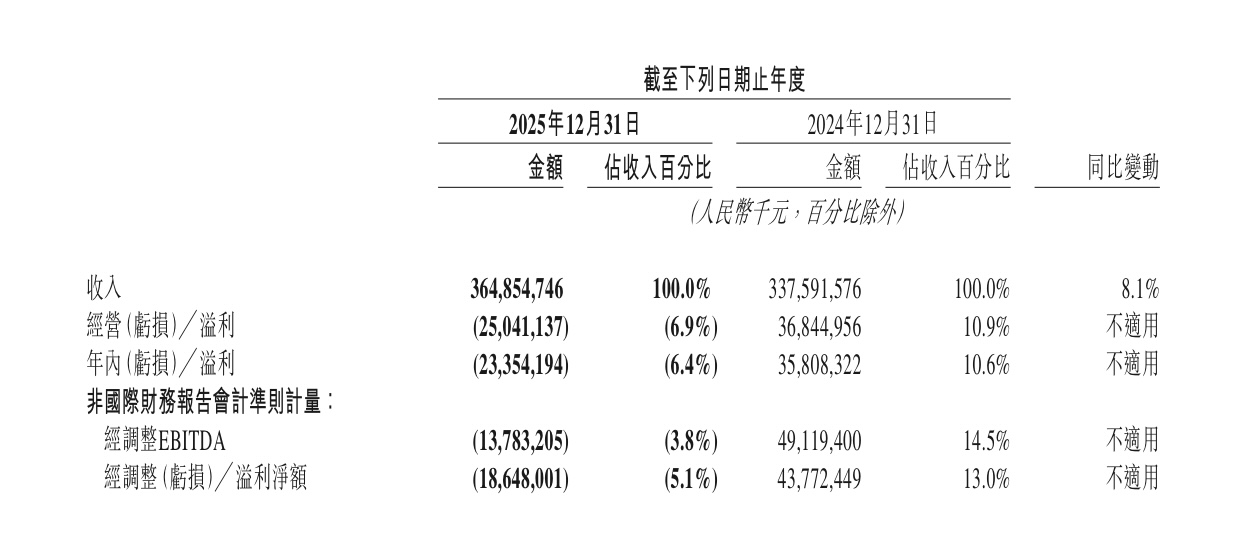
美团“反内卷”成绩单:收入3649亿,亏损234亿
Guan Cha Zhe Wang· 2026-03-26 13:29
Core Insights - Meituan reported a total revenue of 364.9 billion RMB for the fiscal year ending December 31, 2025, representing an 8% year-on-year growth [1][2] - The company experienced a net loss of 23.4 billion RMB for the year, shifting from profit to loss due to intense competition in the instant retail sector [1][2] - CEO Wang Xing emphasized the company's commitment to countering "involution" in the industry and focusing on technological innovation and ecosystem development to better serve users and merchants [2] Financial Performance - The core local commerce segment generated revenue of 260.8 billion RMB, with an operating loss of 6.9 billion RMB [3][4] - In Q4 2025, the core local commerce revenue was 64.8 billion RMB, with a significant reduction in operating loss to 10 billion RMB compared to the previous quarter [3] - Adjusted EBITDA for the year was a loss of 13.8 billion RMB, reflecting a 3.8% margin [2][4] Market Position - Meituan maintained over 60% market share in Gross Transaction Value (GTV) for the food delivery sector, demonstrating resilience despite fierce competition [5] - The company also reported strong growth in its grocery retail and overseas business segments, achieving 104 billion RMB in revenue for new business, a 19% increase year-on-year [5][6] Innovation and Technology - The company invested 26 billion RMB in research and development, marking a 23% increase from the previous year, focusing on logistics and AI technologies [7][8] - Meituan's drone delivery services expanded significantly, with 70 routes established and over 780,000 orders completed, including specialized services for elderly meal delivery [7] - The introduction of AI tools for merchants has seen over 3.4 million businesses utilizing Meituan's AI business management assistants [8]

强call猪-市场在担心什么
2026-03-26 13:20
Summary of Conference Call on Swine Industry Industry Overview - The swine industry is entering a phase of accelerated capacity reduction, with March's reduction rate significantly higher than January and February, driven by an oversupply of live pigs due to inventory backlog [1][2] - The financial pressure on the industry has surpassed the 2023 cycle, with nearly half of the listed pig companies having higher debt-to-asset ratios, indicating a deep cash loss phase that suggests the current capacity reduction will be deeper and longer than expected [1][3] Key Insights and Arguments - Despite expectations of a slight rebound in pig prices in May and June, prices are unlikely to reach the breakeven cost of 13 RMB/kg, leading to continued losses and ensuring the capacity reduction logic remains intact [1][4] - The "anti-involution" policy is expected to be a strong theme in 2026, with increased regulatory measures prompting most companies to adjust their output and breeding plans, accelerating the elimination of outdated capacity [1][5] - The price of piglets has fallen below the breakeven point, signaling a negative feedback loop that reflects market pessimism about future pig prices, which will force upstream breeding capacity to clear out [1][6] Financial Performance and Market Expectations - The industry is experiencing significant cash losses, with average losses per pig ranging from 3 to 4 RMB, which has been priced into the market [6] - Financial reports are expected to validate the capacity reduction logic through increased debt ratios and declining biological assets, confirming the necessity for capacity clearance [6][7] - The current price of live pigs is around 9.6 RMB/kg, with piglet prices declining weekly, indicating a critical state of losses in the piglet market, which is a key indicator of the industry's capacity reduction [6][7] Investment Strategy - The investment strategy should focus on cost-leading companies, recommending Muyuan Foods, Dekang Agriculture, and Wens Foodstuffs, while also monitoring Tian Kang Biological, Shennong Group, Lihua Stock, and Juxing Agriculture for potential opportunities [1][7] - The current phase is seen as the beginning of a major capacity reduction wave, with expectations that the depth and duration of this cycle will exceed that of 2023, setting the stage for a potential price increase in the next cycle [7]
美团2025年财报:收入3649亿元 核心本地商业亏损69亿元
Xin Lang Cai Jing· 2026-03-26 10:01
Core Insights - Meituan reported a total revenue of 364.9 billion yuan for the year 2025, representing an 8% year-on-year growth. However, due to intense competition in the instant retail sector, the company shifted from profit to loss, recording a net loss of 23.4 billion yuan and an operating loss of 17 billion yuan [1][2]. Financial Performance - In 2025, Meituan's core local commerce segment generated revenue of 260.8 billion yuan, with an operating loss of 6.9 billion yuan. Despite fierce competition in the food delivery sector, Meituan maintained over 60% of the GTV market share and retained its advantage in the mid-to-high ticket price dining market [1][2]. Strategic Initiatives - Meituan is expanding its "30-minute delivery" model beyond food delivery to include daily necessities and 3C digital products through innovative approaches such as brand flagship lightning warehouses and self-operated front warehouses [1][2]. - The company is enhancing the synergy between product retail and service retail within its core local commerce, with a fully upgraded membership system that covers various consumption scenarios including food delivery, hotel bookings, lifestyle services, transportation, and healthcare [3]. User Engagement - The improvements in the membership system have led to record highs in both the number of annual transaction users and user consumption frequency, indicating a stronger consumer engagement [3]. Company Vision - CEO Wang Xing emphasized that 2025 presents both opportunities and challenges, asserting that the company's strategic direction remains clear. Meituan is committed to "anti-involution," focusing on doing the right things through technological innovation, supply upgrades, and ecosystem co-construction to better serve users and merchants [2][3].
A股市场2026年二季度投资策略报告:市场维稳预期明确,波动带来配置机会-20260326
BOHAI SECURITIES· 2026-03-26 08:27
Macro Economic Situation - The export growth in January-February 2026 was 21.8% year-on-year, significantly rebounding compared to 2025, supported by structural optimization and competitive advantages in new momentum sectors [8] - Fixed asset investment in January-February 2026 increased by 1.8% year-on-year, with infrastructure investment growing by 11.4%, indicating a positive start to the economy [10][12] - Social retail sales in January-February 2026 showed a year-on-year growth of 2.8%, indicating a need for further stimulation of consumer demand [14] Liquidity Environment - The Federal Reserve maintained the federal funds rate target range at 3.5% to 3.75% during the March meeting, reflecting a cautious approach amid geopolitical uncertainties [22][23] - Domestic monetary policy is expected to continue a moderately loose stance, with potential for rate cuts and reserve requirement ratio reductions in response to economic growth pressures [26][27] Capital Market Liquidity Environment - The capital market's primary task is stability, with mechanisms in place to support liquidity, including the expansion of public funds and the enhancement of ETF roles [31][32] - The balance between capital supply and stock supply is expected to improve, with both showing signs of growth, which may reduce the unilateral driving effect of capital inflows on the market [53] Market Strategy - The A-share market has experienced fluctuations, with external geopolitical risks impacting investor sentiment and market stability [56] - Long-term returns are anticipated to derive from asset allocation capabilities in a stable environment, while excess returns may come from timing opportunities in non-stable market conditions [58]
煤炭月度供需数据点评:26年1-2月:海外局势紧张,进口煤开始收缩-20260326
Shanxi Securities· 2026-03-26 07:50
Investment Rating - The report maintains an investment rating of "Leading the Market" for the coal industry, indicating an expected price increase exceeding the benchmark index by over 10% [1][44]. Core Insights - The coal supply in the first two months of 2026 has slightly contracted, with a cumulative production of 763 million tons, reflecting a year-on-year decrease of 0.3% [4][5]. - Terminal demand has shown marginal recovery, with fixed asset investment increasing by 1.8% year-on-year, driven by a 3.1% rise in manufacturing investment, while real estate investment has decreased by 11.1% [4][5]. - The report highlights that geopolitical tensions have led to a contraction in coal imports, with a cumulative import volume of 77.22 million tons in the first two months, marking a 1.5% year-on-year increase, but a significant drop in February [5][6]. Summary by Sections Supply and Demand - The coal supply has contracted slightly, with a total output of 763 million tons in early 2026, down 0.3% year-on-year [4]. - Demand has shown a mixed trend, with thermal power generation growth at 3.3% and cement growth at 6.8%, while pig iron production has decreased by 2.7% [4][5]. Price Trends - Coal prices have shown a divergent trend in early 2026, with varying adjustments in prices for different coal types, including an increase in the price of coking coal at the Tianjin port [5][6]. Investment Recommendations - The report suggests that the geopolitical situation, particularly uncertainties in Indonesian supply and the impact of the US-Iran conflict, will support a bullish outlook for coal prices in 2026 [6]. - Key stocks to watch include Yanzhou Coal Mining Company, Guanghui Energy, and China Coal Energy, which are expected to benefit from the current market dynamics [6][7].




海螺水泥(600585):25Q4国内水泥承压,海外、消费建材贡献较好增长
Guolian Minsheng Securities· 2026-03-26 07:46
Investment Rating - The report maintains a "Recommended" rating for the company [4] Core Views - The company reported a revenue of 82.532 billion yuan in 2025, a year-on-year decrease of 9%, while the net profit attributable to shareholders was 8.113 billion yuan, an increase of 5% year-on-year [10] - The cement industry is experiencing a bottoming out phase, with both revenue and profit under pressure in Q4 2025 [10] - The company’s cement sales volume in 2025 was approximately 140 million tons, a year-on-year decrease of 2%, which is less than the national average decline of 10% [10] - The company is expanding its production capacity in concrete, with a concrete production capacity of 70.25 million cubic meters by the end of 2025, a year-on-year increase of 35% [10] - The company plans to distribute a dividend of 0.61 yuan per share, with a payout ratio of about 55% [10] Financial Forecasts - Projected revenues for 2026, 2027, and 2028 are 83.333 billion yuan, 86.286 billion yuan, and 89.841 billion yuan, respectively, with growth rates of 1%, 3.5%, and 4.1% [3] - The net profit attributable to shareholders is expected to be 9.149 billion yuan in 2026, 10.265 billion yuan in 2027, and 11.608 billion yuan in 2028, with growth rates of 12.8%, 12.2%, and 13.1% respectively [3] - The company’s PE ratio is projected to be 14 in 2026, decreasing to 11 by 2028, indicating a favorable valuation [3]