
供给侧结构性改革

Search documents
钢矿周报:供需边际偏宽松但需求侧管理政策落地效果或逐步显现,钢矿期价或下存支撑-20250818
Chang An Qi Huo· 2025-08-18 08:41
Report Industry Investment Rating No relevant content provided. Core Viewpoints of the Report - Steel: Although adverse weather conditions such as high temperatures and heavy rainfall in many areas still occur frequently, the real - time terminal demand for steel may remain under pressure, and the inventory accumulation pressure of coils and rebar may continue. However, after the "severe flood period from late July to early August", with the start of large - scale "two major" projects like the Yajiang Hydropower Plant and the continuous implementation of "two new" policies, the terminal demand for steel may remain resilient, and steel futures prices may have downward support [1][41]. - Iron ore: Although the Ministry of Industry and Information Technology will release a new round of steel industry stability - growth work plan, and the China Iron and Steel Association has proposed to strictly implement the deployment of crude steel production control, and there may be production restrictions for steel mills in North China near the September 3rd parade, the demand - side pressure on iron ore may gradually emerge, and there is still a risk of inventory accumulation at iron ore ports. But due to the policy expectation difference in supply - side structural reform and the implementation of demand - side management policies, the replenishment demand of traders and terminal steel mills before the production restrictions in North China in late August may still be released, and the production enthusiasm of steel mills is still relatively high, so the demand for iron ore may remain resilient, and iron ore futures prices may have downward support [2][42]. Summary by Directory 1. Expected Boost but Weak Reality Dominates, Steel and Iron Ore Futures Prices Rise and Then Fall - Last week, the futures prices of steel and iron ore main contracts showed a trend of rising and then falling. The main contracts of hot - rolled coils and iron ore performed slightly stronger, both rising 0.32% week - on - week, while the futures price of the rebar main contract fell 0.78% week - on - week. In the first two trading days of last week, policy expectations led to a strong - side oscillation of steel and iron ore futures prices. However, starting from Wednesday, the prices began to fall. One reason was the expected pressure on China's macro - economic data in July, and the actual data of investment, consumption, industry, and real estate were indeed under pressure. The other reason was the significant decline in the apparent demand for rebar and the continuous inventory accumulation of rebar and hot - rolled coils [4]. 2. Supply - Demand Marginally Loose but Terminal Demand Resilience May Gradually Appear, Steel and Iron Ore Inventory Accumulation Pressure May Be Limited Overall (1) Steel: The Window of Supply - Demand Mismatch in Loose Conditions Remains, but Terminal Demand Resilience May Gradually Appear, and Futures Prices May Have Downward Support - **Terminal Demand**: Last week, the consumption of rebar significantly declined to below the level of the same period last year, while the consumption of hot - rolled coils increased month - on - month and was higher than that of the same period last year. The impact of off - season adverse weather on the consumption of building materials such as rebar was more significant. In July, the year - on - year growth rates of investment, consumption, industry, and real estate indicators all declined. Although the year - on - year decline in new housing starts in the real estate sector continued to narrow slightly and the year - on - year growth rate of automobile sales increased, the year - on - year decline in real estate investment still widened, and the year - on - year growth rates of narrow - sense infrastructure and manufacturing investment also slowed significantly. This week, although the adverse weather still exists, the terminal demand for steel may remain resilient with the start of "two major" projects and the implementation of policies [9]. - **Supply**: Last week, the profitability rate of steel enterprises decreased for the first time after continuous increases, and the profits of rebar blast furnaces, electric furnaces, and hot - rolled coils continued to decline. The capacity utilization rate of steel mill blast furnaces and the output of rebar and hot - rolled coils remained basically stable. This week, the expected "one - size - fits - all" administrative production cuts have decreased, and steel production may still have room for release. However, with the upcoming new round of steel industry stability - growth plan and production control policies, as well as the possible production restrictions in North China near the September 3rd parade and off - season factors, the overall steel supply may be under pressure [18]. - **Inventory**: Last week, the total inventories of rebar and hot - rolled coils continued to accumulate. This week, although the terminal demand for steel shows resilience, the expected reduction of "one - size - fits - all" production cuts and the overall pressure on off - season real - time demand may lead to a continuation of the inventory accumulation pressure for coils and rebar [30]. (2) Iron Ore: Although the Expectation of Steel Mill Production Restrictions and Supply - Side Structural Reform Remains, the Demand Side May Have Resilience, and Futures Prices May Have Downward Support - **Demand**: Last week, the iron ore port clearance volume at 45 ports significantly increased to the highest level in recent years, and the port transactions were active. The daily iron ore consumption of steel mills and the average daily molten iron output increased slightly. This week, although there may be production restrictions for steel mills, the replenishment demand of traders and terminal steel mills before the production restrictions in North China in late August may still be released, and the production enthusiasm of steel mills is still high, so the demand for iron ore may remain resilient [34]. - **Supply**: Last week, the iron ore shipment volume from 19 ports in Australia and Brazil increased by 242,000 tons, and the arrival volume at 45 ports increased by nearly 95,000 tons. This week, the iron ore shipment from overseas mines may transition from the off - season to normal, and new production capacity is expected to be released. The overall supply of iron ore may be relatively loose [35]. - **Inventory**: Last week, the iron ore inventory of steel mills increased significantly, and the port inventory continued to accumulate. This week, there is still a risk of inventory accumulation at iron ore ports, but the replenishment demand of steel mills may limit the degree of inventory accumulation [38]. 3. Supply - Demand Marginally Loose but the Implementation Effect of Demand - Side Management Policies May Gradually Appear, Steel and Iron Ore Futures Prices May Have Downward Support - **Steel Operation Suggestions**: Steel producers and traders with high inventory levels can temporarily slow down the sales rhythm; traders with low inventory levels, downstream, and terminal procurement enterprises can appropriately speed up the procurement rhythm or establish short - term buying hedging positions on the futures market. Investors are advised to adopt a range - trading strategy of high - selling and low - buying, paying attention to profit - taking and stop - loss [41]. - **Iron Ore Operation Suggestions**: Steel mills or traders with low inventory levels can appropriately speed up the procurement rhythm or establish short - term buying hedging positions on the futures market; traders with high inventory levels can temporarily slow down the sales rhythm. Investors are advised to adopt a range - trading strategy of high - selling and low - buying, paying attention to profit - taking and stop - loss [43].
如何观察及分析重点行业产能治理
Minsheng Securities· 2025-08-17 10:20
Group 1 - The report highlights the focus on key industries such as new energy vehicles, new energy batteries, and photovoltaic industries, with recent regulatory measures from various government departments leading to price increases in some industry segments [1][14][15] - The report outlines three observation points for capacity governance: guidance from the State Council, implementation of target responsibility letters by provincial governments, and the need for financial and tax support during execution [2][22][23] - Historical experiences from the 2016 supply-side structural reform are referenced to inform current strategies for managing overcapacity and promoting orderly competition in key industries [9][11][22] Group 2 - The credit bond market is experiencing fluctuations, with short to medium-term bonds performing better, while the overall sentiment remains weak due to a lack of new funding and policy incentives [3][4] - The report suggests focusing on high-quality, high-liquidity credit bonds, particularly AAA+ rated bonds with yields above 1.85%, and recommends considering longer durations for AAA and AA+ rated bonds [4][29] - The report emphasizes the importance of monitoring the impact of government policies on local government performance assessments, especially in areas heavily affected by capacity reduction [25][30]
从险资举牌看AH红利配置走向:AH红利资产的定价模式探索系列(II)
Changjiang Securities· 2025-08-16 15:19
Group 1: Dividend Investment Insights - Dividend investment arises from the pursuit of safety margins in uncertain macroeconomic environments, especially as asset returns decline during economic plateau phases[2] - For equity investors, constructing a "safety margin" relies on selecting high-yield assets or "ticket assets" in undervalued areas[2] - For fixed-income investors, yield elasticity comes from the "+" in "fixed income +", traditionally achieved by increasing equity assets, including relatively low-volatility "ticket assets"[2] Group 2: Market Trends and Stock Selection - Since August 2025, insurance companies have intensified their stock purchases, with 28 instances recorded this year, including 20 in H-shares[18][20] - The pricing formula for dividend assets follows: [Dividend Yield + Earnings Certainty] ≥ [Long-term Bond Yield + Risk Premium], with market risk preference being a core influencing factor[6] - Traditional stable dividend sectors like utilities and banks maintain relatively high dividend yields, with banks showing lower EPS volatility compared to utilities[25] Group 3: Sector Performance and Rotation - The high-dividend sector has experienced rotation, with coal dividends leading in 2021, followed by operators in late 2022, and a resurgence of coal, highways, and hydropower in 2023[7][49] - By 2025, traditional dividend assets have shown a decline, with banks maintaining relative returns, while the demand for high-dividend quality and Hong Kong stocks has increased[60] - The "反内卷" (anti-involution) theme is expected to benefit cyclical dividend assets, with static dividend yield representing an important valuation safety dimension[62]
行业反内卷:机会还是风险?
Sou Hu Cai Jing· 2025-08-16 11:11
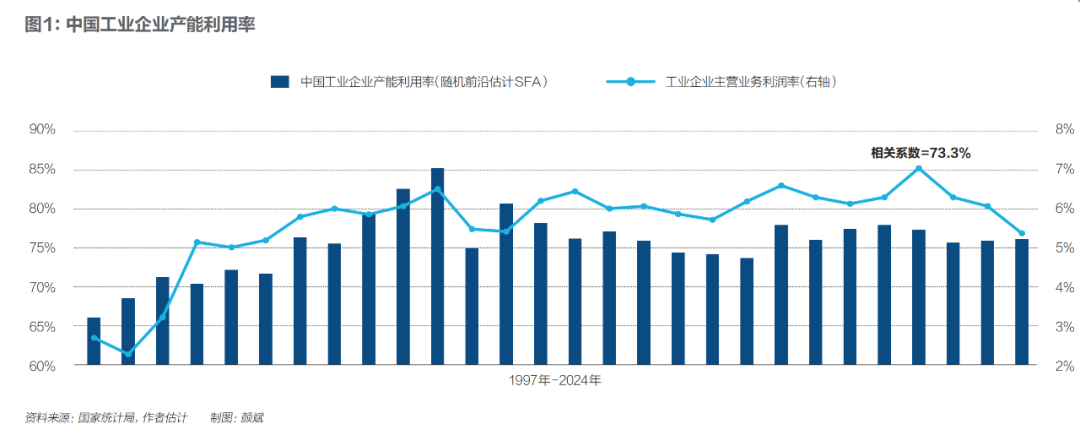
Core Viewpoint - The current "anti-involution" movement in various industries aims for quality improvement and high-quality development rather than merely reducing capacity [1][14]. Group 1: Economic and Employment Impact - "Anti-involution" has a short-term impact on the economy and employment, but with appropriate employment policies and new effective supply, the short-term pressure can be managed [19]. - The industrial capacity utilization rate in China has dropped to 74.0%, indicating significant overcapacity issues [4][5]. Group 2: Industry-Specific Analysis - Key industries facing overcapacity include steel, coal, automotive, battery, photovoltaic, cement, and petrochemicals, with utilization rates in these sectors ranking among the lowest [6]. - The automotive industry is experiencing a reduction in price war pressures, with profit margins stabilizing, indicating a shift from price competition to value competition [15]. - The photovoltaic industry is currently facing severe overcapacity, but recent policies are pushing for the exit of outdated capacities, leading to a rebound in prices for silicon materials and wafers [16]. Group 3: Policy and Structural Changes - The "anti-involution" policy emphasizes legal and market-driven approaches, contrasting with the previous round of capacity reduction that was primarily administratively driven [12]. - The new policies include measures such as the revised Anti-Unfair Competition Law and the establishment of fair competition review systems to prevent price dumping [12]. - The focus of the current "anti-involution" is on both traditional and emerging industries, aiming to alleviate price wars and promote innovation and green transformation [8][10]. Group 4: Historical Context and Future Outlook - Historical data shows that industrial capacity utilization in China has decreased from a peak of 85.2% in 2007 to the current 74.0%, highlighting the need for structural reforms to address overcapacity [5]. - The anticipated impact of a 5% capacity reduction in key sectors like steel and coal is projected to decrease GDP growth by approximately 0.22 percentage points, indicating a manageable but notable effect on the economy [8].

房价涨还是跌?官方统计来了!
Jin Rong Shi Bao· 2025-08-16 02:22
Core Viewpoint - The real estate market is showing signs of stabilization despite seasonal declines in transaction volume during July and August, with core cities expected to maintain resilience due to policy improvements and strong fundamentals [1][3]. Group 1: Price Trends - In July, new home sales prices in first-tier cities decreased by 0.2% month-on-month, while second-hand home prices fell by 1.0%, indicating a slight narrowing of the decline compared to the previous month [2]. - Year-on-year, first-tier cities saw a 1.1% decrease in new home prices, with Shanghai experiencing a 6.1% increase, while the remaining three cities declined [2]. - Among the 70 major cities, five reported year-on-year increases in new home prices, suggesting a shift towards affordable and public housing as a new growth driver [2]. Group 2: Sales and Investment - From January to July, the sales area of new homes decreased by 4.0% year-on-year, and sales revenue fell by 6.5% [1]. - Real estate investment from January to July dropped by 12.0% year-on-year, with the decline rate widening compared to the first half of the year [3]. - The funding sources for real estate companies showed improvement, with a 7.5% year-on-year decrease in funds received, but domestic loans increased by 0.1% [3]. Group 3: Policy and Market Outlook - Recent policy changes in Beijing aim to stimulate the housing market by lifting restrictions on home purchases for eligible families and expanding support for first-time homebuyers [3]. - The focus of real estate policies is on stabilizing the market, with an emphasis on urban renewal and the effective implementation of existing policies to activate demand and optimize supply [3].
宏观经济宏观月报:短期波动不改内需韧性基础,政策发力将引领经济回升-20250815
Guoxin Securities· 2025-08-15 09:48
Economic Growth Data - In July, the industrial added value above designated size grew by 5.7% year-on-year, a decrease of 1.1 percentage points from June[1] - The total retail sales of consumer goods reached 38,780 billion yuan in July, with a year-on-year growth of 3.7%, down 1.1 percentage points from June[1] - From January to July, fixed asset investment (excluding rural households) totaled 288,229 billion yuan, with a year-on-year growth of 1.6%, down 1.2 percentage points from the first half of the year[1] - The unemployment rate in urban areas was 5.2% in July, an increase of 0.2 percentage points from the previous month[1] Economic Challenges - The GDP growth rate for July was approximately 4.3%, a significant drop of 0.9 percentage points from June, falling below the annual growth target[2] - The construction sector contributed a drag of about 0.5 percentage points to the GDP growth, while the industrial sector contributed a drag of 0.3 percentage points[2] - Extreme weather conditions, including high temperatures and heavy rainfall, negatively impacted construction activities, leading to decreased efficiency and project delays[15] Policy Implications - Despite short-term fluctuations, domestic demand shows resilience, providing a foundation for future economic stabilization[3] - The government is expected to enhance efforts to stimulate domestic demand, particularly in boosting consumption and infrastructure investment[4] - The real estate policy is anticipated to continue optimizing around "risk prevention, ensuring delivery, and stabilizing expectations" to support economic recovery[4]
为消费提质升级绘制清晰路径 宁夏实施优化消费环境三年行动
Zhong Guo Chan Ye Jing Ji Xin Xi Wang· 2025-08-15 01:17
Core Insights - The article discusses the implementation of the "Three-Year Action Plan for Optimizing the Consumption Environment (2025-2027)" by the Ningxia Autonomous Region, aiming to enhance consumer experience and address pain points in the consumption sector [1][2]. Group 1: Key Actions and Objectives - The plan includes five major actions and 31 specific tasks targeting consumer safety, quality, and experience upgrades, establishing a clear path for consumption enhancement [1]. - It emphasizes the integration of consumption upgrades with supply-side structural reforms, leveraging existing national "Three Products" strategic demonstration cities to cultivate local quality brands [1][2]. - The plan aims to balance short-term consumption stimulation with long-term transformation through policies like new purchase subsidies in sectors such as automotive and home appliances, alongside initiatives for waste classification and resource recycling [1]. Group 2: Rural Consumption and Logistics - The plan proposes innovative service models like "Hundred Supply Pass" to bridge the urban-rural consumption gap, targeting the establishment of 180 new "Hundred Supply Pass" outlets and over 150 integrated routes by 2027 [1]. - A goal of achieving 80% coverage of comprehensive logistics service stations in administrative villages is set to facilitate rural consumption [1]. Group 3: Consumer Safety and Market Regulation - The plan outlines the construction of a comprehensive consumer protection network, emphasizing strict food and drug safety regulations and enhanced oversight of key agricultural products [2]. - It aims to address market transaction environments by targeting unfair practices in sectors like training, fitness, tourism, and elderly care, while promoting transparency in pricing through mechanisms like the "price commitment system" in the restaurant industry [2]. Group 4: Consumer Rights and Dispute Resolution - The plan seeks to improve consumer rights protection by encouraging large enterprises to establish dispute resolution systems and promoting no-reason return policies in physical stores, with a target of over 300 such units by 2027 [3]. - Mechanisms like "litigation mediation" and "shared courts" are introduced to lower the barriers for consumer rights protection, while a consumer environment index will be developed to quantify consumer satisfaction [3].
焦煤关注“反内卷”政策执行力度
Qi Huo Ri Bao· 2025-08-15 00:46
6月,全国安全生产月之初,煤矿事故引发主产区安监加码,加上彼时炼焦煤价格已处2017年以来的低 位,部分煤矿经营压力较大。成本支撑、安监预期,以及市场短期调整等因素叠加,推动焦煤期货于6 月3日见底后企稳走强。 整体来看,8月焦煤市场供应端仍存在多重支撑因素。虽然短期对国内实际供应影响有限,但行业积极 响应"反内卷"政策的态势已然显现。即便实质性产能退出规模尚待观察,但市场预期已明显改善,行业 协会召开专题会议,释放产量调控信号,以及煤企主动配合政策导向,通过调整生产节奏等方式维护市 场秩序。 焦煤产量边际收缩 从实际产量来看,7月底至8月上旬,国内炼焦煤矿开工率连续两周环比下滑,"反内卷"政策已通过超产 整治和企业自律等方式对焦煤供应产生一定压制。根据钢联的统计,截至8月14日,全国523家炼焦煤矿 开工率为83.7%,较7月25日当期累计下降3.2个百分点;原煤日均产量为187.9万吨,较7月25日当期累 计下降6.8万吨。 综上,当前市场关注的核心在于"反内卷"政策对焦煤供应端的实质性影响。这一影响主要体现在两个层 面:政策层面,煤炭行业具体调控措施的出台及执行力度将直接影响市场预期;实际层面,焦煤产量 ...
焦煤后期走势需关注“反内卷”政策执行力度
Qi Huo Ri Bao· 2025-08-15 00:30
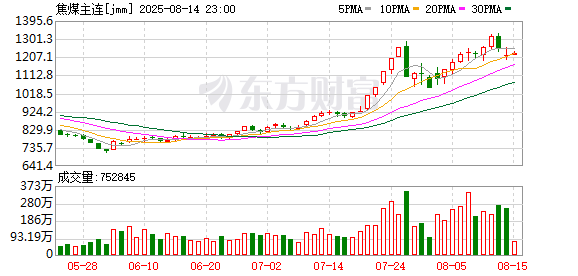
7月1日,中央财经委员会第六次会议明确提出"依法依规治理企业低价无序竞争,引导企业提升产品品 质,推动落后产能有序退出",旨在通过供给侧结构性改革遏制恶性价格战,优化行业集中度。供应过 剩的煤炭行业,成为市场关注焦点之一。 此后,国家能源局综合司、煤炭行业协会"反内卷"消息利好陆续兑现,焦煤中长期基本面预期好转,叠 加中美贸易关系缓和以及雅鲁藏布江超级水电工程开建等阶段性利多因素支撑,焦煤期货在7月加速上 行。8月14日,焦煤期货主力合约报收1204元/吨,较6月3日的低点累计上涨69.8%。 供应端存支撑因素 8月以来,焦煤供应端受消息面的影响不断。8月6日,钢联求证市场关注的"某煤业关于下发276工作日 生产组织方案试行通知"这一消息。据钢联调研了解,该集团内部有4家煤矿收到类似通知,合计产能 390万吨。"276工作日"是在上一轮煤炭行业供给侧改革中,国务院在《关于煤炭行业化解过剩产能实现 脱困发展的意见》中明确提出的,且在后续几年间引发行业广泛讨论。本次"276工作日"为个别企业响 应"反内卷"整治的自律行为,在行业内并未广泛执行,因而目前来看影响更多停留在消息层面。 6月,全国安全生产月之初,煤矿事 ...
以新供给引领新需求 以新需求牵引新供给 中国经济展现强大活力和韧性的密码(人民观点)
Ren Min Ri Bao· 2025-08-14 22:13
Core Viewpoint - China's economy has demonstrated remarkable resilience and exceeded expectations in growth during the first half of the year, prompting several foreign media outlets to revise their forecasts positively [2]. Group 1: Economic Performance and Growth - China's economy is characterized by a strong vitality and resilience, attributed to the effective coordination of supply and demand, as emphasized by President Xi Jinping [2]. - The contribution rate of domestic demand to economic growth reached 68.8% in the first half of the year, with final consumption expenditure contributing 52%, highlighting domestic demand as the main driver of economic growth [6]. Group 2: Supply and Demand Dynamics - The total number of consumer goods in China has surpassed 200 million, with over 8.09 million new consumer goods added in the first four months of the year, reflecting a 40.4% year-on-year increase [3]. - New consumer demands are driving innovations in production methods, leading to the emergence of personalized and flexible manufacturing models [5]. Group 3: Technological Innovation and Industry Transformation - China is transitioning from a manufacturing hub to a global innovation center, supported by technological advancements that create high-quality supply to meet new consumer demands [3][4]. - The integration of technology and traditional industries is fostering new consumption scenarios, such as the rise of the health industry and low-altitude economy [5]. Group 4: Policy Support and Market Expansion - A series of policy measures, including the "Consumption Promotion Action Plan," aim to enhance consumer capacity and improve consumption conditions, driving quality upgrades in consumption [6]. - The establishment of a more efficient national economic cycle is based on a higher level of dynamic balance, promoting a dual empowerment between new supply and new demand [8]. Group 5: Future Outlook - The synergy between high-quality supply and high-quality demand is expected to strengthen the foundation of China's economy, leading to a more resilient and vibrant modern economic landscape [9].