
地缘风险

Search documents
LPG早报-20260114
Yong An Qi Huo· 2026-01-14 01:47
Report Summary 1) Report Industry Investment Rating - Not provided in the given content 2) Core View of the Report - Overall, both domestic and international valuations are relatively high. In terms of external market drivers, short - term supply and demand remain tight, but the buying interest for Middle - East shipments in February has weakened. After the fog in the US dissipates, the supply pressure is still significant, and the end of the combustion demand is approaching. It is expected that the fundamentals of the external market will weaken. The valuation of the domestic 02 contract is neutral, and the drivers should focus on whether there will be negative feedback under the low profit of PDH and the subsequent situation of warehouse receipts. The valuation of the 3 - 4 month spread is relatively high, and attention should be paid to the subsequent situation of warehouse receipts [4]. 3) Summary by Related Content Daily Situation - On Tuesday, due to rising geopolitical risks, the futures market rose significantly. The 02 - 03 month spread was 77 (-12), and the 03 - 04 month spread was -213 (-6). As of 9 pm on Tuesday, the FEI and CP paper prices were 521.84 and 526.84 US dollars respectively, up 7.34 US dollars compared to 8 pm on Monday [4]. - The domestic market rose and then fluctuated. The 02 basis was 179 (+51), the 02 - 03 month spread was 85 (-34), and the 03 - 04 month spread was -192 (-8). The number of warehouse receipts was 6,218 (-180). The price of civil gas increased, with Shandong at 4,400 (+40), East China at 4,467 (+70), and South China at 4,840 (+75). The cheapest deliverable was Shandong ether - after carbon four at 4,390 (-90). The absolute price of paper goods increased. The FEI and CP month spreads decreased slightly, while the MB month spread increased slightly. The oil - gas ratio fluctuated. Both domestic and international markets strengthened, with PG - FEI reaching 86.7 (+9.7) and PG - CP reaching 80 (+9). The CIF discount of propane in East China, China was 79 (+13) [4]. Weekly Situation - The AFB margin has recovered but is still poor. The port storage capacity ratio increased by 0.14 pct due to limited ship arrivals. Refineries had a small destocking of -0.47%, and external sales increased by 1.07% [4].
宝城期货橡胶早报-2026-01-14-20260114
Bao Cheng Qi Huo· 2026-01-14 01:46
Report Summary 1. Report Industry Investment Rating No relevant information provided. 2. Core Viewpoints - Both Shanghai rubber (RU) and synthetic rubber (BR) are expected to run strongly, with short - term and medium - term trends being oscillatory and the intraday trend being strong [1][5][7]. 3. Summary by Related Catalogs Shanghai Rubber (RU) - **Price Trends**: Short - term: oscillatory; Medium - term: oscillatory; Intraday: strong; Overall view: run strongly [1][5] - **Driving Logic**: After Thailand and Cambodia declared a truce, the expectation of reduced rubber supply in Southeast Asia disappeared, weakening the bullish drive. However, domestic natural rubber producing areas in Yunnan and Hainan have entered the off - season, reducing domestic supply pressure, while Southeast Asia is in the peak tapping season. Also, domestic automobile production and sales data are optimistic, and the heavy - truck sales data in December are better than expected. Benefiting from the overall strength of energy - chemical products, Shanghai rubber futures maintained an oscillatory and strong trend on the night of Tuesday and are expected to continue this trend on Wednesday [5]. Synthetic Rubber (BR) - **Price Trends**: Short - term: oscillatory; Medium - term: oscillatory; Intraday: strong; Overall view: run strongly [1][7] - **Driving Logic**: The spot price of butadiene has risen sharply due to the tight supply of northern sources and downstream replenishment demand. The rapid increase in raw material costs has squeezed the profits of synthetic rubber manufacturers, leading to reduced production or shutdown of some plants and a decrease in supply expectations. In addition, domestic automobile production and sales data are optimistic, the heavy - truck sales data in December are better than expected, and the crude oil futures maintain an oscillatory and strong pattern, strengthening the cost support. Under the bullish atmosphere, synthetic rubber futures maintained an oscillatory and strong trend on the night of Tuesday and are expected to continue this trend on Wednesday [7].
中信期货研究(有?每?报告):关税预期扰动与地缘风险仍在,铂钯宽幅震荡
Zhong Xin Qi Huo· 2026-01-14 01:11
Group 1: Report Industry Investment Rating - No information provided Group 2: Core Views of the Report - On January 13, 2026, the closing price of the GFEX platinum main contract was 605.05 yuan/gram, with a decline of -3.2%; the closing price of the GFEX palladium main contract was 483.25 yuan/gram, with a decline of -5.22% [3] - Due to concerns about the Fed's independence and rising geopolitical risks, platinum prices are expected to fluctuate widely but trend upward. The supply in South Africa faces risks, while the demand in the platinum market is expanding, and the "rate cut + soft landing" combination will increase price elasticity [3] - Affected by tariff expectations and geopolitical risks, palladium prices are expected to fluctuate widely but trend upward. Although the long - term supply - demand of palladium is loosening, short - term spot shortages and the Fed's rate - cut cycle support the price [3][4] Group 3: Summary Based on Related Catalogs Platinum Analysis - The main logic is that concerns about the Fed's independence and geopolitical risks have flared up again, and the "233" clause of the US Department of Commerce on critical minerals has no further news. Short - term price fluctuations may intensify. It is recommended to wait for price stabilization and then consider low - buying opportunities [3] - In terms of supply, South Africa, the main supplier of platinum - group metals, still faces risks in power supply and extreme weather. In terms of demand, the platinum market is in a structural expansion stage, with stable demand in the automotive catalyst field, the hydrogen energy industry as a future growth point, and expanding demand in jewelry and investment [3] - The outlook is that platinum prices are expected to fluctuate upward due to healthy supply - demand fundamentals and positive macro - expectations [3] Palladium Analysis - The main logic is that the market expected the US to impose a 50% high - tariff on palladium on January 10. Palladium is being shipped to the US, intensifying non - US supply shortages. The policy has not been implemented yet, and short - term price fluctuations may intensify. It is recommended to trade cautiously and wait for price stabilization to consider low - buying opportunities [3] - In terms of demand, palladium shows significant structural pressure. Although the long - term supply - demand of palladium is loosening, short - term spot shortages and the Fed's rate - cut cycle support the price [3] - The outlook is that palladium prices are expected to fluctuate upward due to spot shortages and a favorable macro - environment [4] Commodity Index - On January 13, 2026, the comprehensive index was 2425.27, down - 0.30%; the commodity 20 index was 2779.12, down - 0.28%; the industrial products index was 2348.14, down - 0.52% [50] Non - ferrous Metals Index - On January 13, 2026, the non - ferrous metals index was 2809.16, with a daily decline of -1.33%, a 5 - day decline of -1.30%, a 1 - month increase of +8.87%, and a year - to - date increase of +4.59% [52]
能源日报-20260113
Guo Tou Qi Huo· 2026-01-13 11:19
Report Industry Investment Ratings - Crude oil, fuel oil, low-sulfur fuel oil, and asphalt are all rated ★★★, indicating a clearer long/short trend and relatively appropriate current investment opportunities [2] Core Viewpoints - The main tone of oil prices is a downward trend in the central level dominated by loose supply and demand [4] - The unilateral trend of fuel oil still mainly follows the fluctuations of the crude oil cost side, and the tense geopolitical situation continues to be a key influencing factor [5] - The tight supply of Venezuelan crude oil may affect the raw material supply of domestic refineries, and the market needs to pay close attention to the arrival situation [6] Summary by Related Categories Crude Oil - In January 2026, the global crude oil market faces significant inventory accumulation pressure [4] - If the US relaxes sanctions on Venezuela, Venezuelan oil production and exports may increase [4] - Geopolitical risks drive oil prices to rebound, but the short-term upward space of oil prices is expected to be limited [4] Fuel Oil & Low-Sulfur Fuel Oil - The unilateral trend of fuel oil follows the fluctuations of the crude oil cost side, and the tense geopolitical situation is a key influencing factor [5] - In the high-sulfur market, if there is a supply interruption or trade flow diversion, domestic refineries may increase the use of fuel oil as an alternative raw material for asphalt production [5] - In the low-sulfur market, the supply scale is expected to gradually increase, and the overseas supply recovery brings a loose pressure, making the fundamentals continue to be weak [5] Asphalt - The arrival volume of imported Venezuelan crude oil in January is sufficient, but the supply may be more affected after February [6] - If the supply of Venezuelan crude oil continues to tighten, refineries may turn to higher-priced alternative oil sources [6] - The market needs to closely monitor the arrival situation of Venezuelan crude oil [6]
【黄金期货收评】贵金属长期核心驱动因素稳健 沪金微涨1027元
Jin Tou Wang· 2026-01-13 09:28
【机构观点】 【黄金期货最新行情】 数据显示,1月13日上海黄金现货价格报价1027.39元/克,相较于期货主力价格(1027.18元/克)升水 0.21元/克。 美国司法部已就美联储总部翻修相关事宜,对美联储主席鲍威尔启动刑事调查。鲍威尔对此回应称,此 举史无前例,应结合特朗普政府对美联储的持续威胁这一背景来看待,目的是就降息问题进一步向他施 压。 当地时间1月12日下午,美国总统特朗普发文称,任何与伊朗进行商业往来的国家,其与美国的所有商 业往来都将面临25%的关税。该命令即日起生效。 | 1月13日 | 收盘价(元/克) | 当日涨跌幅 | 成交量(手) | 持仓量(手) | | --- | --- | --- | --- | --- | | 沪金主力 | 1027.18 | 1.01% | 197421 | 103633 | 打开APP,查看更多高清行情>> 【基本面消息】 上一个交易日COMEX黄金期货涨2.40%报4608.80美元/盎司,COMEX白银期货涨7.33%报85.16美元/盎 司。当前地缘局势持续紧张,美国方面联储新任主席提名人公布在即,全面关税面临最高法院裁决;市 场不确定性加剧。 ...
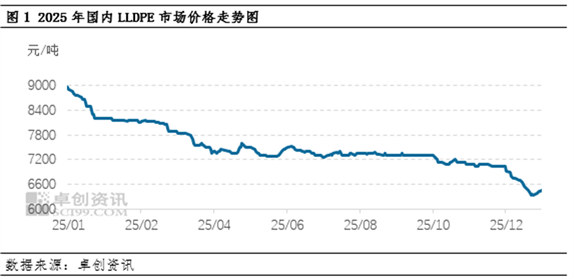
12月国内LLDPE价格走低 不同生产原料企业亏损局面差异化
Sou Hu Cai Jing· 2026-01-13 09:18
Core Viewpoint - In December, domestic LLDPE prices declined, with varying degrees of losses among different production raw material companies [1] Group 1: Market Overview - In December, the domestic PE market experienced price fluctuations and a downward trend, influenced by a weak overall crude oil market and increased supply [1] - The average price of LLDPE at the end of December was 6686 yuan/ton, a decrease of 5.78% month-on-month and 25.17% year-on-year [1] Group 2: Upstream Cost Analysis - The average production cost for naphtha-based LLDPE film material decreased by 178 yuan/ton to 6885 yuan/ton, a drop of 2.52% [3] - The average production cost for coal-based LLDPE film material fell by 347 yuan/ton to 6698 yuan/ton, a decline of 4.93% [3] - The average price of West Texas Intermediate (WTI) crude oil was 57.87 USD/barrel, down 2.71% month-on-month and 16.97% year-on-year [3] Group 3: Profit Margin Insights - The average profit margin for coal-based LLDPE film material production was -241 yuan/ton, an increase of 25 yuan/ton compared to November, indicating a slight alleviation of losses [4] - The average profit margin for naphtha-based LLDPE film material production was -314 yuan/ton, a decrease of 131 yuan/ton from November, indicating an increase in losses [5]

原油成品油早报-20260113
Yong An Qi Huo· 2026-01-13 06:55
Report Industry Investment Rating - Not provided Core Viewpoints of the Report - This week, crude oil rebounded, and geopolitical risks escalated. The unstable situation in Iran continued over the weekend. Trump received a briefing on the military strike plan against Iran but has not made a final decision on whether to authorize the strike. If the US launches a strike against Iran, oil prices may surge due to geopolitical risks. Fundamentally, oil inventories increased this week, the Dubai monthly spread strengthened slightly after opening low, gasoline cracking strengthened while diesel cracking fluctuated, and European refinery profits weakened. Attention should be paid to geopolitical situations, and the price center in the first quarter is expected to be high and volatile [6]. Summary by Relevant Catalogs 1. Daily News - The US State Department issued an emergency security warning, asking US citizens in Iran to leave immediately and make departure plans without relying on US government assistance [3]. - Trump said that Iran called to negotiate on the nuclear issue yesterday, and the US may meet with them. He also announced that starting from now, any country doing business with Iran will be subject to a 25% tariff on all its commercial activities with the US [4]. - The White House stated that diplomacy is the "preferred" option for the US to deal with the Iranian situation, but Trump will not hesitate to use the US military if necessary [4]. 2. Inventory - In the week ending January 2nd, US crude oil exports increased by 823,000 barrels per day to 4.263 million barrels per day [4]. - In the same week, US domestic crude oil production decreased by 16,000 barrels to 13.811 million barrels per day [4]. - Commercial crude oil inventories excluding strategic reserves decreased by 3.832 million barrels to 419 million barrels, a decrease of 0.91% [4]. - The four - week average supply of US crude oil products was 19.871 million barrels per day, a decrease of 1.86% compared to the same period last year [5]. - The US Strategic Petroleum Reserve (SPR) inventory increased by 245,000 barrels to 413.5 million barrels, an increase of 0.06% [5]. - In the week ending January 2nd, US commercial crude oil imports excluding strategic reserves were 6.339 million barrels per day, an increase of 1.386 million barrels per day compared to the previous week [5]. 3. Weekly Quotes | Date | WTI | BRENT | DUBAI | diff FOB dated bre | BRENT 1 - 2 month spread | WTI - BRENT | DUBAI - BRENT (EFS) | NYMEX RB | RBOB - BRENT | NYMEX HO | HO - BRENT | | --- | --- | --- | --- | --- | --- | --- | --- | --- | --- | --- | --- | | 2026/01/06 | 57.13 | 60.70 | 59.16 | 0.74 | 0.39 | - 3.57 | 1.31 | 170.06 | 10.73 | 208.30 | 26.79 | | 2026/01/07 | 55.99 | 59.96 | 58.35 | 0.84 | 0.38 | - 3.97 | 1.41 | 169.45 | 11.21 | 205.67 | 26.42 | | 2026/01/08 | 57.76 | 61.99 | 60.08 | 0.89 | 0.50 | - 4.23 | 1.30 | 176.03 | 11.94 | 211.95 | 27.03 | | 2026/01/09 | 59.12 | 63.34 | 61.02 | 0.89 | 0.55 | - 4.22 | 1.38 | 178.06 | 11.45 | 213.50 | 26.33 | | 2026/01/12 | 59.50 | 63.87 | 61.17 | - | 0.65 | - 4.37 | 1.94 | 179.38 | 11.47 | 215.44 | 26.61 | | Change | 0.38 | 0.53 | 0.15 | - | 0.10 | - 0.15 | 0.56 | 1.32 | 0.02 | 1.94 | 0.28 | | Date | SC | OMAN | SC - BRENT | SC - WTI | Domestic Gasoline | Domestic Gasoline - BRENT | Domestic Diesel | Domestic Diesel - BRENT | | --- | --- | --- | --- | --- | --- | --- | --- | --- | | 2026/01/06 | | 428.20 | 58.86 | 0.32 | 3.89 | 7090 | 3542 | 5743 | 2612 | | 2026/01/07 | | 416.30 | 57.98 | - 0.65 | 3.32 | 7050 | 3544 | 5711 | 2618 | | 2026/01/08 | | 416.20 | 59.98 | - 2.70 | 1.53 | 7010 | 3385 | 5673 | 2475 | | 2026/01/09 | | 432.70 | 61.37 | - 1.64 | 2.58 | 7040 | 3340 | 5717 | 2452 | | 2026/01/12 | | 437.50 | 61.63 | - 1.47 | 2.90 | 7080 | 3350 | - | - | | Change | | 4.80 | 0.26 | 0.17 | 0.32 | 40.00 | 10.00 | - | - | | Date | Japanese Naphtha CFR | Japanese Naphtha - BRENT | Singapore Fuel Oil 380CST Premium | Singapore 380 - BRENT | SHFE FU Main Contract | SHFE FU - BRENT | SHFE BU Main Contract | SHFE BU - BRENT | HH Natural Gas | BFO | | --- | --- | --- | --- | --- | --- | --- | --- | --- | --- | --- | | 2026/01/06 | 534.25 | 88.11 | - 2.0 | - 103.24 | 2479 | - 92.88 | 3144 | 1.89 | - | 61.92 | | 2026/01/07 | 532.75 | 92.04 | - 1.5 | - 98.31 | 2437 | - 93.49 | 3160 | 9.52 | 3.100 | 61.51 | | 2026/01/08 | 540.75 | 85.12 | - 1.9 | - 119.97 | 2458 | - 105.47 | 3132 | - 9.45 | 3.100 | 64.04 | | 2026/01/09 | 551.25 | 85.70 | - 1.43 | - 124.12 | 2514 | - 107.06 | 3171 | - 13.38 | 2.890 | 64.81 | | 2026/01/12 | - | - | - 1.22 | - 130.52 | 2461 | - 118.64 | 3157 | - 19.14 | 2.890 | 64.81 | | Change | - | - | 0.21 | - 6.40 | - 53 | - 11.58 | - 14 | - 5.76 | - 0.210 | 0.77 | [3][14]
光大期货0113热点追踪:伊朗局势再紧张,全球油价恐迎“惊魂时刻”
Xin Lang Cai Jing· 2026-01-13 05:59
客户端 国内原油连续三天震荡上行,隔夜市场WTI 2月合约收盘上涨0.38美元至59.50美元/桶,涨幅0.64%。布 伦特3月合约收盘上涨0.53美元至63.87美元/桶,涨幅0.84%。伊朗局势或导致全球原油供应调整,同时 乌克兰袭击俄罗斯的能源设施,市场持续计价地缘风险,内外盘共振,短期油价整体重心或呈现震荡上 移的格局。 隔夜市场伊朗局势再次紧张。1月12日,美宣布对与伊朗贸易的国家加征25%关税,并威胁采取军事行 动,美伊紧张局势骤然升级。由于伊朗的特殊地理位置,加之其在中东地区的重要角色,一旦与美国的 冲突加剧,势必会引发地缘紧张情绪的升温,从而造成油价的剧烈波动。更为重要的是,伊朗掌握着海 湾地区石油的运输命脉,霍尔木兹海峡,一旦伊朗因受到威胁而封锁该海峡,势必会斩断中东地区原油 的对外输出的最大途径,并造成供应中断的风险。海湾产油国的原油日均产量为33.43百万桶/日,占全 球总供应量的31.7%。一旦这些原油无法对外输出,这才是对全球供应格局的致命打击。如果后续军事 冲突涉及石油设施,油价整体重心上行的概率较大;若未涉及,油价还将面临反复。整体来看,伊朗事 件必然会加剧短期风险溢价的上升。 ...

品种晨会纪要:宝城期货原油早报-2026-01-13-20260113
Bao Cheng Qi Huo· 2026-01-13 02:31
1. Report Industry Investment Rating - Not provided 2. Core View of the Report - The short - term view of crude oil 2603 is volatile, the medium - term view is volatile, and the intraday view is bullish, with an overall outlook of bullish operation [1] - Due to geopolitical risks, the domestic crude oil futures prices are expected to maintain a bullish and volatile trend on Tuesday [5] 3. Summary of Key Points Price and Market Outlook - For crude oil 2603, short - term is volatile, medium - term is volatile, and intraday is bullish, with a reference view of bullish operation [1] Core Logic - The US President Trump frequently releases geopolitical risk signals, and the US threatens a new round of military strikes on Iran, intensifying Middle East geopolitical risks. The weak supply - demand pattern of the oil market is gradually weakened, and the geopolitical factors support the domestic crude oil futures prices to maintain a bullish and volatile trend on Tuesday [5] Calculation Rules - For varieties with night trading, calculate the price change from the night - trading closing price to the day - trading closing price; for those without night trading, calculate from the previous day's closing price to the day - trading closing price [2] - A decline greater than 1% is considered weak, a decline of 0 - 1% is considered bearish, a rise of 0 - 1% is considered bullish, and a rise greater than 1% is considered strong [3] - The bullish/bearish description only applies to intraday views, not short - term and medium - term views [4]
综合晨报-20260113
Guo Tou Qi Huo· 2026-01-13 02:22
Group 1: Energy and Metals Crude Oil - Geopolitical risks in Iran drive up oil prices, but short - term upside is limited due to significant inventory pressure and supply surplus in Q1 2026 [2] Precious Metals - International gold and silver hit new highs. Geopolitical chaos and concerns about the Fed's independence make precious metals easy to rise and hard to fall [3] Copper - Overnight copper prices rose. Sentiment from Powell's possible prosecution and market spread logistics support copper prices. A previous option strategy can still be held [4] Aluminum - Overnight, Shanghai aluminum briefly broke through 25,000 yuan and then fell. It's important to see if it can stabilize above 24,800 yuan. Aluminum producers can consider selling hedging [5] Cast Aluminum Alloy - It follows aluminum price fluctuations passively. Scrap aluminum is tight, and tax adjustments may increase costs. The price difference with Shanghai aluminum will be weaker than usual [6] Alumina - Domestic operating capacity remains around 95 million tons, with a significant surplus. The spot price is under pressure, and the futures face resistance at 3,000 yuan [7] Zinc - Domestic and imported ore TC are low. Supply pressure is not significant in the short - term. Consumption is picking up after the holiday. It is expected to fluctuate between 23,500 - 24,500 yuan/ton [8] Lead - Bullish sentiment is strong in the Shanghai lead market. The cost of recycled lead is rising, providing support. It is expected to fluctuate between 17,000 - 17,800 yuan/ton [9] Nickel and Stainless Steel - The nickel market is active. Stainless steel production is expected to increase in January. The short - term is still dominated by policy sentiment, and a long - position strategy is recommended [10] Tin - Overnight, Shanghai tin continued to rise. The market gives high premiums to semiconductor consumption and geopolitics. Consider selling out - of - the - money call options [11] Lithium Carbonate - It hit the daily limit again. Demand is expected to surge in Q1. The inventory situation is complex, and the futures price is strong but with high short - term uncertainty [12] Industrial Silicon - The fundamentals are weak in both supply and demand. The price is expected to fluctuate. Consider short - selling if it breaks through 9,000 yuan/ton [13] Polysilicon - The cancellation of export tax rebates boosts short - term demand, but the market sentiment is weak. The price is seeking cost support [14] Steel and Iron Ore - Steel prices were weak at night. Demand for rebar and hot - rolled coils is weak, and inventory is changing. Iron ore supply is strong, and demand is weak. Both are expected to fluctuate [15][16] Coke and Coking Coal - Both prices are expected to fluctuate strongly. Carbon element supply is abundant, and downstream demand is at a low level in the off - season [17][18] Manganese Silicon and Ferrosilicon - Manganese silicon prices fell. The manganese ore inventory has a structural problem. Ferrosilicon supply decreased, and demand has some resilience. Both suggest buying on dips [19][20] Group 2: Chemicals Container Shipping Index (European Line) - The cancellation of export tax rebates may stimulate pre - shipment. The impact on spot freight rates needs further observation [21] Fuel Oil and Low - Sulfur Fuel Oil - Fuel oil follows crude oil. Geopolitical risks affect high - sulfur fuel oil, and low - sulfur supply is expected to increase [22] Asphalt - Crude oil rebounds, but asphalt futures are weak. Pay attention to the arrival of Venezuelan crude oil [23] Urea - The futures price is firm. Production is increasing, and demand is picking up. The price may decline slightly in the short - term [24] Methanol - Overseas supply is low, and domestic production is high. Demand is weakening, and the driving force for price increase is weakening [25] Pure Benzene - Import is sufficient, and the port inventory is high. It is affected by oil prices in the short - term and has difficulty in de - stocking in the long - term [26] Styrene - Crude oil price increase supports the cost. Supply and demand are in a tight balance, and the price is rising [27] Polypropylene, Plastic, and Propylene - Supply is supported. Polyethylene has cost support, and polypropylene has reduced production due to more maintenance [28] PVC and Caustic Soda - PVC is weak. It may have export - driven arbitrage opportunities. Caustic soda is weak, and the industry may face profit compression [29] PX and PTA - Polyester demand will decline, but oil price rebound provides support. PX has a strong long - term expectation, and PTA's processing margin is moderately repaired [30] Ethylene Glycol - Supply is expected to increase domestically and decrease overseas. It is under pressure in the short - term and may improve in Q2 [31] Short - Fiber and Bottle Chip - Short - fiber demand is weakening, and bottle - chip demand is turning weak. Both follow raw material prices [32] Group 3: Building Materials Glass - It is weak. Supply is shrinking, and demand is insufficient. Consider buying on dips after a long - term decline [33] Rubber - Natural rubber supply is decreasing, and synthetic rubber supply is increasing. Demand is slowly recovering. The strategy is to go long on natural rubber and wait and see on butadiene rubber [34] Soda Ash - It is weak. Supply pressure is high, and demand is weak. Consider short - selling on rebounds [35] Group 4: Agricultural Products Soybeans, Bean Meal, and Bean Oil - USDA data shows an increase in soybean supply. Bean meal may follow the weak trend of US soybeans. Soybean oil and palm oil prices are affected by supply, policy, and weather [36][37] Rapeseed Meal and Rapeseed Oil - The US Department of Agriculture report is bearish on rapeseed. The market expects the improvement of China - Canada relations to put pressure on rapeseed prices [38] Domestic Soybeans - Spot prices are rising. Supply is tight at the grassroots level, but demand is cautious. Pay attention to policies and the spot market [39] Corn - Northeast spot prices are firm. US corn prices fell after the USDA report. Dalian corn futures are expected to fluctuate widely [40] Livestock and Poultry - Pig prices are oscillating. Supply pressure is high before the Spring Festival, and a second bottom is possible in the medium - long term. Egg prices may strengthen in H1 2026 due to supply and demand changes [41][42] Cotton - US cotton prices are strong due to reduced production. Zhengzhou cotton is adjusting. Demand is stable in the off - season [43] Sugar - International sugar production varies by country. Domestic sugar may rebound weakly due to production expectations [44] Apples - Futures prices are oscillating at a high level. The market focuses on demand, and the high price and poor quality may affect inventory clearance [45] Wood and Pulp - Wood prices are low. Supply and demand are weak, and low inventory provides some support. Pulp prices are limited by weak demand, and inventory is increasing [46][47] Group 5: Financial Products Stock Index - The Shanghai Composite Index had a 17 - day consecutive rise. A - share trading volume hit a record high. The stock index futures are expected to be strong [47] Treasury Bonds - Treasury bond futures rose on January 12. A bull - flattening trend between 10 - 30Y is expected [48]