
新消费

Search documents
外资,正稳健加仓中国股票
Zhong Guo Zheng Quan Bao· 2025-12-04 04:36
Core Viewpoint - Morgan Stanley's 2026 outlook for China's economy and stock market indicates a significant shift in global investors' perception, moving from a market lacking clear growth potential to one rich in growth opportunities, particularly in sectors like AI, new consumption, automation, and biotechnology [1][2]. Group 1: Foreign Investment Trends - Foreign investment sentiment towards the Chinese market is improving, with expectations for continued inflows in 2026 following a substantial valuation recovery in 2025 [2]. - The MSCI China Index has shown significant valuation recovery, marking a milestone for A-shares and Hong Kong stocks, leading to a renewed interest from global investors [2]. - Passive funds have seen a notable increase in inflows, while active funds remain cautious, with less than 5% of their global investment capacity allocated to Chinese stocks [3]. Group 2: Positive Economic Changes - Three positive changes in the Chinese economy have emerged since the "9·24" policy shift: 1. Enhanced policy responsiveness, with a focus on development and flexible adjustments [4]. 2. Resilience and innovation among Chinese enterprises, showcasing advancements in AI, smart vehicles, and biopharmaceuticals [4]. 3. A shift in global investor focus from dollar assets to diversified allocations, with a growing interest in China's tech innovations [4]. Group 3: Policy and Infrastructure Investment - The 2026 fiscal policy is expected to prioritize infrastructure investments in new areas such as underground pipeline renovations and green transition projects, driven by carbon reduction goals [5]. - Increased support for consumption through measures like birth subsidies and social security enhancements reflects a flexible and rich policy toolbox [5]. Group 4: Market Dynamics and Investment Strategy - The market's driving logic is set to change in 2026, with a completed valuation recovery and a stable, reasonable valuation level that can attract new capital [7]. - The anticipated easing of global liquidity, including three expected interest rate cuts by the Federal Reserve in the first half of 2026, will support stock assets [7]. - Investment strategies should focus on high-growth sectors aligned with China's long-term development, such as high-end manufacturing, AI, and biotechnology, while also including quality dividend-paying sectors like insurance [7].
2026消费年度策略新消费无惧质疑,逆流而上
2025-12-04 02:21
Summary of Conference Call Records Industry Overview - The new consumption sector shows higher growth elasticity compared to traditional consumption, particularly in high-end gold jewelry and IP retail segments, benefiting from structural track dividends and emerging categories [1][2] - Traditional consumption recovery relies on demand improvement and supply-side optimization, but current data indicates limited supply-side improvements [2] Key Companies and Their Performance Lao Pu Gold - Lao Pu Gold has increased prices three times in 2025, with a cumulative increase exceeding 40%, and expects further price elasticity in 2026 [1][6] - The company has improved user penetration among middle and high-net-worth individuals through local brand positioning and traditional cultural elements [1][4] - Membership growth has been significant, with a 74% increase in loyal members in the first half of the year, reaching 480,000, and expected to reach 600,000 by year-end [8] - The company faces cash flow pressure due to rapid expansion and rising gold prices, necessitating potential capital raising strategies [10] Luckin Coffee - Luckin Coffee has achieved same-store growth by increasing the proportion of private domain customer acquisition and core user repurchase frequency, although high delivery subsidies may negatively impact profit margins [3][15] - The company needs to assess the impact of delivery subsidies on profitability and same-store growth continuity for 2026 [3][15] Pop Mart - Pop Mart's North American market has shown a slowdown in growth but overall performance remains better than expected, aided by product channel adjustments and IP updates [11][12] - The company faces challenges in operational strategy adjustments and needs to optimize channel and product structures to improve market performance [12][14] - Future growth will depend on significant improvement signals from the North American market and the development of new independent product categories [14][13] Atour Hotel - Atour Hotel has integrated retail business operations, with retail accounting for 30%-40% of revenue, and expects revenue to approach 4 billion RMB by the end of 2025 [19][20] - The company focuses on member value experience and has successfully expanded its retail business through loyal user engagement rather than supply chain advantages [19][21] Market Trends and Future Outlook - The 2026 consumption market will focus on category dividends and the secondary utilization and monetization of user value, with growth continuity being crucial [3][22] - New consumption companies should demonstrate strong growth certainty to mitigate market uncertainties, with high-end gold jewelry and IP retail being key growth areas [5][22] - The overall consumer landscape is expected to show resilience, with potential growth rates of 20%-30% in certain sectors, particularly in low-frequency consumption industries [18][22]
“中国版LUSH”破产了
Xin Lang Cai Jing· 2025-12-04 02:04
昔日创业明星、洗护品牌三谷与Rever的母公司沃利科技(武汉)有限公司进入破产清算程序。湖北省武汉市中级人民法院已正式受理该案。 根据2025年10月发布的民事裁定书,保利沃利以"无法清偿到期债务且资产不足以清偿全部负债"为由主动申请破产。其中,公司2024年度合并资产负债表显 示,所有者权益(股东权益)已亏损878万元,资产状况明显恶化。 围绕公司现状,界面时尚通过公开渠道尝试联系保利沃利,但截至发稿尚未取得联系。值得注意的是,三谷与Rever目前在天猫的官方旗舰店仍保持正常运 营。官方客服告诉界面时尚,尚未收到任何品牌调整或店铺关闭的通知,短期内"店铺不会关闭"。 不过,部分消费者向界面时尚反映已察觉一些异常。一位消费者表示,她在2025年9月底购买Rever沐浴露时,收到的产品生产日期为2023年,其中两款的保 质期将在一年后即将届满。另一名消费者亦称,自己关注的多个香型近两年长期显示缺货,"感觉品牌没有再生产新品,而是在消化存量"。 根据天眼查,保利沃利成立于2016年,该公司从2017年到2020年共接受5轮融资,每轮融资数额从百万元到千万元不等。其中,华映资本分别于2018年和 2020年对其进行 ...


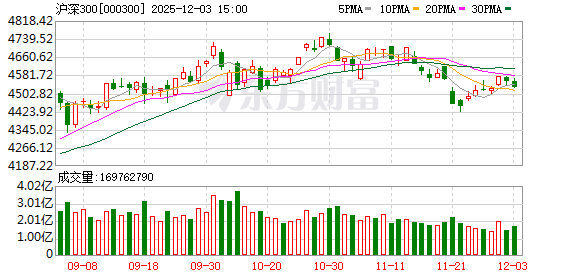
摩根士丹利:明年底沪深300指数目标4840点
Shang Hai Zheng Quan Bao· 2025-12-03 13:47
三是,随着市场对美元资产"一枝独秀论"祛魅,全球资金对中国资产配置兴趣回升。同时,国内资金开 始从定期存款向多元理财配置转变,保险和银行资管等机构开始"真金白银"入市。 在邢自强看来,全球流动性环境趋于宽松将支持风险资产表现,预计2026年上半年美联储将会有三次降 息,分别在1月、4月和6月进行,这为全球风险资产创造了有利环境。 12月2日,摩根士丹利举办线下媒体圆桌分享会,摩根士丹利中国首席经济学家邢自强和摩根士丹利中 国首席股票策略师王滢讨论了2026年中国经济和股市策略。 中国股市进入"估值结构性修复"过程 王滢认为,中国股市已经进入了"估值结构性修复"的过程。"今年A股、港股,包括全球机构投资人追 踪最为紧密的明晟中国指数,在估值上取得了非常大程度的修复。尤其港股恒生指数和明晟中国指数, 市盈率修复超30%。"她说。 摩根士丹利表示,随着市场对美元资产"一枝独秀论"祛魅,全球资金对中国资产配置兴趣回升,中国股 市重新被定义为"有成长性的市场"。该机构小幅上调了中国股票指数目标,将2026年12月沪深300指数 的目标点位定为4840点,并表示"明晟中国指数12个月前瞻市盈率在12至13倍之间是合理的" ...

台州鸟都嫌贵,年轻人爱上一百块的始祖马
新消费智库· 2025-12-03 13:05
Core Insights - The article discusses the rise of parody brands and their appeal among young consumers, particularly in the context of established luxury brands like Arc'teryx and Ralph Lauren [3][14][25]. Group 1: Brand Imitation and Consumer Behavior - The emergence of parody brands, such as "始祖马" (Ancestor Horse), reflects a trend where consumers engage with fashion in a humorous and ironic manner, often as a critique of blind consumerism [6][12]. - Young consumers are increasingly drawn to these parody products, which offer a sense of individuality and a break from traditional luxury branding [12][31]. - The popularity of these parody items is partly driven by their lower price points compared to original luxury brands, appealing to cost-sensitive consumers [28][30]. Group 2: Market Performance of Luxury Brands - Ralph Lauren reported a 17% year-over-year increase in net income, reaching $2 billion, with a notable 30% sales growth in the Chinese market [26]. - Arc'teryx's parent company, Amer Sports, saw a 30% revenue increase to $1.756 billion, with a 47% growth in the Greater China region [26][27]. - The financial success of these brands highlights the ongoing demand for high-quality products, even as parody brands gain traction [26][27]. Group 3: Consumer Trends and Preferences - The article notes a shift in consumer preferences, with younger generations prioritizing personalized expression and cultural identity over traditional brand loyalty [31][32]. - Emotional consumption is becoming a significant trend, where consumers are motivated by personal satisfaction and curiosity rather than mere brand prestige [32][33]. - The economic environment has led to a bifurcation in the market, with one segment focusing on high-quality, premium brands and another catering to price-sensitive consumers seeking value [30][31]. Group 4: Intellectual Property Concerns - The rise of parody brands raises potential intellectual property issues, as these products often mimic established brands without authorization [14][34]. - Legal actions have been taken by brands like Ralph Lauren against imitators, indicating the ongoing tension between parody and trademark infringement [38][41].


A股IPO市场稳中向好 “A+H”模式预计将持续火热
Jin Rong Shi Bao· 2025-12-03 02:24
Group 1 - The IPO market in mainland China and Hong Kong shows a positive growth trend, with A-shares and Hong Kong accounting for 16% and 33% of global IPO numbers and fundraising amounts, respectively [1] - The Hong Kong Stock Exchange achieved a fundraising amount of $36 billion, ranking first globally, while A-shares experienced moderate growth with a significant increase in average fundraising amount, rising over 50% to 1 billion yuan [1] - The characteristics of this year's IPOs include a focus on technology innovation, with the industrial, technology, and materials sectors leading in the number of IPOs, and the energy sector rising in fundraising scale [1] Group 2 - The average fundraising scale for large IPOs increased by 137% compared to last year, reaching the second-highest level in five years, with the industrial and retail consumption sectors being the main contributors [2] - The capital markets in mainland China and Hong Kong are entering a complementary development phase, with international capital flowing into Hong Kong and a shift in investor structure from being foreign-led to a dual-driven model [2] - New consumption and hard technology are identified as the dual engines driving IPO activities in Hong Kong, supported by policies like the "Special Line for Science and Technology Enterprises" [2] Group 3 - A-shares will continue to advance under the framework of "stabilizing rhythm, improving quality, and optimizing structure," with the Beijing Stock Exchange becoming a key player in IPO applications and guidance [3] - The Hong Kong IPO market is expected to maintain its momentum, but with a more stable growth pace and structural deepening, with "A+H" models and the return of Chinese concept stocks being significant sources of listings [3]
港股早评:三大指数低开 科技股普跌 汽车股继续分化
Ge Long Hui· 2025-12-03 01:49
(原标题:港股早评:三大指数低开 科技股普跌 汽车股继续分化) 特朗普暗示下任美联储主席并表示应该降息,隔夜美股收涨,中概指数走低。港股三大指数低开,恒指 跌0.44%,国指跌0.55%,恒生科技指数跌0.51%。大型科技股多数下跌但跌幅较小,腾讯、阿里巴巴、 京东跌幅在0.8%以内,汽车股继续分化,蔚来汽车、小鹏汽车继续走低,濠赌股、食品饮料股、三桶 油普跌。另外,核电股、建材水泥股、新消费概念股多数上涨,此外,新股金岩高岭新材高开超27%。 (格隆汇) ...
福建发布12条惠台政策措施,食品饮料ETF天弘(159736)昨日成交额超1500万元,机构:食品饮料行业明年主线是底部回暖复苏
2 1 Shi Ji Jing Ji Bao Dao· 2025-12-03 01:24
Group 1 - The market experienced fluctuations on December 2, with all three major indices closing lower. The Tianhong Food and Beverage ETF (159736) saw a trading volume exceeding 150 million yuan, with several constituent stocks such as Xiwang Food, Babi Food, and Yanjing Beer rising [1] - The Tianhong Food and Beverage ETF tracks the CSI Food and Beverage Index, focusing on leading stocks in the high-end and sub-high-end liquor sectors, while also covering leading stocks in beverages, dairy, condiments, and beer. The top ten weighted stocks include Moutai, Wuliangye, and Yili [1] - Fujian Province has recently formulated policies to support cross-strait integration development, including measures to assist Taiwanese residents in opening Shaxian snack stores [1] Group 2 - In November, the food and beverage index continued to recover, achieving excess returns compared to the broader market, driven by a shift in market style and a positive CPI growth rate. Within the sector, pre-processed foods, baked goods, and dairy products saw the highest increases [2] - Looking ahead to 2026, the core view is that new consumption will remain sustainable but will experience internal rotation, while traditional consumption is expected to see bottom improvement [2] - Since early 2025, the food and beverage sector has significantly underperformed the broader market due to changes in the consumption environment and market style. However, the sector's fundamentals are at a low point, and the valuation has declined, indicating no need for pessimism. The expectation for 2026 is a recovery in the food and beverage industry, with hopes for resilient consumer spending and increased business activity [2]

专访联博基金投资总监朱良:国际资本转向“结构性配置”中国资产
2 1 Shi Ji Jing Ji Bao Dao· 2025-12-02 11:17
今年11月,联博基金在中国市场推出了首只运用指数增强型策略的权益类基金——联博中证500指数增 强型证券投资基金。对此,朱良分析称,中证500指数凭借其与新质生产力相匹配的行业结构、充满活 力的民营经济成分、坚实的制造业基础以及合理的估值水平,展现出较强的配置价值。 对于未来中国市场的机遇,朱良青睐那些能够将技术优势转化为长期盈利能力和现金流创造力的硬科技 企业,受益于"反内卷"政策的行业、高股息权益资产、新消费企业也值得密切关注。 南方财经 21世纪经济报道记者吴斌 上海报道 迈向不确定性时代,中国资产备受青睐。 联博基金副总经理兼投资总监朱良近日在接受21世纪经济报道记者专访时表示,在当前低利率与高不确 定性的全球背景下,中国资产已成为国际资金进行风险分散、寻求增长新动能的重要选择之一。全球主 要投资机构提升中国仓位,标志着国际资本对中国资产的认知正在发生深刻转变,逐渐转向长期的"结 构性配置"。 中国资产价值重估方兴未艾。在朱良看来,资金需要寻找新的配置方向。在政策提振信心和资本市场制 度不断完善的双重助力下,A股市场自然成为投资者的重要选择,"存款搬家"现象也印证了A股市场正 成为资金关注的重要领域。 ...
港股 12 月投资策略:11 月的回调为 2026 年赢得确定空间
Guoxin Securities· 2025-12-02 11:07
Group 1 - The report emphasizes that the adjustment in the Hong Kong stock market in November has created space for growth in 2026, with a focus on sectors such as AI, materials, and innovative pharmaceuticals [2][64][82] - The report highlights the importance of AI in driving productivity improvements across industries, particularly in the software sector, where per capita income has increased from 750,000 to 870,000 yuan over the past five years [1][59][61] - The report notes that the "anti-involution" trend is expected to positively impact PPI recovery and overall corporate profitability, with a significant reduction in losses for struggling companies [1][55][58] Group 2 - The report suggests that the AI sector remains a key focus for 2026, driven by the need for domestic hardware production and the expectation of more AI applications being implemented [2][82] - The materials and industrial sectors are expected to benefit from the anti-involution trend, with upstream metals and certain industrial enterprises poised to gain [2][82] - The report indicates that the innovative pharmaceutical sector is stable and worth holding, with potential for growth if new business development projects are released [2][82] Group 3 - The report discusses the performance of the Hong Kong stock market in November, noting a slight adjustment of 0.2% in the Hang Seng Index, with significant sector differentiation [64][66] - It highlights that the consumer and innovative pharmaceutical sectors showed positive performance, while technology and automotive sectors faced declines [64][66] - The report mentions that the inflow of southbound funds reached 117.2 billion yuan in November, indicating strong willingness from Chinese capital to invest in Hong Kong stocks despite market downturns [75][82]