
新消费

Search documents
知名品牌退出中国,曾获比尔·盖茨投资,现在卖库存和美国进口品
Mei Ri Jing Ji Xin Wen· 2025-12-01 03:03
Core Viewpoint - Beyond Meat, known as the "first stock of plant-based meat" and previously backed by Bill Gates, has quietly closed its flagship stores on major e-commerce platforms in China, indicating a significant retreat from the market [1][19]. Company Overview - Beyond Meat was founded in 2009 and went public in 2019, experiencing a stock price surge of 163% on its debut. It has notable investors including Bill Gates and Leonardo DiCaprio [3][5]. - The company launched its first end-to-end production facility outside the U.S. in Jiaxing, Zhejiang, in 2021, aiming to cater to the Chinese market with localized products [5][10]. Market Performance - As of November 30, 2023, Beyond Meat's official flagship store on Tmall is no longer searchable, and its Pinduoduo store is also non-functional, indicating a complete withdrawal from the Chinese market [1][3]. - The company has faced declining revenues, with a drop from $419 million in 2022 to $326 million in 2024, and a cumulative loss of $864 million during the same period [10]. Product Pricing and Consumer Perception - Beyond Meat's products are priced above local alternatives, with plant-based meat products costing over 60 yuan per kilogram, comparable to domestic beef prices, which has deterred consumers [3][10]. - Consumer feedback highlights dissatisfaction with the taste and texture of plant-based meat, with many describing it as inferior to real meat [11][13]. Industry Trends - The plant-based meat sector in China has seen a decline in investment and interest since late 2021, with many startups facing financial difficulties and some brands going bankrupt [11][16]. - Despite the challenges, the market for plant-based meat in China is projected to grow, with estimates suggesting a market size of approximately $7.6 billion by 2024, potentially reaching $38.5 billion by 2033 [16].


蜜雪冰城试点卖早餐,或将复用供应链、拓展消费场景,港股消费ETF(513230)震荡攀升
Mei Ri Jing Ji Xin Wen· 2025-12-01 02:32
Group 1 - The Hong Kong stock consumer sector showed strong fluctuations, with the Hong Kong consumer ETF (513230) rising over 1% [1] - Leading stocks included Lao Pu Huang Jin, which surged nearly 5%, and Tongcheng Travel, which increased by approximately 3.5% [1] - Other notable gainers were Alibaba, Chow Tai Fook, Shenzhou International, Smoore International, and China Resources Beer, while Xiaomi Group, Miniso, Mixue Group, and Li Auto experienced declines [1] Group 2 - Mixue Ice City has introduced a "breakfast series" in select cities, including Dalian, Xi'an, Nanning, and Hangzhou, featuring products priced at 5 yuan [1] - The breakfast initiative is seen as an attempt to leverage the supply chain and expand consumption scenarios, reflecting a trend towards all-day operations in the new tea beverage and restaurant sectors [1] - This move may encourage more brands to explore category extensions and expand their operational scenarios [1] Group 3 - Zhongyou Securities remains optimistic about consumer investment opportunities, highlighting two categories: new consumption opportunities and cyclical recovery plays [2] - New consumption opportunities include sectors like trendy toys, gold and jewelry, and new tea beverages, which align with current consumer trends towards personalization and cultural export [2] - Cyclical recovery plays focus on sectors such as liquor and travel, which may benefit from ongoing consumer stimulus policies and economic recovery [2]
鹏扬基金吴西燕:在稳健与创新之间寻找平衡
Shang Hai Zheng Quan Bao· 2025-11-30 14:10
Core Viewpoint - The investment strategy should balance policy guidance and industry fundamentals, with a focus on high-end manufacturing globalization, new consumption, and innovative pharmaceuticals as long-term growth drivers [1][5]. Group 1: Consumer Market Insights - The consumer market is expected to have strong confidence and growth momentum due to policy support, but brand promotion must align with positioning to avoid blind cross-industry ventures [2]. - Brand building plays a crucial role in boosting consumer confidence and expanding domestic demand, requiring careful maintenance and alignment with appropriate channels [2]. - The sectors of "new consumption" and "emotional consumption" are viewed positively for their growth potential as policy plans continue to be implemented [2]. Group 2: Traditional Industries - Traditional industries like kitchen appliances and automotive lighting have investment value due to improved industry structure and efficiency, despite being affected by cyclical factors [2]. - The kitchen appliance sector, while growing slowly and constrained by the real estate cycle, benefits from a favorable competitive landscape leading to high return on equity (ROE) [2]. - The automotive lighting industry is experiencing growth driven by the upgrade of new energy vehicles, with increased unit value and profit margins due to early investments in the sector [3]. Group 3: Investment Strategy - The current market preference for high-growth sectors and the pressure on blue-chip stock valuations highlight the risks associated with chasing hot themes [4]. - A solution proposed is to identify long-term growth potential through in-depth research and invest when there is a perceived safety margin in stock prices [4]. - In a market environment dominated by quantitative strategies, active management investors should focus on solid companies with sustainable performance to endure long-term [4]. Group 4: Future Outlook - Three key areas are highlighted for future investment: globalization of high-end manufacturing, emerging consumer products, and innovative pharmaceuticals [5]. - High-end manufacturing is expected to gain investment value as Chinese companies enhance their global competitiveness through a complete domestic supply chain and ongoing technological upgrades [5]. - Emerging consumer products are projected to maintain a growth advantage within the overall consumer sector, presenting investment opportunities [5]. - Despite recent adjustments, the long-term logic for innovative pharmaceuticals remains strong, supported by robust internal demand and upcoming clinical data releases from representative companies [5].
一周新消费NO.337|LEGO乐高推出10366 热带水族箱;吴艳妮推出个人首饰品牌Née Hurdles
新消费智库· 2025-11-30 13:03
Core Insights - The article highlights the latest trends and product launches in the new consumption sector, showcasing innovations across various brands and categories [2][13]. Product Launches - Balabala has introduced a new line of children's shoes designed for three growth stages: pre-walking (0-9 months), walking (6-20 months), and steady walking (21-48 months), focusing on foot protection and precise fitting [6]. - Let Tea launched a new product, "Cherry Pomegranate Jasmine Tea," emphasizing health, aesthetics, and emotional value, aiming to become a benchmark for sugar-free fruit teas [6]. - Hema has released "Yellow Skin Lemon Tea," made with Guangdong's seedless yellow skin fruit, combining it with various lemon juices for a sweet and sour taste [6]. - LEGO introduced the 10366 Tropical Aquarium set, featuring vibrant colors and a playful design [6]. - Yang Zhanggui has launched "Noodle and Vegetable Egg PLUS," available in three flavors, with a large portion size of 130g [9]. - Wei Dongli has introduced "Probiotic Mineral Sparkling Water," enriched with vitamins and minerals, suitable for various consumption scenarios [9]. - Li Mountain Goat has launched two specialized food products targeting high-pressure professionals and weight management needs [9]. - The collaboration between Si Nian Foods and My Little Pony has resulted in "My Little Pony Magic Dumplings," featuring three flavors and a unique 3D design [12]. - Wang Wang has introduced a "Low GI Yogurt" for seniors, containing 2.6 billion probiotics and high dietary fiber [12]. - BODORME has launched a children's makeup line, featuring a whimsical design and plant-based moisturizing ingredients [12]. Industry Events - Pampers has launched a new ultra-small diaper specifically designed for premature infants weighing less than 500 grams, set to be available in select hospitals by 2025 [14]. - OATLY has introduced a ready-to-drink iced coffee series, including flavors like Iced Latte and Iced Caramel Macchiato, made with Arabica coffee and oat base [14]. - Fat Dong Lai has established a new trading company with a registered capital of 1 billion RMB, focusing on various retail and entertainment activities [14]. - Kiri has invited a Michelin pastry chef to collaborate on high-end dessert offerings in China [14]. - Huawei's AI emotional companion toy has sold out shortly after its launch, indicating strong consumer interest [14]. - The collaboration between Chou Bao and Zootopia 2 has resulted in a new product series, including themed snacks and merchandise [14]. - Tasting has reopened its pizza business in China, indicating a strategic shift back to its original offerings [14]. - The company Fu Gui Niao has been officially dissolved, marking the end of its operations in the footwear industry [18]. Investment Trends - Elon Musk's xAI has completed a strategic financing round of $15 billion, focusing on AI applications in scientific research [21]. - American company Lumia, specializing in health-monitoring wearables, has secured an additional $7 million in funding [21]. - Aplós, a non-alcoholic spirits brand, has raised $5 million (approximately 35.53 million RMB) to expand production and retail channels [23]. - Zhuo Yu Technology has received a strategic investment of 3.6 billion RMB from China FAW Group [23]. - "Laimu Technology," a robotic lawn care company, has completed a multi-million A+ round of financing [24]. - Perelel, a women's health supplement brand, has raised $27 million (approximately 192 million RMB) in strategic growth financing [25]. - Star Motion Era, a Tsinghua University incubated company, has completed a 1 billion RMB A+ round of financing [25]. - Hyper Shell, a consumer-grade exoskeleton brand, has raised a total of $70 million in Pre-B and B rounds [25]. - Danish biotech company Chromologics has completed a €7 million (approximately 57.22 million RMB) financing round [27]. - Ling Universe has secured 200 million RMB in Pre-A round financing, focusing on companion robots for home use [27]. Food Industry Developments - Haotemai has entered the coffee market, offering various freshly brewed coffee products in select stores [28]. - Starbucks in Shenzhen has launched a new breakfast series across over 300 locations, featuring cost-effective meal options [31]. - Tyson Foods announced the closure of a major beef plant in Nebraska, affecting approximately 3,200 employees [31]. - The upgraded egg tofu from Xinqi has been launched in Sam's Club, featuring improved ingredients and packaging [33]. - Pepsi has announced a limited online release of its probiotic cola for Black Friday, with plans for a full launch next year [36]. - Blue Bottle Coffee has opened its first store in Hangzhou, offering exclusive products and a unique design inspired by traditional Jiangnan architecture [37].

纺织服装行业周报:本周延江股价创阶段性新高,持续推荐无纺布产业链-20251130
Shenwan Hongyuan Securities· 2025-11-30 12:42
Investment Rating - The textile and apparel industry is rated as "Neutral" [2] Core Views - The textile and apparel sector underperformed the market, with the SW textile and apparel index rising by 2.8% from November 24 to November 28, lagging behind the SW All A index by 0.2 percentage points [3][4] - Retail sales for clothing, shoes, and textiles reached 1,205.3 billion yuan from January to October, showing a year-on-year growth of 3.5% [3][21] - Textile and apparel exports in October amounted to 22.26 billion USD, down 12.6% year-on-year, with specific declines in textile yarns and fabrics by 9.0% and clothing by 16.0% [3][25] - Cotton prices increased slightly, with the national cotton price B index at 14,858 yuan/ton, up 0.8% [3][32] - Australian wool prices showed significant increases, with the index at 978 cents/kg, up 32.0% year-on-year [3][34] Summary by Sections Industry Performance - The textile and apparel sector's performance was weaker than the market, with the SW textile and apparel index increasing by 2.8%, while the SW apparel and home textiles index rose by 3.0%, and the SW textile manufacturing index increased by 2.7% [3][4] Recent Industry Data - Retail sales for clothing, shoes, and textiles totaled 1,205.3 billion yuan from January to October, reflecting a 3.5% year-on-year increase [3][21] - In October, textile and apparel exports were 22.26 billion USD, a decline of 12.6% year-on-year, with textile yarns and fabrics down 9.0% and clothing down 16.0% [3][25] - Cotton prices rose slightly, with the national cotton price B index at 14,858 yuan/ton, up 0.8% [3][32] - Australian wool prices increased, with the index at 978 cents/kg, up 32.0% year-on-year [3][34] Sector Insights - The report highlights the strong performance of specific companies within the non-woven fabric industry, recommending continued investment in the entire non-woven fabric supply chain [3][8] - The report notes that the outdoor sports segment is expected to see growth, with companies like Bosideng and Anta being highlighted for their potential [3][9] - The report emphasizes the importance of new consumer trends and the potential for recovery in domestic demand in 2026 [3][10]
曾博伟:旅游的价值不止于旅游人次和收入本身
Xin Jing Bao· 2025-11-30 11:41
Group 1 - The new consumption wave is reshaping daily life, transcending mere shopping to encompass lifestyle, value recognition, and emotional connections, responding to people's deep yearning for a "good life" [1] - The "New Consumption and Good Life" salon featured discussions on consumption trends, industry transformations, and the concept of a good life, with insights from various sectors including tourism, culture, beauty, and investment [1] - From a tourism consumption perspective, the value of tourism extends beyond visitor numbers and revenue; it serves as a lever for adjusting and upgrading consumption structures [2] Group 2 - The core contradiction and essence of "new consumption and good life" align with the exploration of social hierarchy and taste in the book "Style: Social Class and Taste," highlighting that different social classes define "taste" differently [2] - The current consumption landscape has shifted from a "one-size-fits-all" approach to a "personalized" model, with emerging trends in niche markets such as pet economy and pet-friendly tourism gaining traction [2] - Tourism can act as an entry point for deep consumption, where initial shallow experiences can lead to deeper engagement and ongoing spending in related areas like equipment and training [3] Group 3 - The core six elements of tourism remain unchanged despite the influence of AI; the technology enhances the ability to meet consumers' personalized needs but must ultimately serve to improve the tourism experience [3] - The true demand upgrade is reflected in changes in tourism consumption structures and innovations in experience methods within specific fields such as pet-friendly tourism and wellness travel [3]
中泰国际首席经济学家李迅雷:加大传统消费不现实,十年前中国白酒消费量是1500万吨,现在只有400万吨
Xin Lang Zheng Quan· 2025-11-30 05:58
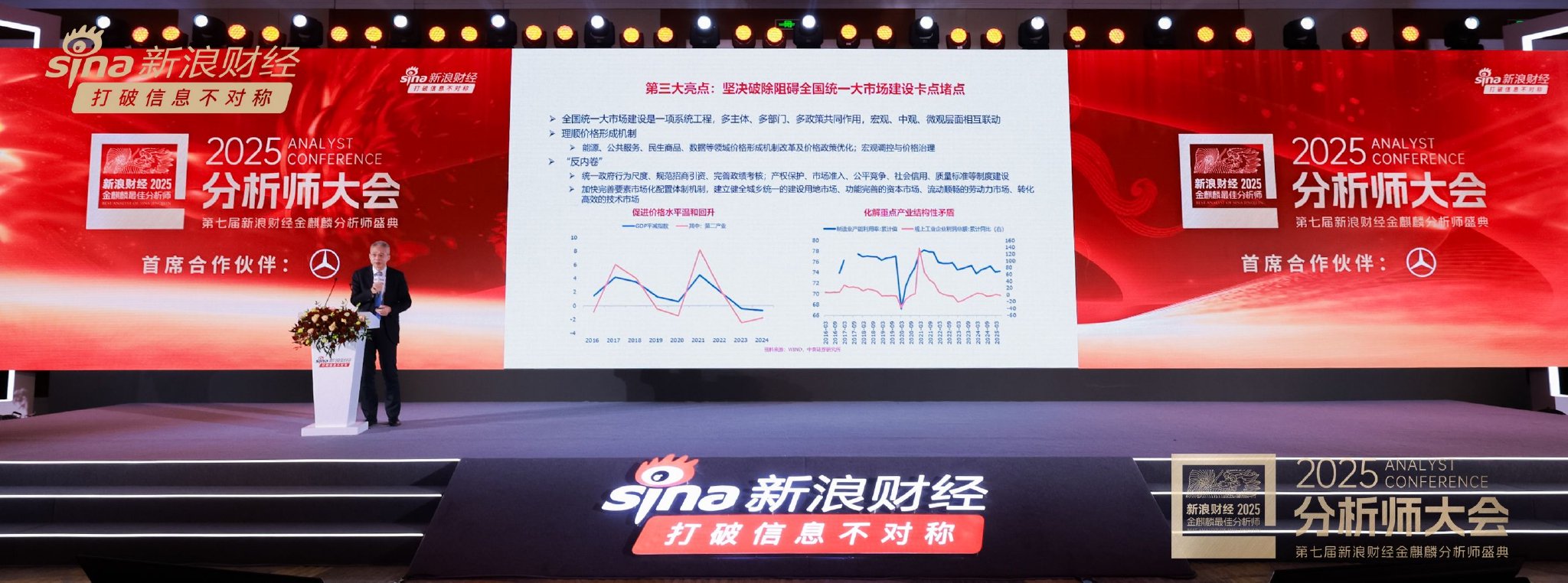
Core Insights - The 2025 Analyst Conference was held on November 28, gathering experts, scholars, and leaders from various financial sectors to explore investment opportunities through economic cycles [1] - Li Xunlei, Chief Economist at Zhongtai International, emphasized the shift from traditional consumption to new consumption patterns, indicating that boosting traditional sectors may not be realistic [1] Group 1: Consumption Trends - Li Xunlei highlighted that traditional consumption, such as liquor, has significantly declined, with China's liquor consumption dropping from 15 million tons a decade ago to only 4 million tons currently [1]
昔日巨头黛安芬退场,本土内衣品牌“接棒”主舞台
Xin Jing Bao· 2025-11-28 13:39
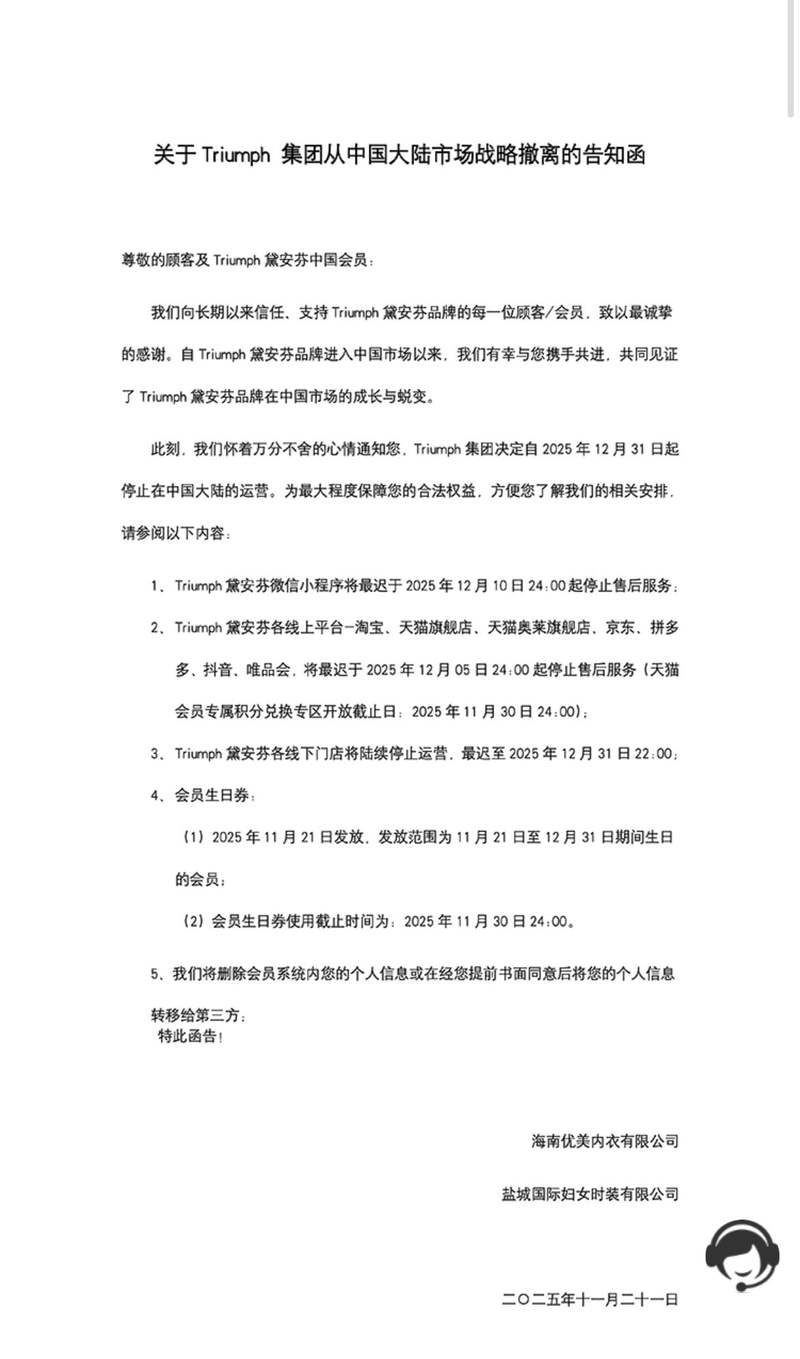
Core Insights - Triumph, a German lingerie brand, announced its exit from the Chinese mainland market by the end of 2025, marking the end of the "underwire era" in the country [5][6][11] - The shift in consumer preferences towards comfort and local brands has led to a decline in Triumph's market presence, with 78.4% of consumers now opting for wire-free bras [6][10] - The rise of domestic brands like Ubras and Jiao Nai has capitalized on the changing consumer trends, achieving significant market share and sales growth [10][12] Company Overview - Triumph International Group, established in 1886, was one of the first international lingerie brands to localize production in China, with a peak of over 1,000 stores [7][11] - The brand was once perceived as a luxury in the Chinese market, but its relevance has diminished as consumer preferences shifted towards comfort and affordability [8][9] Market Dynamics - The lingerie market in China is undergoing a transformation, with local brands capturing 90% of the top 20 sales during the recent Double 11 shopping festival [10][12] - The market is characterized by a fragmented landscape, with the top five brands holding only 6% market concentration, indicating a highly competitive environment [15] Consumer Behavior - Younger consumers are increasingly favoring local brands over international ones, driven by a desire for comfort and affordability [8][9] - The traditional focus on shaping and underwire has been replaced by a demand for comfort, with many consumers now preferring wire-free and sports-style lingerie [6][10] Industry Trends - The lingerie industry is witnessing a bifurcation, with new brands rapidly emerging while traditional brands like Triumph face declining sales and market share [11][12] - The rise of "white label" products poses a significant challenge to both established and new brands, as price competition intensifies in the fragmented market [15]
从“中老年专属”到覆盖3.5亿潜在用户,「新一代鱼油」如何引领40%年复合增长的250亿内服市场?
新消费智库· 2025-11-28 13:04
Core Viewpoint - The article discusses the evolving landscape of health food products, particularly focusing on dietary supplements like fish oil, highlighting their growing importance in the context of an aging population and increased health awareness among consumers [2][10][13]. Group 1: Characteristics of Health Food Products - Health food products, including dietary supplements, are often complex and exist in a gray area between food and medicine, leading to consumer confusion and potential exploitation [2]. - These products are generally driven by raw material research and innovation, with a focus on specific ingredients such as traditional Chinese medicinal foods and vitamins [3]. - The typical forms of these products include tablets, capsules, and liquid forms, with varying compositions of single or mixed ingredients [9]. Group 2: Focus on Fish Oil - Fish oil is identified as a significant category within health food products, experiencing a resurgence due to its perceived health benefits, particularly for eye health and among pet owners [10][11]. - The fish oil market is influenced by the upcoming IPO of leading brands like Shandong Yuwang Technology, which signals market maturity and potential consolidation opportunities [11]. - Social media marketing strategies, exemplified by brands like WHC, are reshaping consumer engagement and expanding market reach [12]. Group 3: Market Trends and Consumer Behavior - The COVID-19 pandemic has heightened health awareness, leading to a surge in demand for health products, including fish oil, as consumers shift from treatment-focused to prevention-oriented health practices [19][20]. - The aging population in China is driving demand for products that support chronic disease management, particularly cardiovascular health, where fish oil is recognized for its Omega-3 content [23]. - New consumer segments, particularly high-income individuals, are emerging, seeking premium health products that align with their health-conscious lifestyles [31]. Group 4: Challenges and Opportunities - The health food industry faces a trust crisis, with consumers struggling to verify the authenticity of health claims and certifications [29]. - Overemphasis on product efficacy without substantiated evidence contributes to skepticism among consumers, necessitating a shift towards more transparent and factual marketing approaches [30]. - The industry is witnessing a rise in scientifically literate consumers who demand higher quality and more innovative health products, pushing brands to differentiate beyond mere purity claims [31][34]. Group 5: Future Directions - There is a need for brands to innovate by creating products that cater to specific consumer scenarios, such as gifting or targeting niche demographics like children and elderly men [37]. - The focus should shift from selling raw materials to offering comprehensive solutions that include knowledge and services related to health management [40]. - Building trust through effective visual branding and transparent communication is essential for consumer engagement in the health food sector [34].

新消费行业框架分析:星星之火,灿若星辰
China Post Securities· 2025-11-28 12:45
Investment Rating - The report maintains a strong buy rating for the new consumption industry [3] Core Insights - New consumption is characterized by new demand from emerging consumer groups like Generation Z and a shift from leverage-driven consumption to income-driven consumption among older demographics [5][17] - The supply side benefits from China's robust manufacturing capabilities and the internet's ability to reshape business models and efficiency [5][17] - The report highlights two main investment opportunities: aggressive new consumption sectors such as trendy toys and gold jewelry, and defensive cyclical sectors like liquor and travel [5][4] Summary by Sections New Consumption: What is New Consumption? - New consumption has gained traction in recent years, initially a term from the primary market, now widely recognized [17] - It encompasses both new demand from younger consumers and a shift in older consumers' preferences towards more rational spending [17][21] New Demand: Stars Gather to Form Light - Emotional consumption and the rise of national trends are significant drivers, with luxury attributes associated with products [46] - The report identifies key sectors: IP toys, gold jewelry, and new tea drinks, which align with current consumer trends [5][4] New Supply: Old Trees Sprout New Buds - The report emphasizes that industries with easier pathways develop first, while more challenging sectors follow as technology and information improve [33] - It discusses the efficiency gains in retail and service sectors through standardization and technological advancements [33] Investment Recommendations - The report suggests focusing on two types of opportunities: aggressive new consumption sectors (e.g., trendy toys, gold jewelry) and defensive cyclical sectors (e.g., liquor, travel) [5][4] - Specific companies to watch include Pop Mart, Mijia, and various tea brands [5][4] Emotional Consumption and National Trends - Generation Z's emotional consumption is highlighted, with a significant portion willing to pay for emotional value [21][23] - The report notes the increasing acceptance of Chinese brands among younger consumers, contrasting with older generations' preferences [21][22] Gold Jewelry Market - The gold jewelry market is projected to grow significantly, with ancient gold jewelry gaining popularity due to its cultural significance [86][87] - The market size for ancient gold jewelry is expected to reach 4,214 billion by 2028, with a compound annual growth rate of 21.8% [86][87] IP Toy Market - The report outlines the rapid growth of the IP toy market, with a projected market size of 1,741 billion by 2024, reflecting a compound annual growth rate of 13.6% [69][70] - The emotional value associated with IP toys is a key driver of consumer interest and market expansion [78][79]

