积极财政政策

Search documents
2026年积极财政政策怎么干,扩内需、稳楼市、化解地方债务
2 1 Shi Ji Jing Ji Bao Dao· 2025-12-05 03:30
今年更加积极的财政政策内涵丰富,赤字率提高到4%左右,对应赤字规模为5.66万亿元;发行超长期 特别国债1.3万亿元,支持"两重""两新"工作;发行超长期特别国债5000亿元,支持国有大型商业银行 补充资本;安排新增地方专项债4.4万亿元,用于投资建设、土地收储、消化地方拖欠企业账款等;四 季度安排使用5000亿元地方债限额,用于化解存量债务和投资建设等。 2026年作为"十五五"的开局之年,部分机构预判2026年经济增长目标仍在5%左右。考虑到当前内需恢 复偏弱、房地产市场在深度调整进程中、外部不确定性较大等,2026年要推动释放潜在经济增速,须实 施更加积极的宏观政策,尤其需要更加积极的财政政策加以支持。 支持全方位扩大内需 财政部数据显示,1—10月份,全国一般公共预算收入18.65万亿元,同比增长0.8%。其中,税收收入 15.34万亿元,同比增长1.7%。1—10月份,全国一般公共预算支出22.58万亿元,同比增长2%。 与此同时,1—10月份,全国政府性基金预算收入3.45万亿元,同比下降2.8%。其中,国有土地使用权 出让收入约2.5万亿元,同比下降7.4%。1—10月份,全国政府性基金支出8. ...


湖北“十五五”规划建议:深化国有“三资”管理改革 显著提升“三资”配置效率和使用效益
Zheng Quan Shi Bao Wang· 2025-12-05 02:02
Core Viewpoint - The proposal by the Hubei Provincial Committee emphasizes the implementation of proactive fiscal policies and the enhancement of fiscal sustainability through improved management and resource allocation [1] Group 1: Fiscal Policy and Management - The proposal calls for the strengthening of fiscal scientific management to enhance sustainability [1] - It highlights the need for better coordination of fiscal resources and the reform of state-owned assets management [1] - The focus is on optimizing both existing and new resources while ensuring regulatory improvements to boost efficiency and effectiveness in the allocation and use of state-owned assets [1] Group 2: State-Owned Enterprises and Economic Development - The document stresses the importance of adhering to the principle of "two unwavering" to promote complementary advantages among various ownership economies [1] - It advocates for deepening the reform of state-owned enterprises to enhance their core functions and drive growth [1] - The proposal encourages collaboration between central and local governments to support the high-quality development of central enterprises in Hubei [1]
南财早新闻|摩尔线程今日登陆A股,沐曦股份开启申购
2 1 Shi Ji Jing Ji Bao Dao· 2025-12-04 23:21
摩尔线程今日正式登陆科创板,自上市之日起纳入科创成长层。摩尔线程此次上市募资80亿元,将投向 公司新一代自主可控的AI训推一体芯片、图形芯片、AI SoC芯片等三大核心研发项目。今年6月出炉的 科创板"1+6"政策体系,为更多技术突破型、暂未盈利的"硬科技"企业开辟了上市通道。 同日,另一家国产GPU公司沐曦股份将开启申购,发行价格为104.66元/股,对应的2024年摊薄后静态 市销率为56.35倍。按此发行价格,预计上市时市值约为418.74亿元。 1、商务部新闻发言人4日表示,中国政府依法依规开展稀土相关物项出口管制工作。只要是用于民用用 途的、合规的出口申请,中国政府都及时予以了批准。 2、商务部新闻发言人4日就欧盟终止诉中国世贸争端案件答记者问时表示,欧方决定终止案件审理是正 确的选择。 3、针对有媒体报道称,日本首相高市早苗3日表示"理解和尊重"中国政府关于"台湾是中国领土不可分 割的一部分"的立场,外交部发言人4日回应:有关报道不准确。高市早苗用"立场没有变化"来敷衍、搪 塞,中方对此不能接受。 4、市场监管总局发布实施外卖平台推荐性国家标准《外卖平台服务管理基本要求》,推动解决"幽灵外 卖", ...

2026年积极财政政策怎么干?扩内需、稳楼市、化解地方债务
2 1 Shi Ji Jing Ji Bao Dao· 2025-12-04 12:44
Group 1: Economic Growth and Fiscal Policy - China's economy is expected to grow by around 5% this year, supported by more proactive fiscal policies, with a deficit rate increased to about 4% and a corresponding deficit scale of 5.66 trillion yuan [1] - The issuance of special long-term bonds totaling 1.3 trillion yuan aims to support key projects in new urbanization and major infrastructure, which will help expand effective investment [3] - The government plans to issue an additional 4.4 trillion yuan in local special bonds for investment construction and debt resolution, with 500 billion yuan allocated for debt management in the fourth quarter [1][2] Group 2: Budget Revenue and Expenditure - From January to October, the national general public budget revenue reached 18.65 trillion yuan, a year-on-year increase of 0.8%, while expenditure was 22.58 trillion yuan, up 2% [2] - Government fund budget revenue decreased by 2.8% to 3.45 trillion yuan, with land transfer income dropping by 7.4% to approximately 2.5 trillion yuan [2] - Despite low growth in fiscal revenue, government spending remains positive, driven by the accelerated use of local special bonds and long-term bonds [2] Group 3: Investment and Consumption Trends - Social retail sales grew by 4.3% year-on-year from January to October, indicating cautious consumer spending [5] - Fixed asset investment saw a slight decline of 0.1%, reflecting insufficient investment demand [5] - The government aims to enhance consumer spending and investment through fiscal policies that increase disposable income and social security levels [5] Group 4: Real Estate Market and Debt Management - The real estate market's performance is crucial for stabilizing local fiscal revenue, with land sales income at 2.5 trillion yuan for the first ten months [7] - The government is implementing measures to stabilize the real estate market, including using special bonds to acquire idle land and exploring the use of funds for purchasing unsold properties [8] - Debt management strategies include issuing bonds to replace hidden debts and addressing overdue payments to businesses, with a total of approximately 3.5 trillion yuan allocated for debt resolution [9][10]

前三季度政府债供给创高峰,化债加快推进
Lian He Zi Xin· 2025-12-03 11:00
1. Report Industry Investment Rating No relevant information provided. 2. Core Viewpoints of the Report - In the first three quarters of 2025, the issuance scale and net financing of local government bonds reached a record high for the same period, with the 2 - trillion - yuan implicit debt replacement nearing completion. The fourth - quarter government bond supply pressure is expected to decline, and the incremental fiscal policy will maintain its previous positive tone, with ample room for future action. The bond market interest rate is expected to fluctuate downward within a certain range, and efforts will continue to be made to resolve debts while promoting development and build a long - term government debt management mechanism [2][32][34]. 3. Summary According to the Directory 3.1 Local Government Bond - Related Policy Review - Fiscal policy: A more active fiscal policy is implemented, with a larger - scale government bond issuance plan. The fiscal deficit rate is increased to about 4%, and the deficit scale is 5.66 trillion yuan. The planned issuance of ultra - long - term special treasury bonds is 1.3 trillion yuan, and special treasury bonds of 500 billion yuan are to support state - owned banks in replenishing core tier - one capital. The new local government special bond quota is 4.4 trillion yuan. The government also promotes the early issuance and use of bonds and guides and drives social capital [4][5][6]. - Debt replacement: The implicit debt replacement policy is accelerated, with a 6 - trillion - yuan local government debt quota approved to replace the stock implicit debt from 2024 - 2026, 2 trillion yuan per year. Additionally, 80 billion yuan is allocated from new local government special bonds annually for five consecutive years for debt resolution. The debt - risk - high area list is dynamically adjusted [7][8]. - Debt management: The local debt monitoring system and government debt risk indicator system are improved, and the special bond management mechanism is optimized. Penalties for illegal debt - raising and false debt - resolution are strengthened, and the reform and transformation of local government financing platforms are promoted [9]. 3.2 Review of the Local Government Bond Market in the First Three Quarters of 2025 - **Issuance overview**: In the first three quarters of 2025, 1,816 local government bonds were issued, totaling 8.53 trillion yuan, a 27.60% increase year - on - year. Special bonds accounted for 75.96% of new issuances. New bonds were issued at 4.35 trillion yuan, and refinancing bonds at 4.18 trillion yuan, with 1.99 trillion yuan of special refinancing special bonds for implicit debt replacement. The net financing was 6.15 trillion yuan, a 54.24% increase. The issuance of land reserve special bonds accelerated in Q3. The issuance of bonds with a term of 10 years or more increased, and the weighted average issuance term was 15.63 years. Economically active regions and "self - review and self - issuance" pilot areas were the main issuers of new special bonds, while key provinces mainly issued refinancing bonds [13][19][20]. - **Interest rate and spread analysis**: In Q3 2025, the average issuance interest rate of local government bonds rebounded due to multiple factors. The average issuance interest rates in Q1, Q2, and Q3 were 1.94%, 1.85%, and 2.01% respectively. The spread widened in the first three quarters of 2025, and there were significant differences in the spread trends among provinces [22][23]. - **Investment areas of local government special bonds**: In the first three quarters of 2025, infrastructure was the main focus of special bond funds. The top three investment areas were urban infrastructure, transportation infrastructure construction, and urban - rural development, accounting for 51.95% of the total. Land reserve special bonds for idle land recovery projects restarted, with an issuance amount accounting for 7.01% [29]. 3.3 Future Outlook for Local Government Bonds - **Issuance outlook**: In the fourth quarter, the government bond issuance will enter the final stage, with reduced supply pressure. The new local government debt quota for 2026 is expected to be issued more quickly. The planned issuance of local government bonds in Q4 is 1.26 trillion yuan, including 730 billion yuan of new special bonds [32]. - **Fiscal policy outlook**: The fiscal policy will maintain its previous positive tone in Q4, with funds tilted towards large economic provinces. The government will strengthen the supervision of relevant funds and project lifecycle management [34]. - **Interest rate outlook**: The bond market interest rate is expected to fluctuate downward within a certain range, affected by multiple factors such as monetary policy, market sentiment, and policy changes [35]. - **Debt management outlook**: The principle of resolving debts while promoting development will be adhered to, and efforts will be made to build a long - term government debt management mechanism. The government will continue to implement a package of debt - resolution measures, strengthen debt management, and improve the performance of bond fund use [36][37].
日本股市狂泻,债务远超警戒线,高市嚣张喊话全球,日方急求访华
Sou Hu Cai Jing· 2025-12-03 08:07
Group 1 - The Japanese stock market has experienced a significant decline, with the Nikkei index dropping nearly 1000 points, marking its largest recent drop and briefly falling below the critical 50000 points level, influenced by the Bank of Japan's Governor Ueda Kazuo's announcement of potential interest rate hikes [1] - The Japanese bond market has also seen extreme volatility, with the 10-year government bond yield soaring and bond prices plummeting, resulting in a dual decline in both the stock and bond markets [1] - The yen's exchange rate has fluctuated dramatically, with the dollar surpassing 155 yen, increasing pressure on Japanese export companies [1] Group 2 - Japan's economy is facing multiple challenges, including an aging population, rising prices, and high government debt, placing it at a historical crossroads [3] - If Japan cannot escape its deflationary predicament and achieve industrial upgrades, it may enter a new normal characterized by low growth, high debt, and gradual interest rate increases, failing to fundamentally improve economic growth [3] - Prime Minister Kishi Nobuo's insistence on promoting active fiscal policies, which are inconsistent with the Bank of Japan's policies, may send misleading signals to external investors and affect Japan's economic stability [3] Group 3 - Prime Minister Kishi Nobuo's recent statements urging global investment in Japan, including a strong call for countries to invest, are seen as inappropriate and unrealistic given the current economic climate [6] - International capital is driven by profit motives, and investors are unlikely to invest in Japan unless they perceive higher returns, especially amid rising tensions between China and Japan regarding Taiwan [6] - The Japanese political and business sectors are aware of the need for improved relations with China, as evidenced by requests from leaders for visits to China, which are hindered by Kishi's remarks on Taiwan [7]

财政政策持续用力更加强劲
Sou Hu Cai Jing· 2025-12-02 23:09
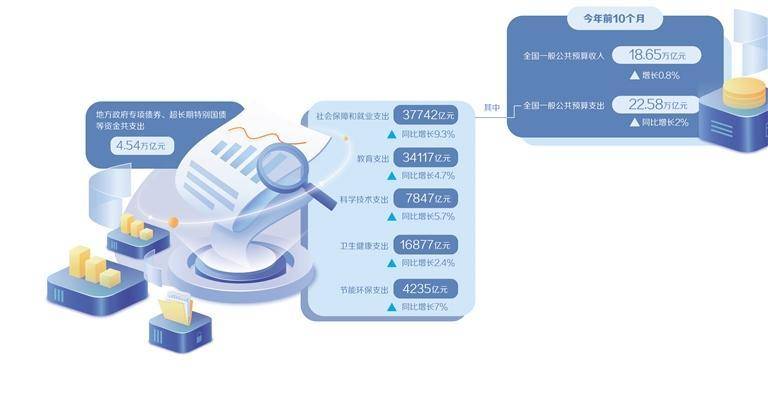
支持实施提振消费专项行动,促进扩大有效投资,持续增加民生投入……今年以来,我国靠前实施更加积极 的财政政策,打好政策"组合拳",有力支撑经济回升向好。下一步,将进一步发挥积极财政政策作用,用好 政策空间、保持支出强度,助力"十五五"开好局、起好步。 有力促消费扩投资 各省份地方政府债券发行工作在年末陆续迎来收官。近日,江苏省成功发行2025年第十批政府债券635亿元。 至此,2025年度江苏省政府债券发行工作圆满结束,全年共发行地方政府债券7392亿元。福建省全年累计发 行地方政府债券3344.49亿元,切实发挥对扩投资、稳增长的积极作用。 统计显示,今年前10个月,全国一般公共预算收入18.65万亿元,增长0.8%,累计增幅稳步回升;全国一般公 共预算支出22.58万亿元,同比增长2%,重点领域支出得到有力保障。各级财政持续加快债券资金使用,地 方政府专项债券、超长期特别国债等资金共支出4.54万亿元,向经济发展注入强劲动力。 近期,各地陆续开始发放育儿补贴。按照今年7月发布的国家育儿补贴制度实施方案,自2025年1月1日起,对 3周岁以下婴幼儿按每孩每年3600元的国家基础标准发放育儿补贴,中央财政按比例 ...
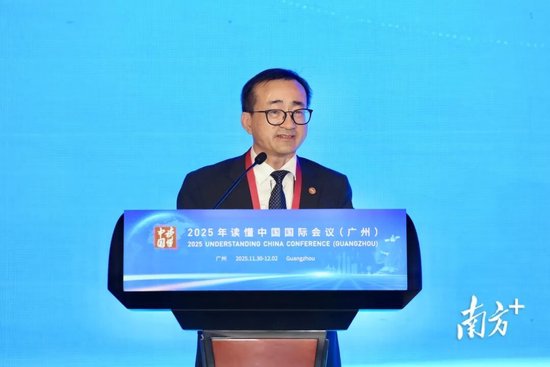
刘元春最新发言:世界经济的弹性与韧性超乎预测,这是为什么呢?
Xin Lang Cai Jing· 2025-12-02 13:52
Core Viewpoint - The resilience and elasticity of the global economy are stronger than expected, with China playing a crucial role in economic globalization [3][4][5]. Economic Growth Outlook - Initial predictions indicated a decline in global economic growth by 0.5 percentage points, from 3.3% to approximately 2.8%, but the actual decline has been less severe [9]. - Global trade growth was expected to fall below GDP growth due to U.S. tariff policies, with a projected drop of 1.8 percentage points; however, trade data from January to October shows a growth rate of 3.6%, surpassing last year's 3.5% [9][10]. - Inflation expectations were for an average price increase of 0.2% to 0.3%, but prices have instead decreased by 0.1 percentage points, indicating strong resilience in global supply chains [4][9]. Trade Dynamics - Despite a significant drop in trade with the U.S. (estimated at around 20%), China's overall trade with the world has increased by 6.2%, with the share of global trade rising from 12.8% in 2020 to approximately 15% this year [10][11]. - The growth in bilateral trade with ASEAN, Africa, and Latin America has been exceptional, showcasing China's ability to create new opportunities in global supply chains and technology environments [10]. Fiscal and Monetary Policies - Many countries have adopted proactive fiscal and monetary policies to counteract U.S. trade policies, with global public debt reaching 95% of GDP, an increase of 2.3 percentage points from previous years [5][10]. - Germany's trade deficit has reached 300 million euros, exceeding the EU's 3% limit, highlighting the widespread fiscal challenges faced globally [10]. Technological Innovation - Significant growth in AI investment, particularly in the U.S., is noted, with a projected increase of nearly 90% this year following an 18% increase last year [5][10]. - Temporary factors such as trade and investment front-loading and inventory management strategies may introduce certain risks [10]. Future Economic Conditions - Key factors for future economic development include potential new proposals under the Trump 2.0 tariff policy, the sustained competitive advantage from China's technological innovations, and whether new technologies can translate into short-term economic growth [11][12]. - The ability of countries to implement structural reforms and effectively address fiscal deficits in a disordered environment is also critical for future economic trends [12].
深度专题|2026年:财政货币政策展望
申万宏源宏观· 2025-12-02 07:33
Group 1: Policy Review for 2025 - Fiscal policy shows increased strength, with a historical high financing scale of 14.36 trillion yuan, accounting for 10.2% of GDP [1][8] - General fiscal expenditure grew by 7.9% year-on-year in the first three quarters of 2025, indicating a high expenditure intensity [11][12] - The government adopted a proactive approach with a front-loaded expenditure rhythm, reflecting a clear intention to support the economy [14][16] Group 2: Monetary Policy Review for 2025 - Monetary policy returned to a "moderately loose" tone, maintaining liquidity at a reasonable level with low funding rates [23][28] - The central bank's interest rate adjustments were more cautious, with only one reduction of 10 basis points in 2025 compared to more significant cuts in 2024 [28][32] - Credit issuance was front-loaded, with new loans in the first quarter reaching 9.78 trillion yuan, accounting for 66.3% of the total for the first three quarters [32] Group 3: Fiscal Policy Outlook for 2026 - Fiscal policy is expected to become more proactive in 2026, focusing on economic growth, structural transformation, and comprehensive reform [61][62] - The deficit rate is anticipated to remain around 4%, with special bonds and new special debt slightly expanding compared to 2025 [61][63] - The expenditure structure will prioritize investments in social welfare and new infrastructure, while also addressing debt resolution [61][70] Group 4: Monetary Policy Outlook for 2026 - Monetary policy is likely to maintain a "moderately loose" stance, focusing on liquidity support and precise policy implementation [4][6] - The social financing scale is expected to increase, with M1 growth slightly rebounding due to fiscal input [4][6] - The central bank may implement one interest rate cut of approximately 10 basis points to ensure liquidity remains ample [4][6] Group 5: Policy Coordination and Structural Reforms - The central bank's operations in government bond trading reflect a flexible and prudent policy approach, with a resumption of operations in October 2025 [42][45] - Fiscal injections into commercial banks are aimed at stabilizing their capital adequacy ratios and facilitating monetary policy transmission [49][51] - Structural reforms will focus on macro tax burdens, central-local relations, and the sustainability of the social security system [3][61]

蓝佛安:发挥积极财政政策作用|政策与监管
清华金融评论· 2025-12-02 01:55
Core Viewpoint - The article emphasizes the importance of implementing proactive fiscal policies to support China's modernization and national rejuvenation, highlighting the need for reform and innovation in fiscal management [1][2]. Summary by Sections Implementation of Proactive Fiscal Policies - The article outlines the necessity of proactive fiscal policies as a key tool for macroeconomic regulation, aiming to stabilize total demand and optimize economic structure through various fiscal instruments [2][3]. Achievements of Proactive Fiscal Policies - Significant outcomes from proactive fiscal policies include an average economic growth rate of 5.5% from 2021 to 2024 and the creation of over 12 million urban jobs annually. Public budget expenditures are projected to exceed 136 trillion yuan during the "14th Five-Year Plan" period, supporting major national strategies [4]. Theoretical Insights on Fiscal Policy - The article discusses the evolution of fiscal policy understanding, emphasizing the balance between counter-cyclical and cross-cyclical adjustments, and the integration of supply-side and demand-side management to foster a dynamic equilibrium in the economy [5]. Challenges and Strategic Focus - The article identifies complex domestic and international challenges, including geopolitical tensions and economic structural changes, necessitating a robust fiscal response to enhance policy effectiveness and support high-quality development [7]. Key Principles for Fiscal Management - The article outlines several principles for effective fiscal management, including: - Upholding the Party's leadership in fiscal matters [7]. - Prioritizing public welfare and investing in human resources [8]. - Balancing market efficiency with government intervention [8]. - Focusing on domestic economic circulation and addressing structural barriers [9]. - Ensuring safety and sustainability in fiscal policies [9]. Future Directions for Fiscal Policy - The article calls for comprehensive strategies to expand domestic demand, support technological independence, improve living standards, and promote regional development, while also enhancing fiscal governance and risk management [10][11][12][13].