
关税风险

Search documents
燃料油日报:宏观风险显现,市场波动增加-20251014
Hua Tai Qi Huo· 2025-10-14 05:37
1. Report Industry Investment Rating - High-sulfur fuel oil: Cautiously bearish, with a short-term focus on waiting and observing [2] - Low-sulfur fuel oil: Cautiously bearish, with a short-term focus on waiting and observing [2] - Cross-variety: None [2] - Cross-period: None [2] - Spot-futures: None [2] - Options: None [2] 2. Core View of the Report - The main contract of SHFE fuel oil futures closed down 2.35% at 2,737 yuan/ton, and the main contract of INE low-sulfur fuel oil futures closed down 3% at 3,232 yuan/ton The recent continuous decline in crude oil prices has led to a downward trend in the energy sector, and the FU and LU contracts are operating weakly [1] - During the China-US tariff negotiation window, oil prices may be affected by various news, and volatility may increase significantly [1] - The fundamentals of fuel oil are currently acceptable, with tightened Middle East supply and improved refinery demand boosting the market However, based on the current valuation and supply-demand situation, the upward drive and space are still limited, and new variables are needed for catalysis [1] - In the case of low-sulfur fuel oil, the shutdown of the RFCC units at the Dangote and Pengerang refineries has led to an increase in local supply, with September shipments reaching 500,000 tons, which has suppressed the spot market According to the latest news from IIR, the Dangote refinery's units may restart on October 14, and if they operate smoothly, the refinery's low-sulfur fuel oil production will decline again, alleviating local supply pressure [1] - Against the backdrop of increasing tariff risks, shipping and marine fuel demand also face potential pressure Compared with high-sulfur fuel oil, the downstream demand for low-sulfur fuel oil is more concentrated and may be more sensitive [1] 3. Summary by Relevant Catalog Market Analysis - The main contract of SHFE fuel oil futures closed down 2.35% at 2,737 yuan/ton, and the main contract of INE low-sulfur fuel oil futures closed down 3% at 3,232 yuan/ton [1] - The recent continuous decline in crude oil prices has led to a downward trend in the energy sector, and the FU and LU contracts are operating weakly [1] - During the China-US tariff negotiation window, oil prices may be affected by various news, and volatility may increase significantly [1] - The fundamentals of fuel oil are currently acceptable, with tightened Middle East supply and improved refinery demand boosting the market However, based on the current valuation and supply-demand situation, the upward drive and space are still limited, and new variables are needed for catalysis [1] - In the case of low-sulfur fuel oil, the shutdown of the RFCC units at the Dangote and Pengerang refineries has led to an increase in local supply, with September shipments reaching 500,000 tons, which has suppressed the spot market According to the latest news from IIR, the Dangote refinery's units may restart on October 14, and if they operate smoothly, the refinery's low-sulfur fuel oil production will decline again, alleviating local supply pressure [1] - Against the backdrop of increasing tariff risks, shipping and marine fuel demand also face potential pressure Compared with high-sulfur fuel oil, the downstream demand for low-sulfur fuel oil is more concentrated and may be more sensitive [1] Strategy - High-sulfur: Cautiously bearish, with a short-term focus on waiting and observing [2] - Low-sulfur: Cautiously bearish, with a short-term focus on waiting and observing [2] - Cross-variety: None [2] - Cross-period: None [2] - Spot-futures: None [2] - Options: None [2]
一个月涨超130元 有品牌金价突破1210元/克
Sou Hu Cai Jing· 2025-10-14 04:41
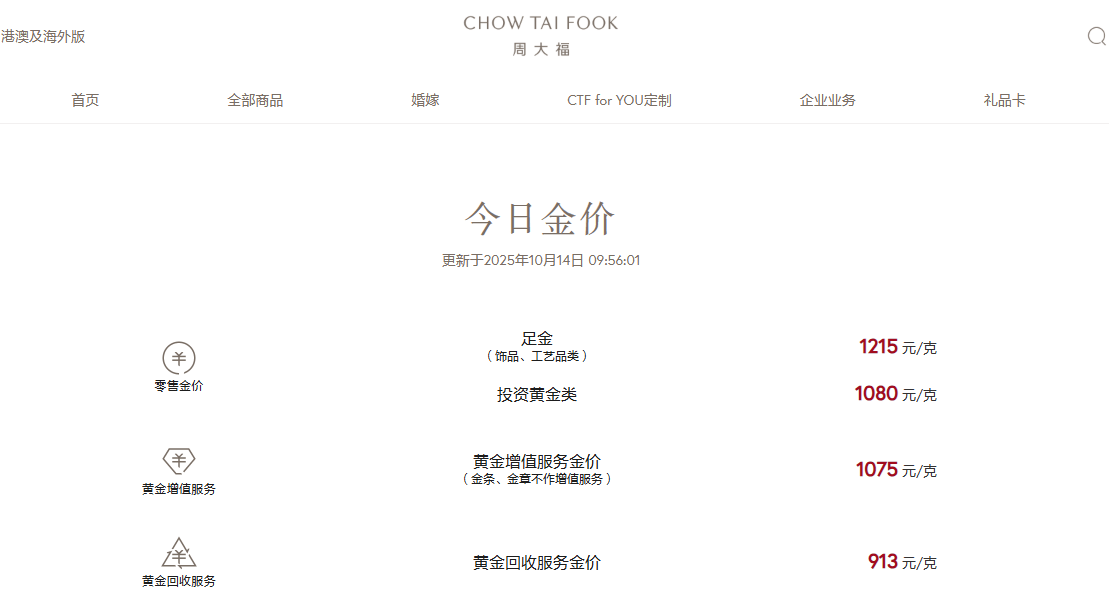
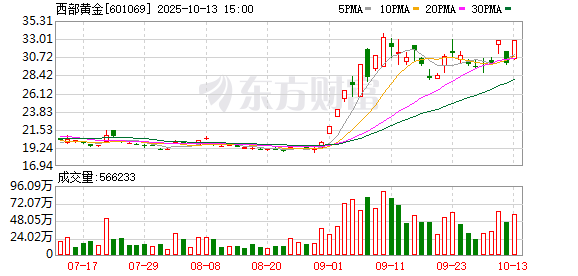
Core Viewpoint - The price of spot gold has been rising significantly, with domestic gold jewelry brands exceeding 1210 RMB per gram, marking an increase of over 130 RMB per gram in the past month [1]. Price Movements - On October 14, 2023, the price of gold jewelry from Chow Tai Fook rose from 1190 RMB per gram to 1215 RMB per gram, an increase of 25 RMB in one day [1]. - The price of gold jewelry from Chow Sang Sang increased from 1188 RMB per gram to 1213 RMB per gram [1]. - Lao Miao Gold's price for gold jewelry reached 1218 RMB per gram [3]. Market Performance - The spot gold price reached a new high of 4140 USD per ounce on October 14, 2023, with a year-to-date increase of over 57% [3]. - The A-share precious metals sector surged nearly 7% on October 13, 2023, with companies like Western Gold hitting the daily limit [6]. - The recent rise in gold and silver prices is attributed to strong safe-haven demand, renewed tariff risks, and ongoing expectations for monetary easing [6].

6只贵金属股年内翻倍,白银年涨70%碾压黄金
2 1 Shi Ji Jing Ji Bao Dao· 2025-10-13 12:37
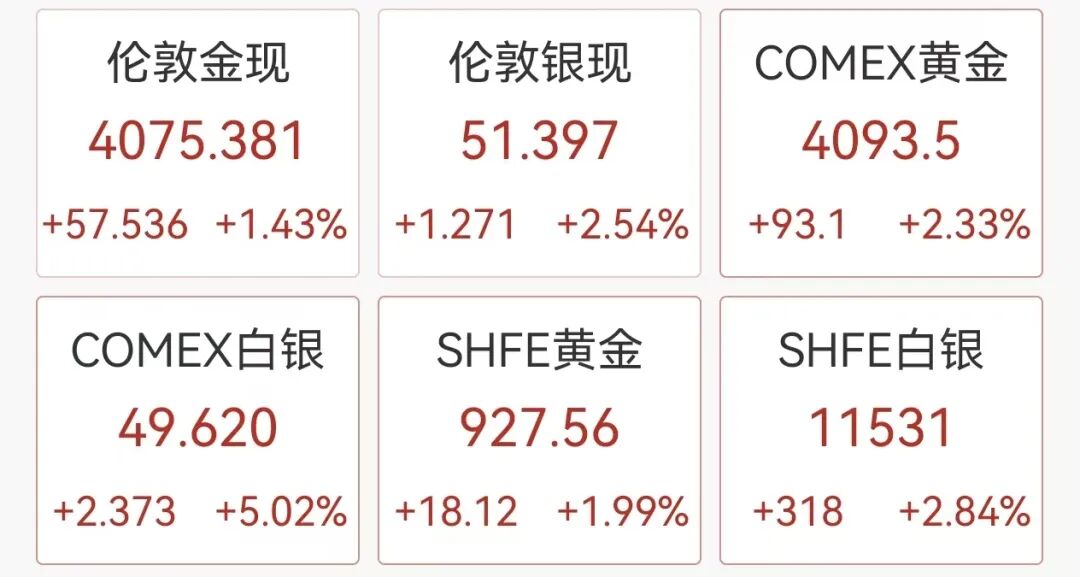
Core Insights - Gold and silver prices have reached historical highs, with spot gold touching $4080 per ounce and COMEX gold futures surpassing $4100 per ounce, marking increases of approximately 55% and 56% year-to-date respectively [1] - Silver prices have surged over 70% this year, outperforming gold [1] Market Performance - On October 13, the A-share precious metals sector rose nearly 7%, with notable gains in stocks such as Western Gold (601069) and Zhaojin Gold (000506) [3] - U.S. gold stocks also saw pre-market gains, with Coeur Mining rising over 7% and other companies like Harmony Gold and Barrick Mining showing significant increases [3] Gold Jewelry Prices - Domestic gold jewelry prices have increased, with major brands adjusting their prices upwards; for instance, Chow Tai Fook raised its price from 1180 to 1190 yuan per gram [3][4] Investment Sentiment - Huatai Futures Research Team maintains a "cautiously bullish" stance on gold and silver, citing tariff risks and ongoing expectations for monetary easing as factors driving prices higher [5] - The precious metals index has risen over 113% this year, significantly outperforming the broader market, with several stocks doubling in value [5][6] Stock Performance - Notable stock performances in the precious metals sector include Zhaojin Gold with a 254.66% increase and Western Gold with a 187.34% increase year-to-date [6] - Hunan Gold has the smallest increase among the listed stocks at 49.21% [6] Risk Advisory - Silver YS (601212) issued a risk warning after its stock price surged 40.10% over four consecutive trading days, indicating potential for future declines [7]


黄金:不要跟黄金对着干
对冲研投· 2025-10-13 12:05
Core Viewpoint - The article highlights the significant price increases in gold and silver since late August, with gold rising over 20% and silver over 30%, driven by various favorable factors including government shutdowns and renewed tariff risks, positioning gold as the ultimate insurance in the era of fiat currency [4][5]. Group 1: Gold Market Dynamics - Gold prices surged past $4,000 per ounce, particularly influenced by heightened risk aversion due to Trump's threats of increased tariffs on China, which reignited safe-haven demand [5]. - The ongoing U.S. government shutdown, which has lasted for two weeks, has created uncertainty in economic data, leading to expectations of potential interest rate cuts by the Federal Reserve [5]. - A critical date is approaching on October 15, when military pay issues may pressure Congress to resolve the shutdown, potentially extending economic uncertainty [5]. Group 2: Tariff Issues - The renewed tariff threats from the U.S. have intensified market volatility, with the S&P 500 index dropping 2.7%, marking its largest single-day decline since April 10, while the dollar index weakened and gold prices rose [6][7]. - The current tariff escalation appears to be a strategic response to China's control over the rare earth industry, which is significant in the U.S.-China trade conflict [7]. - Unlike previous broad tariff measures, the current situation is more targeted, and its long-term effects on market sentiment remain uncertain [7]. Group 3: Silver Market Insights - Silver has outperformed gold in price increases this year, with the current market showing extreme tightness, as evidenced by a one-month silver leasing rate soaring to 35%, a historical high [8][9]. - The deep inversion in the silver futures curve indicates an unsustainable market condition that may not last [9].

黄金白银又创新高,贵金属板块飙涨近7%,西部黄金3天2板
2 1 Shi Ji Jing Ji Bao Dao· 2025-10-13 10:04
Group 1 - The precious metals sector surged nearly 7% on October 13, with notable stocks like Western Gold, Zhaojin Gold, and others experiencing significant gains [2] - Spot gold reached a historical high of $4,078 per ounce, while spot silver increased over 2% to $51.71 per ounce [2] - Huatai Futures research team indicated that renewed tariff risks and ongoing expectations for monetary easing are driving gold prices to new highs [2] Group 2 - The U.S. government shutdown has delayed the release of key economic data, which is perceived as a significant fiscal risk, prompting the market to seek safe-haven assets, thus boosting gold prices [2] - There remains strong uncertainty regarding the Federal Reserve's interest rate cut path, but the market leans towards a potential cut in October, providing further support for gold [2]
受美新一轮关税影响,国际金价突破4060美元/盎司,金ETF(518680)、稀土ETF(159713)早盘双双涨逾2%
Mei Ri Jing Ji Xin Wen· 2025-10-13 02:29
Core Viewpoint - The U.S. has announced a 100% tariff increase on Chinese imports, leading to a surge in gold prices and a strong performance in the rare earth sector [1] Group 1: Gold Market - On October 13, gold prices on Comex futures reached a new historical high of $4060 per ounce due to the announcement of tariffs [1] - The gold ETF (518680) opened with over a 2% increase and has seen a year-to-date rise of nearly 55%, ranking first among 14 gold ETFs over the past year [1] - As of October 10, the gold ETF (518680) reached a record share of 452 million, the highest since its listing and the largest among similar ETFs [1] Group 2: Rare Earth Sector - The rare earth ETF (159713) experienced a peak increase of over 3% in early trading, closing with a rise of 2.52% [1] - Notable stocks within the index include Jiuling Technology, which rose over 14%, and AnTai Technology, which hit the daily limit, while Baogang Co. increased by over 9% [1] Group 3: Tariff Impact - President Trump announced that starting November 1, a 100% tariff will be imposed on Chinese imports, which is an additional charge on top of existing tariffs [1] - The U.S. will also implement export controls on "all critical software" on the same date, indicating a significant rise in tariff risks [1] - Recent market sentiment driven by risk aversion is expected to continue supporting the prices of gold and other resource commodities in the medium to long term [1]
贵金属周报:关税黑天鹅再临,避险溢价逻辑持续兑现-20251012
Hua Tai Qi Huo· 2025-10-12 11:58
Report Industry Investment Rating - Gold: Cautiously bullish [3] - Silver: Cautiously bullish [3] - Arbitrage: Short the gold-silver ratio at high levels [4] - Options: Put on hold [4] Core View of the Report - The resurgence of tariff risks and the continuation of easing expectations have jointly pushed the gold price to continuously hit new historical highs. The U.S. federal government shutdown, although causing the delay of important economic data releases, is itself regarded as an obvious manifestation of fiscal risks, prompting the market to seek safe-haven assets and boosting the gold price. The uncertainty of the Fed's interest rate cut path remains high, but the market still expects a rate cut in October, which also supports the gold price. The silver price is currently strong, hitting a new historical high. There is a need to repair the gold-silver price ratio. However, due to the relatively large volatility of silver, more attention should be paid to position control and strict stop-loss execution when operating [3]. Summary According to Relevant Catalogs Market News and Important Data Macroeconomic Aspects - In the week of October 10, 2025, gold and silver continued their strong performance. U.S. President Trump announced that starting from November 1, a new 100% tariff would be imposed on Chinese imports, an additional part on top of the existing paid tariffs. The U.S. will also implement export controls on "all key software" on the same day, significantly increasing tariff risks. The bill proposed by the U.S. Republicans to end the government shutdown failed to obtain enough votes in the Senate, and the overall U.S. fiscal risk remains prominent. The minutes of the September FOMC meeting showed that there were increasing differences within the Fed regarding the future interest rate cut path. Although most officials supported further rate cuts this year, 7 officials believed that no further cuts were needed, and only Fed Governor Milan supported a larger 50-basis-point cut. The market has strengthened the pricing of a rate cut in October, with the Fedwatch showing a 98.3% probability of a 25-basis-point cut in October [1]. Fundamental Aspects - In the week of October 10, 2025, the Shanghai Futures Exchange's gold warehouse receipts remained unchanged at 70,728 kilograms from the previous week, while silver warehouse receipts decreased by 23,221 kilograms to 1,169,061 kilograms. In the Comex inventory, this week's Comex gold inventory decreased by 170,212.58 ounces to 39,940,669.57 ounces, and Comex silver inventory decreased by 9,409,653.79 ounces to 522,463,797.41 ounces. In the precious metal ETFs, in the week of October 10 (currently the latest), the gold SPDR ETF holdings increased by 2.28 tons to 1,017.16 tons, and the silver SLV ETF holdings increased by 274.06 tons to 15,444 tons. As of September 23, 2025, in terms of CFTC positions, the net long speculative positions in gold increased by 0.13% to 266,749 contracts, and the net long positions in silver increased by 1.43% to 52,276 contracts. In the week of October 10, 2025, the CSI 300 Index fell by 0.51% from the previous week, the electronic components sector index related to precious metals fell by 2.49%, and the photovoltaic sector fell by 0.05%. As of September 29, 2025 (the latest), the photovoltaic price index was reported at 15.74, up 0.01 from the previous period. As of September 15, 2025, the photovoltaic manager index was reported at 119.66, a month-on-month decrease of 5.43 [2]. Strategy - Gold: Cautiously bullish. The resurgence of tariff risks and the continuation of easing expectations jointly push the gold price to continuously hit new historical highs. The U.S. federal government shutdown, although causing the delay of important economic data releases, is itself regarded as an obvious manifestation of fiscal risks, prompting the market to seek safe-haven assets and boosting the gold price. The uncertainty of the Fed's interest rate cut path remains high, but the market still expects a rate cut in October, which also supports the gold price [3]. - Silver: Cautiously bullish. The silver price is currently strong, hitting a new historical high. There is a need to repair the gold-silver price ratio. However, due to the relatively large volatility of silver, more attention should be paid to position control and strict stop-loss execution when operating [3]. - Arbitrage: Short the gold-silver ratio at high levels [4]. - Options: Put on hold [4].
Wall Street selloff raises worries about market downturn
Reuters· 2025-10-10 20:42
Core Insights - Investor concerns are rising regarding the sustainability of Wall Street's record stock rally, particularly with the re-emergence of tariffs as a market risk [1] Group 1 - The stock market has experienced a significant rally, reaching record highs, which has led to increased investor optimism [1] - The potential impact of tariffs on market performance is causing anxiety among investors, suggesting that external factors could disrupt the current rally [1]

纺织制造台企公布2025年8月营收数据,8月营收普遍下滑
Shanxi Securities· 2025-09-16 09:11
Investment Rating - The report maintains an investment rating of "Synchronize with the market - A" for the textile and apparel industry [1]. Core Insights - The textile and apparel industry has shown mixed performance in recent months, with a slight increase in textile exports but a decline in clothing exports. Specifically, from January to August 2025, China's textile yarn, fabric, and products exports increased by 1.6%, while clothing and accessories exports decreased by 1.7% [2][18]. - Major Taiwanese textile manufacturers reported a decline in revenue for August 2025, with significant year-on-year decreases for companies like Yuanyuan Group and Laiyixing, while some companies like Laiyixing still showed growth in the first eight months of the year [19][20]. Summary by Sections 1. Recent Observations - Taiwanese textile manufacturers reported a general decline in revenue for August 2025, with Yuanyuan Group's revenue down by 9.7% year-on-year, and Laiyixing down by 23.11% [19][20]. 2. Market Performance - The SW textile and apparel sector rose by 0.67% this week, lagging behind the SW light industry sector, which increased by 1.88% [20][21]. - The PE-TTM for SW textile manufacturing is 22.05 times, while for SW apparel and home textiles, it is 30.57 times, indicating varying levels of valuation across sub-sectors [24]. 3. Industry Data Tracking - From January to August 2025, China's textile and apparel exports totaled $945.13 billion and $1,027.61 billion, respectively, with a slight increase in textile exports and a decrease in clothing exports [48]. - The domestic retail sales in July 2025 reached 3.88 trillion yuan, showing a year-on-year growth of 3.7% [55]. 4. Industry News - Stone Island opened a new flagship store in Hangzhou, showcasing its commitment to innovation and sustainability [67][68]. - Jiangnan Buyi Group reported a 4.6% increase in revenue for the fiscal year ending June 30, 2025, driven by online sales growth and an expansion of its offline store network [70][71].
研究所晨会观点精萃-20250916
Dong Hai Qi Huo· 2025-09-16 02:40
Report Industry Investment Rating No relevant content provided. Core Viewpoints of the Report - Overseas, the US plans to include more steel and aluminum derivatives in the tariff scope, increasing short - term tariff risks. The market is preparing for the Fed's rate cut this week, leading to a weaker dollar and rising global risk appetite. Domestically, China's consumption, investment, and industrial增加值 in August were lower than previous values and market expectations, with slowing domestic demand. The Ministry of Finance will advance the issuance of part of the new local government debt quota for 2026 and take multiple measures to resolve existing implicit debts. Short - term external risk uncertainty is reduced, and domestic easing expectations are enhanced, leading to an overall increase in domestic risk appetite. The recent market trading logic focuses on domestic incremental stimulus policies and easing expectations, with a strengthened short - term upward macro - drive. Attention should be paid to the progress of China - US trade negotiations and the implementation of domestic incremental policies [3]. - Different asset classes have different trends: the stock index is short - term oscillating strongly, and short - term cautious long positions are recommended; government bonds are short - term oscillating weakly, and cautious observation is advised; in the commodity sector, black metals are short - term oscillating, and short - term cautious observation is needed; non - ferrous metals are short - term oscillating strongly, and short - term cautious long positions are recommended; energy and chemicals are short - term oscillating, and cautious observation is required; precious metals are short - term oscillating strongly at high levels, and cautious long positions are recommended [3]. Summary by Directory Macro - finance - Overseas, the US tariff risk increases, the dollar weakens, and global risk appetite rises. Domestically, economic data is lower than expected, domestic demand slows, but policy expectations are positive, and domestic risk appetite also increases. The trading logic focuses on domestic policies and easing expectations, and the short - term macro - drive is upward [3]. - Asset trends: the stock index is short - term oscillating strongly, government bonds are short - term oscillating weakly, black metals are short - term oscillating, non - ferrous metals are short - term oscillating strongly, energy and chemicals are short - term oscillating, and precious metals are short - term oscillating strongly at high levels [3]. Stock Index - Affected by sectors such as small metals, precious metals, and military industry, the domestic stock market declined slightly. Domestic economic data is weak, but policy expectations are positive, and risk appetite increases. The trading logic focuses on policies and easing expectations, and short - term cautious long positions are recommended [4]. Black Metals - **Steel**: The steel spot and futures markets continued to rebound on Monday, but trading volume was low. Macroeconomic data in August was weak, increasing anti - involution expectations. Real - world demand is weak, with different trends among varieties. Supply has shown some changes, and the steel market is likely to oscillate in the short term [5]. - **Iron Ore**: The spot and futures prices of iron ore declined slightly on Monday. Iron - making water production increased, and supply is at a high level. The price is expected to oscillate in the short term [5][6]. - **Silicon Manganese/Silicon Iron**: The spot and futures prices of silicon iron and silicon manganese rebounded slightly on Monday. Supply is increasing slightly, and the market is in a state of game. The prices are expected to oscillate in the short term [6]. - **Soda Ash**: The main contract of soda ash was strong on Monday. Supply is increasing, and the pattern of over - supply remains. Demand is weak, and it should be treated with a medium - to - long - term bearish view, while being vigilant about short - term positive impacts [6]. - **Glass**: The main contract of glass was strong on Monday. Supply is stable, and demand has limited growth. It is expected to oscillate in the short term [7]. Non - ferrous Metals and New Energy - **Copper**: Macroeconomic factors lead to a weaker dollar and a rise in copper prices. However, considering the global economic slowdown and weakening domestic demand, the upward space is limited [8]. - **Aluminum**: Aluminum prices oscillated on Monday. Inventory increased unexpectedly, and the mid - term upward space is limited, with slow de - stocking expected [8]. - **Aluminum Alloy**: The supply of scrap aluminum is tight, and demand is weak. The price is expected to oscillate strongly in the short term, but the upward space is limited [9]. - **Tin**: Supply is affected by short - term factors, and demand is weak. The price is expected to oscillate in the short term, and the upward space is limited [9]. - **Lithium Carbonate**: The main contract of lithium carbonate rose on Monday. Supply and demand are both increasing, and the market is expected to oscillate and stabilize [10]. - **Industrial Silicon**: The main contract of industrial silicon rose on Monday. It is expected to oscillate strongly in the short term [10]. - **Polysilicon**: The main contract of polysilicon fell slightly on Monday. With rumors of storage and capacity reduction, the price is expected to oscillate at a high level in the short term [11]. Energy and Chemicals - **Crude Oil**: The market is weighing measures to restrict Russian oil and supply - surplus expectations. Ukraine's attacks on Russian oil facilities and the expected Fed rate cut provide short - term support for oil prices [12]. - **Asphalt**: The price of asphalt rebounded with the rise in oil prices. The upward space is limited, and attention should be paid to the follow - up with oil prices [13]. - **PX**: The price of PX rebounded slightly. It is in a tight pattern and is expected to oscillate in the short term [13]. - **PTA**: The price of PTA rebounded slightly. Downstream and terminal开工 rates have different recovery situations, and the price is expected to oscillate in the short term [13]. - **Ethylene Glycol**: The ethylene glycol sector heated up slightly, but inventory increased, and downstream demand is limited. It is expected to oscillate weakly in the short term [14]. - **Short - Fiber**: The price of short - fiber adjusted slightly. Terminal orders increased seasonally, but the upward space is limited, and it can be shorted on rallies in the medium term [14]. - **Methanol**: Supply is increasing, demand is weakening, and inventory is rising. However, there are some supporting factors, and it is expected to oscillate weakly in the short term [14]. - **PP**: Production decreased due to maintenance, and downstream demand improved, but supply is still loose. It is expected to oscillate weakly in the short term [14]. - **LLDPE**: Supply increased, and demand improved slightly. With low inventory and a weak market sentiment, it is expected to oscillate weakly in the short term [15]. - **Urea**: Supply pressure is expected to increase. Demand is weak, and the price is expected to decline in the medium - to - long - term, but short - term support may come from downstream replenishment [16][17]. Agricultural Products - **US Soybeans**: The price of US soybeans declined slightly. Export inspection data was better than expected, and Brazilian drought may support the market [18]. - **Soybean Meal/Rapeseed Meal**: The domestic short - term supply - demand situation is surplus. The supply pressure of soybean meal is large, and the price is expected to improve in late September and October. Rapeseed meal has high inventory, but there is an upward basis in the later period [19]. - **Oils and Fats**: The supply of soybean oil is sufficient, and consumption support is limited. The supply of rapeseed oil decreased. The production of palm oil in Malaysia is affected by floods, and domestic demand is weakening, with increasing inventory [20][21]. - **Corn**: The initial listing price of new - season corn is chaotic, with a slight year - on - year increase. The price is expected to be strong, and the futures price has low - valuation support [21]. - **Pigs**: The planned slaughter of large - scale pig farms increased in September, demand has no obvious increase, and the price rebound expectation is reduced. There may be pressure on the price from October to November, which may promote capacity reduction [21].