工业需求

Search documents
白银还能更疯狂?资深分析师喊出300美元天价
华尔街见闻· 2025-12-27 10:53
Core Viewpoint - The article discusses the significant surge in silver prices, which have increased approximately 10.3% recently, reaching around $79.30 per ounce, and have risen over 170% this year, outpacing gold's increase of over 70% [1][4]. Supply and Demand Dynamics - The current price surge is primarily driven by a supply-demand imbalance, with all factors supporting this trend expected to persist for a considerable time [6]. - A structural deficit of approximately 800 million ounces over the past five years, equivalent to nearly a full year of mining supply, is a key reason for the price explosion [7]. - The Silver Institute predicts that this deficit will continue for the next five years [7]. - Industrial demand, particularly from solar panel manufacturers, is a major driver, with investment demand for silver ETFs expected to reach nearly 200 million ounces this year, significantly higher than the previous estimate of 70 million ounces [9]. Market Sentiment and Predictions - Peter Krauth, a notable silver analyst, anticipates that silver prices could reach $300 per ounce during an upcoming "frenzy phase," driven by a significant adjustment in the gold-silver ratio [5][10]. - The gold-silver ratio peaked at 104 in April but has since fallen to around 68, with predictions that it could drop to 15 in the future [10]. - Using a current gold price of approximately $4,500, a ratio of 15 would imply a silver target price of $300 [11]. - Krauth acknowledges more aggressive predictions of $800 to $1,000 but considers them unrealistic compared to his more measured forecast [12]. Additional Influencing Factors - Other factors contributing to the surge in precious metals include a weakening dollar, high government deficits, inflation concerns, and geopolitical risks [13]. - Krauth maintains a cautious outlook for the short term, suggesting that while silver is in a strong market position, minor corrections may occur [14].


白银暴涨背后:工业需求能否支撑起下一个黄金梦?#
Sou Hu Cai Jing· 2025-12-27 00:05
Core Insights - Silver has experienced a remarkable annual increase of 130%, outpacing gold, often referred to as "poor man's gold" [1] - The surge in silver prices is driven by industrial demand, particularly in solar panels and electric vehicles, which are consuming significant amounts of silver [3] Group 1: Industrial Demand - The silver market in 2025 is characterized by high industrial consumption, with the photovoltaic industry alone consuming 6,000 tons of silver annually, accounting for 20% of global annual production [3] - Silver's supply is inherently flawed, as 68% of silver is produced as a byproduct of copper and zinc mining, meaning reductions in primary mining can lead to immediate silver shortages [3] Group 2: Market Dynamics - Unlike gold, which is driven by safe-haven demand during turmoil, silver's price movements are tied to industrial revolutions and applications [4] - Historical parallels are drawn to the 1980 Hunt brothers' manipulation of silver prices, where prices surged from $6 to $50 before crashing, indicating potential volatility in the current market [4] - The rapid increase in ETF holdings, with a monthly rise of 1,000 tons, and the need for advance booking of physical silver in Shanghai highlight the current market dynamics [4] Group 3: Future Risks - The demand for silver in solar components is approximately 10 tons per GW installed, while each electric vehicle requires 35 grams of silver for contact points, and 5G base stations use three times the silver of 4G [5] - The potential for technological advancements to replace silver with alternative materials poses a significant risk to silver prices, which could collapse overnight if such substitutes are found [5]
白银价格突破73美元/盎司:避险需求与工业属性的双重狂欢
Sou Hu Cai Jing· 2025-12-26 07:25
Core Viewpoint - The spotlight in the precious metals market has shifted from gold to silver as spot silver prices have surpassed $73 per ounce, driven by geopolitical tensions, inflation expectations, and industrial demand [1][3]. Group 1: Silver's Unique Characteristics - Silver exhibits a "dual volatility" characteristic due to its financial and industrial attributes, with current prices reflecting both geopolitical risk premiums and strong demand from the photovoltaic industry [3]. - The global demand for silver in photovoltaic applications has reached 15% of total silver demand, a figure expected to continue rising amid the renewable energy revolution [3]. Group 2: Geopolitical Factors - Ongoing geopolitical risks, such as the Russia-Ukraine conflict and tensions in the Middle East, have amplified the safe-haven function of precious metals, leading to a significant increase in silver ETF holdings by institutional investors [4]. - Historical parallels are drawn to the 2020 pandemic-induced surge in silver prices, highlighting the current market's concerns over monetary expansion and inflation [4]. Group 3: Gold-Silver Ratio Insights - The current gold-silver ratio stands at approximately 65:1, significantly below the historical average of 75:1, indicating a potential shift in market sentiment [5]. - A continuous decline in silver inventories, with registered silver stocks at their lowest since 2008, raises concerns about supply tightness, which could lead to significant price volatility [5]. Group 4: Investment Opportunities and Risks - The diversity of investment channels for silver, including physical silver, paper silver, silver futures, silver ETFs, and silver mining stocks, presents both opportunities and risks for individual investors [6]. - The high volatility of silver prices, typically 2-3 times that of gold, necessitates careful risk management, especially for leveraged instruments like futures [6]. Group 5: Future Outlook - The future trajectory of the silver market will depend on the interplay of three key factors: the persistence of geopolitical risks, the sustained growth of the photovoltaic industry, and the timing of shifts in Federal Reserve monetary policy [7].
白银暴力拉升!是历史性突破,还是“强弩之末”?
Sou Hu Cai Jing· 2025-12-26 07:14
Group 1 - The core viewpoint is that silver prices have surged dramatically, breaking through $73 per ounce, marking a historical high and reflecting a significant shift in global capital sentiment [1] - Three driving factors for this surge are identified: 1) Geopolitical tensions leading to increased investment in precious metals as a safe haven 2) A weakening US dollar which alleviates pressure on dollar-denominated silver 3) Industrial demand from sectors like photovoltaics and new energy, giving silver a stronger growth potential compared to gold [3][4] Group 2 - Short-term outlook suggests that after a rapid increase driven by market sentiment, there may be technical pullbacks, with the $73 level likely to see contention [5] - For aggressive investors, it is advised to use small positions and wait for a pullback to key support levels (around $70-$71) before attempting to capitalize on price movements, with a strong emphasis on setting stop-loss orders [6] - For ordinary investors, a strategy of dollar-cost averaging into silver ETFs or linked funds is recommended to smooth out costs and participate in the long-term trend, specifically during price pullbacks rather than during spikes [6] - A-share investors are encouraged to focus on two lines: companies involved in silver mining and refining, which directly benefit from rising silver prices, and companies related to industrial demand for silver, such as those producing conductive pastes for photovoltaics, as a more suitable approach compared to direct silver trading [6]

金融+工业“双轮驱动” 伦敦银呈现强势前景
Jin Tou Wang· 2025-12-26 06:29
Group 1 - The core viewpoint is that the silver market is experiencing a dual drive from financial attributes and industrial demand, leading to a fluctuating upward trend in silver prices [1] - Silver has both monetary and investment properties, historically serving as an important currency function and currently acting as an inflation hedge reserve asset [1] - The global silver consumption structure for 2024 is projected to have industrial demand at 59%, jewelry at 18%, and coins and bars at 16%, with photovoltaic demand accounting for 197.6 million ounces, approximately 17% of total demand [1] Group 2 - Silver is a critical component in photovoltaic cells, directly affecting the efficiency of energy conversion and the long-term reliability of components [1] - The current mainstream PERC solar cells require about 80 milligrams of silver per piece, while the more promising N-type TOPCon cells require up to 130 milligrams [1] - Short-term market analysis indicates a need to be cautious of potential pullback risks, particularly around the key resistance area of $65.88, which may serve as a turning point for the market [2]
金银铂钯齐涨 贵金属缘何连创新高?
Xin Hua Wang· 2025-12-24 09:50
Core Viewpoint - The precious metals market, particularly gold, silver, platinum, and palladium, has experienced significant price increases driven by multiple factors including market sentiment, concerns over the U.S. dollar's credibility, and rising industrial demand for silver and platinum [1][2]. Group 1: Gold Market Performance - On December 24, gold prices reached a historic high, surpassing $4,500 per ounce for the first time [1]. - In China, the price of gold hit 1,017 yuan per gram, with gold jewelry prices rising to 1,410 yuan per gram [1]. - The gold market has seen over 40 record highs this year, with prices increasing by more than 70% year-to-date [2]. Group 2: Silver and Other Precious Metals - Silver prices have surged nearly 50% in Q4, breaking the $70 per ounce mark and continuing to rise above $72 [1]. - Year-to-date, silver and platinum prices have increased by over 140%, while palladium has risen by more than 100% [1]. - The industrial demand for silver, particularly in sectors like photovoltaics and electric vehicles, is a key driver of its price increase [2]. Group 3: Market Dynamics and Investor Sentiment - The rise in precious metal prices is attributed to a combination of factors, including concerns over U.S. dollar credit and sovereign debt, as well as geopolitical tensions [2]. - The demand for precious metals has led to increased inflows into ETFs, with significant increases in holdings reported on December 23 [3]. - Analysts suggest that the sustainability of the current bullish trend in precious metals will depend on ongoing market demand and investor sentiment [3].
金银铂钯齐涨,贵金属缘何连创新高?
Xin Hua Wang· 2025-12-24 09:44
Core Viewpoint - The precious metals market, particularly gold, silver, platinum, and palladium, has experienced significant price increases, driven by multiple factors including market sentiment and concerns over the U.S. dollar's credibility [1][2]. Group 1: Gold Market Performance - On December 24, gold prices reached a historic high, surpassing $4,500 per ounce for the first time [1]. - In China, the price of gold hit 1,017 yuan per gram, with gold jewelry prices rising to 1,410 yuan per gram [1]. - Gold prices have set new records over 40 times this year, exceeding the total highs of the previous year [2]. Group 2: Silver and Other Precious Metals - Silver prices have surged nearly 50% in Q4, breaking the $70 per ounce mark and continuing to rise above $72 [1]. - Year-to-date, silver and platinum prices have increased by over 140%, while palladium has risen by over 100% [1]. - The industrial demand for silver, driven by sectors like photovoltaics and electric vehicles, has significantly supported its price increase [2]. Group 3: Market Drivers - The rise in precious metal prices is attributed to concerns over U.S. dollar credit and sovereign debt, alongside traditional factors like inflation and geopolitical tensions [2]. - Analysts suggest that the expansion of U.S. debt has made precious metals more attractive as safe-haven assets [2]. - The demand for platinum is also expected to grow due to its use in catalysts and the emerging hydrogen energy sector [2]. Group 4: Investment Trends - On December 23, global ETF holdings for gold and silver increased by approximately 12 tons and 533 tons, respectively, indicating heightened investor interest [3]. - The sustainability of the current bullish trend in precious metals will depend on ongoing market demand and investor sentiment [3].
黄金,突发!
Sou Hu Cai Jing· 2025-12-24 04:34
Core Viewpoint - International gold prices have reached a new high, surpassing $4500 per ounce, driven by financial attributes and industrial demand, with expectations for a continued bull market in precious metals through 2026 [1] Group 1: Market Performance - As of the report, gold prices were at $4492.59 per ounce after initially breaking the $4500 mark [1] - The price surge is attributed to concerns over debt and monetary credit amid a global expansionary fiscal cycle [1] Group 2: Future Outlook - The bull market for precious metals is expected to be driven by dual engines: financial attributes and industrial demand, with significant differentiation among various metals [1] - The Federal Reserve's anticipated interest rate cuts and long-term structural support from central bank gold purchases are expected to maintain an upward trend in gold prices [1] - Despite the high price levels, it is projected that gold will not replicate the explosive growth seen in 2025, with a potential peak around $5000 per ounce in 2026 [1]
2026年尿素期货年度行情展望:需求弹性增加,旺季偏强,淡季承压
Guo Tai Jun An Qi Huo· 2025-12-18 13:31
1. Report Industry Investment Rating No information provided in the content. 2. Core Viewpoints of the Report - In the first half of 2026, the central price of urea may rise. After the peak agricultural demand season, the central price is expected to gradually decline in the second half of the year, with a volatile pattern throughout the year. The market may mainly trade on the expectations and discrepancies of urea's peak agricultural demand, export, and storage drives. Traders are advised to focus on band opportunities. The export - related policy adjustment in 2026 remains a key factor in adjusting the domestic fundamentals. The expected operating range of urea prices in 2026 is 1,550 - 1,950 yuan/ton. Strategies suggest focusing on the 5 - 9 positive spread at low prices, and the 9 - 1 and 1 - 5 reverse spreads at high prices [1][86]. 3. Summary According to the Directory 3.1 2025 H2 Urea Trend Review - **Q3**: With sufficient production profit, the overall operating rate and output of the urea industry remained high. Agricultural demand weakened, but new export quotas and the "anti - involution" macro - logic supported the price, resulting in wide - range price fluctuations [5]. - **Q4**: The strong expectations for September were falsified. Supply remained high, and export and domestic demand could not match the supply pressure, leading to a downward price trend. There was a phased rebound in November due to mid - stream reserve replenishment and increased export quotas [9]. 3.2 Demand Side: Urea Demand in 2026 is Expected to Increase - **Agricultural End**: The growth of urea agricultural demand in 2026 may continue, but the growth rate is expected to decline slightly. The demand increment is mainly concentrated from February to May, and corn is the main source of actual demand growth [13][15][17]. - **Industrial End**: A cautious and pessimistic attitude is taken towards the domestic industrial demand for urea in 2026. The demand from melamine, urea - formaldehyde resin, and thermal power denitrification is expected to have no significant increase [13]. - **Export End**: Urea exports in 2026 may continue to grow, mainly concentrated in the third and fourth quarters [14][48]. 3.3 Supply Side: Urea Supply in 2026 is Expected to Increase - **Output**: The urea industry is expected to add 6.51 million tons of new production capacity in 2026, with an annual capacity growth rate of 7.9%. The theoretical capacity will increase from 82.07 million tons to 88.58 million tons, and the output is expected to increase [51][53]. - **Inventory**: In 2026, the upstream enterprise inventory and mid - stream social inventory of urea are expected to show a pattern of destocking in the first half of the year and stockpiling in the second half, with a slightly higher annual average inventory center [51]. - **Profit**: The production profit of urea in 2026 may fluctuate widely. The profit may rebound in the first half depending on the intensity of agricultural demand, and the profit center may decline in the second half, mainly depending on export policies [51].
白银涨疯了,后市如何?
Guo Ji Jin Rong Bao· 2025-12-17 16:04
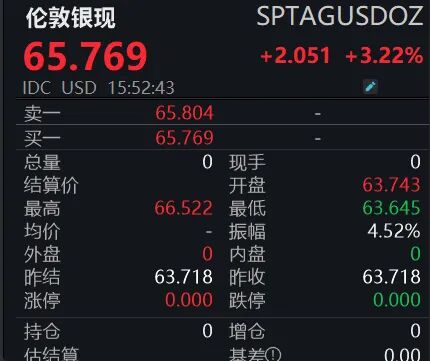
Core Viewpoint - Silver prices have surged dramatically, with both spot and futures prices reaching historical highs, driven by macroeconomic factors, industrial demand, and trading dynamics [1][3][4]. Group 1: Price Movements - As of December 17, silver prices in the international market reached $65.769 per ounce, marking a daily increase of 3.22%, with a year-to-date increase of nearly 130% [1]. - COMEX silver futures also showed strong performance, trading at $66.045 per ounce, with a year-to-date increase exceeding 120% [1][2]. - In the domestic market, the main contract for silver futures on the Shanghai Futures Exchange closed at 15,512 yuan per kilogram, up 5.05%, with an intraday high of 15,555 yuan per kilogram [2]. Group 2: Driving Factors - The macroeconomic environment, particularly expectations of a Federal Reserve interest rate cut by 2025, has significantly increased the attractiveness of silver as a non-yielding asset [3]. - Industrial demand for silver has transformed it from a traditional safe-haven asset to a critical industrial metal, driven by sectors such as photovoltaics, electric vehicles, and AI data centers [3]. - A low inventory level has created a fragile trading structure, leading to significant delivery pressure in the futures market and a risk of short squeezes [3]. Group 3: Investment Dynamics - There has been a notable increase in investment demand for silver, particularly through ETFs, as institutions and high-net-worth individuals accumulate physical silver, further tightening available inventory [4]. - The silver market has shown signs of a futures backwardation structure, indicating extreme tightness in the spot market and high premiums for immediate delivery [4]. - Silver has outperformed gold recently, attributed to a combination of price correction potential in gold and tight silver inventories, alongside geopolitical uncertainties supporting higher silver prices [4]. Group 4: Future Outlook - Analysts suggest that while short-term volatility risks exist, the long-term upward trend for silver remains intact due to ongoing macroeconomic support and robust industrial demand [5][6]. - The anticipated continuation of the Federal Reserve's easing monetary policy and uncertainties surrounding U.S. midterm elections are expected to sustain demand for precious metals [6]. - The ongoing supply-demand gap in silver is projected to widen by 2026, limiting the potential for significant price declines [5][6].