AI泡沫

Search documents
点燃AI泡沫恐慌的甲骨文(ORCL.US) 亟需一份比肩英伟达“2023-2024年的炸裂式增长业绩”
智通财经网· 2025-12-10 13:03
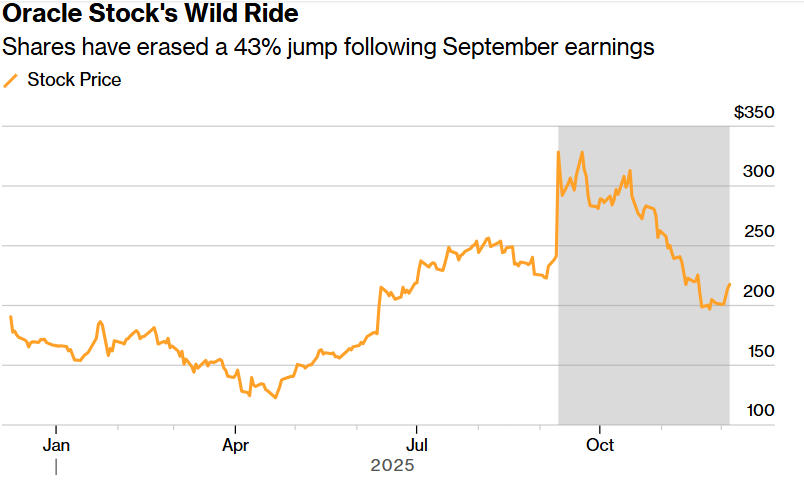
甲骨文(ORCL.US)的常态化超预期增长业绩,已经不足以缓解与公司债务堆积以及AI泡沫即将破裂相关的市场浓 厚担忧情绪,一份堪比英伟达2023-2024年的那种动辄100%+的"炸裂式跃升业绩",以及在业绩展望中公布更多除 OpenAI外的新云计算订单,才有可能全面缓和市场对于该公司基本面以及全球与AI算力基础设施密切相关联的科 技股的"AI泡沫负面情绪"。 即将于美东时间周三收盘后公布业绩的甲骨文,可谓是近期这一轮AI泡沫论调席卷全球股市导致股票市场陷入调 整的罪魁祸首。现在,甲骨文公司的业绩前景与未来展望,已经深度"捆绑"于ChatGPT开发者OpenAI长期、高额 且远远未兑现的大型AI数据中心云计算基础设施订单以及"星际之门"AI基建项目相关的云计算IaaS投资回报。 为了满足这些遥远的未来式的承诺,毛利率已然陷入困境的甲骨文正通过大规模举债与强劲资本支出(capex)助力 OpenAI扩建或新建大型AI数据中心;然而其自由现金流正转为负数,信用违约掉期 (CDS) 价格飙至多年高点,甲骨 文这种深度绑定OpenAI的无比强劲云计算基础设施订单背后的愈发高企债务负担与偿债风险不容忽视。 估值高达50 ...


对话王仲远 警惕具身智能“伪需求”泡沫
Bei Jing Shang Bao· 2025-12-10 12:00
鼎好大厦A座2楼的具身智能训练场内,机械臂和人形机器人正在精准地执行着各种复杂任务。这里是 智源研究院具身智能组探索人工智能边界的试验田。在这里,能看到智源研究院30余家具身智能合作伙 伴的机器,也能看到同一项任务更通用的解法。 去啃那些更前瞻性的研究,成为人工智能创新引领者,是智源研究院创立之初就定下的愿景。跟着智源 研究院的科研布局,可以看到行业发展的趋势。作为新型研究机构,智源研究院负责向创业公司提 供"安卓操作系统",让企业专心做硬件。这样的定位让其对模型、硬件、产业有着更清晰、中立的观 察。 "具身智能的发展,应该先通过专用模型在特定场景落地,形成数据闭环,再逐步向通用化发展,而不 是一开始就追求'万能具身'",在与北京商报记者的交流中,智源研究院院长王仲远多次表达了这一核 心观点。让他担忧的是,具身智能订单的需求真伪、创业公司能否活下来。让他欣喜的是,资本市场用 实际行动证明了各方对具身智能的未来有了共识,技术、产业都在螺旋式上升。 Q:11月,黄仁勋、约书亚·本吉奥、李飞飞等六人同台讨论了AI泡沫等话题,您怎么看待AI泡沫? A:和某些其他赛道不同,AI赛道本身是没有泡沫的,AI技术确实在实实在 ...

哈塞特最有希望接任美联储主席,却最不得人心
Jin Shi Shu Ju· 2025-12-10 06:11
Group 1 - The market widely expects Kevin Hassett to be nominated as the next Federal Reserve Chair, but only 11% believe he should be appointed [1] - Christopher Waller is the preferred candidate with 47% support, followed by Kevin Warsh at 23%, yet only 5% think Trump will nominate either [1] - Concerns about Hassett focus on his commitment to the Fed's dual mandate and independence, with 76% believing the next chair will be more dovish than Jerome Powell [3] Group 2 - There is a significant divide on whether the Fed should cut rates, with 87% expecting a rate cut but only 45% believing it should happen [3] - Economic growth expectations are rising, with GDP growth projected at 2% this year and slightly higher next year, while inflation is expected to remain above the 2% target [5] - "Persistent high inflation" has become the top economic risk, with concerns about the potential stimulus effects of record tax refunds in 2026 [6] Group 3 - Despite concerns about a potential AI bubble, respondents predict a 6% increase in the S&P 500 next year and another 6% in 2027, with 90% believing AI stocks are overvalued [8] - Systemic risk in the U.S. credit market is perceived to have slightly increased, rising from 53% to 60% [8]

富达国际:明年美联储料继续降息,AI投资热潮切实带动企业创新
Di Yi Cai Jing· 2025-12-10 04:33
Core Viewpoint - The impact of AI investments is becoming increasingly evident, with significant changes observed in various sectors, including productivity improvements and corporate restructuring [5][6]. Market Conditions - By the end of 2025, the market is expected to experience renewed volatility and weakness due to diverging expectations regarding Federal Reserve interest rate cuts and liquidity contraction [2]. - Recent market adjustments have been largely driven by liquidity, starting from more speculative markets like cryptocurrencies and spreading to gold and equities [4]. - The Federal Reserve is anticipated to continue its rate-cutting cycle into the next year, which may create favorable conditions for risk assets [4]. AI Investment Impact - AI investments have led to substantial operational efficiencies, reducing technology update cycles from eight months to under one month for some companies [6]. - The AI trend is expected to positively influence not only AI-related companies but also those in seemingly unrelated sectors, enhancing productivity and profitability [6]. Sector Preferences - There is a preference for investing in sectors that will benefit from AI infrastructure, such as the U.S. power grid and Asian semiconductor stocks, which are seen as having attractive valuations [6]. - Chinese technology stocks are viewed favorably due to lower capital investment requirements compared to U.S. tech firms, despite their strong capabilities [6]. Private Equity Insights - The private equity sector does not exhibit systemic risks, but there is significant variability in returns, with some funds outperforming while others underperform [6][7]. - Investors in private equity are advised to diversify their portfolios and extend investment horizons to mitigate risks and enhance returns [7].

AI泡沫遭质疑之际,慢半拍的苹果意外“躺赢”:股价半年飙35%,跑赢微软、Meta
美股IPO· 2025-12-10 00:52
在AI投资热潮受质疑的背景下,苹果因审慎的资本开支策略意外成为市场赢家。其股价自6月底以来上涨超35%,市值突破4.1万亿美元,超越微软成为 标普500第二大权重股。苹果凭借其硬件生态与高利润服务业务,被视为既能规避AI泡沫风险、又能在技术普及时受益的标的,估值已升至历史高位。 上半年垫底到下半年领跑 苹果股价在2025年上演了戏剧性转折。上半年,其在"科技七雄"中表现垫底,股价累计下跌18%;然而自6月底起,走势完全逆转。投资者正将苹果视 为一个独特的防御性选择,既规避了过度投资的风险,又能在AI技术成熟普及时,凭借其生态与硬件优势持续受益。 Glenview Trust Company首席投资官Bill Stone将苹果定义为"反AI概念股",并指出该公司虽必将强化手机AI功能,却主动避开了当前的AI军备竞赛及伴 随的天量资本开支。 Needham积极成长基金投资组合经理John Barr评论称: "关键在于,当同行纷纷加大投入时,苹果选择了保持理性与支出克制。" 当华尔街对人工智能的投资热潮日趋审慎之际,此前因AI布局相对迟缓而备受争议的苹果公司,反而成为近期市场中的意外赢家。 今年下半年以来,苹果股价 ...


21评论丨从通胀和增长数据看美国经济前景
Sou Hu Cai Jing· 2025-12-09 23:07
Group 1: Inflation Analysis - The core scenario for the U.S. economy in 2025 is described as a "Goldilocks scenario," where the economy maintains a moderate growth rate and inflation returns to the 2% target, indicating a soft landing [2] - The U.S. PCE inflation data for September shows a year-on-year increase of 2.8%, with the overall PCE rising by 0.1 percentage points from August, while core PCE decreased by 0.1 percentage points [3] - The increase in overall PCE inflation is primarily driven by a 0.5% rise in commodity prices, marking the largest monthly increase this year, particularly due to a 1.7% rise in energy prices [3] Group 2: Consumer Spending and Economic Growth - Consumer spending is being restrained by rising costs and uncertainty regarding employment and economic outlook, with real personal disposable income growing by only 0.1% in September [5] - The ISM services PMI index for November indicates a decrease in service and material payment prices, supporting the trend of cooling service inflation [5] - Economic growth is slowing due to uncertainties from tariffs and geopolitical factors, with employment showing low hiring rates and a slight increase in unemployment [6] Group 3: Future Economic Outlook - The primary driver of economic growth is large-scale investments in AI and related infrastructure, alongside increased consumption from middle to high-income earners [6] - Potential risks for the U.S. economy in the coming year include concerns over an AI bubble and high government debt levels, but the probability of recession may remain controlled due to possible monetary and fiscal policy measures [6]
从通胀和增长数据看美国经济前景
2 1 Shi Ji Jing Ji Bao Dao· 2025-12-09 22:47
Economic Outlook - The core scenario for the U.S. economy in 2025 is described as a "Goldilocks scenario," where the economy experiences moderate growth without overheating or cooling excessively, with inflation returning to the 2% target, indicating a soft landing [2] Inflation Analysis - The U.S. PCE inflation data for September shows a year-on-year increase of 2.8% for both overall and core PCE, with the overall PCE rising by 0.1 percentage points from August, while core PCE decreased by 0.1 percentage points [3] - The increase in overall PCE inflation is primarily driven by a 0.5% rise in commodity prices, marking the largest monthly increase this year, with energy prices leading at a 1.7% increase [3] - Service prices in the U.S. only increased by 0.2%, with notable stagnation in financial services and dining sectors, while the SuperCore PCE year-on-year growth slightly decreased to 3.25% [3] - Housing inflation, a persistent component of service inflation, is significantly declining, and discounts from retailers have led to a slowdown in price increases for various categories [4] Consumer Behavior - U.S. residents' income growth has slowed, particularly affecting middle and low-income groups, leading to cautious spending behavior; the inflation-adjusted personal disposable income grew by only 0.1% in September, with personal savings rates at 4.7% [5] - The ISM services PMI index for November indicates a decrease in service and material payment prices, supporting the trend of cooling service inflation [5] Economic Growth Factors - Economic growth is slowing due to uncertainties from tariffs and geopolitical factors, with employment levels in a low recruitment state and a slight increase in unemployment rates [5] - The federal government shutdown is expected to negatively impact GDP growth by a few tenths of a percentage point, but a rebound may occur in the first quarter of the following year [5] - The primary driver of economic growth is large-scale investments in AI and related infrastructure, alongside increased consumption from middle and high-income earners [5] Future Risks and Uncertainties - Potential new risks for the U.S. economy include concerns over an AI bubble, high government debt, and other unforeseen events; however, the probability of economic recession may remain contained due to the Federal Reserve's ability to implement interest rate cuts and other monetary and fiscal policies [6]

张小珺对话朱啸虎:人工智能的盛宴与泡泡 | 未竟之约
Xin Lang Cai Jing· 2025-12-09 13:29
Core Insights - The interview series "Unfinished Agreement" has officially launched, featuring a dialogue between Zhang Xiaojun and Zhu Xiaohu, a prominent figure in the venture capital space, known for hunting "unicorns" [1] Group 1: Industry Analysis - The discussion covers the ecological strategies of major companies like Tencent and Alibaba, highlighting their competitive positioning in the market [1] - Zhu Xiaohu analyzes the survival space for emerging companies such as Doubao and Qianwen, indicating the challenges and opportunities they face in the current landscape [1] - The conversation delves into the topic of "AI bubble," where Zhu dissects its real and illusory components, providing insights into the current state of AI investments [1] Group 2: Investment Strategies - Zhu Xiaohu shares his unique investment principles, referred to as the "15-degree investment rule," which offers a different perspective on evaluating potential investments [1]
美国经济被AI泡沫绑架,七巨头掌控命脉,一旦崩盘美国必遭毁灭!
Sou Hu Cai Jing· 2025-12-09 10:14
美国经济的繁荣,本质上是一场少数人的盛宴,其核心支柱是两大相互绑定的泡沫,股市泡沫与AI泡沫。 截至2025年10月,"巴菲特指标"已突破219%,美国上市公司总市值达到经济总量的两倍多,远超2007年金融危机前的105%和2000年互联网泡沫时的138%, 创下历史最高纪录。 这种泡沫的受益者高度集中:最富有的10%人群持有全美国近90%的股票,而底层50%人口仅持有1%。 财富的极度集中直接体现在消费端,《华尔街日报》数据显示,这10%的富人贡献了49.7%的全国消费支出,占GDP的三分之一,成为经济增长的主要推 手。 美国股市屡创新高、GDP保持增长,看似一副经济强劲的模样,但为何超过一半的美国民众却感受不到繁荣,反而深陷生活压力? 这种表面光鲜与民生困境的巨大反差,背后藏着怎样的结构性危机?所谓的经济增长,究竟是真实复苏还是泡沫堆砌的幻觉? 更危险的是市场集中度空前提升,"七大科技巨头"仅占美国上市公司总数的0.12%,却贡献了30.35%的总市值,2025年前9个月其市值增长占股市总增长的 52.37%。 扩展到"十大巨头"后,更是占据了标准普尔500指数38%的市值,少数企业的涨跌直接决定了全国经 ...

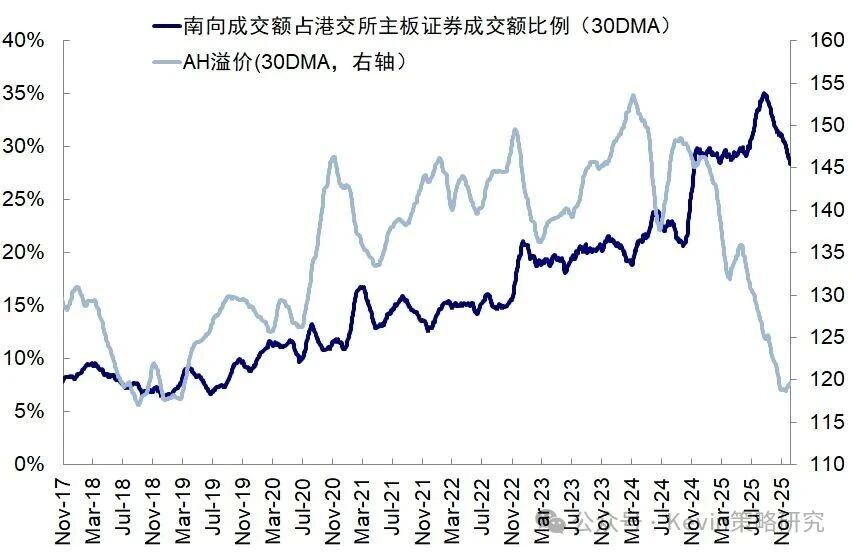
中金:近期港股为何在三地中走得更弱?
Zhi Tong Cai Jing· 2025-12-09 09:57
Core Viewpoint - The recent underperformance of Hong Kong stocks compared to the US and A-share markets is attributed to a combination of factors including a declining credit cycle, liquidity pressure, and a mismatch between fundamentals and expectations [1][2]. Group 1: Market Performance - Hong Kong stocks have shown particular weakness among the three markets, influenced by a shrinking southbound capital flow and the upcoming expiration of lock-up periods for major IPOs [2][4]. - Concerns over the Bank of Japan's potential interest rate hike and the Federal Reserve's stance have contributed to the market's volatility, with US Treasury yields rising despite a recent rate cut by the Fed [2][4]. Group 2: Credit Cycle and Fundamentals - The key issue is the downward trend in the credit cycle, which has been evident for the past two months, leading to a likely stagnation or phase of slowdown in private credit and overall credit cycles unless there is significant policy intervention [4][6]. - The current market dynamics reflect a disconnect between the fundamentals and expectations, particularly in the technology sector, where high valuations and investor sensitivity to negative news are prevalent [6]. Group 3: Sector Analysis - The report outlines four main sectors: 1. AI requires new industrial catalysts, with hardware visibility being more significant than application visibility [6]. 2. Strong cyclical sectors are influenced by US fiscal and real estate demand, alongside rising domestic PPI [6]. 3. Consumer sectors lack fundamental support, making them less attractive [6]. 4. Dividend stocks provide stable returns but lack upward elasticity [6][7]. Group 4: Economic Indicators - Investors should monitor the PPI year-on-year growth rate and the M1 money supply growth rate, as these indicators may signal a potential turning point in private sector financing and economic activity [8].