
货币政策宽松

Search documents
LPR降息落地!百万房贷立省近2万元
Bei Jing Shang Bao· 2025-05-20 04:48
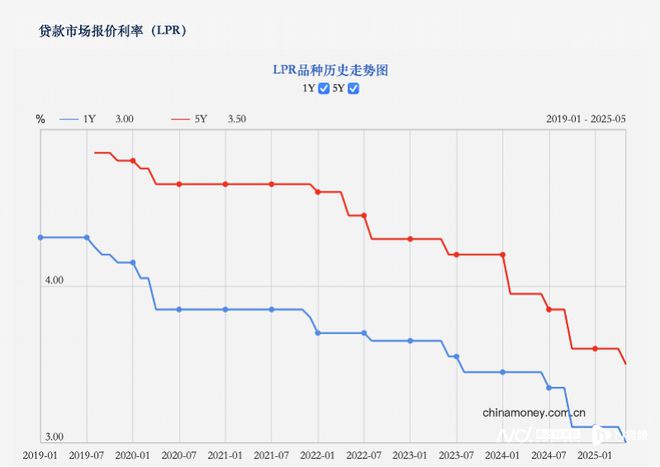
以北京地区为例,当前北京地区银行执行的是首套房贷商贷利率为LPR减45个基点,结合最新LPR报价 来看,即3.05%;购买二套住房位于五环内的,商贷利率下限为LPR减5个基点,即3.45%;购买二套住 房位于五环外的,商贷利率下限为LPR减25个基点,即3.25%。 降息落地!事关数亿人的房贷成本,又将迎来下调。 5月20日,最新一期贷款市场报价利率(LPR)出炉,1年期和5年期以上LPR双双下降10个基点,其 中,1年期LPR降至3%,5年期以上LPR降至3.5%。 值得一提的是,这是LPR年内首降。其中,5年期LPR下调也关乎所有购房者的月供,随着下调,北京 首套房贷利率再度创下最低纪录。据北京商报记者测算,在北京地区,对于100万元贷款本金、30年 期、等额本息的个人按揭贷款而言,政策前后对比,其中月供额减少54元,总还款额(本金+利息)减 少1.96万元,具体到单月上,月供还款金额减少54元。 百万房贷立省近2万元 一如市场预期,在央行重磅预告后,LPR如期按下"下调键"。而其中引发全民关注的是,此次5年期 LPR的下调也将为购房者们省下一笔不小的支出。 值得一提的是,这也是自LPR捆绑房贷利率以来, ...

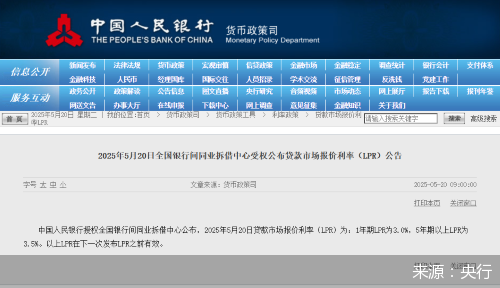
楼市大利好!央行公布LPR下调10个基点
Nan Fang Du Shi Bao· 2025-05-20 04:05
Group 1 - The People's Bank of China has announced a reduction in the Loan Prime Rate (LPR) by 10 basis points, with the 1-year LPR set at 3.00% and the 5-year LPR at 3.50%, following a previous cut in October 2024 [2] - The reduction in LPR is part of a broader financial policy aimed at stabilizing the market and expectations, indicating a further easing of monetary and credit policies, which will lower borrowing costs for medium to long-term funds [2] - The recent LPR cut is expected to positively impact housing loan costs, thereby stimulating housing consumption demand [2] Group 2 - In April, the average interest rate for newly issued personal housing loans was approximately 3.1%, and the recent LPR reduction is projected to decrease monthly payments by 54 yuan and total repayment amounts by 19,000 yuan for a 1 million yuan loan over 30 years [3] - Despite the positive effects of the LPR cut, the current demand for improved housing is insufficient to support the overall market, necessitating further measures to stimulate first-time and second-hand housing demand [3] - The analysis suggests that while interest rate cuts are beneficial, a comprehensive policy framework that includes fiscal support for various sectors is essential to restore the fundamentals of the real estate market and stabilize it [3]
东吴证券晨会纪要-20250519
Soochow Securities· 2025-05-19 14:30
Macro Strategy - The report indicates a cautious outlook on the "loan off-season" and emphasizes the observation of the effects of monetary easing, with May to June being a critical period for assessing the impact of incremental policies [1][6][7] - Financial data from April shows an increase in social financing scale, with new social financing of 16.34 trillion yuan, a year-on-year increase of 3.61 trillion yuan, and a recovery in the growth rate of social financing stock to 8.7% [6][7] - The report highlights that the weighted average interest rate for new loans in April was approximately 3.2%, which is about 50 basis points lower than the same period last year, indicating a continued low-interest environment [6][7] Fixed Income - The report discusses the current state of China's sci-tech bond market, noting that it is in its early development stage compared to overseas markets, characterized by a smaller market size, shorter issuance periods, and higher ratings [2][8] - It forecasts that as the sci-tech bond market matures, there will be rapid growth in market size and a diversification of issuance entities, particularly from high-tech industries, which will better match the long R&D cycles of innovative enterprises [2][11] Industry Analysis - The engineering machinery industry is experiencing a significant upturn, with excavator sales in April increasing by 18% year-on-year, indicating a strong growth trend [3][12] - The report notes that domestic excavator sales reached 49,109 units in the first four months of 2025, a 32% increase year-on-year, driven by factors such as the replacement of aging equipment and improved funding conditions [12][13] - It recommends several companies in the engineering machinery sector, including Sany Heavy Industry, Zoomlion, and LiuGong, as they are expected to benefit from the ongoing upcycle in the industry [3][12] Company Recommendations - The report highlights Beike-W (02423.HK) as a leading player in the domestic real estate brokerage industry, with Q1 2025 revenue of 23.3 billion yuan, a 42.4% year-on-year increase, and adjusted net profit slightly exceeding expectations [4][14] - The company is projected to see continued growth in its second-hand housing business, driven by an increase in transaction volume and market coverage [4][15] - The report maintains profit forecasts for Beike-W for 2025-2027, with adjusted net profits of 9.7 billion, 11.62 billion, and 13.62 billion yuan, respectively, indicating a positive outlook for the company's performance [4][15]
西南期货早间评论-20250519
Xi Nan Qi Huo· 2025-05-19 03:55
Report Industry Investment Ratings No relevant content provided. Core Views of the Report - The report analyzes various futures markets, including bonds, stocks, precious metals, industrial metals, agricultural products, and energy products. It provides market trends, influencing factors, and investment strategies for each market [5][8][11]. - Overall, the report suggests a cautious approach in the current market environment, considering factors such as trade tensions, economic data, and supply - demand dynamics [7][10][13]. Summary by Related Catalogs Bonds - **Market Performance**: On the previous trading day, Treasury bond futures closed down across the board. The 30 - year, 10 - year, 5 - year, and 2 - year main contracts fell by 0.10%, 0.05%, 0.06%, and 0.02% respectively [5]. - **Open Market Operations**: On May 16, the central bank conducted 106.5 billion yuan of 7 - day reverse repurchase operations, with a net investment of 2.95 billion yuan [5]. - **Outlook**: The external environment is favorable for Treasury bond futures, but yields are relatively low. China's economy shows a stable recovery trend. It is recommended to remain cautious, expecting increased volatility [6][7]. Stocks - **Market Performance**: On the previous trading day, stock index futures showed mixed results. The main contracts of CSI 300, SSE 50, CSI 500, and CSI 1000 stock index futures fell by 0.66%, 1.01%, 0.25%, and 0.15% respectively [8][9]. - **Outlook**: Despite concerns about corporate profit growth and global recession, domestic asset valuations are low, and policies have room for hedging. The long - term performance of Chinese equity assets is still optimistic. Considering the progress of the Sino - US trade agreement, it is advisable to consider going long on stock index futures [9][10]. Precious Metals - **Market Performance**: On the previous trading day, the main gold contract closed at 751.8 with a 1.62% increase, and the silver main contract closed at 8,101 with a 1.16% increase [11]. - **Outlook**: Global trade and financial environment is complex. Tariffs increase the risk of global recession, and central banks may adopt loose monetary policies. The long - term bullish trend of precious metals continues. It is recommended to consider going long on gold futures [11][12][13]. Industrial Metals - **Steel Products (Rebar, Hot - Rolled Coil)**: On the previous trading day, rebar and hot - rolled coil futures declined slightly. The real - estate downturn suppresses rebar demand, but the peak - season demand may provide short - term support. The valuation is low, and the market is in a weak oscillation. Investors can look for short - selling opportunities on rebounds [14]. - **Iron Ore**: On the previous trading day, iron ore futures pulled back slightly. High iron - water production supports demand, and the decline in imports and inventory is favorable. The valuation is relatively high. Investors can look for buying opportunities at low levels [16]. - **Coking Coal and Coke**: On the previous trading day, coking coal and coke futures fell sharply. Coking coal supply is loose, and coke demand is weak. The market may hit new lows. Investors can look for short - selling opportunities on rebounds [17]. - **Ferroalloys**: Manganese silicon and silicon iron showed different trends. Manganese ore supply may be disrupted, and high inventory pressures the market. For manganese silicon, consider virtual call options at low inventory levels; for silicon iron, short - sellers can consider exiting at the bottom [19][20][21]. Energy Products - **Crude Oil**: On the previous trading day, INE crude oil fell sharply. OPEC + production increase and potential consumption decline due to tariffs put pressure on oil prices. It is recommended to wait and see [22][23][24]. - **Fuel Oil**: On the previous trading day, fuel oil rose and then fell. The recovery of global trade demand and inventory decline support prices. It is recommended to wait and see [25][26][27]. Agricultural Products - **Soybean Oil and Soybean Meal**: On the previous trading day, soybean meal and soybean oil futures fell. Brazilian soybean harvest is bumper, and domestic supply is expected to be loose. For soybean meal, it is advisable to wait and see; for soybean oil, consider virtual call options at the bottom [56][57]. - **Palm Oil**: Malaysian palm oil prices fell. Exports increased, and domestic inventory is low. Consider the opportunity to expand the soybean - palm oil price spread [58][59]. - **Rapeseed Meal and Rapeseed Oil**: Canadian rapeseed prices rose. Chinese imports and inventory vary. Consider buying rapeseed meal after a pull - back [60]. - **Cotton**: Domestic cotton prices oscillated. The Sino - US tariff suspension is favorable, but the fundamentals are weak. Wait for a pull - back to buy [61][62][63]. - **Sugar**: Domestic sugar prices fell slightly. Brazilian production is currently low but expected to increase. Domestic inventory is low, and imports are limited. It is expected to oscillate within a range [64][65][66]. - **Apples**: Apple futures rose and then fell. Some regions may have reduced production, and inventory is low. Consider buying after a pull - back [67][68][69]. - **Hogs**: Hog prices showed a narrow - range adjustment. Group - farm sales may increase, and consumption is in a short - term off - season. It is recommended to wait and see [70][71][72]. - **Eggs**: Egg prices were stable. Egg supply is expected to increase in May. Consider short - selling after a rebound [73][74]. - **Corn and Corn Starch**: Corn and corn starch futures fell. Domestic supply pressure exists in the short term, but consumption is recovering. It is recommended to wait and see [75][76][77]. - **Logs**: Log futures fell. Import volume decreased, and prices were weak. The market has no obvious driving force [78][79].
国际资本避风港:超长久期国债的2025配置密码
Sou Hu Cai Jing· 2025-05-19 03:17
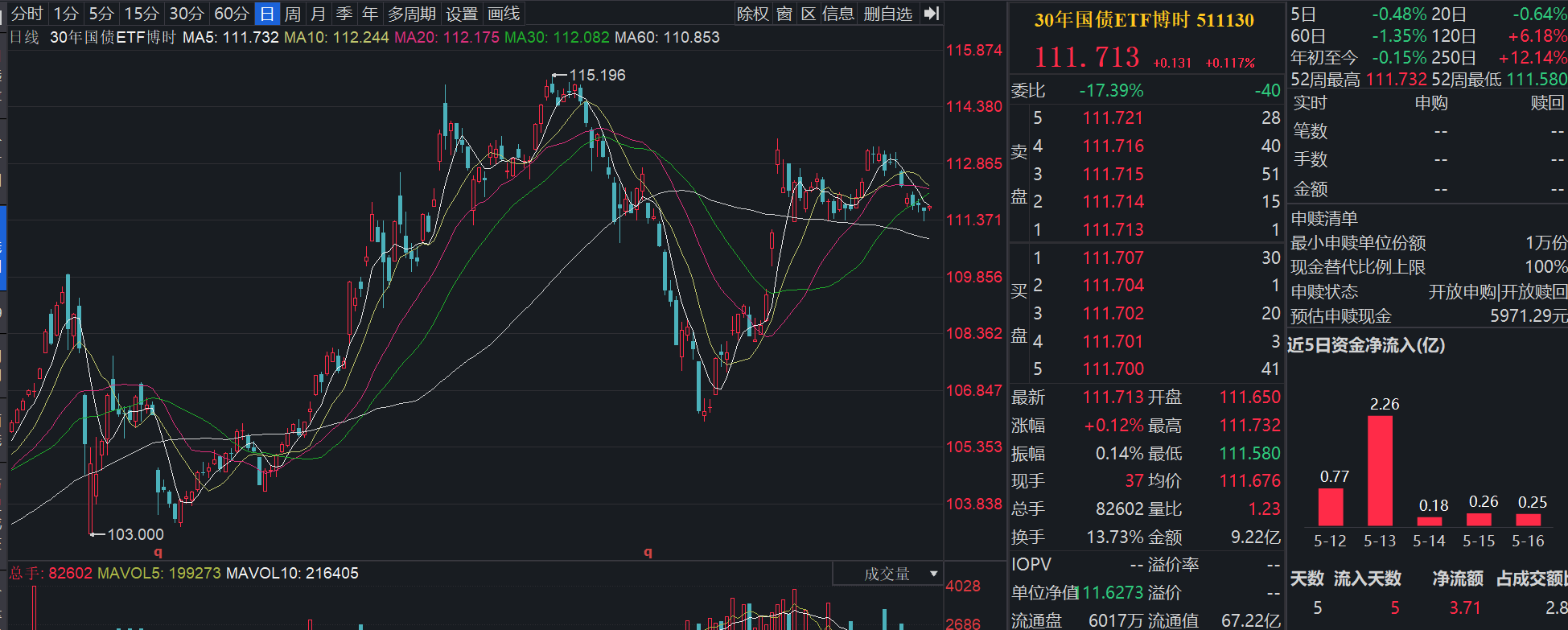
Group 1 - The Chinese bond market is currently experiencing a favorable period due to multiple policy benefits and macroeconomic conditions [1][3] - The People's Bank of China has maintained a loose monetary policy since May 2025, implementing measures such as a 50 basis points reserve requirement ratio cut and a 10 basis points interest rate cut, exceeding market expectations [3] - The issuance of special bonds by the Ministry of Finance is accelerating, requiring central bank liquidity support, which reinforces a stable yet slightly loose funding environment [3] Group 2 - Domestic inflation remains low, with the Consumer Price Index (CPI) unchanged at -0.1% year-on-year in April 2025, indicating weak domestic demand [4] - The yield on 10-year government bonds has dropped to a historical low of 1.62%, while ultra-long bonds (like 30-year bonds) still have room for yield spread recovery due to liquidity premiums [4][6] - The international market shows rising expectations for interest rate cuts by the Federal Reserve, which has eased capital outflow pressure and attracted foreign investment into Chinese bonds [6] Group 3 - Long-term investors, such as banks and insurance institutions, are increasingly allocating funds to ultra-long bonds, matching their long-duration liabilities with the 30-year government bonds [7] - The investment structure for ultra-long bonds is expected to diversify further with the expansion of the third pillar of pensions and the easing of foreign capital access [7] - Key signals to monitor include whether domestic CPI and PMI data exceed expectations and any substantial adjustments in the Federal Reserve's interest rate path [7]
西南期货早间评论-20250516
Xi Nan Qi Huo· 2025-05-16 03:03
1. Report Industry Investment Ratings No relevant content provided. 2. Core Views of the Report - The external environment is favorable for Treasury bond futures, but considering the relatively low current Treasury bond yields and the progress of the China - US trade agreement, it is recommended to remain cautious [6]. - Despite the impact of tariffs, the long - term performance of Chinese equity assets is still optimistic, and considering the progress of the China - US trade agreement, it is advisable to consider going long on stock index futures [9]. - The long - term bullish trend of precious metals is expected to continue, and pullbacks provide better opportunities for layout. It is recommended to consider going long on gold futures [13]. - For steel products such as rebar and hot - rolled coils, investors can focus on opportunities to short on rebounds, with timely profit - taking and attention to position management [15]. - For iron ore, investors can focus on low - level buying opportunities, with timely profit - taking on rebounds and stop - loss if the previous low is broken, while paying attention to position management [17]. - For coking coal and coke, investors can focus on opportunities to short on rebounds, with timely profit - taking and attention to position management [19]. - For ferroalloys, for manganese silicon, consider virtual call options at low levels; for silicon iron, short - sellers at the bottom can consider exiting, and also consider virtual call options at low levels if there are large - scale spot losses [22]. - For crude oil, consider bearish operations on the main contract [25]. - For fuel oil, consider temporarily remaining on the sidelines for the main contract [27]. - For synthetic rubber, it is short - term bullish [30]. - For natural rubber, it is expected to fluctuate weakly [32]. - For PVC, it is expected to have a short - term rebound with limited upside [35]. - For urea, it is expected to fluctuate strongly [36]. - For PX, be cautious about the upside space in the short term and participate with caution, paying attention to changes in crude oil prices and macro - policies [38]. - For PTA, treat it cautiously and bullishly in the short term, and consider range - bound operations at low levels, paying attention to risk control [39]. - For ethylene glycol, it is expected to fluctuate and adjust in the short term, be cautious about the upside space, and pay attention to port inventory and macro - policy changes [41]. - For staple fiber, follow the cost side to fluctuate and adjust in the short term, participate with caution, and pay attention to risk control [42]. - For bottle chips, it is expected to follow the cost side in the future, participate with caution, and pay attention to cost price changes [43]. - For soda ash, the loose pattern remains. In the short term, due to concentrated device maintenance in May, there may be short - term adjustments in the market, and short - sellers at low levels should adjust their positions [44]. - For glass, there is no obvious driving force in the actual supply - demand fundamentals. Although there may be some repair in market sentiment in the short term, the actual repair degree remains to be seen [45]. - For caustic soda, pay attention to the operation of enterprise devices and the fluctuation of liquid chlorine prices in the future [48]. - For pulp, it is expected to have a short - term rebound in the market, and in the future, pay attention to whether international pulp mills initiate substantial production cuts and the implementation rhythm of domestic consumption stimulus policies [52]. - For lithium carbonate, it is expected to operate weakly [53]. - For copper, consider temporarily remaining on the sidelines for the main contract of Shanghai copper [55]. - For tin, it is expected that the upward pressure on tin prices is relatively large, and it should be viewed with a bearish and fluctuating perspective [56]. - For nickel, pay attention to opportunities after the repair of macro - sentiment [57]. - For industrial silicon/polysilicon, maintain a bearish judgment overall and pay attention to the start - up changes in the southwestern region during the wet season [58]. - For soybean oil and soybean meal, remain on the sidelines for soybean meal; for soybean oil, consider virtual call options at the bottom support range [61]. - For palm oil, consider the opportunity to expand the spread between soybean oil and palm oil [64]. - For rapeseed meal and rapeseed oil, consider the opportunity to go long on rapeseed meal after a pullback [66]. - For cotton, pay attention to the opportunity to go long at low levels [70]. - For sugar, it is expected to operate in a range - bound manner, and use range - bound operations as a strategy [73]. - For apples, pay attention to the opportunity to go long after a pullback [77]. - For live pigs, consider temporarily remaining on the sidelines [79]. - For eggs, consider taking profits and then remaining on the sidelines [83]. - For corn and starch, remain on the sidelines for now [86]. - For logs, the fundamentals have no obvious driving force, and the spot transaction price in the market is weak, providing weak support for the market [88]. 3. Summaries According to Relevant Catalogs Treasury Bonds - On the previous trading day, most Treasury bond futures closed higher. The central bank conducted 64.5 billion yuan of 7 - day reverse repurchase operations, with a net withdrawal of 219.1 billion yuan on the same day. The issuance of special ultra - long - term Treasury bonds and local government special bonds is supported. The external environment is favorable for Treasury bond futures, but it is recommended to remain cautious [5][6]. Stock Index Futures - On the previous trading day, stock index futures showed mixed performance. The domestic economy is stable, but tariffs disrupt the economic recovery rhythm. However, due to low domestic asset valuations and policy hedging space, the long - term performance of Chinese equity assets is optimistic, and it is advisable to consider going long on stock index futures [8][9]. Precious Metals - On the previous trading day, gold and silver futures prices declined. The global economic recession risk increases under the influence of tariffs, and the long - term bullish trend of precious metals is expected to continue. It is recommended to consider going long on gold futures [11][13]. Rebar and Hot - Rolled Coils - On the previous trading day, rebar and hot - rolled coil futures fluctuated. The real estate downturn suppresses rebar prices, but the peak - season demand provides short - term support. The valuation is low, and there are signs of a rebound. Investors can short on rebounds [15]. Iron Ore - On the previous trading day, iron ore futures rose slightly. The increase in demand and the decrease in supply and inventory support the price. The valuation is relatively high. Investors can buy at low levels [17]. Coking Coal and Coke - On the previous trading day, coking coal and coke futures fluctuated. The supply of coking coal is loose, and the demand for coke is weak. There are signs of a stop - fall. Investors can short on rebounds [19]. Ferroalloys - On the previous trading day, manganese silicon rose slightly, and silicon iron fell slightly. The demand for ferroalloys is weak, and the supply is high. For manganese silicon, consider virtual call options at low levels; for silicon iron, short - sellers at the bottom can consider exiting [22]. Crude Oil - On the previous trading day, INE crude oil fell sharply. The increase in US crude oil inventories, Iran's willingness to reach an agreement, and OPEC's production increase put pressure on oil prices. Consider bearish operations [23][24]. Fuel Oil - On the previous trading day, fuel oil fell sharply following crude oil. The possible relaxation of US sanctions on Russia is bearish for high - sulfur fuel oil, while the recovery of global trade demand is favorable. Consider remaining on the sidelines [26]. Synthetic Rubber - On the previous trading day, synthetic rubber fell slightly. The supply pressure persists, but the demand and cost sides improve. It is short - term bullish with limited upside [28]. Natural Rubber - On the previous trading day, natural rubber futures fell. The supply is expected to increase, and the demand may improve. It is expected to fluctuate weakly [31]. PVC - On the previous trading day, PVC futures rose. The supply is increasing, and the export demand is good. It is expected to have a short - term rebound with limited upside [33]. Urea - On the previous trading day, urea futures rose. The domestic export policy has adjusted, and the agricultural demand is about to start. It is expected to fluctuate strongly [36]. PX - On the previous trading day, PX futures fell. The PXN and PX - MX spreads are recovering, and the load is increasing. The short - term upside space is limited. Be cautious and pay attention to crude oil and policies [37]. PTA - On the previous trading day, PTA futures fell. The supply and demand structure has improved, and the inventory is decreasing. Treat it cautiously and bullishly in the short term and consider range - bound operations at low levels [39]. Ethylene Glycol - On the previous trading day, ethylene glycol futures fell. The supply increase suppresses the price, but the inventory is decreasing, and the demand is improving. It is expected to fluctuate and adjust in the short term [40]. Staple Fiber - On the previous trading day, staple fiber futures fell. The downstream demand is slightly improving, and it follows the cost side to fluctuate and adjust in the short term. Participate with caution [42]. Bottle Chips - On the previous trading day, bottle chip futures fell. The raw material cost provides support, and the supply and demand fundamentals have improved. It is expected to follow the cost side [43]. Soda Ash - On the previous trading day, soda ash futures rose. Some devices are under maintenance, and the raw material prices are falling. The supply is loose, and there may be short - term adjustments [44]. Glass - On the previous trading day, glass futures fell slightly. The production line is at a low level, and the market is weak. There is no obvious driving force in the fundamentals, and the market sentiment may be repaired in the short term [45]. Caustic Soda - On the previous trading day, caustic soda futures rose. Some devices are under maintenance, and the supply is decreasing. The demand is limited, and the price may be affected by alumina and liquid chlorine [47]. Pulp - On the previous trading day, pulp futures rose. The tariff issue gives some confidence, but the supply is abundant, and the demand is weak. It is expected to have a short - term rebound [50]. Lithium Carbonate - On the previous trading day, lithium carbonate futures fell. The supply is abundant, and the demand is weak. It is expected to operate weakly [53]. Copper - On the previous trading day, Shanghai copper fluctuated downward. The Sino - US talks have achieved results, but the copper tariff issue remains uncertain. Consider remaining on the sidelines [54]. Tin - On the previous trading day, Shanghai tin rose slightly. The supply may increase, but the demand is good. The upward pressure on prices is large, and it is expected to fluctuate bearishly [56]. Nickel - On the previous trading day, Shanghai nickel rose slightly. The cost provides support, but the demand is weak. Pay attention to opportunities after the repair of macro - sentiment [57]. Industrial Silicon/Polysilicon - On the previous trading day, industrial silicon rose slightly, and polysilicon fell slightly. The demand is weak, and the supply reduction is limited. It is expected to be bearish overall [58]. Soybean Oil and Soybean Meal - On the previous trading day, soybean meal rose, and soybean oil fell. The US biodiesel policy affects the market. The supply of soybeans is expected to be loose. Remain on the sidelines for soybean meal; for soybean oil, consider virtual call options at the bottom [60]. Palm Oil - Malaysian palm oil fell, but strong export data limited the decline. The domestic inventory is low, and the consumption is increasing. Consider the opportunity to expand the spread between soybean oil and palm oil [62]. Rapeseed Meal and Rapeseed Oil - Canadian rapeseed fell. The 45Z biofuel tax credit extension is bearish for rapeseed oil. The domestic inventory of rapeseed is low, and the inventory of rapeseed meal is high. Consider the opportunity to go long on rapeseed meal after a pullback [65]. Cotton - Domestic cotton fluctuated, and external cotton fell. The USDA report is bearish, but the Sino - US talks are favorable. The downstream demand is weak. Pay attention to the opportunity to go long at low levels [67]. Sugar - Domestic sugar fell slightly, and external sugar fell 2%. The production in Brazil and India is lower than expected. The domestic inventory is neutral, and the import is low. It is expected to operate in a range - bound manner [71]. Apples - Apple futures fluctuated. There are signs of production reduction in some areas, and the inventory is low. The spot price is expected to be strong. Pay attention to the opportunity to go long after a pullback [74]. Live Pigs - The price of live pigs fell. The supply may increase after the holiday, and the consumption is in a short - term off - season. Consider temporarily remaining on the sidelines [78]. Eggs - The price of eggs remained stable. The supply is increasing, and the cost is decreasing. The price may be supported during the Dragon Boat Festival. Consider taking profits and then remaining on the sidelines [80]. Corn and Starch - Corn and corn starch futures fell. The supply pressure remains, and the demand is weak. The market is expected to be balanced in the long term. Remain on the sidelines for now [84]. Logs - Log futures fell. The import volume decreased in April, and the spot price showed regional differentiation. The fundamentals have no obvious driving force [87].
固定收益点评:小月弱信贷
GOLDEN SUN SECURITIES· 2025-05-15 07:04
Group 1 - The report indicates that credit demand from enterprises remains weak due to debt replacement, with April's new credit at 280 billion yuan, a year-on-year decrease of 450 billion yuan [1][7] - Specifically, enterprise medium and long-term loans decreased by 160 billion yuan year-on-year to 250 billion yuan, while short-term loans fell by 70 billion yuan to -480 billion yuan [1][7] - The report highlights that government bonds are the main support for social financing, with April's new social financing at 1.1591 trillion yuan, a year-on-year increase of 1.2249 trillion yuan, and a social financing stock growth of 8.7% [2][10] Group 2 - M2 growth is reported at 8%, an increase of 1 percentage point from the previous month, primarily driven by an expansion in non-bank deposits [3][21] - The report suggests that the monetary policy easing environment is likely to continue, with the recent rate cuts in May marking the beginning of a broader easing cycle [3][23] - The bond market is expected to experience a shift from short to long-term, with the yield curve anticipated to first steepen and then flatten, as short-term rates decline [4][23]
西南期货早间评论-20250515
Xi Nan Qi Huo· 2025-05-15 05:49
Report Industry Investment Ratings No relevant content provided. Core Views of the Report - The overall market is affected by factors such as tariffs, global economic recession risks, and policy adjustments. Different sectors show various trends and investment opportunities. For example, the report is optimistic about the long - term performance of Chinese equity assets, believes in the long - term bullish trend of precious metals, and has different views on other commodities based on their supply - demand fundamentals and market conditions [6][9][11]. Summary by Related Catalogs Bonds - **Treasury Bonds**: The previous trading day saw a full - line decline in treasury bond futures. The central bank conducted 920 billion yuan of 7 - day reverse repurchase operations on May 14, with a net withdrawal of 103.5 billion yuan. The current macro data is stable, but tariffs may lead to a slowdown in the Chinese economy. The external environment is favorable for treasury bond futures, but yields are relatively low. It is recommended to be cautious as the Chinese economy shows a stable recovery trend [5][6]. Stocks - **Stock Index Futures**: The previous trading day, stock index futures showed mixed performance. The domestic economy is stable, but tariffs disrupt the economic recovery rhythm. However, due to low domestic asset valuations and policy hedging space, the report is optimistic about the long - term performance of Chinese equity assets and suggests considering going long on stock index futures [8][9]. Precious Metals - **Gold and Silver**: The previous trading day, gold and silver futures prices declined. The complex global trade and financial environment, along with the increasing risk of global economic recession due to tariffs, may lead to passive monetary policy easing in various countries, which is expected to drive up the price of gold. It is recommended to go long on gold futures on dips [11]. Base Metals - **Copper**: The previous trading day, Shanghai copper rose significantly. The progress of the Sino - US Geneva economic and trade statement and the lower - than - expected CPI growth in the US have boosted market sentiment. It is expected that copper prices will rise, and it is recommended to go long on the Shanghai copper main contract [51]. - **Tin**: The previous trading day, Shanghai tin rose. The复产 of mines in Congo (Kinshasa) and Myanmar increases the supply expectation, while the current supply is tight. It is expected that tin prices will face upward pressure and show a bearish - oscillating trend [53]. - **Nickel**: The previous trading day, Shanghai nickel rose. The tightening of the ore supply policy in Indonesia and the Philippines provides cost support, but the downstream is in a state of over - supply. It is necessary to pay attention to opportunities after the repair of macro - sentiment [54]. Energy - **Crude Oil**: The previous trading day, INE crude oil oscillated higher. OPEC+ will increase production from May to June, and the market is worried about oversupply. After the short - term rise, crude oil may face a correction. It is recommended to take a short position on the crude oil main contract [21][22]. - **Fuel Oil**: The previous trading day, fuel oil followed crude oil and oscillated upward. The possible relaxation of US sanctions on Russia is negative for high - sulfur fuel oil, while the signing of tariff agreements is beneficial for the recovery of fuel oil prices. It is recommended to wait and see for the fuel oil main contract [24][25]. Chemicals - **Synthetic Rubber**: The previous trading day, the synthetic rubber main contract rose. Supply pressure persists, but the demand side is expected to improve due to the slowdown of tariffs, and the cost side has rebounded significantly. It is expected to be short - term bullish [27]. - **Natural Rubber**: The previous trading day, natural rubber futures rose. The global supply is expected to increase, and the demand side may improve due to tariff changes. It is expected to show a weak - oscillating trend [29]. - **PVC**: The previous trading day, the PVC main contract rose. Supply is gradually recovering, and demand is weakly recovering. The market is expected to maintain a bottom - oscillating trend [31]. - **Urea**: The previous trading day, the urea main contract fell. The adjustment of domestic export policies and the upcoming agricultural demand may lead to a bullish - oscillating trend. It is necessary to continue to pay attention to policy changes and the spread between domestic and foreign markets [34]. - **PX**: The previous trading day, the PX main contract rose. The PXN spread is continuously repairing, and the supply and demand situation is improving. With the upward repair of crude oil prices and positive macro - sentiment, PX is expected to oscillate bullishly. It is recommended to participate on dips [36]. - **PTA**: The previous trading day, the PTA main contract rose. The supply side has decreased, the demand side has increased, and the cost side is supported. It is expected that PTA prices will continue to repair upward. It is recommended to operate in the low - range [37]. - **Ethylene Glycol**: The previous trading day, the ethylene glycol main contract rose. The supply increase is not obvious, the port inventory is decreasing, and the demand side is improving. It is expected that ethylene glycol prices will continue to rise. It is recommended to participate on dips [40]. - **Short - Fiber**: The previous trading day, the short - fiber main contract rose. The downstream terminal demand has slightly recovered, and the supply - demand fundamentals have improved. It is expected to follow the cost side and oscillate bullishly. It is recommended to go long on dips [41]. - **Bottle - Chip**: The previous trading day, the bottle - chip main contract rose. The raw material price is rising, and the supply - demand fundamentals have improved. It is expected to follow the cost side and rebound [43]. - **Soda Ash**: The previous trading day, the soda ash main contract rose. The raw material prices are falling, the production is decreasing, and the inventory is increasing. The market is in a loose pattern, but short - term adjustments may occur due to device maintenance. Short - position holders at low levels should adjust their positions [44]. - **Glass**: The previous trading day, the glass main contract rose. The production line is at a low level, and the market is weak. There is no obvious driving force in the supply - demand fundamentals. The market sentiment may be repaired in the short - term, but the actual repair degree needs to be observed [45]. - **Caustic Soda**: The previous trading day, the caustic soda main contract rose. The demand from the alumina and non - alumina downstream is limited, but some devices will enter the maintenance period in May, which may provide some driving force. It is necessary to pay attention to device operation and liquid chlorine price fluctuations [46]. - **Pulp**: The previous trading day, the pulp main contract rose. The Sino - US tariff breakthrough has given some confidence to the pulp market, but the supply - demand situation is still loose. It is expected that the market will rebound in the short - term, and it is necessary to pay attention to international pulp mill production cuts and domestic consumption stimulus policies [48]. - **Lithium Carbonate**: The previous trading day, the lithium carbonate main contract rose. The supply side is difficult to further reduce production, the demand side is weakening, and the inventory is increasing. It is expected to show a bearish trend [50]. Agricultural Products - **Soybean Oil and Soybean Meal**: The previous trading day, soybean meal and soybean oil futures rose. The soybean supply is expected to be loose, and the upward pressure on soybean meal is high. It is recommended to wait and see. The cost support for soybean oil at the bottom is increasing, and it is recommended to pay attention to the opportunity of out - of - the - money call options [58]. - **Palm Oil**: The previous trading day, Malaysian palm oil rose. The inventory in Malaysia has increased, and Indonesia has raised the export tax. The domestic palm oil inventory is at a low level. It is recommended to pay attention to the opportunity of expanding the spread between soybean oil and palm oil [60]. - **Rapeseed Meal and Rapeseed Oil**: The previous trading day, rapeseed futures showed mixed performance. The 45Z bio - fuel tax credit extension is negative for rapeseed oil. The domestic rapeseed inventory is at a low level, and rapeseed meal inventory is at a high level. It is recommended to pay attention to the opportunity of going long on rapeseed meal after a correction [62]. - **Cotton**: The previous trading day, domestic cotton futures rose slightly. The US Department of Agriculture's monthly supply - demand report is negative, but the Sino - US negotiation is progressing smoothly, which is beneficial for cotton. The domestic downstream demand is weak, but there may be a short - term support. It is recommended to pay attention to the opportunity of going long on dips [64]. - **Sugar**: The previous trading day, domestic sugar futures rose slightly. The production in Brazil and India is lower than expected, and the domestic inventory is at a medium level with low imports. It is expected to oscillate within a range. It is recommended to operate within the range [68]. - **Apple**: The previous trading day, domestic apple futures fell slightly. There is a production reduction in some apple - producing areas, and the current inventory is at a low level. It is expected that the spot price will be strong in the future. It is recommended to pay attention to the opportunity of going long after a correction [71]. - **Live Pigs**: The previous trading day, the live pig futures main contract rose. The supply is expected to increase after the holiday, and the consumption is in a short - term off - season. It is expected that the pig price will first weaken and then strengthen. It is recommended to wait and see [73]. - **Eggs**: The previous trading day, the egg futures main contract fell slightly. The egg supply is expected to increase in May, and the pre - holiday stocking may provide some support. It is recommended to take profits and then wait and see [77]. - **Corn and Starch**: The previous trading day, the corn main contract rose, and the corn starch main contract fell. The domestic corn supply - demand is approaching balance, but there is short - term supply pressure. Corn starch has weak production and demand and high inventory. It is recommended to wait and see [79]. - **Logs**: The previous trading day, the log futures main contract rose. The import volume of logs and sawn timber has decreased, and the spot price shows regional differentiation. The market has no obvious driving force, and the spot price has a weak support for the futures [82].
债市迎政策利好,民生加银鹏程混合A攻守兼备优势显著
Cai Fu Zai Xian· 2025-05-14 10:15
Group 1 - The core viewpoint of the articles highlights the recent monetary policy easing in China, with the People's Bank of China lowering the 7-day reverse repurchase rate by 10 basis points to 1.40% and reducing the reserve requirement ratio by 0.5 percentage points, releasing approximately 1.2 trillion yuan in long-term funds [1] - The easing measures are intended to lower financing costs for the real economy and boost market confidence, marking the beginning of a new round of monetary policy easing [1] - The positive impact of the rate cuts on the bond market includes increased available funds in the banking system, alleviating market liquidity pressure, and driving down short-term interest rates, which benefits bond prices, especially high-grade credit bonds [1] Group 2 - In the context of monetary policy easing and increased volatility in equity markets, mixed-asset bond funds are becoming an ideal choice for medium to low-risk investors due to their balanced risk-return profile [2] - These funds typically use bond assets as a base while allocating a portion to equities and convertible bonds to enhance returns, allowing for flexible asset allocation to manage market fluctuations [2] - Key focus areas for the bond market include changes in tariff policies and the sustainability of a loose funding environment, with April showing a generally loose funding situation, which is crucial for the bond market's performance [2] Group 3 - The Minsheng Jianyin Pengcheng Mixed A Fund, managed by Zhao Xiaoqiang, employs a "fixed income foundation + equity enhancement" strategy, showing strong performance with net value growth rates of 2.74% and 4.10% over the past six months and one year, respectively [3] - The fund has outperformed its benchmark with excess returns of 1.76% and 16.85% since inception, demonstrating strong drawdown control capabilities in a volatile market environment [3] - The fund's strategy of combining fixed income and equity investments provides investors with a favorable holding experience, especially during periods of market fluctuations [3]
西南期货早间评论-20250514
Xi Nan Qi Huo· 2025-05-14 05:45
Report Industry Investment Ratings No relevant content provided. Core Views - The report analyzes multiple futures markets, including bonds, stocks, precious metals, and various commodities. It suggests different investment strategies based on market conditions, such as being cautious with bonds, considering long positions in stock index futures, and taking long positions in gold futures [6][10][12]. Summary by Category Bonds - **Market Performance**: On the previous trading day, most bond futures closed higher. The 30 - year, 10 - year, and 2 - year contracts rose, while the 5 - year contract fell slightly. The central bank conducted 43 billion yuan of 7 - day reverse repurchase operations, resulting in a net injection of 43 billion yuan [5]. - **Analysis**: The external environment is favorable for bond futures, but yields are relatively low. China's economy shows a stable recovery trend, and there is room for domestic demand policies. It is recommended to be cautious, expecting increased volatility [6][7]. Stock Index Futures - **Market Performance**: On the previous trading day, stock index futures showed mixed results, with the CSI 300 and SSE 50 rising slightly, while the CSI 500 and CSI 1000 fell [8]. - **Analysis**: Although tariffs disrupt the domestic economic recovery rhythm, domestic asset valuations are low, and there is policy - hedging space. The report is optimistic about the long - term performance of Chinese equity assets and suggests considering long positions in stock index futures [10][11]. Precious Metals - **Market Performance**: On the previous trading day, gold and silver futures prices declined. The eurozone's May ZEW economic sentiment index improved [12]. - **Analysis**: The complex global trade and financial environment, potential central bank policy easing, and trade frictions are expected to drive up gold prices. The long - term bullish trend of precious metals continues, and it is recommended to take long positions in gold futures on dips [12][13]. Steel Products (Rebar, Hot - Rolled Coil) - **Market Performance**: On the previous trading day, rebar and hot - rolled coil futures rebounded slightly. Spot prices are at certain levels [14]. - **Analysis**: The real estate downturn suppresses rebar demand, but the current peak demand season may support prices. The valuation is low, and there are signs of a bottom. It is recommended to look for short - selling opportunities on rebounds and manage positions carefully [14][15]. Iron Ore - **Market Performance**: On the previous trading day, iron ore futures rose slightly. Spot prices are at certain levels [16]. - **Analysis**: The increase in iron ore demand and the decrease in supply and inventory support prices. The valuation is relatively high. It is recommended to look for long - buying opportunities at low levels, take profits on rebounds, and set stop - losses if the previous low is broken [16]. Coking Coal and Coke - **Market Performance**: On the previous trading day, coking coal and coke futures fell slightly [18]. - **Analysis**: The supply of coking coal is loose, and the demand for coke from steel mills is weakening. Prices are expected to remain weak in the short term. It is recommended to look for short - selling opportunities on rebounds and manage positions carefully [18][19]. Ferroalloys - **Market Performance**: On the previous trading day, manganese silicon and silicon iron futures fell. Spot prices also showed some changes [21]. - **Analysis**: The demand for ferroalloys is weak, and the supply is relatively high. There are concerns about manganese ore supply disruptions. It is recommended to consider long positions in out - of - the - money call options for manganese silicon and exit short positions for silicon iron at the bottom [21][22]. Crude Oil - **Market Performance**: On the previous trading day, INE crude oil opened high and closed low. There are various data and news in the energy market [23][24]. - **Analysis**: OPEC+ is increasing production, and there are concerns about oversupply. However, the reduction of Sino - US tariffs is beneficial to crude oil. It is recommended to wait and see for the main crude oil contract [25][26]. Fuel Oil - **Market Performance**: On the previous trading day, fuel oil followed crude oil, opening high and then fluctuating lower. Singapore's fuel oil inventory decreased [27]. - **Analysis**: The possibility of relaxed US sanctions on Russia is negative for high - sulfur fuel oil, but tariff agreements are beneficial for demand recovery. It is recommended to take long positions in the main fuel oil contract [27][28][29]. Synthetic Rubber - **Market Performance**: On the previous trading day, synthetic rubber futures rose. Spot prices increased, and the basis was stable [30]. - **Analysis**: Supply pressure persists, but demand is expected to improve due to tariff expectations, and costs are rebounding. It is expected to be short - term bullish [30][31]. Natural Rubber - **Market Performance**: On the previous trading day, natural rubber futures rose. Spot prices increased, and the basis was stable [32]. - **Analysis**: The supply is expected to increase, but demand may improve due to tariff changes. It is expected to fluctuate weakly [32][34]. PVC - **Market Performance**: On the previous trading day, PVC futures rose. Spot prices increased slightly, and the basis was stable [35]. - **Analysis**: Supply is gradually recovering, and demand is weakly recovering. The market is expected to fluctuate weakly at the bottom [35][37]. Urea - **Market Performance**: On the previous trading day, urea futures rose. Spot prices increased, and the basis was stable [38]. - **Analysis**: The adjustment of export policies and the upcoming agricultural demand may lead to a bullish trend. It is necessary to continue to monitor policy changes and price differences between domestic and foreign markets [38][40]. PX - **Market Performance**: On the previous trading day, PX futures rose. The PXN spread increased [41]. - **Analysis**: The short - term upward repair of crude oil prices and positive sentiment are expected to drive PX prices to rebound. It is recommended to participate on dips and pay attention to crude oil price changes and macro - policies [41]. PTA - **Market Performance**: On the previous trading day, PTA futures rose. Supply decreased, and demand increased [42]. - **Analysis**: The improvement in the short - term supply - demand structure and the expected improvement in costs are expected to drive PTA prices to rebound. It is recommended to operate in the low - price range and control risks [42]. Ethylene Glycol - **Market Performance**: On the previous trading day, ethylene glycol futures rose. Supply increased slightly, and inventory decreased [43]. - **Analysis**: The restart of coal - based ethylene glycol plants is slower than expected, and imports are reduced. It is expected that prices will have upward space. It is recommended to participate on dips and pay attention to inventory and policies [43]. Short - Fiber - **Market Performance**: On the previous trading day, short - fiber futures rose. Demand improved slightly, and costs increased [44]. - **Analysis**: The improvement in the supply - demand fundamentals and the support from costs are expected to drive short - fiber prices to adjust bullishly. It is recommended to take short - term long positions on dips and control risks [44]. Bottle Chips - **Market Performance**: On the previous trading day, bottle - chip futures rose. Costs increased, and demand improved [45]. - **Analysis**: The increase in raw material prices and the improvement in supply - demand fundamentals are expected to drive bottle - chip prices to rebound. It is necessary to pay attention to cost price changes [45]. Soda Ash - **Market Performance**: On the previous trading day, soda ash futures fell. Production decreased, and inventory increased [46]. - **Analysis**: The market remains in a loose pattern, but the concentrated maintenance in May may lead to short - term adjustments. Short - sellers at low levels should adjust their positions [46]. Glass - **Market Performance**: On the previous trading day, glass futures fell. There are changes in production lines and market prices [47][48][49]. - **Analysis**: There is no obvious driving force in the supply - demand fundamentals. The tariff adjustment and the expected policy support may have an impact on market sentiment, but the actual repair degree needs to be observed [49]. Caustic Soda - **Market Performance**: On the previous trading day, caustic soda futures rose. Production increased slightly, and inventory was at a neutral level [50]. - **Analysis**: The demand for caustic soda is limited, but the maintenance of some plants in May may provide some driving force. It is necessary to focus on plant operations and liquid chlorine prices [50][51]. Pulp - **Market Performance**: On the previous trading day, pulp futures rose. The tariff negotiation result gave some confidence, but the supply - demand situation is still loose [52]. - **Analysis**: The supply is high, and the demand is weak. The short - term rebound may be due to tariff news. It is necessary to pay attention to international production cuts and domestic consumption - stimulating policies [52][53]. Lithium Carbonate - **Market Performance**: On the previous trading day, lithium carbonate futures fell. The supply - demand situation is in surplus [54][55]. - **Analysis**: The decline in ore prices weakens the cost support, and the demand slows down. It is expected to run weakly [55]. Copper - **Market Performance**: On the previous trading day, Shanghai copper fluctuated slightly. Spot prices decreased slightly [56]. - **Analysis**: The Comex copper is weak, and the 60 - day moving average suppresses prices. The Sino - US negotiation results may lead to price fluctuations. It is recommended to wait and see [56][57]. Tin - **Market Performance**: On the previous trading day, Shanghai tin rose. There are changes in supply and demand [58][59]. - **Analysis**: The contradiction between the current shortage and the expected supply increase is expected to lead to a bearish - fluctuating trend [59]. Nickel - **Market Performance**: On the previous trading day, Shanghai nickel rose. The supply and demand situation is complex [60]. - **Analysis**: The cost support is strong, but the demand is weak. It is necessary to pay attention to the opportunity after the repair of macro - sentiment [60]. Industrial Silicon/Polysilicon - **Market Performance**: On the previous trading day, industrial silicon futures fell, and polysilicon futures rose. Spot prices of polysilicon decreased [61]. - **Analysis**: The demand in the industry chain is weak, and the supply reduction is limited. It is in the capacity - clearing cycle, and it is recommended to maintain a bearish view and pay attention to the start - up changes in the southwest region during the wet season [61][62]. Soybean Oil/Soybean Meal - **Market Performance**: On the previous trading day, soybean meal futures fell, and soybean oil futures rose. Spot prices also changed [63]. - **Analysis**: The supply of soybeans is expected to be loose, and the upward pressure on soybean meal is high. It is recommended to wait and see. The cost support for soybean oil at the bottom is strong, and it is recommended to consider out - of - the - money call options [63][64]. Palm Oil - **Market Performance**: Malaysian palm oil prices rose, but the increase was limited by inventory. Domestic palm oil imports and consumption data are available [65][66]. - **Analysis**: It is recommended to consider the opportunity to expand the spread between soybean oil and palm oil [67]. Rapeseed Meal/Rapeseed Oil - **Market Performance**: Canadian rapeseed prices rose. There are changes in domestic supply and demand and inventory [68]. - **Analysis**: It is recommended to consider long positions in rapeseed meal after a pull - back [68][69]. Cotton - **Market Performance**: Domestic cotton futures fluctuated, and external cotton futures fell. There are various data and news [70][71]. - **Analysis**: The end of the peak season weakens demand, but the Sino - US negotiation results may support prices. It is recommended to operate with a light position and pay attention to tariff policies [70][72][73]. Sugar - **Market Performance**: Domestic sugar futures fluctuated at a low level, and external sugar futures rose. There are production and inventory data from Brazil and India [75]. - **Analysis**: The global trade friction affects demand. It is expected to run in a range, and it is recommended to operate within the range [75][76][77]. Apple - **Market Performance**: Domestic apple futures fell slightly. There are signs of production reduction, and inventory is at a low level [78][79]. - **Analysis**: The low inventory and the expected production reduction may lead to a strong spot price. It is recommended to consider long positions after a pull - back [79][80]. Live Pigs - **Market Performance**: The national average price of live pigs decreased slightly. There are data on supply, demand, and inventory [81]. - **Analysis**: The supply is expected to increase after the holiday, and the demand is in a short - term off - season. It is recommended to wait and see [81][82]. Eggs - **Market Performance**: Egg prices rose. There are data on production, cost, and inventory [83]. - **Analysis**: The supply is expected to increase in May, and the pre - holiday stocking may support prices. It is recommended to take profits and then wait and see [83][84]. Corn/Starch - **Market Performance**: Corn and corn starch futures fell. There are data on supply, demand, and inventory [85][86][87]. - **Analysis**: The supply pressure of corn is still there, but the bottom support is strong. Corn starch follows the corn market. It is recommended to wait and see [87]. Logs - **Market Performance**: On the previous trading day, log futures fell. Import data and spot price changes are available [88]. - **Analysis**: There is no obvious driving force in the fundamentals, and the spot market has weak support for the futures price [88][89].