
中美贸易摩擦

Search documents
前7月我国货物贸易进出口总值25.7万亿元,同比增3.5% 集成电路、船舶、汽车出口均实现两位数增长
Mei Ri Jing Ji Xin Wen· 2025-08-07 15:17
Group 1: Overall Trade Performance - In the first seven months of 2025, China's total goods trade value reached 25.7 trillion yuan, a year-on-year increase of 3.5% [1] - Exports amounted to 15.31 trillion yuan, growing by 7.3%, while imports were 10.39 trillion yuan, declining by 1.6%, though the decline was narrower by 1.1 percentage points compared to the first half of the year [1] - The Customs spokesperson noted that despite a complex external environment, foreign trade maintained a positive upward trend [1] Group 2: High-Tech Product Exports - In the first seven months, exports of electromechanical products reached 9.18 trillion yuan, increasing by 9.3% and accounting for 60% of total exports [2] - High-tech products such as integrated circuits, ships, and automobiles saw significant export growth, with integrated circuit exports rising by 21.8%, ship exports by 16.8%, and automobile exports by 10.9% [2] - The increase in high-tech product exports is attributed to expanded production capacity and enhanced competitiveness, particularly in the semiconductor sector amid rising global demand [2] Group 3: Labor-Intensive Product Exports - The share of labor-intensive products in China's foreign trade exports is gradually declining, with some experiencing significant fluctuations in export performance [3] - In early 2024, major labor-intensive products like plastics, bags, textiles, toys, and furniture saw double-digit growth, but by the first quarter of this year, most entered a phase of negative growth [3] Group 4: Structural Changes in Foreign Trade - The overall trade data for the first seven months indicates a positive trend, but labor-intensive products face challenges due to tariffs and competition from Southeast Asian countries [4] - Trade protectionism from developed economies and low-cost competition from Southeast Asia are exerting pressure on labor-intensive product exports [4] - There is a need for product upgrades and value addition to counteract these pressures, with emerging markets in Europe, Japan, Africa, and Latin America providing new opportunities for textile and apparel exports [4] Group 5: Transition in Export Strategy - The increase in high-tech product exports and the slowdown in labor-intensive product exports reflect a proactive transformation and upgrading of China's foreign trade, particularly in manufacturing [5] - The shift from price competition to technology competition is evident, although there remains potential for labor-intensive products through technological and brand enhancements [5]
解码出海市场 供需精准对接交流会——福建商会专场活动举办
Nan Fang Du Shi Bao· 2025-08-06 13:58
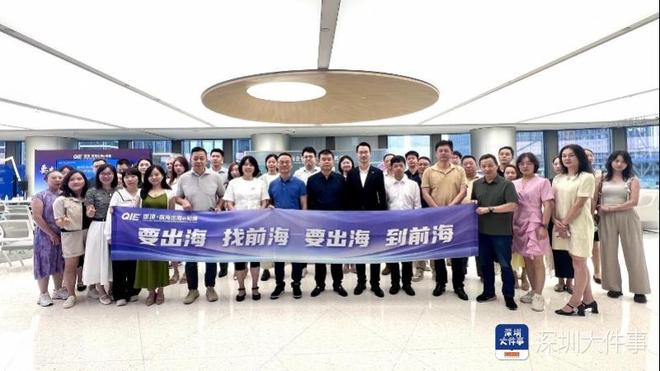
Group 1 - The event "Decoding Overseas Markets, Supply and Demand Service Matching Exchange Meeting" was successfully held to support enterprises in expanding overseas markets, focusing on the specific needs of Fujian enterprises in Southeast Asia [1][3] - The event gathered representatives from various business associations and highlighted the collaborative service model of "government-enterprise-business association" [1][3] - The meeting received positive feedback from participating enterprises, emphasizing the importance of providing precise and effective support for Fujian companies to "go global" [1] Group 2 - The Executive Vice President of Shenzhen Fujian Chamber of Commerce emphasized the unique conditions provided by Qianhai for Fujian enterprises to expand internationally, leveraging its innovative system and international resource aggregation capabilities [3] - Qianhai's efficient business environment and comprehensive cross-border service system are seen as strong support for Fujian businesses [3] Group 3 - A representative from Shenzhen Fujian Fengze Chamber of Commerce shared insights on the opportunities and challenges faced by enterprises in the overseas market, particularly in resin crafts and textiles [5] - The representative highlighted the alignment of Qianhai's professional service resources with the needs of Fengze enterprises, aiming for deeper cooperation to help "Fengze manufacturing" enter international markets [5] Group 4 - A representative from Beijing Qiancheng (Shenzhen) Law Firm discussed the profound changes in the international trade environment, which pose multiple pressures on Chinese enterprises, including cost increases and market share shrinkage [7] - The representative proposed a comprehensive risk control system combining legal, commercial, and tax aspects for enterprises going abroad [7] Group 5 - The Chairman of Shenzhen Shenghe Lingnan Investment Co., Ltd. noted that the US-China trade friction reflects a competition of economic scale, suggesting that traditional strategies for manufacturing relocation to avoid tariffs are no longer effective in Southeast Asia [9] - The Chairman recommended exploring emerging e-commerce markets in Russia and Africa, emphasizing the importance of capital operations to access mature channels [9] Group 6 - The event also focused on strengthening exchanges between Hong Kong and Qianhai, with initiatives to enhance youth development and promote collaboration through various activities [11] - The goal is to provide a broader learning platform for Hong Kong youth and enhance their understanding of national development [11] Group 7 - The event facilitated practical discussions among participating enterprises regarding the challenges they face in going abroad and the support they need from Qianhai [13] - There was a vibrant exchange of experiences and needs, leading to proactive business matching among representatives [13] Group 8 - The Shenzhen Qianhai Outbound E-Station is set to launch in July 2024, aiming to create a one-stop comprehensive service platform for enterprises going abroad [15] - As of May 9, 2025, the platform has served over 800 enterprises and attracted more than 180 professional service providers, forming a service system covering the entire lifecycle of enterprise outbound activities [15]

政策信号下的市场主线
2025-08-05 03:20
Summary of Key Points from Conference Call Records Industry Overview - **Economic Growth Target**: China's economic growth target for 2025 is maintained at 5%, with a growth of 5.3% in the first half of the year. The fiscal easing policy will continue in the second half, but the impact on nominal GDP and PPI may be limited due to moderate demand-side policies [1][3][4]. - **Real Estate Market**: The real estate market is showing signs of weakness, with significant inventory pressure despite some recovery in transaction volumes in core cities. The need to stabilize buyer expectations and improve product quality is emphasized [2][38][39]. Core Insights and Arguments - **Trade Relations**: The U.S.-China trade negotiations have been postponed, with a slightly hawkish stance from the U.S. The introduction of secondary tariffs on imported goose oil has caused market fluctuations, indicating ongoing sensitivity to trade tensions [1][6]. - **Policy Outlook**: The political bureau meeting expressed optimism about the economic situation, emphasizing policy coherence and stability. Incremental policies may become evident in Q4, focusing on improving fund efficiency [1][12][19]. - **Demand-Side Policies**: Demand-side policies are present but are less systematic compared to supply-side reforms. The impact on PPI and GDP is expected to be moderate [5][7][14]. Important but Overlooked Content - **Capital Market Sentiment**: The capital market is expected to be more attractive and inclusive, with potential adjustments in IPO thresholds and margin trading data. Structural opportunities are highlighted despite a lack of clear performance drivers [1][23][28]. - **Real Estate Challenges**: The real estate market faces challenges such as high inventory levels and declining prices, with a significant inventory of nearly 500 million square meters in 80 key cities, leading to a de-stocking cycle of about 28 months [39][40]. - **Future Planning**: The upcoming five-year plan will dominate macroeconomic policy, focusing on high-level security and quality development, with energy, electricity, national security, and technological independence as key indicators [1][19]. Sector-Specific Insights - **Real Estate**: The market is stabilizing, but the pressure from inventory remains high. Core cities are showing some recovery, but overall, the market needs to address buyer confidence and product quality [38][41][42]. - **Consumer Sector**: The consumer sector is expected to recover faster than real estate, with policies aimed at enhancing service consumption. The focus is on stable ROE and dividend yields in consumer and financial sectors [32][36]. - **Technology Sector**: The technology sector remains crucial, with strong support policies and potential for growth in areas like AI and cloud computing. The sector is seen as undervalued compared to global peers [31][37]. Conclusion The conference call highlights a cautious yet optimistic outlook for the Chinese economy, with specific attention to the real estate market's challenges and the potential for recovery in consumer and technology sectors. The emphasis on policy stability and structural opportunities in the capital market suggests a strategic approach to navigating the current economic landscape.
特朗普打错算盘了!1天内外交部两次通告美国,俄石油中方照买不误!话音刚落,中俄联合演习开始
Sou Hu Cai Jing· 2025-08-04 13:35
Core Viewpoint - The U.S. Treasury Secretary's threat to impose a 500% tariff on China for purchasing Russian oil highlights the ongoing tensions in U.S.-China relations, particularly in the context of energy cooperation and sanctions against Russia [1][3]. Group 1: U.S.-China Relations - The U.S. is attempting to leverage tariffs to pressure China into ceasing its oil purchases from Russia, which the U.S. views as undermining its sanctions against Russia [1][3]. - Following a recent round of trade talks in Stockholm, the U.S. quickly shifted from a temporary truce to aggressive tariff threats, indicating a lack of trust and stability in U.S.-China negotiations [1][3]. Group 2: China's Response - China has firmly stated its intention to protect its sovereignty and development interests, asserting that its energy cooperation with Russia is a matter of national choice [3][5]. - The Chinese government emphasizes the importance of dialogue based on equality and mutual respect, indicating that the root of the current issues lies more with the U.S. [3][5]. Group 3: Energy Cooperation - China relies on Russia as a key partner in its energy diversification strategy, with significant imports of oil and gas, including 107 million tons of crude oil in 2023, making Russia China's second-largest oil supplier [5]. - The ongoing energy cooperation is reinforced by projects like the "Power of Siberia" gas pipeline, which is expected to supply 38 billion cubic meters of gas annually when fully operational [5]. Group 4: Military Cooperation - China and Russia are set to conduct joint military exercises, signaling a strong strategic partnership that complements their economic ties [6][8]. - High-level interactions, including President Putin's upcoming visit to China, further solidify the relationship, demonstrating mutual support and collaboration [6][8]. Group 5: Economic Implications - The potential for high tariffs could adversely affect U.S. businesses and consumers, highlighting the negative consequences of a renewed tariff war [8]. - The politicization of energy procurement by the U.S. contradicts market principles and could destabilize global energy security, leading to widespread opposition [8].

乌克兰:中国买石油只能2选1!特朗普亮关税新招,要和中国硬碰硬
Sou Hu Cai Jing· 2025-08-03 03:58
Group 1 - The core viewpoint of the article highlights the ongoing tensions in U.S.-China relations, particularly in the context of trade negotiations and energy imports from Russia, with the U.S. acknowledging its limited leverage over China [1][3][5] - The article discusses the implications of the U.S. Treasury Secretary's admission that the U.S. lacks sufficient leverage to pressure China into abandoning Russian oil, indicating a shift in the dynamics of global trade and energy markets [3][5][11] - It emphasizes that the U.S. has previously had to make concessions in trade negotiations, as evidenced by the outcome of the tariff disputes, which suggests that the notion of a hard decoupling between the U.S. and China is overstated [3][5][11] Group 2 - The article outlines Trump's recent actions to impose new tariffs on several countries, excluding China, which may indicate a strategic approach to isolate China by treating its allies differently [7][9] - It notes the contrasting tariff rates imposed on Pakistan and India, suggesting a shift in U.S. foreign policy aimed at pressuring India to choose sides in the geopolitical landscape [9][11] - The article also highlights the relatively low tariff imposed on Brazil, indicating a calculated decision by the U.S. to avoid escalating tensions with a key member of the BRICS group while focusing on China as the primary target [9][11]
2025年7月PMI点评:制造业PMI季节性回落,价格指数回升
Hua Yuan Zheng Quan· 2025-07-31 14:26
证券研究报告 固收点评报告 hyzqdatemark 2025 年 07 月 31 日 ——2025 年 7 月 PMI 点评 投资要点: 证券分析师 廖志明 SAC:S1350524100002 liaozhiming@huayuanstock.com 马赫 请务必仔细阅读正文之后的评级说明和重要声明 联系人 mahe@huayuanstock.com 制造业 PMI 季节性回落,价格指数回升 7 月 PMI 季节性回落,景气度有所下降。7 月制造业 PMI 环比下降 0.4pct 至 49.3%, 2021-2024 年的 7 月制造业 PMI 平均环比下降 0.38pct,今年 7 月下降或主要受部 分地区高温、暴雨、台风灾害等因素影响。7 月产需相关指数有所收缩,价格指数持 续回升。7 月非制造业商务活动指数为 50.1%,环比下降 0.4pct,服务业商务活动指 数和建筑业商务活动指数分别为 50.0%和 50.6%,较上月分别-0.1pct/-2.2pct。7 月综合 PMI 产出指数为 50.2%,较上月-0.5pct,仍位于扩张区间,显示企业生产经 营活动总体扩张虽有所减缓,但经济内生动力持续 ...
PE与PP套利机会分析
Qi Huo Ri Bao· 2025-07-30 08:12
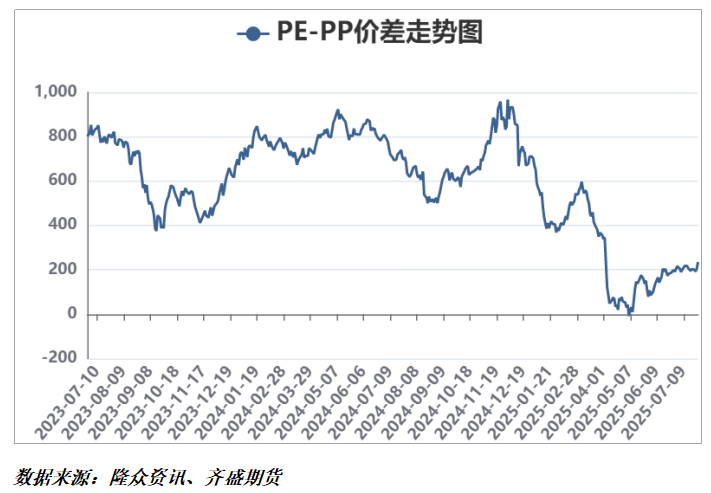
Group 1: Market Dynamics - The relationship between PE (Polyethylene) and PP (Polypropylene) is strong, with concerns over rising propane prices due to tariffs impacting PP costs, leading to a narrowing price gap that even turned negative at one point [1] - Since May, as trade tensions eased, the price gap between PE and PP has been gradually returning to fundamentals, suggesting a potential resurgence in PE's bullish positioning [1] Group 2: Supply Side - As of July, the traditional maintenance season for polyolefins is coming to an end, with both PP and PE operating rates rebounding to around 85% [2] - There are more maintenance plans for PE than for PP before the National Day holiday, with 12 PE production lines (over 3 million tons capacity) scheduled for maintenance compared to 7 PP lines (230,000 tons capacity) [2] Group 3: Demand Side - The second half of the year is traditionally a peak demand season for polyolefins, with PE's peak demand starting in late July and expected to last until November, primarily driven by agricultural needs [6][3] - In contrast, PP's peak demand is more aligned with consumer spending during the "Golden September and Silver October" period and year-end holidays, making it more susceptible to macroeconomic conditions [6] Group 4: Import and Export Trends - Domestic PP capacity has expanded significantly, leading to reduced imports and a situation where exports exceed imports, resulting in a declining reliance on PP imports [7] - Conversely, PE still faces high import dependency due to a shortage of domestic high-end supply, although PE imports have decreased significantly this year, dropping to below 1 million tons in June, the lowest in seven years [7] Group 5: Summary - Trade tensions have caused the PE and PP price gap to hit a three-year low, but as these tensions diminish, expectations for PE in terms of supply, demand, and import/export dynamics are stronger than for PP, indicating a potential widening of the price gap in the future [8]
工业盈利仍有压力
CAITONG SECURITIES· 2025-07-28 08:00
Group 1: Industrial Profitability - In June 2025, the total profit of industrial enterprises above designated size decreased by 4.3% year-on-year, with the decline narrowing by 4.8 percentage points compared to May[7] - The profit margin for industrial enterprises in June was down 6.9% year-on-year, contributing a 6.9 percentage point drag on profit growth, although this was an improvement from the 10.2 percentage point drag in May[8] - Industrial production showed resilience with a 6.8% year-on-year increase in industrial added value, outperforming May's 5.8%[8] Group 2: Future Profitability Pressure - The second half of 2025 is expected to see continued pressure on corporate profitability due to potential depletion of U.S. demand from prior "import rush" activities[10] - Tariffs have increased costs for enterprises, impacting profit levels, similar to the trend observed during the last U.S.-China trade friction from 2018 to 2019[10] - Multiple industries are pushing for "anti-involution," which may further compress profit margins in sectors with weak downstream demand[25] Group 3: Resilience in Equipment Manufacturing - Equipment manufacturing has shown relative resilience, with profit margins performing better than other sectors since April 2025[26] - The mining industry has maintained a profit margin of around 31% since April 2025, despite revenue growth remaining negative[26] - Companies that have already expanded overseas or are establishing factories abroad are likely to capture more market share amid trade frictions[27][28]
倒计时90天,美国无路可退,川普释放和解信号,主动提出访华意愿
Sou Hu Cai Jing· 2025-07-26 11:48
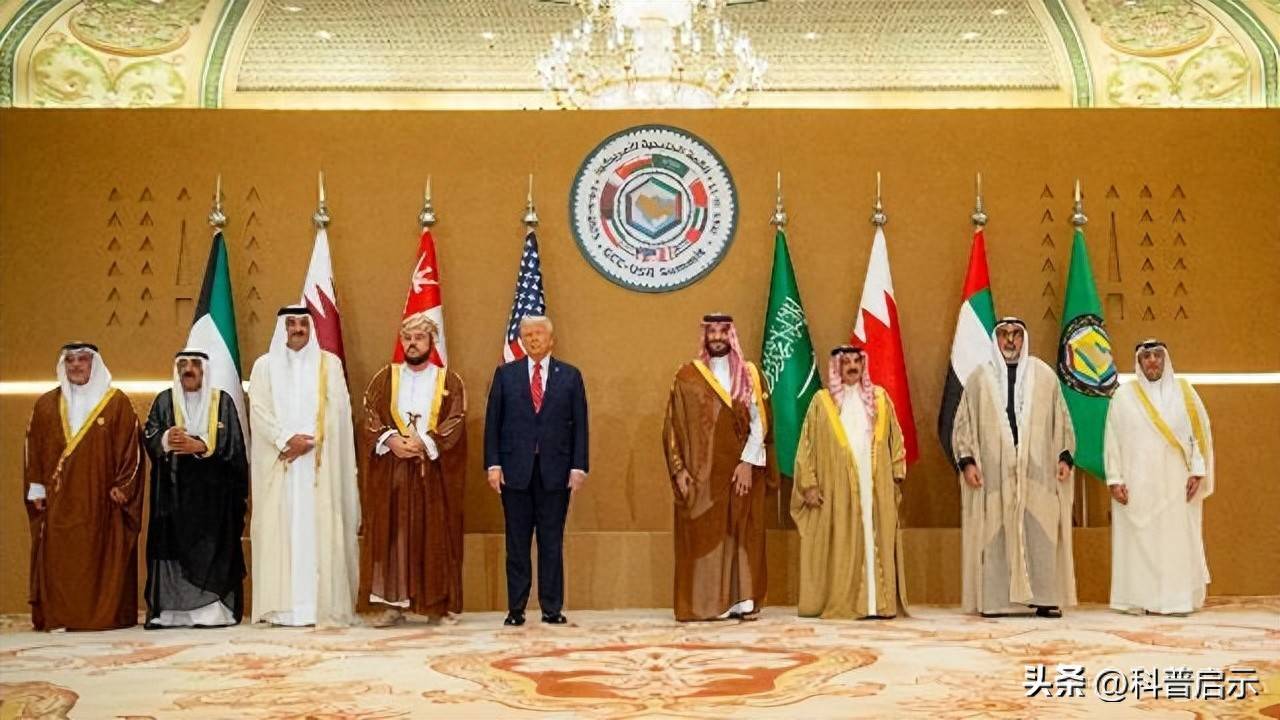
Group 1 - Trump's recent Middle East visit resulted in significant military purchase contracts and investment commitments from Saudi Arabia, UAE, and Qatar, totaling thousands of billions of dollars [1] - Qatar gifted Trump a Boeing aircraft, showcasing the high-level diplomatic relations during his visit [1] - Despite these apparent successes, Trump faces a critical situation with only 90 days remaining to address ongoing challenges, particularly in U.S.-China relations [1] Group 2 - Following the initiation of a tariff war in April, Trump granted a 90-day temporary tariff exemption to most trade partners, aiming to negotiate new trade agreements [3] - However, no country, except the UK, reached an agreement with the Trump administration, while China unexpectedly secured a tax reduction agreement with the U.S. [3] - This outcome indicates a failure of Trump's tariff strategy, as he did not achieve the concessions he anticipated from China [3] Group 3 - On May 14, China's Ministry of Commerce announced a 90-day suspension of export control measures against 28 U.S. entities, which previously restricted military-related exports [5] - Additionally, measures against 17 U.S. entities listed as "unreliable" will also be adjusted, allowing for a temporary reprieve from restrictions on trade and investment in China [6] - These actions are seen as a strategic move to ease tensions and facilitate the implementation of agreements reached during U.S.-China trade talks [8] Group 4 - The 90-day exemption period for U.S. companies is critical, as it hinges on Trump's actions and performance in the coming weeks [8] - Trump's recent statements indicate a willingness to engage with China, highlighting the strategic importance of U.S.-China relations on a global scale [8][10] - The urgency for Trump to resolve issues related to the supply of strategic minerals from China is underscored, as these resources are vital for U.S. technology and defense sectors [11] Group 5 - China has implemented strategic mineral export controls and is actively combating smuggling to protect its resource security [13] - The U.S. faces significant challenges in the rare earth sector due to technological limitations, which has become a critical vulnerability [13] - Trump's need for reconciliation with China is driven by the necessity to secure essential resources for U.S. industries [13]
长江期货市场交易指引-20250724
Chang Jiang Qi Huo· 2025-07-24 02:00
1. Report Industry Investment Ratings - **Macro - finance**: Index futures are rated as a slow - bull market with an upward - trending shock; treasury bonds are recommended to focus on taking profits, with a strengthening shock [6]. - **Black building materials**: Rebar is recommended for temporary observation; iron ore is expected to be strong with shocks; coking coal and coke are recommended for cautious trial - buying [1][8][9]. - **Non - ferrous metals**: Copper is recommended for range trading or observation; aluminum is recommended to be mainly observed; nickel is recommended for observation or short - selling at high prices; tin is recommended for range trading; gold and silver are recommended for range trading [1][11][20]. - **Energy and chemicals**: PVC, caustic soda, styrene, and rubber are expected to be strong with shocks; urea and methanol are expected to move with shocks; polyolefins are expected to have wide - range shocks; soda ash is recommended for离场观望 [1][23][36]. - **Cotton - spinning industry chain**: Cotton and cotton yarn are expected to be strong with shocks; apples and jujubes are expected to move with shocks [1][38][39]. - **Agriculture and animal husbandry**: Pigs are recommended to be short - sold at high prices; eggs are recommended to be short - sold at high prices in the short - term and long - bought at low prices in the fourth quarter; corn is expected to have high - level shocks; soybean meal and oils are expected to be strong with shocks [1][41][48]. 2. Core Views of the Report The report provides investment ratings and market outlooks for various futures products in different industries. It analyzes market trends based on factors such as macro - economic policies, supply - demand relationships, and international trade situations. For example, in the macro - finance sector, index futures are influenced by trade news and show a slow - bull trend, while treasury bonds face challenges from capital diversion and risk - preference changes. In the black building materials sector, prices are affected by factors like production inspections, supply - demand balances, and policy expectations. 3. Summaries According to Relevant Catalogs Macro - finance - **Index futures**: The slow - bull trend is gradually clear, and the index center moves up due to trade news boosting market risk preference [6]. - **Treasury bonds**: Although the odds space of long - term and ultra - long - term yields has opened, the bond market is under pressure from capital diversion and cautious institutional behavior. It is recommended to focus on taking profits [6]. Black building materials - **Rebar**: The price is expected to be strong with shocks. The supply - demand relationship is relatively balanced, and attention should be paid to policy signals and crude steel production restrictions [8]. - **Iron ore**: The price is expected to be strong with shocks. The supply is stable, the demand is strong, and the market is influenced by trade policies and policy expectations [9]. - **Coking coal and coke**: Coking coal shows a supply - demand boom, and the price is strongly supported in the short - term. Coke has obvious supply - demand gaming characteristics, and the second - round price increase may be affected by factors such as steel mill profits [9][10]. Non - ferrous metals - **Copper**: The price is expected to be in a high - level shock. It is affected by factors such as import tariffs, inventory changes, and economic recovery expectations [11]. - **Aluminum**: The short - term upward space of the price is limited. Attention should be paid to inventory accumulation. Alumina is recommended for observation, and electrolytic aluminum and cast aluminum alloy are recommended for observation [13][14]. - **Nickel**: The long - term supply is excessive, and the price is expected to move with shocks. It is recommended to short - sell at high prices [18]. - **Tin**: The supply gap is improving, and the price is expected to be supported. It is recommended for range trading [19][20]. - **Silver and gold**: The prices are expected to move with shocks. They are affected by factors such as economic data, geopolitical situations, and tariff policies [20][22]. Energy and chemicals - **PVC**: The supply - demand is still weak, but it is driven by policy expectations and is expected to be strong with shocks. Attention should be paid to the support at 5100 [24][25]. - **Caustic soda**: The supply is high, and the demand has rigid support but slow growth. The near - month contract is under pressure, and the 10 - contract can be considered for low - buying on dips [26][27]. - **Styrene**: The fundamentals have limited benefits, and it is expected to be strong with shocks. Attention should be paid to the support at 7300 [28]. - **Rubber**: It is expected to be strong with shocks. Attention should be paid to the pressure at 15000. The raw material is firm, and the inventory shows a slight destocking trend [30]. - **Urea**: The supply decreases slightly, the demand has certain support, and the price is expected to move with shocks in the range of 1680 - 1850 [31]. - **Methanol**: The supply and demand tend to be stable, and the price is expected to move with shocks [33]. - **Polyolefins**: The supply pressure is large, the demand is in the off - season, and the price is expected to have a weak shock. Attention should be paid to the intervals of 7200 - 7500 for L2509 and 6900 - 7200 for PP2509 [34][35]. - **Soda ash**: It is recommended for离场观望. The supply is high, the demand is under pressure, and the short - term is driven by macro factors [37]. Cotton - spinning industry chain - **Cotton and cotton yarn**: The price is expected to be strong with shocks. The global cotton supply and demand are adjusted, and the spot market is tight [38]. - **Apples**: The price is expected to maintain a high - level range shock due to low inventory [39]. - **Jujubes**: The spot price is expected to be stable in the short - term. Attention should be paid to the new - season situation in the production area [39]. Agriculture and animal husbandry - **Pigs**: The supply - demand pressure still exists, and the price is under pressure. It is recommended to short - sell at high prices after the rebound [41][42]. - **Eggs**: In the short - term, it is recommended to short - sell at high prices, and in the fourth quarter, it is recommended to long - buy at low prices. Attention should be paid to factors such as supply and demand changes and cold - storage egg出库 [44]. - **Corn**: The short - term supply - demand game is intense, and the price is expected to have a high - level shock. It is recommended to be cautious when going long unilaterally and pay attention to the 9 - 1 reverse spread opportunity [45][46]. - **Soybean meal**: In the short - term, it is recommended to go long at low prices for M2509. In the long - term, pay attention to the weather and go long at low prices for M2511 and M2601 [46][48]. - **Oils**: In the short - term, pay attention to the support levels of 8000, 8900, and 9400 for soybean oil, palm oil, and rapeseed oil 09 contracts, and continue the idea of buying on dips [48][53].