
通胀预期

Search documents
事件点评:央行重启国债买卖或是一次性利好
KAIYUAN SECURITIES· 2025-10-28 14:13
Report Industry Investment Rating No relevant content provided. Core Viewpoints of the Report - The central bank's restart of treasury bond trading only affects the rhythm of the bond market, not its direction, similar to the impact of the stamp duty cut on the stock market in August 2023 [5]. - Against the backdrop of revised economic expectations, bond yields are expected to rise trend - like. For stock - bond allocation, it is maintained that in the second half of 2025, the economic growth rate may not decline significantly, structural issues such as prices are expected to improve trend - like, and there will be a continued switch between stock - bond allocation with bond yields and the stock market expected to rise [6][7]. Summary by Related Catalogs Central Bank's Reasons for Restarting Treasury Bond Trading - The central bank's trading of treasury bonds is mainly to enrich the channels for base money injection, and the channel for long - term base money injection is gradually shifting from foreign exchange purchases and reserve requirement ratio cuts to treasury bond trading. This change is in line with the central bank's established goals, and restarting treasury bond trading within the year is a reasonable arrangement. Also, it is a common and mature base money injection method in developed countries like the US and Japan [6]. Changes in the Central Bank's Treasury Bond Trading Method - In 2024, the central bank's bond purchases significantly affected the short - end market. Banks actively bought short - term bonds in the secondary market during the yield decline to meet purchase quotas, leading to a significant drop in short - term treasury bond yields. In 2025, since May, banks have restarted bond purchases with a similar volume to 2024, but short - term treasury bond yields did not decline abnormally. It is speculated that the bond purchase method has changed to passive buying, similar to a market - maker role. The impact on bond yields has shifted from pushing down short - end yields to curbing their upward movement. In 2025, the central bank may mainly buy bonds previously purchased by large banks, with large banks first stocking up bonds and then the central bank buying their existing bonds [3][6][7]. Impact of Central Bank's Treasury Bond Trading on the Bond Market - Historically and internationally, the central bank's selling of treasury bonds does not necessarily lead to an increase in bond yields, and buying does not necessarily lead to a decrease. For example, in August 2024, the central bank sold treasury bonds when the 10 - year treasury bond yield was low, but long - end and ultra - long - end bond yields still declined significantly. In recent years, central banks in the US and Japan have continuously bought bonds, but their long - term treasury bond yields have been rising, with 30 - year treasury bond yields above 3%. Inflation expectations are considered the key factor affecting bond yields. If inflation or inflation expectations rise, long - term yields should follow. For instance, in the first half of 2009, long - term treasury bond yields rose significantly due to rising inflation expectations despite low short - term yields [4]. - The central bank's announcement of treasury bond trading is likely to have a one - time impact. From international experience, central bank bond purchases do not change the bond market's direction. However, market expectations of central bank bond purchases have restricted the rise of bond yields. Since the central bank did not announce an interest rate cut simultaneously, the probability of future interest rate cuts is not high after this treasury bond trading. After yields decline, some investors may sell, pushing yields up again [4].
宏观深度报告:重启降息后,美债利率如何走?
Ping An Securities· 2025-10-28 12:25
Group 1: Macroeconomic Background of Fed's Rate Cut - The U.S. economy is slowing down, with a real GDP growth of 2.1% in the first half of the year, below the expected growth of nearly 3% for 2023-2024 and the 2015-2019 average of 2.6%[2] - Employment demand and supply are both weak, with an average of only 27,000 new non-farm jobs added monthly from May to August, and the unemployment rate rising to 4.3%[2] - Inflation is showing a mixed structure, with stable but high headline inflation, and commodity inflation rising offset by a decline in service inflation[2] Group 2: U.S. Treasury Yield Trends and Supply-Demand Characteristics - The term premium for U.S. Treasuries has significantly increased, reflecting investor caution towards long-term risks, with 20-year and above Treasuries at historically high premium levels[2] - The supply-demand structure for Treasuries is changing, with the Treasury increasing short-term debt issuance while maintaining stable overall financing[2] - As of September, T-Bills accounted for 21.5% of the total outstanding marketable debt, indicating a shift in financing strategy[2] Group 3: Historical Experience of Rate Cuts and Future Outlook - Historically, in the seven rate cut cycles from 1982 to 2019, the 10-year Treasury yield typically declines before the first cut due to "expectation pricing," but may rebound in the following months[2] - The Fed is expected to be cautious in its rate cut approach, with only one cut likely in October or December this year, and 2-3 cuts anticipated next year, leading to a policy rate around 3% by the end of 2026[2] - The 10-year Treasury yield is projected to fluctuate between 3.9% and 4.3% in the next 1-3 months, and potentially drop to 3.5%-4% in the 3-6 month outlook[2]
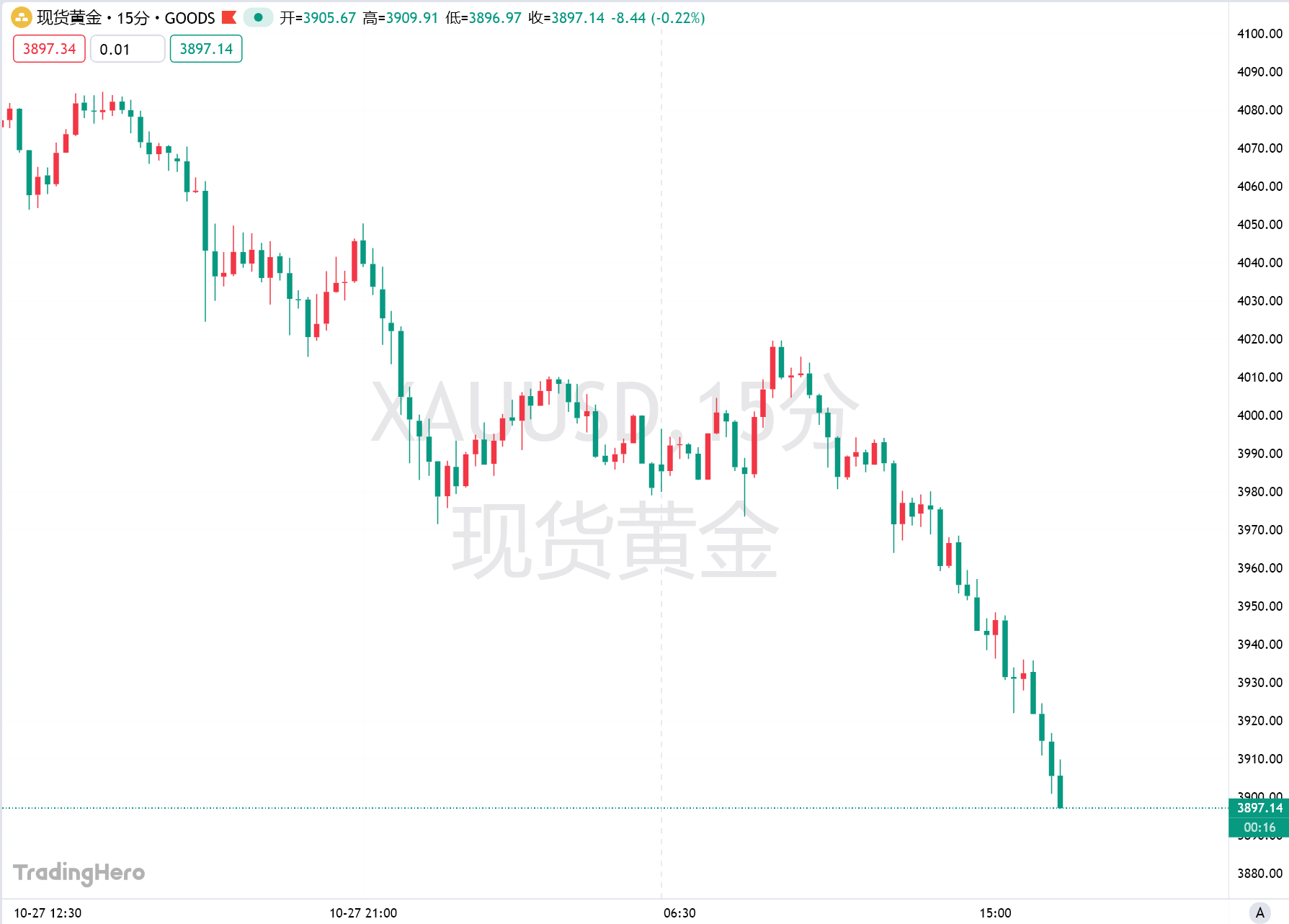
金价下破3900!花旗隔夜紧急预警:短期内或跌至3800
Jin Shi Shu Ju· 2025-10-28 09:03
Core Viewpoint - The ongoing easing of trade tensions has led to a decline in safe-haven demand, causing spot gold prices to drop below $3900 per ounce, marking a significant decrease from recent highs [1][2]. Price Movements - Spot gold prices fell below the $4000 mark on Monday and subsequently dropped over $120 in a single day, with a daily decline exceeding 2% [1][2]. - Citigroup has revised its short-term price targets for gold and silver, lowering the gold price expectation from $4000 to $3800 per ounce and silver from $55 to $42 per ounce due to changes in the global market environment [2]. Market Dynamics - Factors contributing to the price adjustments include U.S. trade negotiations with several countries, which have reduced market uncertainty, and expectations of a resolution to the U.S. government shutdown [2][5]. - Year-to-date, gold prices have surged by 51% due to geopolitical uncertainties, interest rate cut expectations, and central bank purchases, although prices have retreated by 10% from the historical high of $4381.21 per ounce reached on October 20 [2]. Long-term Outlook - Citigroup suggests that concerns driving gold prices higher may need to become a baseline scenario to sustain the current bull market until 2026, while the logic of holding gold as a hedge against geopolitical and economic risks remains strong in the medium to long term [3]. Market Sentiment - There is significant divergence in market opinions regarding the bottom for gold prices, with some analysts suggesting tactical buying after a pullback [4]. - Central bank demand for gold is reportedly weaker than before, with some traders welcoming deeper price corrections as potential buying opportunities [4]. Federal Reserve Influence - The market is closely watching the upcoming Federal Reserve interest rate decision, with a high probability of a 25 basis point cut expected [4][5]. - The ongoing government shutdown has added uncertainty to the Fed's decision-making process, affecting the release of key economic data [5]. Leadership Changes - The selection process for the next Federal Reserve Chair is under scrutiny, with a shortlist of candidates that could influence future monetary policy directions [6].

机构:美联储前瞻指引或带有温和鹰派基调
Sou Hu Cai Jing· 2025-10-28 07:00
Core Viewpoint - Analysts from Allspring Global Investments expect the Federal Reserve to lower the benchmark interest rate by 25 basis points this week, but the forward guidance may vary and could carry a mildly hawkish tone [1] Group 1: Interest Rate Expectations - The analysts believe that the market may be overly optimistic about a rate cut in December, estimating a 60%-70% probability compared to the market's pricing of 96% [1] - There is a persistent risk of high inflation expectations, especially amid ongoing economic uncertainty [1] Group 2: Long-term Economic Outlook - The analysts suggest that if economic growth remains resilient, the Federal Reserve may tolerate an inflation rate above 2% in the long term [1]
贵金属周报:中美经贸关系缓和预期或使贵金属价格承压-20251028
Hong Yuan Qi Huo· 2025-10-28 06:44
Report Title - Weekly Report on Precious Metals - Gold and Silver [1] Report Date and Author - Date: October 28, 2025 - Author: Wang Wenhu from the Research Institute [2] Investment Rating - Not provided in the report Core Viewpoints - Sino-US economic and trade relations' easing may put pressure on precious metal prices; Fed's possible rate cut and stop of balance sheet reduction in the long term support precious metal prices; some central banks' gold - related actions have mixed impacts on prices. It is expected that precious metal prices may adjust, and investors are advised to wait and see [3] Summary by Sections Part 1: US Fiscal and Monetary Policy - **Fiscal Situation**: US unpaid public debt scale increased by $30.8 billion to $3.80 trillion; 2025 Q3 Treasury net issuance was $964.5 billion, and Q4 may decline. Permanent expansion of additional tax credits may increase fiscal deficits by $23.4 - $43.9 billion from 2026 - 2035; abolition of health insurance - related provisions may increase deficits by $1.4 - $37.5 billion [10] - **Monetary Policy Tools**: Fed's daily overnight reverse repurchase scale was $2.435 billion; bank reserve balance decreased, overnight reverse repurchase agreement scale increased, and Treasury cash account increased. The temporary appropriation bill passed by the House failed in the Senate. Fed's lending to commercial banks showed different trends, and the regular financing plan BTFP expired. The Fed used the standing repurchase facility SRF, with a cumulative use of $30.6 billion [11][13][16][17] - **Inflation and Interest Rates**: US September CPI was 3% year - on - year, core CPI was 3% year - on - year. October consumer inflation expectations were 4.6% (1 - year) and 3.9% (5 - year). Mid - long - term Treasury yields decreased due to Fed's expected rate cuts and stop of balance sheet reduction. The spread between long - and mid - term Treasuries was positive and widened [19][21][26] - **Financial Stress Index**: The US OFR financial stress index decreased to - 2.0930, with some sub - indicators rising. The Fed's use of SRF eased inter - bank liquidity [29] Part 2: US Economic and Employment Performance - **Commercial Bank Loans**: US commercial bank loan and lease volume increased week - on - week, with different trends in various loan types [33][35] - **Retail Sales**: US Redbook commercial retail sales annual rate decreased to 5.0% week - on - week, but consumer spending remained relatively stable [38] - **Mortgage Applications**: US 15 - year and 30 - year mortgage fixed rates decreased, MBA mortgage application activity index decreased, and August new and existing home sales increased [41] - **Employment**: US initial jobless claims were 218,000, lower than expected and previous values; continued claims were 1.926 million, lower than expected but higher than previous values. September ADP private employment decreased by 32,000, indicating concerns about a weakening job market [44] - **International Bond Yield Spreads**: The spreads between US and German (Japanese) mid - long - term Treasury yields decreased due to different central bank policies [47] - **Exchange Rates**: Euro - US dollar exchange rate may bottom out, and US dollar - Chinese yuan exchange rate may weaken [48] - **Market Volatility**: US S&P 500 and gold ETF index volatilities decreased [50] Part 3: Gold - Silver Spread and Inventory Situation - **Gold**: COMEX gold non - commercial long - short position ratio decreased; COMEX and SHFE total gold inventory decreased. Gold futures and spot spreads, basis, and near - far contract spreads were at different levels, with corresponding investment suggestions [56][58][60][67][69][72] - **Silver**: London silver 1 - month lease rate decreased significantly; COMEX silver non - commercial long - short position ratio increased; COMEX, SHFE, and SGE total silver inventory decreased. Silver futures and spot spreads, basis, and near - far contract spreads were at different levels, with corresponding investment suggestions [73][76][79][83][84][85] - **Ratio Analysis**: "Gold - silver ratio" was between the 50 - 75% quantiles of the past five years; "Gold - oil ratio" and "Gold - copper ratio" were much higher than the 90% quantiles of the past five years, with corresponding investment suggestions [87][89]
分析师:美联储前瞻性指引或带有温和偏紧缩基调
Sou Hu Cai Jing· 2025-10-28 04:21
Core Viewpoint - The Federal Reserve is expected to lower the benchmark interest rate by 25 basis points this week, but the forward guidance may be mixed and carry a mildly hawkish tone [1] Group 1: Interest Rate Expectations - The market's perception of a rate cut in December may be overly optimistic, with the probability of a cut estimated at 60%-70%, compared to the market's expectation of 96% [1] Group 2: Inflation and Economic Outlook - Inflation expectations remain high, posing a persistent risk, especially amid ongoing economic uncertainty [1] - In the long term, if economic growth remains resilient, the Federal Reserve may tolerate inflation rates above 2% [1]
贵金属早报-20251028
Da Yue Qi Huo· 2025-10-28 02:47
1. Report Industry Investment Rating No relevant content provided. 2. Core Viewpoints of the Report - Global trade tensions have eased, leading to a continued decline in gold and silver prices. The optimism about trade has returned, increasing the downward pressure on gold prices, and silver prices have followed the decline of gold prices. The premiums of Shanghai gold and silver have expanded slightly, and the domestic sentiment remains relatively strong [4][5]. - After Trump took office, the world entered a period of extreme turmoil and change. The inflation expectation has shifted to an economic recession expectation. Gold prices are difficult to fall, and silver prices still mainly follow gold prices. However, tariff concerns have a stronger impact on silver prices, and there is a risk of an enlarged increase in silver prices [9][12]. 3. Summary by Related Catalogs 3.1 Previous Day's Review - **Gold**: The three major US stock indexes rose across the board, and the three major European stock indexes closed slightly higher. US bond yields fell collectively, with the 10 - year US bond yield dropping 3.46 basis points to 3.976%. The US dollar index fell 0.12% to 98.82. The offshore RMB depreciated against the US dollar to 7.1091. COMEX gold futures fell 3.40% to $3997.00 per ounce. The basis was - 1.56, with the spot at a discount to the futures. Gold futures warehouse receipts remained unchanged at 87,015 kilograms. The 20 - day moving average was upward, and the K - line was above the 20 - day moving average. The main net long position decreased [4]. - **Silver**: Similar to gold, COMEX silver futures fell 3.61% to $46.83 per ounce. The basis was - 18, with the spot at a discount to the futures. The Shanghai silver futures warehouse receipts decreased by 17,328 kilograms day - on - day to 647,643 kilograms. The 20 - day moving average was upward, and the K - line was above the 20 - day moving average. The main net long position increased [5]. 3.2 Daily Tips - **Gold**: Positive factors include the long - term upward trend on the disk and the main net long position. Negative factors include unchanged gold futures warehouse receipts. The expected impact of the day's events: Trump extended the US - Mexico trade negotiation period, and the US reached trade agreements with multiple Southeast Asian countries, causing gold prices to fall again. The trade optimism has returned, increasing the downward pressure on gold prices [4]. - **Silver**: Positive factors include the decrease in Shanghai silver futures warehouse receipts, the long - term upward trend on the disk, and the increase in the main net long position. Negative factors are not obvious. The silver price followed the gold price decline due to trade factors, and the domestic sentiment remained relatively strong [5]. 3.3 Today's Focus - 07:00: South Korea's preliminary GDP for the third quarter - Time TBD: The 2025 World Digital City Conference in Shenzhen (lasting until October 31), the 2025 Shenzhen International All - Touch and Display Exhibition, the Guangdong International Robot and Intelligent Equipment Development Conference, and the 2025 Financial Street Forum Annual Conference - 16:30: German Economic and Energy Minister Robert Habeck's speech and participation in the public discussion of the Foreign Trade Day event - 17:00: The European Central Bank releases CPI expectations and the loan survey report - 17:30: ECB Governing Council member Fabio Panetta's speech - 21:00: US FHFA Housing Price Index for August, S&P/CS 20 - City Composite Home Price Index for August - 22:00: US Richmond Fed Manufacturing Index for October, Conference Board Consumer Confidence Index for October [14] 3.4 Fundamental Data - **Gold**: The inflation expectation has shifted to an economic recession expectation, and the new US government's policy expectations and actual verification will continue, making gold prices still prone to rise and difficult to fall [9]. - **Silver**: Silver prices still mainly follow gold prices. Tariff concerns have a stronger impact on silver prices, and there is a risk of an enlarged increase [12]. 3.5 Position Data - **Gold**: The main net long position decreased. The long position of the top 20 in Shanghai gold decreased by 45 contracts (- 0.03%), the short position increased by 864 contracts (1.31%), and the net long position decreased by 909 contracts (- 0.88%) [4][29]. - **Silver**: The main net long position increased. The long position of the top 20 in Shanghai silver decreased by 5,409 contracts (- 1.53%), the short position decreased by 13,453 contracts (- 5.06%), and the net long position increased by 8,044 contracts (9.16%) [5][32]. - **ETF Position**: The SPDR gold ETF position continued to decrease, and the silver ETF position also decreased but was higher than the same period in the past two years [34][37]. - **Warehouse Receipts**: Shanghai gold warehouse receipts increased again, COMEX gold warehouse receipts decreased slightly but remained at a high level. Shanghai silver warehouse receipts continued to decrease significantly and were at the lowest level in nearly six years, and COMEX silver warehouse receipts continued to decrease, with New York silver transferred to London [38][39][41].
黄金今日行情走势要点分析(2025.10.28)
Sou Hu Cai Jing· 2025-10-28 00:28
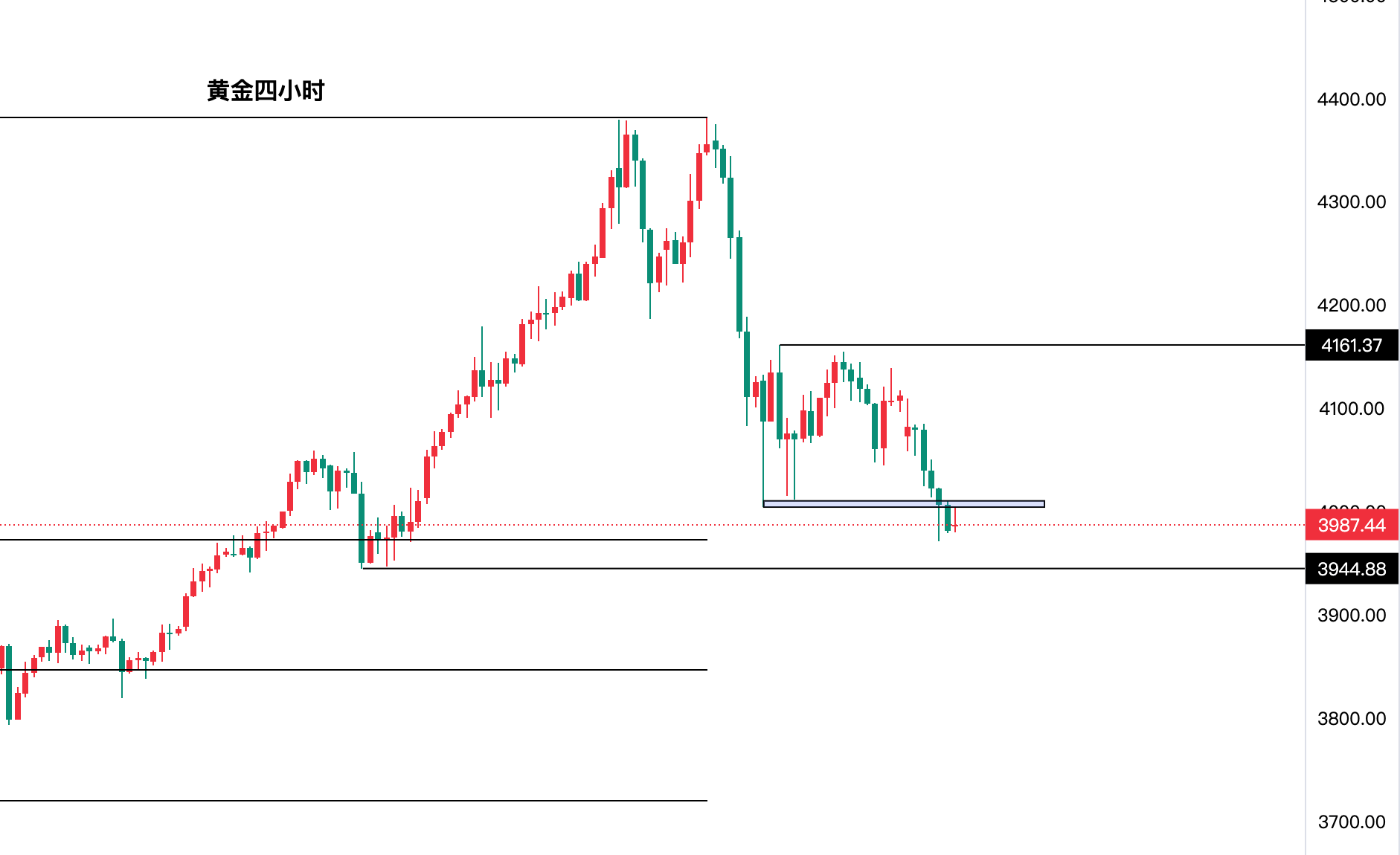
Group 1: Fundamental Analysis - The core reason for the significant drop in gold prices is the progress in China-U.S. trade negotiations, which has led to a reduction in market risk aversion and a shift of investors towards riskier assets [2] - The rapid increase in gold prices prior has resulted in substantial profit-taking by investors, exacerbated by technical selling pressure due to optimistic trade sentiment [3] - Current market conditions show strong expectations for a Federal Reserve interest rate cut, with a 98% probability of a 25 basis point cut, but this expectation has already been priced in, providing limited support for gold prices [4] Group 2: Market and Macro Environment Changes - The U.S. 10-year Treasury yield has slightly increased, reflecting enhanced market risk appetite, while the U.S. dollar index has decreased slightly but failed to support gold prices [5] - Market focus is on the Federal Reserve's interest rate path and U.S. consumer confidence data, which will influence future gold price movements [6] Group 3: Future Price Trends and Investment Suggestions - Short-term factors such as progress in China-U.S. trade talks, strong global stock markets, and rising U.S. Treasury yields are likely to continue suppressing gold prices, leading institutions to lower long-term expectations [7] - Long-term factors such as geopolitical risks, inflation expectations, global central bank gold purchases, and the potential for a long-term decline in the U.S. dollar may still provide support for gold prices [8] Group 4: Technical Analysis - On the daily chart, gold has shifted from a consolidation phase to a bearish trend after breaking below the previous week's low, indicating a short-term market shift towards weakness [9] - Key resistance is identified at around 4070, where the 5-day and 20-day moving averages intersect, while support levels to watch are at 3971 and 3960 [9] - On the four-hour chart, the previous support zone of 4010-4000 has been broken, and the market should monitor whether this area will act as resistance moving forward [11]
美国通胀或阶段性见顶——美国9月CPI数据点评
一瑜中的· 2025-10-26 13:15
Core Viewpoint - The article suggests that US inflation may have reached a temporary peak, with expectations of a decline in the coming months due to manageable tariff impacts and a stabilizing job market [1][3][13]. Inflation Trends - Over the past six months, US inflation has experienced a slight recovery, with the CPI rising from 3% in January to 3% in September, after a low of 2.3% in April [1][5]. - Core CPI also showed a similar trend, increasing from 2.8% in May to 3% in September [1][5]. Tariff Impact - The price impact of tariffs is relatively controllable, with the effective tariff rate rising from 2.3% to 9.5% between February and July, which is lower than initial market expectations [1][6]. - As of September, the tariff price effect on core goods prices is estimated to be close to 90%, with a potential remaining impact of about 0.5 percentage points on core goods and 0.1 percentage points on overall CPI if tariffs rise to 17% [2][7]. Labor Market Dynamics - The marginal weakening of the job market has prevented a wage-price spiral, with wage growth slowing and rental prices stabilizing around 0.2-0.3% [2][6]. - The rental growth rate has decreased, with primary residence rent rising only 0.2%, the smallest monthly increase since January 2021 [19][22]. Inflation Expectations - Consumer inflation expectations remain high in the short and medium term but have decreased compared to earlier in the year, with market pricing for long-term inflation expectations remaining stable or even declining [11][13]. Future Inflation Projections - If US tariff policies do not experience significant fluctuations, inflation is expected to stabilize around 3% in Q4 of this year and decline to approximately 2.5% and 2.8% for CPI and core CPI, respectively, in Q2 of next year [3][13]. Monetary Policy Implications - The controllable impact of tariffs and the peak in inflation may support the Federal Reserve's decision to continue "preemptive" rate cuts, with potential cuts of 25 basis points in October and December [15][25]. - Future rate cuts may slow down if inflation declines at a moderate pace and employment stabilizes [15][25].

美国9月CPI点评:美联储继续降息或无悬念
KAIYUAN SECURITIES· 2025-10-25 09:56
Group 1: Inflation Data Overview - In September 2025, the US CPI increased by 3.0% year-on-year and 0.3% month-on-month, while core CPI also rose by 3.0% year-on-year and 0.2% month-on-month, all below market expectations[2] - Overall inflation shows a marginal rebound, but core inflation is declining, indicating a potential easing impact from tariffs on US inflation[3] - Energy inflation rose significantly, with a year-on-year increase of 2.8%, while food inflation increased by 3.1%, showing a slight decline from August[4] Group 2: Future Inflation Trends and Federal Reserve Actions - The report suggests that inflation may trend downward in the future, with core inflation expected to remain stable or decrease slightly[5] - The Federal Reserve is likely to continue lowering interest rates by 25 basis points, with a total expected reduction of 75 basis points for 2025, due to ongoing risks in the labor market and low consumer confidence[6] - Consumer confidence index recorded a low of 55 in October, indicating pessimism about future economic conditions[42] Group 3: Key Economic Indicators - The Michigan University inflation expectation remained stable at 4.6%, with a 5-year expectation at 3.7%, suggesting consumers do not anticipate rapid cost transfers to them despite income pressures[46] - The core services inflation, excluding housing, showed a year-on-year decline, reflecting significant differences across various consumption sectors[23] - Risks include potential inflation surprises due to international tensions and unexpected economic downturns in the US[47]