
宏观经济

Search documents
永安期货有色早报-20250925
Yong An Qi Huo· 2025-09-25 01:52
Group 1: Report Investment Rating - No information provided regarding the industry investment rating Group 2: Core Views - This week, copper prices fluctuated widely around 80,000 yuan. Before the interest - rate meeting, the market's profit - taking sentiment led to a decline in copper prices. The copper fundamentals remained resilient with increased downstream orders after the price drop. Consider mid - term long positions below 79,000 - 79,500 yuan or selling put options below 78,000 yuan [1] - Aluminum supply increased slightly, downstream开工 improved, and inventory was expected to decline in September. Hold long positions at low prices and pay attention to inter - month and domestic - foreign reverse arbitrage [1][2] - Zinc prices moved down in oscillation. Supply was affected by TC changes, and demand was seasonally weak domestically and faced some resistance overseas. Hold short positions and partially take profits on domestic - foreign positive arbitrage [6] - Nickel's supply remained high, demand was weak, and inventory increased. The short - term fundamentals were weak, but macro - policies and Indonesian policies had some impact [7] - Stainless steel's supply was expected to increase slightly, demand was mainly for rigid needs, and inventory decreased. The fundamentals were weak, and there was some price - supporting motivation from policies [7] - Lead prices rose due to macro factors. Supply was affected by various factors, demand improved slightly, and prices were expected to oscillate between 16,800 - 17,200 yuan next week [9] - Tin prices oscillated widely. Supply was expected to recover marginally, demand was mainly rigid, and short - term supply - demand was weak. Suggest short - term waiting and light - shorting above 275,000 yuan/ton [12] - Industrial silicon production in some regions was expected to adjust, with short - term tight balance and long - term price oscillation at the cycle bottom [15] - Lithium carbonate prices oscillated strongly. Raw - material suppliers were reluctant to sell, and demand was supported by pre - holiday stocking. The market was in an over - capacity stage with some supply disruptions [17] Group 3: Summary by Metal Copper - This week, the spot price of Shanghai copper, the spread between waste and refined copper, inventory, and import profitability showed various changes. The copper price was affected by market sentiment, fundamentals, and macro policies. Consider mid - term long positions below 79,000 - 79,500 yuan or selling put options below 78,000 yuan [1] Aluminum - Aluminum prices, inventory, and import profitability changed. Supply increased slightly, downstream开工 improved, and inventory was expected to decline in September. Hold long positions at low prices and pay attention to inter - month and domestic - foreign reverse arbitrage [1][2] Zinc - Zinc prices, inventory, and import profitability were in flux. Supply was affected by TC changes, and demand was seasonally weak domestically and faced some resistance overseas. Hold short positions and partially take profits on domestic - foreign positive arbitrage [6] Nickel - Nickel prices, import profitability, and inventory changed. Supply remained high, demand was weak, and inventory increased. The short - term fundamentals were weak, but macro - policies and Indonesian policies had some impact [7] Stainless Steel - Stainless steel prices were stable. Supply was expected to increase slightly, demand was mainly for rigid needs, and inventory decreased. The fundamentals were weak, and there was some price - supporting motivation from policies [7] Lead - Lead prices rose due to macro factors. Supply was affected by factors such as scrap battery supply and smelting profit, demand improved slightly, and prices were expected to oscillate between 16,800 - 17,200 yuan next week [9] Tin - Tin prices oscillated widely. Supply was expected to recover marginally, demand was mainly rigid, and short - term supply - demand was weak. Suggest short - term waiting and light - shorting above 275,000 yuan/ton [12] Industrial Silicon - Industrial silicon production in some regions was expected to adjust, with short - term tight balance due to production resumption in Southwest China and Hesheng, and long - term price oscillation at the cycle bottom due to over - capacity [15] Lithium Carbonate - Lithium carbonate prices oscillated strongly. Raw - material suppliers were reluctant to sell, and demand was supported by pre - holiday stocking. The market was in an over - capacity stage with some supply disruptions [17]
MetalsFocus:中长期支撑因素或推动金价在2026年前持续刷新历史高位
智通财经网· 2025-09-24 06:15
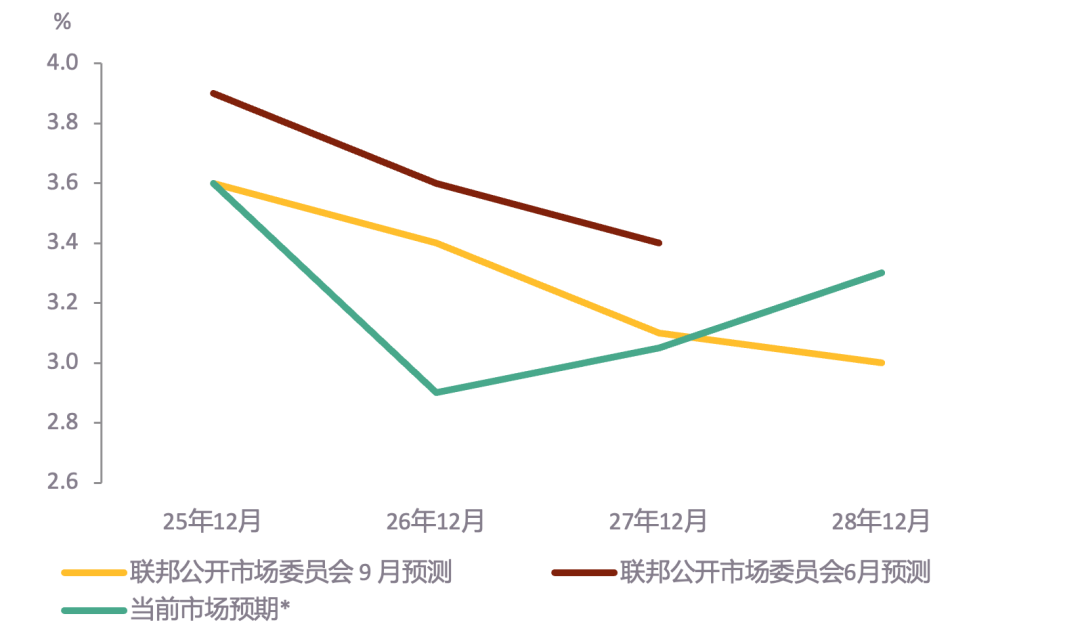
智通财经APP获悉,MetalsFocus发文称,9月17日美联储如市场预期,宣布降息25个基点。受此消息提振,金价一度升至3708美元/盎司的历史新高,并于 近期持续强势。展望后市,MetalsFocus认为,从中长期来看,宏观经济与地缘政治因素仍将为黄金投资和价格提供支撑,因此市场投资者逢低买入的趋 势预计仍将延续,并推动金价在2026年前持续刷新历史高位。 此外,尽管地缘政治紧张局势较年初有所缓解,但重新出现不稳定局势的风险仍难以排除,而美国政府经济与外交政策的不确定性也可能持续存在。总体 而言,这些因素将继续支撑机构投资者在中长期资产配置中增持黄金的合理性。 *联邦基金期货隐含利率; 联邦基金利率预测 MetalsFocus指,美联储的"点阵图"显示,到2025年底前仍将有两次各25个基点的降息,这与市场预期基本一致。然而对于2026~2027年期间的前瞻指引则 明显更为谨慎。中位数预测显示,至2026年底前利率水平将降至3.4%左右,这意味着2026年仅会再有一次降息。相比之下,联邦基金利率期货隐含定价 则更为宽松,指向明年至少两次(甚至三次)降息,利率可能在2026年底接近3%。 更为关键的是,尽 ...

宏观和产业驱动向下 油价弱势不改
Sou Hu Cai Jing· 2025-09-24 06:15
Group 1 - The international oil market is showing signs of downward pressure from both macroeconomic and industry factors, with weak oil demand and increased production from oil-producing countries leading to high inventory risks [1][2] - Since the beginning of 2024, international crude oil prices have been in a weak oscillating trend, fluctuating between $65 and $85 per barrel, influenced by the end of the Fed's rate hike cycle and relatively stable geopolitical conditions in Europe and the Middle East [1] - Looking ahead to 2026, oil prices are expected to adjust weakly, with a mainstream focus level of $55 to $65 per barrel, primarily due to the Fed's initial rate cut phase and concerns over economic downturn and weakened oil demand [1] Group 2 - OPEC+ countries are gradually increasing production to capture more market share, with a total of 2.2 million barrels per day already released and an additional 1.65 million barrels per day being released, amidst limited demand growth and the increasing impact of renewable energy [2] - The combination of weak macroeconomic conditions and strong expectations for inventory accumulation suggests that crude oil prices are likely to undergo a weak adjustment phase, although geopolitical risks in Europe and the Middle East could lead to short-term price spikes [2]
《有色》日报-20250924
Guang Fa Qi Huo· 2025-09-24 03:13
1. Report Industry Investment Ratings No investment ratings are provided in the reports. 2. Core Views of the Reports Copper - Short - term, the copper market has weak drivers, and the main contract of Shanghai copper fluctuates narrowly. Macroscopically, if subsequent inflation and employment data strengthen the expectation of interest rate cuts, copper prices may benefit. Fundamentally, it is in a state of "weak reality + stable expectation". In the medium - to - long - term, the supply - demand contradiction provides bottom support, and the center of copper prices will gradually rise. The main contract is expected to fluctuate between 79,000 - 81,000 yuan/ton [1]. Aluminum - For alumina, it is in a fundamental pattern of "high supply, high inventory, and weak demand", and this pattern is difficult to change fundamentally in the short term. The main contract is expected to fluctuate between 2,850 - 3,150 yuan/ton. For electrolytic aluminum, it is expected to maintain a volatile operation, and the main contract is expected to be in the range of 20,600 - 21,000 yuan/ton [3]. Aluminum Alloy - The spot price of aluminum alloy is expected to remain firm in the short term, the inventory accumulation rate will slow down, and the price difference between aluminum alloy and aluminum is expected to further converge. The short - term main contract is expected to operate in the range of 20,200 - 20,600 yuan/ton [5]. Zinc - Since September, Shanghai zinc has been relatively weak in the non - ferrous metal sector due to the expectation of loose supply. In the short term, the price may be driven by the macro - environment, but the upside space is limited. It is expected to fluctuate mainly, and the main contract is expected to be in the range of 21,500 - 22,500 yuan/ton [7]. Tin - The supply of tin ore remains tight, and the demand is weak. Tin prices are expected to continue to fluctuate at a high level, with the operating range of 265,000 - 285,000 yuan/ton [11]. Nickel - The macro - environment is weak, and there are disturbances in the ore end, but the actual impact is limited. The cost still has support. In the short term, there is no obvious supply - demand contradiction, but the inventory reduction rhythm has slowed down. The price is expected to fluctuate in the range of 119,000 - 124,000 yuan/ton [13]. Stainless Steel - The stainless - steel market is in a state where the downstream is replenishing goods moderately before the festival, but the overall transaction is based on rigid demand. The raw material price is firm, and the cost has support. The short - term disk is expected to adjust in a volatile manner, and the main contract is expected to be in the range of 12,800 - 13,200 yuan/ton [15]. Lithium Carbonate - The lithium carbonate market is in a state of tight balance. The supply path is becoming clearer, and the trading space is weakening. The strong demand in the peak season provides support for the price. The short - term disk is expected to fluctuate and sort out, and the main price center is expected to be in the range of 70,000 - 75,000 yuan/ton [17]. 3. Summaries According to Relevant Catalogs Copper Price and Basis - SMM 1 electrolytic copper price was 80,010 yuan/ton, down 0.27% from the previous day. The SMM 1 electrolytic copper premium was 55 yuan/ton, down 5 yuan/ton from the previous day. The refined - scrap price difference was 1,799 yuan/ton, down 3.93% [1]. Fundamental Data - In August, the electrolytic copper production was 117.15 million tons, down 0.24% month - on - month; the import volume was 26.43 million tons, down 10.99% month - on - month [1]. Aluminum Price and Spread - SMM A00 aluminum price was 20,680 yuan/ton, down 0.34% from the previous day. The import loss was 1,541 yuan/ton, up 242.3 yuan/ton from the previous day [3]. Fundamental Data - In August, the alumina production was 773.82 million tons, up 1.15% month - on - month; the electrolytic aluminum production was 373.26 million tons, up 0.30% month - on - month [3]. Aluminum Alloy Price and Spread - SMM aluminum alloy ADC12 price was 20,850 yuan/ton, down 0.48% from the previous day. The month - to - month spread of 2511 - 2512 was - 25 yuan/ton, up 15 yuan/ton from the previous day [5]. Fundamental Data - In August, the production of recycled aluminum alloy ingots was 61.50 million tons, down 1.60% month - on - month; the production of primary aluminum alloy ingots was 27.10 million tons, up 1.88% month - on - month [5]. Zinc Price and Spread - SMM 0 zinc ingot price was 21,880 yuan/ton, down 0.32% from the previous day. The import loss was 3,145 yuan/ton, up 147.64 yuan/ton from the previous day [7]. Fundamental Data - In August, the refined zinc production was 62.62 million tons, up 3.88% month - on - month; the import volume was 2.57 million tons, up 43.30% month - on - month [7]. Tin Price and Spread - SMM 1 tin price was 270,700 yuan/ton, down 0.48% from the previous day. The import loss was 11,388.05 yuan/ton, up 1,007.77 yuan/ton from the previous day [11]. Fundamental Data - In July, the tin ore import was 10,278 tons, down 13.71% month - on - month; the SMM refined tin production was 15,940 tons, up 15.42% month - on - month [11]. Nickel Price and Basis - SMM 1 electrolytic nickel price was 121,950 yuan/ton, down 0.61% from the previous day. The LME 0 - 3 spread was - 177 dollars/ton, up 2 dollars/ton from the previous day [13]. Fundamental Data - The domestic refined nickel production was 32,200 tons, up 1.26% month - on - month; the import volume was 17,536 tons, down 8.46% month - on - month [13]. Stainless Steel Price and Spread - The price of 304/2B (Wuxi Hongwang 2.0 coil) was 13,100 yuan/ton, unchanged from the previous day. The month - to - month spread of 2511 - 2512 was - 15 yuan/ton, up 65 yuan/ton from the previous day [15]. Fundamental Data - The production of 300 - series stainless - steel crude steel in China (43 companies) was 171.33 million tons, down 3.83% month - on - month; the import volume was 11.72 million tons, up 60.48% month - on - month [15]. Lithium Carbonate Price and Spread - SMM battery - grade lithium carbonate average price was 73,850 yuan/ton, unchanged from the previous day. The month - to - month spread of 2510 - 2511 was - 220 yuan/ton, down 20 yuan/ton from the previous day [17]. Fundamental Data - In August, the lithium carbonate production was 85,240 tons, up 4.55% month - on - month; the demand was 104,023 tons, up 8.25% month - on - month [17].
期货市场交易指引:2025年09月24日-20250924
Chang Jiang Qi Huo· 2025-09-24 02:14
Report Industry Investment Ratings - **Macro Finance**: Bullish on the medium to long - term for stock indices, hold a wait - and - see attitude for treasury bonds [1][5] - **Black Building Materials**: Range trading for coking coal and rebar, buy on dips for glass [1][8][10] - **Non - ferrous Metals**: Wait - and - see or buy on dips for copper, suggest buying on dips after a pullback for aluminum, suggest waiting or shorting on rallies for nickel, range trading for tin, gold, and silver [1][12][18][19] - **Energy and Chemicals**: PVC, caustic soda, styrene, rubber, urea, methanol, and polyolefins are expected to oscillate; conduct an arbitrage strategy of shorting 01 and going long on 05 for soda ash [1][23][34] - **Cotton Textile Industry Chain**: Cotton and cotton yarn are expected to oscillate, PTA is expected to oscillate weakly, apples are expected to oscillate strongly, and jujubes are expected to oscillate weakly [1][36][37] - **Agriculture and Animal Husbandry**: Short on rallies for pigs and eggs, wide - range oscillation for corn, range oscillation for soybean meal, and oscillation with an upward bias for oils [1][39][46][53] Core Views The report provides investment strategies and market analyses for various futures products. It takes into account factors such as supply and demand, macro - economic conditions, policy changes, and seasonal factors. Overall, the market for different futures products shows a complex situation with both opportunities and risks, and investors need to make decisions based on specific product characteristics and market trends [1][5][8] Summaries According to Related Catalogs Macro Finance - **Stock Indices**: Oscillating in the short - term, bullish on the medium to long - term, buy on dips. Affected by pre - holiday capital demands, A - shares fluctuated widely. The Shanghai Composite Index and Shenzhen Component Index showed slight declines, while the ChiNext Index rose. Pay attention to whether the micro - cap stock index can regain stability on the 20 - day line [5] - **Treasury Bonds**: Hold a wait - and - see attitude. The bond market had a slight pullback. Open - market operations affected liquidity expectations, and the future trend of treasury bond futures needs further observation [5] Black Building Materials - **Coking Coal and Coke**: Oscillating. Multiple factors drove up market sentiment, with coal prices rising across the board, including pit - mouth, port, and purchased coal prices [8] - **Rebar**: Oscillating. The futures price of rebar oscillated weakly. The market sentiment weakened slightly, and the short - term focus is on the demand in October [8] - **Glass**: Buy on dips. The fundamentals of glass are stable. The supply is relatively stable, and the demand has a certain degree of support. The market is speculating on supply - side shutdown expectations and seasonal and macro - economic factors [10] Non - ferrous Metals - **Copper**: High - level oscillation. The price of copper fluctuated after a rapid rise. The high price suppressed demand, and the market is affected by factors such as Fed's interest - rate policy, domestic economic data, and seasonal consumption [12][13] - **Aluminum**: Neutral. The price of aluminum showed a neutral trend. The price of bauxite decreased slightly, and the production capacity of alumina and electrolytic aluminum increased steadily. The demand entered the peak season, and it is recommended to buy on dips [13] - **Nickel**: Neutral. The fundamentals of nickel changed little in the short - term, affected by macro and mine - end news. In the long - term, the supply is in surplus. It is recommended to short on rallies moderately [18] - **Tin**: Neutral. The supply of tin ore is tight, and the downstream consumption is picking up. It is recommended to conduct range trading [18][19] - **Silver and Gold**: Neutral. After the Fed cut interest rates by 25 basis points, precious metals showed a strong - side oscillation. Affected by US economic data and trade negotiations, it is recommended to conduct range trading [19][20][21] Energy and Chemicals - **PVC**: Oscillating. The cost is at a low level, the supply is high, and the demand is affected by the real - estate market and exports. It is expected to oscillate in the short - term [23] - **Caustic Soda**: Oscillating. The upstream inventory has stopped falling and rebounded, and the demand is expected to increase marginally. It is expected to oscillate before the National Day [26] - **Styrene**: Oscillating. The cost is affected by oil prices and pure - benzene supply, and the demand is limited during the peak season. It is expected to oscillate weakly [27] - **Rubber**: Oscillating. Affected by typhoons and weak overseas buying, the raw - material price has limited upward momentum. The downstream pre - holiday stocking is basically over, and the price is expected to decline [29][30] - **Urea**: Oscillating. The supply has increased, the agricultural demand is scattered, and the compound - fertilizer market has slightly improved. The inventory has been accumulating, and it is recommended to pay attention to the support level of the 01 contract [30] - **Methanol**: Oscillating. The supply in the mainland has recovered, the traditional demand is stable, and the demand from methanol - to - olefins has declined. The port inventory is at a high level, and the price is expected to oscillate weakly [31] - **Polyolefins**: Oscillating. The downstream demand has improved during the "Golden September and Silver October" season, and the supply pressure has been relieved. The inventory has been decreasing, and the price is expected to oscillate in a range [32] - **Soda Ash**: Short 01 and go long on 05 for arbitrage. The downstream pre - holiday replenishment is active, but the production has increased. The supply is expected to be in surplus, and it is recommended to conduct the arbitrage strategy [34] Cotton Textile Industry Chain - **Cotton and Cotton Yarn**: Oscillating. The global cotton supply - demand situation has improved, but the new - cotton output is expected to increase significantly. It is recommended to prepare for hedging [36] - **PTA**: Oscillating weakly. Affected by concerns about OPEC+ production increases, the oil price has declined. The supply and demand are in a state of accumulation, and the price is expected to oscillate weakly [36][37] - **Apples**: Oscillating strongly. Affected by weather conditions, the price of early - maturing apples is firm, and the market is expected to oscillate strongly [37] - **Jujubes**: Oscillating weakly. The consumption is weak, and the price is under pressure after reaching a high level, with an expected weak - side oscillation [37] Agriculture and Animal Husbandry - **Pigs**: Under pressure. Affected by factors such as supply increases and policy support, the short - term price may have a limited rebound, and it is recommended to short on rallies. Pay attention to the arbitrage strategy of long 05 and short 03 [39][40] - **Eggs**: Resistance to rebound. The short - term supply pressure is difficult to relieve significantly, and the demand is gradually weakening. It is recommended to short on rallies for the 11 contract and be cautious about shorting the 12 and 01 contracts in the short - term [42] - **Corn**: Range - oscillating. The new - crop supply will ease the tight supply of old - crop corn. It is recommended to take a short - side approach for the 11 contract and pay attention to the new - crop listing rhythm [45] - **Soybean Meal**: Weakly oscillating. Affected by Argentina's cancellation of export tariffs, the price is under pressure in the short - term, but there is cost support. The domestic supply is abundant from September to October, and the price is expected to be weak [46][48] - **Oils**: Adjusting. Affected by Argentina's cancellation of export tariffs, the oil price has回调. However, there is still support at the bottom. It is recommended to wait and see in the short - term and pay attention to arbitrage opportunities [53]
广发早知道:汇总版-20250923
Guang Fa Qi Huo· 2025-09-23 02:12
Report Industry Investment Rating No relevant content provided. Core Viewpoints of the Report - The overall market shows a complex situation with different trends in various sectors. In the stock index futures market, the TMT sector is booming, but the overall market volume is shrinking. The bond market is affected by factors such as central bank policies and market sentiment, showing a mixed situation. The precious metals market is driven by overseas political turmoil and the divergence of Fed officials' attitudes, with prices reaching new highs. The shipping index shows a volatile trend, and the commodity futures market, including non - ferrous metals, black metals, and agricultural products, also presents different supply - demand and price trends [2][5][8][11]. Summary by Directory Financial Derivatives - Financial Futures Stock Index Futures - **Market Situation**: On Monday, A - shares strengthened in the afternoon. The Shanghai Composite Index rose 0.22%, the Shenzhen Component Index rose 0.67%, and the ChiNext Index rose 0.55%. The four major stock index futures contracts all rose with the index, but the basis was deeply discounted. The consumer electronics sector led the rise, while the consumer - related sectors declined [2][3]. - **News**: Domestic news includes a press conference on the "14th Five - Year Plan" of the financial industry. Overseas, there are differences between South Korea and the US on a $350 billion investment [3][4]. - **Funding**: On September 18, the trading volume of A - shares decreased. The central bank carried out reverse repurchase operations, with a net investment of 260.5 billion yuan [4]. - **Operation Suggestion**: After the Fed's interest rate cut, the market turned to shock. It is recommended to sell put options on MO2511 near the strike price of 6600 to collect premiums when the index pulls back [4]. Treasury Bond Futures - **Market Performance**: The 30 - year, 10 - year, 5 - year, and 2 - year treasury bond futures contracts all rose, and the yields of major interest - rate bonds in the inter - bank market generally declined [5]. - **Funding**: The central bank restarted the 14 - day reverse repurchase, with a net investment of 260.5 billion yuan. The inter - bank market funds continued to improve [6]. - **Policy**: The central bank's monetary policy is supportive, and it will ensure liquidity and promote the decline of social financing costs [6]. - **Operation Suggestion**: The bond market is still mixed. It is recommended to operate within the range, and consider the basis narrowing strategy for the TL contract [7]. Financial Derivatives - Precious Metals - **Market Review**: Due to the political turmoil in Argentina and the divergence of Fed officials' attitudes towards interest rate cuts, the precious metals market was driven by risk - aversion sentiment, with gold and silver prices reaching new highs [8][9]. - **Outlook**: In the short term, gold will maintain high - level volatility, and it is recommended to buy on dips or buy out - of - the - money call options. For silver, it is recommended to sell out - of - the - money put options when the price is above $41 [10]. - **Funding**: The Fed's loose monetary policy stimulates institutional investors to increase their holdings of ETFs [10]. Financial Derivatives - Container Shipping Index (European Line) - **Spot Quotation**: As of September 22, the freight quotes for Shanghai - Europe routes from different shipping companies are in different ranges [11]. - **Shipping Index**: The SCFIS European line index decreased by 14.3%. The Shanghai - Europe freight rate decreased by 9%, the Shanghai - US West freight rate increased by 31%, and the Shanghai - US East freight rate decreased by 23% [11]. - **Fundamentals**: As of September 22, the global container shipping capacity increased by 7.35% year - on - year. The eurozone's August composite PMI was 51, and the US August manufacturing PMI was 48.7 [11]. - **Logic**: The futures market was volatile. It is expected that the spot inflection point will appear in mid - to - late October, and attention can be paid to the upward opportunities of the 12 and 02 contracts [12]. - **Operation Suggestion**: The market is bearish, and it is advisable to consider the spread arbitrage between the 12 - month and 10 - month contracts [12]. Commodity Futures - Non - Ferrous Metals Copper - **Spot**: As of September 22, the average price of electrolytic copper increased, but the market procurement sentiment weakened when the price returned to around 80,000 yuan/ton [12]. - **Macro**: The Fed cut interest rates by 25BP in September, and the future interest rate cut path is uncertain. Attention should be paid to the US September non - farm and inflation data [13][14]. - **Supply**: The spot TC of copper concentrate is at a low level. The domestic electrolytic copper production in August decreased slightly month - on - month but increased year - on - year. It is expected to decrease in September [14]. - **Demand**: The operating rates of copper rod production increased after the price correction, and the overall spot trading improved [15]. - **Inventory**: LME and domestic social inventories decreased, while COMEX inventory increased [16]. - **Logic**: The short - term driving force is weak. The market is in a state of "weak reality + stable expectation". The medium - and long - term supply - demand contradiction provides support for the price [17]. - **Operation Suggestion**: The main contract is expected to fluctuate between 79,000 and 81,000 yuan/ton [17]. Alumina - **Spot**: On September 22, the spot prices of alumina in various regions decreased slightly, and the supply pattern was gradually loosening [17]. - **Supply**: In August, China's metallurgical - grade alumina production increased year - on - year and month - on - month. It is expected to continue to increase slightly in September [18]. - **Inventory**: The port inventory decreased, and the total registered warehouse receipts increased [18]. - **Logic**: The market is in a situation of "high supply, high inventory, and weak demand". It is expected to fluctuate between 2,900 and 3,200 yuan/ton in the short term [19]. - **Operation Suggestion**: Pay attention to the support at 2,900 yuan/ton [19]. Aluminum - **Spot**: On September 22, the average price of A00 aluminum decreased, and the market trading activity increased [19]. - **Supply**: In August, domestic electrolytic aluminum production increased year - on - year and month - on - month, and the proportion of molten aluminum increased [20]. - **Demand**: The operating rates of downstream industries were in the process of recovery [20]. - **Inventory**: The domestic social inventory of electrolytic aluminum ingots increased, and the LME inventory remained unchanged [20]. - **Logic**: The macro environment is generally positive, but the inventory is still in the accumulation stage. It is expected to fluctuate between 20,600 and 21,000 yuan/ton in the short term [21]. - **Operation Suggestion**: The main contract is expected to operate in the range of 20,600 - 21,000 yuan/ton [21]. Aluminum Alloy - **Spot**: On September 22, the spot prices of aluminum alloy ADC12 remained unchanged [21]. - **Supply**: In August, the production of recycled aluminum alloy ingots decreased. It is expected that the operating rate will increase slightly in September [22]. - **Demand**: In August, the terminal demand for cast aluminum alloy was weak, but it is expected to recover moderately in September [22]. - **Inventory**: The social inventory increased, and some areas' inventories were close to full [22]. - **Logic**: The price of scrap aluminum is high, and the cost support is significant. The demand is gradually recovering, and the spot price is expected to remain firm in the short term [23]. - **Operation Suggestion**: The main contract is expected to operate in the range of 20,200 - 20,600 yuan/ton [23]. Zinc - **Spot**: On September 22, the average price of 0 zinc ingots decreased slightly, and some downstream enterprises replenished stocks at low prices [23][24]. - **Supply**: The import TC of zinc concentrate continued to rise, and the domestic refined zinc production is expected to decrease slightly in September but increase year - on - year [24]. - **Demand**: The operating rates of primary processing industries increased in the peak season, and the inventory of raw materials increased [25]. - **Inventory**: Both domestic social inventory and LME inventory decreased [25]. - **Logic**: The short - term driving force is weak, and it is expected to fluctuate between 21,500 and 22,500 yuan/ton [26]. - **Operation Suggestion**: The main contract is expected to operate in the range of 21,500 - 22,500 yuan/ton [26]. Tin - **Spot**: On September 22, the price of 1 tin increased, and the spot premium remained unchanged. The trading activity decreased after the price increase [26][27]. - **Supply**: The domestic tin ore import volume in August was at a low level, and the tin ingot import volume decreased [28]. - **Demand**: The operating rate of the solder industry increased in August, but the overall market is still in a tight - balance situation [29]. - **Inventory**: The LME inventory and the warehouse receipts of the Shanghai Futures Exchange increased, while the social inventory decreased [29]. - **Logic**: The supply side provides support for the price. Attention should be paid to the import situation of tin ore from Myanmar [30]. - **Operation Suggestion**: The main contract is expected to operate in the range of 265,000 - 285,000 yuan/ton [30]. Nickel - **Spot**: As of September 22, the average price of electrolytic nickel decreased slightly [30]. - **Supply**: The production of refined nickel is at a high level and is expected to increase slightly [31]. - **Demand**: The demand for electroplating and stainless steel is weak, while the demand for alloys is relatively good. The price of nickel sulfate has increased recently but may face pressure in the medium term [31]. - **Inventory**: The overseas inventory is at a high level and increased, while the domestic social inventory increased slightly and the bonded area inventory decreased [31]. - **Logic**: The macro environment is weak, and the supply - demand situation is relatively stable. The price is expected to fluctuate between 120,000 and 125,000 yuan/ton [32][33]. - **Operation Suggestion**: The main contract is expected to operate in the range of 120,000 - 125,000 yuan/ton [33]. Stainless Steel - **Spot**: As of September 22, the prices of 304 cold - rolled stainless steel in Wuxi and Foshan remained unchanged [33]. - **Raw Materials**: The price of nickel ore is firm, the price of nickel iron is stable, and the price of chromium ore is rising [34]. - **Supply**: The estimated production of stainless steel in August and September increased [34]. - **Inventory**: The social inventory decreased slowly, and the warehouse receipts decreased [35]. - **Logic**: The market is in a state of narrow - range fluctuation. The cost support is significant, but the peak - season demand has not been fully realized [36]. - **Operation Suggestion**: The main contract is expected to operate in the range of 12,800 - 13,200 yuan/ton [36]. Lithium Carbonate - **Spot**: On September 22, the spot prices of battery - grade and industrial - grade lithium carbonate increased slightly [37]. - **Supply**: The production in August increased, and it continued to increase in September. The supply is affected by new projects and imports [37][38]. - **Demand**: The demand is stable and optimistic, and the seasonal performance is weakened. The demand in September and October is expected to increase [38]. - **Inventory**: The overall inventory decreased last week, with the smelter inventory decreasing and the downstream inventory increasing [38]. - **Logic**: The market is in a tight - balance state. The price is expected to fluctuate between 70,000 and 75,000 yuan/ton in the short term [39]. - **Operation Suggestion**: The main contract is expected to operate in the range of 70,000 - 75,000 yuan/ton [39]. Commodity Futures - Black Metals Steel - **Spot**: The spot prices of rebar and hot - rolled coil increased slightly [39]. - **Cost and Profit**: The cost of raw materials is affected by production restrictions and supply - demand relationships. The profit of steel products has declined [40]. - **Supply**: The production of iron elements increased in the first eight months, and the production of rebar decreased while that of hot - rolled coil increased [40]. - **Demand**: The apparent demand for five major steel products was basically flat in the first eight months. The export of steel products supported the valuation [40]. - **Inventory**: The inventory of five major steel products increased, with rebar inventory decreasing and hot - rolled coil inventory increasing [41]. - **Viewpoint**: The steel price is expected to maintain a high - level volatile trend. It is recommended to go long lightly and pay attention to the seasonal recovery of demand. The spread between hot - rolled coil and rebar is expected to continue to converge [43]. Iron Ore - **Spot**: As of September 22, the prices of mainstream iron ore powders were stable or increased slightly [44]. - **Futures**: The main contract of iron ore increased slightly [44]. - **Basis**: The basis of different iron ore varieties is positive [45]. - **Demand**: The daily average pig iron production and blast furnace operating rates increased, while the steel mill profitability decreased slightly [45]. - **Supply**: The global iron ore shipment decreased last week, while the arrival volume at 45 ports increased [45]. - **Inventory**: The port inventory decreased, the daily average dredging volume increased, and the steel mill inventory increased [45]. - **Viewpoint**: The iron ore market is in a tight - balance state. It is recommended to go long on the 2601 contract on dips and consider the spread arbitrage of going long on iron ore and short on hot - rolled coil [46]. Coking Coal - **Futures and Spot**: The coking coal futures fluctuated and declined. The spot auction price showed signs of stabilization and rebound [47][49]. - **Supply**: The coal mines in the main production areas continued to resume production, and the import coal price followed the futures price [49]. - **Demand**: The pig iron production continued to increase, and the downstream replenishment demand increased [49]. - **Inventory**: The overall inventory increased slightly, with coal mines, ports, and steel mills reducing inventory and coal - washing plants, coking plants, and ports increasing inventory [49]. - **Viewpoint**: The coking coal market is moving towards a tight - balance state. It is recommended to go long on the 2601 contract on dips and consider the spread arbitrage of going long on coking coal and short on coke [49]. Coke - **Futures and Spot**: The coke futures fluctuated and declined. Some coking enterprises started to raise prices [50][52]. - **Profit**: The average profit per ton of coke for independent coking plants was - 17 yuan/ton [50]. - **Supply**: The coking enterprises in the north have high enthusiasm for resuming production [52]. - **Demand**: The steel mills continued to resume production, and the demand for coke was supported [52]. - **Inventory**: The overall inventory increased slightly, with the coking plant inventory decreasing and the steel mill and port inventories increasing [52]. - **Viewpoint**: The coke spot price is expected to rebound. It is recommended to go long on the 2601 contract on dips and consider the spread arbitrage of going long on coking coal and short on coke [52]. Commodity Futures - Agricultural Products Meal - **Spot Market**: The domestic spot prices of soybean meal increased on September 22, and the trading volume increased. The trading volume of rapeseed meal was zero [53]. - **Fundamentals**: Argentina temporarily cancelled the export tax on soybeans and their derivatives. The US is expected to increase soybean planting next year, and the soybean planting in Brazil has started [53][54]. - **Market Outlook**: The cancellation of the export tax in Argentina put pressure on the US soybean and domestic oil - meal markets. The domestic soybean meal market is expected to maintain a weak - volatile trend [56]. Live Pigs - **Spot Situation**: The spot price of live pigs fluctuated weakly, with prices in various regions decreasing [57]. - **Market Data**: The profit of live pig breeding decreased, and the average slaughter weight increased. The enthusiasm for slaughtering by farmers and second - fattening increased [57]. - **Market Outlook**: The pressure on live pig slaughter is high, and the spot price is difficult to improve before the National Day. It is recommended to pay attention to the spread arbitrage opportunities between different contracts [58].
国泰君安期货商品研究晨报:贵金属及基本金属-20250923
Guo Tai Jun An Qi Huo· 2025-09-23 02:08
1. Report Industry Investment Rating No industry investment rating information is provided in the report. 2. Report's Core View - Gold is expected to continue hitting new highs; silver will experience a volatile adjustment [2][4]. - Copper lacks a clear driving force, and its price will fluctuate [2][10]. - Zinc will trade within a range [2][13]. - Lead's price is supported by inventory reduction [2][16]. - Tin will trade within a range [2][19]. - Aluminum will undergo a slight adjustment; alumina will face downward pressure; cast aluminum alloy will follow the trend of electrolytic aluminum [2][25]. - Nickel prices will oscillate at a low level due to the game between smelting inventory accumulation and ore - end expectations; stainless - steel prices will fluctuate as a result of the short - term supply - demand and cost game [2][28]. 3. Summary by Related Catalogs 3.1 Precious Metals 3.1.1 Gold - **Fundamentals**: The closing prices of various gold contracts showed increases, with the Shanghai Gold 2510 contract closing at 843.00 yuan, up 1.87%, and the night - trading closing price at 850.98 yuan, up 1.46%. The trading volume and positions of some contracts changed, and ETF holdings and inventories also had corresponding changes [5]. - **Trend Intensity**: The trend intensity is 0, indicating a neutral view [8]. 3.1.2 Silver - **Fundamentals**: Silver prices also rose, with the Shanghai Silver 2510 contract closing at 10283 yuan, up 3.50%, and the night - trading closing price at 10348.00 yuan, up 1.77%. Trading volume, positions, inventories, and spreads all had corresponding changes [5]. - **Trend Intensity**: The trend intensity is 1, indicating a slightly bullish view [8]. 3.2 Copper - **Fundamentals**: The Shanghai Copper main contract closed at 80160 yuan, up 0.39%, and the night - trading closing price was 80100 yuan, down 0.07%. The trading volume and positions increased, and inventories decreased. Spot and futures spreads also changed [10]. - **Industry News**: In August 2025, China's refined copper imports decreased by 8.17% month - on - month but increased by 11.14% year - on - year. September's copper production is expected to decline due to anode copper supply shortages and routine maintenance [10][12]. - **Trend Intensity**: The trend intensity is 0, indicating a neutral view [12]. 3.3 Zinc - **Fundamentals**: The Shanghai Zinc main contract closed at 22090 yuan, up 0.23%. Trading volume, positions, inventories, and spreads all had corresponding changes [13]. - **Industry News**: China's central bank's monetary policy is currently supportive and moderately loose, and the risk level of local government financing platform debts has significantly converged [13]. - **Trend Intensity**: The trend intensity is 0, indicating a neutral view [13]. 3.4 Lead - **Fundamentals**: The Shanghai Lead main contract closed at 17165 yuan, down 0.09%. The trading volume decreased, and positions increased. Inventories showed different trends, with Shanghai's inventory decreasing and LME's increasing [16]. - **Industry News**: China aims to promote stable and healthy development of Sino - US economic and trade relations, and the central bank's monetary policy is supportive and moderately loose [17]. - **Trend Intensity**: The trend intensity is 0, indicating a neutral view [17]. 3.5 Tin - **Fundamentals**: The Shanghai Tin main contract closed at 272510 yuan, up 1.39%, and the night - trading closing price was 270610 yuan, down 0.28%. Trading volume, positions, inventories, and spreads all had corresponding changes [20]. - **Industry News**: There were various macro - level news, including Sino - US economic and trade relations, central bank policies, and international political and economic situations [21][23]. - **Trend Intensity**: The trend intensity is 0, indicating a neutral view [24]. 3.6 Aluminum, Alumina, and Cast Aluminum Alloy - **Fundamentals**: The Shanghai Aluminum main contract closed at 20745 yuan, with changes in trading volume, positions, and spreads. The Shanghai Alumina main contract closed at 2934 yuan, and the cast aluminum alloy main contract closed at 20340 yuan. Inventories, prices, and spreads of each had corresponding changes [25]. - **Industry News**: There were differences in views on interest rate cuts among Fed officials [27]. - **Trend Intensity**: Aluminum's trend intensity is 0 (neutral), alumina's is - 1 (slightly bearish), and cast aluminum alloy's is 0 (neutral) [27]. 3.7 Nickel and Stainless Steel - **Fundamentals**: The Shanghai Nickel main contract closed at 121400 yuan, and the stainless - steel main contract closed at 12910 yuan. Various indicators such as trading volume, positions, prices, and spreads in the industrial chain had corresponding changes [28]. - **Industry News**: Indonesia plans to shorten the mining quota period, and some nickel - iron smelting plants have suspended production due to losses [28][29][31]. - **Trend Intensity**: Both nickel and stainless - steel have a trend intensity of 0, indicating a neutral view [33].
宏观经济周报-20250922
工银国际· 2025-09-22 09:02
Group 1: China Macro - The ICHI Composite Economic Index remains in the contraction zone, but shows slight improvement compared to last week, indicating marginal economic recovery[1] - The consumption index is still in contraction, suggesting that consumer spending momentum needs to be restored[1] - The production index has fallen back into contraction, reflecting volatility in supply-side recovery, although investment remains a core support for stable growth[1] - The investment index remains in the expansion zone, indicating that investment continues to support economic stability[1] - The export index has stabilized at the edge of expansion, showing resilience in Chinese exports despite weak global demand[1] Group 2: Global Macro - The Federal Reserve lowered the federal funds rate target range by 25 basis points to 4.00%-4.25%, marking the first rate cut of the year[6] - The Canadian central bank also cut rates by 25 basis points to 2.50%, with a cautious stance on future policy directions[6] - The UK central bank maintained its benchmark rate at 4%, emphasizing a cautious approach due to rising inflation risks[7] - In the U.S., initial jobless claims fell to 231,000, below market expectations, but the number of continuing claims remains above 1.9 million, indicating challenges in the labor market[8]
中国人民银行行长潘功胜:当前中国的货币政策立场是支持性的 实施适度宽松的货币政策
Qi Huo Ri Bao· 2025-09-22 08:59
潘功胜表示,中国的货币政策坚持以我为主,兼顾内外均衡。当前中国的货币政策立场是支持性的,实 施适度宽松的货币政策,这一政策立场为我国经济的持续回升向好和金融市场的稳定运行创造了良好的 货币金融环境。 期货日报记者网讯9月22日,国务院新闻办公室举行"高质量完成'十四五'规划"系列主题新闻发布会, 介绍"十四五"时期金融业发展成就。会上,中国人民银行行长潘功胜就美联储降息后我国下一步的货币 政策如何考虑进行了回应。他表示,几天前,美联储降息,全球金融市场对美联储这次降息有充分预 期,市场反应相对平稳。美元指数基本维持在97的区间附近,国际资本市场总体上行,大宗商品市场振 荡下行,我国股、债、汇市场保持平稳运行。 "根据宏观经济的数据判断,确定是不是要作出货币政策调整,在方法论上,国际很多央行是相同 的。"潘功胜表示,我们也是如此,根据宏观经济运行情况和形势变化,综合运用多种货币政策工具, 保证流动性充裕,促进社会综合融资成本下降,支持提振消费、扩大有效投资,巩固和增强经济回升向 好态势,维护金融市场的稳定运行,保持人民币汇率在合理均衡水平上的基本稳定。 ...
铜周报20250921:宏观乐观情绪降温,基本面驱动有限-20250922
Guo Lian Qi Huo· 2025-09-22 03:52
Report Industry Investment Rating No relevant content provided. Core Viewpoints - This week, the main contract of Shanghai copper 2511 closed at 79,850 yuan/ton on Friday afternoon, a week-on-week decrease of 1.52%. The center of Shanghai copper moved lower. The Fed cut interest rates by 25 basis points as expected, but the Fed Chairman said this was a risk - management - type interest rate cut, and the call for a 50 - basis - point cut was not high, cooling the loose expectation. China's economic data for August showed slow industry, weak investment, and light consumption. In the second half of the week, the futures price fell, and the spot premium stopped falling and rebounded [4]. - Fundamentally, the Grasberg copper mine in Indonesia remained suspended. The impact of maintenance in September increased, and combined with the tight supply of cold materials, the domestic electrolytic copper output was expected to decrease by more than 4% month - on - month and increase by more than 11% year - on - year. The operating rate of refined copper rods increased week - on - week due to pre - holiday stockpiling and the decline in the futures price in the second half of the week. The transaction areas of new and second - hand houses in 10 key cities increased week - on - week last week. The total production plan of air conditioners, refrigerators, and washing machines in September decreased by 7.2% compared with the actual performance of the same period last year. The retail volume of the new - energy passenger vehicle market in China from September 1 - 14 increased by 6% year - on - year. The expected output of photovoltaic modules in September increased slightly month - on - month. The spot inventory of electrolytic copper increased week - on - week, the bonded - area inventory increased slightly, the LME copper inventory continued to decline, and the COMEX copper inventory continued to accumulate [4]. - With the cooling of the loose expectation and limited fundamental drivers, Shanghai copper entered a volatile phase and should be treated within a range [4]. Summary by Directory Price Data - In the second half of the week, the futures price fell, and the copper spot premium stopped falling and rebounded [11] - This week, the LME copper 0 - 3M discount narrowed week - on - week [13] Fundamental Data - This week, the average price of the copper concentrate TC index increased by 0.5 US dollars/ton week - on - week to - 40.8 US dollars/ton, still at a low level [15] - According to SMM, the inventory of copper concentrates in ten ports increased by 31,800 tons week - on - week to 724,500 tons [16] - The refined - scrap price difference weakened week - on - week [18] - Due to increased maintenance in September, the domestic electrolytic copper output was expected to decrease by more than 4% month - on - month and increase by more than 11% year - on - year [20] - In August, 425,000 tons of unwrought copper and copper products were imported, and the cumulative imports from January to August decreased by 2.1% year - on - year [21] - This week, the spot inventory of electrolytic copper increased week - on - week, and the bonded - area inventory increased slightly week - on - week [24] - The LME copper inventory continued to decline, and the COMEX copper inventory continued to accumulate [25] - This week, the operating rate of refined copper rods increased week - on - week due to pre - holiday stockpiling for the National Day and the decline in the futures price in the second half of the week [27] - From September 1 - 14, the retail volume of the new - energy passenger vehicle market in China increased by 6% year - on - year [31] - The expected output of photovoltaic modules in September increased slightly month - on - month, but there were differences among leading enterprises [32] - The planned production of household air conditioners in September decreased by 12% compared with the actual performance of the same period last year [35] Macroeconomic Data - In August in China, the new social financing was 2.57 trillion yuan, and the new loans were 590 billion yuan [40] - In the US, the core CPI in August increased by 3.1% year - on - year and 0.3% month - on - month, in line with expectations [42] - The Fed cut interest rates by 25 basis points as expected, emphasized the downward risk of employment, and believed that inflation had risen [43]