产业空心化

Search documents
2025收缩型城市分析——139个城市正 “悄悄收缩”
Sou Hu Cai Jing· 2025-09-14 03:13
Core Viewpoint - The phenomenon of "shrinking cities" in China has gained attention as urbanization enters a new phase, characterized by population decline and economic restructuring, necessitating targeted development strategies and policy recommendations for sustainable urban development [1][48]. Group 1: Definition and Identification of Shrinking Cities - Shrinking cities are defined as urban areas experiencing sustained population loss and structural economic crises, requiring a multi-dimensional understanding [3][6]. - Identification standards for shrinking cities include a continuous decline in urban population over three years, economic growth below the national average, and mismatched urban expansion and population growth [7][10]. Group 2: Characteristics and Distribution of Shrinking Cities - There are 139 identified shrinking cities in China, with significant concentrations in the Northeast, particularly in Heilongjiang, where 12 out of 13 cities are classified as shrinking [10][11]. - Shrinking cities exhibit a paradox of spatial expansion despite population decline, with 93.03% of these cities still expanding their built-up areas [35][36]. Group 3: Causes of Shrinking Cities - Macro factors contributing to shrinking cities include population aging, low birth rates, and regional development imbalances, leading to resource and talent concentration in coastal areas [17][19]. - Micro factors include population outflow, a decline in job opportunities, and a stagnant real estate market, exacerbating the shrinking phenomenon [27][29]. Group 4: Transformation Paths for Shrinking Cities - Strategies for transformation include "smart shrinkage," focusing on quality and efficiency rather than mere expansion, optimizing urban space, and developing new industries [38][39]. - Specific development paths for resource-dependent cities involve leveraging local resources for new industries, while cultural tourism and ecological cities are emerging as viable options for others [40][41]. Group 5: Policy Responses - National policies emphasize the need for "smart shrinkage" strategies, optimizing administrative divisions, and avoiding blind expansion to enhance urban quality and competitiveness [43][44]. - Future policy recommendations include establishing monitoring mechanisms for shrinking cities, implementing differentiated support policies, and promoting regional collaboration for resource sharing [46][47].


李迅雷专栏 | 失温时为何会感受到“热”
中泰证券资管· 2025-09-10 11:32
Core Viewpoint - The article draws a parallel between human hypothermia and economic conditions, suggesting that when the economy is "hypothermic," it may create a false sense of warmth, leading to misinterpretations of economic health [1][4]. Economic Data vs. Perception - Economic data often lags behind real-time events, leading to a disconnect between actual economic conditions and public perception [4]. - Japan's economic stagnation over 30 years post-bubble burst is highlighted as a case study, where the Consumer Price Index (CPI) only increased by 7.5% from 1991 to 2021, averaging an annual growth of just 0.25% [4][6]. Japan's Economic Decline - Japan's per capita GDP in 1991 was $28,666, peaking at $38,467 in 1994, but by 2024, it is projected to be only $32,420, indicating a significant decline when adjusted for inflation [6][9]. - The Nikkei 225 index peaked at 38,900 points in 1989 but fell to around 8,700 points by 2012, illustrating the prolonged economic downturn [9][11]. Policy Misjudgments - Japanese authorities underestimated the impact of the real estate bubble's collapse, leading to ineffective economic policies [11][12]. - The Bank of Japan's delayed response in shifting from tight to loose monetary policy contributed to the prolonged economic stagnation [12]. Ineffective Fiscal Policies - Japan's fiscal policies oscillated between expansion and contraction, lacking coherence and effectiveness, which hindered economic recovery [12][25]. - Public works spending was often misallocated, focusing on low-impact infrastructure projects in declining regions, leading to wasted resources [15][25]. Lessons from Japan's Experience - The article emphasizes the importance of targeted investment in emerging industries to avoid economic stagnation, as Japan failed to capitalize on new sectors like technology and renewable energy [19][20]. - Japan's experience serves as a cautionary tale about the dangers of misallocated public spending and the need for coherent economic policies to foster growth [27][28].

疫情期间连口罩都造不出来,为什么还有人相信美国制造业"随时能爆发"?
Sou Hu Cai Jing· 2025-09-06 03:55
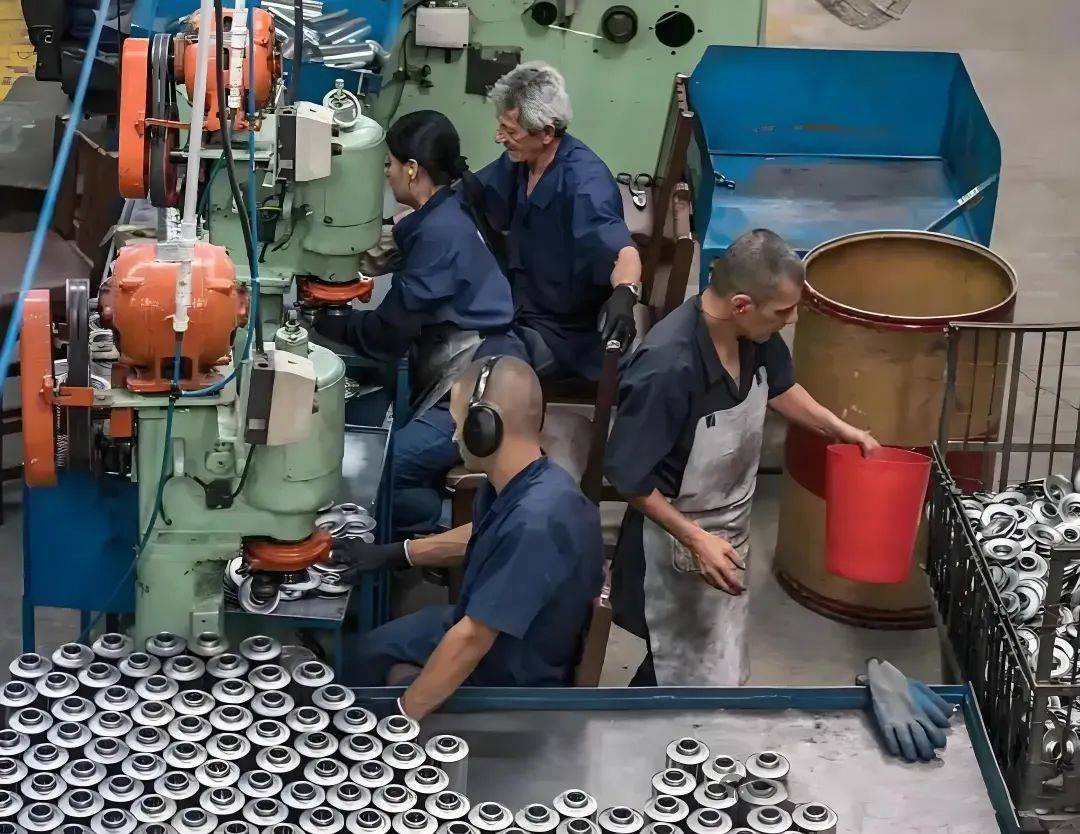
Core Viewpoint - The article argues that the belief in a sudden resurgence of American manufacturing is misguided, highlighting the significant decline in manufacturing's contribution to GDP and the challenges faced in revitalizing the sector [1][3][7]. Group 1: Manufacturing Decline - The share of manufacturing in the U.S. GDP has decreased from 16% in the 1990s to 11% in 2022, indicating a substantial decline in the sector [3]. - The notion that the U.S. has voluntarily abandoned low-value industries is challenged, with the argument that high costs have forced businesses to retreat from manufacturing [3][5]. Group 2: Challenges in Revitalization - The U.S. has invested heavily in initiatives like the CHIPS and Science Act ($280 billion) and the Inflation Reduction Act ($370 billion) to address the lack of manufacturing capabilities [3]. - The article emphasizes that the U.S. struggled to produce basic items like masks during the pandemic, showcasing the weakened industrial base [5][7]. Group 3: Global Manufacturing Landscape - China produced 1.019 billion tons of crude steel in 2023, accounting for 54% of global output, while the U.S. produced only 81 million tons, less than one-tenth of China's output [3]. - The article points out that the U.S. defense sector is heavily reliant on foreign manufacturing for critical components, illustrating the consequences of deindustrialization [5][7]. Group 4: Misconceptions about High-End Manufacturing - While the U.S. excels in high-end manufacturing and technology sectors, these advantages depend on a robust manufacturing base, which is currently lacking [7]. - The article critiques the mindset that dismisses low-end manufacturing as unimportant, arguing that modern industry relies on a comprehensive ecosystem of production [7].
欧洲专题系列2:产业空心化与政治光谱右移
NORTHEAST SECURITIES· 2025-09-02 07:14
1. Report Industry Investment Rating No information provided. 2. Core Viewpoints of the Report - Europe's decline is a chronic process, with industrial hollowing - out being a representative phenomenon, which is the result of the continuous decline of European manufacturing competitiveness and is further amplified by the global industrial chain reconstruction [1][13]. - The direct cause of European industrial hollowing - out is the energy crisis and cost imbalance, while the deeper reason is the long - term "capital laziness, lack of enterprise, and poor financing environment for technology companies", leading to Europe missing technological revolutions [13]. - The exhaustion of innovation momentum has made Europe lag behind in disruptive technology fields, and industrial hollowing - out has caused social chain reactions, leading to a right - shift in the political spectrum [2][14]. 3. Summary by Related Catalogs 3.1 European Different Regions' Pillar Industries - Northern Europe focuses on green technology and high - value - added industries, with leading positions in clean energy and high - end manufacturing [15]. - Western Europe is dominated by advanced manufacturing and high - end services, with strengths in aerospace, semiconductors, finance, and luxury industries [16][17]. - Central Europe is a manufacturing cluster base, especially Germany in high - end and precision manufacturing, and also has some mid - low - end manufacturing [17]. - Southern Europe relies on tourism and agriculture, with Italy and Spain having relatively complete manufacturing systems [18]. - Eastern Europe is resource - driven and has received some industrial transfers, but also faces geopolitical challenges [18]. - Northern, Western, and Central Europe have better economic development and more high - end pillar industries, while Eastern and Southern Europe are relatively backward [19]. 3.2 European Industrial Transfer and Industrial Hollowing - out Trend - The industrial hollowing - out is manifested in the decline of the manufacturing share in GDP, the transfer of production lines, and the loss of control over key industrial chain links [13]. - Taking the automotive industry as an example, the global automotive industry chain has gone through four stages of transfer, and European automotive industry's market share has declined since 2013 [35][36]. - The machinery manufacturing industry has also experienced three stages of transfer, and European industrial transfer is mostly in the third or fourth round and is difficult to reverse [42][58]. 3.3 European Political Spectrum Right - shift and Policy Helplessness - Central and Western European economies are more right - leaning, corresponding to economically strong countries and regions with industrial losses [59]. - From 2018 to 2025, the European political spectrum has shifted significantly to the right, with an increase in the average value from 0.97 to 1.48 [62]. - The right - shift is due to traditional parties' inability to solve economic and social problems, but right - wing parties' solutions cannot address the core issues [66].
美国突然收到一封“投降书”!台湾将掏出所有家底双手奉上
Sou Hu Cai Jing· 2025-09-01 20:34
Group 1 - The U.S. imposed a 20% tariff on Taiwanese exports, which is higher than the 15% tariffs on Japan and South Korea, significantly impacting Taiwan's economy that heavily relies on exports, particularly in semiconductors and electronics [2][3] - Taiwan's trade surplus with the U.S. reached $64.9 billion, primarily from semiconductors, machinery, and textiles, prompting the U.S. to use tariffs as leverage to open Taiwanese markets [2][3] - If the tariffs remain high, Taiwan's exports to the U.S. could decline by 15%, potentially leading to a GDP contraction of approximately 3.8% [2][7] Group 2 - Taiwan agreed to invest an additional $250 billion in the U.S. over four years, focusing on artificial intelligence and semiconductors, with TSMC planning to build advanced factories in the U.S. [5] - Taiwan's military and energy procurement from the U.S. is projected to exceed $300 billion over the next decade, with ongoing military sales indicating a strong defense partnership [5][9] - The economic dependency on the U.S. has raised concerns about Taiwan's long-term economic stability, with potential job losses and increased pressure on local industries [7][9] Group 3 - The trade tensions have led to a shift in Taiwanese companies' supply chains, with some moving operations to the U.S. to mitigate the impact of tariffs, raising concerns about industrial hollowing [7][9] - The overall economic situation in Taiwan is deteriorating, with rising prices and industry challenges, as the reliance on the U.S. continues to be questioned by the public [9]


失温时为何会感受到“热”︱重阳荐文
重阳投资· 2025-09-01 07:31
Core Viewpoint - The article draws a parallel between human hypothermia and economic conditions, suggesting that just as individuals can misinterpret their body temperature in extreme cold, markets can misinterpret economic signals, leading to potential misjudgments about economic health [1]. Economic Data vs. Perception - Economic data often lags behind real-time events, leading to discrepancies between actual economic conditions and public perception [7]. - Japan's economy has experienced a prolonged period of stagnation, referred to as the "lost thirty years," characterized by minimal inflation and economic growth [10]. Japan's Economic Performance - Japan's CPI index showed only a 7.5% increase from 1991 to 2021, averaging an annual growth rate of 0.25% [10]. - In terms of GDP, Japan's per capita GDP in 2024 is projected to be $32,420, which, when adjusted for inflation, represents a 33% decline from 30 years ago [10][12]. Stock Market Trends - The Nikkei 225 index peaked at 38,900 points in 1989 but fell significantly over the following decades, illustrating the long-term economic decline [13]. - Despite experiencing several technical bull markets, the overall trend remains downward due to a lack of new industries and innovation [21][23]. Policy Missteps - Japanese authorities underestimated the impact of the real estate bubble's collapse, leading to delayed and ineffective policy responses [16]. - The Bank of Japan's slow transition from tight to loose monetary policy contributed to prolonged economic stagnation [16][17]. Infrastructure Investment Issues - Japan's public works spending has often been misallocated, focusing on low-impact projects in declining regions rather than stimulating private consumption and investment [20][29]. - The inefficacy of infrastructure investments has led to increased government debt without corresponding economic recovery [29]. Lessons from Japan's Experience - The article emphasizes the importance of targeted investment in emerging industries rather than excessive spending on infrastructure with diminishing returns [29]. - It highlights the need for coherent and consistent fiscal policies to avoid the pitfalls of Japan's past, particularly in the context of an aging population and rising government debt [32].

失温时为何会感受到“热”
李迅雷金融与投资· 2025-08-31 07:05
Core Viewpoint - The article draws a parallel between human hypothermia and economic stagnation, suggesting that just as individuals can misinterpret their physical sensations in extreme cold, markets can also misinterpret economic signals, leading to false perceptions of economic health [1][2]. Economic Data vs. Perception - Economic data often lags behind real-time events, leading to discrepancies between actual economic conditions and public perception [2]. - The case of Japan's "lost 30 years" illustrates how prolonged economic stagnation can occur despite seemingly positive data, as evidenced by Japan's CPI growth from 1991 to 2021 being only 7.5% [2][5]. Japan's Economic Stagnation - Japan's per capita GDP in 1991 was $28,666, peaking at $38,467 in 1994, but by 2024, it is projected to be only $32,420, indicating a significant decline when adjusted for inflation [5][7]. - The Nikkei 225 index peaked at 38,900 points in 1989 but fell to around 8,700 points by 2012, reflecting a long-term economic decline [7][10]. Policy Misjudgments - Japanese authorities underestimated the impact of the real estate bubble burst, leading to ineffective policy responses that failed to stimulate recovery [10][11]. - The Bank of Japan's delayed shift from tight to loose monetary policy contributed to prolonged deflation, with interest rates remaining high until 1995 [11]. Ineffective Fiscal Policies - Japan's fiscal policies oscillated between expansion and contraction, lacking coherence and effectiveness, which hindered economic recovery [11][12]. - Public works spending increased significantly in the 1990s, but much of it was directed towards low-impact projects in declining regions, resulting in wasted resources [12][14]. Lessons from Japan's Experience - Japan's experience highlights the importance of targeted investment in sectors that can drive growth, rather than indiscriminate infrastructure spending [23][27]. - The need for a coherent industrial policy to foster new industries is critical, as Japan has struggled to innovate in emerging sectors like technology and renewable energy [17][23]. Conclusion - The article emphasizes that while increasing public investment can stabilize growth, it must be strategically directed to avoid economic imbalances and ensure effective use of resources [27][28].

X @外汇交易员
外汇交易员· 2025-08-28 07:46
Economic Impact - The Bank of Korea anticipates a significant blow to the South Korean economy due to the 15% US tariff on Korean exports, affecting trade, financial markets, and business confidence [1] - The US tariff is projected to decrease South Korea's economic growth by 0.45 percentage points this year and 0.6 percentage points by 2026 [1] - The US tariff is also expected to reduce South Korea's CPI by 0.15 percentage points this year and 25 percentage points by 2026 [1] Industry Specific Concerns - The steel and automotive industries are particularly vulnerable to the US tariffs [1] - Increased investment in the US, driven by the tariffs, could potentially deplete South Korean industries [1] Long-Term Risks - South Korea faces the risk of supply chain disruptions, industrial hollowing-out, and shifts in the global trade landscape [1] - These risks could permanently reshape the South Korean economy, potentially leading to job losses and talent drain [1]
新英国病人
Hu Xiu· 2025-08-23 08:25
Group 1 - The UK has lost the ability to independently manufacture a complete modern fighter jet, reflecting a broader decline in high-end manufacturing and competitiveness across various industries [1][35][39] - The historical industrial strength of the UK was built on a global rent-seeking system rooted in colonial history and financial hegemony, rather than collective effort [3][4][106] - The reliance on rent-seeking has weakened the willingness and capacity for long-term, arduous construction within the country [6][7][102] Group 2 - The decline of the UK’s industrial base is evident across various sectors, leading to a loss of strategic independence and the ability to control its own destiny [9][10][121] - The UK automotive industry faces additional challenges due to a new trade agreement with the US, which imposes tariffs that exacerbate its already weak position [13][14] - The UK has become the only G7 country to effectively exit the primary steelmaking industry, with steel production dropping from a peak of 28.31 million tons in 1970 to 4 million tons in 2024 [38][40] Group 3 - The UK’s military-industrial complex is in decline, with the army reduced to its smallest size since the Napoleonic Wars and a reliance on foreign technology for key military equipment [35][36][121] - The UK’s manufacturing sector has seen its contribution to GDP fall to approximately 7.1%, the lowest among G7 nations, indicating a significant structural transformation [82] - The UK has lost its position as a major shipbuilding nation, with its shipyards unable to compete with the growing Chinese market, which dominates global shipbuilding [46][47][49] Group 4 - The UK’s high-end manufacturing capabilities are diminishing, as it has become a supplier of high-value components rather than a leader in complete systems integration [63][71] - The country’s infrastructure projects, such as the HS2 high-speed rail, have faced budget overruns and mismanagement, leading to cancellations and failures [72][121] - The UK’s reliance on foreign supply chains for critical components in various industries, including aerospace and automotive, has further eroded its industrial base [62][68][70] Group 5 - The UK’s government has historically favored financial services over manufacturing, leading to a hollowing out of its industrial capabilities [85][121] - The decline in traditional manufacturing has resulted in economic instability in regions that were once industrial powerhouses, contributing to a growing divide between prosperous areas and those in decline [79][80] - The UK’s attempts to pivot towards emerging industries have been hampered by a lack of foundational industrial capacity and coherent policy direction [98][126]

北上广不香了?越来越多的人选择回流县城
Sou Hu Cai Jing· 2025-08-14 11:18
Group 1 - The trend of young people moving from rural areas to major cities is reversing, with a significant slowdown in urbanization rate to 0.5% in 2023 compared to an average of 1.2% over the previous five years [1] - High living costs in major cities, with an average rent-to-income ratio of 48% in cities like Beijing, Shanghai, Guangzhou, and Shenzhen, compared to only 18% in county towns, are diminishing the appeal of urban life [2] - The rapid upgrade of infrastructure in county towns, including an 85% coverage of high-speed rail networks and the establishment of major hospitals and schools, is attracting young people back [2] Group 2 - The cost-benefit analysis of living in county towns versus major cities is a significant factor for returnees, as one IT engineer noted that a monthly salary of 8,000 in his hometown is more comfortable than a 200,000 annual salary in Shanghai after expenses [3] - Despite rising property prices in county towns (60%-100% increase over five years), the job market remains heavily reliant on government positions, with over 60% of mid-to-high-end consumption driven by civil servants [4] - The narrow job market in county towns is highlighted by the competitive nature of civil service exams, with over 283,000 applicants for 2024 and a competition ratio of 3,572:1 for the most sought-after positions [6] Group 3 - The over-reliance on a "civil servant economy" poses sustainability challenges, with an average county-level fiscal self-sufficiency rate of only 42% in 2023, and some regions below 30% [6] - The phenomenon of industrial hollowing is evident, with 60% of tax revenue in a top county coming from real estate and construction, while manufacturing contributes less than 15% [8] - Successful diversification strategies in counties, such as tourism in Guizhou and e-commerce in Shandong, demonstrate potential pathways for revitalizing local economies [8] Group 4 - The need for counties to break away from dependence on government jobs and develop a diverse industrial ecosystem is crucial for retaining talent [8] - The government has initiated support for county-level economic development, with 120 pilot counties receiving special bond allocations to promote local economies [8] - The transformation of the "return flow" of talent into a sustainable development force requires counties to offer differentiated opportunities compared to major cities, such as lower startup costs and a more flexible work environment [8]