
悦己消费

Search documents
年货采购最后阶段,今年这些产品很时髦
Sou Hu Cai Jing· 2026-02-06 02:14
Group 1 - The core consumption trend for the upcoming Spring Festival reflects a more relaxed and pragmatic approach, with consumers focusing on "just right" items rather than excessive stocking [1] - The popularity of "experiential" goods, particularly in the ice and snow sports category, has surged, driven by the ongoing enthusiasm from the Winter Olympics and the rise of ice and snow tourism during the holiday [1][3] - The "Guochao" fashion trend continues to thrive, integrating traditional cultural elements into modern attire, catering to consumers' desire for festive yet understated outfits [3] Group 2 - The shift towards "light socializing" and "self-reward consumption" is evident, with consumers prioritizing quality and uniqueness in snacks and beverages, favoring imported snacks, specialty coffee, and unique alcoholic drinks for intimate gatherings or personal enjoyment [3] - The purchasing behavior for clothing has evolved, with consumers opting for versatile, high-quality "popular items" that can be worn beyond the New Year, extending the festive joy throughout the season [3] - Consumers are increasingly seeking value in their purchases, balancing brand quality with affordability, as seen in platforms like Vipshop, which emphasizes straightforward discount rules and focuses on popular, market-validated products [5] Group 3 - The scarcity of certain products, such as limited editions of high-demand items like Feitian Moutai, creates unique consumption excitement during the final shopping phase of the New Year [5] - The overall sentiment emphasizes that the essence of purchasing New Year goods is about meaningful choices rather than excessive accumulation, encouraging consumers to select items they truly appreciate and will use [7]


激活城市脉动 释放消费潜能 上海年味扑面而来 两会会场热议“文旅商体展”
Jie Fang Ri Bao· 2026-02-06 01:42
Group 1 - The core viewpoint emphasizes that the festive atmosphere in Shanghai not only enhances cultural appeal but also stimulates urban vitality and consumer potential [2] - The Shanghai government has introduced 28 measures to promote service industry quality and consumption expansion, indicating a shift in focus towards service consumption, which is experiencing rapid growth [3] - Successful cases, such as the Egyptian civilization exhibition at the Shanghai Museum, demonstrate the potential for high-quality offerings to drive significant consumer engagement and economic impact [4] Group 2 - The rise of the "self-love" trend among young consumers reflects a shift in consumption logic towards emotional resonance and value recognition, with 56.3% of young people willing to pay for emotional value or interests [5][6] - The "silver economy" targeting the elderly is identified as a new growth area, with recommendations for tailored policies and services to enhance quality of supply across various sectors [7] - Optimizing the consumption environment is crucial, with suggestions for reforming the consumption voucher system to better serve diverse demographics, particularly the elderly, and ensuring a fair and transparent consumer ecosystem [8][9]
万亿个护大战,除了讲故事,谁在真解决问题?| 2025清洁个护年终盘点TOP15创新发布
新消费智库· 2026-02-05 13:33
Core Insights - The article highlights the significant growth in the online sales of body care products, which increased by 27% year-on-year, indicating a shift in consumer focus from basic grooming to more personalized and emotional value-driven care [2][7][19] - The Chinese personal care market is expected to undergo a transformation by 2025, moving from basic cleaning to precise care and emotional value [2][6] Industry Landscape - The personal care market in China is experiencing a dual trend, with traditional segments growing slowly while emerging niches expand rapidly. The hair care market reached 55.9 billion yuan in 2023 and is projected to exceed 70 billion yuan by 2026 [6] - The body care segment has become the largest highlight, with online sales surpassing 65.1 billion yuan, accounting for 56% of the personal care market [7] Consumer Demographics - The primary consumer demographic consists of women aged 21-35 in first-tier and new first-tier cities, making up over 70% of the market. Female users account for over 85% of personal care consumers, with a notable increase in the under-30 age group [9] Consumer Pain Points - There is a growing disconnect between product promises and actual results, leading to a trust crisis in the industry. 63% of consumers no longer believe in the efficacy claims made by brands [12][13] - The complexity of ingredient lists and lack of transparency create confusion for consumers, making it difficult to discern necessary components from potential irritants [14][15] - Consumers face decision fatigue due to an overload of choices, with 71% stating they cannot find products that fully meet their needs [15][16] - The mismatch between price and perceived value is evident, as high-end products often do not deliver significantly better results than lower-priced alternatives [17] Market Trends - Body care has surpassed hair care as the largest segment in personal care, driven by a shift in consumer attitudes towards self-care and holistic well-being [19][21] - Domestic brands are moving from a focus on cost-effectiveness to value leadership, addressing specific local consumer needs that international brands may overlook [22] - Fragrance has become the primary purchasing decision factor in body care, with over 50% of consumer discussions centered around scent experiences [23] Product Innovation - The concept of "clean beauty" is transitioning from niche to mainstream, with the global market expected to grow from $7.15 billion in 2024 to $8.09 billion in 2025, reflecting a shift in consumer attitudes towards ingredient safety [24][25] - Traditional herbal ingredients are making a strong comeback, providing a unique competitive advantage for domestic brands in hair and scalp care [26][27] - High-efficacy ingredients from facial care are increasingly being applied to body care, indicating a rising consumer expectation for body products to deliver similar results [30] Consumer Experience - The personalization of fragrance choices is on the rise, with unique scents becoming a way for consumers to express their identity [31] - The emergence of therapeutic fragrances reflects a growing consumer focus on emotional well-being, although the subjective nature of these experiences can lead to polarized reviews [32][33] - The expansion of personal care consumption into various life scenarios, such as gifting and travel, is creating new market opportunities while also raising concerns about over-packaging and single-use products [34][35] Brand Innovation - Brands are redefining their core competencies by focusing on specific consumer needs and creating products that resonate with modern lifestyles, such as health-oriented solutions [36][37] - The trend towards comprehensive scalp care reflects a shift in consumer perception, viewing scalp health as integral to overall well-being [39][41]

从“买有用”到“买开心”
Sou Hu Cai Jing· 2026-02-03 23:26
Core Insights - The rise of "crying horse" plush toys symbolizes the growing trend of self-indulgent consumption, reflecting a shift from functional value to emotional value in consumer behavior [2][3] Group 1: Emotional Consumption Trends - Emotional consumption is defined as purchasing non-essential items or experiences to achieve immediate pleasure and self-affirmation, indicating a transformation in consumer mindset from "buying useful" to "buying happiness" [2] - The emotional economy market in China is projected to reach 2.31 trillion yuan in 2024, with expectations to exceed 4.5 trillion yuan by 2029, highlighting its robust growth potential [2] - Local governments are increasingly recognizing this trend, with many incorporating emotional consumption strategies into their work reports [2] Group 2: Expanding Consumption Scenarios - The scope of self-indulgent consumption is broadening, with products like custom baby clothes, stress-relief toys, and niche accessories gaining popularity, as consumers prioritize emotional resonance and self-expression over mere practicality [3] - The focus on "interesting" and "meaningful" products indicates that emotional satisfaction is becoming a key driver of consumer willingness to spend, stimulating innovation on the supply side [3] Group 3: Industry Dynamics and Opportunities - The emotional economy is driving new business models, with manufacturers like those in Yiwu ramping up production of popular items, and DIY workshops and cultural experience venues gaining traction [4] - Diverse supply options are aligning with personalized consumer needs, injecting flexibility into consumption growth and creating new pathways for domestic demand expansion [4] - However, the industry must avoid "hollowness" in content, as some trending products rely on superficial attributes without sustainable narratives, which could hinder long-term success [4] Group 4: Strategic Recommendations - To capitalize on the emotional economy, businesses should innovate their offerings by understanding the nuanced emotional needs of different consumer segments, creating products that blend practicality with therapeutic benefits [5] - Policymakers should enhance consumer promotion measures, integrating emotional consumption into broader strategies for domestic demand and consumption stimulation [5] - Maintaining market order and consumer rights is essential for fostering a healthy environment for emotional consumption to thrive [5]
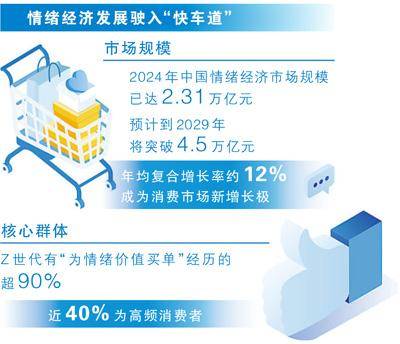
从“买有用”到“买开心”(商海观潮)
Sou Hu Cai Jing· 2026-02-03 22:17
Core Insights - The rise of "crying horse" plush toys symbolizes the growing trend of self-indulgent consumption, reflecting a shift from functional value to emotional value in consumer behavior [2][3] - The emotional economy market in China is projected to reach 2.31 trillion yuan in 2024 and exceed 4.5 trillion yuan by 2029, indicating strong growth potential [2] - Local governments are increasingly recognizing and promoting emotional consumption in their work reports, aligning with the broader trend of self-indulgent spending [2] Group 1: Trends in Self-Indulgent Consumption - Self-indulgent consumption is expanding beyond traditional boundaries, with consumers valuing emotional resonance and self-expression over mere practicality [3] - Products like custom children's clothing, stress-relief toys, and niche accessories are gaining popularity, highlighting a shift in consumer preferences towards items that provide emotional satisfaction [3] Group 2: Market Dynamics and Supply Innovations - The emotional economy is driving new market dynamics, with businesses adapting to meet the demand for products that offer joy and unique experiences [4] - Various sectors, including tourism and home goods, are innovating to provide products that enhance daily life and emotional well-being, such as themed accommodations and comforting home items [4] Group 3: Strategic Recommendations for Industry Growth - To capitalize on the emotional economy, companies should innovate their offerings by understanding the emotional needs of different consumer segments and creating products that combine practicality with therapeutic benefits [5] - Policymakers are encouraged to enhance consumer policies that support emotional consumption as part of broader strategies to stimulate domestic demand [5] - The industry must avoid superficial trends and focus on building sustainable emotional connections with consumers to ensure long-term success [4][5]
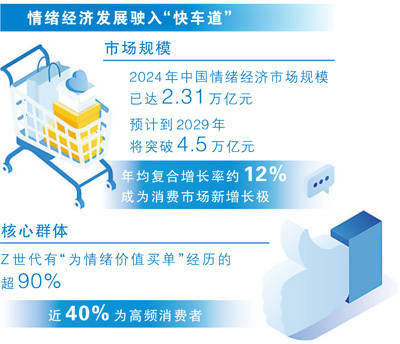
政府工作报告首提“悦己消费”,小红书创始人瞿芳:上海看到了大家的消费需求变化
Sou Hu Cai Jing· 2026-02-03 16:17
上海市第十六届人民代表大会第四次会议今天上午召开,"悦己消费"首次出现在了政府工作报告中。上 海市人大代表、小红书创始人瞿芳表示,去年"爱你老己"火爆全网,今年"悦己消费"写入政府工作报 告,上海作为国际消费中心已经看到了人们消费需求的变化。另外,作为一名创业者,瞿芳也建议,上 海可以进一步发挥优势,跨前一步为创业者提供金融、咨询、法律等各方面支持。(东方视频 柏可林 刘昊) ...
上海市市长龚正:加强科创板制度建设,培育壮大长期资本、耐心资本丨聚焦2026地方两会
证券时报· 2026-02-03 04:23
Economic Growth and Development - Shanghai's GDP is projected to reach 5.67 trillion yuan with a growth rate of 5.4% by 2025 [2] - The total import and export volume is expected to reach 4.51 trillion yuan, with exports growing by 10.8% [6] Financial and Technological Reforms - The government aims to enhance the construction of the Sci-Tech Innovation Board and promote financial system reforms [2] - A focus on developing offshore financial systems and improving cross-border financial services is highlighted [2] Industry and Innovation - R&D expenditure is expected to account for approximately 4.5% of Shanghai's GDP by 2025 [4] - The output of strategic emerging industries is projected to grow by 6.5%, with integrated circuits, biomedicine, and artificial intelligence expected to exceed 2 trillion yuan [4] Foreign Investment and Projects - Actual foreign investment is anticipated to reach 16.06 billion USD (approximately 114.8 billion yuan) [6] - The government plans to attract foreign investment in advanced manufacturing, modern services, and high-tech industries [6] Consumer Market and Tourism - The government aims to boost consumption and develop Shanghai into an international consumption center [8] - Plans include enhancing service consumption and promoting various tourism initiatives [8] Cultural and Creative Industries - The report emphasizes the importance of cultural industry projects and the development of new cultural formats [9] - The government aims to improve the capabilities of the cultural industry, including film production and creative design [9]

九部委联合发力乐购新春行动,助力春节消费市场热潮,聚焦消费板块布局机遇
Mei Ri Jing Ji Xin Wen· 2026-02-03 03:21
Group 1 - The Hong Kong stock consumer sector is experiencing a rise, with the Hong Kong Stock Connect Consumer ETF (513230) increasing by nearly 1.5% [1] - Notable gainers include TCL Electronics, WH Group, Zhenjiu Lidu, Pop Mart, Midea Group (000333), KANAT Optical, and Gu Ming, while major decliners include Weilong Delicious, Smoore International, Little Garden, Uni-President China, and Giant Bio [1] - The Ministry of Commerce and nine other departments have issued a special activity plan for the 2026 "Happy New Spring" Spring Festival, encouraging increased subsidies for trade-in programs and support for offline retail [1] Group 2 - CITIC Securities reports that Moutai's sales price has exceeded expectations, with price increases for Flying Moutai, vintage wines, and zodiac wines, indicating strong channel sales [1] - The white liquor sector is viewed as having a significant investment opportunity, with current valuations at historical lows, suggesting strong bottom-fishing value [1] - The report highlights the potential for consumption policies to catalyze growth in the white liquor sector around the Spring Festival [1]

多重利空导致A股下跌,需耐心等待市场企稳
British Securities· 2026-02-03 01:44
Market Overview - The A-share market is experiencing a downturn due to multiple negative factors, with a notable decline in trading volume and a cautious sentiment among investors as the Spring Festival approaches [2][9] - On the previous Monday, all three major indices fell over 1%, with the precious metals and non-ferrous metals sectors leading the decline, while sectors like ultra-high voltage and liquor showed resilience [5][6] Key Drivers of Market Movement - The recent drop in the market can be traced back to significant fluctuations in the international precious metals market, which affected the commodity market and subsequently impacted related A-share sectors [2][9] - The appointment of a new Federal Reserve Chairman has led to a reassessment of global liquidity policies, tightening market liquidity further due to increased margin requirements on futures contracts [2][9] Sector Performance - Consumer stocks, particularly in the liquor sector, have shown activity as the government emphasizes domestic demand, with policies aimed at stimulating consumption since 2025 [7] - The ultra-high voltage sector has seen gains, driven by the increasing demand for high-power, stable electricity supply in the context of the global AI computing infrastructure boom [8] Investment Strategy - Investors are advised to remain patient and wait for market sentiment to stabilize, liquidity to improve, and clear positive fundamentals to emerge before increasing their investment positions [3][9] - The report highlights three key investment directions in the consumer sector: structural opportunities aligned with demographic trends, service consumption upgrades, and safety-focused investments in agriculture and related sectors [7]
让“爱你老己”消费风 吹拂得更健康
Xin Lang Cai Jing· 2026-02-02 23:52
炒股就看金麒麟分析师研报,权威,专业,及时,全面,助您挖掘潜力主题机会! 卞广春 中国消费者协会发布的《2025年上半年全国消协组织受理投诉情况分析》显示,情绪消费已成为投诉热 点问题,其中商品粗制滥造、诱导消费、退费困难等问题尤为突出。在二手交易平台上,某隐藏款潮玩 盲盒被炒至原价10倍,卖家用"绝版""稀缺"等字眼哄抬价格;部分"情绪疗愈课程"打着"实现自我成 长"的旗号,却制造情绪焦虑以诱导消费。这些行为都有违悦己消费的初衷。一旦悦己消费引发焦虑甚 至"伤己",就必然会走向衰落。 基于此,除了年轻人要提高警惕,增强理性消费意识和辨别能力,社会各界也应重视规范悦己消费。有 关方面应强化政策引导与监管,打击诱导性营销、虚假宣传、大数据杀熟等侵害消费者权益的行为,营 造良好的消费环境;企业应从消费动机出发,将实用性与情绪体验融入产品设计,满足年轻消费者的需 求,确保悦己消费持续增长;网络平台应提醒和鼓励商家提供质量优、价格好、服务佳的商品;媒体应 倡导理性悦己消费,避免盲目跟风。 本版专栏文章仅代表作者个人观点 责任编辑:吴思楠 炒股就看金麒麟分析师研报,权威,专业,及时,全面,助您挖掘潜力主题机会! 岁末年 ...