
技术突破

Search documents
七大部门联合出手,华为AI新突破在即!明天这几个方向或将迎来布局良机
Sou Hu Cai Jing· 2025-11-17 11:15
Market Overview - The A-share market showed weakness around the 4000-point mark, with major indices generally declining. The Shanghai Composite Index closed at 3972.03 points, down 0.46% [1] - The Shenzhen Component Index slightly decreased by 0.11%, closing at 13202.00 points, while the ChiNext and STAR Market indices fell by 0.2% and 0.53%, respectively [1] - A total of 2584 stocks rose, while 2726 stocks fell, indicating a divergence in individual stock performance [1] - Net outflow of main funds reached 16.844 billion yuan, with 2078 stocks seeing inflows, significantly lower than the 3078 stocks that experienced outflows [1] - Despite the outflows, the overall trading volume remained high at 1.93 trillion yuan, suggesting a reallocation of funds rather than an exit from the market [1] Sector Performance - The lithium mining sector led the market with a 7.16% increase, driven by both fundamental and capital market factors. The price of lithium carbonate futures hit the limit up, boosting the profitability outlook for the industry [2] - Domestic sales of new energy vehicles showed signs of recovery in October, reinforcing lithium's strategic value as "white oil" amid ongoing global energy transition trends [2] - The military industry gained strength due to rising geopolitical uncertainties, with expectations of increased defense spending [2] Technology and Innovation - The operating system and AI-related sectors rose, driven by domestic substitution and technological breakthroughs. The operating system index surged by 4.31% [3] - Huawei's upcoming AI breakthrough, set to be announced on November 21, is expected to enhance resource management for AI training and inference, positively impacting related stocks [3] Macro Policy and Institutional Insights - Positive macro factors are gradually accumulating, with the Ministry of Commerce and other departments initiating projects to promote industrial transfer and new productivity development [3] - Insurance capital holdings reached a historical high of 5.59 trillion yuan, indicating long-term capital's recognition of A-share value [3] - UBS maintains an "overweight" rating on Chinese stocks, reflecting a consensus on positive market factors [3] Future Market Outlook - The market is expected to continue its "oscillating rotation" pattern, with ongoing competition between policy expectations and profit recovery [4] - Investors are advised to focus on sectors benefiting from policies and profit improvements, including lithium, military, and technology sectors [4] - Close attention should be paid to the Federal Reserve's December meeting, major project implementations, and potential style rebalancing due to mutual fund annual assessments [4]
反内卷重构千亿赛道,这个板块悄悄逆袭!
格隆汇APP· 2025-11-17 10:35
Core Viewpoint - The chemical industry, previously labeled as "big and clumsy," is experiencing a resurgence, driven by supply-demand balance and technological advancements, positioning it as a high-growth sector worth 4 trillion yuan [5][10]. Supply-Demand Dynamics - Since September, the chemical sector index has surged over 60%, primarily due to price increases in battery chemicals [3]. - The industry has shifted from chaotic overcapacity to a more balanced supply-demand structure, aided by policy changes and strategic industry actions [6][9]. - The Ministry of Industry and Information Technology's "14th Five-Year Plan" has curtailed blind capacity expansion, reducing industry capacity growth from double digits to below 7% [9]. - Key resources like phosphate rock and fluorite are in tight supply, with demand from emerging industries like electric vehicles and energy storage expected to drive material demand growth over 50% by 2024 [9][10]. Competitive Landscape - The competition in the chemical sector has evolved from merely increasing production capacity to focusing on high-value-added products and technological advancements [11]. - Leading companies are investing significantly in fine chemicals and emerging materials, with over 30% of Wanhua Chemical's 25.24 billion yuan investment directed towards these areas [11]. - China's chemical industry has achieved over 60% global market share in basic and fine chemicals, enhancing its pricing power internationally [12]. Investment Opportunities - The chemical sector is undergoing a strategic revaluation, with expectations of improved profitability and valuation recovery, particularly as the global chemical export demand is projected to grow by 8%-10% by 2026 [13][10]. - Key investment themes include supply contraction, high-end product development, and green transformation, with a focus on companies that can manage supply-demand dynamics and possess strong technological barriers [14][15]. - The global chemical market is expected to exceed $5.2 trillion by 2030, with China's market reaching $1.9 trillion, indicating significant growth potential [17]. Conclusion - The chemical industry is transitioning from a low-end, overcapacity model to a global leader in high-value products, driven by technological innovation and strategic resource management [16][18].



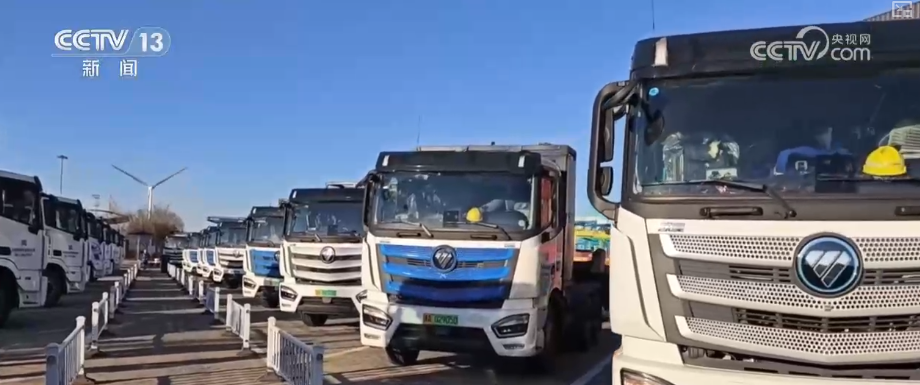
重卡产品多元技术并行向“新”向“绿” 产品畅销实现月度“七连涨”
Yang Shi Wang· 2025-11-12 02:41
Core Insights - The Chinese commercial vehicle market, particularly heavy-duty trucks, is experiencing significant growth, with production and sales exceeding 3.4 million units in the first ten months of 2025, marking a year-on-year increase of 10.9% and 9% respectively [1][3] - The heavy-duty truck market has seen a continuous monthly increase since April 2025, with an average growth rate of nearly 40% from April to October [3][4] - The transition towards new energy and clean energy heavy-duty trucks is becoming a focal point for market growth, driven by policies promoting vehicle replacement and energy efficiency [4][9] Market Dynamics - The heavy-duty truck market's recovery is attributed to various macroeconomic policies, including equipment updates, infrastructure investments, and energy strategies, which are expected to sustain growth [6][9] - The demand for new energy heavy-duty trucks is rising, with significant investments in clean energy vehicles in regions like Guangxi and Hebei, enhancing logistics efficiency and reducing carbon emissions [4][7] Technological Advancements - New energy heavy-duty trucks are gaining traction due to breakthroughs in core technologies, offering significant lifecycle cost advantages and addressing range anxiety with improved battery and powertrain solutions [11][12] - The market penetration rate of new energy commercial vehicles surpassed 30% in September 2025, reflecting the effectiveness of long-term national policies and technological advancements [14][15] Industry Standards and Infrastructure - The establishment of a comprehensive standard system is crucial for transitioning the industry from policy-driven to market-driven growth, supporting high-quality development [15][19] - The launch of the largest innovation base for new energy and intelligent connected commercial vehicles in Wuhan signifies a commitment to enhancing inspection and testing capabilities within the industry [16][18]
道恩股份:公司在机器人仿真皮肤弹性体材料领域实现技术突破
Mei Ri Jing Ji Xin Wen· 2025-11-07 13:17
Core Viewpoint - The robotics sector is expected to become a hot area in the coming years, presenting new opportunities for the company's thermoplastic elastomers [1] Company Developments - The company has achieved technological breakthroughs in the field of robotic simulation skin elastomer materials [1] - The R&D team is simultaneously researching and reserving several directions: ultra-soft artificial muscle TPE, artificial skin SiTPV, conductive TPE, temperature-sensitive color-changing TPE, and light-sensitive color-changing TPE, with significant progress made [1] Product Innovations - The artificial muscle TPE has a Shore hardness of 0A, characterized by ultra-softness, excellent elasticity, and a dry, non-slippery surface [1] - The artificial skin SiTPV offers a strong skin-like feel and high strength [1] - The conductive TPE has a resistivity as low as 10Ω.m, which is expected to enable direct printing of circuits on robots, significantly reducing or even eliminating the need for cables [1] - The temperature-sensitive and light-sensitive color-changing TPE can simulate human facial expressions in robots, greatly reducing the need for sensors, and is expected to transition existing robots from being expensive, bulky, and clumsy to being agile, affordable, and realistic [1]

长电科技:1季度-3季度研发投入同比增长25%
Zheng Quan Ri Bao Wang· 2025-11-07 13:13
Core Viewpoint - Longji Technology (600584) emphasizes the importance of localized production capacity support for clients and aims to maintain an international layout while building a resilient and sustainable supply chain [1] Group 1: Company Strategy - The company is committed to international expansion and flexible capacity allocation to enhance business resilience [1] - Longji Technology plans to continue investing in advanced technology and research, with R&D expenditure increasing by 25% year-on-year to reach 1.54 billion yuan [1] Group 2: Technological Advancements - The company has made significant breakthroughs in key technologies such as glass substrates, CPO optoelectronic packaging, and large-size FCBGA [1]

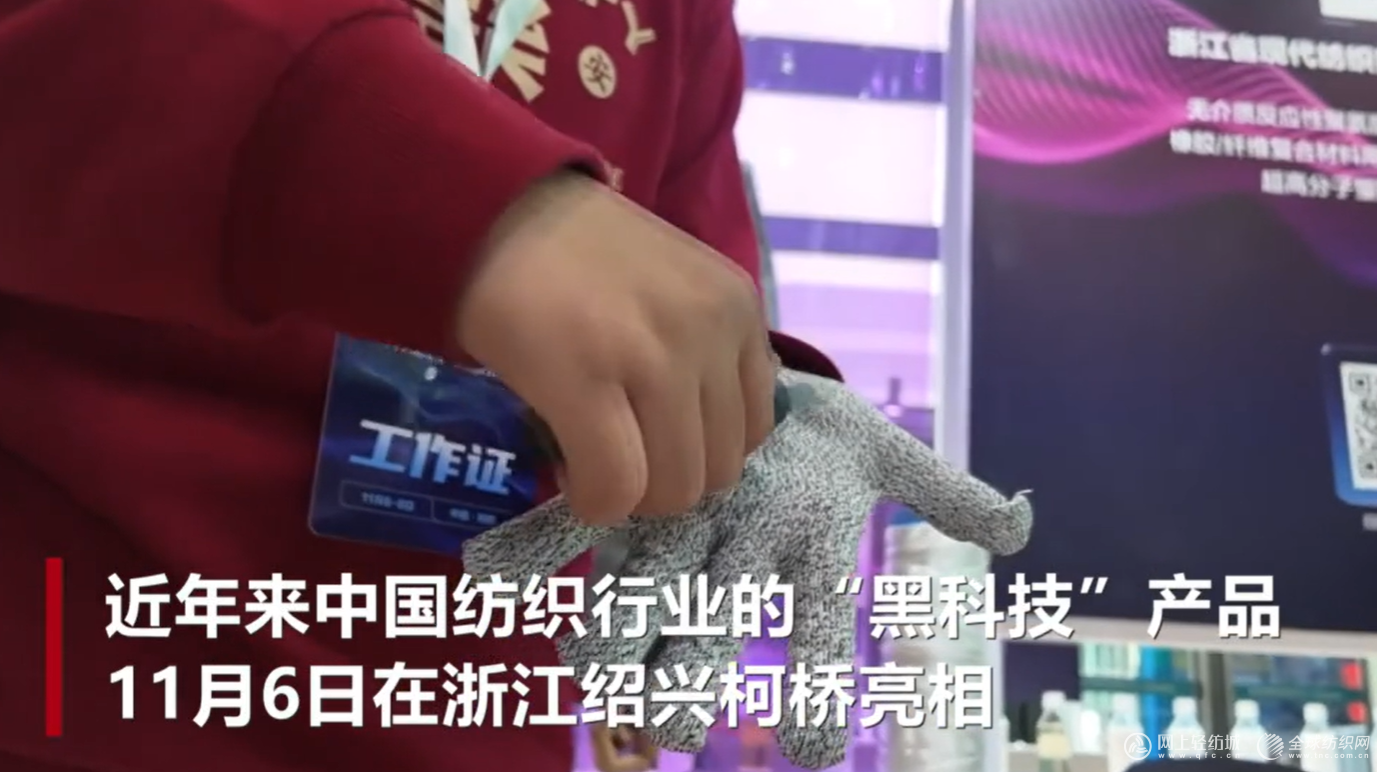
纺织品“黑科技”亮相浙江绍兴
Zhong Guo Xin Wen Wang· 2025-11-07 06:02
Group 1 - The textile industry in China is showcasing innovative products such as cut-resistant ultra-high molecular weight polyethylene gloves and temperature-regulating inflatable clothing at the 8th World Fabric Merchant Conference in Shaoxing, Zhejiang [1][2] - The event features a concurrent textile science and technology exhibition, highlighting breakthroughs and cross-industry integrations in the textile sector, with participation from top domestic textile universities and leading tech companies [2] - A notable innovation presented is a domestically produced artificial blood vessel for minimally invasive interventions, developed by Donghua University's biomedical textile materials team, which aims to reduce reliance on imported products and lower medical costs [2]
华虹半导体有限公司2025年第三季度报告
Zhong Guo Zheng Quan Bao - Zhong Zheng Wang· 2025-11-06 23:21
Core Viewpoint - The company reported record sales revenue of $635.2 million for Q3 2025, driven by a recovery in global semiconductor demand and effective management strategies [3]. Financial Performance - Sales revenue reached $635.2 million, aligning with guidance expectations, while gross margin was 13.5%, exceeding guidance [3]. - The company anticipates Q4 2025 sales revenue between $650 million and $660 million, with a projected gross margin of 12% to 14% [4]. Management Insights - The Chairman and CEO, Dr. Bai Peng, emphasized the company's strong performance in specialty processes and the need for continuous advancement in technology and capacity [3]. - Ongoing acquisition efforts are expected to enhance production capacity and diversify process platforms, contributing to improved profitability [3]. Shareholder Information - As of the report date, the company has issued 1,327,704,403 shares in Hong Kong, representing 76.50% of total shares, and 407,750,000 shares on the Shanghai Stock Exchange, representing 23.50% [9]. Asset Impairment - The company announced a provision for asset impairment totaling approximately 86.39 million yuan, which will reduce the total profit for the first three quarters of 2025 by 58.50 million yuan [13][15].
第三季度扣非净利润同比激增1040.88% 高端刀具龙头华锐精密交出超预期答卷
Zheng Quan Ri Bao Wang· 2025-10-31 04:45
Core Viewpoint - The company, Zhuzhou Huari Precision Tools Co., Ltd., reported explosive growth in Q3 2025, with revenue reaching approximately 252 million yuan, a year-on-year increase of 44.49%, and a net profit of about 51.74 million yuan, soaring by 1040.88% [1] Group 1: Financial Performance - In Q3 2025, the company achieved a revenue of approximately 252 million yuan, marking a 44.49% year-on-year growth [1] - The net profit attributable to shareholders, excluding non-recurring gains and losses, was around 51.74 million yuan, reflecting a staggering increase of 1040.88% year-on-year [1] Group 2: Product Development and Market Strategy - The company has made systematic breakthroughs in product matrix, R&D transformation, and market expansion, with a focus on maintaining its market share in the cutting tool sector [1] - The cutting tools, particularly turning blades, continue to drive revenue growth due to their cost-effectiveness and customization capabilities [1] - The company has successfully entered the humanoid robot sector and achieved technical breakthroughs in gas turbine blade processing, indicating potential for future growth [1] Group 3: R&D Investment and Innovation - The company invested approximately 12.33 million yuan in R&D in Q3 2025, accounting for 4.90% of its revenue, focusing on the "U series" tools and AI intelligent tool selection systems [2] - The company aims to transition from a single hard alloy cutting tool manufacturer to a leading comprehensive cutting solution provider in China [2] Group 4: Market Expansion and Sales Strategy - The company is enhancing its dual sales model of "distribution + direct sales" and has established partnerships with key clients in various industries [2] - The company is expanding its overseas market presence through a "trial tool program" in countries like South Korea and Turkey, achieving a passing rate of over 90% in tests [2] - Plans are underway to establish overseas offices and increase local service capabilities, which are expected to open up high-end global market opportunities [2] Group 5: Industry Insights - The success of the company illustrates that traditional manufacturing can achieve qualitative leaps through technological breakthroughs, scenario deepening, and model innovation [3] - The company's growth story may serve as a model for high-quality development in China's manufacturing sector, particularly in response to emerging demands in humanoid robotics and renewable energy [3]

入乡随俗?世中大会上,雅克说:全球权力重心正从美国转移到中国
Sou Hu Cai Jing· 2025-10-26 08:45
Core Viewpoint - The current global crisis is fundamentally a shift of power from the West to the East, suggesting that the situation may persist until effective solutions are found [1] Group 1: Historical Context - Signs of global chaos emerged as early as 2008, when the political elite in the U.S. lost confidence, coinciding with China's rise [5] - The year 2016 marked a critical point in the collapse of Western hegemony, with a significant shift in U.S. policy towards China following Trump's election [5] Group 2: Economic Strategies - The U.S. is repeating historical patterns similar to the 1929 crisis, where it initiated a tariff war out of fear of losing its dominant position, leading to global economic fragmentation [7] - The current U.S. approach, characterized by tariffs, is seen as a desperate measure against a changing global landscape, unlike the past when the U.S. had substantial gold reserves [8] Group 3: China's Economic Strength - China accounts for 30% of global manufacturing output, demonstrating significant influence in the global supply chain [10] - China's semiconductor exports are projected to exceed one trillion by 2024, showcasing its growing independence in technology despite U.S. pressure [10] Group 4: Global Economic Dynamics - Some developing countries remain overly reliant on the U.S. market, failing to recognize the diminishing significance of the U.S. in the global economy [11] - China's Belt and Road Initiative is fostering global economic connections, indicating a shift away from dependence on the U.S. [11] - The future is expected to see China in a more advantageous position compared to the U.S., marking a significant shift in global power dynamics [11]

格力机床突破技术壁垒斩获国际金奖,德国同行震动
Xin Lang Cai Jing· 2025-10-23 22:22
Core Viewpoint - Gree Machine Tool has successfully entered the global high-end market, achieving significant technological breakthroughs that have made competitors, particularly German firms, uneasy [2] Group 1: Technological Advancements - Gree Machine Tool has overcome previous technological limitations, enabling it to compete effectively in the high-end market [2] - The company has received international recognition, including prestigious awards, highlighting its advancements in technology [2] Group 2: Market Impact - The entry of Gree Machine Tool into the global market has raised concerns among German competitors, indicating a shift in competitive dynamics [2] - Gree's success is seen as a significant achievement for Chinese manufacturing, showcasing the potential for growth in the high-end machinery sector [2]
