扩内需

Search documents
全国政协十四届常委会第十二次会议举行全体会议,围绕“进一步深化经济体制改革,推进中国式现代化”进行大会发言
news flash· 2025-06-24 10:56
Group 1 - The core viewpoint emphasizes the need to combine an effective market with a proactive government to build a high-efficiency, standardized, fair competition, and fully open national unified market [1] - Suggestions include improving long-term mechanisms to encourage and guide private economic organizations to participate in national technological breakthroughs [1] - Recommendations focus on enhancing the transformation mechanism of scientific and technological achievements to promote the integration of technology and economy, accelerating the formation of new productive forces [1] Group 2 - There is a call to address urgent issues in the livelihood sector to expand domestic demand, promoting high-quality development through "investment in people" [1] - Proposals include deepening fiscal and tax system reforms to establish a clear responsibility and authority framework, coordinating financial resources, and achieving regional balance in central and local fiscal relations [1]
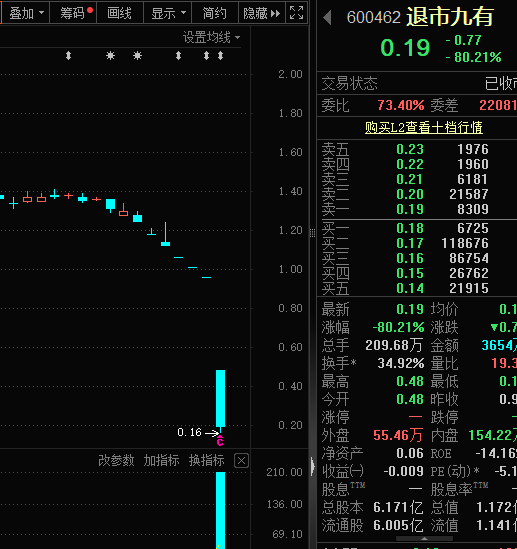
暴跌超80%,年内第三惨!强研发+高成长中小盘股揭秘
Zheng Quan Shi Bao· 2025-06-24 10:53
Group 1 - A-shares experienced a collective rise, with the Shanghai Composite Index closing at 3420.57 points, up 1.15%, and the Shenzhen Component Index rising 1.68% to 10217.63 points [1][5] - The trading volume in the Shanghai and Shenzhen markets reached 14146 billion, a significant increase of 2920 billion compared to the previous day [1] - Key sectors such as electric power equipment, non-bank financials, and retail saw gains exceeding 2%, with solid performance from heavyweight stocks and a notable shift towards growth styles [1][6] Group 2 - *ST Jiuyou's stock plummeted over 80% after being placed in a delisting risk warning, with a market value reduced to 1.2 billion [2][4] - The company reported a negative net asset value at the end of 2023 and received an audit report with no opinion for its 2024 annual report, triggering delisting conditions [4] - Other companies in the delisting process also experienced severe declines, with some dropping over 70% on their first day of delisting [4] Group 3 - The electric power equipment index surged by 2.85%, and non-bank financials rose by 2.68%, indicating a bullish trend in these sectors [6] - The lithium battery sector saw significant gains, with multiple companies announcing advancements in solid-state battery technology and production timelines [6] - The humanoid robot sector also rebounded, with indices related to humanoid robots and associated technologies rising over 4% [6] Group 4 - A focus on high-growth small-cap stocks with significant R&D investment is highlighted, with 36 stocks identified that have over 20% of revenue allocated to R&D and projected net profit growth rates exceeding 40% from 2025 to 2027 [8] - Notable companies include Tai En Kang, which has seen a year-to-date increase of nearly 135%, driven by a strong pipeline of self-developed drugs [8][9] - The average increase for these identified companies is close to 19% year-to-date, outperforming the broader market [8]


专家建言下半年扩内需:提高居民收入、加力“投资于人”
2 1 Shi Ji Jing Ji Bao Dao· 2025-06-23 13:55
Core Viewpoint - The Chinese economy is expected to maintain a growth rate above 5% in the first half of 2024, demonstrating resilience despite external uncertainties and internal challenges [1][2][4]. Economic Performance - In Q1 2024, China's economy grew by 5.4% year-on-year, exceeding market expectations [2][4]. - The retail sales of consumer goods in May 2024 increased by 6.4% year-on-year, marking the highest monthly growth since 2024 [1][3]. - The cumulative year-on-year growth rate of retail sales for the first five months of 2024 was 5% [3]. External Trade - The cumulative year-on-year growth rate of imports and exports in the first five months was 1.3%, with exports growing by 6% [2]. - Factors contributing to export growth include increased non-U.S. exports, "export grabbing" effects, and "price-for-volume" strategies in U.S. exports [2][4]. Consumer Policies - The "old-for-new" consumption policy has significantly boosted retail sales, with furniture, communication, and home appliance retail sales growing over 20% [3]. - In 2024, the central and local governments allocated approximately 170 billion yuan for the "old-for-new" policy, expected to raise retail sales growth by over 1 percentage point [3]. Investment and Consumption Outlook - There is a need to stimulate both consumption and investment in high-tech sectors and productive services [5]. - The focus should be on stabilizing domestic consumption and investment, with an emphasis on the real estate market and capital market stability [5]. Structural Reforms - The current economic strategy emphasizes the need to shift from investment and export-driven growth to consumption and innovation-driven growth [6][7]. - Reforms in fiscal and tax systems are necessary to enhance local governments' incentives to boost consumption [7]. Monetary Policy - There is still room to lower the reserve requirement ratio, and stabilizing asset prices should be included in monetary policy considerations [7].
转债周度专题:近期评级调整怎么看?-20250622
Tianfeng Securities· 2025-06-22 14:11
1. Report Industry Investment Rating No relevant content provided. 2. Core Viewpoints of the Report - In 2025, rating adjustments for convertible bonds may be relatively optimistic. With the expectation of economic recovery and policy support such as expanding domestic demand and debt resolution, credit risks are relatively controllable, but industry differentiation and tail risks still need attention [12]. - The A - share market valuation has recovered but remains at a relatively low level in the long - term. The risk premium shows good allocation value. The convertible bond supply is shrinking, and the demand side has certain support. The overall valuation of convertible bonds is in a reasonable range, and the valuation center is expected to fluctuate moderately in the future [15]. - Attention should be paid to popular themes, domestic demand - oriented sectors, high - dividend sectors under the Chinese - characteristic valuation system, and the military industry [15]. 3. Summary of Each Section 3.1. Convertible Bond Weekly Special Topic and Outlook 3.1.1. Recent Rating Adjustments - As of Friday, 237 convertible bonds have disclosed their 2025 annual follow - up rating announcements, accounting for 50.3% of the total number of convertible bonds in the market. Among the updated - rating convertible bonds, 14 have had their ratings downgraded, and the adjustment ratio of medium - and high - rated convertible bonds is significantly lower than in previous years [10]. - Rating downgrades have a short - term negative impact on convertible bonds, but the overall market impact may be relatively controllable. The prices of convertible bonds with high institutional holdings and rating downgrades have relatively large adjustments, while those with low institutional holdings and relatively low original ratings are less affected [10]. 3.1.2. Weekly Review and Market Outlook - This week, the market showed daily fluctuations and a weekly overall correction. The A - share market's three major indexes rose on Monday, adjusted on Tuesday, rose slightly on Wednesday, fell on Thursday, and adjusted with volume contraction on Friday [14]. - The A - share market valuation has recovered but is still at a relatively low level. The export order rebound has led to a narrow improvement in the May PMI. The convertible bond supply is shrinking, and the demand side has support. The convertible bond valuation is expected to fluctuate moderately in the future. Attention should be paid to different sectors [15]. 3.2. Convertible Bond Market Weekly Tracking 3.2.1. Equity Market Declined, and Pro - cyclical Sectors such as Banks Strengthened - This week, the main equity market indexes declined. Among them, the Wind All - A Index fell 1.07%, the Shanghai Composite Index fell 0.51%, the Shenzhen Component Index fell 1.16%, and the ChiNext Index fell 1.66%. The market style was more inclined to large - cap growth [18]. - Three Shenwan industry indexes rose, and 28 declined. The banking, communication, and electronics industries rose, with increases of 2.63%, 1.58%, and 0.95% respectively [21]. 3.2.2. Convertible Bond Market Declined, and the 100 - yuan Premium Rate Decreased - This week, the convertible bond market declined. The CSI Convertible Bond Index fell 0.17%, the Shanghai Convertible Bond Index rose 0.11%, and the Shenzhen Convertible Bond Index fell 0.59%. The average daily trading volume of convertible bonds decreased [23]. - Five convertible bond industries rose, and 24 declined. The non - bank finance, public utilities, and banking industries led the gains, while the media, beauty care, and social services industries led the losses [27]. - Most individual convertible bonds declined. The top five weekly gainers were Jingrui Convertible Bond, Liande Convertible Bond, Tianchuang Convertible Bond, Xuerong Convertible Bond, and Shouhua Convertible Bond. The top five weekly losers were Jinling Convertible Bond, Zhite Convertible Bond, Jindan Convertible Bond, Dongshi Convertible Bond, and Zhongchong Zhuan 2 Convertible Bond [29]. - The weighted conversion value of the whole market increased, and the premium rate rose. The weighted conversion premium rate of the whole market was 48.62%, up 1.02 pct from last weekend. The 100 - yuan parity premium rate was 18.89%, down 1.74 pct from last weekend [34]. 3.2.3. High - Frequency Tracking of Different Types of Convertible Bonds 3.2.3.1. Classification Valuation Changes - This week, the valuations of various types of convertible bonds declined. The valuations of convertible bonds with a parity of 80 - 90 yuan and 100 - 110 yuan declined, while most others increased. The valuations of AAA - rated convertible bonds increased, while those of other ratings decreased. The valuations of large - cap convertible bonds increased, while those of other scale segments decreased [42]. - Since the beginning of 2024, the conversion premium rates of equity - biased and balanced convertible bonds have rebounded from the bottom. As of Friday, the conversion premium rate of equity - biased convertible bonds was below the 35th percentile since 2017, and that of balanced convertible bonds was below the 50th percentile [42]. 3.2.3.2. Market Index Performance - This week, AAA - rated convertible bonds rose, while those of other ratings declined. The AAA convertible bonds rose 0.43%, and AA + convertible bonds fell 0.12% [55]. - This week, large - cap convertible bonds rose, while those of other scales declined. The small - cap convertible bonds fell 0.75%, and the medium - small - cap convertible bonds fell 0.46% [57]. 3.3. Convertible Bond Supply and Clause Tracking 3.3.1. This Week's Primary Plan Issuance - One new convertible bond was listed this week (Hengshuai Convertible Bond), and five issued but unlisted convertible bonds are pending (Luwei Convertible Bond, Dianhua Convertible Bond, Anke Convertible Bond, Xizhen Convertible Bond, and Huachen Convertible Bond). One primary approval was obtained this week, and Maiwei Co., Ltd. (1.967 billion yuan) passed the shareholders' meeting [62]. - From the beginning of 2023 to June 20, 2025, the total number of planned convertible bonds was 92, with a total scale of 146.099 billion yuan [63]. 3.3.2. Downward Revision and Redemption Clauses - This week, 9 convertible bonds announced that they were expected to trigger downward revisions, 15 announced no downward revisions, 5 proposed downward revisions, and 1 actually had a downward revision [66][67]. - Six convertible bonds announced that they were expected to trigger redemptions, 5 announced no early redemptions, and 1 announced an early redemption. As of the end of this week, 4 convertible bonds were still in the put - option declaration period, and 35 were in the company's capital - reduction settlement declaration period [71][73].
1至5月云南高技术制造业增加值增长10%
Zhong Guo Xin Wen Wang· 2025-06-20 07:42
Economic Performance - Yunnan Province's industrial added value above designated size increased by 4.7% year-on-year from January to May 2025, with high-tech manufacturing growing by 10%, surpassing the overall industrial growth by 5.3 percentage points [1] - The mining industry saw a year-on-year increase of 10.3%, manufacturing grew by 4.3%, and the electricity, heat, gas, and water production and supply industry increased by 4.2% [1] - In May, the industrial added value above designated size grew by 3.5% [1] High-end Manufacturing - The equipment manufacturing industry experienced an 11.8% year-on-year increase, exceeding the overall industrial growth by 7.1 percentage points [1] - The electronics sector's added value rose by 13.8%, continuing its rapid growth trend [1] Traditional Industries - The energy industry added value increased by 4.9%, with the petroleum sector growing by 3.1% and the coal industry by 11.3% [1] - The non-ferrous metals industry maintained a robust growth rate of 15.3%, consistently achieving double-digit growth this year [1] Energy Production - Yunnan's industrial electricity generation reached 158.113 billion kilowatt-hours, marking a 7.9% year-on-year increase [1] Consumer Market - From January to May, the total retail sales of consumer goods in Yunnan reached 517.362 billion yuan, reflecting a 3.9% year-on-year growth, with a slight acceleration of 0.1 percentage points compared to the previous four months [2] - Fixed asset investment in Yunnan increased by 0.3% year-on-year, with the primary industry investment declining by 14%, the secondary industry growing by 5%, and the tertiary industry decreasing by 0.1% [2] Inflation and Economic Stability - The Consumer Price Index (CPI) in Yunnan decreased by 0.3% year-on-year and month-on-month in May [2] - The overall economic performance of Yunnan is stable, with ongoing policy effects expected to support growth, though external uncertainties and insufficient demand remain challenges [2]
5月经济延续平稳增长,稳楼市扩内需政策仍将加力
2 1 Shi Ji Jing Ji Bao Dao· 2025-06-16 14:11
关联内容 国家统计局答21:无人机、智能车载设备增长强劲 21世纪经济报道记者周潇枭 北京报道 6月16日,国家统计局发布5月经济数据。 从5月经济数据来看,我国出口依然维持相当韧性,表现更亮眼的在于消费品以旧换新政策支持下的消 费在加快回升。不过,外部不确定性仍然较大,国内房地产投资依然在下行通道中,扩内需、稳楼市政 策仍需继续发力。5月生产端的数据表现更为稳定,5月规模以上工业增加值同比增长5.8%,全国服务 业生产指数同比增长6.2%,经济延续平稳增长态势。 6月13日,国务院常务会议明确指出,要对全国房地产已供土地和在建项目进行摸底,进一步优化现有 政策,更大力度推动房地产市场止跌回稳。另外,今年用以支持消费品以旧换新的3000亿元超长期特别 国债,目前已经下达1600亿元,剩余的约1400亿元资金也会加快下达。 政策推动消费加快回升 去年1500亿元"国补"资金收效良好,今年3000亿元"国补"资金的政策效应仍在持续释放。5月份,社会 消费品零售总额同比增长6.4%,比上月加快1.3个百分点,为2024年以来月度最高增速。 具体来看,受"国补"政策带动,5月份,限额以上单位家用电器和音像器材类、通信 ...
“苏超”赞助商数量激增!现场直击淮安“小龙虾”VS南京“盐水鸭”
21世纪经济报道· 2025-06-16 08:05
Core Viewpoint - The "Su Super" football league in Huai'an has gained significant popularity, evidenced by a substantial increase in attendance and sponsorship, indicating a successful event that contributes to local economic growth [1][2][3] Group 1: Event Attendance and Impact - The recent match in Huai'an attracted over 26,000 spectators, a notable increase from the previous match which had over 10,000 attendees, showcasing the growing interest in the "Su Super" league [1] - The event is reported to be the largest sports event ever held in Huai'an, highlighting its significance in the local sports landscape [1] Group 2: Sponsorship Growth - The number of sponsors for the event has increased, with local companies like Jiangsu Bank and Longpan Technology, as well as external brands such as JD.com and Heineken, participating [1] - Some sponsors, including JD.com, joined later, indicating a rising interest in associating with the event as it gains traction [1] Group 3: Cultural and Tourism Integration - The timing of the "Su Super" event coincided with the local Lobster Festival, enhancing the cultural and tourism appeal of Huai'an [2] - Promotional advertisements linking local delicacies like salted duck and crayfish to the "Su Super" event were prominently displayed at the Huai'an East High-speed Railway Station, further promoting local tourism [2]

“转型牛”格局越来越清晰,消费仍是经济修复的重要动能
Mei Ri Jing Ji Xin Wen· 2025-06-13 05:36
Group 1 - The A-share market has entered an adjustment phase, with declines in consumer and technology sectors, indicating a shift in investor sentiment towards a clearer "transformation bull" market by 2025 [1] - The report from Guotai Junan Securities suggests that the marginal impact of valuation contraction is decreasing as investors' understanding of the economic situation becomes more comprehensive, with expectations shifting from economic cycle fluctuations to a decline in discount rates [1] - The Chinese government's "three arrows" policy aimed at resolving debt, boosting demand, and stabilizing asset prices, along with capital market reforms focused on investors, is expected to enhance long-term investment assumptions [1] Group 2 - The recent domestic policies in China remain proactive, with expectations for continued policy implementation, particularly in boosting domestic demand [1] - The food processing, professional services, and leisure food sectors are highlighted as resilient areas within the consumer industry, suggesting potential investment opportunities [1] - The Food and Beverage ETF (515170) tracks the China Securities Food and Beverage Industry Theme Index, focusing on high-barrier sectors like liquor and dairy, providing a convenient investment tool for small capital [2]
“郑好办”将贵金属消费纳入以旧换新
Shang Hai Zheng Quan Bao· 2025-06-08 18:04
据悉,此次推出的黄金珠宝专项消费补贴活动主要包括"四零一免"补贴政策(即0品牌限制、0克数限 制、0增重限制、0折旧限制及免新品工费),以及黄金珠宝15%专项补贴,降低了消费者对黄金珠宝的 换新成本。 旧金换新享"四零一免"、购买即享黄金珠宝15%专项补贴……6月7日至13日,郑州市"郑好办"平台联合 本土黄金企业乾昌珠宝,推出黄金珠宝专项消费补贴活动,首次将贵金属消费纳入以旧换新范围。 6月7日,上海证券报记者在郑州市乾昌珠宝旗舰店内看到,不少市民携带旧金饰前来咨询、换购,享受 补贴优惠,现场人头攒动。"郑好办"统计数据显示,活动启动仅3小时,就有超过1.2万人参与。 郑州市民张女士也前来换购,她告诉记者:"一直想买件新首饰,但金价太高没舍得。这次用30克旧金 饰,加上补贴优惠,只补了几百元就换到了新款手镯和项链,还是比较划算的。" 乾昌珠宝现场销售人员介绍,以一条加工费为35元/克、总重为10克的项链为例,消费者可直接拿10克 旧金饰进行以旧换新,享"四零一免"后,可实现0元置换。如果新金饰加工费超过35元/克,则仅需补加 工费。"例如这条手镯加工费为45元/克,总克重为50克,补贴前加工费为2250元, ...
汇丰匡正:下半年可能进一步降息20个基点
Guo Ji Jin Rong Bao· 2025-06-06 23:52
Group 1 - The core viewpoint emphasizes that despite the uncertainties caused by U.S. trade tariffs, the Asian market continues to show resilience and attract capital due to its structural growth and local opportunities [1] - The Chinese economy is characterized by strong manufacturing capabilities that are hard to replace, indicating ongoing structural growth opportunities [1] Group 2 - Domestic demand resilience is crucial, with current economic data showing stability, and the need for policy support to maintain economic momentum [2] - The focus of macroeconomic policy is shifting from infrastructure to consumer and corporate capital expenditure, highlighting the importance of internal demand [2] Group 3 - The consumption market is benefiting from policy support, with significant growth in sales of durable goods, particularly in the automotive sector, which saw a 15% year-on-year increase [3] - There is potential for further policy measures to stimulate consumption in non-durable goods and services, with a possibility of a 20 basis point interest rate cut in the second half of the year [3] Group 4 - The liquidity environment for A-shares remains favorable, supported by stock buybacks and renewed public fund issuance [4] - The focus on high-quality growth and deep value stocks is expected to continue, particularly in the context of China's technological innovation and the ongoing "AI+" trend [4] Group 5 - Core quality state-owned enterprises and sectors like food and beverage are expected to remain attractive, with a focus on artificial intelligence applications and long-term structural trends [5] - The strategy emphasizes diversification through low-correlation assets, particularly in light of ongoing geopolitical risks and global economic slowdown [5] - Gold is viewed as a stable asset during market volatility, with its price supported by a weaker dollar and central bank purchases, making it a recommended part of diversified portfolios [5]