逆全球化

Search documents
中科三环(000970):25H1经营受政策扰动,H2有望恢复
HTSC· 2025-08-13 10:50
Investment Rating - The report maintains a "Buy" rating for the company [5] Core Views - The company's H1 2025 revenue was 2.922 billion RMB, a year-over-year decrease of 11.17%, while net profit attributable to shareholders was 43.9931 million RMB, an increase of 160.82% year-over-year [1][5] - The company faced operational disruptions due to policy impacts but is expected to see a recovery in H2 2025, particularly in magnetic material exports [1][3] - The report highlights the strategic position of the rare earth magnetic material industry under the backdrop of "de-globalization" [1] Summary by Sections Financial Performance - In H1 2025, the company's revenue was 2.922 billion RMB, with a net profit of 43.9931 million RMB and a non-recurring net profit of 31.594 million RMB [1][5] - Q2 2025 revenue was 1.461 billion RMB, showing a year-over-year decline of 10.75% but a quarter-over-quarter increase of 0.04% [1] Policy Impact - The company experienced a decline in overseas revenue due to export controls on heavy rare earth materials, with domestic revenue increasing by 5.62% and international revenue decreasing by 28.85% [2] - The overall revenue for magnetic materials in H1 2025 decreased by 14.93% year-over-year, with a gross margin of 9.39% [2] Market Outlook - The report anticipates a recovery in magnetic material exports in H2 2025, supported by the issuance of export licenses to several companies, including the report's subject [3] - Global demand for praseodymium and neodymium oxide is expected to grow, with projections of 119,700 tons and 129,000 tons for 2025 and 2026, respectively [3] Profit Forecast and Valuation - The forecast for net profit attributable to shareholders for 2025-2027 has been revised downwards by 14.81%, 16.67%, and 19.01%, respectively, with expected profits of 198.4 million RMB, 333 million RMB, and 478 million RMB [4] - The target price is adjusted to 15.32 RMB, corresponding to a price-to-book ratio of 2.81 for 2025 [4]

嘉实转战广发首年交卷:苏文杰在管规模直逼60亿,旗下四基金齐涨,广发优势成长近三月涨17%
Xin Lang Ji Jin· 2025-08-13 08:00
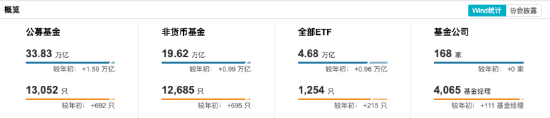
Core Insights - The article highlights significant changes in the fund management industry, with over 1,630 funds experiencing manager changes this year, indicating a dynamic environment rather than a negative trend [1][3] - Su Wenjie, a former manager at Jiashi Fund, has made a notable transition to Guangfa Fund, where he has achieved impressive returns in a short period [4][6] Fund Management Changes - As of August 13, the total number of fund managers in the market reached 4,065, with an increase of 111 since the beginning of the year [3] - The article notes that over 920 fund managers have left their positions, while more than 610 new managers have been hired [1] Su Wenjie's Performance - Su Wenjie joined Guangfa Fund in April 2024 and took over management of several funds, achieving a total management scale of 5.835 billion yuan [4] - His long-term managed funds, such as Guangfa Advantage Growth and Guangfa Jufeng A, have shown returns of 20.97% and 17.09%, respectively [4] - Recently taken over funds, Guangfa Resource Selection A and Guangfa Growth Power Three-Year Holding A, have also performed well with returns of 7.35% and 8.10% [4] Investment Strategy - Su Wenjie’s investment strategy focuses on cyclical thinking, with top holdings in resource and chemical industry leaders [7] - His second-quarter operations included a reduction in positions due to trade war impacts, but he plans to restore positions to 80%-90% focusing on sectors like non-ferrous metals, military, chemicals, and new energy [7] Market Outlook - Su Wenjie anticipates that the ongoing trend of de-globalization will continue to drive up upstream commodity prices, with expectations for coordinated fiscal and monetary policies during China's economic recovery in 2025 [9] - His successful first year at Guangfa Fund reflects a broader industry trend where experienced fund managers with proven methodologies are becoming key focal points for capital flows [9]

从下跌到快速反弹,金价的“涨跌密码”是什么?|2025招商证券“招财杯”ETF实盘大赛
Quan Jing Wang· 2025-08-13 05:51
Group 1: ETF Market Development - The "Zhaocai Cup" ETF live competition series aims to enhance investors' asset allocation and risk management skills, promoting the healthy development of the ETF market [1] - The event is organized by China Merchants Securities in collaboration with ten major fund companies and Panoramic Network [1] Group 2: Gold Market Insights - Gold has shown strong performance over the past two years, exceeding initial expectations with a price increase of over 20% [2] - As of April 22, gold prices reached nearly $3,500, with trading volume on that day hitting 989 billion yuan, marking a fivefold increase compared to the past three years [2][3] - The current gold price is at historical highs, comparable to the peak in January 1980, indicating a stable support level above $3,100 [3][11] Group 3: Geopolitical Factors Impacting Gold - Geopolitical tensions, including the US-China trade policies and conflicts in Ukraine and the Middle East, contribute to gold's appeal as a safe-haven asset [4][6] - The ongoing trend of de-globalization and weakening dollar credibility are expected to sustain gold's long-term value [3][4] Group 4: Central Bank Actions - Central banks, including China's, have been increasing their gold reserves, with China purchasing 44 tons last year and continuing to add to its holdings [3][12] - The trend of central banks accumulating gold reflects a consensus on the asset's value amid declining trust in the dollar [3][12] Group 5: Investment Strategies and Instruments - Gold ETFs are highlighted as a convenient investment vehicle, with low entry barriers and good tracking performance, making them attractive to investors [19][20] - The introduction of new players, such as insurance asset management firms allowed to invest in gold, is expected to further support gold prices [18] Group 6: Economic Indicators and Future Outlook - The potential for US interest rate cuts could positively impact gold prices, although the likelihood of such cuts occurring within the year is considered low [15][17] - The relationship between gold and real interest rates remains significant, with historical data showing a strong negative correlation [16][17]

西南期货早间评论-20250813
Xi Nan Qi Huo· 2025-08-13 02:26
1. Report Industry Investment Ratings No specific industry investment ratings are provided in the report. 2. Core Views of the Report - The report analyzes various futures markets, including bonds, stocks, precious metals, and commodities, providing insights into their market trends and investment strategies. It suggests different approaches for each market based on current economic conditions, policy changes, and supply - demand dynamics [5][9][11]. 3. Summary by Related Catalogs Bonds - **Market Performance**: On the previous trading day, most bond futures closed down. The 30 - year, 10 - year, and 2 - year main contracts declined by 0.31%, 0.04%, and 0.02% respectively, while the 5 - year main contract remained flat [5]. - **Policy and Economic Conditions**: The central bank conducted 114.6 billion yuan of 7 - day reverse repurchase operations on August 12, with a net withdrawal of 46.1 billion yuan. The Sino - US trade agreement made substantial progress, and the market risk appetite increased significantly [5]. - **Investment Strategy**: It is expected that there will be no trending bond futures market, and investors should remain cautious [6][7]. Stocks - **Market Performance**: On the previous trading day, stock index futures showed mixed results. The main contracts of IF, IH, IC, and IM rose by 0.51%, 0.61%, 0.52%, and 0.31% respectively [8][9]. - **Policy and Economic Conditions**: Three departments jointly issued a personal consumer loan fiscal subsidy policy. Although the domestic economic recovery momentum is weak, asset valuations are low, and the Chinese economy has sufficient resilience. Market sentiment has recently increased significantly [9]. - **Investment Strategy**: The long - term performance of Chinese equity assets is still optimistic, and investors may consider going long on stock index futures [9][10]. Precious Metals - **Market Performance**: On the previous trading day, the main gold contract closed at 776.04, with a decline of 0.44%, and the night - session closed at 776.28. The main silver contract closed at 9,187, with a decline of 0.25%, and the night - session closed at 9205 [11]. - **Policy and Economic Conditions**: The global trade and financial environment is complex, and the "de - globalization" and "de - dollarization" trends are beneficial to the allocation and hedging value of gold. The Fed is expected to cut interest rates, providing new upward momentum for gold [11]. - **Investment Strategy**: The long - term bullish trend of precious metals is expected to continue, and investors may consider going long on gold futures [11][12]. Steel Products (Rebar and Hot - Rolled Coil) - **Market Performance**: On the previous trading day, rebar and hot - rolled coil futures rose slightly. The spot price of Tangshan billet was 3120 yuan/ton, Shanghai rebar was 3260 - 3380 yuan/ton, and Shanghai hot - rolled coil was 3470 - 3480 yuan/ton [13]. - **Policy and Economic Conditions**: Policy changes have become the dominant factor in the market, and the price of finished products follows the price of coking coal. The downward trend of the real estate industry and over - capacity are still the core factors suppressing rebar prices. The expected steel industry stability policy may be a positive factor [13]. - **Investment Strategy**: Investors can pay attention to buying opportunities on pullbacks and continue to hold previous long positions, while managing their positions carefully [13]. Iron Ore - **Market Performance**: On the previous trading day, iron ore futures rose significantly. The spot price of PB powder was 788 yuan/ton, and the price of Super Special powder was 662 yuan/ton [15]. - **Policy and Economic Conditions**: Policy has become the dominant factor, and iron ore prices follow coking coal prices. The high demand for molten iron supports iron ore prices, but the supply has increased, and the medium - term supply - demand pattern may weaken [15]. - **Investment Strategy**: Investors can pay attention to buying opportunities on pullbacks and continue to hold previous long positions, while managing their positions carefully [15]. Coking Coal and Coke - **Market Performance**: On the previous trading day, coking coal and coke futures rose significantly [17]. - **Policy and Economic Conditions**: The national energy administration's coal production verification policy has affected supply, causing some mines to shut down and driving up prices [17]. - **Investment Strategy**: Investors can pay attention to buying opportunities on pullbacks and continue to hold previous long positions, while managing their positions carefully [17]. Ferroalloys - **Market Performance**: On the previous trading day, the main manganese - silicon contract closed at 6110 yuan/ton, up 0.16%, and the main silicon - iron contract closed at 5820 yuan/ton, up 0.21% [19]. - **Policy and Economic Conditions**: The supply of manganese ore has increased slightly, and the inventory has risen. The production of ferroalloys has continued to increase, but demand recovery is weak, and there is still oversupply in the short term [19]. - **Investment Strategy**: After a decline, investors can consider long positions when the spot market falls into a loss - making range [19][20]. Crude Oil - **Market Performance**: On the previous trading day, INE crude oil oscillated upward but was blocked by the moving average group [21]. - **Policy and Economic Conditions**: Fund managers reduced their net long positions, and the focus has shifted to the US - Russia talks, with geopolitical risks easing, leading to a decline in crude oil prices [22]. - **Investment Strategy**: Temporarily observe the main crude oil contract [23]. Fuel Oil - **Market Performance**: On the previous trading day, fuel oil oscillated downward, showing a weak trend [24]. - **Policy and Economic Conditions**: The spread of ultra - low - sulfur fuel oil has become negative, indicating an oversupply. The expected increase in Singapore's arbitrage fuel oil and the increase in ARA inventory are negative for prices [25]. - **Investment Strategy**: Shorten the spread between high - and low - sulfur fuel oil in the main fuel oil contract [26]. Synthetic Rubber - **Market Performance**: On the previous trading day, the main synthetic rubber contract rose 0.72%, and the mainstream price in Shandong was raised to 12100 yuan/ton [27]. - **Policy and Economic Conditions**: Raw material prices have rebounded, but production is still slightly loss - making. The market has declined with overall sentiment, waiting for the market to stabilize [27]. - **Investment Strategy**: Wait for the market to stabilize and then participate in the rebound [27][28]. Natural Rubber - **Market Performance**: On the previous trading day, the main natural rubber contract rose 0.89%, and the 20 - grade rubber contract rose 0.72%. The Shanghai spot price was raised to around 14700 yuan/ton [29]. - **Policy and Economic Conditions**: The macro - market sentiment has cooled, and supply disruptions have temporarily eased. The supply is affected by heavy rainfall, and the cost support has strengthened [29]. - **Investment Strategy**: Pay attention to long - position opportunities after a decline [29][31]. PVC - **Market Performance**: On the previous trading day, the main PVC contract rose 0.88%, and the spot price was raised by 30 yuan/ton [32]. - **Policy and Economic Conditions**: The oversupply situation continues, but the downward space is limited, and it will continue to oscillate at the bottom [32]. - **Investment Strategy**: The market will oscillate at the bottom [32][35]. Urea - **Market Performance**: On the previous trading day, the main urea contract rose 0.52%, and the price in Shandong Linyi was lowered to 1720 yuan/ton [36]. - **Policy and Economic Conditions**: The short - term fundamentals have not changed much, and the market will oscillate. In the medium term, the outlook is bullish [36]. - **Investment Strategy**: The market will oscillate in the short term and be treated bullishly in the medium term [36][37]. PX - **Market Performance**: On the previous trading day, the PX2509 main contract rose 0.92%, with a PXN spread of 260 dollars/ton and a PX - MX spread of 120 dollars/ton [38]. - **Policy and Economic Conditions**: The PX load has slightly increased, but the supply - demand situation has weakened in the short term, and the cost and demand support are insufficient [38]. - **Investment Strategy**: Consider range - bound operations and pay attention to changes in crude oil costs and macro - policies [38]. PTA - **Market Performance**: On the previous trading day, the PTA2509 main contract rose 0.38%, and the spot price in East China was 4695 yuan/ton [39]. - **Policy and Economic Conditions**: The supply has not changed much, demand is expected to weaken, and the cost support from crude oil has decreased. However, the processing fee is under pressure, and large producers are increasing production cuts [39]. - **Investment Strategy**: Consider range - bound participation and pay attention to risk control [39]. Ethylene Glycol - **Market Performance**: On the previous trading day, the main ethylene glycol contract rose 0.64% [40]. - **Policy and Economic Conditions**: The overall operating load has decreased slightly, and the port inventory has increased slightly. However, overseas plant maintenance has increased, and imports may decrease [40]. - **Investment Strategy**: Consider range - bound participation and pay attention to changes in port inventory and imports [40]. Short - Fiber - **Market Performance**: On the previous trading day, the short - fiber 2510 main contract rose 0.25% [41]. - **Policy and Economic Conditions**: The supply remains at a relatively high level, demand has improved, and the supply - demand contradiction is not significant [41]. - **Investment Strategy**: The market may oscillate with costs, and investors should pay attention to cost changes and macro - policy adjustments [41]. Bottle Chips - **Market Performance**: On the previous trading day, the bottle chips 2510 main contract rose 0.44% [42]. - **Policy and Economic Conditions**: There have been more plant overhauls, and inventory has remained stable. The market is supported, but the main logic lies in the cost side [43]. - **Investment Strategy**: The market is expected to oscillate with the cost side, and investors should pay attention to risk control [43]. Soda Ash - **Market Performance**: On the previous trading day, the main 2601 contract closed at 1409 yuan/ton, up 5.31% [44]. - **Policy and Economic Conditions**: Supply is expected to increase as previous overhauls are restored, and downstream demand is weak. The market is under pressure, but there is cost support from coking coal [44]. - **Investment Strategy**: Pay attention to position management due to price fluctuations caused by capital games [44]. Glass - **Market Performance**: On the previous trading day, the main 2509 contract closed at 1073 yuan/ton, up 0.47% [45]. - **Policy and Economic Conditions**: Production lines are stable, inventory is increasing, and downstream demand is weak. The market is expected to be weak in the short term [45]. - **Investment Strategy**: Go short in the short term, but be aware of capital - related disturbances before contract roll - over [45]. Caustic Soda - **Market Performance**: On the previous trading day, the main 2509 contract closed at 2502 yuan/ton, up 0.85% [46]. - **Policy and Economic Conditions**: Supply has increased as previous overhauls are restored, and inventory is stable. The market is gradually returning to the logic of stable spot prices [46][47]. - **Investment Strategy**: No specific strategy is provided in the text. Pulp - **Market Performance**: On the previous trading day, the main 2509 contract closed at 5264 yuan/ton, up 0.73% [48]. - **Policy and Economic Conditions**: Supply has decreased slightly, and port inventory is decreasing but still at a high level year - on - year. Downstream demand is weak [49]. - **Investment Strategy**: The market is expected to oscillate weakly in the short term [49][50]. Lithium Carbonate - **Market Performance**: On the previous trading day, the main lithium carbonate contract rose 2% to 82520 yuan/ton [51]. - **Policy and Economic Conditions**: The suspension of mining at Ningde Times' mine has raised concerns about mining rights and costs, but the supply - demand surplus pattern has not changed. Demand has increased as the consumption season approaches [51]. - **Investment Strategy**: It is difficult to operate unilaterally. Non - participants should operate with a light position and control risks [51]. Copper - **Market Performance**: On the previous trading day, Shanghai copper oscillated upward, breaking through the moving average group. The average price of 1 electrolytic copper was 79160 yuan/ton, up 20 yuan/ton [53]. - **Policy and Economic Conditions**: There is a shortage of copper concentrates, and the expectation of a Fed interest - rate cut supports copper prices [54]. - **Investment Strategy**: Go long on the main Shanghai copper contract on pullbacks [54][55]. Tin - **Market Performance**: On the previous trading day, Shanghai tin oscillated, closing at 270690 yuan/ton, up 0.1% [56]. - **Policy and Economic Conditions**: The supply of tin ore is tight, but there are expectations of复产 in the fourth quarter. Consumption is weak, and inventory is decreasing [56]. - **Investment Strategy**: The market is expected to oscillate [56]. Nickel - **Market Performance**: On the previous trading day, Shanghai nickel rose 0.2% to 122870 yuan/ton [57]. - **Policy and Economic Conditions**: The price of nickel ore has weakened, and the supply of nickel iron is in surplus. Stainless steel is strong on the futures market but weak in the spot market, and consumption is weak [57]. - **Investment Strategy**: The market is expected to oscillate [57]. Soybean Oil and Soybean Meal - **Market Performance**: On the previous trading day, the main soybean meal contract rose 0.72% to 3091 yuan/ton, and the main soybean oil contract rose 0.90% to 8476 yuan/ton [58]. - **Policy and Economic Conditions**: The USDA report has reduced the US soybean planting area and production. The supply of soybeans is expected to be loose, and the cost has increased. The demand for soybean meal is expected to increase slightly, while the demand for soybean oil may be suppressed [58][59]. - **Investment Strategy**: Consider long positions on soybean meal after a pullback and take profit on long positions of soybean oil at high levels [59]. Palm Oil - **Market Performance**: Malaysian palm oil has risen for three consecutive days [60]. - **Policy and Economic Conditions**: Malaysian palm oil inventory has increased, but exports have also increased. Indonesia plans to implement a B50 biodiesel policy in 2026. Domestic palm oil inventory is high [60][61]. - **Investment Strategy**: Consider taking profit on long palm oil positions [61]. Rapeseed Meal and Rapeseed Oil - **Market Performance**: Canadian rapeseed prices have fallen, but futures prices have rebounded from the low. The prices of domestic rapeseed meal and rapeseed oil have changed [62]. - **Policy and Economic Conditions**: China has implemented anti - dumping measures on Canadian rapeseed, and the supply of rapeseed may be tightened. Global rapeseed production and inventory are expected to change [62]. - **Investment Strategy**: Consider taking profit on long positions of rapeseed products [62][63]. Cotton - **Market Performance**: On the previous trading day, domestic Zhengzhou cotton oscillated, and overnight, overseas cotton rose 2.4% [64]. - **Policy and Economic Conditions**: The USDA report has reduced US and global cotton production and inventory estimates. Chinese cotton production is expected to increase, and textile exports are under pressure [64][65]. - **Investment Strategy**: The market is expected to be strong in the short term [64][65][66]. Sugar - **Market Performance**: On the previous trading day, domestic Zhengzhou sugar oscillated, and overnight, overseas raw sugar rose 2.5% for three consecutive days [67]. - **Policy and Economic Conditions**: Brazil's sugar production has increased, and India and Thailand are expected to have good harvests. China's sugar inventory is low, but imports will be high before October [67][68]. - **Investment Strategy**: It is recommended to observe the market [67][68]. Apples - **Market Performance**: On the previous trading day, domestic apple futures oscillated at a high level [70]. - **Policy and Economic Conditions**: The expectation of a production reduction has been disproven, and the national apple production is expected to increase slightly. The price of early - maturing apples has declined [70][71]. - **Investment Strategy**: Observe the market [70][72]. Pigs -
机构看金市:8月12日
Xin Hua Cai Jing· 2025-08-12 05:55
·银河期货:贵金属暂时缺乏进一步上行的动能 ·西南期货:贵金属的长期牛市趋势有望延续 ·光大期货:若美国通胀低于预期或提振降息预期从而拉动金价反弹 ·Bloomberg Intelligence:美股高位回落压力和地缘因素可能构成金价冲击4000美元的驱动 ·Heraeus:关税因素扰动上周金价作为对政策失误的保险金价会有更多上涨空间 【机构分析】 ·银河期货表示,近期美国对瑞士黄金征收关税的事件被证明是一场"乌龙",关于黄金关税问题的不确 定性几乎消失,令金价回落,纽约和伦敦金价差也收敛至正常水平。另外,和7月非农数据公布之后相 比,由于美国企业二季度财报在上周密集出炉、且总体表现良好,市场风险情绪持续回升,美股走高, 美元和美债收益率反弹,贵金属暂时缺乏进一步上行的动能。叠加美国继续在俄乌间进行斡旋,地缘冲 突缓和的可能性再起,多方面因素令贵金属暂时遇阻回调。但由于未来美国经济在关税冲击下出现通胀 反弹和经济走弱仍是基准情景,因此对贵金属不必悲观,可暂时观望等待入场机会。 ·西南期货表示,当前全球贸易金融环境错综复杂,关税存在巨大不确定性。"逆全球化"和"去美元 化"大趋势,利好黄金的配置价值和避险价值。 ...
西南期货早间评论-20250812
Xi Nan Qi Huo· 2025-08-12 02:17
1. Report Industry Investment Ratings No industry investment ratings are provided in the report. 2. Core Views - For treasury bonds, it's expected that there will be no trend - driven market, and caution is advised [6][7]. - Regarding stock index futures, the long - term performance of Chinese equity assets is still optimistic, and going long on stock index futures is under consideration [8][9]. - For precious metals, the long - term bull market trend is expected to continue, and going long on gold futures is recommended [9]. - In the case of steel products (including rebar, hot - rolled coil), investors can pay attention to buying opportunities on pullbacks and manage positions carefully [10]. - For iron ore, investors can focus on buying opportunities on pullbacks and manage positions [12]. - Concerning coking coal and coke, they may continue to show strong performance, and investors can look for buying opportunities on pullbacks [14]. - For ferroalloys, there may be a short - term supply surplus, and long positions can be considered when the spot falls into the loss - making range again [16][18]. - Regarding crude oil, it may run weakly, and the main contract can be put on hold for now [19][20][21]. - For fuel oil, the main contract can be used to narrow the spread between high - and low - sulfur fuel oils [23][24]. - In the case of synthetic rubber, wait for the market to stabilize and then participate in the rebound [25][26]. - For natural rubber, pay attention to going long opportunities after pullbacks [27][28]. - Regarding PVC, it will continue to fluctuate at the bottom [29][30]. - For urea, it will fluctuate in the short - term and be bullish in the medium - term [32]. - In the case of PX, it may fluctuate and adjust in the short - term, and interval trading can be considered [33]. - For PTA, it can be traded within an interval, considering the current situation [34][35]. - Regarding ethylene glycol, interval trading is recommended, focusing on port inventory and import changes [36]. - For short - fiber, it may fluctuate following costs, and risk control is needed [37][38]. - In the case of bottle chips, it is expected to fluctuate following the cost side [39]. - For soda ash, supply may remain high, and it is supported by double - coking costs in the short - term [40][41]. - Regarding glass, pay attention to spot trade and regional de - stocking; in the long - term, focus on capacity clearance of old production lines [42]. - For caustic soda, the price is expected to be weakly stable, and the market will gradually return to fundamental logic [43][44][45]. - In the case of pulp, it is expected to maintain a weakly oscillating pattern in the short - term [46][47]. - For lithium carbonate, it is better for non - participating investors to operate with a light position and control risks [48]. - Regarding copper, the price may rebound, and the main contract of SHFE copper can be put on hold for now [50][51]. - For tin, the price is expected to oscillate [52]. - Regarding nickel, the price is expected to oscillate [53]. - In the case of soybean oil and soybean meal, consider long positions in soybean meal after adjustment, and exit long positions in soybean oil at high levels [54][55][56]. - For palm oil, consider widening the spread between rapeseed oil and palm oil [56][57]. - Regarding rapeseed meal and rapeseed oil, consider long positions in rapeseed - related products [58][59][60]. - For cotton, it is recommended to wait and see in the short - term and go short on rebounds [61][62][63]. - Regarding sugar, it is recommended to wait and see [63][65]. - For apples, it is recommended to wait and see [66][67][68]. - Regarding live pigs, consider reverse arbitrage strategies [68][69][70]. - For eggs, consider holding 9 - 10 reverse arbitrage [71][72]. - Regarding corn and starch, consider virtual call options for old - crop contracts, and corn starch follows the corn market [73][74][75]. - For logs, short - term bullish sentiment may be supported [77][78][79]. 3. Summary by Directory Treasury Bonds - The previous trading day saw a full - line decline in treasury bond futures. The central bank conducted 112 billion yuan of 7 - day reverse repurchase operations, with a net withdrawal of 432.8 billion yuan. The macro - economic recovery momentum needs to be strengthened, and the treasury bond futures are expected to have no trend - driven market [5][6]. Stock Index Futures - The previous trading day saw mixed performance in stock index futures. Domestic economic growth is stable but lacks momentum. The long - term performance of Chinese equity assets is optimistic, and going long on stock index futures is considered [8]. Precious Metals - The previous trading day saw a decline in gold and silver futures. The global trade and financial environment is complex, and central banks' gold - buying and the expected Fed rate - cut are favorable for gold. The long - term bull market trend of precious metals is expected to continue [9]. Rebar and Hot - Rolled Coil - The previous trading day saw a slight increase in rebar and hot - rolled coil futures. Policy changes dominate the market, and the medium - term trend will return to supply - demand logic. The real estate downturn suppresses rebar prices, and the steel industry's stability policy may be a positive factor [10]. Iron Ore - The previous trading day saw a slight increase in iron ore futures. Policy changes dominate the market, and iron ore prices follow coking coal. The short - term supply - demand pattern is strong, but it may weaken in the medium - term [12]. Coking Coal and Coke - The previous trading day saw a significant increase in coking coal and coke futures. Policy - induced production cuts in some mines are the main reason for the price increase, and they may continue to be strong [14]. Ferroalloys - The previous trading day saw an increase in manganese - silicon and silicon - iron futures. The short - term demand has a slight recovery, but supply is still high. There may be a supply surplus in the short - term, and long positions can be considered at low levels [16][17][18]. Crude Oil - The previous trading day saw a sharp decline in INE crude oil. Fund managers reduced their net long positions, and the market focus is on the US - Russia talks. Crude oil may run weakly [19][20]. Fuel Oil - The previous trading day saw a sharp decline in fuel oil, hitting a multi - day low. Singapore's fuel oil inventory has increased, and the market is bearish on fuel oil prices [23]. Synthetic Rubber - The previous trading day saw an increase in synthetic rubber futures. The raw material price has rebounded, and the market is waiting for a rebound after stabilization [25]. Natural Rubber - The previous trading day saw an increase in natural rubber futures. The supply is affected by rainfall, and there is support for going long after pullbacks [27]. PVC - The previous trading day saw a slight increase in PVC futures. The supply - demand imbalance persists, and it will continue to fluctuate at the bottom [29]. Urea - The previous trading day saw a decline in urea futures. The short - term fundamentals are stable, and it is expected to be bullish in the medium - term [32]. PX - The previous trading day saw an increase in PX futures. The short - term supply - demand has weakened, and it may fluctuate and adjust [33]. PTA - The previous trading day saw an increase in PTA futures. The short - term supply is stable, demand may weaken, and it can be traded within an interval [34][35]. Ethylene Glycol - The previous trading day saw an increase in ethylene glycol futures. The port inventory has increased slightly, and it can be traded within an interval, focusing on inventory and imports [36]. Short - Fiber - The previous trading day saw an increase in short - fiber futures. The short - term supply is high, demand has improved, and it may fluctuate following costs [37][38]. Bottle Chips - The previous trading day saw an increase in bottle - chip futures. The device maintenance has increased, and it is expected to fluctuate following the cost side [39]. Soda Ash - The previous trading day saw an increase in soda ash futures. Supply is expected to increase, demand is average, and the price may be supported by double - coking costs in the short - term [40][41]. Glass - The previous trading day saw an increase in glass futures. The production line is stable, inventory de - stocking has slowed down, and attention should be paid to spot trade and de - stocking [42]. Caustic Soda - The previous trading day saw an increase in caustic soda futures. Supply has increased, and the price is expected to be weakly stable. The market will return to fundamental logic [43][44][45]. Pulp - The previous trading day saw an increase in pulp futures. Supply has a marginal decrease, inventory is high, demand is weak, and it is expected to be weakly oscillating [46][47]. Lithium Carbonate - The previous trading day saw an 8% increase in lithium carbonate futures. The mining suspension in Yichun has raised cost concerns, but the supply - demand surplus remains. It is recommended to operate with a light position [48]. Copper - The previous trading day saw a sharp increase in SHFE copper. The Fed's rate - cut expectation supports the copper price, and the main contract can be put on hold [50][51]. Tin - The previous trading day saw an oscillating increase in SHFE tin. The supply is tight, and the price is expected to oscillate [52]. Nickel - The previous trading day saw an increase in SHFE nickel. The supply is in surplus, and the price is expected to oscillate [53]. Soybean Oil and Soybean Meal - The previous trading day saw a decline in soybean meal and an increase in soybean oil. The soybean crushing volume has decreased slightly, and inventory has increased. Consider long positions in soybean meal after adjustment and exit long positions in soybean oil at high levels [54][55][56]. Palm Oil - The market has mixed factors, and consider widening the spread between rapeseed oil and palm oil [56][57]. Rapeseed Meal and Rapeseed Oil - The Canadian rapeseed market is affected by rainfall. In China, inventory changes vary, and consider long positions in rapeseed - related products [58][59][60]. Cotton - The domestic and international cotton markets have different trends. The global supply - demand is loose, and it is recommended to wait and see in the short - term and go short on rebounds [61][62][63]. Sugar - The domestic and international sugar markets have different situations. Abroad, production is expected to be high. Domestically, inventory is low but imports will be high before October. It is recommended to wait and see [63][65]. Apples - The apple market has a slight increase in production, and it is recommended to wait and see [66][67][68]. Live Pigs - The pig price has declined slightly. Supply has increased, demand is weak, and consider reverse arbitrage strategies [68][69][70]. Eggs - The egg price has increased. Supply is expected to increase in August, and consider holding 9 - 10 reverse arbitrage [71][72]. Corn and Starch - The previous trading day saw an increase in corn and a decline in corn starch. The short - term supply - demand is balanced, and consider virtual call options for old - crop contracts. Corn starch follows the corn market [73][74][75]. Logs - The previous trading day saw an increase in log futures. The arrival volume has decreased, and short - term bullish sentiment may be supported [77][78][79].
有色金属行业周报(2025.08.04-2025.08.10):宁德时代枧下窝矿区确认停产,或引发碳酸锂价格上涨-20250811
Western Securities· 2025-08-11 09:56
有色金属行业周报(2025.08.04-2025.08.10) 核心结论 本周核心关注一:美联储部分官员释放鸽派信号,特朗普提名新理事 8 月 6 日,美国明尼阿波利斯联储主席、2026 年 FOMC 票委卡什卡利媒体 采访时表示,"经济正在放缓",因此"在短期内开始调整联邦基金利率可 能变得合适"。他重申,他个人仍预计到今年年底会有两次降息。此外旧金 山联储主席戴利也发出了类似鸽派呼声,称美联储可能需要在未来几个月降 低利率。8 月 8 日清晨,特朗普在 Truth Social 社交平台上宣布,提名现任 白宫经济顾问委员会主席斯蒂芬·米兰(Stephen Miran)出任美联储理事。 本周核心关注二:中国收紧锂矿审查,加速供应重构,宁德时代枧下窝矿区 确认(8 月 9 日)24 时停产,短期无复产计划 行业周报 | 有色金属 宁德时代枧下窝矿区确认停产,或引发碳酸锂价格上涨 据期货日报,据市场多方交叉证实,宁德时代旗下机下窝矿区采矿端将于 (8 月 9 日)24 时正式停产。自 8 月 10 日起,该矿区采矿作业全面暂停,且短 期内无复产安排。后续影响仍待观察。 本周核心关注三:美国 7 月服务业 PMI ...

早间评论-20250811
Xi Nan Qi Huo· 2025-08-11 07:43
Group 1: Report Industry Investment Ratings - No specific industry investment ratings are provided in the report. Group 2: Core Views - The macro - economic recovery momentum needs strengthening, and the bond futures are expected to have no trend - based market. Be cautious about the stock index futures, but optimistic about the long - term performance of Chinese equity assets. Consider going long on gold, and be cautious about other commodities with specific trading strategies for each [6][10][12] Group 3: Summaries by Categories Treasury Bonds - The previous trading day, most treasury bond futures closed up. The current macro data is stable, but the recovery momentum is weak. The yield is low, and the economy is steadily recovering. It is expected that there will be no trend - based market, so stay cautious [5][6][7] Stock Index - The previous trading day, stock index futures showed mixed performance. The domestic economy is stable, but the recovery momentum is weak. However, the asset valuation is low, and the economy has resilience. Be optimistic about the long - term performance of Chinese equity assets and consider going long on stock index futures [8][10][11] Precious Metals - The previous trading day, gold and silver futures rose. The global trade and financial environment is complex, and the "de - globalization" and "de - dollarization" trends are beneficial to precious metals. The central banks' gold - buying and the Fed's possible rate - cut provide upward impetus. The long - term bull market is expected to continue, and consider going long on gold futures [12][13] Rebar and Hot - Rolled Coil - The previous trading day, rebar and hot - rolled coil futures fluctuated. Policy changes are currently the dominant factor, and the prices follow the trend of coking coal. In the medium - term, the prices will return to the supply - demand logic. The real - estate downturn suppresses rebar prices, and the possible steel industry policy is a potential positive factor. Investors can look for opportunities to buy on dips and manage positions carefully [14][15] Iron Ore - The previous trading day, iron ore futures fluctuated. Policy is the dominant factor, and the price follows coking coal. The high iron - water production supports the price, but the supply has increased, and the inventory is lower than last year. The short - term supply - demand is strong, but may weaken in the medium - term. Investors can look for opportunities to buy on dips and manage positions carefully [16][17] Coking Coal and Coke - The previous trading day, coking coal and coke futures fluctuated. After the previous sharp fluctuations, the prices are back to the supply - demand logic. The coal production verification policy has affected the supply and pushed up the prices. The futures may continue to be strong. Investors can look for opportunities to buy on dips and manage positions carefully [18][19] Ferroalloys - The previous trading day, manganese silicon and ferrosilicon futures declined. The manganese ore supply has fluctuations, and the inventory is low. The demand for ferroalloys has a slight rebound, but the supply is still high. The cost has limited downward space. Consider going long on the spot when it falls into the loss - making range [20][21][22] Crude Oil - The previous trading day, INE crude oil declined significantly. Fund managers reduced their net long positions, and the market focus shifted to the US - Russia talks. The geopolitical risk eased, leading to the decline. Temporarily hold a wait - and - see attitude towards the main crude oil contract [23][24][25] Fuel Oil - The previous trading day, fuel oil declined significantly. The ultra - low - sulfur fuel oil price difference turned to a discount, and the high - sulfur fuel oil discount narrowed. The market expects a large amount of arbitrage fuel oil in Singapore, which is negative for the price. Consider shorting the spread between high - and low - sulfur fuel oil [26][27] Synthetic Rubber - The previous trading day, synthetic rubber futures rose slightly. The raw material price has rebounded, but the production is still slightly in loss. Wait for the market to stabilize and then participate in the rebound [28][29] Natural Rubber - The previous trading day, natural rubber futures rose. The macro - market sentiment cooled, and the supply - side disturbance slowed down. The price has limited downward space. Consider going long after the price pull - back [30][31] PVC - The previous trading day, PVC futures declined. The supply - demand imbalance persists, but the downward space is limited. The market will continue to oscillate at the bottom [32][33] Urea - The previous trading day, urea futures declined. The overall commodity sentiment has cooled, and the supply - demand of urea has weakened recently. It will fluctuate in the short - term and is expected to rise in the medium - term [34][35] PX - The previous trading day, PX futures declined. The supply - demand is in a tight balance in the short - term, and the cost support from crude oil has weakened. The downward space is limited. Consider range - bound trading and pay attention to cost and policies [36] PTA - The previous trading day, PTA futures declined. The supply change is small, the demand is expected to weaken, and the cost support from crude oil has weakened. The processing fee is under pressure, and the large - scale producers are reducing production. Consider range - bound trading and control risks [37][38] Ethylene Glycol - The previous trading day, ethylene glycol futures declined. The domestic coal - based production has high capacity utilization, but the overseas production has more maintenance, and the inventory is decreasing. Consider range - bound trading and focus on inventory and imports [39] Short - Fiber - The previous trading day, short - fiber futures declined. The supply is at a relatively high level, and the demand has improved. There is no significant supply - demand contradiction. The price will fluctuate with the cost. Pay attention to cost and policies [40][41] Bottle Chips - The previous trading day, bottle - chip futures declined. The recent device maintenance has increased, and the inventory is stable. The price is mainly supported by the cost. It is expected to fluctuate with the cost. Control risks [42] Soda Ash - The previous trading day, soda - ash futures declined. The supply is increasing, and the demand is average. The spot price has limited upward momentum. The supply is expected to remain high, but there is cost support from coking coal in the short - term [43][44] Glass - The previous trading day, glass futures declined. The production line is stable, and the inventory reduction has slowed down. The downstream demand is weak. The price will be stable. Pay attention to the trading and inventory reduction in the spot market [45] Caustic Soda - The previous trading day, caustic - soda futures rose slightly. The supply has increased after the previous device maintenance. The demand from non - aluminum industries is weak, and the price will be weakly stable. The market may shift from tight to loose. Pay attention to production and demand [46][47] Pulp - The previous trading day, pulp futures declined. The supply has a marginal change, and the inventory is high. The downstream demand is weak. The market is in a multi - dimensional contradiction. It is expected to oscillate weakly in the short - term [48][49] Lithium Carbonate - The previous trading day, lithium - carbonate futures rose significantly. The mining suspension of Ningde Times has raised the cost and supported the price, but the supply - demand surplus has not been reversed. The trading logic has shifted. It is difficult for one - sided trading. Light - position operation is recommended [50] Copper - The previous trading day, Shanghai copper futures fluctuated slightly. The copper concentrate is in short supply, and the smelting cost has no further downward space. The Chinese stimulus policy is not effective, but the Fed's possible rate - cut will support the price. Temporarily hold a wait - and - see attitude [52][53] Tin - The previous trading day, Shanghai tin futures fluctuated. The ore supply is tight, but the expectation of production resumption in the fourth quarter has increased. The overall supply is still short, and the consumption is weak. The price is expected to oscillate [54] Nickel - The previous trading day, Shanghai nickel futures declined slightly. The ore price has weakened, and the port inventory is increasing. The stainless - steel market is under pressure, and the consumption is weak. The refined nickel is in surplus. The price is expected to oscillate [55] Soybean Meal and Soybean Oil - The previous trading day, soybean meal futures rose, and soybean oil futures declined. The US soybean production is expected to be good, the domestic soybean supply is abundant, and the import cost has increased. Consider going long on soybean meal after the price adjustment and exiting long positions on soybean oil at high prices [56][57][58] Palm Oil - Malaysian palm oil prices rose. The domestic palm oil inventory is at a relatively high level, and the demand is expected to be strong in August. Consider going long on palm oil [59][60] Rapeseed Meal and Rapeseed Oil - Canadian rapeseed prices declined. The domestic rapeseed and rapeseed oil imports have changed, and the inventory is at different levels. Consider going long on rapeseed - related products [61][63] Cotton - The previous trading day, domestic cotton futures oscillated. The global cotton supply - demand is expected to be loose, and the domestic terminal demand is weak. The new - season production is expected to increase. Wait and see in the short - term and consider shorting on price rebounds [64][66][67] Sugar - The previous trading day, domestic sugar futures declined. The Brazilian sugar production is accelerating, and India and Thailand are expected to have a good harvest. The domestic inventory is low, but the import volume will be high before October. Hold a wait - and - see attitude [68][69][70] Apple - The previous trading day, apple futures rose slightly. The expected apple production reduction has been falsified, and the production is expected to increase slightly. Consider shorting on price rebounds [70][71][72] Live Pigs - The previous trading day, live - pig futures rose. The northern pig price may weaken, and the southern pig price may be stable with narrow fluctuations. The supply pressure is high, and the demand is weak. Consider a reverse - spread strategy [73][74][75] Eggs - The previous trading day, egg futures declined. The egg supply is expected to increase in August, and the consumption is less than expected. Consider a 9 - 10 reverse - spread strategy [76][77][78] Corn and Corn Starch - The previous trading day, corn and corn - starch futures declined. The US corn supply is abundant, and the domestic corn supply - demand is approaching balance. The consumption is recovering, and the inventory pressure has reduced. Consider buying out - of - money call options on old - crop contracts. Corn starch follows the corn market [79][80][81] Logs - The previous trading day, log futures declined. The import cost is stable, and the supply is expected to increase. The downstream demand has increased, and the futures market sentiment is strong. The short - term bullish sentiment is expected to be strong [82][83]
雷少华:美国对华技术封锁为何注定失败?中国正在改写500年工业史的潜规则
Guan Cha Zhe Wang· 2025-08-10 02:09
Group 1 - The core viewpoint is that the U.S. has implemented a comprehensive industrial blockade against China since 2018, which is part of a historical pattern where leading nations impose restrictions on developing countries [1][2][3] - The U.S. blockade is not solely aimed at China but is a response to any rapidly developing nation that threatens the U.S. industrial dominance, following historical precedents like the U.S. blockade against the Soviet Union [2][3] - The blockade has intensified as China's development has accelerated, indicating that the U.S. perceives a significant threat to its technological and industrial leadership [3][10] Group 2 - The U.S. believes that by restricting advanced technologies, it can hinder China's overall industrial development, but this perspective is flawed as industries do not always require the most advanced technologies to thrive [6][10] - China's industrial strength lies in its comprehensive manufacturing system, which allows it to produce a wide range of products, from basic components to advanced technologies [9][11] - The U.S. blockade primarily targets high-end technologies, but China's extensive manufacturing capabilities ensure that it can still produce and innovate across various sectors [10][11] Group 3 - The U.S. GDP figures may appear strong, but a significant portion is derived from the service sector, which is dependent on a robust manufacturing base [12][14] - The manufacturing sector is considered the foundation of a nation's wealth and strength, and as China continues to develop its manufacturing capabilities, it is expected to challenge the U.S. service sector's dominance [12][14] - China's approach to development emphasizes sharing its technological advancements and infrastructure experiences with other countries, contrasting with the historical exploitative practices of Western nations [19][20] Group 4 - The current geopolitical landscape presents both challenges and opportunities for China, as the U.S. policies of decoupling and protectionism force China to develop a self-sufficient innovation system [20][21] - There is a growing consensus within China that core technologies cannot be acquired through external means, necessitating the establishment of a robust domestic technological and industrial framework [21] - China's strategy moving forward will focus on creating a larger, more stable market for innovation while promoting shared technological advancements with developing nations [21]

【广发资产研究】美国衰退预期升温——全球大类资产追踪双周报(8月第一期)
戴康的策略世界· 2025-08-09 00:01
Group 1 - The core viewpoint of the article highlights the impact of renewed recession concerns in the US and tariff disruptions on global risk assets, leading to a decline in industrial metals and equities, while safe-haven assets like gold and US Treasuries have risen [3][4] - The article discusses the "global barbell strategy" as the optimal response for asset allocation in a fragile era, emphasizing the need for a diversified approach that includes Chinese government bonds, US short-term Treasuries, and high-dividend stocks in China, among others [4][11] - It notes that the Chinese risk assets have outperformed those in the US, with the Shanghai Composite Index continuing its upward trend supported by liquidity easing [3][4] Group 2 - The article outlines key economic data and events scheduled from August 10 to August 24, including important indicators such as the US CPI and Eurozone GDP [12][15] - It provides a detailed tracking of global asset dynamics, indicating a widening SOFR-OIS spread and a decline in the US financial conditions index, reflecting a tightening of overall financial conditions in the US [18][20] - The article mentions that the US consumer confidence index has shown fluctuations, which typically correlates with increased volatility in US equities [28][31]