估值修复

Search documents
海隆控股(01623):完成全部复牌指引,治理重塑完成,估值修复值得期待
Winrich Securities· 2025-07-08 05:14
Investment Rating - The report maintains a "Buy" rating for the company with a target price of HK$0.75 [1]. Core Insights - The company has completed all resumption guidelines set by the Hong Kong Stock Exchange, indicating a restoration of governance and an expected valuation recovery [1]. - The core operational performance remains robust, with a reported revenue of RMB 4.668 billion for the year, reflecting a year-on-year growth of 9.8% [1]. - The company has established a new internal control system and governance structure, addressing previous regulatory concerns and enhancing operational transparency [1][3]. Summary by Relevant Sections Resumption and Governance - The company has fulfilled all six resumption conditions required by the Hong Kong Stock Exchange, including independent investigations and internal control reviews [1]. - The previous financial statements do not require restatement, and the identified issues are deemed procedural rather than indicative of systemic fraud [1]. Operational Performance - Despite facing audit and compliance pressures during the suspension, the company achieved a revenue of RMB 4.668 billion, driven by oilfield services and marine engineering [1]. - The gross profit margin remained stable at 24.0%, reflecting ongoing improvements in product structure and pricing power [1]. Valuation Update - The target price has been adjusted to HK$0.75, reflecting the potential for valuation recovery as governance issues are resolved and market confidence is restored [3]. - The company is expected to attract value-oriented and trading funds post-resumption, enhancing liquidity and valuation benchmarks [3].
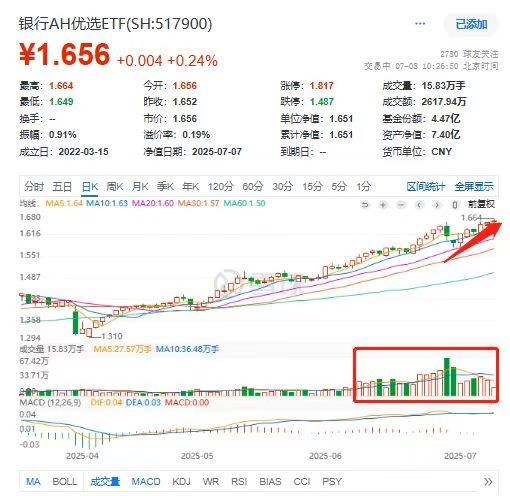
银伟达再发力!银行AH优选ETF(517900)盘中再创新高,年内累涨超26%引领同类
Sou Hu Cai Jing· 2025-07-08 02:42
Core Viewpoint - The banking sector is experiencing significant growth, with the Bank AH Preferred ETF (517900) reaching a historical high, driven by policy easing expectations and strong market demand for bank fundamentals [1] Group 1: Market Performance - As of July 8, the Bank AH Preferred ETF (517900) has increased by 0.18%, marking its third consecutive rise [1] - Over the past 10 days, the ETF has risen by 2.67%, and by 6.98% over the last 20 days, with a year-to-date increase of 26.53% [1] - The trading volume is active, with a transaction amount of approximately 26 million, and the fund's size has grown by 590.69% this year, exceeding 700 million, setting a new historical high [1] Group 2: Investment Insights - The growth in the banking sector is attributed to a combination of liquidity easing and valuation recovery logic, with high dividend stocks expected to maintain strong performance [1] - The index for the Bank AH Preferred ETF had a dividend yield of 5.92% as of the end of May, reflecting a strategy of selecting undervalued stocks [1] - Investors can access this ETF through linked funds (Class A: 016572; Class C: 016573) [1] Group 3: Future Considerations - In the short term, liquidity easing and valuation recovery will likely dominate the sector's performance [1] - In the medium to long term, attention should be paid to economic transformation and industry differentiation [1]

港股科技股多数上涨,港股科技30ETF(513160)涨超1%,机构:港股科技配置价值逐渐凸显
Sou Hu Cai Jing· 2025-07-08 02:02
Group 1 - The core viewpoint is that the Hong Kong stock market, particularly the technology sector, is experiencing significant improvements in liquidity and investment potential, with a notable increase in both trading volume and new listings [2][3]. - The Hong Kong Technology 30 ETF (513160) has seen a net inflow of over 170 million yuan in the past five days, indicating strong investor interest [2]. - The Hang Seng Index has risen by 20% in the first half of 2025, marking the largest increase in points for any first half of the year [2]. Group 2 - The Hong Kong technology sector is currently viewed as being in a "valuation trough" and is positioned for potential recovery due to favorable policies, technological advancements, and capital influx [3]. - The price-to-earnings ratio (PE-TTM) of the Hang Seng Technology Index is approximately 20 times, which is below the 9th percentile since July 27, 2020, suggesting a high potential for valuation recovery [3]. - Analysts predict that the earnings per share (EPS) of the Hang Seng Technology Index will increase year-on-year from 2025 to 2027, indicating a potential "valuation recovery" and "earnings growth" scenario [3].
《黑色》日报-20250707
Guang Fa Qi Huo· 2025-07-07 12:10
| 产业期现日报 | 投资咨询业务资格:证监许可 【2011】1292号 | 周敏波 | 20010559 | | | | | | | | | | --- | --- | --- | --- | --- | --- | --- | --- | --- | --- | --- | --- | | 2025年7月7日 | | | | | | | | | | | | | 钢材价格及价差 | 其差 | 品种 | 现值 | 涨跌 | 单位 | 前值 | | | | | | | 螺纹钢现货(华东) | 3170 | 3150 | 20 | 77 | 螺纹钢现货(华北) | 3170 | 3160 | 11 | 10 | | | | 螺纹钢现货(华南) | 3230 | 3220 | 10 | 137 | 螺纹钢05合约 | 3098 | 300dd | -1 | 72 | | | | 螺纹钢10合约 | 3072 | 3076 | -4 | ರಿ8 | 螺纹钢01合约 | 77 | 3093 | 3090 | 3 | | | | 元/吨 | 热卷现货(华东) | 3250 | 3250 | 0 | 40 | | | | ...
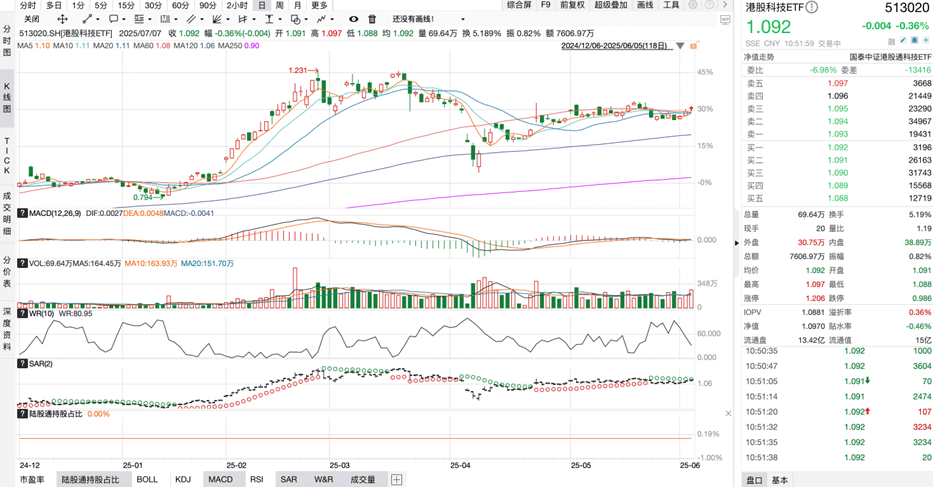
“戴维斯双击”黄金机遇!港股科技ETF(513020)低位布局正当时
Sou Hu Cai Jing· 2025-07-07 03:30
Core Viewpoint - The Hong Kong technology sector is at a convergence of "valuation trough" and "industry transformation," with policy, technology, and capital factors significantly enhancing its investment value [3]. Group 1: Market Performance - The Hong Kong Technology ETF (513020) has seen a year-to-date increase of approximately 30%, although it has recently been fluctuating around the price range of 1.09 [1]. - As of July 7, 2025, the CSI Hong Kong Technology Index has achieved a return of 29.04% year-to-date, outperforming the Hang Seng Technology Index and the Hong Kong Internet Index, which recorded returns of 16.24% and 24.30% respectively [3]. Group 2: Valuation and Growth Potential - The current price-to-earnings ratio (PE-TTM) of the CSI Hong Kong Technology Index is 20.92, which is at the 20.92 percentile of its historical range, indicating a relatively low valuation level with higher safety margins and potential for appreciation [5]. - Bloomberg consensus forecasts suggest that the EPS of the Hang Seng Technology Index will continue to rise annually from 2025 to 2027, supporting the potential for "valuation recovery" and "profit growth" in the sector [3]. Group 3: Investment Opportunities - Investors interested in the Hong Kong technology sector can consider the Hong Kong Technology ETF (513020) for investment opportunities, while those without stock accounts may look into the Hong Kong Technology ETF feeder funds [6].
Vatee外汇:欧洲银行股还能在“2025年下半场”继续狂飙吗?
Sou Hu Cai Jing· 2025-07-02 10:45
Group 1 - The European banking sector delivered its best performance since 1997 in the first half of 2025, with the Stoxx 600 Bank Index rising by 29%, and many leading stocks reaching their highest levels in a decade [1] - The net interest margin, which had benefited from the European Central Bank's interest rate hikes and recovering loan demand, is expected to decline as interest rates are projected to decrease, potentially compressing banks' profit margins [1][4] - Investors will focus on cost control and non-interest income as banks face the challenge of maintaining profitability without the tailwind of significant interest rate hikes [1][4] Group 2 - Valuation recovery has been largely priced in, with Deutsche Bank, UniCredit, and Santander seeing stock price increases between 50% and 80% year-to-date, and their price-to-book ratios moving above the ten-year average [3] - If economic growth falls short of expectations or credit costs rise, current valuations may lack a safety cushion, especially given the weak manufacturing sentiment and ongoing geopolitical risks [3] - M&A-driven premiums are becoming harder to replicate, as evidenced by the cautious stance of potential buyers regarding high premiums and capital usage, with UniCredit's CEO stating they are no longer considering acquiring Deutsche Bank [3] Group 3 - The second half of the year will be determined by the quality of real earnings, cost management, and asset quality cycles, as the market transitions into a period of interest rate cuts and regulatory changes [4] - The key question is which banks can maintain stability and profitability in a cooling market, as this will dictate the sector's performance in the latter half of the year [4]

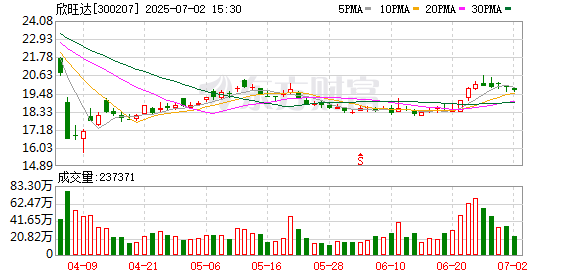
欣旺达拟赴港上市 拓宽融资渠道增强全球竞争力
Zheng Quan Ri Bao· 2025-07-02 10:08
Core Viewpoint - The company, Xinwanda, plans to issue H-shares and apply for listing on the Hong Kong Stock Exchange to enhance its international brand image and competitiveness, marking a significant step in its globalization strategy [2][3]. Group 1: Internationalization Strategy - Xinwanda is a leading player in the lithium battery sector in the A-share market, with a diversified business model that includes consumer batteries, power batteries, and energy storage systems [3]. - The planned H-share issuance is seen as a crucial move in the company's internationalization strategy, leveraging Hong Kong's financial hub status to broaden financing channels and optimize capital structure [3]. - The company aims to enhance its international brand recognition and expand its overseas market capabilities through the H-share platform, facilitating stronger international collaboration in technology, branding, and mergers [3]. Group 2: Financial Performance - In the first quarter, the company reported a revenue of 12.289 billion yuan, representing a year-on-year growth of 11.97%, and a net profit attributable to shareholders of 386 million yuan, up 21.23% year-on-year [3]. - The company plans to focus on emerging application scenarios such as power tools, electric two-wheelers, smart homes, low-altitude economy, and humanoid robots to create a diversified profit growth curve [3]. Group 3: Market Valuation and Capital Operations - Despite strong business performance, the company's valuation in the A-share market does not fully reflect its potential and global strategy, and the H-share listing is expected to open a valuation correction window [4]. - The Hong Kong market, with its mature mechanisms and international investor base, is anticipated to enhance the company's visibility and attract more international capital, aligning its valuation with global peers [4]. - The H-share listing will provide the company with greater capital operation flexibility, enabling strategic actions such as mergers, industry integration, and equity incentives, while also improving corporate governance and operational transparency [5]. Group 4: Global Production and Market Position - The company has established a global production layout with manufacturing bases in Vietnam and India, creating a "local production, local delivery" supply chain system [5]. - Xinwanda is continuously expanding its global customer base, laying a solid foundation for high-quality and sustainable growth [5]. - The rise of AI terminal devices is increasing demands for battery capacity density and energy management, positioning the company to leverage its technological expertise and industry chain collaboration to gain a competitive edge in the upcoming product upgrade wave [5].

从银行保险价值重估看本轮牛市的起点
雪球· 2025-07-02 08:22
Core Viewpoint - The rise in asset prices is fundamentally a monetary phenomenon, reflecting where funds are directed. The stock market is currently experiencing this shift after the real estate market. The bull market is driven not by a sudden surge in corporate profits but by a systematic redirection of funds from traditional sectors to undervalued core assets in the secondary market, creating a mismatch between liquidity and asset supply [1]. Group 1: Market Dynamics - The banking and insurance sectors in China have undergone a significant value reassessment since last year, accelerating since May 2023, indicating a trend not driven by retail investors [2]. - The valuation of Chinese banking and insurance stocks has been at unprecedented lows, with major banks' price-to-book ratios dropping significantly, such as Bank of China at 0.40 and Agricultural Bank of China at 0.40, marking a historical low [4][5]. - The insurance sector has faced even harsher conditions, with China Life's price-to-embedded value ratio at 0.22 and a price-to-book ratio of 0.6, placing it in the lowest 5% of its historical range [4]. Group 2: Valuation Comparisons - In contrast to Chinese financial institutions, major global banks like JPMorgan have a price-to-book ratio of 2.4, while European and Japanese banks hover around 1.0, highlighting a significant undervaluation of Chinese financial stocks [5]. - The extreme undervaluation of Chinese financial stocks, coupled with dividend yields of 6% to 8%, presents a unique investment opportunity in the global financial market [5]. Group 3: Regulatory Environment and Market Recovery - Since 2020, China's financial system has been in deep adjustment, focusing on reducing shadow banking and addressing real estate and local government debt risks, which has pressured profitability and valuation [6]. - Despite the challenges, this period has led to improved asset quality, with banks achieving a provisioning coverage ratio above 200% and stable capital adequacy ratios [6][7]. - The current policy environment is actively directing liquidity into the equity market, with regulatory measures encouraging insurance companies to allocate a significant portion of new premiums to A-shares [8][9]. Group 4: Future Outlook - The ongoing valuation recovery is seen as just the beginning, with continued monetary supply and a focus on undervalued, high-dividend financial blue-chip stocks expected to absorb market liquidity [10]. - The market is anticipated to experience a gradual bull market, characterized by steady index increases and reduced volatility, until a new phase of large-scale equity financing or a shift in interest rate cycles occurs [10].

PX:投产真空期下的估值修复
Wu Kuang Qi Huo· 2025-07-02 05:59
Report Industry Investment Rating - Not provided in the content Core View of the Report - The report analyzes the central value restoration of PXN from the perspective of the domestic PX capacity gap. After nearly two years of production suspension, the PX capacity gap is approaching the level of 2014 - 2018, and it maintains a de - stocking pattern even at high operating rates. The theoretical potential for the valuation center to recover to the average level of 2014 - 2017, around $350 per ton, should occur before the commissioning of Yulong Petrochemical [1]. Summary by Directory 1. Capacity Cycle Comparison - After continuous large - scale production expansions, the domestic PX production has entered a two - year vacuum period. In 2025, whether Yulong Petrochemical is put into production or not, the domestic PX capacity gap will widen. Assuming full PTA capacity is put into production, if Yulong Petrochemical is commissioned, the capacity gap will reach 15.37 million tons, similar to the 15.79 million tons in 2018; if not, it will reach 18.37 million tons, the largest in history. The capacity gap calculated from the polyester end is much smaller than that in 2018, mainly due to the over - capacity of PTA and its export to meet downstream demand. The effectiveness of the capacity gap indirectly corresponding to polyester is not strong [4]. 2. Operating Rate Comparison - As of the end of June 2025, the domestic PX capacity utilization rate is 83.8%, and the Asian capacity utilization rate is around 73%. In the same period of 2018, the domestic capacity utilization rate was lower, hovering around 75% throughout the year, but the Asian overall capacity utilization rate was higher, reaching 80 - 85% outside the maintenance season. In 2018, the average capacity utilization rate was the highest among the years with a large PX capacity gap from 2014 - 2018. The import dependence in 2018 was 60%, while in 2025 it is only 20%. Therefore, the domestic operating rates in 2018 and 2025 cannot be compared independently. In 2018, more attention should be paid to the Asian overall operating rate, and in 2025, more attention should be paid to the domestic operating rate. Currently, the room for China to increase the device load is limited. If the PX operating rate approaches 90% and it is still de - stocking, and the Asian device load approaches 80% or cannot be further increased, there is a possibility of a sharp price increase due to shortages [7][11]. 3. Downstream Comparison - In 2018, against the background of three - year suspension of PTA and PX production, the capacity gap widened. Polyester production expanded significantly, and the operating rate reached a record high due to export rush, leading to significant de - stocking of upstream PTA and PX and triggering the 2018 PTA market. Currently, the export rush stage has passed, and the textile and clothing industry still faces great pressure. Although the polyester fiber inventory and profit pressure are small, the operating rate is unlikely to increase further. The bottle chip sector is gradually reducing production due to inventory and profit pressure. Overall, the polyester sector is less prosperous than in 2018. Currently, PTA inventory has dropped to a low level after five months of de - stocking, and the processing fee is neutral, so the probability of unplanned maintenance in the short term is low. The overall operating rate is similar to that in 2018, but it is gradually entering a stocking cycle, and the PTA processing fee is difficult to expand as in 2018. The main driving force for valuation restoration comes from PXN [22]. 4. Valuation Restoration from the Perspective of Capacity Gap - From the perspective of the capacity cycle, from 2014 - 2017, the domestic PX capacity gap was around 16 million tons, and the PXN center was stable between $350 - 400 per ton. In 2018, due to the export rush, the raw material end de - stocked, and the valuation increased significantly. As the capacity gap narrowed later, the average annual PXN dropped rapidly to around $200 per ton, only increasing in 2022 - 2023 due to aromatics blending for oil. After 2024, the premium of aromatics blending for oil was reversed. Due to the two - year PX production suspension, the upstream - downstream production was mismatched, the capacity gap widened, and the inventory decreased even at a high operating rate. In the medium term, theoretically, PXN should recover to around $350 per ton. However, the commissioning of Yulong Petrochemical may suppress the restoration process and directly lead to inventory accumulation in the later balance sheet. Therefore, the best window period for valuation restoration is before the commissioning of Yulong Petrochemical [36].
苏州银行(002966):大股东再推增持计划,重申目标估值25年1倍PB
Shenwan Hongyuan Securities· 2025-06-30 15:20
——大股东再推增持计划,重申目标估值 25 年 1 倍 PB 事件:苏州银行发布公告, 6 月 27 日,大股东国发集团以自有资金增持公司股份 1211 万股, 持股比例提升至 15% ,变动后,国发集团成为控股股东,苏州财政局成为实际控制人;同时大 股东国发集团计划自 7 月 1 日起的 6 个月内,通过集中竞价交易方式增持不少于 4 亿人民币。 财务数据及盈利预测 | 百万元 | 2023 | 2024 | 2025E | 2026E | 2027E | | --- | --- | --- | --- | --- | --- | | 营业总收入(百万元) | 11,866.12 | 12,223.79 | 12,621.08 | 13,415.66 | 14,377.10 | | 营业总收入同比增长率(%) | 0.88 | 3.01 | 3.25 | 6.30 | 7.17 | | 资产减值损失(百万元) | 1,647.96 | 1,127.89 | 1,481.27 | 1,842.34 | 2,223.63 | | 资产减值损失同比增长率(%) | (40.38) | (31.56) | 31.3 ...