去美元化

Search documents
金融属性+大国博弈机遇:有色矿业怎么看?
Mei Ri Jing Ji Xin Wen· 2026-02-09 01:37
Core Viewpoint - Investors may focus on investment opportunities in the non-ferrous mining and metals sector, driven by the financial attributes of non-ferrous metals in a rate-cutting environment and the benefits of precious metals from a declining US dollar index and de-dollarization demand [1] Group 1: Non-Ferrous Metals and Mining Sector - The demand for industrial metals, rare earths, and energy metals is influenced by significant supply-side disruptions and strong strategic reserve needs [1] - The energy transition, driven by advancements in AI, humanoid robots, and solid-state batteries, is expected to increase demand for copper, aluminum, and lithium, with lithium demand in energy storage surpassing that in electric vehicles [1] - The correlation of copper and aluminum with AI data centers is higher than with other metals, leading to a notable price increase since last year [1] Group 2: Precious Metals - There is a marked increase in investment demand for gold, with domestic central banks continuously increasing their gold reserves and emerging market central banks showing significant demand for gold reserves [1] - Both domestic and overseas investors believe that the future price of gold has upward potential [1] Group 3: Market Trends and Recommendations - The short-term price increase potential exists for metals like copper, aluminum, and gold, with lithium prices rising rapidly due to supply disruptions and increasing storage demand [2] - The rare earth sector is also expected to see price stability and potential increases due to strategic reserve needs and ongoing supply regulations [2] - The non-ferrous sector, including gold and silver, has already seen significant short-term gains, but there may still be room for growth throughout the year, suggesting a strategy of gradual investment [2] - The mining ETF (561330) is highlighted as a potential investment opportunity, having shown strong price elasticity over the past two to three years [2]
中国加速抛售美债,美专家:中国用了新的抛售方式,根本无法干预
Sou Hu Cai Jing· 2026-02-08 22:39
2026年1月15日,美财政部公布了2025年11月世界各国持美债状况,日本和英国成了最大"债主",中国 则大量抛出美债至6826亿美元,相较于巅峰时期的1.3万亿几乎对半砍! 美专家分析,中国这次抛售用的是一种"我们没法阻止的新方式",美国想干预于也无济于事,那么,中 国为何会大量抛售美债?这背后是金融操作,还是另有深意? 要说中国为什么要减持美债,得从美国自身说起,眼下的美国财政状况,说好听点是"吃紧",说难听点 就是"快吃不上饭了"。 全球都在买,中国却不抛售 美债市场现在的情况有点像全球性的"抢购会",日本买得起劲,英国也不手软,就连加拿大和挪威都在 往里冲。 根据2025年11月的数据,全球美债总持仓已经飙到了9.36万亿美元,创了历史新高,日本一个国家就拿 了1.2万亿,英国也有将近8100亿。 这些国家为什么热情高涨?道理很简单:美元流动性强,美国金融市场深,政治盟友之间互相投桃报 李,再加上有避险需求,买点美债是符合传统逻辑的。 可偏偏在这时候,中国却在往回收,11月再一次减持61亿美元,持仓降到了6826亿,连2008年金融危机 时候的水平都跌破了。 如果拉长时间看,自从2013年中国持仓达 ...

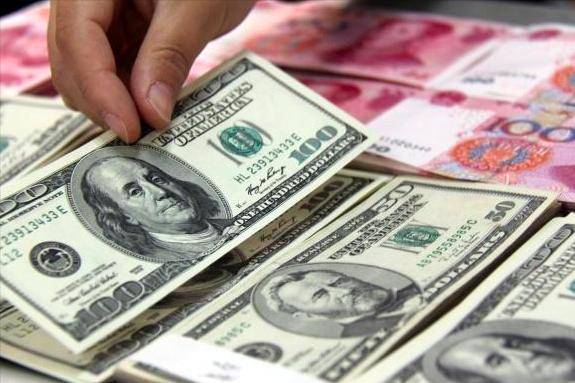
抛售千亿美债,增持26吨黄金,全球跟风拆台美元霸权,美毒计出炉
Sou Hu Cai Jing· 2026-02-08 16:50
黄金无疑是近年来的焦点,两年前黄金的价格还是2000美元左右,而现在黄金一度超过了5500美元/盎司,当前黄金价格所处的水平,在人类金融史上堪称 前所未见。 回顾过往两次黄金价格大幅上扬的重要契机,其背后均与货币体系范式的动摇密切相关,例如,1973年布雷顿森林体系瓦解,此前30年美元与黄金挂钩所积 累的黄金估值压制力量得以释放,黄金价格在此期间飙升17倍,涨幅极为显著;20世纪80年代,受美国债务危机及金融体系动荡等因素影响,黄金价格再度 上扬,涨幅达6倍。 透过现象看本质,黄金的需求主要源自两大核心驱动因素,其一,黄金作为地缘政治环境下的硬通货资产,具有独特的避险属性。 其中一个核心是,美元的信用基础正遭受前所未有的挑战,美国国债规模已突破39万亿美元大关,且仍以惊人的速度持续扩张,政府通过大规模增发货币来 应对债务压力,实质上陷入了"印钞还债"的恶性循环。 美国国债利息支出不仅超越了其军费开支,更跃居联邦政府第二大支出项目之列。这充分暴露了美国债务负担的沉重程度,以及其偿债能力的严重透支,美 国实质上已陷入"借新还旧"的困境,这种饮鸩止渴的做法无疑加剧了全球金融市场的系统性风险。 比如当某一经济体遭遇美 ...

人生发财靠康波:2026年展望
泽平宏观· 2026-02-08 16:05
Core Viewpoint - The article discusses the impending global economic shifts, including de-dollarization, the rise of AI, and the cyclical nature of economic trends, predicting significant inflation and subsequent monetary tightening by 2026 [2][4][5]. Group 1: Economic Cycles - The article emphasizes the end of a century-long economic cycle, marked by the disintegration of the old order and the emergence of new challenges such as income inequality, populism, and geopolitical tensions [6][12]. - It highlights the fourth technological revolution driven by AI, which is expected to lead to substantial capital expenditure in new infrastructure and reshape wealth distribution and national power [6][18][19]. Group 2: Real Estate Market - The real estate sector is entering a phase of differentiation, with a predicted 20% of the population moving to core cities while 80% in lower-tier cities face prolonged declines [7][21]. - The article forecasts that 2026 will see a stabilization in the real estate market, contingent on policy support such as relaxed purchase restrictions and lower interest rates [22][23]. Group 3: Capacity Cycle - The capacity cycle is undergoing a transition, with traditional industries facing capacity reduction while new productive forces, particularly AI, drive large-scale infrastructure investments [24][27]. - The article notes that the capacity cycle has reached a turning point, with improvements in supply-demand dynamics and a recovery in prices and corporate profits expected [25][29]. Group 4: Inventory Cycle - The inventory cycle is transitioning from passive destocking to active restocking, although the recovery is expected to be weak due to ongoing industry differentiation and external uncertainties [29][30]. - The article anticipates a potential exit from deflation in 2026, driven by factors such as anti-involution policies and external inflationary pressures [30][31]. Group 5: Debt Cycle - The article discusses the ongoing challenges in the debt cycle, particularly the need for households to repair their balance sheets while new productive enterprises increase leverage [34][35]. - It emphasizes the necessity for fiscal and monetary policy adjustments to support new productive forces and stimulate economic recovery [39][41]. Group 6: Policy Outlook - The article outlines five key policy areas for 2026, including maintaining a moderately loose monetary policy, proactive fiscal measures, and supportive real estate policies aimed at stabilizing the market [46][48]. - It suggests that the focus will shift from merely preventing overheating in the real estate market to encouraging sustainable growth and addressing housing affordability [48][49]. Group 7: Asset Class Outlook - The article predicts a "confidence bull market" in the stock market, driven by technological advancements and a favorable policy environment, with a focus on sectors like AI, semiconductors, and renewable energy [51][52]. - It also anticipates a significant year for commodities, with expectations of rising prices due to de-dollarization and increased demand from the AI sector [53][54].
美国只有3亿人,为何消费力能远超中国14亿人?现在全“露馅”了!
Sou Hu Cai Jing· 2026-02-08 14:56
Group 1 - The core point is that American consumer power is fundamentally based on "spending tomorrow's money today," which translates to widespread consumer debt [1] - The average savings rate in the U.S. hovers around 4%-5%, while China's savings rate is significantly higher at 43% in 2023 [1] - U.S. consumer credit balances reach $4.8 trillion, averaging about $15,000 per person, compared to China's per capita consumer loans being less than one-tenth of that amount [1] Group 2 - The disparity in income and wealth distribution in the U.S. amplifies consumer data, with a significant portion of consumption driven by a small number of wealthy individuals [2] - The U.S. has a GDP per capita of $77,000, which is six times that of China, but this is misleading due to the large wealth gap [2] - In contrast, China has a substantial number of low-income individuals, with 600 million people earning less than 1,000 yuan per month, limiting their ability to spend beyond basic needs [2] Group 3 - The U.S. consumer power is supported by the dominance of the dollar, allowing Americans to acquire global goods at lower costs [4] - The U.S. economy is consumption-driven, with government and corporate policies aimed at stimulating spending, even if it leads to debt [6] - In contrast, China's economy focuses on investment and exports, resulting in slower growth in consumer income relative to economic development [6] Group 4 - The facade of American consumer power is beginning to unravel as rising interest rates increase debt pressure, leading to higher credit card default rates and reduced consumer spending [8] - The wealth gap is widening, and the actual purchasing power of ordinary Americans is declining, resulting in quieter shopping malls and restaurants [8] - The U.S. dollar's dominance is being challenged as countries pursue "de-dollarization," which threatens the sustainability of American consumer power [8] Group 5 - The difference in consumer power between the U.S. and China is fundamentally rooted in their development models and consumption philosophies [10] - China's consumer power is seen as stable and sustainable, supported by real income without excessive debt risks [10] - The U.S. consumer power is characterized as artificial and unsustainable, reliant on future debt and skewed distribution, which could collapse if its support systems fail [10]
海外宏观及大类资产周度报告-20260208
Guo Tai Jun An Qi Huo· 2026-02-08 14:10
国泰君安期货研究所· 海 外 研 究 联系人 杨藤 F03151619 国泰君安期货·君研海外 海外宏观及大类资产周度报告 戴璐 Z0021475 刘雨萱 Z0020476 日期:2026年2月8日 Guotai Junan Futures all rights reserved, please do not reprint Special report on Guotai Junan Futures CONTENTS 01 02 03 大类资产周度表现及市场高频数据 • 固定收益 – 海外固收周度表现 • 固定收益 – 美债收益率曲线和信用利差 • 固定收益 – 不同评级信用债相对强弱及欧元区利差 • 固定收益 – 美国国债发行量及一二级市场供需 • 汇率市场 – 主要汇率周度表现 • 汇率市场 – 主要国家国债收益率与美债利差走势 • 汇率市场 – 中国货币政策框架演进 • 汇率市场 – 人民币汇率月频指标 • 汇率市场 – 人民币汇率高频指标 • 大宗商品 – 主要大宗商品周度表现 • 大宗商品 – 主要大宗商品比价及产业链相对强弱 • 海外权益 – 全球主要指数及美股各行业周度表现 • 海外权益 – ...
金银周报-20260208
Guo Tai Jun An Qi Huo· 2026-02-08 10:04
1. Report Industry Investment Rating There is no information about the report industry investment rating in the given content. 2. Core Viewpoints of the Report - Gold is expected to stabilize in a volatile manner, while silver requires attention to spot market changes. The strength analysis indicates a neutral stance for both gold and silver. The price ranges are 1050 - 1150 yuan/gram for gold and 18000 - 25000 yuan/kilogram for silver [3][5]. - The long - term logic for gold remains solid, but there is a lack of short - term drivers around the Chinese New Year, resulting in a wedge - shaped oscillatory convergence pattern in prices. The adjustment of gold is considered relatively sufficient, and the possibility of further decline is low [4]. - For silver, the feedback from the fundamentals after the price drop this week is the core for subsequent price judgment. The contradiction of the tight spot structure is expected to continue until the second quarter. There is still potential for an increase in silver prices, but it depends on factors such as continued retail speculation, pre - April export rush, and no further inventory reduction in the US. There is a trend - based decline opportunity for silver if a second peak appears in the second quarter [5]. 3. Summary According to Relevant Catalogs 3.1 Transaction Aspect (Price, Spread, Inventory, Capital, and Position) 3.1.1 Overseas Spot - Futures Price Spread - Gold: This week, the spread between London spot gold and COMEX gold主力 rebounded to - 21.99 US dollars/ounce, and the spread between COMEX gold continuous and COMEX gold主力 was - 30.1 US dollars/ounce [11]. - Silver: This week, the spread between London spot silver and COMEX silver主力 rebounded to 0.225 US dollars/ounce, and the spread between COMEX silver continuous and COMEX silver主力 was - 0.76 US dollars/ounce [17]. 3.1.2 Domestic Spot - Futures Price Spread - Gold: This week, the domestic gold spot - futures price spread was 1.37 yuan/gram, at the lower end of the historical range [20]. - Silver: This week, the domestic silver spot - futures price spread was - 602 yuan/gram, at the upper end of the historical range [22]. 3.1.3 Inter - month Spread - Gold: This week, the gold inter - month spread was 6.92 yuan/gram, at the upper end of the historical range [26]. - Silver: This week, the silver inter - month spread was 476 yuan/gram, at the lower end of the historical range [29]. 3.1.4 Cross - month Positive Arbitrage Delivery Cost - Gold: The total cost of cross - month positive arbitrage delivery for buying TD and selling Shanghai gold was 26.74 yuan/gram; for buying Shanghai gold December contract and selling June contract, it was 7.38 yuan/gram [31][32]. - Silver: The total cost of cross - month positive arbitrage delivery for buying TD and selling Shanghai silver was 343.18 yuan/kilogram; for buying Shanghai silver December contract and selling June contract, it was 418.60 yuan/kilogram [33][34]. 3.1.5 Delivery Direction of Deferred Fees for Gold and Silver Spot at Shanghai Gold Exchange This week, for gold at the Shanghai Gold Exchange, the deferred fee was mainly paid from long to short, indicating stronger delivery power; for silver, it was mainly paid from short to long, indicating stronger receiving power [35]. 3.1.6 Inventory and Position - to - Inventory Ratio - Gold: This week, the COMEX gold inventory decreased by 11 tons, and the proportion of registered warrants rebounded to 51.9%. The domestic gold futures inventory increased by 1.02 tons [37][42]. - Silver: This week, the COMEX silver inventory decreased by 353 tons to 12270 tons, and the proportion of registered warrants declined to 26%. The domestic silver futures inventory decreased by 105 tons to 350 tons [39][42]. 3.1.7 CFTC Non - commercial Positions This week, the non - commercial net long position of COMEX CFTC gold decreased slightly, and the non - commercial net long position of silver also decreased slightly [44]. 3.1.8 ETF Positions - Gold: This week, the inventory of the gold SPDR ETF decreased by 10.87 tons, and the domestic gold ETF decreased by 2.4 tons [47]. - Silver: This week, the position of the silver SLV ETF increased by 667 tons [51]. 3.1.9 Gold - Silver Ratio This week, the gold - silver ratio rebounded from 47 in the previous week to 66.27 [53]. 3.1.10 COMEX Gold Delivery Volume and Gold - Silver Lease Rates This week, the 3 - month gold lease rate was - 0.05%, and the 3 - month silver lease rate was 5.74% [55]. 3.2 Core Drivers of Gold 3.2.1 Gold and Real Interest Rates This week, the correlation between gold and real interest rates recovered, and the 10Y TIPS continued to decline [60].
中外资机构:期待中国股市“盈利牛”
Zhong Guo Ji Jin Bao· 2026-02-08 08:43
【导读】中外资机构:期待中国股市"盈利牛",短期波动不会改变黄金、白银避险属性 【编者按】 中国基金报每月会邀请中外资金融机构的代表,分享他们对全球经济及重大事件的分析与评判。 进入2026年,地缘政治风云突变,各类资产坐上史诗级"过山车",全球尤其是中国的经济及金融市场将 如何发展?中国基金报记者采访了以下机构专业人士。 贝莱德大中华区投资策略师 陆文杰 汇丰环球私人银行及财富管理中国首席投资总监 匡正 南方东英CIO 王毅 惠理集团投资组合总监 盛今 中国银河国际首席宏观策略师 成亚曼 全国两会重点关注 政策取向如何匹配中长期目标 中国基金报:全国两会即将举行,你会关注哪些热点? 陆文杰:中国政策连续性强,方向明确,不会因两会而发生根本性转向。 在基础性周期性政策上,如财政赤字、发债额度等占GDP的比重,预计与去年大致相当,不会有太大意 外。 我们真正关注的是政策取向如何与"十五五"规划等中长期目标配合。例如,"投资于人"的具体含义是什 么?财政支出是更侧重民生保障,还是通过给中小企业减税来促进就业和收入?这些具体的结构性安排 是最值得关注的。 成亚曼:2026年作为"十五五"开局之年,政策或趋于务实,淡 ...
特朗普怎么也没有想到,委内瑞拉的石油,正在撑破美国的肚子
Sou Hu Cai Jing· 2026-02-08 08:41
Group 1 - The article discusses the challenges faced by the oil industry, particularly in relation to the oversupply of oil and the impact on prices, with Brent crude oil prices dropping from $75.93 to $60.64, a decrease of 20% [4] - Venezuela's oil production is significantly hampered by high costs and logistical issues, with the processing costs being $1 more per barrel for transportation and 22% higher for processing compared to lighter oils from the Gulf of Mexico [3] - The U.S. initially aimed to control 40% of global oil production to influence prices, but the oversupply has undermined this strategy, leading to a situation where oil sales are heavily restricted and revenues are diminished [8][10] Group 2 - By 2026, global oil oversupply is projected to reach between 750,000 to 3.5 million barrels per day, with average oil prices around $56 [5] - The U.S. oil market is struggling to absorb Venezuelan oil, which has seen a threefold increase in exports to the U.S. at 284,000 barrels per day, yet refiners still complain about high prices [5][11] - The geopolitical landscape is shifting, with countries like China moving towards West African and Middle Eastern heavy oils, which has led to increased prices in those regions [6][8] Group 3 - The article highlights the complexities of U.S. policies towards Venezuela, where the government is attempting to reshape the energy landscape but faces significant obstacles, including the need for major reforms to attract investment [5][10] - Analysts predict that if tensions with Iran ease, the oil market could stabilize, but the absorption capacity of the U.S. market remains limited [11] - The article concludes that while the U.S. has gained some control over Venezuelan oil, the overall situation remains precarious, with the potential for greater economic volatility [12]