资产荒

Search documents
一年期定期存款利率跌破1%,对我们的投资有何启示?| 每天进步一点点
Sou Hu Cai Jing· 2025-05-26 01:41
Group 1 - Major commercial banks have lowered RMB deposit rates, with the one-year fixed deposit rate falling below 1% for the first time, sparking discussions on investment and financial planning in a low-interest-rate environment [2] - The market had anticipated this decline in deposit rates, as the need for monetary policy to stimulate the economy and stabilize the housing market continues, leading to a decrease in loan rates and a historical low net interest margin of 1.43% for commercial banks [2] - The ongoing trend of declining interest rates will significantly impact investment and financial planning strategies [4] Group 2 - In the current low-interest-rate environment, traditional financial products that guarantee returns, such as fixed deposits and certain insurance products, offer limited yields, making them less suitable for investors seeking substantial returns [4] - The capital market is experiencing an "asset shortage," where investors struggle to obtain returns that match the risks they are taking, leading to a need for a shift in investment strategy [6] - A recommended investment approach is to extend the investment horizon and focus on long-term value growth, aligning with the national encouragement for "patient capital" to support new productive forces and high-quality development in the capital market [6] Group 3 - Options for investing as "patient capital" include investing in stocks or funds with a long-term perspective, avoiding short-term trading, and maintaining emotional stability during market fluctuations [8] - Another option is to purchase participating insurance, allowing insurance companies, which are skilled in long-term investments, to manage assets while ensuring capital preservation and potential high returns from economic recovery [8]


沿着债市定价体系找机会
HTSC· 2025-05-25 11:09
Report Industry Investment Rating No investment rating for the industry is provided in the report. Report's Core View - Fundamental factors are unlikely to break the narrow - range fluctuation pattern of the bond market. The decline in deposit rates is a short - term positive for non - bank allocation demand. The bond market is reasonably priced compared to credit and other broad - spectrum interest rates, but has a lower cost - performance ratio compared to the stock market. Chinese bonds are a global interest - rate low - lying area. In the short term, continue to focus on non - bank allocation, PMI data, and bond supply. The judgment that the 10 - year Treasury bond will fluctuate in the range of 1.5% - 1.8% remains unchanged. [6] - In terms of operations, continue to recommend 3 - and 5 - year credit bonds and Tier 2 capital bonds, and seek opportunities for spread compression through short - end credit downgrading and long - end high - grade bonds. Long - term and ultra - long - term interest - rate bonds are more suitable for trading than allocation, and continue to buy on dips. The cost - performance ratio of the previously recommended ultra - long local bonds has slightly weakened, while that of policy - financial bonds has slightly increased. [6] Summary by Relevant Catalogs This Week's Strategy View: Looking for Opportunities along the Bond Market Pricing System - Last week, the funding situation was stable. Economic data was released, and the cuts in deposit rates and LPR were implemented. The auction result of the 50 - year Treasury bond was poor, and yields fluctuated within a narrow range. Throughout the week, the yield of the active 10 - year Treasury bond rose 1BP to 1.69% compared to the previous week, the 10 - year CDB bond yield fell 1BP to 1.74%, and the 30 - year Treasury bond yield remained unchanged at 1.92%. The 10 - 1 - year term spread widened, and credit spreads remained largely unchanged. [10] - The bond market has been in a narrow - range fluctuation pattern since the suspension of Sino - US tariffs. Last week's deposit - rate cut failed to break the bond - market equilibrium. Currently, investors generally believe that the bond market has a high probability of winning but a low odds ratio. The report explores bond - market pricing from multiple dimensions. [11] Comparison with Credit and Other Broad - Spectrum Interest Rates - The pricing of the bond market is basically reasonable. There is a transmission between bonds and deposits/loans through the price - comparison effect and institutional behavior. After the recent LPR cut, some banks maintained the original 3% mortgage rate for new mortgages. If 3% is the bottom line for mortgage rates, the 30 - year Treasury bond rate may have also bottomed out. Currently, the 30 - year Treasury bond is 2BP higher than the after - tax mortgage rate, with limited upside. [12][13] - In practice, three factors prevent a simple comparison between bonds and loans: different availability of the two types of assets, the influence of non - bank trading desks not being considered, and banks' asset - allocation decisions being affected by multiple factors other than just returns. The cut in deposit rates directly benefits non - bank bond allocation. In the future, banks will face increased difficulty in liability management. [14][15] Comparison with Overseas Markets - Chinese bonds have become a global interest - rate low - lying area, but the short - term adjustment risk is limited. Recently, the sharp rise in US and Japanese bond yields has attracted global attention. The root causes are the reshaping of the global financial order, high debt levels, tight monetary policies, and large - scale long - bond auctions. [2] - China's interest rates are at a global low, especially at the ultra - long end. However, there is no need to worry about Chinese bond yields rising in tandem with overseas markets in the short term, as the influence of overseas interest rates on the Chinese bond market is limited. In the process of global capital reallocation, Chinese bonds and stocks may be relatively beneficiary assets. In the long run (2 - 3 years), there are concerns about the repricing of term spreads. [2][22][26] Comparison with the Stock Market - The bond market has a lower cost - performance ratio compared to the stock market. Currently, the dividend yields of the CSI 300, the dividend index, and the Hang Seng High - Dividend Index are approximately 3.4%, 6.7%, and 8% respectively. Considering the tax - exemption effect of insurance investments in Hong Kong stocks, their value far exceeds that of investing in ultra - long bonds. [3] - In the past two years, the imbalance in the cost - performance ratio between stocks and bonds has persisted. The core reason is that stocks carry price - fluctuation risks while offering high dividends. If the stock market can maintain an upward - trending and less - volatile pattern, there is a possibility of bond - market funds gradually flowing into the stock market to achieve a balance between stocks and bonds. [3] Comparison of Spreads among Bond Market Varieties - Regarding the pricing model of policy rates → funds → short - end → long - end, currently, the role of the MLF policy rate has diminished, and OMO is the most important pricing anchor in the bond market. However, the current term spreads are relatively flat, making it difficult to price long - term and ultra - long - term bonds according to historical rules. In the future, it is difficult for the yield - curve shape to steepen trendily, and investors should focus on finding relative opportunities. [31][32] - In terms of credit spreads, in the context of debt resolution and stricter urban - investment supervision in recent years, the "scarcity of credit assets" has become more prominent. Credit spreads still have room for compression. Specifically, avoid 1 - year ordinary credit bonds for now; 3 - 5 - year credit spreads still offer good value, and high - grade (AAA) credit spreads over 5 years are relatively attractive. Currently, inter - bank certificates of deposit have a better cost - performance ratio than short - term credit bonds, but there may be supply - demand disturbances at certain times. [33][34] - The spreads among bond varieties have significantly compressed. Low - liquidity policy - financial bonds have a slightly better cost - performance ratio, while the cost - performance ratio of local bonds has slightly weakened. [40] This Week's Operation Suggestions - Currently, the bond - market pricing is reasonable compared to credit and other broad - spectrum interest rates, but has a lower cost - performance ratio compared to overseas markets and the stock market. The fundamentals are still in a state of differentiation and bottom - grinding. The decline in deposit rates is positive for non - bank allocation demand. The long - term trend of the bond market has not reversed, but the trading space is limited, and it remains in a narrow - range fluctuation pattern in the short term. [42] - The market lacks major catalysts, so only short - term information such as funds and institutional behavior can be traded. This week, pay attention to PMI and credit - demand data, which are expected to be relatively strong and slightly negative for bonds. In terms of funds, as this week enters the end - of - month trading period, the funding center may rise slightly, but the central bank is expected to provide active support. In terms of institutional behavior, the deposit - rate cut last week led to an increase in inter - bank certificates of deposit and increased subscriptions of funds by wealth - management products, indicating that deposit migration is occurring, providing real - world support for bond - market allocation demand. [42] - In the medium term, the decline in broad - spectrum interest rates will have a certain impact on the bond market. The low of the 10 - year Treasury bond this year is expected to be around 1.5%, but it may be difficult to break through in the second quarter. The upper limit is expected to be between 1.7% - 1.8%. Therefore, if there is further adjustment from the current level, consider entering the market for allocation. [42] - In terms of operations, continue to recommend 3 - and 5 - year credit bonds and Tier 2 capital bonds, and seek opportunities for spread compression through short - end credit downgrading and long - end high - grade bonds. The narrow - range fluctuation pattern of long - term and ultra - long - term interest - rate bonds remains unchanged, so continue to buy on dips. The cost - performance ratio of the previously recommended ultra - long local bonds has slightly weakened, while that of policy - financial bonds has slightly increased. Inter - bank certificates of deposit are initially in the allocation range, but may fluctuate at relatively high levels due to liability - side disturbances. [44] This Week's Core Focus This week, focus on China's industrial - enterprise profits in April, the official manufacturing PMI in May, the euro - zone economic sentiment index in May, the Fed's monetary - policy meeting minutes in May, the US PCE in April, and the end - of - month funding situation. [45]
REITs行业周报:试点持有型不动产ABS扩募,消费REITs表现持续优异
KAIYUAN SECURITIES· 2025-05-25 10:23
REITs 业 研 试点持有型不动产 ABS 扩募,消费 REITs 表现持续 优异 2025 年 05 月 25 日 投资评级:看好(维持) 行业走势图 数据来源:聚源 -19% -10% 0% 10% 19% 2024-05 2024-09 2025-01 沪深300 中证REITs全收益 相关研究报告 《地方政策积极支持公募 REITs 产 品发行,消费 REITs 表现持续优异 —行业周报》-2025.5.18 duzhiyuan@kysec.cn 证书编号:S0790124070064 试点持有型不动产 ABS 扩募,消费 REITs 表现持续优异 2025 年第 21 周,中证 REITs(收盘)指数为 869.19,同比上涨 9.27%,环比上 涨 1.19%;中证 REITs 全收益指数 1089.72,同比上涨 16.22%,环比上涨 1.2%。 本周 REITs 市场交易规模成交量达 6.87 亿份,同比增长 44.33%;成交额达 31.21 亿元,同比增长 57.95%;区间换手率 3.58%,同比下降 6.77%。本周保障房、环 保、高速公路、产业园区、仓储物流、能源、消费类 REI ...
行业周报:试点持有型不动产ABS扩募,消费REITs表现持续优异-20250525
KAIYUAN SECURITIES· 2025-05-25 10:06
Investment Rating - The industry investment rating is "Positive" (maintained) [2][5] Core Viewpoints - The market for REITs is expected to continue to perform well due to supportive policies and the anticipated entry of social security and pension funds, enhancing the cost-effectiveness of allocations in this sector [5][6] - The market trading volume for REITs reached 687 million shares, a year-on-year increase of 44.33%, with a transaction value of 3.121 billion yuan, up 57.95% year-on-year [5][28] - The China Securities REITs (closing) index rose to 869.19, a year-on-year increase of 9.27% and a quarter-on-quarter increase of 1.19% [5][16] Summary by Sections 1. REITs Role and Expansion - The National Development and Reform Commission emphasizes the need for a diversified funding mechanism for urban renewal projects, highlighting the role of REITs in infrastructure investment [6][14] 2. Market Review - The China Securities REITs (closing) index increased by 1.19% quarter-on-quarter, with a cumulative increase of 14.91% since the beginning of 2024, outperforming the CSI 300 index by 1.76% [16][21] - The China Securities REITs total return index rose by 1.2% quarter-on-quarter, with a cumulative increase of 26.45% since the beginning of 2024, significantly outperforming the CSI 300 index by 13.3% [21][26] 3. Weekly Performance - Weekly performance for various REIT sectors showed mixed results, with consumer REITs increasing by 1.04% and a monthly increase of 7.58% [39][56] - The weekly and monthly performance for other sectors included: affordable housing (+0.83% weekly, +6.32% monthly), environmental (-0.05% weekly, -0.03% monthly), and logistics (+1.58% weekly, +5.81% monthly) [39][56] 4. Active Market for New REITs - There are currently 14 REIT funds awaiting listing, indicating a vibrant issuance market [8][39] 5. Investment Recommendations - The report maintains a "Positive" rating for the industry, suggesting favorable conditions for investment in REITs [5][39]
【财经分析】二级市场表现可圈可点 保租房REITs成为投资“避风港”
Xin Hua Cai Jing· 2025-05-24 01:40
Core Viewpoint - The recent performance of rental housing REITs has shown significant excess returns, supported by rental price advantages and demand from end consumers, indicating a strong potential for stable operations through 2025 [1][4]. Group 1: Market Performance - The Huatai Suzhou Hengtai Rental Housing REIT triggered trading halts twice within its first week of listing due to high price increases, reaching 3.554 yuan per share and 3.909 yuan per share, respectively [2][3]. - The REITs market has demonstrated strong performance, with six rental housing REITs showing monthly increases of over 18% since the second half of 2024, peaking at a 47% increase in January 2025 [4][7]. Group 2: Investment Demand - The Huatai Suzhou Hengtai Rental Housing REIT saw an unprecedented oversubscription of 222.64 times during its issuance phase, indicating strong investor interest [3][4]. - The demand for rental housing REITs is driven by a combination of stable rental income, low-risk profiles, and favorable regulatory support, making them attractive to institutional investors [4][6]. Group 3: Underlying Asset Value - The underlying assets of leading REITs are concentrated in prime business districts and high-tech industrial zones, enhancing their core value due to their unique locations [6]. - The operational efficiency of these REITs is notable, with average occupancy rates maintained between 92% and 97%, significantly higher than industry averages [6][7]. Group 4: Future Outlook - The potential for further expansion in the rental housing REITs sector is widely recognized, with predictions indicating that the overall issuance scale could exceed 25 billion yuan by 2025 [7]. - The market for rental housing REITs is expected to remain active, driven by a continuous influx of new assets and the need for original stakeholders to monetize their investments [7].
李大霄:险资入市是重大利好 或助推中国股市向3400点发起总攻
Quan Jing Wang· 2025-05-23 02:16
Group 1 - The first batch of pilot reforms for long-term investment of insurance funds is set at 50 billion, the second batch at 112 billion, and a third batch of 60 billion is pending approval, totaling 222 billion [1] - The total scale of insurance funds is projected to reach 34.93 trillion by the end of 2024, with an average annual growth rate of 16% [1] - The unique operational logic of insurance funds, characterized by long-term and stable attributes, significantly influences asset allocation strategies and has a profound impact on the development of the stock market [1] Group 2 - The primary issue in the Chinese stock market is the short-term nature of funding, which leads to volatility, while the long-term nature of insurance funds effectively addresses this problem [2] - The combination of insurance funds and other long-term capital is expected to transform the short-term funding characteristics of the Chinese stock market, potentially leading to a new phase of stable and healthy development [2]
难有趋势行情,关注曲线交易机会
Changjiang Securities· 2025-05-22 12:13
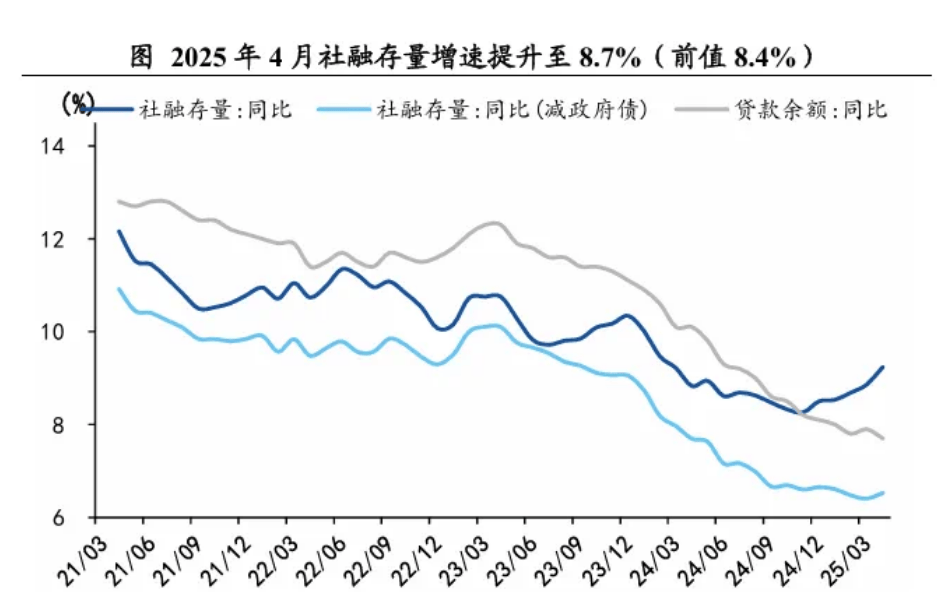
1. Report Industry Investment Rating No relevant content provided. 2. Core Viewpoints of the Report - Since 2021, the logic of the "asset shortage" in the bond market is not applicable this year. Instead, the bond market presents a "liability shortage." The liability gap and structure are the main lines of bond market trading this year [2][5][12]. - The bond market is unlikely to rise trend - wise. Only continuous negative carry can drive the trend - wise correction of long - term interest rates. The probability of a tightening of capital prices in the second quarter is not high, and the market interest rate is expected to fluctuate in the range of 1.5% - 1.6% [2][8][22]. - The bond market has no obvious odds recently. A 10bp positive carry can boost the inter - bank bond market leverage ratio by about 0.1 - 0.2 percentage points. The current positive carry amplitude is insufficient, restricting the market's enthusiasm for leveraging [2][8][30]. - It is recommended to allocate when the 10 - year Treasury bond yield is above 1.65% and the 30 - year Treasury bond yield is above 1.9%. Institutions with stable liabilities can appropriately focus on the coupon opportunities of credit bonds with a term of more than 3 years [2][8][34]. 3. Summary by Related Catalogs 3.1 From "Asset Shortage" to "Liability Shortage", Bond Market Volatility - Before 2024, the "asset shortage" was the main line of the bond market. Due to the downward pressure on the real estate industry and the establishment of the regulatory red line for local implicit debt, credit expansion was constrained. Since this year, with the adjustment of the social financing structure and the relative stability of credit, the "asset shortage" is no longer the main contradiction. The supply of government bonds has increased, and the social financing growth rate has rebounded to 8.7% in April [5][12]. - While the asset supply has increased, the bond market faces a "liability shortage." The central bank's attitude is not the only source of liability pressure. Currently, the market style is more trading - oriented, lacking stable - liability configuration forces. Insurance's premium income growth has declined significantly this year, and its trading attribute has increased; wealth management is undergoing rectification, reducing the allocation of less - liquid credit bonds; public funds have a strong wait - and - see sentiment [8][19]. 3.2 Difficulty in Trend - wise Market, Focus on Curve Trading Opportunities - The bond market is difficult to rise trend - wise. In a relatively stable fundamental situation, only continuous negative carry can drive the trend - wise correction of long - term interest rates. The current fundamental situation is relatively stable, but the real interest rate is high, and there is still uncertainty in the fundamental recovery. The probability of a tightening of capital prices in the second quarter is not high [8][22]. - The bond market has no obvious odds recently. Although the bond market has returned to the positive carry range, the amplitude is insufficient, restricting the market's enthusiasm for leveraging. A 10bp increase in carry can increase the inter - bank bond market leverage ratio by 0.14 and 0.21 percentage points respectively. Since May, the average monthly inter - bank bond market leverage ratio has increased by about 0.2 percentage points compared with April [8][30]. - Before the bond market shows sufficient odds, it is difficult to have a trend - wise market. It is expected that the 10 - year Treasury bond yield will fluctuate around 1.6% - 1.7%. It is recommended to capture trading opportunities along the yield curve. Institutions with stable liabilities can focus on the coupon opportunities of credit bonds with a term of more than 3 years [8][34].
2025年一季度保险业资金运用情况点评:风险偏好提升,权益增量持续
Guoxin Securities· 2025-05-22 09:33
Investment Rating - The investment rating for the insurance industry is "Outperform the Market" (maintained) [1] Core Insights - As of the end of Q1 2025, the balance of insurance funds reached 34.9 trillion yuan, a year-on-year increase of 16.7% [2] - The bond market saw rising yields, prompting insurance companies to increase their bond investments, with the balance of bond allocations for life insurance companies reaching 16.1 trillion yuan, a quarter-on-quarter increase of over 1 trillion yuan, marking a historical high of over 51% [2][19] - In the context of "asset scarcity," insurance companies are expanding investment channels to stabilize medium to long-term investment returns, with a positive outlook on long-duration bonds and high-dividend stocks [2][19] Summary by Sections Bond Market - In Q1 2025, the bond market interest rates rose, attracting insurance capital to increase long-term bond allocations [3] - The 10-year and 30-year government bond yields increased by 20.5 basis points and 18.3 basis points respectively since the beginning of the year [3] Equity Market - Equity assets have become crucial for insurance companies to enhance returns, with life insurance companies' stock holdings reaching 2.65 trillion yuan and long-term equity investments at 2.60 trillion yuan, together accounting for over 16% of total investments [5] - The top ten heavily weighted industries saw significant increases in holdings, except for real estate, which saw a year-on-year decrease of 28.1% [6] Investment Allocation - Life insurance companies increased their bond allocation to 16.06 trillion yuan, a quarter-on-quarter growth of 6.7%, while property insurance companies' bond allocation reached 909.3 billion yuan, a 4.6% increase [10] - The allocation of stocks for life and property insurance companies reached 8.4% and 7.6% respectively, both marking recent highs [19] Long-term Investment Strategies - The expansion of long-term stock investment trials is expected to bring stable medium to long-term incremental funds to the capital market, with a focus on high-quality listed companies in both domestic and Hong Kong markets [12][13] - The insurance industry is actively increasing its allocation to long-term bonds and high-dividend stocks to optimize asset-liability management [10][19]
日度策略参考-20250521
Guo Mao Qi Huo· 2025-05-21 05:51
| I C E H Ho | | 投资咨询业务资格:证监许可【 | | --- | --- | --- | | | | 日博策略参 | | | | 发布日期:2025/05 | | 行业板块 趋势研判 品种 | | 逻辑观点精粹及策略参考 | | | | 随着市场对关税冲击的波动与政策护盘动能趋于衰减,加上当前 | | 股指 震荡 | | 反弹已至区间上沿,在缺乏增量催化因素的背景下,短期或转入 | | | | 震荡整固阶段,策略上、短线多单考虑冲高止盈, 警惕调整风险 | | 宏观金融 震荡 | | 资产荒和弱经济利好债期,但短期央行提示利率风险,压制上涨 | | 国债 | | 空间。 | | 賣金 農汤 | | 多空交织,短期金价或盘整震荡;但中长期上涨逻辑尚未改变。 | | 白银 震荡 | C B | 跟随黄金宽幅震荡, 但中期上方空间有限。 | | 看空 第四 | | 近期国内外宏观数据偏弱压制市场风险偏好,叠加铜下游需求有 | | | | 所转弱,铜价短期偏弱运行。 | | 農汤 | | 近期电解铝低库存对铝价仍有支撑,但随着铝价走高,上行空间 | | | | 受限,预计近期震荡运行。 | | 氢化 ...
长端利率博弈:宏观叙事重构下的长久期国债价值重估
Sou Hu Cai Jing· 2025-05-20 03:00
Group 1: Market Overview - The total market size of bond ETFs has surpassed 260 billion yuan as of May 16, with several products managing over 10 billion yuan, indicating a significant head effect [1] - The rise of bond ETFs is attributed to their stability, transparency, and convenience, gaining recognition from both institutional and individual investors amid increased volatility in the equity market [1] Group 2: Macro Policy Environment - In the first four months of 2025, new social financing reached 1.2 trillion yuan, a year-on-year increase of 1.2 trillion yuan, pushing the social financing stock growth rate to 8.7%, the highest since March 2024 [2] - The net financing of government bonds in April was 976.2 billion yuan, a year-on-year increase of over 1 trillion yuan, supported by the early issuance of special government bonds [2] - The financial system's liabilities are expanding faster than assets, leading to increased demand for bond allocation as interbank liquidity remains ample [2] Group 3: Economic Fundamentals - In April 2025, the cumulative year-on-year growth rate of industrial added value decreased by 0.1 percentage points compared to March, while the CPI remained at -0.1%, indicating weak industrial production and demand [4] - The issuance pace of local government special bonds has slowed compared to previous years, creating a window for allocation in interest rate bonds [4] - The 30-year government bonds are highlighted for their hedging properties against economic downturns, serving as a "ballast" for market funds [4] Group 4: Global Geopolitical Context - The ongoing U.S.-China tariff negotiations have entered a "tug-of-war" phase, with heightened tensions in semiconductor and new energy sectors, leading to a conservative risk appetite in global capital [7] - The geopolitical tensions in the Middle East, particularly regarding the Iran nuclear deal, have further intensified inflation expectations, enhancing the protective attributes of bonds [7] Group 5: Fund Performance and Investor Behavior - The 30-year government bond ETF (博时511130) has seen continuous net inflows, with a total of 446 million yuan over a week, indicating strong institutional investor interest [8] - Despite a slight price correction of 0.26%, the fund's scale increased to 6.717 billion yuan, marking a new high in nearly a month, reflecting a strong willingness among institutional investors to buy on dips [8] - The fund's Sharpe ratio over the past year stands at 1.08, with a maximum drawdown of 6.89%, outperforming over 90% of bond funds, showcasing its defensive attributes [8]