
利率风险

Search documents
固定收益点评:银行配债有哪些指标约束
GOLDEN SUN SECURITIES· 2025-11-06 12:22
1. Report Industry Investment Rating No relevant content provided. 2. Core View of the Report In recent years, the mismatch between the duration of banks' assets and liabilities has intensified, with the duration of the asset side lengthening and that of the liability side shortening. This has put pressure on some liquidity indicators and constrained banks' asset allocation behavior. The increase in long - term bond holdings has also increased the pressure on interest rate risk indicators. The report analyzes the current indicator constraints on banks' bond allocation and the prospects of these indicator pressures [1]. 3. Summary by Related Catalogs 3.1 Liability - side Duration Reduction and Asset - side Duration Extension - **Net Interest Margin Pressure**: Since 2022, the net interest margin of commercial banks has continued to decline, from 2.08% at the end of December 2021 to 1.42% at the end of June 2025, compressing banks' profit margins [9]. - **Liability - side Duration Reduction**: - **Deposit**: Since 2023, the duration of new deposits has significantly shortened. High - cost, long - term deposits have been significantly reduced due to the expiration of high - interest fixed deposits in 2025 - 2026 and the suspension of "manual interest compensation" in 2024. Banks tend to guide customers to transfer to short - term deposits, and customers are less attracted to long - term deposits. New deposits are concentrated within 1 year [10]. - **Inter - bank Liabilities**: In 2025, banks mostly reduced the issuance of 9M and 1Y certificates of deposit (CDs) and increased the issuance of 3M and 6M CDs [15]. - **Asset - side Duration Extension**: Since 2019, the loan growth rate of listed banks has continued to decline, and financial investment has become an important alternative asset on the asset side. Bond investment is a major part of financial investment, with government bonds accounting for a relatively high proportion. From 2023 - 2025, the average duration of local government bonds has lengthened from 12.39 years to 15.62 years, and it is expected that the duration of the asset side of national and joint - stock banks will lengthen [17]. 3.2 What Indicator Constraints Do Banks Face in Bond Allocation? 3.2.1 Liquidity Risk: Low NSFR Index for Joint - stock Banks - **Liquidity Regulatory Indicators**: Chinese banks need to meet five liquidity regulatory indicators, including LMR, LR, NSFR, LCR, and HQLAAR. The report mainly analyzes LR, NSFR, and LCR. In mid - 2025, the LR and LCR of listed banks generally had sufficient safety margins, while the NSFR safety cushions of joint - stock banks (except China Merchants Bank) and some city commercial banks were relatively thin [3][22]. - **Reasons for Low NSFR in Joint - stock Banks**: The core reason lies in the liability side. Retail deposits are not advantageous, the proportion of inter - bank liabilities is high, and deposits tend to be short - term. This leads to a low Available Stable Funds (ASF) [41]. - **Measures to Deal with NSFR Pressure**: - **Increase the Numerator**: In October, joint - stock banks significantly increased the issuance of 1Y CDs. The net financing of joint - stock bank CDs in October reached 62.44 billion yuan, and the issuance scale of 1Y CDs was significantly increased [45]. - **Reduce the Denominator**: From January to September this year, joint - stock banks basically maintained a monthly net reduction of CDs and increased the allocation of interest - rate bonds, which is conducive to reducing the Required Stable Funds (RSF) and improving the NSFR [48]. 3.2.2 Interest Rate Risk: The ΔEVE/First - tier Capital of Some State - owned Banks Approaches the Upper Limit - **Regulatory Requirements**: According to the "Administrative Measures for the Interest Rate Risk of Commercial Banks' Banking Books (Revised)", when the economic value change of state - owned large commercial banks exceeds 15% of their first - tier capital, the banking regulatory authority should pay attention and conduct follow - up evaluations [53]. - **Interest Rate Risk of Banking Books**: In 2024, under six standardized interest rate shock scenarios, the maximum economic value change losses of Agricultural Bank of China (- 14.31%), Industrial and Commercial Bank of China (- 14.71%), and China Construction Bank (- 14.73%) as a percentage of their first - tier capital were close to - 15%. This has objectively constrained bond - allocation behavior and will affect the volume and duration of state - owned banks' bond investments [55].






日度策略参考-20251106
Guo Mao Qi Huo· 2025-11-06 05:28
Report Summary 1. Industry Investment Ratings The report does not provide an overall industry investment rating. It offers trend judgments for various commodities within different sectors, including "oscillating", "bullish", and "bearish". 2. Core Views - The current macro - level is in a relatively vacuous period, with A - shares lacking a clear upward mainline. The market trading volume remains low, and the stock index continues to oscillate while accumulating momentum for the next upward movement. There is strong support below the stock index due to policy protection and abundant macro - liquidity [1]. - Different commodities in various sectors are affected by a combination of macroeconomic factors, supply - demand fundamentals, and geopolitical events, resulting in different price trends and investment outlooks. 3. Summary by Commodity Sectors Macro - Financial - **Stock Index**: Oscillating. A - shares lack an upward mainline, trading volume is low, but there is strong support below due to policy and liquidity [1]. - **Treasury Bonds**: Oscillating. Asset shortage and weak economy are favorable for bond futures, but the central bank's short - term interest rate risk warning suppresses the upward space [1]. - **Gold and Silver**: Oscillating. The tightness of the US dollar liquidity has eased, and precious metals are stabilizing and oscillating [1]. Non - Ferrous Metals - **Copper**: Oscillating. The tightness of the US dollar liquidity has eased, market risk appetite has recovered, and copper prices have stopped falling. Limited industrial drivers and digested macro - benefits lead to an oscillating trend [1]. - **Aluminum**: Oscillating. With small production profits, domestic alumina production capacity is continuously released, and production and inventory are both increasing, pressuring the spot price. Attention should be paid to cost support [1]. - **Zinc**: Oscillating. The US government shutdown has increased market risk aversion. LME zinc inventory is continuously decreasing, and the risk of a short squeeze remains, but domestic fundamentals are still in surplus, so be cautious when chasing high prices [1]. - **Nickel**: Oscillating. US economic data and Fed policy expectations affect market risk appetite. The RKAB policy in Indonesia has been implemented, and nickel prices are mainly affected by macro factors in the short term, with high inventory pressure [1]. - **Stainless Steel**: Oscillating. Macro - sentiment is volatile, and stainless steel futures are oscillating at the bottom. Pay attention to the actual production of steel mills [1]. - **Tin**: Oscillating. Macro - benefits have been digested, and considering the raw material shortage and good new - quality demand expectations, it is recommended to pay attention to buying at low prices in the long - term [1]. - **Industrial Silicon**: Oscillating. Northwest production capacity is resuming, and southwest production is weak. The impact of the dry season is weakening [1]. - **Polysilicon**: Oscillating. There is an expectation of production capacity reduction in the long - term, and terminal installation is expected to increase in the fourth quarter [1]. - **Lithium Carbonate**: Oscillating. The traditional peak season for new - energy vehicles is approaching, and energy - storage demand is strong, but there is hedging pressure [1]. Black Metals - **Rebar**: Oscillating. There are concerns about weakening industrial demand in the off - season, and attention should be paid to upward pressure after the realization of macro - sentiment [1]. - **Hot - Rolled Coil**: Oscillating. The off - season effect is not obvious, but the industrial structure is loose, and attention should be paid to upward price pressure [1]. - **Iron Ore**: Oscillating. Near - month contracts are restricted by production cuts, but there is an upward opportunity for far - month contracts due to good commodity sentiment [1]. - **Coke**: Oscillating. There is cost support and direct demand, but high supply and inventory accumulation put pressure on the sector, and the price rebound space is limited [1]. - **Silicon Iron**: Oscillating. Short - term production profit is poor, cost support is strong, but high supply and downstream pressure limit price rebound [1]. - **Coking Coal and Coke**: Oscillating. Coal and coke are strong due to tight supply, but downstream steel prices have weakened first, and there is a risk of the price returning to the oscillating range. It is recommended to wait and see in the short - term and go long at low prices in the long - term [1]. Agricultural Products - **Palm Oil**: Oscillating. It is currently under the pressure of seasonal production increase and weak exports, but may rebound if export data improves in the traditional production - reduction cycle starting in November [1]. - **Soybean Oil**: Oscillating. China's purchase of US soybeans may bring a loose supply expectation, and the rebound momentum is insufficient [1]. - **Rapeseed Oil**: Oscillating. The meeting between Chinese and Canadian leaders and Canadian rapeseed harvest put pressure on the market [1]. - **Cotton**: Oscillating. Uncertainty in cotton demand exists due to the contradiction between Xinjiang's production capacity expansion and reduced spinning profit. The downside space is limited, but the new - crop basis and futures price may be under pressure [1]. - **Sugar**: Oscillating. Typhoons have affected sugarcane production, and there is seasonal upward pressure, but the rebound space is limited after new - sugar listing [1]. - **Corn**: Oscillating. There is selling pressure in the short - term, and the market is expected to oscillate and bottom out. Attention should be paid to traders' inventory - building rhythm and policy changes [1]. - **Soybean Meal**: Oscillating. Domestic soybean purchase and processing margins are poor, and the market may rebound to repair margins, but the supply is expected to be loose in the near and far terms, limiting the rebound height [1]. Energy and Chemicals - **Crude Oil**: Oscillating. OPEC+ plans to maintain a small increase in production in December, geopolitical speculation has cooled, and trade policies have eased market sentiment [1]. - **Fuel Oil**: Oscillating. Similar to crude oil, affected by OPEC+ production policy, geopolitics, and trade policies [1]. - **Asphalt**: Bearish. Short - term supply - demand contradiction is not prominent, following crude oil. The "14th Five - Year Plan" construction demand is likely to be false, and supply is sufficient with high profits [1]. - **Natural Rubber**: Oscillating. Supported by raw material cost, with decreasing intermediate inventory and a positive commodity market atmosphere [1]. - **Synthetic Rubber**: Oscillating. Crude oil price decline weakens the cost support of butadiene, and synthetic rubber supply is loose with high inventory [1]. - **PTA**: Oscillating. The news of the "anti - involution" policy, overseas and domestic device failures, and maintenance have affected production and prices [1]. - **Ethylene Glycol**: Oscillating. It follows the decline of crude oil prices, but coal price increase strengthens cost support. The polyester peak season is ending without obvious decline [1]. - **Short - Fiber**: Oscillating. It is affected by the PTA price and cost, with a strengthening basis [1]. - **Styrene**: Oscillating. Weak Asian benzene prices, low device operating rates, and closed arbitrage windows have affected the market [1]. - **Urea**: Oscillating. Export sentiment has eased, and domestic demand is insufficient, but there is support from the "anti - involution" policy and cost [1]. - **PE**: Oscillating. High supply leads to large inventory pressure, weakening maintenance, and slow - growing demand [1]. - **PP**: Oscillating. Insufficient maintenance support and new device production increase supply pressure, and demand improvement is less than expected [1]. - **PVC**: Oscillating. New device production and reduced maintenance increase supply pressure, and coal price increase strengthens cost support [1]. - **Caustic Soda**: Oscillating. Planned production expansion in Guangxi, reduced maintenance concentration, and potential short - squeeze risk [1]. - **LPG**: Oscillating. International oil and gas fundamentals are loose, and domestic spot fundamentals are stable [1].
200亿的买债规模及其对市场的影响:2025年11月5日利率债观察
EBSCN· 2025-11-05 03:49
Report Industry Investment Rating - Not provided in the content Core Viewpoints - The scale of the central bank's bond purchases in October was significantly less than last year, but the daily average net purchase was not low. The total net purchase in November is likely to exceed that in October [1]. - The scale of the central bank's future bond purchases depends on bond yield changes. The recent decline in interest rates may be due to market trading of the "central bank bond - buying" theme, and bond pricing will eventually return to fundamentals [2]. - There is theoretical downward space for the 10Y Treasury bond yield, but three points need to be noted: the speed of yield decline, the possible change of the "desirable level" over time, and the influence of market internal forces [3]. Summary by Related Catalog 1. Is the 20 - billion bond - buying scale small? - On November 4, 2025, the central bank disclosed a net bond purchase of 20 billion yuan in October, much less than last year's monthly 100 - 30 billion yuan. Using the daily average indicator, the daily net purchase was 50 billion yuan from October 28 - 31, and the November total is likely to exceed October's [1]. - The scale of the central bank's future bond purchases depends on bond yield changes. The 20 - billion purchase may not be the main reason for the 5bp decline in the 10Y Treasury bond yield from October 28 - 31, and bond pricing will return to fundamentals [2]. 2. The downward space of bond yields and three points to note - It is reasonable to think that the central bank's restart of bond - buying indicates that the Treasury bond yield in late October was at a desirable level. There is theoretical downward space for the 10Y Treasury bond yield, similar to the level in mid - June [3]. - Three points to note: the speed of yield decline may be more important than the specific level; the "desirable level" may change over time; the downward space is a theoretical maximum from a policy perspective, and market forces often dominate bond yield trends [3].
日度策略参考-20251105
Guo Mao Qi Huo· 2025-11-05 03:21
Report Industry Investment Ratings - **Bullish**: None - **Bearish**: Palm oil, Rapeseed oil, Soybean meal, Paper pulp - **Neutral (Oscillating)**: Stock index, Treasury bond, Gold, Copper, Aluminum, Alumina, Zinc, Nickel, Stainless steel, Tin, Polysilicon, Lithium carbonate, Iron ore, Manganese silicon, Soda ash, Coking coal, Coke, Cotton, Sugar, Corn, Crude oil, Fuel oil, Asphalt, Natural rubber, Synthetic rubber, PTA, Ethylene glycol, Short - fiber, Styrene, Urea, PE, PP, PVC, Caustic soda, PG, Container shipping European line Core Views - Short - term, market sentiment may shift from optimism to caution, and the stock index may enter an oscillating phase to accumulate momentum for the next upward movement, with strong support below due to policy and liquidity [1]. - Asset shortage and weak economy are favorable for bond futures, but short - term central bank interest - rate risk warnings suppress the upside [1]. - Precious metals are under short - term pressure due to tight dollar liquidity [1]. - Copper price is expected to have limited downside, while aluminum price oscillates, and alumina has a weak fundamental situation [1]. - Zinc price is expected to stay high, but chasing high should be cautious; nickel and stainless - steel prices are affected by macro factors and have different trends [1]. - Tin has long - term buying opportunities at low prices; polysilicon, lithium carbonate, and other commodities have their own oscillating or directional trends based on supply - demand and macro factors [1]. - Some agricultural products like palm oil, rapeseed oil, etc. face bearish factors, while others like sugar and cotton have complex supply - demand situations [1]. - Energy - chemical products' prices are affected by factors such as supply - demand, policies, and cost, showing various trends [1]. Summary by Related Catalogs Stock Index - Short - term, with the release of positive factors, the stock index may oscillate to accumulate momentum for the next upward movement, and there is strong support below due to policy and liquidity [1]. Treasury Bond - Asset shortage and weak economy are favorable for bond futures, but short - term central bank interest - rate risk warnings suppress the upside [1]. Gold - Precious metals are under short - term pressure due to tight dollar liquidity [1]. Copper - Macro - positive sentiment is digested, and copper price may decline, but the downside is limited [1]. Aluminum - Recent industrial drivers are limited, and with the digestion of macro - positives, aluminum price oscillates [1]. Alumina - Domestic alumina production capacity is continuously released, with both production and inventory increasing, and the fundamental situation is weak, putting pressure on the spot price [1]. Zinc - Market risk aversion rises, LME zinc inventory is decreasing, and zinc price is strong, but domestic over - supply requires caution when chasing high [1]. Nickel - Short - term, nickel price may be dominated by macro factors and oscillate weakly, with high inventory pressure; long - term, primary nickel over - supply persists [1]. Stainless Steel - Macro sentiment weakens, and stainless - steel futures are under pressure; short - term operations are recommended, and opportunities for selling hedges at high prices should be noted [1]. Tin - Long - term, there are opportunities to go long at low prices due to the unrepaired raw - material end and good new - quality demand expectations [1]. Polysilicon - Northwest production capacity is recovering, production in November is decreasing, and there are expectations of capacity reduction and increased terminal installation [1]. Lithium Carbonate - There are concerns about potential weakening of industrial demand in the off - season, and attention should be paid to upward pressure after the realization of macro sentiment [1]. Iron Ore - Near - month production is restricted, and far - month has upward potential [1]. Manganese Silicon - Direct demand is good, but high supply and inventory pressure limit price rebound [1]. Soda Ash - It follows glass, but supply - demand is average, and there is strong upward resistance [1]. Coking Coal and Coke - Coking coal is testing support, and coke has a complex situation; short - term, single - side operations should be observed, and long - term, low - buying is recommended [1]. Palm Oil - Short - term, it faces seasonal production increase and weak exports; from November, there may be a phased rebound if exports improve [1]. Rapeseed Oil - Sino - Canadian relations and Canadian harvest put pressure on the price [1]. Cotton - Uncertainty in cotton demand exists due to the contradiction between Xinjiang's capacity expansion and reduced spinning profit; the downside is limited, but new - crop base and price may be under pressure [1]. Sugar - Short - term, there is seasonal upward momentum, but new - sugar listing may limit the rebound space [1]. Corn - Futures and spot face selling pressure, and the price may oscillate and bottom out [1]. Soybean Meal - Domestic soybean purchase and processing profit is poor, and the price may rebound to repair the profit, but supply expectations limit the rebound height [1]. Paper Pulp - The 11 - contract has pressure, and an 11 - 1 reverse spread is recommended [1]. Log - The fundamental situation has declined, and it is recommended to wait and see [1]. Live Pig - Short - term, futures follow the spot and turn weak [1]. Crude Oil and Fuel Oil - OPEC+ continues to increase production slightly, geopolitical hype cools down, and market sentiment eases [1]. Asphalt - Short - term supply - demand is not prominent, and the "14th Five - Year Plan" demand may be false; supply is sufficient, and profit is high [1]. Natural Rubber - Supported by raw - material cost, mid - stream inventory decreases, and the market atmosphere is positive [1]. Synthetic Rubber - Cost support weakens, supply is loose, and the price is adjusted downwards [1]. PTA and Short - fiber - The "anti - involution" policy drives the price up, and short - fiber follows the cost [1]. Ethylene Glycol - It follows the decline of crude oil, but cost support strengthens, and polyester demand is stable [1]. Styrene - Asian benzene price is weak, and styrene profit declines, with more device overhauls [1]. Urea - Export is weak, and there is cost support [1]. PE and PP - Supply pressure is high, and downstream improvement is less than expected [1]. PVC - Supply pressure is large, and cost support strengthens [1]. Caustic Soda - Production plans increase, over - concentration of overhauls decreases, and there is a risk of short - squeeze [1]. PG - International oil and gas supply is loose, and domestic spot is stable [1]. Container Shipping European Line - Macro - positive sentiment is digested, and November's shipping capacity supply is relatively loose [1].
如何解读央行恢复国债买卖︱重阳问答
重阳投资· 2025-10-31 07:32
Core Viewpoint - The People's Bank of China (PBOC) has decided to resume the trading of government bonds after a 10-month suspension, indicating a positive shift in the bond market and a need for liquidity support [2][3]. Group 1: Reasons for Resuming Bond Trading - The resumption is attributed to a phase of alleviated interest rate risks in the bond market and the necessity to provide liquidity support [3]. - The initial suspension in January was due to overly optimistic market sentiment and rapid declines in government bond yields, which increased interest rate risks and widened the China-U.S. interest rate differential [3]. - Since July, a shift in risk appetite has led to capital outflows from the bond market, causing a rapid increase in the 10-year government bond yield from 1.6% to over 1.8%, stabilizing around this level for a month [3]. - The macroeconomic environment, including the Federal Reserve's rate cuts and a narrowing of the China-U.S. interest rate differential, has created a favorable context for the PBOC to restart bond trading [3]. Group 2: Market Implications - The resumption of bond trading signals a defined upper limit for bond yields, suggesting limited room for further increases in the 10-year government bond yield [4]. - The PBOC's actions are aimed at enhancing the financial function of government bonds and improving the coordination between monetary and fiscal policies [4]. - The recent rise in short-term bond yields has led to a narrowing of the yield spread between 10-year and 1-year government bonds, indicating a potential steepening of the yield curve [4]. - In the short term, the PBOC's bond purchases may focus on the shorter end of the yield curve, with the long end requiring further observation of the scale of bond purchases and equity market performance [4].


认识基金----债券基金
Sou Hu Cai Jing· 2025-10-23 17:07
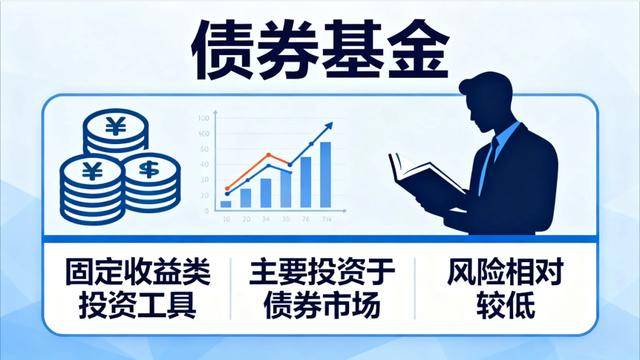
Core Insights - The article defines bond funds as investment funds that primarily invest in tradable government bonds, local government financial bonds, and corporate bonds [2] - The development history of bond funds includes the establishment of the first bond fund in the United States, Keystone Custodian Fund, in 1935, and the launch of China's first bond fund, Southern Baoyuan Bond A, in 2002 [2] - Bond funds can be classified into pure bond funds, hybrid bond funds, and convertible bond funds based on their ability to invest in the stock market, and into government bond funds, municipal bond funds, and corporate bond funds based on the types of bonds they invest in [2] - The main characteristics of bond funds include a focus on bonds as investment targets, with over 80% of fund assets invested in bonds, offering relatively stable returns with lower risk compared to equity funds, but also lower expected returns [2] - Risks associated with bond funds include interest rate risk, credit risk, early redemption risk, and inflation risk, with rising market interest rates potentially leading to a decline in bond prices and a decrease in fund net value [2]
中金:美国中小银行为何又“暴雷”
中金点睛· 2025-10-19 23:59
Core Viewpoint - Recent declines in stock prices of Zions Bank (ZION) and Western Alliance (WAL) are attributed to concerns over loan losses, raising fears about the asset quality issues stemming from previous loose credit conditions and potential systemic financial risks [2][3] Group 1: Risk Origin and Comparison - The current risks faced by U.S. regional banks are primarily credit risks rather than interest rate risks, as analyzed in a previous report [2] - ZION and WAL differ significantly from the previously failed Silicon Valley Bank (SVB) and First Republic Bank (FRC) in terms of liability stability, with ZION and WAL showing no signs of deposit runs [2][3] - The liability structures of ZION and WAL are more stable and diversified compared to SVB and FRC, with uninsured deposits at 43% and 50% respectively, and non-interest-bearing demand deposits at 32% and 28% [2][3] Group 2: Asset Quality and Credit Risk - The asset risks for ZION and WAL are primarily related to credit risk, unlike SVB and FRC, which faced significant interest rate risks due to their long-term bond holdings [3] - ZION and WAL have a higher proportion of loans (62% and 76%) compared to securities investments (30% and 13%), which reduces their exposure to interest rate fluctuations [3] - Current evidence does not suggest that the recent loan risk events are systemic, as the overall loan delinquency rates in the U.S. banking sector remain historically low [3] Group 3: Financial Stability and Systemic Impact - ZION and WAL's potential bad debt exposure is limited, with loan write-offs accounting for only 13% and 8% of their 2024 profits, and impacting their core Tier 1 capital minimally [3][4] - The asset sizes of ZION (888 billion) and WAL (809 billion) are significantly smaller than those of SVB and FRC, indicating that the current risks are more localized and do not pose a systemic threat to the financial system [4] - The high interest rate environment may lead to increased credit risks, but any resulting credit tightening is expected to be moderate unless clear signs of economic recession emerge [4]



未来,超长债谁来买?:地方债发行期限梳理-20250925
Hua Yuan Zheng Quan· 2025-09-25 11:32
Report Industry Investment Rating - Not provided in the content Core Viewpoints of the Report - The issuance rules of local government bonds have changed significantly in the past decade. Policy encourages the issuance of longer - term special bonds, and the weighted average issuance term of local government bonds has been greatly extended. There may be pressure of supply - demand imbalance for ultra - long bonds in the future, and high macro - leverage ratio in the non - financial sector may lead to increased debt pressure when interest rates rise. It is recommended to address the supply - demand imbalance from both the supply and demand sides [1] Summary by Related Catalogs Changes in Local Government Bond Issuance Rules - In 2015, local governments fully launched independent bond issuance, with a maximum term of 10 years and strict restrictions on medium - and long - term proportions. In 2018, 15 - year and 20 - year terms were added. In 2019, the limit on the term - ratio structure of local bond issuance was removed, and long - term special bonds were encouraged. In 2020, 9 terms were specified, and requirements for the average issuance term of new general bonds were set [1] Differences between General Bonds and Special Bonds - General bonds are used for non - revenue public welfare projects, repaid mainly by general public budget revenue, with an average term within 10 years. Special bonds are for projects with certain revenues, repaid by government fund revenues or special revenues, and long - term issuance is encouraged. In 2025, 4.4 trillion yuan of local government special bonds are planned [1] Changes in the Weighted Average Issuance Term of Local Government Bonds - From 2015 - 2018, the weighted average issuance term was about 6 years. Since 2019, it has increased significantly from 10.3 years in 2019 to 15.5 years as of September 15, 2025. The proportion of local bonds with a term of 15 years and above has risen from 18.6% in 2019 to 48.6% as of September 15, 2025 [1] Potential Supply - Demand Imbalance of Ultra - Long Bonds - The annual issuance scale of interest - bearing bonds with a term of 20 years and above has increased from 1.96 trillion in 2021 to 4.65 trillion as of September 25, 2025. The demand for ultra - long bonds mainly comes from life insurance. However, factors such as the significant reduction of insurance preset interest rates, the peak of non - standard investment maturity of insurance funds, and the new regulations on punitive redemption fees of public funds may lead to a weakening of demand. Banks may also net sell ultra - long interest - bearing bonds in the secondary market [1] High Macro - Leverage Ratio and Debt Pressure - As of the end of March 2025, China's non - financial sector macro - leverage ratio was 292.2%, significantly higher than the average of developed economies (258%). Rising interest rates may increase the debt pressure on enterprises and local governments [1] Suggestions to Alleviate Supply - Demand Imbalance - Demand side: The central bank should restart the purchase of government bonds and expand the scope to local bonds, and encourage banks to promote ultra - long interest - bearing bonds to individual investors and guide long - term funds such as social security and annuities to increase investment. Supply side: Control the proportion of government bonds with a term of 15 years and above and encourage the issuance of floating - rate bonds [2]
债市日报:9月24日
Xin Hua Cai Jing· 2025-09-24 08:30
Core Viewpoint - The bond market is experiencing a correction, with government bond futures declining and interbank bond yields rising, indicating tightening liquidity as the month-end approaches [1][2]. Market Performance - Government bond futures closed lower across the board, with the 30-year main contract down 0.41% to 114.070, marking a new closing low since March 19 [2]. - Interbank bond yields mostly increased, with the 30-year government bond yield rising 1.3 basis points to 2.112% and the 10-year government bond yield up 1.4 basis points to 1.812% [2]. Overseas Bond Market - In North America, U.S. Treasury yields fell across the board, with the 10-year yield down 4.06 basis points to 4.106% [3]. - In Asia, Japanese bond yields also decreased, while in the Eurozone, the 10-year French bond yield rose by 0.4 basis points to 3.561% [3]. Primary Market - The Ministry of Finance's weighted average bid yields for 91-day and 182-day government bonds were 1.2473% and 1.3405%, respectively, with bid-to-cover ratios of 2.84 and 2.31 [4]. Liquidity Conditions - The central bank conducted a 7-day reverse repo operation of 401.5 billion yuan at a rate of 1.40%, resulting in a net withdrawal of 17 billion yuan for the day [5]. - Short-term Shibor rates increased, with the overnight rate rising 2.1 basis points to 1.434% [5]. Institutional Perspectives - Citic Securities noted that the urgency for the central bank to restart government bond trading is not strong in the short term, but the increased bond purchases by state-owned banks reflect a relatively loose liquidity environment [6]. - China International Capital Corporation (CICC) observed that while the bond market is experiencing volatility, credit bonds in the short to medium term are performing relatively well [7].
永赢基金|了解固收基金 树立正确投资理念
Xin Lang Ji Jin· 2025-09-19 09:37
Core Insights - The article emphasizes the importance of financial education in safeguarding financial rights and enhancing quality of life, particularly through the actions of the fund industry [1] Fund Performance and Characteristics - Fixed income securities, including government bonds and central bank bills, are the primary investment objects for funds, with a performance of 3.03% and a maximum drawdown of -0.36% for 2024 [5] - Short-term pure bond funds are characterized by low risk, with most funds allocated to short-term bonds with maturities not exceeding 3 years [5] - Long-term pure bond funds have similar investment objects to short-term pure bond funds, with a performance of 4.59% and a maximum drawdown of -0.67% for 2024 [6] Risks Associated with Bond Funds - Credit risk arises when bonds in the fund default, affecting overall returns and potentially leading to losses [8] - Interest rate risk is highlighted as a core concern, where rising market interest rates inversely affect bond prices, potentially leading to losses [7] - Liquidity risk can occur during market tightness, leading to increased short-term bond rates and potential difficulties in buying or selling bonds at favorable prices [8] Investor Considerations - Investors should align their risk tolerance and return objectives with suitable fund types, such as short-term bond funds for lower risk tolerance and longer investment horizons for those with higher risk tolerance [9] - Historical performance metrics, including annualized returns and maximum drawdown, are essential for evaluating fund performance [10] - The Calmar ratio, which measures risk-adjusted returns, is a useful metric for assessing fund performance relative to risk [11] Fund Management and Team - The experience and historical performance of fund managers are critical, with a focus on those with extensive experience and a proven track record [12] - The strength of the research and risk management teams is also important, particularly for large fixed income fund companies with robust systems [12] Fund Holdings and Credit Risk Assessment - Regular reports should be reviewed to assess the top five bond holdings and their credit ratings, prioritizing funds with a high proportion of high-rated bonds to mitigate credit risk [13] Fund Size Considerations - It is advisable to consider funds of moderate size to avoid issues related to small fund sizes, such as the risk of liquidation [14]
