
消费信心

Search documents
中国消费的“斯普特尼克时刻” |东哥笔记
Sou Hu Cai Jing· 2025-06-10 10:12
Core Insights - The article discusses the concept of "Sputnik Moment" in various sectors, particularly focusing on the need for a similar moment in Chinese consumer confidence, which has been lacking despite advancements in other industries [1][14]. Group 1: Biotechnology and Pharmaceuticals - CanSino Biologics' PD-1/VEGF dual antibody "Yivolumab" achieved a significant milestone by outperforming the global leader "K drug" in clinical trials, marking a leading position for China in the dual antibody sector [5]. - The proportion of large pharmaceutical companies engaging in significant transactions with Chinese biotech firms has surged from less than 5% before 2019 to 31% in 2024, indicating a growing recognition of China's biotech capabilities [6]. Group 2: Aerospace and Defense - China successfully conducted test flights of two sixth-generation fighter jets on December 26, 2024, marking a significant breakthrough in global aviation technology and establishing China as the first country to achieve this feat [7][8]. - The successful test flights signify a new phase in the competition for air combat dominance, with advanced features such as all-aspect stealth and AI integration [7][8]. Group 3: Artificial Intelligence - DeepSeek's R1 model achieved performance comparable to OpenAI's GPT-3 at a fraction of the training cost, leading to a significant drop in Nvidia's stock price and highlighting a pivotal moment in the AI sector [9]. - The advancements in AI technology from Chinese companies are prompting a reevaluation of strategies in the U.S. tech landscape, as noted by prominent venture capitalists [9]. Group 4: Automotive Industry - In 2024, China exported nearly 6 million vehicles, significantly outpacing Japan's 4 million, with BYD emerging as the largest brand for pure electric vehicles globally [10][11]. - The automotive sector is undergoing rapid changes, with Chinese brands like BYD and Geely ranking among the top ten global automotive brands, reflecting a shift in market dynamics [11]. Group 5: Consumer Confidence and Economic Challenges - Consumer confidence in China has been declining, with significant increases in household savings and deflationary pressures observed [3][14]. - The decline in consumer confidence can be traced back to several factors, including geopolitical tensions, the real estate crisis, and the impact of COVID-19 lockdowns [15][18][20]. - The article emphasizes the need for measures to stabilize the real estate market and enhance consumer confidence to stimulate domestic consumption [24][25].





美贸易政策冲击消费韧性 伦敦银依旧保持强势
Jin Tou Wang· 2025-06-09 02:16
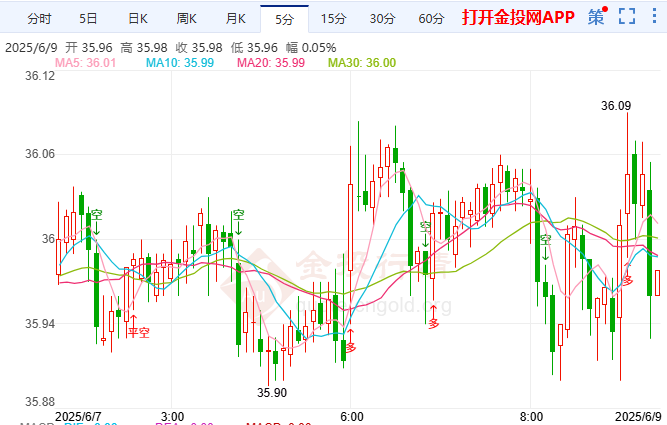
Group 1 - The core viewpoint of the news highlights the uncertainty in the U.S. economy due to the Trump administration's trade policies, which are characterized by a mix of aggressive tariff increases and temporary relaxations, creating a unique policy volatility trajectory [3] - The consensus in the economic community indicates that consumer confidence and spending capacity will be crucial in determining whether the U.S. economy falls into recession, with historical data showing that a year-on-year growth rate of over 3% in consumer spending can help the economy withstand external shocks [3] - The dynamic balance between policy volatility and consumer confidence is becoming a key battleground affecting the U.S. economic outlook [3] Group 2 - The current sentiment in the silver market is optimistic but cautious, with long-term undervaluation driving market enthusiasm for buying, while short-term technical indicators suggest overbought conditions [4] - Despite the U.S. dollar index rebounding near the 99 mark, silver maintains its strength, indicating that its upward momentum is not solely dependent on safe-haven demand or dollar weakness, but has independent driving logic [4] - Structural bullish confidence in silver is expected to provide ongoing financial support for the market [4]
白银价格大幅走高,特朗普关税政策依然多变
Hua Tai Qi Huo· 2025-06-06 02:56
Report Investment Rating - Gold: Cautiously bullish [8] - Silver: Cautiously bullish [8] - Arbitrage: Short the gold-silver ratio at high levels [8] - Options: On hold [8] Core View The Fed officials have significant differences in future monetary policy, and the market is also concerned about future overall demand and economic outlook. Although current inflation data is not affected by tariffs, it reflects a decline in consumer confidence. Trump's changeable policies will continuously affect future inflation expectations. Therefore, in the current situation, gold and silver are recommended to be bought on dips for hedging, and the gold-silver ratio can be shorted at high levels [8]. Summary by Sections Market News and Key Data - US initial jobless claims soared to an 8-month high, and the US trade deficit shrank by 55.5% to $61.6 billion due to Trump's tariffs [1] - The European Central Bank cut three key interest rates by 25 basis points, and Lagarde hinted that the rate-cutting cycle would end [1] - Trump said it was difficult to achieve an immediate ceasefire in Russia-Ukraine in a short time and hinted at possible sanctions on both sides [1] - Silver prices rose sharply, breaking through the $36/ounce mark for the first time since February 2012, possibly due to Trump's announcement of raising steel and aluminum tariffs to 50% [1] Futures Quotes and Volumes - On June 5, 2025, the Shanghai Gold (SHFE) main contract opened at 782.40 yuan/gram, closed at 783.72 yuan/gram, up 0.17% from the previous trading day [2] - The SHFE silver main contract opened at 8454 yuan/kg, closed at 8473 yuan/kg, down 1.31% from the previous trading day [2] - During the night session, the SHFE gold main contract closed at 780.78 yuan/gram, down 0.46% from the afternoon close [2] - The SHFE silver main contract closed at 8715 yuan/kg, up 2.89% from the afternoon close [2] US Treasury Yield and Spread Monitoring - On June 5, 2025, the US 10-year Treasury yield closed at 4.37%, down 0.09% from the previous trading day [3] - The 10-year and 2-year spread was 0.48%, down 2 basis points from the previous trading day [3] Position and Volume Changes of Precious Metals on SHFE - On the Au2502 contract, the long position decreased by 44 lots and the short position decreased by 16 lots [4] - The total trading volume of SHFE gold contracts decreased by 3.24% from the previous trading day [4] - On the Ag2502 contract, the long position decreased by 78 lots and the short position decreased by 169 lots [4] - The total trading volume of SHFE silver contracts decreased by 27.07% from the previous trading day [4] Precious Metals ETF Position Tracking - The gold ETF position remained unchanged at 935.64 tons from the previous trading day [5] - The silver ETF position increased by 120.16 tons to 14,672.53 tons from the previous trading day [5] Precious Metals Arbitrage Tracking - On June 5, 2025, the domestic gold premium was -3.37 yuan/gram, and the domestic silver premium was -525.99 yuan/kg [6] - The price ratio of the SHFE gold and silver main contracts was about 92.50, up 0.05% from the previous trading day [6] - The overseas gold-silver ratio was 98.03, up 0.67% from the previous trading day [6] Fundamentals - On June 5, 2025, the trading volume of gold on the Shanghai Gold Exchange T+d market increased by 3.63% from the previous trading day [7] - The trading volume of silver increased by 4.19% from the previous trading day [7] - The gold delivery volume was 19,510 kg, and the silver delivery volume was 64,440 kg [7]
昨夜,中概股大跌!
证券时报· 2025-05-31 00:24
截至收盘,道琼斯工业指数涨0.13%,报42270.07点;纳斯达克指数跌0.32%,报19113.77点;标普500指数跌0.01%,报5911.69点。本周,道琼斯工 业指数涨1.6%,标普500指数涨1.88%,纳斯达克指数涨2.01%。5月份,道琼斯工业指数涨3.94%,标普500指数涨6.15%,纳斯达克指数涨9.56%。 当地时间周五(5月30日),由于贸易不确定性持续存在,美股盘中持续震荡走低,但随后收复了部分失地。 | 代码 | 名称 | 现价 | 涨跌 | 涨跌幅 | 年初至今 | | --- | --- | --- | --- | --- | --- | | DJI | 道琼斯工业指数 | 42270.07 | 54.34 | 0.13% | -0.64% | | IXIC | 纳斯达克指数 | 19113.77 | -62.10 | -0.32% | -1.02% | | SPX | 标普500 | 5911.69 | -0.48 | -0.01% | 0.51% | 欧洲主要股指收盘涨跌互现,德国DAX指数涨0.27%,报23997.48点;法国CAC40指数跌0.36%,报7751. ...


特朗普挑起贸易争端,苹果排名滑落、利润受损、消费信心受挫
Sou Hu Cai Jing· 2025-05-25 06:42
Core Viewpoint - Apple has fallen from its long-standing position as the market leader to third place, significantly impacted by the trade policies initiated by Trump [1]. Trade Dispute Impact - The trade disputes initiated by Trump have severely affected Apple, leading to increased production costs due to tariffs on components sourced from China, which directly compresses profit margins and affects market performance [2]. - The instability in the global supply chain caused by trade tensions disrupts Apple's production plans, resulting in product supply interruptions and a failure to meet market demand, prompting consumers to turn to other brands [2]. Consumer Confidence Erosion - The unpredictability of Trump's policies has created a climate of uncertainty, making consumers more cautious about purchasing high-priced Apple products, especially during periods of heightened trade tensions [3]. - Nationalistic sentiments have led some consumers to prefer domestic brands, such as Huawei, over Apple, contributing to a decline in Apple's market share in China [3]. Rise of Competitors - As Apple faces challenges due to Trump's policies, competitors have seized the opportunity to grow, with domestic high-end brands increasing R&D investments and improving product quality [4]. - Brands like Huawei and Xiaomi have gained consumer favor through innovative products and competitive pricing, further eroding Apple's market share [4][6]. Strategic Challenges - Trump's policies have hindered Apple's global strategic initiatives, including technology collaborations that are essential for innovation, as isolation can lead to a lack of innovation capabilities [7]. - The trade disputes have also complicated Apple's efforts to expand into emerging markets, making it difficult to tap into new growth opportunities [8]. Brand Image Damage - Apple's brand image has suffered due to its association with U.S. government policies, leading to a decline in consumer goodwill and perceptions of the brand's independence and risk management capabilities [8]. - Actions perceived as aligning with U.S. policies have sparked negative sentiments among consumers in markets like China, further diminishing Apple's global brand appeal [8].

图说经济 | “抢出口2.0”拉开序幕 地产小阳春再次消退
雪涛宏观笔记· 2025-05-22 13:32
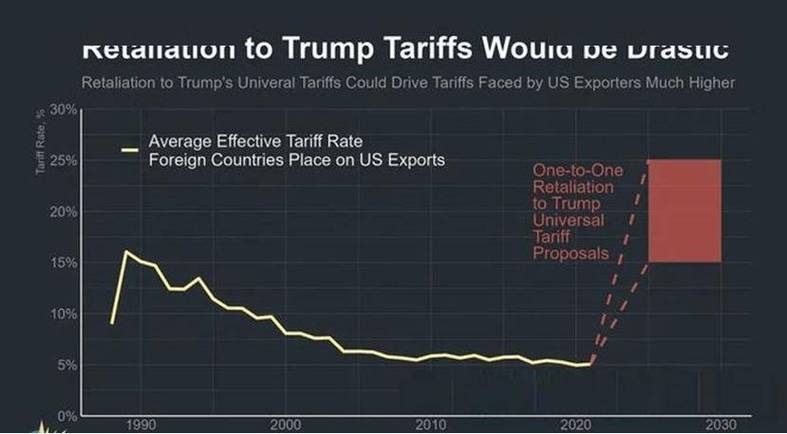
关于本栏目 高频数据难懂?挖掘信息不易?【图说经济】每周一期,与您一同从高频数据库中抽丝剥茧,看懂全球经济的新变化。如需底层数据库,欢迎联系国金宏 观团队。 中美航运数据出现转机 美东、美西航线运价大幅上升 " 出口总额 " 与 " 出口交货值 " 分化 各类群体消费信心普遍下降 地产 "930 小阳春 " 逐步降温 本期Headline 中美航运数据出现转机 船舶停靠量与集装箱吞吐量增加: 5月11-17日,美国洛杉矶港口船舶停靠数量上升至19.0艘,4月均值为21.3艘;港口集装箱进口吞吐量环比增长 16.0%,结束了连续两周的下滑,开始由负转正,当周同比增速上升至-14.2%,4月末同比为56.0%。 集装箱预订量飙升: 贸易追踪机构Vizion公布的数据显示,在美国和中国互降关税之后,在美国下单的从中国到美国的集装箱运输预订量飙升近 300%。而从深圳盐田港船代公司了解到,中美相互调整关税正式实施后,美线货量已从5月初同比下降近50%,恢复到4月2日加税之前水平,并 且还有所增加。 01 02 美东美西航线运价大幅上升 美线集装箱运价大幅上升: 5月10-16日,上海港-美西基本港、上海港-美东基本港 ...

唯品会(VIPS.US):短期保持谨慎
SPDB International· 2025-05-22 10:30
Investment Rating - The report maintains a "Hold" rating for the company with a target price of $14 [3][12]. Core Views - The company's 1Q25 revenue decreased by 5.0% year-on-year, aligning with market expectations, while adjusted net profit was RMB 2.3 billion, maintaining a high profit margin of 8.8%. Active user numbers fell by 4% year-on-year, but SVIP users grew by 18%, contributing 51% of online GMV. Total order volume declined by 6%, with GMV remaining stable, and the apparel category showed positive growth [2][3]. - For 2Q25, the company provides cautious guidance, expecting revenue to decline by 5% to 0%. However, there are signs of improved consumer confidence, with sales momentum picking up in April and May. The company remains cautious about the 618 sales due to ongoing promotional activities and consumer sensitivity to subsidies. The company anticipates double-digit growth in SVIP numbers for the year, which is expected to help return to growth in the second half of the year [2][3]. - The company has returned over $400 million to shareholders year-to-date and commits to returning no less than 75% of 2024 profits to shareholders, corresponding to an attractive return rate of approximately 12.7% [2]. Financial Summary - The report forecasts FY25E revenue at RMB 107.048 billion and FY26E revenue at RMB 111.685 billion, with corresponding P/E ratios of 6.1x and 5.8x [3][5]. - The adjusted net profit is projected to be RMB 8.806 billion for FY25E and RMB 9.285 billion for FY26E, with a stable profit margin expected throughout the year [5][11]. - The company’s total market capitalization is approximately $7.374 billion, with a recent average trading volume of $62.4 million over the past three months [5][12].

吞下关税还是转嫁成本 “沃尔玛们”两难
Bei Jing Shang Bao· 2025-05-19 14:34
Core Viewpoint - The article discusses the impact of U.S. tariffs on Walmart's pricing strategy and the broader implications for the U.S. economy, highlighting a conflict between Walmart and President Trump regarding who should absorb the costs associated with tariffs [2][5][6]. Group 1: Walmart's Pricing Strategy - Walmart has indicated that it will raise prices on certain products due to the impact of U.S. tariffs, which has drawn criticism from President Trump, who believes Walmart should absorb these costs given its substantial profits last year [2][3]. - Walmart's CFO stated that while the company aims to keep prices low, the scale of tariffs and the reality of thin retail margins limit their ability to absorb all costs [3][4]. - Approximately one-third of the products sold by Walmart in the U.S. are imported, primarily from countries like China, Mexico, Canada, Vietnam, and India, making the company particularly sensitive to tariff changes [3][4]. Group 2: Economic Impact and Consumer Sentiment - The tariffs have made various goods more expensive, with reports indicating significant price increases for specific products, such as a 43% rise in Barbie dolls and an $80 increase for certain washing machines [6][7]. - The uncertainty surrounding trade negotiations has made it difficult for Walmart to provide revenue forecasts for the upcoming quarter, reflecting broader economic instability [5][6]. - Consumer confidence has been negatively affected, with the University of Michigan's consumer sentiment index dropping to 50.8, the lowest since June 2022, as many consumers express concerns about rising inflation due to tariffs [7][8].

沃尔玛宣布涨价,特朗普:不许涨!
Sou Hu Cai Jing· 2025-05-19 07:39
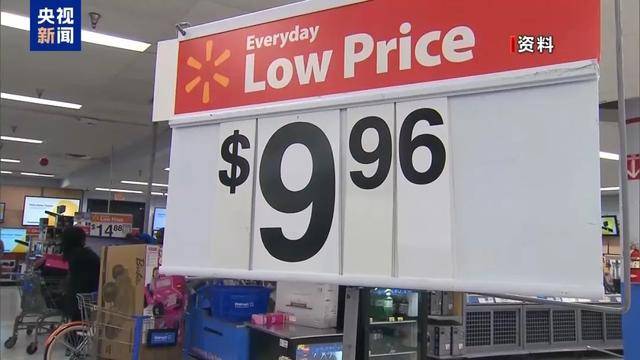
Core Viewpoint - Walmart is set to raise prices on certain products in the U.S. due to the impact of government tariff policies, which has drawn criticism from President Trump, who believes Walmart should absorb the costs instead of passing them on to consumers [1][2]. Group 1: Company Actions and Financials - Walmart's net profit for the first fiscal quarter ending April 30 was $4.49 billion, a decrease of over 12% year-on-year [1]. - The company's CFO stated that the increase in tariffs exceeds what any retailer can absorb, indicating that consumers will likely see price hikes starting from late May [2]. - Walmart's CEO acknowledged that the company cannot absorb all the pressure from tariffs, leading to higher prices for consumers [1]. Group 2: Industry Context and Consumer Impact - Other U.S. companies, including Microsoft, have also announced price increases on products, indicating a broader trend in the retail sector [4]. - A report from the Telsey Advisory Group noted significant price increases for certain products, such as a 43% rise in Barbie doll prices and an $80 increase for some Whirlpool washing machines [4]. - Concerns over inflation due to tariffs have severely impacted consumer confidence, with the latest consumer confidence index hitting one of its lowest recorded levels [4].
长江期货市场交易指引-20250519
Chang Jiang Qi Huo· 2025-05-19 02:17
1. Report Industry Investment Ratings - **Macro Finance**: Index - Defensive waiting; Treasury bonds - Oscillating upward [1] - **Black Building Materials**: Rebar - Temporary waiting; Iron ore - Oscillating weakly; Coking coal and coke - Oscillating [1] - **Non - ferrous Metals**: Copper - Cautious trading within a range; Aluminum - Suggested to wait and see; Nickel - Suggested to wait and see or short on rallies; Tin - Trading within a range; Gold - Build long positions on dips after sufficient price correction; Silver - Trading within a range [1] - **Energy and Chemicals**: PVC - Oscillating; Soda ash - Waiting and seeing; Caustic soda - Oscillating; Rubber - Oscillating weakly; Urea - Oscillating; Methanol - Oscillating; Plastic - Oscillating [1] - **Cotton Industry Chain**: Cotton and cotton yarn - Oscillating and rebounding; Apple - Oscillating; PTA - Oscillating weakly [1] - **Agriculture and Animal Husbandry**: Live pigs - Oscillating weakly; Eggs - Weakly trending; Corn - Oscillating strongly; Soybean meal - Oscillating weakly; Oils and fats - Limited rebound, short on rallies [1] 2. Core Viewpoints of the Report The report provides investment ratings and market analysis for various futures products. It takes into account multiple factors such as international trade relations, economic data, supply - demand fundamentals, and policy impacts. For different futures products, it gives corresponding investment strategies based on their specific market situations, including waiting and seeing, trading within a range, shorting on rallies, and building long positions on dips [1]. 3. Summaries According to Relevant Catalogs Macro Finance Index - **Market Situation**: Influenced by events like the US losing its AAA rating, trade tariff concerns, and domestic policy adjustments. It is expected to oscillate [5]. - **Investment Strategy**: Defensive waiting [1][5] Treasury Bonds - **Market Situation**: Affected by factors such as short - term capital tightness, large - scale bond issuances, and economic data releases. In the short term, it may oscillate upward, but next week there are many disturbing factors and the market may be slightly weak [5][6]. - **Investment Strategy**: Short - term optimism, oscillating upward [1][5] Black Building Materials Rebar - **Market Situation**: The price was weak last Friday. Macro - economically, Sino - US trade relations improved, and domestic monetary policy was favorable, but the market expects fiscal policy support. Industrially, demand is about to face seasonal weakness, and supply - demand contradictions may gradually emerge. Currently, the price is at a relatively low level, and it is expected to oscillate [7]. - **Investment Strategy**: Oscillating [7] Iron Ore - **Market Situation**: The price fluctuated last week. Supply is relatively stable, and demand is still at a high level. However, the positive sentiment from tariff easing is fading, and domestic demand is insufficient. It is expected to oscillate in a range [8]. - **Investment Strategy**: Oscillating, suggested to wait and see or focus on 9 - 1 arbitrage opportunities [8] Coking Coal and Coke - **Market Situation**: Coking coal supply is relatively loose, and demand is weak, with prices under pressure. Coke supply is relatively abundant, and demand is mainly based on rigid needs, with prices in a weak - balance state and expected to oscillate [9][10]. - **Investment Strategy**: Oscillating, neutral waiting and seeing [9][10] Non - ferrous Metals Copper - **Market Situation**: Global trade tensions have eased, and copper prices have returned to fundamental logic. Supply may decline in the future, and consumption is stable. With low inventory, prices may continue to oscillate strongly at a high level [11]. - **Investment Strategy**: Cautious trading within a range [11] Aluminum - **Market Situation**: Alumina production capacity is in a state of mixed changes, and electrolytic aluminum production capacity is increasing slightly. Demand is expected to weaken, and the sustainability of price rebounds is to be observed [12]. - **Investment Strategy**: Suggested to wait and see [12] Nickel - **Market Situation**: Trade tensions have eased, and the market has adjusted its expectations for the Fed's interest rate cuts. Nickel costs are firm, but there is a long - term supply surplus, and prices are expected to oscillate weakly [13][14]. - **Investment Strategy**: Oscillating, suggested to wait and see or short on rallies [13][14] Tin - **Market Situation**: Production is increasing, and raw material supply is tight. The semiconductor industry is expected to recover, and inventories are at a medium level. Price fluctuations are expected to increase [15]. - **Investment Strategy**: Trading within a range, referring to the 06 contract operating range of 255,000 - 275,000 yuan/ton [15] Gold and Silver - **Market Situation**: Affected by Sino - US tariff negotiations, US economic data, and the Fed's policy stance, prices are expected to oscillate with increased volatility [17]. - **Investment Strategy**: Gold - Build long positions on dips after sufficient price correction; Silver - Trading within a range [1][17] Energy and Chemicals PVC - **Market Situation**: Macro - sentiment has improved after Sino - US trade talks, but demand is still weak due to the real - estate market, and supply is expected to increase. The price is at a low level, and the rebound space is limited [20]. - **Investment Strategy**: Oscillating, paying attention to the pressure at 5100 [19] Caustic Soda - **Market Situation**: Supply is relatively abundant, and demand is affected by tariffs and seasonal factors. In the short term, it may oscillate, and in the medium term, it is advisable to short at high levels [23]. - **Investment Strategy**: Oscillating, paying attention to the pressure at 2600 [21] Rubber - **Market Situation**: Macro - positive factors are fading, and supply is expected to increase while demand is weak. Prices are expected to oscillate weakly [25]. - **Investment Strategy**: Oscillating weakly, paying attention to the pressure at 15300 [24] Urea - **Market Situation**: Supply is stable, and demand from agricultural fertilizers is about to be released. Exports also have an impact. Prices are expected to oscillate at a high level [28]. - **Investment Strategy**: Oscillating at a high level, paying attention to the support at 1850 [27] Methanol - **Market Situation**: Supply is at a high level, and downstream demand has limited short - term carrying capacity. It is greatly affected by the macro - environment and the chemical sector, and is expected to oscillate widely [30]. - **Investment Strategy**: Wide - range oscillation, referring to the range of 2200 - 2380 [28] Plastic - **Market Situation**: Supply has decreased due to increased maintenance, and demand has both positive and negative factors. The market expectation is still weak, and it is expected to oscillate widely in the short term [30]. - **Investment Strategy**: Oscillating, referring to the range of 6950 - 7350 and paying attention to the support at 7200 [30] Soda Ash - **Market Situation**: Spot prices are firm, but the futures market is affected by insufficient maintenance. Supply is still high, and downstream demand is not optimistic. It is advisable to wait and see in the short term [31]. - **Investment Strategy**: Oscillating weakly, waiting and seeing [31] Cotton Industry Chain Cotton - **Market Situation**: Global cotton supply and demand are still loose, but Sino - US trade negotiations have made progress, and prices are expected to oscillate and rebound [33]. - **Investment Strategy**: Oscillating and rebounding [32] Apple - **Market Situation**: The post - holiday market is stable, and inventory is low. Prices are expected to oscillate at a high level, but macro risks need to be noted [33]. - **Investment Strategy**: Oscillating [33] PTA - **Market Situation**: Cost has declined, and although supply and demand are in a state of de - stocking, prices are under pressure due to external factors. It is expected to oscillate weakly [35]. - **Investment Strategy**: Oscillating within the range of 4200 - 4300 [34] Agriculture and Animal Husbandry Live Pigs - **Market Situation**: Supply is increasing and postponed, and demand is weak in the off - season. Prices are under pressure, but the decline is limited. It is advisable to short on rallies [36]. - **Investment Strategy**: Weakly oscillating, short on rallies, paying attention to support and resistance levels [36] Eggs - **Market Situation**: Short - term prices are at a low level, and demand may increase before the Dragon Boat Festival, but supply is accumulating. In the long term, supply is expected to increase. It is advisable to short on rallies [37]. - **Investment Strategy**: Short on rallies, paying attention to the pressure at 3000 for the 06 contract, and taking a bearish view on the 08 and 09 contracts [37] Corn - **Market Situation**: Short - term price increases are limited by supply increases, but there is support below. In the long term, supply and demand are tightening, but the upward space is limited by substitutes. It is advisable to go long on dips [39]. - **Investment Strategy**: Oscillating at a high level, going long on dips at the lower edge of the range, and paying attention to 7 - 9 positive spreads [39] Soybean Meal - **Market Situation**: Short - term supply is increasing, and prices are expected to fall. In the long term, costs are increasing, and prices are expected to be strong. It is advisable to short on rallies in the short term and go long on dips in the long term [39]. - **Investment Strategy**: Oscillating weakly, short on rallies in the short term (before mid - June) for the 09 contract, go long on dips in the long term, paying attention to the support at 2830, and focusing on 9 - 1 positive spreads [40] Oils and Fats - **Market Situation**: Affected by factors such as international crude oil prices and supply and demand of various oils and fats, short - term prices are回调, but the decline is limited. In the long term, prices may stop falling and rebound in the third quarter [44]. - **Investment Strategy**: Be cautious about short - selling, pay attention to support levels, and temporarily exit the strategy of widening the spreads between soybean - palm oil and rapeseed - palm oil 09 contracts [40]