
再工业化

Search documents
特朗普认为台湾不重要,这是我们解决台湾问题的好时机吗?
Guan Cha Zhe Wang· 2025-11-19 06:48
Group 1 - The current state of US-China relations has shifted from intense confrontation to a temporary period of stability following recent high-level meetings, indicating a potential for more balanced interactions in the future [1][3][13] - The US is facing significant financial challenges, with national debt nearing $40 trillion, which may lead to a collapse of its financial system and a decline in the dollar's dominance [4][28] - The US-China decoupling is deemed impossible, as both nations are interlinked economically, and the US has failed to achieve its goals of isolating China from the global supply chain [3][4][13] Group 2 - Chinese companies are advised to reconsider investments in the US and Europe due to the increasingly competitive and hostile environment, which resembles a "jungle" of competition [6][9] - The focus of Chinese investments is expected to shift towards developing countries, particularly in Africa and Southeast Asia, as these regions present more promising opportunities compared to the West [11][12][24] - The trend of Chinese enterprises investing in infrastructure and manufacturing abroad is likely to continue, as these sectors align with China's strengths [8][24] Group 3 - The US's attempts to re-industrialize face significant obstacles, including a lack of skilled labor and deteriorating infrastructure, making it difficult for the country to regain its former industrial prowess [7][8] - The relationship between ASEAN countries and China has strengthened over the past decade, as these nations have become more integrated into China's supply chain [11][12] - The potential for rapid economic development in Africa is highlighted, with Chinese technology and investment playing a crucial role in this growth [12][24] Group 4 - The financial bubble in the US is attributed to excessive money printing since 2008, leading to a disconnect between wealth accumulation and real economic value creation [26][27] - The reliance on virtual currencies and stock markets for wealth generation poses significant risks, with predictions of an impending financial crisis [27][28] - The US's financial strategies, including the introduction of stablecoins, are seen as attempts to manage its growing debt crisis, but they may exacerbate existing financial vulnerabilities [28][29]
程实︱2026年香港经济展望:在交汇中重塑平衡
Di Yi Cai Jing· 2025-11-16 13:21
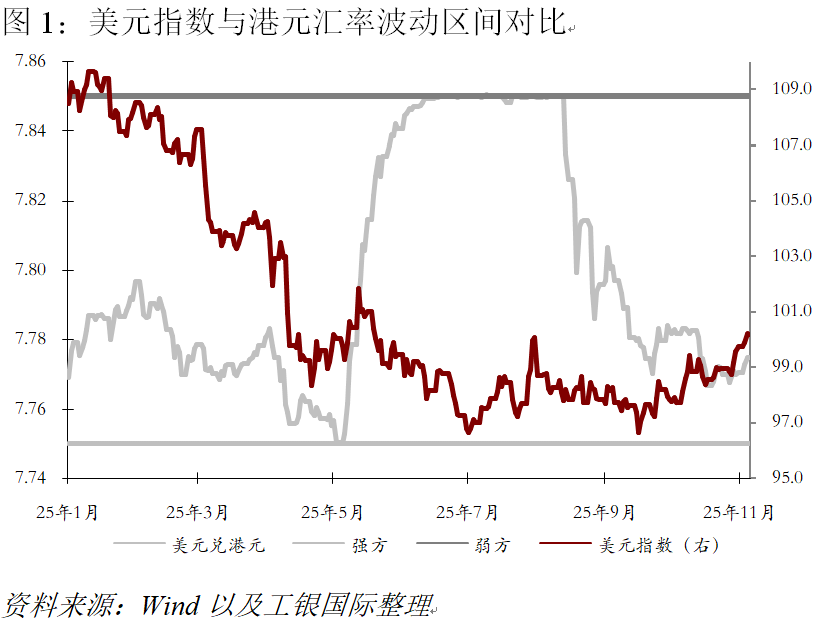
Economic Outlook - Hong Kong's economy is expected to maintain moderate growth, with GDP growth projected to reach around 3.5% in 2026 [1][15] - From 2025 to 2029, the economy is anticipated to sustain a growth rate of approximately 3%, significantly higher than developed economies in Europe and the US, which are below 2% [15] Financial Stability - Hong Kong's financial system remains robust amid global economic uncertainties, supported by a stable institutional framework and healthy fiscal conditions [1][19] - The Hong Kong Monetary Authority has intervened multiple times to maintain exchange rate stability, which has increased market liquidity [2] Trade Dynamics - Hong Kong's overall export value decreased by 7.8% in 2023 but is expected to rebound with an 8.7% growth in 2024, indicating a recovery in external demand [7] - By the first nine months of 2025, exports continued to rise, showing a year-on-year increase of 13.4% [7] Service Sector Growth - The service trade structure is optimizing, with financial, professional services, and high-end logistics expanding under policy guidance [10] - Increased demand for high-end services from mainland China is providing new external markets for Hong Kong's service exports [10] Internal Support Mechanisms - The government's budget aims to consolidate recovery momentum and enhance development capabilities, with GDP growth of 3.8% year-on-year in Q3 2025 [11][19] - Private consumption and fixed capital formation are showing positive growth, contributing to the overall economic recovery [11] Innovation and Industrial Upgrading - The government is accelerating re-industrialization and innovation through funding and support for advanced manufacturing and research projects [22] - Hong Kong is enhancing its role as a hub for cross-border private wealth management and hedge funds, with a growing venture capital ecosystem [22] Green Finance Initiatives - The government has issued approximately 240 billion HKD (about 31 billion USD) in green bonds, establishing a key pricing benchmark in the market [23] - The expansion of green finance is enhancing Hong Kong's financial system's resilience and international influence [23] Spatial Economic Development - The Northern Metropolis development strategy aims to create a diverse industrial system, integrating innovation, high-end services, and education [24] - This initiative is expected to foster a complete ecosystem from R&D to high-end manufacturing, promoting long-term growth [24]

格林大华期货沪银创新高,白银库存持续下降
Ge Lin Qi Huo· 2025-11-14 09:21
Report Industry Investment Rating No information provided. Core Viewpoints of the Report - The price of Shanghai silver has reached a new high, and silver inventories are continuously decreasing [2][42][48] - The U.S. government has resumed operation, and trillions of dollars in funds from the fiscal general account will flow into the market, equivalent to four interest rate cuts [4][43] - The U.S. employment boom is declining, and the number of corporate lay - offs in October has increased significantly compared to September and the same period last year [14] - China's commodity competitiveness has increased, and the U.S. import volume from China in August has increased by nearly 40% month - on - month [17] - The U.S. manufacturing industry is accelerating its return, and "re - industrialization" is speeding up [26] - U.S. consumption remains strong, as shown by the data of wholesalers' sales and retail and food sales [29][32] - The eurozone's manufacturing PMI remained flat in October, while the service industry PMI accelerated its expansion [35] - India's manufacturing and service industries have continued to expand for more than three years [37] - Japan's long - term government bond yields are on an upward trend [40] - The Shanghai Composite Index continues to consolidate at 4000 points, and stock index futures long positions should be mainly allocated to the CSI 300 Index and the SSE 50 Index for range trading [43][46] - London spot gold prices are higher than New York futures gold prices, and gold is moving towards physical shortage [57] - Copper prices are rising moderately due to AI infrastructure and power construction [59] Summary by Related Catalogs Global Economic Outlook - The U.S. government shutdown has ended, and trillions of dollars in funds from the Treasury general account will flow into the market [12] - NVIDIA CEO Huang Renxun believes that China will win the AI competition due to a more favorable regulatory environment and lower energy costs [12] - Huawei has announced "ten major inventions" including key technologies such as the Scale - up super - node computing platform [12] - Goldman Sachs CEO is optimistic about the stock markets in Hong Kong and the Chinese mainland, and many Chinese stocks seem "very attractive" [12] - Morgan Stanley predicts that there will be a 44 - gigawatt power gap in U.S. data centers by 2028 [12] - More companies report a slowdown in consumption, and the weakness has spread to the middle - income group [12] - In October, the total number of U.S. corporate lay - offs was 153,074, mainly driven by the technology and warehousing industries, an increase of 183% from September and almost three times that of the same period last year [12][14] - The U.S. employment boom is declining [14] - After the U.S. imposed reciprocal tariffs on various countries, China's commodity competitiveness increased, and the U.S. import volume from China in August increased by nearly 40% month - on - month [17] - The U.S. ISM services PMI in October was 52.4, continuing to expand [20] - In August, the U.S. manufacturing backlog of orders was at a record high, with a year - on - year increase of 7.1%, indicating high prosperity [23] - In August, the U.S. capital goods import amount was $91.9 billion, still at a high level, with a year - on - year growth rate of 10.5%, indicating that the U.S. manufacturing industry is accelerating its return [26] - In August, U.S. wholesalers' sales reached a record high of $711.3 billion, with a year - on - year increase of 6.2%, indicating strong consumption [29] - In August, the total U.S. retail and food sales increased by 0.6% month - on - month, exceeding expectations, indicating strong consumption [32] - The eurozone's manufacturing PMI remained flat in October, while the service industry PMI accelerated its expansion [35] - India's manufacturing and service industries in October continued to expand and have been expanding for more than three years [37] - Japan's long - term government bond yields are on an upward trend [40] Big - Asset Allocation - The U.S. government has resumed operation, and trillions of dollars in funds from the fiscal general account will flow into the market, equivalent to four interest rate cuts [43] - The Shanghai Composite Index has reached a new high again, insurance funds are continuously entering the market with an average monthly inflow of 150 billion yuan, the market style has temporarily shifted to high - dividend and bonus stocks, and the SSE 50 Index has strengthened [43][44] - The Shanghai Composite Index continues to consolidate at 4000 points, and stock index futures long positions should be mainly allocated to the CSI 300 Index and the SSE 50 Index for range trading [43][46] - The price of Shanghai silver has reached a new high, and silver inventories are continuously decreasing. The Shanghai Gold Exchange has only 822 tons left, and the Shanghai Futures Exchange has only 584 tons left [42][43][51] - London spot gold prices are higher than New York futures gold prices, and gold is moving towards physical shortage [57] - Copper prices are rising moderately due to AI infrastructure and power construction [59]
浙商证券:2026年出口链投资策略注重微观经营质量 我国出口企业盈利能力有较强支撑
Zhi Tong Cai Jing· 2025-11-13 02:53
Core Viewpoint - Zhejiang Securities emphasizes a micro-operational quality investment strategy for the export chain in 2026, focusing on sectors benefiting from recovery and those that can navigate trade changes [1] Demand and Supply Outlook - The global economy is expected to continue a weak recovery with loose monetary policy and supply chain restructuring. The U.S. shows resilience, Europe is seeking a bottom, and emerging markets are experiencing divergence [2] - The price outlook indicates a temporary halt in the weakening of the U.S. dollar index, with the difference between U.S. CPI and Chinese PPI remaining significant, suggesting strong support for the profitability of Chinese export companies [2] Market Concerns and Projections - Concerns in the market include macro data deficiencies and a renewed recession narrative. The mid-term elections in the U.S. are expected to stimulate the economy, supported by AI and re-industrialization trends [3] - In Europe, energy vulnerabilities and fiscal constraints are likely to hinder recovery, with attention on marginal changes in energy prices [3] - Emerging markets face exchange rate risks and high interest rate pressures, leading to increased divergence among countries [3] Investment Themes - Three main investment themes identified include: 1. Onshore industrial transfer (textile and apparel equipment, metallurgical equipment) 2. Resource advantage countries (engineering machinery, mining machinery, electrical equipment) 3. Cyclical recovery (transportation chain, engineering machinery) [4] Investment Opportunities in U.S. Exports - Selected companies for U.S. export opportunities include: - Star Technology (002444) - Quan Feng Holdings - Creative Technology* - Ousheng Electric (301187) - AIPCB equipment: Dazhu Laser (002008) - Diesel power: Weichai Power (000338) - Aerial work platforms: Zhejiang Dingli (603338) - Consumer discretionary: Taotao Vehicle (301345) [5] Investment Opportunities in Non-U.S. Exports - Companies for stable long-term non-U.S. exports include: - Sany Heavy Industry (600031) - XCMG Machinery (000425) - Shantui Construction Machinery (000680) - Agricultural machinery: Lvtian Machinery (605259), Zongshen Power (001696) - Smelting equipment: Zhongzhong Technology (603135) - Textile and apparel equipment: Honghua Digital Science, Jack Technology (603337) - Transportation: Yutong Bus (600066), King Long Automobile (600686), Longxin General (603766), Qianjiang Motorcycle (000913), Chunfeng Power (603129) [6]

经济学家梁国勇:弥合数字鸿沟,积极推动全球化 中国理念成“稳定器”
Zhong Guo Xin Wen Wang· 2025-11-12 07:03
Core Insights - The article discusses the importance of bridging the digital divide and promoting globalization, highlighting China's role as a stabilizer in the global economy [1][3]. Group 1: Digital Economy and Global Governance - China's digital economy is now among the largest globally, serving as a model for other developing countries in terms of digitalization and sustainable development [4]. - There is a significant digital divide between developed and developing countries, particularly in digital infrastructure and skills, necessitating capacity building in the digital economy and artificial intelligence [4]. - The concept of building a community of shared future in cyberspace is emphasized as crucial in addressing the imbalances in global network development [4]. Group 2: Foreign Investment in China - Despite challenges in attracting foreign investment, China's foreign investment market shows resilience and unique advantages [5]. - The current economic transformation in China has led to a decrease in foreign investment in low-end manufacturing, but there is growth in high-tech manufacturing sectors [5]. - China's strong international competitiveness in manufacturing, supported by infrastructure, a large market, and recovering consumer potential, continues to attract market-oriented foreign investment [5]. Group 3: Globalization and De-Globalization Trends - Some countries are exhibiting tendencies towards de-globalization, which can be attributed to institutional adjustments [6]. - The shift of capital and production from developed to emerging markets has led to a call for re-industrialization in developed countries, as they face trade deficits and industrial hollowing [6]. - Despite the challenges posed by protectionism and unilateralism, technological advancements and institutional resilience are expected to continue driving globalization forward [7].
中金 • 全球研究 | 解码再工业化(一):美国制造业回流综述篇——再论“空心化”
中金点睛· 2025-11-11 23:41
Group 1 - The core viewpoint of the article is that global manufacturing is undergoing a multi-centralization trend, with significant shifts in manufacturing centers, particularly focusing on the re-industrialization process in the United States [2][5][20] - By 2024, the manufacturing value added shares are projected to be 27.7% for China, 20.6% for the US-Mexico-Canada Agreement (USMCA), 17.9% for the EU and the UK, and 4.7% for ASEAN [2][4] - The article highlights that while the US manufacturing sector's contribution to GDP is declining, this is attributed to faster overall economic growth rather than a decline in manufacturing itself [3][14] Group 2 - The US manufacturing sector is characterized by high value-added production, but it faces challenges due to a relative lack of actual production capacity [4][19] - The US has transitioned from being a net exporter of intermediate goods to a net importer since 2000, indicating a growing reliance on foreign supply chains [28][29] - The manufacturing trade deficit in the US has been expanding, with net imports accounting for 46% of manufacturing GVA in 2023, contrasting with other major manufacturing nations [20][24] Group 3 - The article discusses the "hollowing out" phenomenon of US manufacturing, where high-value sectors are not matched by corresponding production levels [19][28] - The US's dependency on foreign intermediate goods has increased, with 40% of its manufacturing value added coming from imports in 2023 [28][29] - The high-tech manufacturing sector in the US shows significant reliance on imports, particularly in electronics and electrical equipment, with dependency rates of 69% and 59% respectively [34][35] Group 4 - The US manufacturing sector's structure is heavily driven by research and development, with a high proportion of mid-to-high-tech manufacturing [35][36] - In 2021, the US's manufacturing R&D expenditure as a percentage of manufacturing GDP was 14.1%, significantly higher than that of China, Japan, and Germany [40] - The article emphasizes that the US excels in high-value segments of the manufacturing value chain, particularly in R&D and design, while actual production remains relatively low [35][39]

南非贸工部答21:南非力推产业本地化,中资制造业将迎合作机遇
2 1 Shi Ji Jing Ji Bao Dao· 2025-11-10 11:13
Core Viewpoint - South Africa is actively encouraging local steel manufacturing and aims to attract Chinese companies with advanced technology to invest in steel production projects within the country [1][3]. Group 1: South Africa's Industrial Strategy - Since 2019, South Africa's Department of Trade, Industry and Competition has launched comprehensive plans across various sectors, including automotive, textiles, and steel, to enhance manufacturing capacity, boost exports, create jobs, and promote localization [2]. - The strategic focus is on targeted policy interventions and multi-party cooperation to enhance industrial resilience, transitioning the economy from mere resource exports and assembly to a higher value-added manufacturing system [2][4]. - The "South African Automotive Masterplan 2035" sets a localization target of 60% and aims to double employment in the automotive value chain by 2035, increasing vehicle production to capture 1% of the global market share [2][4]. Group 2: Renewable Energy Initiatives - South Africa is advancing the "Renewable Energy Master Plan" and "Independent Power Producer Procurement Program" to promote local manufacturing in the solar, wind, and energy storage sectors [2][5]. - The goal is to enable South Africa to not only export raw materials but also to complete higher value-added production locally [2][5]. Group 3: Collaboration with China - China is viewed as a crucial partner in South Africa's systematic re-industrialization strategy, particularly in steel and renewable energy sectors [3][6]. - As of September 2025, China is South Africa's largest source of imports, accounting for approximately 22.8% of total imports, and the largest destination for exports, making up about 11.6% of total exports [3]. - South Africa encourages local steel manufacturing and seeks to attract Chinese companies with advanced technology to invest in local steel production [6].
2026年有色金属展望:货币与需求共振期望牛市
Xin Lang Cai Jing· 2025-11-08 03:49
Group 1: Outlook for Non-Ferrous Metals Industry - The non-ferrous metals industry is expected to experience a bullish market by 2026, driven by monetary policy, demand growth, and supply changes [1] - The Federal Reserve may restart interest rate cuts, and the trend of de-dollarization will increase global liquidity demand for non-ferrous metals, particularly physical assets [1] - Demand for non-ferrous metals will accelerate due to adjustments in U.S. tariff policies and the reshaping of global supply chains, especially in emerging industries like AI, electricity, new energy, and high-end equipment manufacturing [1] Group 2: Supply Challenges - The industry faces significant supply challenges due to insufficient capital expenditure over the past decade, leading to low supply elasticity [1] - Resource-rich countries are tightening control over key minerals, increasing supply uncertainty and presenting multiple challenges for the non-ferrous metals industry [1] Group 3: Precious Metals Market - The resonance of interest rate cuts and de-dollarization is expected to drive gold prices higher, with silver benefiting from rising gold prices and the restoration of the gold-silver ratio [2] - Basic metals like copper, aluminum, and tin are anticipated to perform well in 2026 due to the rise of emerging demands in AI, electricity, new energy, and high-end equipment manufacturing [2] Group 4: Strategic Metals and Market Dynamics - The supply-demand dynamics for strategic metals such as cobalt, natural uranium, tungsten, rare earths, and antimony are changing, with prices expected to rise overall, forming a bullish market [2] - The overall price increase in non-ferrous metals will enhance the allocation value of non-ferrous mining companies, prompting investors to focus on leading companies with strong resource expansion capabilities and potential for mergers and acquisitions [2] Group 5: Gold Market Trends - Gold prices are expected to remain in an upward trend through 2026, supported by a slowing U.S. economy and potential stagflation risks [2] - Central banks and financial institutions are likely to increase their allocation to physical gold, further boosting the gold market [3] - The net inflow of global gold ETFs reached 397 tons in the first half of 2025, the highest since 2020, indicating strong investor interest in gold assets [3] Group 6: Base Metals and New Energy Metals - Copper supply shortages are becoming clearer, with expectations for copper prices to enter a bull market by 2026 [3] - The demand for aluminum is expected to improve despite some policy impacts, with a growing supply-demand gap for electrolytic aluminum [3] - Cobalt's supply-demand tension is likely to push its price upward, while lithium market supply disruptions are gradually easing, which may affect lithium price trends [3]
签7500亿能源协议:依附美国30年,欧洲的“百年屈辱”刚刚开始?
Sou Hu Cai Jing· 2025-11-07 12:38
Group 1 - The article draws a parallel between the current situation in Europe and the historical context of the Qing Dynasty, suggesting that Europe has lost its autonomy and is heavily reliant on the United States for military and economic matters [1][3] - The initial decision by Europe to rely on the U.S. for defense and economic growth has led to a loss of independent decision-making power, with significant industries now dominated by American companies [5][7] - The trade agreement signed between the U.S. and the EU highlights Europe's economic vulnerabilities, as it requires the EU to purchase significant amounts of American energy and military equipment while imposing tariffs on EU goods [8][10] Group 2 - The internal discord within the EU regarding the trade agreement reflects the differing priorities of member states, with some seeking to maintain dignity while others prioritize economic relations with the U.S. [10][12] - Proposed solutions for Europe's challenges, such as opposing the U.S., finding new trade partners, and strengthening the internal market, face significant obstacles due to economic stagnation and political fragmentation [13][15] - The decline in the industrial share of GDP in the EU, from nearly 30% in 1990 to an expected 22% by 2025, indicates a worrying trend of deindustrialization and reliance on the service sector [19]
CRH(CRH) - 2025 Q3 - Earnings Call Transcript
2025-11-06 14:00
Financial Data and Key Metrics Changes - CRH reported total revenues of $11.1 billion for Q3 2025, a 5% increase year-over-year, driven by positive underlying demand and pricing momentum [6][7] - Adjusted EBITDA reached $2.7 billion, marking a record for CRH and a 10% increase compared to the previous year, with a margin expansion of 100 basis points [6][7][16] - Diluted earnings per share increased by 12% year-over-year, reflecting the company's strong financial performance [7] Business Line Data and Key Metrics Changes - Americas Materials Solutions saw total revenues and adjusted EBITDA increase by 65%, supported by strong demand and pricing momentum, with aggregates pricing up 4% [11] - Americas Building Solutions experienced a 2% revenue growth, translating into a 22% increase in adjusted EBITDA, driven by robust demand in data centers and outdoor living [13][14] - International Solutions reported a 5% revenue increase and a 15% rise in adjusted EBITDA, with margin expansion of 170 basis points, benefiting from pricing momentum and acquisitions [14][15] Market Data and Key Metrics Changes - The company is well-positioned to capitalize on megatrends in transportation, water, and reindustrialization, which are expected to drive above-market growth [8][29] - Strong state and federal funding for transportation infrastructure continues to support CRH's growth, with 60% of the IIJA funds yet to be deployed [29][30] Company Strategy and Development Direction - CRH's strategy focuses on investing in high-growth markets and leveraging its connected portfolio across four platforms: aggregates, cementitious, roads, and water [5][19] - The company aims to maintain its leadership position in North America by capitalizing on infrastructure megatrends and enhancing its operational efficiencies [8][19] Management's Comments on Operating Environment and Future Outlook - Management expressed a positive outlook for 2026, highlighting strong demand in transportation and water infrastructure, as well as continued growth in reindustrialization [29][30] - The company anticipates a 10% growth in adjusted EBITDA for the full year 2025, with net income expected between $3.8 billion and $3.9 billion [28] Other Important Information - CRH has invested $3.5 billion in 27 acquisitions year-to-date, strengthening its market position and connected portfolio [5][17] - The company has returned over $700 million to shareholders through dividends and share buybacks, with a quarterly dividend increase of 6% [17][18] Q&A Session Summary Question: Expectations for 2026 regarding volume, price, and M&A contributions - Management indicated a positive outlook for 2026, particularly in transportation and water infrastructure, with strong funding and demand expected [35][36] - Volume and pricing for aggregates and cement are projected to improve, with a positive bidding environment and increased backlogs [44][46] Question: Margin trends and pricing across divisions - Management noted a consistent margin improvement trend, with no structural ceiling anticipated, and emphasized the importance of the CRH Winning Way in driving performance [50][51] - The company expects another year of margin expansion, supported by ongoing operational improvements and pricing momentum [54] Question: Key drivers of updated 2025 guidance - The updated guidance reflects strong Q3 performance, contributions from acquisitions, and a solid demand backdrop [56][58] - Management highlighted the importance of land sales and asset optimization in driving performance [59] Question: Performance drivers in Americas Building Solutions - Strong demand in reindustrialization, particularly for data centers, has driven performance, with a focus on quality and speed of delivery [66][67] - Outdoor living business has shown resilience, supported by effective customer engagement and logistics [69] Question: Visibility on infrastructure funding and highway bill reauthorization - Management confirmed strong visibility in the roads business, with significant IIJA funds yet to be deployed and positive early discussions regarding new highway legislation [75][80]
