
智能驾驶

Search documents
量价齐升!“双冠王”德赛西威:350亿新订单,难挡大股东减持冲动
市值风云· 2026-03-20 10:16
Core Viewpoint - The core focus is on whether revenue growth can accelerate, which is a key concern for the industry and the company [1] Group 1: Policy and Market Position - In December 2025, the Ministry of Industry and Information Technology officially announced the first batch of L3 conditional autonomous driving vehicle permits in China, marking a significant step for the intelligent connected vehicle industry [4] - Following policy developments, leading company Desay SV (002920.SZ) reported its 2025 annual results, ranking 58th among the world's top automotive parts suppliers, an increase of 16 places year-on-year [5] Group 2: Business Performance - Desay SV achieved total revenue of 32.557 billion yuan in 2025, a year-on-year increase of 17.9% [9] - The net profit attributable to shareholders reached 2.454 billion yuan, up 22.4% year-on-year [11] - The intelligent cockpit segment generated revenue of 20.585 billion yuan, growing 12.9% year-on-year, accounting for approximately 63.2% of total revenue [13] - The intelligent driving segment achieved revenue of 9.7 billion yuan, a year-on-year increase of 32.6%, raising its revenue share to 29.8% [14] Group 3: Market Trends and Projections - By 2024, the domestic market for intelligent driving and intelligent cockpits is projected to reach 85 billion yuan and 129 billion yuan, respectively, with expected growth to 213 billion yuan and 300 billion yuan by 2029, corresponding to CAGRs of 20.2% and 18.4% [19] - The penetration rates for intelligent driving and intelligent cockpits are expected to rise to 64% and 82% by 2025, with further increases to 97% and 94% by 2029 [17] Group 4: Pricing and Value Growth - From 2021 to the first three quarters of 2024, the average selling price (ASP) of intelligent driving products increased from 313 yuan/unit to 904 yuan/unit, while the ASP for intelligent cockpits rose from 656 yuan/unit to 960 yuan/unit [25] - The continuous increase in unit value for both intelligent driving and intelligent cockpit products is expected to drive future growth, especially for the intelligent cockpit segment, which is nearing an 80% penetration rate [25] Group 5: Shareholder Activity - In 2025, the second-largest shareholder, Huizhou Innovation Investment Co., Ltd., reduced its holdings by 26.71 million shares, amounting to 4.8% of the total share capital, raising 2.8 billion yuan [28] - As of the end of 2025, Huizhou Innovation's shareholding dropped to 20.2% [29] - The major shareholder, Guangdong Desay Group, plans to reduce its holdings by up to 710,630 shares, representing 1.2% of the total share capital [31]

吉利汽车2025增收不增利:低端放量高端滞涨、出口增0.4%垫底 高管“智驾年内超特斯拉FSD”言论受质疑
Xin Lang Cai Jing· 2026-03-20 10:01
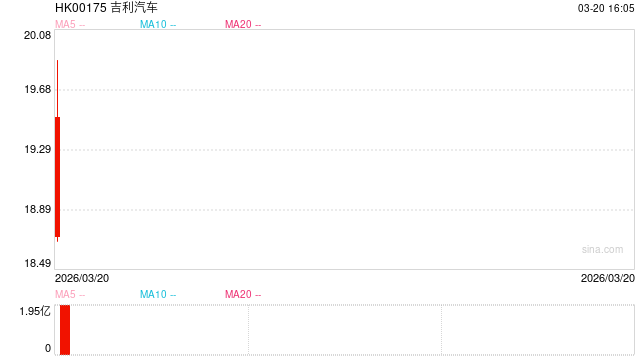
Core Viewpoint - Geely Auto reported a significant increase in revenue but faced challenges with net profit growth, indicating a trend of revenue growth without corresponding profit increase [2][4][14]. Financial Performance - In 2025, Geely achieved revenue of 345.23 billion, a year-on-year increase of 43.73%, while net profit was 16.85 billion, up only 1.32% [2][4][15]. - The total sales volume reached 3.02 million units, reflecting a 39% increase year-on-year [4][15]. Market Competition - Geely's product structure has deteriorated, with low-priced models like the Geely Galaxy seeing a 150% increase in sales, while high-priced models like Zeekr stagnated with only a 1% increase [7][17]. - The competitive landscape is intensifying, leading to a price war among automakers, which has pressured Geely's market position [14][20]. Export Performance - Geely's export growth was only 0.4%, placing it at the bottom among leading automakers, while the overall export of Chinese passenger cars grew by 21.1% [9][20]. - In 2025, Geely exported 420,000 units, significantly lower than competitors like Chery and BYD, which exceeded one million units [10][21]. R&D Investment - Geely increased its R&D spending to 17.62 billion, a 69% increase year-on-year, indicating a strong commitment to innovation [10][22]. - The CEO expressed ambitions for Geely's smart driving technology to surpass Tesla's FSD within the year, a statement that has drawn skepticism from the market [9][22][24]. Sales Targets - For 2026, Geely set a sales target of 3.45 million units, a 14% increase from 2025, but faced a challenging start with only a 1% growth in the first two months of the year [3][11][24].

雷军回来了:新一代SU7爆杀全场
创业邦· 2026-03-20 07:25
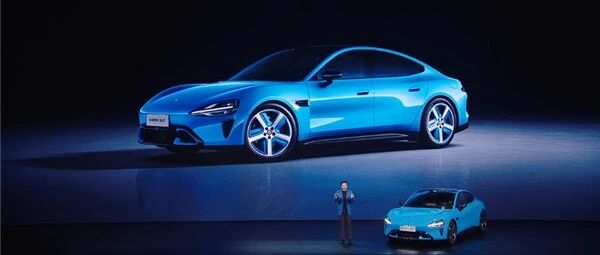
Core Viewpoint - The new generation of Xiaomi SU7 has been officially launched after a three-month hiatus, featuring significant upgrades and a pricing strategy that aims to provide value for consumers [4][6]. Pricing and Market Position - The new SU7 is priced between 219,900 to 303,900 yuan, which is 5,000 yuan higher than the previous model's starting price, but offers substantial benefits that enhance its value proposition [4][6]. - The vehicle's popularity remains strong despite its absence from the market, indicating consumer interest and anticipation for the new model [6]. Key Upgrades - The new SU7 features three versions with improved specifications, including enhanced battery technology, safety features, and interior quality [5][7]. - The vehicle's range has been improved across all versions, with the Pro version achieving a CLTC range of 902 km, placing it among the top electric sedans [32]. Design and Interior Enhancements - The exterior design has minor updates, while the interior has seen significant improvements, aligning with luxury standards and enhancing user experience [10][11]. - Upgrades include better sound insulation, new materials, and advanced seating features, contributing to a more premium feel [14][16]. Safety Features - The new SU7 includes nine airbags and utilizes 2200MPa ultra-high-strength steel for improved safety [21]. - It features a three-redundancy door handle system for enhanced safety during emergencies, ensuring mechanical unlocking capabilities even in power failure scenarios [20]. Performance and Driving Experience - The vehicle's performance has been enhanced with a new V6s Plus motor, achieving a 0-100 km/h acceleration time of 3.08 seconds for the Max version [34]. - The suspension system has been upgraded to improve handling and comfort, with all versions featuring advanced suspension technologies [36]. Intelligent Driving and Technology - The new SU7 offers a comprehensive intelligent driving experience with standard features across all models, including advanced driver assistance systems powered by a 700TOPS computing platform [41][42]. - The upgraded Xiaomi HAD system integrates advanced AI capabilities, allowing for more intuitive driving interactions [44]. Competitive Landscape - The new SU7 faces strong competition from models like Tesla Model 3, BYD Han L, and Xpeng P7, each with unique strengths in the electric vehicle market [56][57]. - The competitive environment in the 200,000 to 300,000 yuan electric sedan segment is intensifying, with multiple strong contenders [59].

油价上行,港股新能源汽车机遇凸显!港股通汽车ETF华宝(520780)放量涨超2%!吉利汽车、宁德时代冲高
Xin Lang Cai Jing· 2026-03-20 02:51
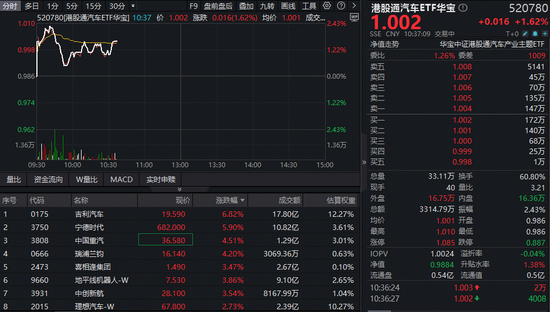
Group 1 - The core viewpoint of the article highlights the active performance of the Hong Kong stock market's new energy vehicle (NEV) sector, with significant gains in stocks such as Geely Auto, CATL, and others [1][5] - Geely Auto led the gains with an increase of over 5%, while other companies like CATL, Ruipu Lanjun, and China National Heavy Duty Truck also saw increases exceeding 3% [1][5] - The Hong Kong Stock Connect Automotive ETF (520780) focused on NEVs rose over 2% during the trading session, with a trading volume exceeding 32 million yuan [1][5] Group 2 - According to Dongfang Securities, the rising oil price environment will continue to enhance the cost advantage of NEVs over traditional fuel vehicles, leading to a global push for the adoption of NEVs [3][7] - Domestic automakers, particularly independent brands, are expected to accelerate their overseas expansion in the NEV sector, making international markets a significant growth point [3][7] - The investment strategy suggests focusing on the Hong Kong Stock Connect Automotive ETF (520780), which covers a range of sectors including complete vehicles and automotive parts, benefiting from high consumer demand and advancements in smart driving technologies [3][7]

新一代小米SU7 “低价”上市 雷军:不想让车主超预算
财联社· 2026-03-19 15:16
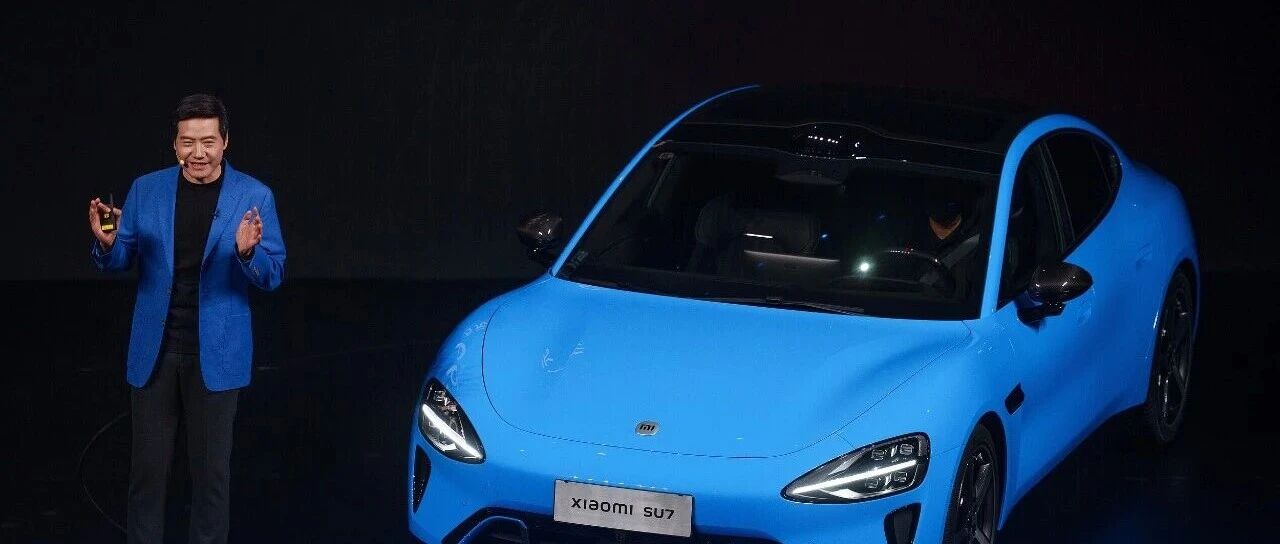
3月19日,小米汽车正式发布新一代小米SU7,三个版本售价分别为21.99万、24.99万和30.39万元, 较第一代SU7价格分别上涨4000元,但较之前预 售价降一万元。 "(新一代SU7)升级的地方超过了100多项,光材料成本就增加了小2万元。但考虑到购置税政策退坡后, 我们不想让买新一代SU7的车 主超过预算。 "小米集团董事长雷军在发布会后解释了此次新车定价的逻辑。 | | | 新一代小米SU7售价及主要配置对比(单位:万元) | | | --- | --- | --- | --- | | | 标准版 | Pro版 | Max版 | | 第一代SU7 | 21.59 | 24.59 | 29.99 | | 新一代SU7 | 21.99 | 24.99 | 30.39 | | 差价 | 0.4 | 0.4 | 0.4 | | 主要配置差异 | | 新增后排侧气妻/2200MPa 热成型钢防撞梁 + 内嵌防滚架等 | -电压平台:752V-897V | | | -电压平台:400V→752V | -续航:830km→902km | | | | -续航:700km→720km | | | | | | -新 ...
零跑汽车(09863):2025年首次实现全年盈利
HTSC· 2026-03-19 11:53
Investment Rating - The report maintains a "Buy" rating for the company with a target price of HKD 70.52 [6]. Core Insights - The company achieved its first annual profit in 2025, with a revenue of RMB 64.73 billion (up 101.3% year-on-year) and a net profit of RMB 540 million, marking a significant turnaround from a loss of RMB 2.82 billion in 2024 [1][2]. - The company delivered 597,000 vehicles in 2025, leading the new energy vehicle sector, and aims to challenge a sales target of 1 million vehicles in 2026 with the launch of four new models [1][3]. - The gross margin reached a record high of 15.0% in Q4 2025, driven by economies of scale and cost reductions from in-house production [2][3]. Summary by Sections Financial Performance - In 2025, the company reported a revenue of RMB 64.73 billion, with automotive and parts contributing RMB 62.01 billion (up 96.0% year-on-year) and services contributing RMB 2.72 billion (up 413.2%) [2]. - The gross margin for the year was 14.5%, with Q4 achieving a peak of 15.0% [2]. - The adjusted net profit for 2025 was RMB 1.08 billion, aligning with the company's guidance of RMB 500 million to RMB 1 billion [1][2]. Product Development - The company plans to launch four new models in 2026, covering a price range of RMB 80,000 to RMB 300,000, which is expected to enhance its market presence [3]. - The company has already launched its city navigation feature and aims to complete its AI driving model by the end of 2026 [3]. International Expansion - The company exported 67,000 vehicles in 2025, leading the sector, and aims to double its overseas sales to 100,000-150,000 vehicles in 2026, focusing on South America and Asia-Pacific markets [4]. - The company is also advancing local production initiatives, with plans for a CKD project in Spain to commence production in October 2026 [4]. Profit Forecast and Valuation - The profit forecast for 2026-2028 has been adjusted, with expected sales of 910,000, 1.19 million, and 1.35 million vehicles respectively, and revenues of RMB 109.9 billion, RMB 144.7 billion, and RMB 164 billion [5]. - The estimated net profit for 2026 is RMB 4.2 billion, with a PE ratio of 21 times for 2026, reflecting a cautious outlook amid increasing competition [5].

富维股份(600742):首次覆盖:主业稳固,静待新兴业务成长
Shanghai Aijian Securities· 2026-03-19 11:02
Investment Rating - The report assigns a "Buy" rating for the company, indicating a positive outlook for its stock performance in the near term [5]. Core Insights - The company is positioned in the automotive parts industry, specifically in the body accessories and trim segment. It is transitioning towards becoming a comprehensive solution provider and exploring new business avenues such as robotics and eVTOL [5][6]. - The company has a strong platform capability and is advancing its business upgrade towards smart cockpits and intelligent driving. It aims to maintain high dividend payouts while investing in new growth areas [5]. - The report anticipates steady revenue growth, with total revenue projected to increase from 20,766 million yuan in 2023 to 23,423 million yuan in 2027, reflecting a compound annual growth rate (CAGR) of approximately 7.6% [3][14]. Financial Data and Profitability Forecast - Total revenue (in million yuan) is forecasted as follows: 2023: 20,766, 2024: 19,636, 2025E: 20,567, 2026E: 21,774, 2027E: 23,423, with a projected growth rate of 4.0% in 2023, -5.4% in 2024, and positive growth thereafter [3][14]. - Net profit attributable to shareholders (in million yuan) is expected to be: 2023: 521, 2024: 509, 2025E: 551, 2026E: 610, 2027E: 724, with growth rates of -4.3% in 2023 and -2.3% in 2024, followed by increases of 8.4%, 10.7%, and 18.6% in the subsequent years [3][14]. - Earnings per share (EPS) is projected to rise from 0.70 yuan in 2023 to 0.97 yuan in 2027 [3][14]. - The gross margin is expected to improve from 10.1% in 2023 to 11.3% in 2027, indicating enhanced profitability [3][14]. Industry and Company Situation - The automotive parts industry is experiencing significant structural differentiation, with increasing penetration of new energy vehicles and pressure on traditional fuel vehicles. The company is a core supplier for the FAW Group and is accelerating its strategic transformation towards smart technologies [5][6]. - The company has established a diverse customer matrix beyond the FAW Group, including luxury car manufacturers and new energy vehicle companies, which positions it well for future growth [5]. - The report highlights the company's commitment to maintaining a cash dividend payout ratio of no less than 50% from 2024 to 2026, which may attract investors seeking both high dividends and growth potential [5].

收购PSS显成效,车载+散热双爆发,瑞声科技2025年净利大增39.8%
Hu Xiu· 2026-03-19 10:20
Core Insights - The company reported significant growth in revenue and net profit for 2025, marking a transition towards becoming a global leader in AI perception interaction systems following the acquisition of Belgian automotive acoustics leader PSS [1][8]. Financial Performance - Revenue exceeded 31.8 billion yuan, a year-on-year increase of 16.4% - Net profit reached 2.51 billion yuan, up 39.8% year-on-year, with a net profit margin of 7.9%, an increase of 1.3 percentage points from the previous year [2] - Operating cash flow was 7.18 billion yuan, a 38.1% increase year-on-year, providing strong financial support for operations and R&D [2] Market Development - Domestic revenue was 16.316 billion yuan, a 12.5% increase, accounting for 51.3% of total revenue - Overseas revenue was 15.491 billion yuan, up 20.8%, making up 48.7% of total revenue, with the Americas showing particularly strong performance [2] Business Segments - Electromagnetic transmission and precision structural components generated 11.77 billion yuan, a 21.3% increase, with a gross margin of 24.5% [4] - Acoustic business revenue was 8.35 billion yuan, a 1.7% increase, with significant growth in smart dual-speaker systems for AI phones [4] - Optical business revenue reached 5.73 billion yuan, a 14.5% increase, with improved profitability from new product launches [4] Emerging Business Growth - The sensor and semiconductor business saw explosive growth, with revenue of 1.57 billion yuan, a 103.1% increase, indicating strong potential in AI applications [5] - The company has established itself among the top ten automotive audio suppliers globally, enhancing its market position through strategic acquisitions [5] Technological Innovation and Capacity Optimization - The company achieved significant breakthroughs in high-end products, particularly in smart driving and AR fields, solidifying its industry leadership [6] - A fully automated production line for ultra-thin heat plates was launched, significantly increasing efficiency and contributing to a 410.9% revenue growth in the cooling business [6] Strategic Focus and Future Outlook - The management anticipates continued double-digit revenue growth in 2026, driven by strong demand in emerging fields such as AI hardware and robotics [7] - The company aims to deepen integration across its technology sectors and expand its global market presence, particularly in the Americas and Europe [7] - A focus on creating integrated smart perception solutions will enhance profitability and strengthen the company's competitive position [7]
独家丨地平线敲定征程 7 目标算力,舱驾一体产品命名 “星空”
晚点Auto· 2026-03-19 08:49
Core Viewpoint - Horizon Robotics is preparing to launch its next-generation intelligent driving chip series, the Journey 7 (J7), with the highest performance version, J7P, expected to significantly surpass NVIDIA's Thor-X in computing power, aiming for mass production in 2027 [3][5]. Group 1: Chip Development and Strategy - The J7 product planning is primarily driven by the algorithm team, marking a shift from being a chip supplier to an integrated solution provider [5]. - The J7 will utilize Horizon's fourth-generation BPU architecture, "Riemann," and aims to compete directly with Tesla's AI5 chip [5]. - The C7H chip, developed in partnership with Volkswagen, will also be based on the Riemann architecture and is designed for the J7, utilizing a 3-4 nm process with an AI computing power of 500-700 TOPS [5]. Group 2: Market Dynamics and Competition - The evolution of vehicle models is accelerating, with parameters expanding from millions to billions, necessitating next-generation high-end driving chips that can adapt to new algorithm models [6]. - Current high-end driving chips are primarily designed for modular algorithms and early-stage end-to-end models, with a typical development cycle of 3-4 years [6]. - The actual bottlenecks in vehicle chips are not just theoretical computing power but also memory bandwidth, data transfer efficiency, and inference accuracy [7]. Group 3: Future Projections and Requirements - The industry anticipates that achieving L3 autonomous driving will require computing power between 500-1000 TOPS by 2025, while L4 may require up to 2000 TOPS by 2030 [7][8]. - Huawei's president of intelligent driving products indicated that transitioning from L2 to L4 may require a 3-5 times increase in investment, with vehicle computing power needing to rise from hundreds to 1500-2000 TOPS [8]. - The focus is shifting towards optimizing the integration of chips, compilers, and models to enhance efficiency rather than solely increasing peak computing power [9]. Group 4: Operational Challenges - Horizon Robotics faces competitive pressure as it attempts to convert more automakers into clients while some of these clients are becoming competitors [9]. - Maintaining production schedules and cash flow is critical for Horizon, especially as it ramps up production of its J6 series while preparing for the next generation [9].

整车强势反弹-后市怎么看
2026-03-19 02:39
Summary of Conference Call Records Industry Overview - The automotive industry is experiencing a recovery in demand as of March 2026, with customer traffic nearing levels seen at the end of 2025, although still 10%-15% lower year-on-year [1][2] - The inventory pressure among leading new energy vehicle manufacturers is significant, with a combined inventory of approximately 900,000 units, and companies like BYD, Geely, and Leap Motor having inventory-to-sales ratios above 2.5 [1][3] Key Insights and Arguments - **BYD's Flash Charging Technology**: BYD's flash charging technology, which integrates "vehicle + charging pile + battery," is expected to drive monthly sales increases of 15,000 to 20,000 units for new models like the Yuan MAX [1][8] - **Xpeng's V2V22.0**: The launch of Xpeng's V2V22.0 has doubled store traffic, although order conversion rates still depend on word-of-mouth effects [1][2] - **Sales Forecasts**: Passenger car sales are expected to decline by over 10% in Q1 2026, with retail sales anticipated to remain flat or slightly decrease year-on-year due to purchasing power constraints [1][5] - **Export Trends**: Companies like SAIC, BYD, Chery, and Geely have competitive advantages in exports due to their own shipping fleets and established overseas channels [1][2] Market Dynamics - **Inventory Levels**: Major new energy manufacturers have high inventory levels, with BYD holding around 400,000 to 500,000 units, primarily in lower-end models. The inventory-to-sales ratio for BYD is expected to drop below 2.5 if March sales reach 220,000 to 250,000 units [3][4] - **Market Recovery Factors**: The recovery in the market is driven by local consumption subsidy policies and the impact of technology launch events, which have significantly increased customer traffic [2][3] - **Future Sales Expectations**: The overall passenger car market is expected to face challenges in Q1 2026, but a more vibrant market is anticipated in Q2 with numerous new product launches [5][6] Government Policies and Their Impact - The total amount for the 2026 consumer goods replacement subsidy is projected to be 250 billion yuan, which is expected to provide direct cash support for vehicle sales [6] - The extension of the personal consumption car loan interest subsidy policy may also support sales, but overall retail sales are expected to remain flat or slightly decrease [6] Competitive Landscape - **BYD vs. Geely**: BYD's rapid advancement in flash charging technology and ecosystem development is contrasted with Geely's slower progress in fast charging and energy supply networks [9][10] - **Emerging Players**: Companies like NIO and Leap Motor are highlighted as potential industry leaders due to their focus on core automotive manufacturing and competitive pricing strategies [14][15] Export Potential - **Leap Motor's Export Performance**: Leap Motor has shown strong export performance, with over 100,000 units exported, and has partnered with Stellantis for overseas expansion [15] Conclusion - The automotive industry is navigating a complex landscape of recovery, inventory management, and technological advancements, with significant implications for sales and market dynamics in 2026. The focus on new energy vehicles and competitive strategies will be crucial for companies aiming to capture market share in both domestic and international markets.
