
稳增长

Search documents
2025年12月财政数据点评:年末公共财政预算仍保持一定的支出力度
Bank of China Securities· 2026-02-01 06:01
Revenue and Income Trends - In December 2025, total public finance revenue was CNY 15,529.0 billion, a year-on-year decrease of 25.0%, with the decline expanding by 24.9 percentage points compared to November[4] - Tax revenue for December was CNY 11,549.0 billion, down 11.5% year-on-year, marking a negative growth shift of 14.3 percentage points[4] - Non-tax revenue fell to CNY 3,980.0 billion, a significant decline of 47.9%, with the drop widening by 37.1 percentage points from the previous month[4] Expenditure Insights - Public finance expenditure in December was CNY 38,857.0 billion, down 1.8% year-on-year, with the decline narrowing by 1.9 percentage points from November[4] - Local public finance expenditure was CNY 34,055.0 billion, decreasing by 2.3% year-on-year, with the decline narrowing by 2.9 percentage points compared to November[4] - The share of expenditure on social security and employment fell to 9.5%, with a year-on-year decrease of 7.4%[2] Sector-Specific Expenditure - Expenditure on health, energy conservation, and cultural tourism increased by 12.1%, 3.1%, and 5.3% year-on-year, respectively[2] - Infrastructure spending accounted for 25.0% of the public finance budget in December, an increase of 5.9 percentage points from the previous month, indicating a continued focus on "stabilizing growth"[2] Government Fund Revenue and Expenditure - Central government fund revenue in December was CNY 1,118.0 billion, up 36.5% year-on-year, while local government fund revenue was CNY 16,312.0 billion, down 13.8%[5] - The revenue from state land use rights fell to CNY 12,399.0 billion, a decrease of 22.9% year-on-year, contributing to the decline in local government fund revenue[5] Overall Fiscal Performance - For the entire year of 2025, general public budget revenue was CNY 216,045.0 billion, a year-on-year decrease of 1.7%[7] - General public budget expenditure for the year was CNY 287,395.0 billion, showing a modest increase of 1.0% year-on-year[12] - The central budget expenditure for the year increased by 19.0%, indicating a significant contribution to overall fiscal performance[22]
铁路公路行业点评:流量韧性仍存,稳增长背景下改善可期
Shenwan Hongyuan Securities· 2026-02-01 05:46
Investment Rating - The report rates the railway and highway industry as "Overweight" [2][4]. Core Insights - The freight volume in China is projected to reach 58.7 billion tons in 2025, with a year-on-year growth of 3.2%. The growth rates for railway, highway, waterway, and civil aviation freight volumes are expected to be 2%, 3.4%, 3.2%, and 13.3% respectively [4]. - Fixed asset investment in transportation is expected to remain high, with an estimated completion of over 3.6 trillion yuan in 2025. The inter-regional personnel flow is projected to reach 66.86 billion person-times, growing by 3.5% year-on-year [4]. - Railway passenger and freight volumes are expected to maintain steady growth, with passenger volume reaching 4.601 billion people and freight volume reaching 5.277 billion tons in 2025, representing year-on-year growth of 6.7% and 2% respectively [4]. - The highway sector is anticipated to improve in 2026 after a slowdown in growth in 2025, with freight volume growth of 3.4% in 2025 [4]. - Investment recommendations include focusing on high dividend stocks and potential market value management catalysts in the highway sector, with specific companies such as Anhui Expressway, Shandong Expressway, and Zhejiang Expressway being highlighted [4]. Summary by Sections Railway Transportation - In 2025, the total passenger turnover is expected to reach 1,639.556 billion person-kilometers, with a year-on-year growth of 3.8%. The total freight turnover is projected to be 3,686.909 billion ton-kilometers, growing by 2.8% [4]. - The investment in railway fixed assets is expected to reach 901.5 billion yuan in 2025, with a year-on-year increase of 6% [4]. Highway Transportation - The growth rate of highway freight volume is expected to slow down in 2025 but is projected to improve in 2026 due to stable demand in highway logistics [4]. Investment Analysis - The report suggests that the highway sector has two main investment themes for the year: traditional high dividend investments and potential market value management catalysts. Recommended companies include Wanhua Expressway, Shandong Expressway, and others [4].




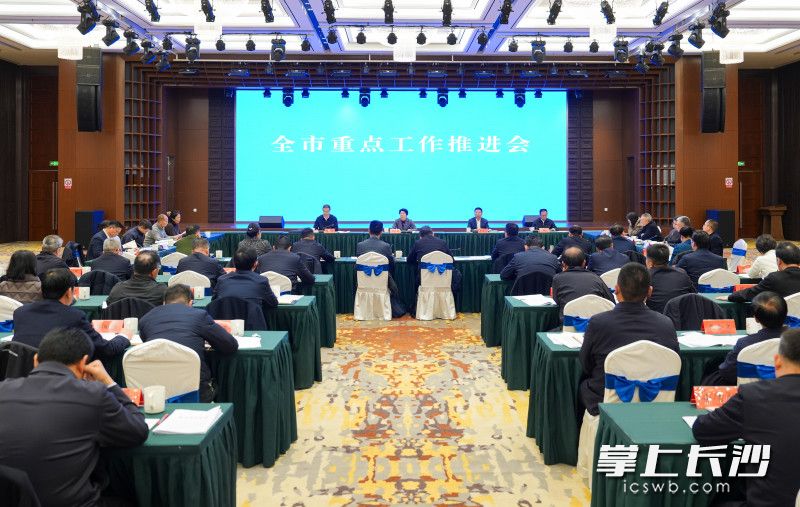
吴桂英:凝心聚力抓发展 干字当头开新局 全力以赴抢抓一季度实现“开门红”
Xin Lang Cai Jing· 2026-01-31 15:24
Core Viewpoint - The meeting emphasized the need for collective efforts to drive development and achieve a strong start in the first quarter, laying a solid foundation for the 14th Five-Year Plan [1][3]. Group 1: Economic Performance and Strategy - The city's economic performance in the past year was generally stable, with improvements in quality and efficiency, despite facing pressures [3]. - There is a need to objectively assess development achievements and recognize existing shortcomings, enhancing awareness of potential regression [3]. - High-quality development should be prioritized, with a focus on stabilizing growth and improving economic work quality to boost market expectations and enterprise confidence [3]. Group 2: Key Initiatives and Focus Areas - Internal demand is highlighted as a top priority, with plans to precisely strategize and reserve projects, implement actions to boost consumption, and accelerate major infrastructure and industrial projects [3]. - The integration of science and industry should be deepened to enhance innovation competitiveness, strengthen advanced manufacturing, and accelerate the development of modern services [3]. - Efforts should be made to achieve better outcomes from reform and opening up, addressing deep-seated contradictions and systemic obstacles, while enhancing the business environment and stabilizing foreign trade [3]. Group 3: Implementation and Action Plans - There is a call for a heightened awareness of urgency and a commitment to practical action, showcasing responsibility and determination in the critical year ahead [5]. - The focus is on coordinating efforts to promote development, improve livelihoods, ensure safety, and maintain bottom lines as the new phase begins [5]. - The city aims to achieve a stable start in the first quarter, ensuring a good beginning for the 14th Five-Year Plan through precise analysis and efforts to expand effective demand [5].

打开专项债分配的“黑箱”
Changjiang Securities· 2026-01-31 08:57
1. Report Industry Investment Rating No investment rating information is provided in the report. 2. Core Viewpoints - The introduction of special new special-purpose bonds has changed the traditional allocation logic of special-purpose bonds, and the allocation logic has become more complex due to regional economic and fiscal differences and the balance between economic development and "Three Guarantees" [4][7][18]. - The allocation of new special-purpose bond quotas at the provincial level generally follows the logic of "following the projects", but in recent years, the explanatory power of objective factors, especially debt risk factors, has decreased, and more attention is paid to management performance and local application factors. Since 2020, the quota allocation has been "tailored to local conditions and precisely targeted", showing regional heterogeneity [9][75][81]. - The allocation of new special-purpose bond quotas at the municipal level is more flexible and difficult to fully explain with objective factors. It is speculated that the resource coordination of provincial governments for municipalities will further reduce the explanatory power of objective factors [9][85][88]. - Some provinces have significant deviations in the actual allocation of new special-purpose bond quotas from the theoretical values. Some economic provinces may receive more quotas due to major project construction, while some regions may receive more funds for debt resolution [10][90]. 3. Summary by Relevant Catalogs 3.1 Special-purpose Bonds as the Main Local Financing Method - The scale of special-purpose bonds has been continuously increasing. As of the end of 2025, the stock of local special-purpose bonds in China was 37 trillion yuan, accounting for nearly 70% of the total stock of local government bonds. The net financing of special-purpose bonds increased significantly in 2020 and 2024, and the issuance scale and stock are expected to continue to rise [19]. - Special-purpose bonds can be divided into new special-purpose bonds, refinancing special-purpose bonds, and replacement special-purpose bonds. There are also special refinancing special-purpose bonds and special new special-purpose bonds for debt resolution [21]. 3.2 Deviation between Special-purpose Bond Investment and Physical Workload - In 2024 and 2025, new special-purpose bond funds were mainly invested in transportation infrastructure, municipal and industrial park infrastructure, and other fields. However, there may be a situation where "money waits for projects", and the progress of some special-purpose bond funds in forming physical workload is slow [25][30]. 3.3 Debt Resolution Factors Becoming an Important Consideration in Special-purpose Bond Allocation - The spatial distribution of special-purpose bond stocks is uneven. Since 2023, the marginal changes have reflected the policy orientation of "risk prevention". The issuance of refinancing special-purpose bonds in the western region has increased rapidly, and the proportion of debt resolution funds in key provinces is relatively high [37]. 3.4 Process and Results of New Special-purpose Bond Quota Allocation - **Principles**: New special-purpose bond quota allocation mainly considers five factors: financial strength, debt risk, construction demand, capital efficiency, and local applications, and is adjusted by a fluctuation coefficient. Overall, it follows the principle of "rewarding the excellent and punishing the inferior", but also pays attention to risk prevention [8][47]. - **Results**: There is a positive correlation between the new special-purpose bond quota and the actual in - place investment in fixed assets, but there are also some deviations. The allocation of new special-purpose bond quotas can generally reflect the objective situation, but some provinces deviate from the trend, indicating that they may receive more special funds [53][57]. 3.5 Provincial Quota Allocation: From "Extensive Distribution" to "Precise Targeting" - The allocation of new special-purpose bond quotas at the provincial level generally follows the logic of "following the projects". In recent years, the explanatory power of objective factors has decreased, and more attention is paid to management performance and local application factors. Since 2020, the allocation logic has shown regional heterogeneity [9][75][81]. 3.6 Municipal Quota Allocation: From "Rewarding the Excellent and Punishing the Inferior" to "Overall Coordination" - The allocation of new special-purpose bond quotas at the municipal level is more flexible, and the overall explanatory power of objective factors is weaker. It is speculated that the resource coordination of provincial governments will further reduce the explanatory power of objective factors [85][88]. 3.7 Deviation Calculation: Which Provinces Receive More Special-purpose Bond Funds? - Provinces such as Shandong, Guangdong, Anhui, Tianjin, Gansu, and Xinjiang have a large upward deviation in the actual quota allocation from the theoretical value, while Shanghai, Jiangsu, and Zhejiang have a large downward deviation. Some economic provinces may receive more quotas for major project construction, and some regions may receive more funds for debt resolution [10][90].
稳增长与强创新并举 地方差异化谋划工业蓝图
Xin Lang Cai Jing· 2026-01-30 18:44
Core Viewpoint - The article emphasizes the importance of stabilizing industrial growth and fostering innovation to ensure a strong start for the 14th Five-Year Plan, with various provinces setting specific growth targets for industrial output in 2026 [3][5][6]. Group 1: Industrial Growth and Economic Stability - The National Bureau of Statistics reported a 5.9% increase in industrial added value for 2025, laying a solid foundation for the 14th Five-Year Plan [3]. - The national industrial and information technology conference highlighted the need to stabilize growth, enhance innovation, promote integration, optimize governance, and mitigate risks to achieve qualitative and quantitative improvements in the industrial economy [3][4]. - Various provinces, such as Jiangxi and Guangdong, are focusing on stabilizing operations and encouraging investment in major industrial projects, aiming for significant industrial investments [4][5]. Group 2: Regional Industrial Development Goals - Provinces like Anhui and Zhejiang have set specific targets for industrial added value growth, with expectations of around 6.5% and 6% respectively for 2026 [5]. - The industrial development is expected to concentrate in eastern coastal provinces, particularly in industrial clusters like the Pearl River Delta and Yangtze River Delta, which will continue to lead in manufacturing [5][6]. - A gradient linkage in regional industrial development is anticipated, with eastern regions leading in high-end transformation, while central and western provinces focus on resource-based industries [5]. Group 3: Innovation and New Growth Drivers - Innovation is recognized as the primary driver of development, with a focus on integrating technological and industrial innovation to build a modern economic system [7]. - The central economic work conference emphasized the need for a comprehensive approach to education, technology, and talent development to foster innovation [7]. - Provinces like Henan and Shaanxi are prioritizing technological innovation and the establishment of manufacturing innovation centers to enhance industrial competitiveness [7][8]. Group 4: Differentiated Industrial Layout - Regions are adopting differentiated strategies based on their resource endowments and industrial foundations to enhance industrial coordination and development [9][10]. - Provinces such as Hebei and Zhejiang are focusing on collaborative industrial development and brand enhancement to improve their competitive positions [10]. - The emphasis on differentiated layouts aims to reduce competition intensity and promote coordinated industrial growth across regions [10].
胡衡华参加讨论并讲话
Xin Lang Cai Jing· 2026-01-29 18:46
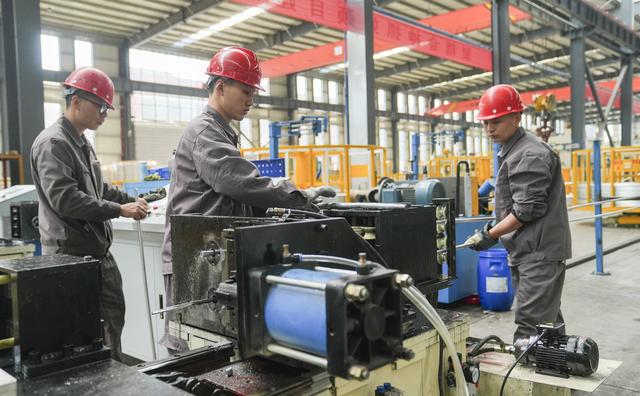
Core Viewpoint - The government emphasizes the integration of investment in physical infrastructure and human capital to boost consumption and adapt to changing economic conditions [3]. Group 1: Investment Strategy - The government aims to address the contradiction between strong supply and weak demand by focusing on both physical and human investments [3]. - There is a need to shift investment priorities to improve infrastructure and public services, aligning with urban renewal and demographic trends [3]. Group 2: Consumption Enhancement - The strategy includes optimizing consumer supply to reflect the shift from goods consumption to service consumption and from uniform to diverse consumption [3]. - The government plans to create comprehensive scenarios that leverage local strengths and enhance innovation and service support [3]. Group 3: Employment and Policy Support - Efforts will be made to increase employment, reduce burdens, and improve policies to stimulate consumer spending [3]. - The government encourages committee members to actively contribute ideas and facilitate cooperation to promote consumption, investment, and stable growth [3].
突发特讯!美媒向世界宣布:美联储以10票赞成、2票反对的结果通过决议,宣布暂停降息,维持基准利率在3.5%至3.75%区间不变
Sou Hu Cai Jing· 2026-01-29 04:56
北京时间1月29日凌晨,美联储2026年首次议息会议落下帷幕。最终决议毫无悬念:维持3.5%-3.75%的 基准利率不变,按下了此前连续三次降息的"暂停键"。这不是简单的政策观望,更不是对经济形势的盲 目乐观。深挖10:2的投票分歧、鲍威尔的强硬表态以及全球市场的连锁反应就能发现,这场"不降息"的 决定,是美联储在抗通胀、守独立、控溢出效应之间的艰难平衡,更暴露了当前全球货币政策的集体困 局。 但通胀问题仍未解决,核心PCE物价指数同比上涨3%,距离2%的目标还有差距,尤其是服务价格、租 金等领域降温缓慢。这种背景下,美联储内部分裂明显:10名委员支持维持利率,2名委员坚决主张降 息25个基点。分歧的本质,是"防通胀反弹"与"怕经济降温"两派的博弈,而最终的"不降息",实则是选 择了"短期控风险优先"的策略。 博弈二:拒政治施压,守住央行独立性底线 这场"不降息",更是美联储对白宫政治施压的直接回应。特朗普政府多次抨击美联储,要求大幅降息刺 激经济,甚至通过调查鲍威尔施压,试图干预货币政策走向。 博弈一:抗通胀vs稳增长,内部分歧摆上台面 美联储此次拒降息,核心矛盾是"通胀粘性"与"经济韧性"的对冲。最新数据 ...

2026年置换债披露发行规模超3000亿元 部分省份2026年额度已用完
Xin Hua Cai Jing· 2026-01-28 15:03
Core Viewpoint - The issuance of local government refinancing special bonds for replacing existing implicit debts has exceeded 300 billion yuan as of January 28, 2024, with a significant focus on long-term bonds of 10 years or more [1][2] Group 1: Bond Issuance and Structure - As of January 28, 2024, the disclosed scale of local government refinancing special bonds for replacing existing implicit debts has surpassed 300 billion yuan [1] - The bond issuance plan for 2024 to 2026 includes an annual allocation of approximately 2 trillion yuan for replacement bonds, with 2026 being the final year of the three-year replacement plan [1] - Multiple provinces have disclosed plans for issuing refinancing special bonds for 2026, with a total disclosed plan scale of 302.79 billion yuan and an issued scale of approximately 259.25 billion yuan [1] Group 2: Regional Highlights - Provinces such as Jiangsu, Shandong, and Zhejiang have taken the lead in issuing bonds, becoming key players in the current debt reduction policy [1] - Xinjiang has been allocated 64.8 billion yuan for replacing existing implicit debts from 2024 to 2026, with an annual distribution of 21.6 billion yuan, and all related bonds have been issued as of January 28, 2024, with terms of 20 and 30 years [1] Group 3: Market Implications - The rapid advancement of replacement bonds in 2026 is expected to reduce local government interest burdens and optimize debt structures, while also providing fiscal space for major project construction and social welfare support [2] - The first quarter of 2024 is anticipated to see local bond issuance exceed 2 trillion yuan, with refinancing special bonds accounting for nearly half, highlighting the dual goals of "stabilizing growth" and "preventing risks" [2] - As the issuance of replacement bonds concludes, the market anticipates a shift from "scale reduction" to "mechanism construction" for local debt, further promoting the transformation of urban investment platforms and sustainable fiscal development [2]
“十四五”时期 青海经济运行“稳、进、韧”
Zhong Guo Xin Wen Wang· 2026-01-27 18:18
Economic Overview - Qinghai Province aims for a GDP growth of 4.1% by 2025, with per capita disposable income expected to rise by 5.1% and an urban unemployment rate of 5.4% [1] - In the previous year, the province's general public budget expenditure was 216.42 billion RMB, with a focus on implementing proactive macro policies and leveraging over 50 billion RMB in financial resources [1] Industry Performance - The agricultural and pastoral sector saw a value-added growth of 5.5%, with cattle and sheep output increasing by 5.2% and 1.9% respectively, and total grain production at 1.193 million tons [1] - The industrial sector's value-added output grew by 7.6%, with 85 new industrial enterprises established and 20 green factories created, while high-tech and equipment manufacturing sectors grew by 9.5% and 10.7% respectively [1] Service Sector and Consumption - The service sector showed stability with transportation, warehousing, and postal services growing by 8.5%, and total passenger and cargo turnover increasing by 9.5% [2] - Consumer activity was boosted by a 2.03 billion RMB "trade-in" subsidy, leading to a consumption increase of 21.5 billion RMB, alongside the establishment of flagship stores for brands like McDonald's and Xiaomi [2] Investment and Infrastructure - Significant infrastructure developments include the completion of the third phase of Xining Airport, expansion of the Ge'ku Railway, and the opening of 11 national and provincial highways, contributing to a 24% increase in investment funds to 79.56 billion RMB [2] - The province is enhancing its business environment and integrating into the national market, with a 17.6% increase in total import and export value, and notable growth in lithium-ion battery and salt lake chemical product exports [2]
陈刚:聚焦关键攻坚突破,奋力实现一季度经济高质量开局
Guang Xi Ri Bao· 2026-01-27 02:05
原标题: 陈刚指出,习近平总书记在省部级主要领导干部学习贯彻党的二十届四中全会精神专题研讨班开班 式上的重要讲话,高屋建瓴、立意深远、催人奋进,具有很强的政治性、理论性、针对性、指导性,为 我们深刻领会把握党的二十届四中全会精神、扎实做好各项工作提供了根本遵循。我们要深刻领悟"两 个确立"的决定性意义,坚决做到"两个维护",自觉把思想和行动统一到习近平总书记重要讲话精神和 党中央决策部署上来,登高望远强化战略思维、聚焦重点狠抓贯彻落实、锻造过硬作风提高能力水平, 自觉为人民出政绩、以实干出政绩。 陈刚在2026年一季度全区经济发展调度会上强调 陈刚指出,过去一年,自治区党委、政府团结带领全区上下锚定目标、铆足干劲,拼经济、净生 态、转作风,工作思路更宽了、经济运行更稳了、发展动能更强了、"朋友圈"更大了、营商环境更好 了、干部作风更实了,取得了多年未有的优异成绩。实践证明,广西正迎来历史最好发展时期,高质量 发展其时已至、其势渐成、其兴可待。但越是形势向好,越要清醒看到存在的短板和面临的挑战。必须 将"实干为要、创新为魂,用业绩说话、让人民评价"的导向牢牢树立起来,把心思用在干实事上,把精 力投到抓落实上,把 ...