科技革命

Search documents
学习规划建议每日问答丨怎样理解前瞻布局未来产业
Xin Hua Wang· 2025-11-26 23:43
Core Viewpoint - The article emphasizes the importance of forward-looking planning and strategic positioning in future industries, highlighting key sectors such as quantum technology, biomanufacturing, hydrogen energy, nuclear fusion, brain-computer interfaces, embodied intelligence, and sixth-generation mobile communication as new economic growth points [1][2][3] Group 1 - The urgency to seize development opportunities and enhance the foresight of future industry layout is crucial, as historical technological revolutions have consistently reshaped global competitive landscapes [1] - The current technological revolution is characterized by multiple breakthroughs and cross-disciplinary integration, necessitating a focused approach to select key areas for development [2] - Future industries are driven by cutting-edge technologies and exhibit high uncertainty, requiring targeted support policies to mitigate investment risks and foster a conducive ecosystem [3] Group 2 - At the national level, emphasis should be placed on accelerating the development of key industries such as quantum technology and biomanufacturing, while at the regional level, strategies should be tailored to local resources and conditions [2] - To address uncertainties in investment returns and development paths, it is essential to establish mechanisms for venture capital and promote successful experiences in future industry development [3] - Strengthening the innovation ecosystem by concentrating resources on enterprises and fostering the growth of leading technology companies and specialized small and medium-sized enterprises is vital for the future industry landscape [3]
2026大类资产怎么配?这场策略会给出答案
Guo Ji Jin Rong Bao· 2025-11-26 10:28
Group 1 - The theme of the CITIC Futures 2026 Annual Strategy Conference is "Sailing Forward Amidst Waves," focusing on global economic changes, macro policy orientation, and asset allocation [1] - CITIC Futures Chairman Dou Changhong highlighted the dual challenges of restructuring global order and trade rules while also embracing a new wave of technological revolution and green transformation [1] - The conference emphasized the importance of seizing historical opportunities during the transitional phase of the economy, particularly as China enters the 14th Five-Year Plan [1] Group 2 - CITIC Securities' Chief Macro Analyst Cui Rong and his team predict a temporary period of clarity in the global macro environment for 2026, with reduced uncertainties in geopolitics, fiscal, and monetary policies [2] - They expect a moderate acceleration in economic growth in the US, Europe, and Japan, alongside a return of inflation concerns to a "comfortable zone" [2] - The anticipated global interest rate cuts in 2026 are expected to be less pronounced than in 2025, with a stronger US dollar in the first half of the year, leading to lower liquidity in global financial markets [2] Group 3 - CITIC Futures Research Institute Deputy Director Zeng Ning maintains an optimistic macro outlook for 2026, with a continued easing of global liquidity driven by the Federal Reserve's rate-cutting cycle [2] - The asset allocation strategy for 2026 suggests a balanced approach, with an increased weight on commodities while being mindful of internal differentiation [2] - Precious metals are expected to remain a strong hedge against sovereign credit currency depreciation, while supply-constrained and demand-growing non-ferrous metals are also favored [3] Group 4 - The outlook for black construction materials indicates a stable demand-supply dynamic, with potential for long positions at relative valuation bottoms once global recovery becomes clearer [3] - Oil is projected to face significant inventory accumulation in 2026, with expectations of downward pressure on price levels, suggesting a cautious approach to long positions until supply dynamics stabilize [3]
中信期货董事长窦长宏:2025年公司保证金规模突破2000亿新高
Jing Ji Guan Cha Wang· 2025-11-26 07:12
Core Viewpoint - The global economic landscape is undergoing significant changes, characterized by the restructuring of old global orders and trade rules, alongside a new wave of technological revolution and green transformation that injects new momentum into global economic development [1] Group 1: Company Strategy and Performance - CITIC Futures aims to enhance its comprehensive service capabilities by integrating on-exchange and off-exchange services, futures and spot services, as well as domestic and international operations [1] - The company anticipates its margin scale to exceed 200 billion yuan in 2025, with year-on-year growth in trading volume, positions, and delivery scale [1] - CITIC Futures has served over 10,000 industrial clients, achieving a hedging amount of nearly 800 billion yuan [1] Group 2: Risk Management and Client Services - The company continues to develop derivative product structures that align with the risk management needs of the industrial chain, with its risk subsidiary serving over 2,000 entities, primarily small and medium-sized enterprises, and facilitating transactions exceeding 150 billion yuan [1] - The international business has reached historical highs in both inbound and outbound operations, enhancing the company's capabilities in global market trading and settlement [1]
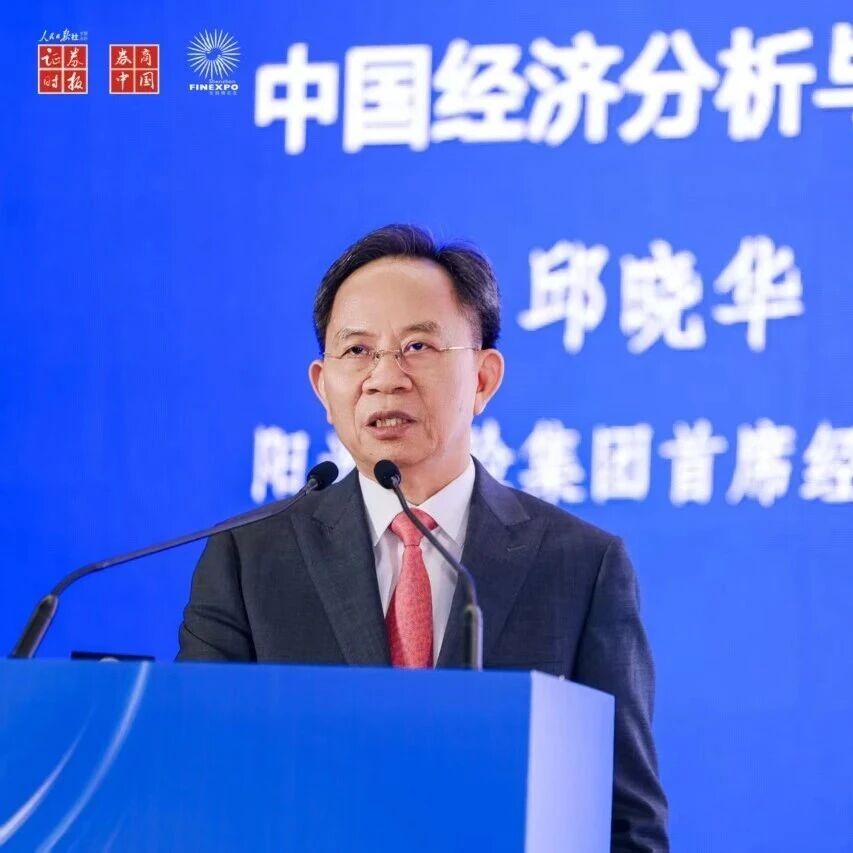
中国经济正在积蓄新的发展动能!阳光保险集团首席经济学家邱晓华最新发声
Zheng Quan Shi Bao Wang· 2025-11-25 10:22
Core Insights - The Chinese economy has demonstrated resilience amidst complex external pressures and internal transformation, achieving a GDP growth target of around 5% for the year [1][2] - Key factors contributing to this performance include proactive macro policies, ongoing reforms and opening up, strong consumer spending, and the buffering effect of external shocks on trade [1][3] Economic Cycle Perspective - The current economic situation is viewed as the "fourth adjustment" cycle, characterized by the interplay of external changes, the COVID-19 pandemic, and internal transformation challenges [2][3] - Despite these challenges, the economy has maintained a growth rate of approximately 5%, showcasing significant systemic resilience [2] Transition and Reform - Signs indicate that the current economic adjustment is nearing a resolution, with the real estate market's impact expected to lessen and substantial progress in the transition from old to new economic drivers [3] - Emerging industries such as artificial intelligence, biomedicine, and low-altitude economy are becoming significant growth engines [3][4] Technological Revolution Perspective - The ongoing technological revolution presents unprecedented strategic opportunities for China, marking a shift from being a passive observer to an active participant and leader in various sectors [4][5] - The government's strategic focus includes building a modern industrial system and promoting the transformation of traditional industries towards smarter and greener practices [5][6] Infrastructure Development - Significant investments are being made in both traditional and new infrastructure, including renewable energy and storage, to support the ongoing industrial transformation [6] - Major national projects and infrastructure developments are expected to provide robust support for this profound industrial change [6] Geopolitical Context - The evolving geopolitical landscape, particularly the dynamics of Sino-American relations, is a critical factor influencing China's economic future [7][8] - A complex relationship characterized by both competition and cooperation is anticipated, with a focus on addressing global challenges while managing core security and technology issues [8] Conclusion - The outlook for the Chinese economy is optimistic, with a recognition that while the path may be challenging, the potential for growth and development remains strong [8]
中国经济正在积蓄新的发展动能!阳光保险集团首席经济学家邱晓华最新发声
券商中国· 2025-11-25 09:53
第十九届深圳国际金融博览会暨2025中国金融机构年会日前在深圳举行。在"中国银行业年会"分论坛上,阳光保险集团首席经济学家邱晓华发表题为"中国经济 分析与展望"的主题演讲。 邱晓华指出,过去一年,中国经济顶住了复杂的外部压力,以及内部转型升级的阵痛,在风浪中实现了稳中有进的发展,全年有望实现年初制定的5%左右的GDP增 长目标。 他认为,这份成绩单背后对应四个关键因素:宏观政策积极有为;深化改革和扩大开放持续释放制度红利;消费继续发挥"压舱石"作用;外部冲击的时效性特征使 进出口波动得到缓冲。 展望未来,邱晓华从经济周期、科技革命与地缘政治三个维度进行了深刻剖析。他表示,虽然前行路上仍面临挑战,但中国经济正在积蓄新的发展动能,未来发展 前景值得期待。 自身周期视角:第四次经济调整接近尾声 从中国经济自身的发展周期回顾,改革开放以来的历程并非一帆风顺,而是经历了数次起落调整。 邱晓华在演讲中清晰地梳理了前三个主要周期:80年代末的价格改革闯关、90年代末的亚洲金融危机以及2008年的国际金融危机,每一次中国经济都通过政策的优 化和改革开放的深化,成功走出了困境,并迈上了新的发展台阶。 他认为,当前中国经济正处在 ...

一周观点:防御当先,静候良机-20251124
Huafu Securities· 2025-11-24 05:07
Group 1 - The report highlights a combination of strong non-farm payrolls and dovish Federal Reserve actions as illogical, suggesting that the resulting decline in U.S. markets may become a norm in the upcoming quarter [3][9] - The ongoing technological revolution may face a "bubble burst" moment, emphasizing the need to monitor whether technology positively impacts demand [3][9] - Market sentiment is expected to remain weak in the short term, recommending a cautious approach to positioning and waiting for better opportunities [3][9] Group 2 - Fiscal stimulus is anticipated to be a primary support mechanism for the U.S. economy moving forward [3][9] - The allocation towards the energy sector is seen as a response to overheating expectations regarding U.S. AI investments, suggesting a focus on short to medium-term trading strategies [3][9] - Long-term optimism is expressed for sectors such as insurance, anti-involution industries, Chinese internet companies, and military trade [3][9] Group 3 - In September, the U.S. non-farm payrolls exceeded expectations with an addition of 119,000 jobs, significantly higher than the anticipated 51,000 [8] - The unemployment rate in September rose to 4.4%, up from 4.3% in the previous month, indicating a healthy increase in labor force participation [8][10] - The report notes that the increase in labor force participation suggests more individuals are entering the job market, which may lead to a temporary rise in unemployment rates as they seek employment [8][10]
创50ETF(159681)盘中净申购1000万份,资金上周净流入创业板宽基72.47亿
Xin Lang Cai Jing· 2025-11-24 02:27
Group 1 - The Federal Reserve's interest rate cut expectations are fluctuating, leading to a recent pullback in the technology sector, while funds are strategically positioning in broad-based investments, as evidenced by the net subscription of 10 million units in the 创50ETF (159681) [1] - Donghai Securities believes that a new wave of AI-driven technological revolution is expected to enhance production efficiency, potentially alleviating inflation caused by rising traditional commodity prices, although the short-term commodity cycle remains under pressure [1] - With a rich array of domestic application scenarios, more industries are likely to be willing to pay for AI to reduce intermediate costs or capture new application peaks, suggesting that maintaining a focus on technology while promoting consumption and countering internal competition is not contradictory [1] Group 2 - As of October 31, 2025, the top ten weighted stocks in the 创业板50指数 (399673) include 宁德时代 (300750), 中际旭创 (300308), 东方财富 (300059), 新易盛 (300502), 阳光电源 (300274), 胜宏科技 (300476), 汇川技术 (300124), 迈瑞医疗 (300760), 亿纬锂能 (300014), and 同花顺 (300033), collectively accounting for 70.15% of the index [2] - The 创50ETF has a management fee rate of 0.15% and a custody fee rate of 0.05%, closely tracking the performance of the 创业板50指数, which consists of the 50 stocks with the highest average daily trading volume in the ChiNext market [2]

“成长未必长期跑赢价值,股市风格轮动或更频繁” 中金公司最新研判!
Zhong Guo Ji Jin Bao· 2025-11-17 14:55
Group 1 - The core theme of the 2026 investment strategy meeting held by CICC is "Seizing Opportunities and Planning for the Future," focusing on market themes and attracting over 4,500 participants [1] - CICC's Chief Strategy Analyst, Miao Yanliang, indicates that the US-China economic relationship has entered a "fragile balance," suggesting that while both countries have enough leverage for negotiations, tail risks still exist [2][3] - Miao believes that the current gold bull market may not be fully realized, presenting good medium to long-term allocation value, especially in light of the accelerating reconstruction of the international monetary order [2] Group 2 - Miao highlights that during technological revolutions, growth often outpaces value, but the current AI revolution may see more frequent style rotations in the stock market due to increased uncertainty in economic activities [3] - The analysis of market styles shows that since the launch of ChatGPT in November 2022, US stocks have consistently outperformed value stocks, while non-US markets have seen value outperform growth, indicating that not all economies will benefit equally from technological advancements [3] - CICC's Chief Analyst for Nonferrous Metals, Qi Ding, points out that the deepening trend of de-globalization and high US interest rates are leading to significant inflows into gold ETFs, reflecting a "de-dollarization" trend [4] Group 3 - Qi anticipates that basic metals like copper, aluminum, and tin will perform well in 2026 due to rising demand from AI, electricity, new energy, and high-end manufacturing, coupled with insufficient capital expenditure on the supply side [4] - The report suggests that strategic metals such as cobalt, natural uranium, tungsten, rare earths, and antimony will maintain a bull market due to increasing control and stockpiling by resource countries, leading to a systematic price increase [4] - Overall, the nonferrous metals sector is expected to experience significant development opportunities, driven by rising prices and supportive policies for critical mineral resources [4]

“成长未必长期跑赢价值,股市风格轮动或更频繁”,中金公司最新研判!
中国基金报· 2025-11-17 14:44
Core Viewpoint - The investment strategy meeting held by CICC focused on the theme "Ride the Momentum, Seek New Opportunities," discussing the current bull market and its future direction [2] Group 1: Market Dynamics - CICC's chief strategist, Miao Yanliang, indicated that the Sino-U.S. economic relationship has entered a "fragile balance," which implies potential tail risks while also providing a basis for negotiation [4] - The current bull market is attributed to the evolving dynamics of Sino-U.S. relations, transitioning from a phase of mutual benefit (2005-2016) to increased trade friction (2017-2024), and now to a new phase of "fragile balance" since 2025 [4] - Miao believes that this new order allows for a reassessment of China's competitiveness, potentially leading to a confidence premium and new valuation recovery space [4] Group 2: Gold Market Outlook - Miao suggests that the ongoing restructuring of the international monetary order may lead to an underappreciated gold bull market, with gold being a key hedging tool against tail risks [4] - The current bull market in gold is expected to continue, with strong medium to long-term allocation value [4][7] Group 3: Stock Market Trends - The stock market is likely to experience more frequent style rotations, with growth potentially not consistently outperforming value during this AI technology revolution [4] - Historical trends show that technological advancements often create high-growth investment opportunities, but current geopolitical tensions may lead to resource over-investment and efficiency declines [4] Group 4: Sector-Specific Insights - The non-ferrous metals sector is anticipated to see significant growth opportunities due to the deepening trend of de-globalization and high U.S. interest rates [7] - CICC's research indicates that basic metals like copper, aluminum, and tin are expected to perform well in 2026 due to emerging demands from AI, electricity, and new energy sectors [8] - Strategic metals such as cobalt, natural uranium, tungsten, and rare earths are projected to maintain a bull market, with prices expected to rise systematically due to supply-demand imbalances [8]
进化的伯克希尔
Xin Lang Cai Jing· 2025-11-17 11:21
Core Insights - Warren Buffett announced his retirement during Thanksgiving, leading to significant market reactions and discussions about Berkshire Hathaway's future direction [2] - Berkshire's Q3 report revealed a $10.6 billion reduction in Apple holdings and a substantial increase in investments in Google, indicating a shift in investment strategy under new leadership [2][15] - Historical data shows that Buffett's investment philosophy has evolved from focusing on undervalued tangible assets to recognizing the importance of intangible value [3][19] Investment Philosophy Evolution - Buffett's early investment strategy was heavily influenced by Benjamin Graham, focusing on companies trading below their net liquidation value, primarily during the industrial era [6][14] - Over time, Buffett began to prioritize companies with strong brand value and management quality, reflecting a shift towards recognizing the economic value of goodwill and intangible assets [8][9] - The transition to the information age saw Buffett adapt his investment approach to include technology and light-asset business models, culminating in significant investments in companies like Apple [11][12][13] Current Challenges and Future Outlook - Berkshire Hathaway faces challenges due to its large asset management scale, making it difficult to find suitable investment opportunities in small-cap stocks [15][16] - The company holds $380 billion in cash, over 30% of total assets, as a strategy to maintain a safety margin amid limited investment opportunities [16] - Under new CEO Greg Abel, Berkshire is expanding its investment circle, as evidenced by recent investments in technology companies, indicating a willingness to adapt to changing market dynamics [17][20]