资产配置

Search documents
每日钉一下(存量+增量,资产配置这样做)
银行螺丝钉· 2025-12-14 13:42
Group 1 - The core concept of fund advisory is to address the issue where funds make profits, but investors do not [4] - Fund advisory services are designed to help investors achieve better returns through professional guidance [5] - The article promotes a free course on fund advisory, which includes notes and mind maps for efficient learning [5][7] Group 2 - Investment funds can be categorized into two parts: existing funds and incremental funds [10] - For existing funds, a common strategy is to allocate assets based on the formula "100 - age," suggesting a higher percentage in stocks for younger investors [12] - For incremental funds, a systematic investment plan (SIP) is recommended, where a portion of monthly income is invested regularly, typically around 20% of new income [14][15]


[12月14日]美股指数估值数据(美股牛熊市有啥特点,美股也有长熊市吗)
银行螺丝钉· 2025-12-14 13:42
Core Viewpoint - The article discusses the current state of global stock markets, particularly focusing on the valuation of U.S. stocks and the characteristics of bull and bear markets, while also introducing investment opportunities through global index funds. Group 1: Global Stock Market Overview - This week, global stock markets experienced slight fluctuations with minimal movement [1][2][3][4] - The U.S. stock market has seen a slight decline, while non-U.S. markets have shown slight increases [2][3] - A-shares in China also experienced a slight increase, indicating a stable market environment [4] Group 2: Valuation Insights - Despite significant increases in U.S. stock indices over the years, they have rarely reached overvaluation, mostly remaining at normal valuation levels [5][6] - As of October this year, U.S. stocks touched high valuation levels, but have since corrected back to a normal high valuation [7][8] - The growth in earnings over the past two years has helped absorb some of the high valuations in the U.S. stock market [9] Group 3: Bull and Bear Market Characteristics - U.S. stock markets have experienced long bull and bear cycles, with each cycle lasting 15-20 years [12][13][14] - Long bear markets typically occur during economic recessions, as seen in the 1970s and from 2000 to 2010 [15][16] - The current economic environment has not yet entered a recession, and earnings growth remains the primary driver for stock index increases [22][23] Group 4: Investment Opportunities - Historical data indicates that significant undervaluation opportunities in global stock indices occurred in 2018, 2020, and 2022 [29] - The article highlights the introduction of a global index investment advisory portfolio that diversifies across various stock markets [34][35] - The portfolio aims to track global stock market performance, although there are current purchase limits for domestic investors [37] Group 5: Book Promotion - A new edition of the book "The Long-Term Investment Guide" has been released, which includes updated data and new chapters [40] - The book emphasizes that stocks are the best long-term investment vehicle, encouraging asset allocation towards equities [41][42]

财通证券夏理芬:以资产配置为核心打造财富管理买方服务能力
Sou Hu Cai Jing· 2025-12-14 10:35
"财富管理转型的突破在于构建以资产配置为核心的买方投顾服务能力,这也是践行'以客户为中心'使命的起点。" 夏理芬认为,在业内同质化竞争以及佣金 下滑的现实背景下,现在整个财富转型已经从销售模式转向实现客户资产的保值增值,只有提供好的产品、专业的服务,才能破解发展困局。 12月12日,由上海证券报与交通银行上海市分行联合主办、基煜基金全程协办的"上证·大虹桥金融高质量发展大会"在上海长宁举办。财通证券党委委员、 副总经理夏理芬在会上表示,当前财富转型进入深水区,以资产配置为核心打造财富管理买方服务能力。 夏理芬进一步阐释。首先,是理念共识的塑造。我们必须清晰地向市场和客户传递:财富管理不是追逐短期热点的投机,而是基于长期主义的科学规划。其 次,是产品服务的保障。根据客户需求提供跨越周期的"武器",包括针对交易型客户提供股票投顾服务,配置型客户提供FOF标准化产品和基金投顾服务, 帮助客户纪律性地执行配置策略。最后,是有温度的陪伴。市场剧烈波动时,必须主动进行"逆周期沟通"。这种沟通不是预测市场,而是回归初心。 上证报中国证券网讯(记者 严晓菲)12月12日,由上海证券报与交通银行上海市分行联合主办、基煜基金全程 ...


沪深300都跑不赢,为啥还要做组合?
雪球· 2025-12-13 13:01
Core Viewpoint - The article discusses the importance of diversification and asset allocation in investment strategies, emphasizing that while pure equity indices like the CSI 300 may outperform in bull markets, a balanced portfolio is essential for long-term sustainability and risk management [5][6][10]. Group 1: Performance Comparison - The CSI 300 index has shown strong performance in the current bull market, outperforming many investors [5]. - In contrast, indices like the ChiNext and the communication index have experienced significant downturns, highlighting the risks of concentrated investments [5][6]. - The article argues that while pure equity assets can yield high returns, they also come with high volatility and long-term risks, necessitating a diversified approach [9][10]. Group 2: Risk Management - A diversified portfolio typically includes various asset classes such as bonds, dividends, and international investments, which serve to mitigate risks and reduce volatility [9]. - The article points out that the trade-off for lower volatility is a potential sacrifice in returns, making it normal for diversified portfolios to lag behind single equity indices during bull markets [10]. - The need for a balanced approach is underscored by the observation that many investors struggle to maintain their positions during market downturns, often leading to premature exits from the market [11][12]. Group 3: Psychological Factors - The article emphasizes that investment is not just a rational endeavor but also involves emotional factors, with many investors failing to stick to their strategies during market fluctuations [7][20]. - It highlights the importance of setting realistic return expectations and conducting stress tests to ensure that investors can endure market volatility [14]. - The discussion includes the notion that the greatest risk for long-term investors is not underperforming but rather being forced out of the market during critical moments [17]. Group 4: Long-term Strategy - The article advocates for a focus on the investment process rather than just the results, suggesting that a balanced portfolio can help ordinary investors navigate market challenges more effectively [15][16]. - It stresses that the true measure of investment success is the ability to remain invested and weather market fluctuations, rather than simply outperforming a benchmark like the CSI 300 [20][21]. - The article concludes by encouraging investors to reflect on their personal goals, risk tolerance, and investment duration to clarify their portfolio needs [21].

白银正在抢走黄金的“风头”?它真能成为新一代“硬通货”吗?
Sou Hu Cai Jing· 2025-12-13 07:27
朋友们,我是帮主郑重。今天咱们聊一个近期风头甚至盖过黄金的品种——白银。如果你最近关注市 场,一定会被它的涨势吓一跳:价格接连刷新历史纪录,年内涨幅超过100%,直接把黄金甩在了身 后。市场上甚至开始出现一种声音,说"白银正在成为新的黄金"。这到底是一时的炒作,还是一场深刻 的投资逻辑变局?今天,帮主就带你穿透价格的喧嚣,看看白银到底"成色"几何。 3. 当前暴涨中混杂着强烈的散户 "FOMO"(错失恐惧)情绪,这加剧了行情的脆弱性。 首先,我们必须承认,白银这次上涨的"底气"比以往都足。 它正摆脱过去作为黄金"影子"或"附属 品"的传统角色,拥有了自己独立的投资叙事。这个新故事的核心,是它强大的 "工业金属"属性。全球 绿色转型和科技革命,为白银创造了前所未有的需求。 · 光伏是头号功臣,太阳能电池板里的导电银浆离不开它,光伏用银目前已占工业需求的近三成。 · 电动汽车的普及,让每辆车的平均用银量比传统汽车高出约67%-79%。 · 甚至炙手可热的 AI和数据中心,其服务器、芯片封装也离不开白银的导电特性。 与此同时,供应却跟不上。全球白银市场已连续第五年出现供应缺口,2025年的缺口预计高达约1.17亿 ...

内行提醒:手握20万存款的人,明年起要做好6个准备
Sou Hu Cai Jing· 2025-12-13 02:06
Group 1 - The article emphasizes the importance of balancing safety and liquidity for individuals with savings of 200,000, especially in the current economic environment where inflation is outpacing interest rates on fixed deposits [1][3] - It suggests that individuals should avoid long-term fixed deposits and instead consider shorter terms to maintain flexibility and access to funds [3][4] - The article warns against high-interest offers from small banks due to their lower stability and higher risk of liquidity issues, recommending larger, state-backed banks for safer deposits [4][6] Group 2 - It highlights the benefits of investing a portion of savings in gold, which has shown an average annual increase of 6.8% over the past five years, providing a hedge against economic volatility [6][7] - The article advises keeping a portion of savings in liquid accounts or money market funds to ensure quick access to cash for emergencies, as many individuals face unexpected expenses [6][7] - It encourages diversifying deposits across multiple banks to mitigate risk and take advantage of varying interest rates, suggesting a split of funds between two major banks [9][10]
2026货币政策定调适度宽松,强调灵活高效降准降息
Sou Hu Cai Jing· 2025-12-13 00:53
Group 1 - The monetary policy for 2026 is set to be "moderately loose," emphasizing "flexible and efficient use of reserve requirement ratio (RRR) and interest rate cuts" alongside "reasonable recovery of prices," shifting the focus from scale expansion to precise regulation and structural optimization [1][2] - The core objectives of the monetary policy now include "promoting reasonable price recovery" alongside "stabilizing economic growth," aiming to alleviate the current structural contradiction of "strong supply and weak demand" [2] - The policy will likely involve 1-2 RRR or interest rate cuts in 2026, with potential reductions of 10-50 basis points, and will emphasize coordination with a more proactive fiscal policy, including an expansion of special bonds and targeted funding towards technology innovation and green industries [3] Group 2 - The central bank's operational logic is shifting from traditional "interest rate cuts to promote inflation" to a focus on supply-side reforms and demand activation, aiming to reduce ineffective production capacity and enhance consumer spending through fiscal measures [4] - The Consumer Price Index (CPI) is expected to moderately rise to a target range of 0.4%-0.6%, while caution is advised regarding market distortions such as "price increases followed by subsidies" [5] Group 3 - External pressures are easing with the Federal Reserve's continuous interest rate cuts, which have reduced the US-China interest rate differential, providing a window for domestic interest rate reductions [6] - The strategy includes expanding exports of "new three items" (new energy vehicles, lithium batteries, etc.) to counteract risks from US tariffs and global supply chain issues, while also focusing on financial safety and optimizing local debt restructuring [7] Group 4 - Financing costs for enterprises are expected to decrease further, particularly benefiting technology and green sectors, while personal mortgage rates are likely to continue their downward trend, alleviating household leverage through policies supporting the acquisition of existing homes [8] - The loose liquidity is expected to support a structural market in A-shares, with a focus on technology (AI, robotics) and cyclical sectors (electricity, chemicals), while the value of national bonds and technology innovation bonds is becoming more prominent, attracting foreign investment in RMB assets [9]
AI时代,如何成为不可替代的价值枢纽?
Wind万得· 2025-12-13 00:00
Win.d 金融销售灵魂提问: AI时代, 如何成为不可替代的 价值枢纽? 资管规模突破百万亿、理财全面净值化、 外资加速布局中国 -- 金融业正经历深度 变革。 当金融遇见AI, 而是专业金融人的战略级杠杆: · 它让市场分析更精准 · · / / 真正的价值创造,永远来自懂得资产配置 本质、理解监管趋势、掌握机构需求的销 售精英! 万得 -- 金融圈的 「核心操作系统」》》》》》》 在这里,您将获得服务顶级金融机构的通 行证: √ 覆盖多家金融机构的生态网络 从头部公募到外资投行,上百万精英通过 万得决策 √ 前瞻性市场洞察体系 您该站在浪潮的哪一端 ? AI不是取代者, 整合宏观经济、行业研究、资金流向的智 能分析平台 ✔ 持续进化的解决方案库 tr 124 - L / 1 + 1 + 母牛赦增切能候块,贴终领先中场涌点半 十六 您将成为 不可替代的价值枢纽 核心职员 ◆ 深度诊断:识别金融机构业务痛点 ◆ 价值匹配:定制万得数据+分析解决方 案组合 ◆ 持续赋能: 推动客户从产品使用到战略 升级 · 有相关销售经验, 渴望在专业深度和服 务价值上精进。 · 敏锐如鹰:能洞察客户核心战略需求与 未言明的 ...

大额存单快到期的人,愁坏了
36氪· 2025-12-12 13:51
Core Viewpoint - The article discusses the declining interest rates of large-denomination time deposits in China, which have dropped to "1.x%" levels, leading to challenges for savers who previously relied on these products for income [3][4][5]. Group 1: Current Situation of Large-Denomination Time Deposits - Many banks have stopped offering 5-year large-denomination time deposits, with the longest available term now being 3 years at a rate of 1.55% [8][11]. - The interest rates for large-denomination time deposits have significantly decreased over the years, with rates previously above 4% now falling below 2% [14][19]. - The demand for large-denomination time deposits has diminished as banks prioritize managing their liabilities and reducing costs [19][20]. Group 2: Changes in Banking Strategy - Banks are shifting their strategies from using large-denomination time deposits as a tool for attracting deposits to focusing on low-cost demand deposits and optimizing the structure of deposit terms [20][19]. - The net interest margin for commercial banks has been declining, prompting banks to reduce their reliance on high-interest deposits [18][19]. - The current banking environment reflects a preference for short-term, low-cost liabilities over long-term, high-cost deposits [27]. Group 3: Investment Alternatives for Savers - With the decline in large-denomination time deposits, savers are encouraged to explore other investment options, such as low-risk fixed-income products and structured financial products [23][26]. - The bank wealth management market is experiencing growth, with a significant increase in the scale of bank wealth management products, indicating a shift in investor preferences [23][26]. - Young investors are increasingly turning to online investment platforms, particularly in gold and diversified funds, as alternatives to traditional savings [26][27].

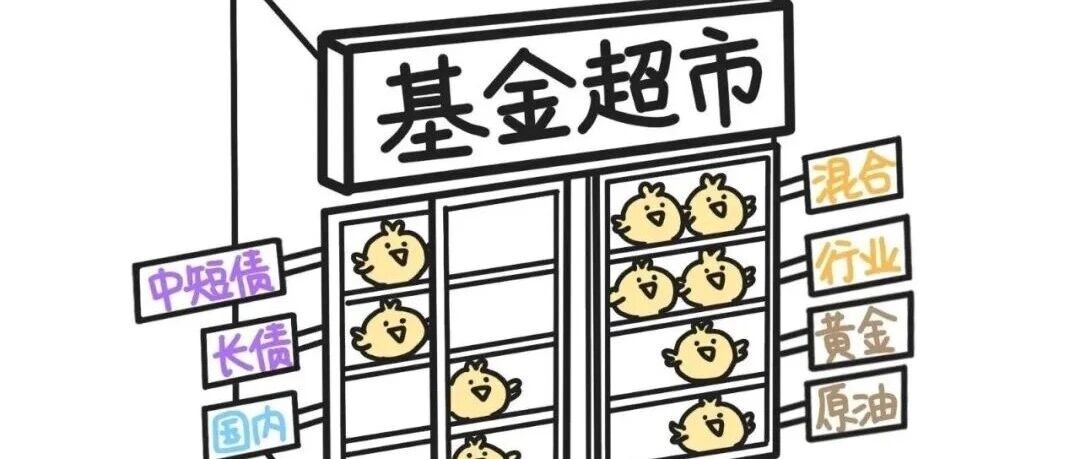
新手养基第一步 关掉你的基金超市
雪球· 2025-12-12 13:00
Core Viewpoint - The article emphasizes the pitfalls of having an excessive number of funds in an investment portfolio, likening it to running a supermarket, which can lead to false diversification and management difficulties [6][17]. Group 1: Reasons for Excessive Fund Holdings - Fear of Missing Out (FOMO) drives investors to buy into new concepts and themes, leading to an overwhelming number of funds [9]. - Misunderstanding the principle of diversification results in investors believing that holding more funds inherently reduces risk [11]. - Decision paralysis occurs when investors are overwhelmed by choices, leading them to buy multiple funds without a clear strategy [13]. Group 2: Problems with Excessive Fund Holdings - False Diversification: Holding many funds does not guarantee risk diversification, as many funds may share the same underlying assets [18]. - Management Overload: Monitoring numerous funds can be time-consuming and impractical, making it difficult to analyze performance and make informed decisions [22]. Group 3: Steps to Optimize Fund Holdings - Step 1: Define a portfolio structure based on individual risk tolerance and investment goals, including allocations to different types of funds [27][30][34]. - Step 2: Tag each fund according to its category to gain clarity on the portfolio composition [37]. - Step 3: Consolidate similar funds by evaluating them based on performance, drawdown history, fund size, fee structure, and manager experience [41][45][49]. Group 4: Tools and Recommendations - The article suggests using fund comparison tools available in various apps to facilitate the selection process and streamline decision-making [50]. - It introduces a three-part asset allocation tool that helps investors avoid common pitfalls by providing a structured framework for fund selection and management [65][66].