
以旧换新

Search documents
2025年5月经济数据点评:“两重”“两新”持续发力,经济呈现较强韧性
Chengtong Securities· 2025-06-17 08:33
Economic Resilience - In May, industrial production year-on-year growth decreased from 6.1% to 5.8%, maintaining a high growth rate, with a month-on-month growth of 0.61%[1] - Domestic demand is effectively supporting industrial production as external demand gradually declines, with export growth rates of 8.1% and 4.8% in April and May respectively[9] - The government issued a net financing of 6.3 trillion yuan in bonds in the first five months, an increase of 3.8 trillion yuan year-on-year, supporting economic stability[9] Investment Trends - Total infrastructure investment growth rate decreased from 10.9% to 10.4% in the first five months, still above the 2024 annual target of 9.2%[2] - Manufacturing investment year-on-year growth is at 8.5%, slightly down from the previous month, with equipment investment growing at 17.3%[2] - Real estate investment fell by 10.7%, with housing starts down 22.8% and sales area down 2.9% year-on-year, indicating ongoing market challenges[2] Consumer Behavior - Retail sales of consumer goods increased by 6.4% year-on-year in May, surpassing the market expectation of 4.9%[3] - The "trade-in" policy significantly boosted consumption, contributing an estimated 3 trillion yuan in sales in May alone[3] - Home appliance and audio-visual equipment sales surged by 53% year-on-year, driven by government subsidies[3] Financial Support - New social financing reached 2.29 trillion yuan in May, exceeding expectations and last year's figures, indicating strong financial support for the economy[3] - M2 money supply growth remained high at 7.9%, while social financing balance growth was at 8.7%[3] - There is still over 900 billion yuan of issuance space for special government bonds aimed at stabilizing growth, which will continue to support the "two new" and "two heavy" initiatives[3]
深度 | 财政的“后手”——财税重塑系列之四【财通宏观•陈兴团队】
陈兴宏观研究· 2025-06-17 08:28
Group 1 - The effectiveness of fiscal policy is beginning to show, but revenue is still below budget targets. The general public budget revenue for the first four months was 8.1 trillion yuan, with a year-on-year growth rate of -0.4%, which is lower than the previous year's growth of 1.3% and the initial budget target of 0.1% [4][5][26] - Monthly improvements in revenue are observed, with April's revenue growth turning positive at 1.9%. The revenue completion rate for the first four months was 36.7%, slightly below the average of the past five years [4][6] - Government expenditure has exceeded targets, with a year-on-year growth of 4.6% for the first four months, surpassing the budget target of 4.4%. The expenditure completion rate reached 31.5%, the highest since 2020 [6][9] Group 2 - The narrow fiscal deficit for the first four months reached 1.3 trillion yuan, marking a historical high for the same period, with a usage rate of 16.8%, significantly above the average of 12% over the past five years [13][14] - The issuance of government bonds has been accelerated, contributing to a rapid usage of the narrow deficit. The net financing of ordinary government bonds reached 1.9 trillion yuan, accounting for 39.4% of the annual central deficit target [14][18] - Special bonds have seen a slower issuance pace, with a completion rate of 37.1% for the first five months, which is higher than the previous year but lower than the levels seen in 2022 and 2023 [18][19] Group 3 - There is a potential need for incremental support, with a projected revenue gap of approximately 550 billion yuan for 2025. If revenue performance does not improve, there may be a possibility of increasing government debt quotas [3][26] - Special bonds are expected to be a focus for fiscal efforts in the second half of the year, with an anticipated increase in funds for land reserves, which could alleviate liquidity pressures for real estate companies [27][31] - New policy financial tools are expected to be implemented in the second half of the year, aimed at supporting investment in urban renewal and various infrastructure projects [33]


兼评5月经济数据:以旧换新资金进度约42%
KAIYUAN SECURITIES· 2025-06-17 07:14
Consumption - The "trade-in" program continues to show effectiveness, with subsidy fund progress estimated at approximately 42% for May[3] - Retail sales in May increased significantly, with a year-on-year growth of 6.4%, up 1.3 percentage points from the previous month[3] - The contribution breakdown of retail sales shows that major categories like home appliances and communication equipment contributed 0.27 and 0.20 percentage points respectively[3] Production - Industrial production maintained a high growth rate with a year-on-year increase of 5.8% in May, despite a slight decline of 0.3 percentage points from the previous value[5] - The supply-demand structure remains poor, with the industrial enterprise production-sales rate at 95.3%, the lowest level for the same period in history[5] Fixed Investment - Real estate investment continues to decline, with a year-on-year drop of 10.7% in May, indicating a worsening trend[6] - Manufacturing investment decreased by 0.3 percentage points year-on-year, primarily affected by sectors like non-ferrous metallurgy and electrical machinery[6] - Infrastructure investment is expected to maintain high growth, with special bond issuance progress at 39.0% as of June 15[6] Risks - Potential risks include unexpected changes in policy and a possible recession in the U.S. economy[7]
政策高频|深入推进深圳综合改革试点(申万宏观·赵伟团队)
赵伟宏观探索· 2025-06-17 04:48
关注、加星,第一时间接收推送! 文 | 赵伟、贾东旭、侯倩楠 联系人| 侯倩楠 报告正文 2. 政策高频:深入推进深圳综合改革试点 2.1 国务院办公厅:深入推进深圳综合改革试点 6月10日,中办、国办印发《关于深入推进深圳综合改革试点深化改革创新扩大开放的意见》,将从统 筹推进教育科技人才体制机制一体改革、推进金融、技术、数据等赋能实体经济高质量发展、建设更高水平 开放型经济新体制、健全科学化、精细化、法治化治理模式四个方面推进改革。广东将通过支持深圳建设一 批高水平高校、深化数据交易规则以及场景探索、支持前海高标准建设现代服务业集聚区、支持深圳推进放 宽市场准入特别措施等举措,全力以赴支持深圳的改革探索。 2.2 中办、国办:进一步保障和改善民生 6月9日,中共中央办公厅、国务院办公厅印发《关于进一步保障和改善民生,着力解决群众急难愁盼的 意见》。围绕民生保障,《意见》强调增强社会保障公平性,提出有效扩大社会保障覆盖面、加强低收入群 体兜底帮扶等政策举措。围绕公平性,《意见》强调提高基本公共服务均衡性,提出全方位提高基本公共服 务质效、推行由常住地提供基本公共服务等政策举措。围绕民生服务普惠性方面,《意见 ...
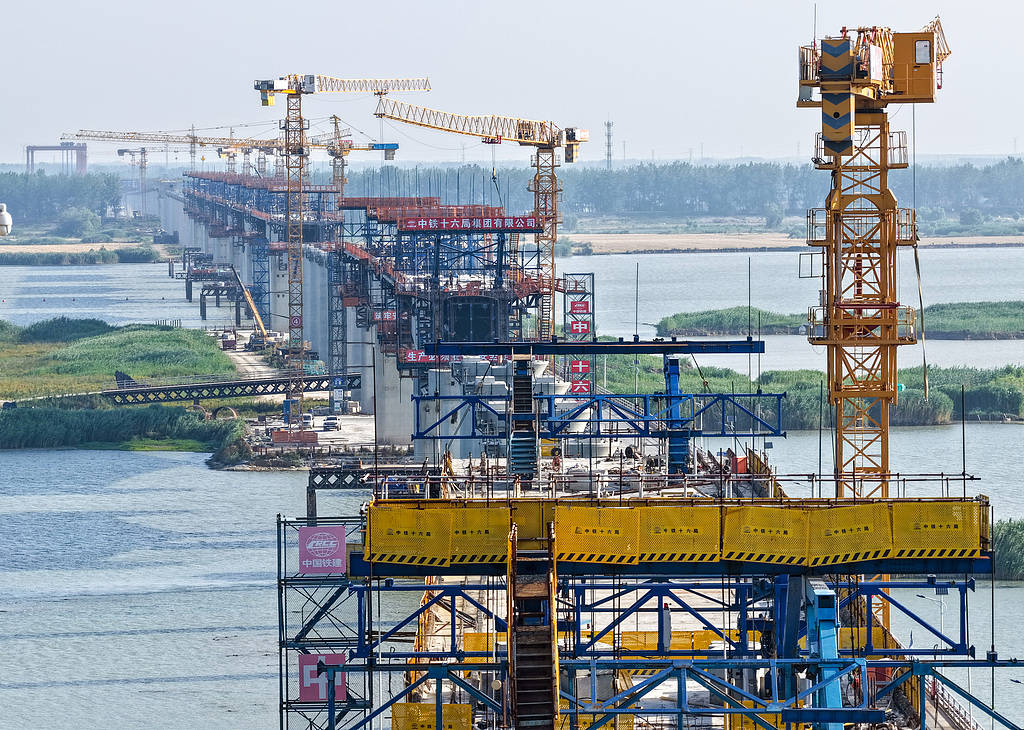
二季度GDP增长5%以上基本无虞,下半年或有新一轮增量政策出台
Sou Hu Cai Jing· 2025-06-17 04:24
分析人士指出,"以旧换新"等政策支持与"618"购物节的提前启动形成合力,共同推动了5月社零的快速增长。国家统计局数据显示,5月限额以上 单位家用电器和音像器材类、通讯器材类、文化办公用品类、家具类商品零售额分别增长53.0%、33.0%、30.5%、25.6%。 东吴证券分析师芦哲表示,社零超预期,一部分原因在于提前启动的"618 购物节"和"国补"叠加,另一部分原因可能在于"抢国补"。"5-6月诸多地 区传出国补暂停的说法,尽管很多省份进行辟谣,但可能还是有不少消费者在此期间抢时间购买以旧换新产品。"芦哲在研报中写道。 记者 王珍 5月中国经济运行总体平稳,虽然投资继续放缓,但消费零售表现亮眼,工业生产也较有韧性。分析人士预计,二季度GDP同比增速有望继续达到 5%以上。 但他们同时指出,国内需求扩大内生动能尚需增强,叠加下半年外贸环境不确定性仍在,稳增长政策进一步发力的概率相对上升。监管层或在三 季度推出新一轮增量政策,以进一步激发市场活力。 5月份一系列数据中,社零表现尤为亮眼。当月社会消费品零售总额同比增长6.4%,比上月加快1.3个百分点,创2024年初以来的最高水平。 国家统计局数据显示,1-5 ...
政策高频|深入推进深圳综合改革试点(申万宏观·赵伟团队)
申万宏源宏观· 2025-06-17 03:23
关注、加星,第一时间接收推送! 文 | 赵伟、贾东旭、侯倩楠 联系人| 侯倩楠 报告正文 2. 政策高频:深入推进深圳综合改革试点 2.1 国务院办公厅:深入推进深圳综合改革试点 6月10日,中办、国办印发《关于深入推进深圳综合改革试点深化改革创新扩大开放的意见》,将从统 筹推进教育科技人才体制机制一体改革、推进金融、技术、数据等赋能实体经济高质量发展、建设更高水平 开放型经济新体制、健全科学化、精细化、法治化治理模式四个方面推进改革。广东将通过支持深圳建设一 批高水平高校、深化数据交易规则以及场景探索、支持前海高标准建设现代服务业集聚区、支持深圳推进放 宽市场准入特别措施等举措,全力以赴支持深圳的改革探索。 2.2 中办、国办:进一步保障和改善民生 6月9日,中共中央办公厅、国务院办公厅印发《关于进一步保障和改善民生,着力解决群众急难愁盼的 意见》。围绕民生保障,《意见》强调增强社会保障公平性,提出有效扩大社会保障覆盖面、加强低收入群 体兜底帮扶等政策举措。围绕公平性,《意见》强调提高基本公共服务均衡性,提出全方位提高基本公共服 务质效、推行由常住地提供基本公共服务等政策举措。围绕民生服务普惠性方面,《意见 ...
以旧换新政策落地见效 银企合作激发消费新活力
Jin Rong Shi Bao· 2025-06-17 03:11
Group 1: Consumer Trends and Policies - The new round of consumer goods replacement policy in 2024 has positively impacted sales, exceeding 1.3 trillion yuan [1] - As of May 31, 2023, the policy has driven sales of 1.1 trillion yuan across five major categories, with approximately 175 million subsidies issued directly to consumers [1] - The automotive sector is a significant contributor to household consumption, with banks focusing on this area to stimulate demand through various financial incentives [2] Group 2: Financial Services Innovations - Commercial banks are leveraging government policies to innovate financial services, particularly in the automotive sector, offering subsidies and credit card installment services [2][3] - Agricultural Bank has introduced age-friendly renovation installment products to meet consumer demand in home decoration [5] - Banks are enhancing service quality by providing "combination" financial products for large purchases, such as home and car loans [4] Group 3: Collaboration and Market Activation - Banks are strengthening partnerships with enterprises to enhance service networks and stimulate market activity, creating a "government subsidy + bank discount + enterprise promotion" model [6] - Various banks are collaborating with major e-commerce platforms to offer discounts and installment plans, increasing consumer engagement [6] - Future efforts will focus on enhancing the synergy between financial services and the replacement policy, providing targeted financial support to related enterprises [7]


全年社会消费品零售总额迈上万亿赛道 成都荣获“美好消费典范城市”|成都发展
Sou Hu Cai Jing· 2025-06-16 23:58
Core Insights - Chengdu has been awarded the title of "Model City for Good Consumption" due to its robust consumer market growth and diverse consumption scenarios [3][4] - The city's retail sales of consumer goods are projected to exceed 1 trillion yuan in 2024, reaching 1,032.71 billion yuan, a 3.3% increase from the previous year [3][4] Group 1: Consumption Growth - Chengdu's retail sales in 2024 are expected to be 1,032.71 billion yuan, with goods retailing at 839.34 billion yuan (up 2.6%) and catering revenue at 193.37 billion yuan (up 6.2%) [3][4] - The city is recognized as the second in the country to surpass 1 trillion yuan in retail sales, highlighting its status as a consumption center in Western China [3][4] Group 2: New Consumption Drivers - The "event economy" is emerging as a new consumption driver, with significant ticket sales from events like the Thomas Cup and the League of Legends Mid-Season Invitational, generating over 500 million yuan in ticket revenue [6][7] - In 2024, the music performance sector is expected to contribute 6.35 billion yuan to overall consumption, showcasing the integration of performances and tourism [8][9] Group 3: Tourism and Cultural Consumption - Chengdu's tourism sector is thriving, with 306 million visitors expected in 2024, leading to a total tourism revenue of 373.27 billion yuan, a 7.9% increase [11] - The city plans to create over ten unique consumption scenarios, focusing on innovative experiences in technology, rural tourism, and cultural heritage [11][14] Group 4: Stimulating Consumption - The "trade-in" initiative is projected to stimulate 40 billion yuan in consumption, with significant growth in automotive and home appliance sectors due to government incentives [17][18] - Chengdu aims to implement a comprehensive plan to boost consumption across various sectors, targeting a 5% increase in retail sales by 2025 [18]

用好以旧换新这把“金钥匙”
Zheng Quan Ri Bao· 2025-06-16 16:48
Group 1 - The core viewpoint emphasizes that the implementation of the old-for-new policy for consumer goods is crucial for boosting consumption and expanding domestic demand, serving as a "golden key" for economic growth and improving people's livelihoods [1][2]. Group 2 - The old-for-new policy has been expanded this year, including subsidies for new purchases of digital products such as smartphones, tablets, and smartwatches, and increasing the categories of appliances eligible for the program from 8 to 12. Additionally, 300 billion yuan has been allocated to support this initiative [2][3]. - Retail sales of household appliances, audio-visual equipment, communication devices, and furniture saw significant year-on-year growth in May, with increases of 53%, 33%, 30.5%, and 25.6% respectively, contributing to a 1.9 percentage point increase in total retail sales of consumer goods [2][3]. Group 3 - The old-for-new policy is driving explosive demand, leading to accelerated growth in related industries, particularly in green, smart, and high-quality products. In May, production of new energy vehicles, tablets, and electric bicycles increased by 31.7%, 30.9%, and 20.5% respectively [3][4]. Group 4 - There is a noticeable shift in consumer focus towards the performance and safety of products, moving from mere availability to quality. The old-for-new initiative aims to provide consumers with superior products, facilitating a quality upgrade in consumption and contributing to high-quality economic development [4].
2025年5月经济数据点评:政策驱动特征明显
CMS· 2025-06-16 15:12
Economic Performance - In May, the industrial added value of large-scale enterprises increased by 5.8% year-on-year, with a month-on-month growth of 0.61%[4] - Fixed asset investment from January to May grew by 3.7% year-on-year, marking the lowest level this year[4] - Retail sales in May reached 4.13 trillion yuan, with a year-on-year growth of 6.4%, exceeding market expectations of 4.85%[5] Industrial Sector Insights - The equipment manufacturing sector saw a 9.0% year-on-year increase in added value, contributing 54.3% to overall industrial growth[4] - High-tech manufacturing growth slowed to 8.6%, down by 1.4 percentage points from April, primarily due to high base effects and reduced policy stimulus[4] - The export delivery value of large-scale industrial enterprises increased by only 0.6% year-on-year, indicating weakened external demand[4] Investment Trends - Equipment and tool investment surged by 17.3% year-on-year, contributing 63.6% to overall investment growth, driven by policies like "old-for-new" and equipment upgrades[4] - Real estate investment in May fell by 10.7%, with residential investment declining by 10.0%, reflecting ongoing pressures in the property sector[5] - Infrastructure investment recorded a growth rate of 10.42%, supported by special bonds and long-term treasury bonds, despite a slight decline from April[5] Consumer Behavior - Essential consumer goods such as grain and oil saw a growth rate of 14.6%, indicating resilience in basic consumption[5] - The "old-for-new" policy significantly boosted retail sales in categories like home appliances and furniture, with growth rates of 53.0% and 25.6% respectively[5] - Automotive retail sales grew by only 1.1%, significantly lower than the overall retail growth, primarily due to the decline in subsidies for new energy vehicles[5] Future Outlook - Industrial growth may slow marginally in June, with high-frequency data indicating a shift towards the off-season for several upstream industries[5] - Manufacturing investment is expected to remain high, driven by policy support for equipment updates and green transformation, but may face constraints from low export demand[5] - Retail sales growth may slightly decline, with ongoing policy support being a key factor in sustaining consumer demand[5]