
财政政策

Search documents
【冠通研究】沥青:高开震荡
Guan Tong Qi Huo· 2025-07-25 11:25
制作日期:2025年7月25日 【策略分析】 【冠通研究】 沥青:高开震荡 区间操作 基差方面: 山东地区主流市场价上涨至3850元/吨,沥青09合约基差下跌至235元/吨,处于偏高水平。 供应端,本周沥青开工率环比回落4.0个百分点至28.8%,较去年同期高了4.0个百分点,沥青开 工率转而回落,处于近年同期偏低水平。据隆众资讯数据,7月份国内沥青预计排产254.2万吨,环 比增加14.4万吨,增幅为6.0%,同比增加48.5万吨,增幅为23.6%。本周,沥青下游各行业开工率多 数上涨,其中道路沥青开工环比上涨2个百分点至27.0%,只是仍处于近年同期偏低水平,受到资金 和降雨高温制约。本周,华北地区集中交付前期合同,出货量增加较多,全国出货量环比增加8.03% 至26.9万吨,处于中性偏低水平。沥青炼厂库存存货比本周环比转而回落,仍处于近年来同期的最 低位。美国允许雪佛龙恢复在委内瑞拉开采石油,或将增加沥青原料供给。全球贸易战的恐慌情绪 缓解,只是全球贸易战阴云仍未完全散去,近期原油价格震荡,工信部提到新一轮十大重点行业 (包括石化、建材等)稳增长工作方案近期将陆续发布,摸底石化、化工老装置清单,淘汰20 ...
央行开展4000亿元MLF操作 连续5个月加量续做
Zheng Quan Ri Bao· 2025-07-24 16:07
Group 1 - The People's Bank of China (PBOC) announced a 400 billion MLF operation to maintain liquidity in the banking system, resulting in a net injection of 100 billion after 300 billion MLF maturity in July [1] - In July, the PBOC also conducted a 14 trillion reverse repurchase operation, achieving a net injection of 2 trillion after offsetting 12 trillion maturity, leading to a total net liquidity injection of 3 trillion for the month [1] - The continuous injection of medium-term liquidity reflects the coordination between monetary and fiscal policies, supporting credit expansion to meet financing needs of enterprises and households [2] Group 2 - Despite a low probability of interest rate cuts in the short term, monetary policy is expected to focus on expanding domestic demand and stabilizing growth in the second half of the year [3] - The PBOC is likely to maintain the momentum of MLF operations and reverse repos to ensure stable liquidity levels, supporting government bond issuance and enhancing banks' lending capabilities [3] - There is a possibility of resuming government bond purchases through open market operations to inject long-term liquidity into the banking system, countering external economic fluctuations [3]
每日投行/机构观点梳理(2025-07-23)
Jin Shi Shu Ju· 2025-07-23 14:53
Group 1 - Citigroup's outlook suggests that if growth remains resilient and prices improve, the attractiveness of Chinese assets will increase [1] - Deutsche Bank indicates that the burden of tariffs is primarily borne by Americans, leading to downward pressure on the dollar [2] - Dutch International highlights concerns over the UK's fiscal situation, which has contributed to the depreciation of the pound [3] Group 2 - Pantheon Macroeconomics notes that the deterioration of UK public finance data increases the likelihood of tax measures in the upcoming autumn budget [4] - Capital Economics argues that Trump's tariffs are unlikely to significantly revive U.S. manufacturing, as competition from low-wage countries remains a challenge [5] - Saxo Bank views the recent U.S.-Japan trade agreement as a political show rather than a substantial economic catalyst [6] Group 3 - Citic Construction states that the controllable nuclear fusion industry is entering a fast development phase, positively impacting the supply chain [7] - Citic Construction estimates that the average annual demand for coal-fired power generation capacity during the 14th Five-Year Plan period will be 60-80 GW, significantly higher than current market expectations [8] - Citic Securities continues to recommend leading companies in the thermal coal sector, anticipating a new round of opportunities due to recovering coal prices [9] Group 4 - Citic Securities predicts a 25-30% increase in cement demand in Tibet by 2026, driven by ongoing infrastructure development [10] - Citic Securities expects the banking sector to maintain an upward trend in Q3 2025, supported by favorable market conditions [11] - Huatai Securities reports that the domestic "anti-involution" measures are creating opportunities in the metals sector, with price recoveries in polysilicon and other materials [12]
关税降至15% 美日贸易协议达成
Bei Jing Shang Bao· 2025-07-23 14:45
Group 1: Trade Agreement Overview - The United States and Japan reached a trade agreement before August 1, significantly reducing U.S. tariffs on Japanese automobiles and industrial goods from 25% to 15% in exchange for Japan's commitment to invest $550 billion in the U.S. and open its markets for automobiles, rice, and other products [2][3] - The agreement is seen as a short-term benefit for Japan, as it avoids higher tariffs that could severely impact its automotive industry, which is a key sector for the Japanese economy [3][4] Group 2: Economic Impact - Following the announcement of the trade agreement, Japan's stock market surged, with the Nikkei 225 index rising by 3.51% and the TOPIX index increasing by 3.18%, particularly benefiting the automotive sector [5] - Japanese government bond yields rose across the board, reflecting concerns over Japan's fiscal outlook and the potential for increased government spending following the recent elections [6][7] Group 3: Political Context - The political landscape in Japan remains uncertain, with Prime Minister Shigeru Ishiba facing pressure to resign after the ruling coalition lost its majority in the recent elections, which could lead to increased market volatility [6][8] - Analysts suggest that the election results may have significant implications for Japan's macroeconomic policies, including fiscal strategy and the direction of the Bank of Japan's monetary policy [9]


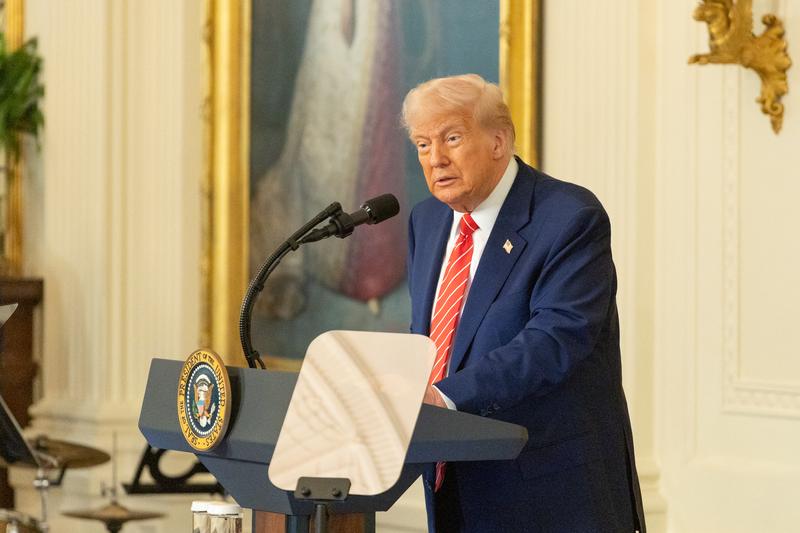
特朗普称日美达成贸易协定!日股汽车板块集体飙升,日债跌跌不休
Di Yi Cai Jing· 2025-07-23 03:13
Group 1: Trade Agreements and Economic Impact - The US and Japan have reached a trade agreement, reducing the reciprocal tariff rate from 25% to 15%, with Japan committing to invest $550 billion and open its agricultural market [1] - Following the announcement, Japan's Nikkei 225 and TOPIX indices rose approximately 2.7%, reaching their highest levels since July 2024, with significant gains in the automotive sector [3] - The Philippines also reached a trade agreement with the US, with tariffs set at 19%, lower than the previously threatened 20% [1] Group 2: Political Developments in Japan - Japanese Prime Minister Shigeru Ishiba is expected to announce his resignation by the end of August, following the ruling coalition's loss of majority seats in the recent Senate elections [1][5] - The political uncertainty in Japan may lead to increased volatility in the market, affecting investor confidence and complicating the policy environment [5] - The election results could influence Japan's fiscal policy direction, with opposition parties advocating for tax cuts and the ruling coalition favoring fiscal discipline [5] Group 3: Bond Market Reactions - Japanese government bond yields have risen across the board, with the 2-year yield increasing by 5 basis points to 0.8%, and the 10-year yield rising by 8 basis points to 1.58% [4] - Concerns over fiscal sustainability are driving the bond market, with predictions of further yield increases if populist parties push for tax reductions [6] Group 4: Broader Market Trends in Asia - Other Asian markets also experienced gains, with South Korea's KOSPI index rising 0.62% and significant increases in automotive stocks [7] - Vietnam's stock market has shown strong performance, with a 19% increase this year, driven by optimism from recent trade agreements and significant economic reforms [8]
美国贸易谈判进展跟踪【宏观视界第17期】
一瑜中的· 2025-07-22 13:44
Core Viewpoint - The article discusses the current macroeconomic environment and its implications for investment strategies, emphasizing the importance of understanding both domestic and international factors affecting market dynamics [3][4]. Group 1: Domestic Fundamentals - The report highlights the resilience of the domestic economy, noting that key indicators such as industrial profits and consumer spending remain robust despite external uncertainties [3][4]. - It points out the dual mission of consumption in driving economic growth while also addressing structural challenges within the economy [3][4]. Group 2: Financial Insights - The analysis indicates a trend of increasing financial support from the government to stabilize market expectations, particularly in the real estate sector [4]. - It discusses the implications of monetary policy adjustments and the need for careful monitoring of financial indicators to gauge future economic performance [3][4]. Group 3: Policy Tracking - The article reviews recent policy measures aimed at fostering economic growth and stability, emphasizing the ongoing commitment to reform and opening up [4]. - It notes the significance of fiscal policies in supporting key sectors and the potential for new policies to emerge in response to evolving economic conditions [4]. Group 4: International Context - The report examines the impact of global economic trends, including U.S. monetary policy and trade dynamics, on the domestic market [3][4]. - It highlights the importance of understanding international economic signals to make informed investment decisions [3][4].

瑞达期货集运指数(欧线)期货日报-20250722
Rui Da Qi Huo· 2025-07-22 09:50
| | 集运指数(欧线)期货日报 | | | 2025/7/22 | | | --- | --- | --- | --- | --- | --- | | 项目类别 数据指标 | 最新 环比 | 数据指标 | 最新 | 环比 | | | EC主力收盘价 | 2249.700 -50.6↓ EC次主力收盘价 | | 1548 | | -100.50↓ | | 期货盘面 EC2508-EC2510价差 | 701.70 +2.50↑ EC2508-EC2512价差 | | 541.00 | | -8.70↓ | | EC合约基差 | 150.80 +42.20↑ | | | | | | 期货持仓头寸(手) EC主力持仓量 | 12393 -1644↓ | | | | | | SCFIS(欧线)(周) | 2400.50 -21.44↓ SCFIS(美西线)(周) | | 1,301.81 | | 35.22↑ | | SCFI(综合指数)(周) | 1646.90 -86.39↓ 集装箱船运力(万标准箱) | | 1,227.97 | | 0.07↑ | | 现货价格 CCFI(综合指数)(周) | 1303.54 ...
瑞达期货铝类产业日报-20250722
Rui Da Qi Huo· 2025-07-22 09:27
Report Summary 1. Investment Rating No investment rating for the industry is provided in the report. 2. Core Viewpoints - The alumina market is expected to be in a stage of slightly increasing supply and stable demand. The electrolytic aluminum market may face stable supply and temporarily weak demand, with the influence of the consumption off - season intensifying. The casting aluminum alloy market is likely to be in a situation of weak supply and demand, with industrial inventory gradually accumulating [2]. - For all three markets (alumina, electrolytic aluminum, and casting aluminum alloy), the technical analysis shows that the 60 - minute MACD has double lines above the 0 - axis with converging red columns. The recommended trading strategy is to trade with a light position in a volatile manner, while paying attention to controlling the rhythm and trading risks [2]. 3. Summary by Directory 3.1 Futures Market - **Prices and Spreads**: The closing price of the Shanghai Aluminum main contract was 20,900 yuan/ton, up 60 yuan; the closing price of the alumina futures main contract was 3,513 yuan/ton, up 127 yuan. The LME electrolytic aluminum three - month quotation was 2,641 US dollars/ton, up 3 US dollars. The spreads of some contracts changed, such as the spread of the Shanghai Aluminum current - next month contract increasing by 10 yuan to 65 yuan, while the alumina current - next month contract spread decreased by 24 yuan to 0 yuan [2]. - **Positions and Inventories**: The position of the Shanghai Aluminum main contract increased by 13,990 hands to 330,897 hands, while the alumina main contract position decreased by 9,904 hands to 211,644 hands. LME aluminum inventories increased by 3,725 tons to 434,425 tons, and Shanghai Aluminum's SHFE inventory increased by 5,625 tons to 108,822 tons [2]. 3.2 Spot Market - **Prices**: The Shanghai Non - ferrous Network A00 aluminum price was 20,940 yuan/ton, up 50 yuan; the alumina spot price in Shanghai Non - ferrous was 3,210 yuan/ton, up 50 yuan. The average price of ADC12 aluminum alloy ingots nationwide was 20,250 yuan/ton, up 50 yuan [2]. - **Basis**: The basis of casting aluminum alloy decreased by 740 yuan to - 30 yuan, and the basis of electrolytic aluminum decreased by 280 yuan to 100 yuan. The basis of alumina decreased by 203 yuan to - 176 yuan [2]. 3.3 Upstream Situation - **Production and Utilization**: Alumina production was 774.93 million tons per month, with a national alumina start - up rate of 79.61% and a capacity utilization rate of 80.93% (down 1.17 percentage points) [2]. - **Supply and Demand**: The demand for alumina in the electrolytic aluminum part decreased by 23.83 million tons to 696.19 million tons per month, and the alumina supply - demand balance increased by 52.40 million tons to 27.14 million tons per month [2]. - **Trade**: China's imports of aluminum scrap and waste decreased by 4,084.65 tons to 155,616.27 tons per month, and exports decreased by 8.11 tons to 64.33 tons per month. Alumina exports decreased by 4 million tons to 17 million tons per month, and imports increased by 3.38 million tons to 10.13 million tons per month [2]. 3.4 Industry Situation - **Production and Capacity**: The total production capacity of electrolytic aluminum increased by 0.50 million tons to 4,520.70 million tons per month, the production of aluminum products increased by 11.17 million tons to 587.37 million tons per month, and the production of recycled aluminum alloy ingots increased by 0.29 million tons to 61.89 million tons per month [2]. - **Trade**: The import of primary aluminum decreased by 30,781 tons to 192,314.50 tons per month, and the export decreased by 12,523.35 tons to 19,570.72 tons per month. The export of unwrought aluminum and aluminum products decreased by 6 million tons to 49 million tons per month, and the export of aluminum alloy increased by 0.16 million tons to 2.58 million tons per month [2]. 3.5 Downstream and Application - **Production**: The production of aluminum alloy increased by 2.40 million tons to 166.90 million tons per month, and the production of automobiles increased by 16.66 million vehicles to 280.86 million vehicles per month. The national housing climate index decreased by 0.11 to 93.60 [2]. 3.6 Options Situation - **Volatility and Ratio**: The 20 - day historical volatility of Shanghai Aluminum decreased by 0.08 percentage points to 10.04%, the 40 - day historical volatility increased by 0.01 percentage points to 10.10%. The implied volatility of the Shanghai Aluminum main contract at - the - money increased by 0.0233 percentage points to 11.38%, and the put - call ratio increased by 0.0486 to 1.13 [2]. 3.7 Industry News - Fiscal policy in the second half of 2025 is expected to continue to support consumption and investment, and market institutions expect a further decline in LPR [2]. - Fitch downgraded the outlook of 25% of US industries in 2025 to "deteriorated" due to increased uncertainty, slow economic growth, and expected long - term high interest rates [2]. 3.8 Market Views and Suggestions - **Alumina**: The supply is expected to increase slightly, and the demand is stable. It is recommended to trade with a light position in a volatile manner [2]. - **Electrolytic Aluminum**: The supply is stable, and the demand is temporarily weak. It is recommended to trade with a light position in a slightly stronger volatile manner [2]. - **Casting Aluminum Alloy**: The supply and demand are weak. It is recommended to trade with a light position in a slightly stronger volatile manner [2].

沪铜产业日报-20250722
Rui Da Qi Huo· 2025-07-22 09:21
Report Industry Investment Rating - Not provided Core View of the Report - The main contract of Shanghai copper fluctuates strongly, with increasing positions, spot premium, and strengthening basis. The fundamentals show that the TC spot index of copper concentrate has slightly rebounded but still operates in the negative range, and port inventories have slightly increased. Recently, the decline in copper prices has dragged down the quotation of copper ore slightly. On the supply side, due to the relatively abundant raw materials recently and the good price of by - product sulfuric acid from smelters, smelters' production willingness remains relatively positive, and the domestic supply volume may increase steadily and slightly. On the demand side, affected by the seasonal consumption off - season, the start - up and orders of downstream copper processing enterprises have declined. Coupled with the price - holding behavior of holders, downstream purchasing attitudes are cautious, mainly for just - in - time replenishment, so the trading sentiment in the spot market is relatively light. In terms of inventory, domestic social inventories have slightly accumulated but still operate at a medium - low level. Overall, the fundamentals of Shanghai copper may be in a situation of slightly increasing supply and temporarily weak demand, but due to the increasing macro - policy benefits, the industry expectations are gradually being repaired. In the options market, the call - put ratio of at - the - money option positions is 1.53, with a month - on - month decrease of 0.1204, indicating a bullish sentiment in the options market, and the implied volatility has slightly increased. Technically, for the 60 - minute MACD, the double lines are above the 0 - axis, and the red bars are converging. The operation suggestion is to conduct light - position oscillating trading and pay attention to controlling the rhythm and trading risks [2]. Summary by Relevant Catalogs Futures Market - The closing price of the main futures contract of Shanghai copper is 79,740 yuan/ton, up 40 yuan; the price of LME 3 - month copper is 9,849 dollars/ton, down 11 dollars. The inter - month spread of the main contract is - 30 yuan/ton, down 30 yuan; the position of the main contract of Shanghai copper is 166,726 lots, up 29,109 lots. The position of the top 20 futures holders of Shanghai copper is 1,583 lots, up 2,935 lots. LME copper inventory is 122,075 tons, down 100 tons; Shanghai Futures Exchange inventory of cathode copper is 84,556 tons, up 3,094 tons; LME copper cancelled warrants are 12,575 tons, down 1,500 tons; Shanghai Futures Exchange warehouse receipts of cathode copper are 25,507 tons, down 2,856 tons [2]. Spot Market - The price of SMM 1 copper spot is 79,755 yuan/ton, up 200 yuan; the price of Yangtze River Non - ferrous Market 1 copper spot is 79,695 yuan/ton, up 55 yuan. The CIF (bill of lading) price of Shanghai electrolytic copper is 65 dollars/ton, unchanged; the average premium of Yangshan copper is 48.5 dollars/ton, unchanged. The basis of the CU main contract is 15 yuan/ton, up 160 yuan; the LME copper premium (0 - 3) is - 66.96 dollars/ton, down 13.2 dollars [2]. Upstream Situation - The import volume of copper ore and concentrates is 234.97 million tons, down 4.58 million tons. The TC of domestic copper smelters is - 43.45 dollars/kiloton, up 0.34 dollars. The price of copper concentrate in Jiangxi is 70,030 yuan/metal ton, up 70 yuan; the price of copper concentrate in Yunnan is 70,730 yuan/metal ton, up 70 yuan. The processing fee of blister copper in the south is 800 yuan/ton, unchanged; the processing fee of blister copper in the north is 750 yuan/ton, unchanged [2]. Industry Situation - The output of refined copper is 130.2 million tons, up 4.8 million tons. The import volume of unwrought copper and copper products is 460,000 tons, up 30,000 tons. The social inventory of copper is 41.82 million tons, up 0.43 million tons. The price of 1 bright copper wire scrap in Shanghai is 55,690 yuan/ton, up 600 yuan; the price of 2 copper scrap (94 - 96%) in Shanghai is 68,100 yuan/ton, up 800 yuan. The ex - factory price of 98% sulfuric acid of Jiangxi Copper is 640 yuan/ton, unchanged [2]. Downstream and Application - The output of copper products is 221.45 million tons, up 11.85 million tons. The cumulative completed investment in power grid infrastructure is 203.986 billion yuan, up 63.169 billion yuan. The cumulative completed investment in real estate development is 4,665.756 billion yuan, up 1,042.372 billion yuan. The monthly output of integrated circuits is 4,505,785,400 pieces, up 270,785,400 pieces [2]. Option Situation - The 20 - day historical volatility of Shanghai copper is 11.57%, down 0.08%; the 40 - day historical volatility of Shanghai copper is 10.02%, down 0.10%. The implied volatility of at - the - money options in the current month is 12.4%, up 0.0291; the call - put ratio of at - the - money options is 1.53, down 0.1204 [2]. Industry News - In the first half of 2025, the national economy generally operated steadily and improved. The more proactive fiscal policy has achieved remarkable results. In the second half of the year, to promote consumption and investment, the fiscal policy will continue to act proactively. The LPR in China remained unchanged in July for the second consecutive month, with the 1 - year variety at 3.0% and the over - 5 - year variety at 3.5%. Market institutions generally expect that there is room for further decline in LPR in the second half of the year. International rating agency Fitch said that policy risks cast a shadow over the US credit outlook. Fitch downgraded the outlook of 25% of US industries in 2025 to "deteriorating" due to increased uncertainty, slow economic growth, and the expectation of long - term high interest rates [2].
野村:日本参院选举后美/日走弱概率上升
news flash· 2025-07-22 01:49
Core Viewpoint - The likelihood of a weakening USD/JPY exchange rate is increasing following the Japanese Senate elections, influenced by various factors [1] Group 1: Economic Policies - The Japanese government may adopt more expansionary fiscal policies, with funding expected to come from the tax surplus of the 2024 fiscal year rather than new bond issuance, which should help alleviate downward pressure on the yen [1] - Market expectations for Bank of Japan interest rate hikes have been lowered to a cumulative increase of 16 basis points by the end of 2025, indicating limited further downside for the yen in the context of a dovish central bank stance [1] Group 2: Market Positioning - Nomura has re-established short positions on USD/JPY, targeting a decline to 142.00 by the end of October [1] - The current USD/JPY exchange rate is stable around 147.60 [1]