
冬储行情

Search documents
纯碱厂家库存高位上升 预计节前盘面仍震荡对待
Jin Tou Wang· 2026-02-04 06:02
Group 1 - The domestic futures market for soda ash is showing a strong upward trend, with the main contract opening at 1208.00 CNY/ton and reaching a high of 1234.00 CNY, reflecting a 2.08% increase [1] - Soda ash production has increased to 111,400 tons per day, with an operating rate of 83.8%. However, demand from glass manufacturers is stabilizing, and inventory levels are rising [2] - The overall market sentiment is cautious due to oversupply pressures, with a recommendation for a short-selling strategy in the medium to long term, while short-term price support is expected due to winter storage demand [2][3] Group 2 - The float glass industry is experiencing a slight increase in operating rates, but demand remains weak, leading to stable soda ash prices. New orders are limited, and manufacturers are maintaining low inventory levels [2] - Southern soda ash producers are planning maintenance, which may lead to a decrease in operating rates. The overall supply is under pressure, and caution is advised in pursuing long positions [3]
螺纹日报:止跌企稳-20260121
Guan Tong Qi Huo· 2026-01-21 12:49
Group 1: Investment Rating - No investment rating information is provided in the report. Group 2: Core View - The current demand for rebar is seasonally weak. The data released last week showed an uptick, indicating that the winter storage demand is starting. With about one month until the Spring Festival, there are expectations for the winter storage market. The output has slightly declined and is at a relatively low level compared to recent years. The anti - involution policy is expected to shrink production capacity, providing support at the bottom. The inventory has slightly decreased and is at a relatively low level with little pressure. The cost support has shifted downwards as iron ore and coking coal prices have weakened. The real - estate demand continues to decline, limiting the upside potential. After the recent decline, the market has digested the weak real - estate data, and the price is near the previous integer - level support. It is recommended to take a cautiously bullish approach at this level [4]. Group 3: Market行情 Review - Futures price: The rebar main contract on Wednesday had an increase of 1,023 lots in open interest, and the trading volume decreased compared to the previous trading day, with 633,661 lots. It stopped falling and stabilized, breaking below the 5 - day moving average, but was supported by the 10 - day, 30 - day, and 60 - day moving averages. It stabilized near the 3,100 integer level, with a low of 3,104 yuan/ton, a high of 3,122 yuan/ton, and closed at 3,117 yuan/ton, down 1 yuan/ton or 0.35% [1]. - Spot price: The mainstream area's spot price for HRB400E 20mm rebar was 3,270 yuan/ton, down 10 yuan from the previous trading day [1]. - Basis: The futures price was at a discount of 153 yuan/ton to the spot price. The large basis provided some support, and winter storage on the futures market was somewhat cost - effective [1]. Group 4: Fundamental Data - Supply: As of the week of January 15, rebar production decreased by 0.74 tons week - on - week to 190.3 tons, after four consecutive weeks of increase. It was 2.99 tons lower year - on - year in the Gregorian calendar. The blast furnace operating rate of 247 surveyed steel mills was 78.84%, down 0.47 percentage points week - on - week but up 1.66 percentage points year - on - year. The blast furnace iron - making capacity utilization rate was 85.48%, down 0.56 percentage points week - on - week but up 1.20 percentage points year - on - year. The steel mill profitability rate was 39.83%, up 2.17 percentage points week - on - week but down 10.39 percentage points year - on - year. The daily average pig iron output was 228.01 tons, down 1.49 tons week - on - week. This week's output decline and relatively low production compared to recent years provided some support for prices [2]. - Demand: The apparent consumption rebounded, and winter storage may have started. As of the week of January 15, the apparent consumption increased by 15.38 tons week - on - week to 190.34 tons, and was 5.19 tons higher year - on - year. After three consecutive weeks of decline, the apparent consumption rebounded significantly, indicating the possible start of winter storage demand [2]. - Inventory: The inventory decreased slightly, with a decrease in mill inventory and an increase in social inventory. As of the week of January 15, the total inventory decreased by 0.04 tons week - on - week to 438.07 tons. The social inventory was 295.41 tons, increasing by 5.23 tons week - on - week but still at a relatively low level in recent years. The mill inventory was 142.66 tons, down 5.27 tons. The increase in social inventory indicated weak downstream demand, while the decrease in mill inventory indicated some winter storage by traders [3]. - Macroeconomic: The central bank signaled moderate easing, and the Ministry of Finance emphasized that expenditure would only increase. However, due to the drag from real - estate demand, the incremental demand at the macro - level was relatively limited, but the easing cycle provided some support, and the upper limit of demand determined the pressure [3]. Group 5: Driving Factor Analysis - Bullish factors: The inventory was at a three - year low, the supply side was reducing production due to anti - involution, production capacity was strictly controlled, policies supported demand, post - holiday demand was expected to improve marginally, and the macro - economic outlook was optimistic [4]. - Bearish factors: There was an unexpected increase in inventory after the Spring Festival, the inventory reduction speed slowed down, blast furnace restart accelerated, winter storage demand was cautious, real - estate demand continued to decline, exports were restricted, and economic recovery was weak [4].
【黑金重磅】焦煤期权上市首日策略分享
Xin Lang Cai Jing· 2026-01-14 09:47
Group 1 - The core viewpoint of the article is that the upcoming listing of coking coal options on the Dalian Commodity Exchange is influenced by supply and demand dynamics, particularly the high import volume of Mongolian coal and its impact on coking coal prices [1][3] - On the supply side, the average daily import volume of Mongolian coal at the Ganqimaodu port has been high, reaching 1204 trucks per day after the New Year, despite a slight decrease compared to late 2025, indicating a strong supply that may suppress coking coal prices [1] - The latest daily import data has exceeded 1500 trucks, suggesting that the potential high supply of imported Mongolian coal will continue to limit price increases for coking coal [1][3] Group 2 - On the demand side, the current pig iron production may have reached a temporary low, and while production increases are not significant, the winter storage demand for coking coal is expected to provide some support before the Spring Festival [1] - However, indications of a warmer winter this year may limit the space for further winter storage replenishment, making it difficult to create a sustained rally in prices [1] - The recent price of the coking coal 2605 contract peaked at 1246 yuan/ton, showing a slight premium over the cost of Mongolian coal, indicating limited potential for further price breakthroughs in a market with insufficient supply [3]

2026年1月双焦基本面月报-20260108
Hong Ta Qi Huo· 2026-01-08 10:48
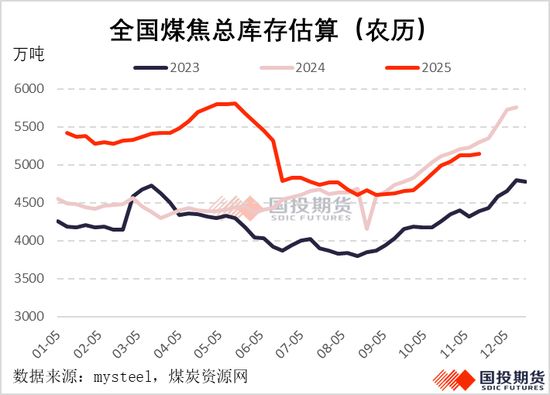
Report Industry Investment Rating - Not provided in the document Core Viewpoint - The coking coal and coke market currently has an oversupply situation. With the continuous low level of hot metal, there is limited room for price increases. It is more likely to operate stably with fluctuations before the Spring Festival [5] Summary by Relevant Catalogs Macro Interpretation - **Domestic Market**: In December, China's manufacturing PMI rose to 50.1%, and non - manufacturing PMI to 50.2%. The recovery was driven by policies, external demand, and seasonal factors. In the "15th Five - Year Plan" start - up year, with economic growth pressure, proactive fiscal policies are expected to be implemented early, and corporate profit recovery will be an important market driver [8] - **International Market**: Overseas economies show a pattern of total expansion and falling interest rates. Major economies have looser monetary policies. The Fed cut the federal funds rate in December. The US, EU, and Japan have increasing fiscal deficits. Although the US economy grew rapidly in Q3 2025, core inflation is falling, providing room for loose policies, but future interest rate paths are uncertain [8] Coal Supply - In 2025, from January to November, China's total raw coal production was 4.402 billion tons, with a year - on - year increase of 1.84%. As of January 5, 2026, the daily output of raw coal and clean coal of 523 sample mines decreased month - on - month. In December, coking coal production declined slightly. In January, coal production will be restricted by various factors, and Mongolian coal imports may fall [10] Coking Coal Import - From January to November 2025, China's total coking coal imports were 104.8917 million tons, a year - on - year decrease of 5.66%. Imports from Mongolia, Australia, Russia, and Canada all showed different trends. Weak demand and a cautious market sentiment restricted port coking coal prices [17] Coking Coal Inventory - As of January 5, 2026, the inventories of 523 clean coal sample mines, port coking coal, and independent coking enterprises increased slightly month - on - month, while the inventory of 247 integrated steel enterprises decreased slightly. In December, the coking coal inventory problem was significant, with upstream accumulation and slow downstream winter storage [26] Coke Supply - From January to November 2025, China's total coke production was 461 million tons, a year - on - year increase of 3.2%. As of January 5, 2026, the daily output of 230 independent coking enterprises decreased slightly, and that of 247 integrated steel plants increased slightly, but the capacity utilization rate decreased for both. In January, coke supply is expected to shrink further [34] Coke Import and Export - From January to November 2025, China's total coke and semi - coke exports were 693,650 tons, a year - on - year decrease of 10.62%. Exports have been at a low level, restricted by coking coal cost fluctuations. In November, exports to Europe increased due to European steelmakers' procurement adjustments [44] Coke Inventory - As of January 5, 2026, the total coke inventory increased slightly month - on - month. The inventories of independent coking enterprises, 247 steel enterprises, and ports all rose. The overall coke inventory is accumulating, and the supply surplus pressure is increasing [47] Iron Element Demand - On January 5, 2026, the profit per ton of blast furnace steel increased, but the daily hot metal output of 247 steel enterprises and the consumption of the five major steel products decreased, and the inventory of the five major steel products decreased slightly. In December, coke demand weakened, and in January, demand may be affected by factors such as the late Spring Festival, environmental protection, and maintenance [55] Iron Element Terminal Demand - From January to November 2025, fixed - asset investment decreased by 2.6% year - on - year. Infrastructure investment decreased by 1.1%, manufacturing investment increased by 1.9%, and real estate development investment decreased by 15.9%. Steel exports increased by 6.66% year - on - year, showing economic structural differentiation [63]
黑色建材日报:市场情绪好转,钢价震荡运行-20260107
Hua Tai Qi Huo· 2026-01-07 02:49
1. Report Industry Investment Rating No relevant content provided. 2. Report's Core View - The market sentiment has improved, and steel prices are fluctuating. Building materials are in a state of low production, consumption, and inventory, with limited price volatility. After New Year's Day, the winter storage market for building materials will begin, and the game between reality and expectations will intensify. Plates are still restricted by high inventory, and the short - term inventory pressure is difficult to resolve [1]. - The market sentiment for iron ore has improved, and prices are slightly fluctuating. The supply - demand contradiction is intensifying, and the overall inventory has increased significantly. The price is at a high - level range in the short term but may face a downward risk once the negotiation is settled [3]. - The molten iron output has slightly increased, and coking coal and coke prices are fluctuating widely. After New Year's Day, the demand for coke is expected to improve, while the supply of coking coal is relatively loose, and the price may be weak in the short term [5][6]. - The pit - mouth coal price is adjusting, and the supply in the production area is recovering. The daily consumption of thermal coal is still not good, and the coal price is oscillating. In the long - term, the supply is in a loose pattern [7]. 3. Summary by Related Catalogs Steel Market Analysis - Futures and spot: The steel futures market showed a trend of first falling and then rising. The national building material prices increased by 10 - 20 yuan, and the national building material trading volume was 96,623 tons [1]. - Supply and demand logic: Building materials have no obvious supply - demand contradictions, maintaining low production, consumption, and inventory. After New Year's Day, the winter storage market will start. Plates are restricted by high inventory, and the short - term inventory pressure is difficult to resolve [1]. Strategy - Unilateral: Fluctuating; Cross - period: None; Cross - variety: None; Futures - spot: None; Options: None [2] Iron Ore Market Analysis - Futures and spot: The iron ore futures price fluctuated upward, and the trading volume increased significantly. The prices of mainstream imported iron ore varieties at Shandong ports rose slightly, with low trading volume and low procurement intention from steel mills [3]. - Supply and demand logic: The supply - demand contradiction is intensifying, and the overall inventory has increased significantly. The market gives a high valuation to the iron ore price, but it may face a downward risk once the negotiation is settled. In the short term, the actual inventory pressure is limited, and the price will maintain a high - level range [3]. Strategy - Unilateral: Fluctuating; Cross - period: None; Cross - variety: None; Futures - spot: None; Options: None [4] Coking Coal and Coke Market Analysis - Futures and spot: The main futures contracts of coking coal and coke fluctuated. The coke market continued to be weak and stable, and the inventory pressure of upstream coke has been alleviated. The coking coal auction prices mostly continued to decline, and the price of imported Mongolian coking coal decreased [5]. - Supply and demand logic: After New Year's Day, the demand for coke is expected to improve. The supply of coking coal is relatively loose, and the price may be weak in the short term. After the winter storage, the price may be further adjusted [6]. Strategy - Coking coal: Fluctuating; Coke: Fluctuating; Cross - period: None; Cross - variety: None; Futures - spot: None; Options: None [6] Thermal Coal Market Analysis - Futures and spot: In the production area, coal mines are resuming production, and the pit - mouth coal price is adjusting. The downstream demand is mainly for rigid needs, and the trading volume at ports is light. The import coal market is rising steadily [7]. - Supply and demand logic: The daily consumption of thermal coal is still not good. After New Year's Day, the supply in the production area is gradually recovering, and the coal price is oscillating. In the long - term, the supply is in a loose pattern [7].
市场谨慎观望,钢价震荡运行
Hua Tai Qi Huo· 2026-01-06 02:43
1. Report Industry Investment Rating - Not provided in the content 2. Core Views - The steel market is in a state of cautious wait - and - see, with steel prices oscillating. Building materials are in a state of low production, consumption, and inventory, while plates are constrained by high inventory. After the New Year's Day, the winter storage market for building materials and potential steel mill restarts for plates should be monitored [1]. - The iron ore market shows a significant decline in global shipments. The supply - demand contradiction is intensifying, and the inventory is increasing. Although the short - term price is in high - level oscillation, it faces downward risk once negotiations are finalized [3]. - The coking coal and coke market has a relatively loose supply - demand situation, with a weakening oscillation trend. After the New Year's Day, the demand for coke may improve with steel mill restarts, while coking coal prices may remain weak before winter storage and could be further adjusted after [5][6]. - The thermal coal market sees a recovery in production area supply, and the coal price is stabilizing in the short term. In the long - term, the supply is still abundant, and non - power coal consumption and restocking should be watched [8]. 3. Summary by Related Catalogs Steel Market Analysis - Futures and spot: The steel futures main contract declined slightly yesterday, and the spot prices generally fell, with rebar down 10 - 20 yuan/ton and hot - rolled coil down 20 - 30 yuan/ton [1]. - Supply and demand logic: Building materials have a stable supply - demand situation with limited price fluctuations. After New Year's Day, the winter storage market will intensify the game between reality and expectation. Plates are restricted by high inventory, and the short - term inventory pressure is difficult to resolve due to potential mill restarts [1]. Strategy - Unilateral: Oscillation; Cross - period: None; Cross - variety: None; Futures - spot: None; Options: None [2] Iron Ore Market Analysis - Futures and spot: The iron ore futures price oscillated. The prices of mainstream imported iron ore varieties increased slightly, but steel mills' procurement intention was low. Global iron ore shipments dropped significantly, with a 12.6% MoM decrease to 3214 million tons, while the 45 - port arrivals increased by 6% MoM to 2756 million tons [3]. - Supply and demand logic: The supply - demand contradiction is intensifying, and inventory is increasing. The market gives a high valuation to iron ore prices, but there is a downward risk once negotiations are settled. In the short term, the price will remain high - level oscillating [3]. Strategy - Unilateral: Oscillation; Cross - period: None; Cross - variety: None; Futures - spot: None; Options: None [4] Coking Coal and Coke Market Analysis - Futures and spot: The main coking coal and coke futures contracts declined yesterday. The coking profit improved, and the demand from steel mills' blast furnaces increased slightly after New Year's Day. Coal mine production resumed, and the Mongolian coal customs clearance volume recovered rapidly, with the Mongolian 5 raw coal price at around 960 - 980 yuan/ton [5][6]. - Supply and demand logic: The demand for coke may improve after New Year's Day, and it will remain oscillating in the short term. Coking coal supply and demand are relatively loose, and its price will remain weakly oscillating before winter storage and could be adjusted further after [6]. Strategy - Coking coal: Oscillation; Coke: Oscillation; Cross - period: None; Cross - variety: None; Futures - spot: None; Options: None [7] Thermal Coal Market Analysis - Futures and spot: In the production areas, coal prices fluctuated, and the group's purchased - in price and port price stabilized and rebounded. In the ports, the inventory decreased, driving a short - term price increase. The import market was inactive, with limited actual transactions [8]. - Supply and demand logic: The daily consumption of thermal coal is still low, and the coal price is oscillating with the recovery of production area supply. In the long - term, the supply is abundant [8]. Strategy - Not provided in the content
热卷日报:震荡整理-20251230
Guan Tong Qi Huo· 2025-12-30 14:06
Report Summary 1. Report Industry Investment Rating No investment rating information is provided in the report. 2. Core View of the Report The hot - rolled coil is currently in a game between cost support and inventory pressure under the pattern of weak supply and demand. Although the output of hot - rolled coil rebounded last week but is at a relatively low level, there is still room for output to rise. The recovery of apparent demand shows the resilience of demand, but the subsequent demand increment is limited. The total inventory continues to be destocked, but the total amount is still at a high level. With the expectation of a relatively loose macro - environment, it is necessary to pay attention to whether the manufacturing PMI can rise above the boom - bust line. The winter storage market in January and the recovery slope of production capacity also need to be monitored. It is expected to maintain a range - bound consolidation, and there are no unilateral driving factors for now [6]. 3. Summary by Relevant Catalogs Market行情回顾 - **Futures Price**: On Tuesday, the open interest of the main hot - rolled coil futures contract increased by 7,022 lots, with a trading volume of 311,439 lots, a decrease compared to the previous trading day. The intraday low was 3,278 yuan, the high was 3,298 yuan, and it closed at 3,282 yuan/ton, down 18 yuan/ton or 0.33% [1]. - **Spot Price**: The price of hot - rolled coil in the mainstream Shanghai area was reported at 3,290 yuan/ton, remaining stable compared to the previous trading day [2]. - **Basis**: The spot - futures basis was 8 yuan, close to par [3]. Fundamental Data - **Supply**: As of December 25, the weekly output of hot - rolled coil increased by 1.63 million tons to 293.54 million tons week - on - week, and decreased by 13.60 million tons year - on - year. The output rebounded after a sharp decline last week, currently near the lowest level of the year and at a near - four - year low, which enhances price support. The production cut was mainly due to profit contraction, more steel mill maintenance, some steel mills switching to rebar production, and the seasonal off - season [4]. - **Demand**: As of December 25, the weekly apparent consumption increased by 8.76 million tons to 307.04 million tons week - on - week, and decreased by 2.29 million tons year - on - year. The apparent demand recovered this week, and the export rush market emerged, but the winter storage market in January still needs attention [4]. - **Inventory**: As of December 25, the total inventory decreased by 13.50 million tons week - on - week to 377.22 million tons (social inventory decreased by 10.6 million tons, steel mill inventory decreased by 2.9 million tons). The total inventory continued to be destocked, and the destocking accelerated, indicating the demand's resilience in late December, probably due to enterprises' export rush. However, the total inventory is at a near - four - year high, and the subsequent destocking speed needs attention [4]. - **Policy**: The new regulations on the management of steel export licenses have been introduced. In the short term, it will cause export fluctuations, increase supply, and put pressure on prices. In the long term, it will promote industrial upgrading, structural optimization, and competitiveness improvement. The Central Economic Work Conference in December proposed a proactive fiscal policy and a moderately loose monetary policy, which is positive for prices and industry profitability. Efforts will be made to stabilize the real estate market and expand domestic demand [4][5]. - **External Macro**: In the US, the core CPI in November increased by 2.6% year - on - year, the slowest growth rate since early 2021, lower than the market expectation of 3%. The overall CPI increased by 2.7% year - on - year, lower than the expected 3.1% [5]. Market Driving Factor Analysis - **Bullish Factors**: The supply - side output has decreased significantly, there is an expectation of the start of winter storage demand, an export rush market, policy support ("14th Five - Year Plan", infrastructure investment), and the strength of iron ore as a furnace charge [6]. - **Bearish Factors**: The resumption of steel mill production in January may exceed expectations, the demand will seasonally weaken, manufacturing orders are insufficient, and inventory accumulation will suppress prices [6].
螺纹日报:震荡整理-20251230
Guan Tong Qi Huo· 2025-12-30 12:06
Report Summary 1) Report Industry Investment Rating No information provided. 2) Core View of the Report The current market is in a volatile situation supported by low supply and in the off - season of demand. The supply is at a relatively low level but has started to rise in the past two weeks, and steel mills have the expectation of resuming production in January, which restricts the upside space of prices to some extent. The demand shows off - season characteristics with a decline. Observe whether the winter storage market can start in January. The inventory destocking has slowed down, but the overall inventory level is acceptable. The macro - expectation is loose, but the real - estate regulation restricts the long - term demand space. The recent market has shown continuous volatility after a low - level rebound, indicating that the current supply - demand contradiction is not prominent. It is expected to maintain a volatile consolidation, and there is currently a lack of unilateral driving factors [5]. 3) Summary by Relevant Catalogs Market行情回顾 - Futures price: The position of the main rebar contract increased by 30,014 lots on Tuesday. The trading volume was slightly lower than the previous trading day, with 635,547 lots. It fluctuated within the day, with a minimum of 3128 yuan/ton, a maximum of 3148 yuan/ton, and closed at 3134 yuan/ton, down 3 yuan/ton or 0.10% [1]. - Spot price: The mainstream spot price of HRB400E 20mm rebar was 3300 yuan/ton, unchanged from the previous trading day [1]. - Basis: The futures were at a discount of 166 yuan/ton to the spot, which provided some support for the futures price [1]. Fundamental Data - Supply - side: As of the week ending December 25, rebar production increased by 27,100 tons week - on - week to 1.8439 million tons, rising for two consecutive weeks. It was 319,100 tons lower than the same period in the Gregorian calendar. The blast furnace operating rate of 247 steel mills was 78.32%, down 0.15 percentage points week - on - week and 0.39% lower than last year. The steel mill profitability rate was 37.23%, unchanged from last week. The daily average hot metal output increased by 300 tons week - on - week to 2.2658 million tons, 12,900 tons lower than last year. The production continued to rise slightly this week, and there was an expectation of steel mill复产, which would weaken the price support to some extent [2]. - Demand - side: The terminal demand was weak, with the average daily trading volume of building materials in the country maintaining at 90,000 - 100,000 tons, at a low level in the same period of the past five years. As of the week ending December 25, the apparent consumption decreased by 59,600 tons week - on - week to 2.0268 million tons, 169,000 tons lower than the same period in the Gregorian calendar. There were regional differences in demand, with construction in the north stagnant due to cold weather and stock projects in the south rushing to work. The apparent demand declined due to the off - season, and attention should be paid to whether the winter storage could boost demand in January [2]. - Inventory: As of the week ending December 25, the total inventory decreased by 182,900 tons week - on - week to 4.3425 million tons, de - stocking for 8 consecutive weeks but still 345,100 tons higher than the same period. The social inventory was 2.9419 million tons, down 188,100 tons week - on - week with a slowdown in de - stocking, and the steel mill inventory was 1.4006 million tons, up slightly by 5200 tons. The de - stocking of social inventory showed the current demand resilience, and the overall inventory pressure was still controllable [3]. - Macro - aspect: The Central Economic Conference proposed to use policies such as reserve requirement ratio cuts and interest rate cuts flexibly. The Fed cut interest rates by 25 basis points in December as expected. The macro - expectation was moderately positive. The 15th Five - Year Plan pointed out a transformation path for the steel industry, with limited incremental demand but support from the loose cycle [3]. - Cost - side: The futures of iron ore and coking coal stabilized, strengthening the cost support [4]. Driving Factor Analysis - Bullish factors: Low supply, continuous inventory de - stocking, loose policy expectations, large discount on the futures market, and strong iron ore [5]. - Bearish factors: Unexpectedly high resumption of steel mill production in January, seasonal weakening of terminal demand, more construction site closures in the north, cautious willingness of traders for winter storage, weak real - estate data, and weakening of coking coal [5].
热卷日报:震荡整理-20251229
Guan Tong Qi Huo· 2025-12-29 11:12
Report Industry Investment Rating - Not provided Core Viewpoints of the Report - The hot-rolled coil is currently in a situation where cost support and inventory pressure are in a game under the pattern of weak supply and demand. It is expected to maintain a sideways consolidation, and there are no unilateral driving factors for now. Attention should be paid to the winter storage market in January and the recovery slope of production capacity [5]. Summary by Relevant Catalogs Market行情回顾 - Futures price: The main contract of hot-rolled coil futures increased its open interest by 43,907 lots on Monday, with a trading volume of 511,982 lots. The intraday low was 3,280 yuan, the high was 3,308 yuan, and it closed at 3,287 yuan/ton, up 18 yuan/ton or 0.55% [1]. - Spot price: The price of hot-rolled coil in Shanghai, a major region, was reported at 3,290 yuan/ton, up 20 yuan from the previous trading day [1]. - Basis: The basis between futures and spot was 3 yuan, approaching flat water [2]. Fundamental Data - Supply: As of December 25, the weekly output of hot-rolled coil increased by 16,300 tons to 2.9354 million tons week-on-week, and decreased by 136,000 tons year-on-year. This week's output rebounded after a sharp decline last week, currently near the lowest level of the year and at a near 4-year low, enhancing price support. The reduction in production was mainly due to profit contraction, more steel mill maintenance, some steel mills switching to rebar production, and the seasonal off-season [3]. - Demand: As of December 25, the weekly apparent consumption increased by 87,600 tons to 3.0704 million tons week-on-week, and decreased by 22,900 tons year-on-year. This week's apparent consumption rebounded, and the export rush market emerged, but the winter storage market in January still needs to be monitored [3]. - Inventory: As of December 25, the total inventory decreased by 135,000 tons to 3.7722 million tons week-on-week (social inventory decreased by 106,000 tons, and steel mill inventory decreased by 29,000 tons). The total inventory continued to be destocked, and the destocking accelerated, indicating that demand was resilient in late December, likely due to enterprises rushing to export. However, the total inventory was at a near 4-year high. The subsequent destocking speed needs to be monitored [3]. - Policy: The new regulations on the management of steel export licenses were introduced. In the short term, it will cause export fluctuations, increase supply, and put pressure on prices. In the long term, it will promote industrial upgrading, structural optimization, and competitiveness improvement. The Central Economic Work Conference held in December proposed a proactive fiscal policy and a moderately loose monetary policy, and listed the in-depth rectification of involutionary competition as a key task for 2026, which is beneficial to prices and industry profitability. Efforts will be made to stabilize the real estate market and expand domestic demand [3][4]. - External Macro: In the United States, the core CPI in November increased by 2.6% year-on-year, the slowest growth rate since early 2021, lower than the market expectation of 3%. The overall CPI increased by 2.7% year-on-year, lower than the expected 3.1% [4]. Market Driving Factor Analysis - Bullish factors: Significant decline in supply-side production, expectation of winter storage demand, export rush market, policy support ("14th Five-Year Plan", infrastructure investment), and strong iron ore as a furnace charge [5]. - Bearish factors: Unexpected resumption of steel mill production in January, seasonal weakening of demand, insufficient manufacturing orders, and inventory accumulation suppressing prices [5]. Short-Term View Summary - The hot-rolled coil is currently in a game between cost support and inventory pressure under the pattern of weak supply and demand. Last week's reported output of hot-rolled coil rebounded but was at a relatively low level, and there may still be room for output to rebound in the future. The rebound in apparent consumption shows demand resilience, but the subsequent demand increase is limited. The total inventory continued to be destocked, but the total amount was still at a high level. There is an expectation of a relatively loose macro environment. It is necessary to monitor whether the manufacturing PMI can rise above the boom - bust line. In the future, it is necessary to pay attention to the winter storage market in January and the slope of production capacity recovery. Today's daily line closed with a long upper - shadow阳线, indicating pressure above but also support below. It is expected to mainly maintain a sideways consolidation. There are no unilateral driving factors for now [5].
热卷日报:震荡整理-20251226
Guan Tong Qi Huo· 2025-12-26 09:44
1. Report's Industry Investment Rating No information provided. 2. Core Viewpoints of the Report The hot-rolled coil is currently in a game between cost support and inventory pressure under the pattern of weak supply and demand. The output of hot-rolled coil rebounded this week but is at a relatively low level, and there may still be room for output to rise in the future. The rebound in apparent demand shows the resilience of demand, but the subsequent demand increment is limited. The total inventory continues to decline, but the total amount is still at a high level. With the expectation of macro-loose policy, it is necessary to pay attention to whether the manufacturing PMI can rise above the boom-bust line. In the future, it is necessary to pay attention to the winter storage market in January and the recovery slope of production capacity. The daily K-line shows a lower shadow positive line, and it is expected to fluctuate weakly in the short term [5]. 3. Summary According to Relevant Catalogs Market行情回顾 - Futures price: On Thursday, the position of the main hot-rolled coil futures contract decreased by 6,522 lots, with a trading volume of 490,404 lots, an increase compared with the previous trading day. The intraday low was 3,253 yuan, and the high was 3,288 yuan. It fluctuated within the day and closed at 3,283 yuan/ton, down 2 yuan/ton, a decrease of 0.06% [1]. - Spot price: The price of hot-rolled coil in the mainstream area of Shanghai was reported at 3,270 yuan/ton, a decrease of 10 yuan compared with the previous trading day [1]. - Basis: The basis between futures and spot is -13 yuan, and the basis is close to parity [2]. Fundamental Data - Supply side: As of December 25, the weekly output of hot-rolled coil increased by 16,300 tons to 2.9354 million tons compared with the previous week. It decreased by 136,000 tons year-on-year. This week, the output of hot-rolled coil rebounded after a sharp decline last week. Currently, it is near the lowest level of the year and at a low level in the past four years, which enhances price support. The production reduction is mainly due to profit contraction, more steel mill overhauls, some steel mills switching to rebar production, and the seasonal off-season [3]. - Demand side: As of December 25, the weekly apparent consumption increased by 87,600 tons to 3.0704 million tons compared with the previous week. It decreased by 22,900 tons year-on-year. This week, the apparent demand rebounded, and the export rush market appeared. However, the winter storage market in January still needs to be followed up [3]. - Inventory side: As of December 25, the total inventory decreased by 135,000 tons to 3.7722 million tons compared with the previous week (the social inventory decreased by 106,000 tons, and the steel mill inventory decreased by 29,000 tons). The total inventory continued to decline, and the de - stocking accelerated, indicating that the demand in late December was resilient, which should be due to enterprises rushing to export. However, the total inventory is at a high level in the past four years. In the future, the speed of continued de - stocking of inventory needs to be followed up [3]. - Policy side: The new regulations on the export license management of steel products have been introduced. In the short term, it will lead to fluctuations in exports, an increase in supply, and price pressure. In the long term, it will promote industrial upgrading, structural optimization, and competitiveness improvement. The Central Economic Work Conference held in December proposed a proactive fiscal policy and a moderately loose monetary policy. Rectifying involution - style competition in depth is listed as a key task for 2026, which is beneficial to prices and industry profits. Efforts will be made to stabilize the real estate market and expand domestic demand [3][4]. - External macro: The core CPI in the United States increased by 2.6% year - on - year in November, the slowest growth rate since the beginning of 2021, lower than the market expectation of 3%. The overall CPI increased by 2.7% year - on - year, lower than the expected 3.1% [4]. Market Driving Factor Analysis - Bullish factors: The output on the supply side has decreased significantly. There is an expectation of the start of winter storage demand, an export rush market, policy support ("the 14th Five - Year Plan", infrastructure investment), and the stabilization and strengthening of furnace materials such as iron ore and coking coal have enhanced cost support [5]. - Bearish factors: The resumption of production of steel mills in January exceeds expectations, the demand weakens seasonally, manufacturing orders are insufficient, and inventory accumulation suppresses prices [5].