
美联储降息

Search documents
油市上演反转好戏,地缘+美联储降息,将油价从危局中拉出
Xin Lang Cai Jing· 2025-12-10 23:14
Core Viewpoint - Oil prices experienced a rebound after a period of decline, driven by geopolitical tensions and the Federal Reserve's interest rate decisions, which increased market risk appetite [3][5][22]. Group 1: Oil Price Movements - On Wednesday, oil prices initially fell due to oversupply but rebounded over 2% from daily lows, marking a significant recovery after a nearly $3 drop earlier in the week [3][21]. - The U.S. WTI crude oil futures closed at $58.46 per barrel, up 0.36%, while Brent crude oil futures rose to $62.21 per barrel, up 0.44% [7][24]. Group 2: Supply and Demand Dynamics - The EIA reported a decrease in U.S. commercial crude oil inventories by 1.8 million barrels to 125.7 million barrels, a decline of 0.4%, while refined product inventories saw a significant increase [8][25]. - Global liquid fuel production is projected to increase by 3 million barrels per day by 2025, with the U.S., Brazil, Guyana, and Canada contributing significantly to this growth [9][26]. Group 3: Geopolitical Factors - Russia rejected Ukraine's proposal for an "energy ceasefire," escalating tensions and impacting oil supply dynamics [5][22]. - The ongoing maintenance delays at the CPC terminal in the Black Sea are causing significant export capacity constraints for Kazakhstan, potentially leading to production cuts if storage facilities reach capacity [12][29]. Group 4: Market Outlook - The oil market is currently navigating between oversupply pressures and geopolitical factors, with high volatility expected to continue [6][23]. - Analysts suggest maintaining a strategy of shorting oil prices at high points while monitoring the complex interplay of influencing factors [6][23].


Fed rate cut is 'insurance' buffer against labor market, says economist Claudia Sahm
Youtube· 2025-12-10 19:13
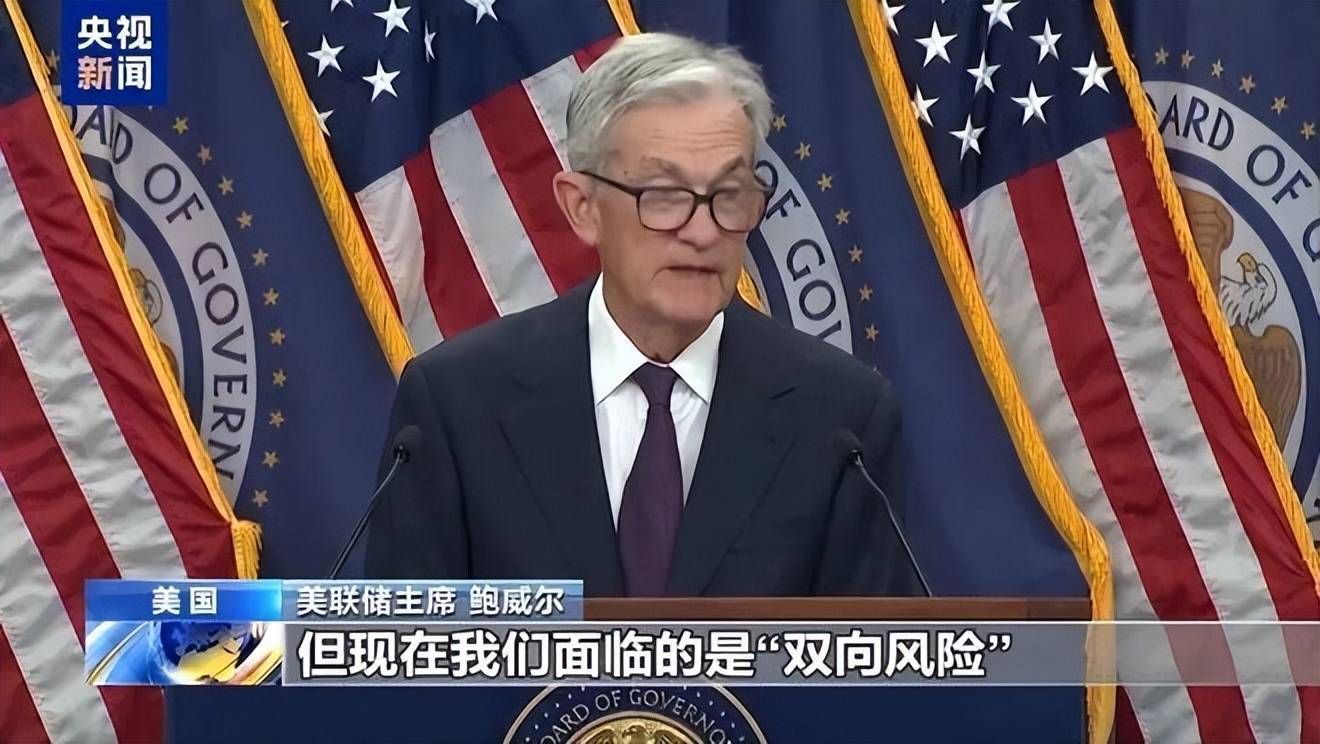
Our next guest says today's cut is an insurance cut against a weakening labor market. Let's bring in Claudia Som, chief economist at New Century Adviserss, creator of the SOM rule. Claudia, it's great to see you.Let me just set this up a little bit because we had Jason Ferman earlier saying we shouldn't cut because of inflation and because of the deficit. Those pressures are still too high. Um, obviously others are are more doubbish.They think that we can and should. Explain where you come down on this. >> ...

长城基金医药投资团队:持续看好AI医疗,创新药领域关注两大方向
Xin Lang Cai Jing· 2025-12-10 09:00
Core Viewpoint - The A-share market is expected to face short-term risks but may enter a preparation window for next year's expectations due to upcoming economic meetings and potential interest rate cuts by the Federal Reserve [2][6]. Group 1: Market Outlook - In November, the market was influenced by U.S. liquidity expectations, with strong performance in dividend and cyclical sectors, while growth stocks lagged [2][6]. - December may present a window for positioning as the Central Economic Work Conference approaches and the Federal Reserve is expected to lower interest rates [2][6]. Group 2: AI Applications - The company maintains a positive outlook on AI applications in the healthcare and consumer sectors, particularly in new technology sub-sectors [3][7]. - After an initial overestimation of AI application expectations, the market has adjusted to more rational forecasts, with significant infrastructure already in place for AI applications [3][7]. - The current low market expectations in the AI application field may lead to valuation recovery opportunities [3][7]. Group 3: Innovative Pharmaceuticals - In the innovative drug sector, two focus areas are identified: deep globalization of already business-developed (BD) companies and the confirmation of pipeline value for non-BD companies [4][9]. - Many innovative drug stocks have absorbed negative sentiment, but December lacks significant data releases or BD catalysts, shifting attention to the clinical data readout rhythm of potential heavy-hitting pipelines [4][9].
日本加息美元降息,两国货币“反向操作”下,你的钱该往哪放?
Sou Hu Cai Jing· 2025-12-10 08:31
Core Viewpoint - The article analyzes the complex economic environment of interest rate changes in the US and Japan, focusing on where Chinese citizens should safely invest their money in 2025 [1]. Group 1: Economic Context - The global financial market is experiencing a rare "policy duel" with Japan ending over a decade of negative interest rates by raising its policy rate by 25 basis points, while the US begins a rate-cutting cycle by lowering the federal funds rate by 25 basis points [1]. - Japan's interest rate hike is a response to long-term negative rates that made the yen the cheapest currency globally, leading to a massive "yen carry trade" estimated between $9.3 trillion to $20 trillion [4]. - The US's rate cut is a "preventive measure" to support the economy amid rising unemployment and a significant drop in job vacancies, despite inflation remaining slightly above the 2% target [5]. Group 2: Capital Movement and Market Impact - The shift in policies has triggered a capital migration, with investors selling overseas assets to return to yen as the carry trade opportunity diminishes [8]. - The US rate cut has decreased the attractiveness of dollar assets, resulting in a $45 billion inflow into emerging markets, with $39 billion specifically flowing into China, marking a one-year high [10]. - Different industries are affected variably; export-oriented companies face profit squeezes due to currency fluctuations, while importers benefit from lower costs for commodities like oil and copper [10]. Group 3: Investment Strategies - For ordinary investors, the recommendation is to focus on the technology growth sector in A-shares, complemented by high-dividend blue-chip stocks to balance volatility, as technology stocks typically perform well during US rate-cut cycles [13]. - Gold ETFs are highlighted as a worthy investment due to the expected rise in gold prices driven by a weaker dollar and increased demand for safe-haven assets [15]. - The bond market is expected to remain stable, with a potential 10-20 basis points of easing space available due to the Fed's rate cuts, suggesting that there is no need for panic regarding bond market fluctuations [17].
铜2026年度策略:宏观为翼产业托举,铜价屡攀新高仍可期
Chang Jiang Qi Huo· 2025-12-08 12:54
Report Industry Investment Rating No relevant content provided. Core Viewpoints - In 2025, copper prices reached new highs driven by both macro and fundamental factors. The easing of Sino-US trade frictions was positive, and the continuation of the Fed's interest rate cut cycle boosted copper prices. In 2026, the tightness of copper mine supply is expected to intensify, and in the long term, the demand for new energy, power, and AI data center construction will increase steadily. Therefore, the upward momentum of copper prices remains strong. However, due to the suppression of downstream demand by high copper prices, copper prices may show a pattern of rising periodically and then oscillating and correcting [5][82]. Summary by Directory 1. Market Review - In 2025, copper prices rose under the influence of overseas interest rate cuts and copper mine shortages, with strong support from new energy, power, and AI computing power demand. Although tariff disturbances periodically suppressed copper prices, copper prices still reached new highs under the impetus of favorable macro factors and strong supply - demand fundamentals [9]. - **Q1**: Copper prices oscillated upward. Overseas interest rate cuts, tight raw material supply, and positive domestic policy expectations pushed up copper prices. However, factors such as Trump's tariff policy, the Fed's hawkish stance, and the Altonorte smelter incident affected the price trend, resulting in a high - level oscillation pattern with limited gains [11]. - **Q2**: Copper prices first fell sharply and then rebounded. Trump's tariff policy shocked the market, but the tight supply and strong demand of copper fundamentals supported the price rebound. Events such as the Kakula mine shutdown, the cease - fire agreement between Israel and Palestine, and Sino - US economic and trade talks also influenced the price [12]. - **Q3**: Copper prices were generally strong. In July, copper prices first rose and then fell due to factors such as supply tightening expectations and Trump's copper tariff implementation. In August and September, positive factors such as the easing of Sino - US trade frictions, the Fed's dovish remarks, and domestic policy expectations boosted copper prices. The shutdown of the Grasberg mine due to a mudslide also pushed up copper prices [13]. - **Q4**: Copper prices reached new highs. The Sino - US summit and trade consultations brought confidence to the market. The Fed's interest rate cuts and the continuous tight supply of copper mines supported the price increase [14]. 2. Macro Analysis (1) Overseas - **Global economic growth slowdown**: In 2025, due to uncertainties such as overseas anti - globalization tariff policies, the global trade pattern was reshaped, and the economic growth rate was expected to slow down. According to the IMF, the global economic growth rate in 2025 was 2.8%, a 40 - basis - point reduction from the previous forecast [15]. - **US economic situation**: - **Manufacturing and service industries**: The US manufacturing PMI was relatively low, with the November 2025 ISM manufacturing PMI at 48.2, remaining below the boom - bust line for nine consecutive months. The service industry continued to expand, with the October ISM services PMI reaching 52.4, the highest in eight months [17]. - **GDP**: The US Q2 real GDP annualized quarterly - on - quarterly rate was revised up to 3.3%, mainly driven by improved business investment and a significant boost in trade. Net exports contributed nearly 5 percentage points to GDP growth, and consumer spending was also robust [18]. - **Inflation**: US inflation increased slightly and was generally moderate. In September, the CPI increased by 3% year - on - year, and the core inflation rate increased by 0.2% month - on - month. The PCE price index was in line with expectations, which further promoted the Fed's interest rate cut in December [19]. - **Employment**: The US labor market cooled down. The unemployment rate rose from 4% at the beginning of the year to 4.4% in September. The ADP employment number decreased by 32,000 in November, and the Fed's interest rate cut probability continued to increase [25]. (2) Domestic - **Social financing and price levels**: - **Social financing**: The growth rate of China's social financing scale slowed down in the second half of 2025. From January to October, the cumulative social financing scale increment was 30.9 trillion yuan, but the increment in October was the lowest since August 2024. The M2 - M1 gap widened, indicating a decline in the willingness of enterprises and residents to consume and invest [26]. - **Inflation**: The improvement of China's CPI was still moderate. In October, CPI turned positive year - on - year, mainly driven by food, service, and gold prices. PPI increased month - on - month for the first time this year, and the year - on - year decline narrowed [28]. - **Economic growth**: In 2025, China's economic growth faced mild downward pressure due to insufficient domestic demand and overseas tariff policies. The manufacturing PMI was below the boom - bust line for seven consecutive months, but the service industry was generally expanding. From January to October, the added value of large - scale industries increased by 6.1% year - on - year. The economic growth pressure was more prominent in the fourth quarter, but the full - year 5% growth target could still be achieved [30][31]. - **Policy**: China proposed "strengthening unconventional counter - cyclical regulation" this year. In May, the central bank cut the reserve requirement ratio and interest rates. The 14th Five - Year Plan suggestions provided guidance for future economic development. In 2026, as the first year of the 15th Five - Year Plan, policies are expected to be more proactive to ensure a stable economic start [34][35]. 3. Supply - Demand Fundamental Analysis (1) Supply Side - **Copper mines**: - **Overseas mine disruptions**: In 2025, global copper mine accidents frequently occurred, such as the Kakula mine earthquake in Congo, the El Teniente mine collapse in Chile, and the Grasberg mine mudslide in Indonesia. The ICSG lowered the mine supply growth rate from 2.3% to 1.4%. The global copper concentrate supply increment was less than expected, and the copper concentrate TC was at a historical low [36][38]. - **Domestic imports and inventory**: From January to October, China imported 22.684 million tons of copper ore, a year - on - year increase of 7.58%. As of November 28, the copper concentrate port inventory was 674,000 tons, a year - on - year decrease of 27.14%, indicating a tight supply [39]. - **Electrolytic copper**: - **Global production**: Some large mining companies lowered their copper production targets due to mine accidents. The ICSG predicted a 150,000 - ton global copper supply shortage in 2026. Global new smelting capacity exceeded copper ore supply, and some overseas smelters stopped production due to various reasons [40][42]. - **Domestic production**: From January to November, SMM China's electrolytic copper production increased by 11.76% year - on - year. However, since September, production has decreased month - on - month due to raw material shortages and smelter overhauls. The price increase of by - product sulfuric acid alleviated the smelting pressure [43]. - **Recycled copper**: - **Import**: China's recycled copper imports were stable. Although imports from the US decreased due to tariffs, imports from Southeast Asia and other regions increased. The country's policies support the development of the recycled copper industry, and the demand for recycled copper imports is expected to be stable in 2026 [45][47]. - **Downstream industry**: The operating rate of recycled copper rods was at a low level. Factors such as tight supply of recycled copper raw materials, weak downstream orders, and policy uncertainties led to a low operating rate [48]. - **Imports and exports**: - **Imports**: China is a net importer of electrolytic copper. In 2025, the import profit window was mostly closed. From January to October, the cumulative import of electrolytic copper decreased by 6.34% year - on - year [49][51]. - **Exports**: The export window opened in June, and the export volume increased significantly in October. From January to October, the cumulative export of electrolytic copper increased by 29.44% year - on - year [51]. (2) Demand Side - **New energy and power investment**: - **New energy installation**: As of October, the total installed power generation capacity in China increased by 17.3% year - on - year, with significant growth in solar and wind power. The "抢装潮" in the first half of the year affected the new installation volume in the second half, but the annual new installation volume of photovoltaic and wind power still increased steadily. The new installation scale of new energy is expected to reach a new high during the 15th Five - Year Plan period [55][56]. - **Grid investment**: The grid investment scale reached a new high this year, driving copper demand. The investment in the power grid and energy storage is expected to increase during the 15th Five - Year Plan period to support the development of new energy [57]. - **Real estate**: The real estate market was at the bottom - grinding stage. From January to October, real estate development investment, new construction area, and sales area all decreased year - on - year. Although the 15th Five - Year Plan suggestions aim to promote the high - quality development of the real estate market, the market's recovery still depends on subsequent policies [59][60]. - **Automobiles**: - **Domestic market**: From January to October, China's automobile production increased by 11% year - on - year, and new energy vehicle production and sales maintained high growth. The penetration rate of new energy vehicles has been above 50% since March [64][65]. - **Global market**: Global new energy vehicle sales increased steadily. China is the world's largest exporter of new energy vehicles, but exports may be restricted by tariffs in 2026. With policy support, the production and sales of new energy vehicles in China are expected to remain high in 2026 [67][68]. - **Home appliances**: The "two - new" policies promoted the stable growth of home appliance production and sales. Since the second quarter of 2025, the domestic home appliance market has seen a trend of strong domestic sales and weak exports. Although the policy effectiveness has declined, the production and sales growth of home appliances is expected to remain stable in 2026 with the continuous strengthening of consumption - boosting policies [69][72]. 4. Inventory and Supply - Demand Balance - **Domestic inventory**: Since March 2025, domestic copper inventory has been decreasing. Although there was a slight increase in inventory in the second half of the year due to high copper prices, the inventory decreased again with the price correction. As of December 5, the Shanghai Futures Exchange copper inventory and domestic copper social inventory were at low levels in recent years [73]. - **Overseas inventory**: Overseas copper smelting capacity shrank due to tight copper concentrate supply and negative processing fees. The LME inventory decreased, and the COMEX inventory increased. The global visible inventory decreased, but it increased in the second half of the year due to the opening of the LME - COMEX arbitrage window [73][74]. - **Supply - demand balance**: The global refined copper production continued to grow, but the growth rate slowed down year by year. There were regional shortages and supply - demand mismatches in overseas copper. The supply - demand balance of domestic refined copper is expected to show that consumption growth is higher than production capacity release [76]. 5. 2026 Outlook - **Macro factors**: The easing of Sino - US trade frictions is positive, and the Fed's interest rate cut cycle continues, which is beneficial to copper prices. However, attention should be paid to the Fed's interest rate cut rhythm in 2026 and the potential impact of the US's additional tariffs on refined copper [78]. - **Supply**: The supply of copper mines is expected to be tighter in 2026. The ICSG predicts a 150,000 - ton supply shortage. The copper concentrate TC is at a historical low, and the long - term contract copper supply premium of Codelco has increased significantly. Under the influence of raw material shortages and anti - involution measures, refined copper production may shrink [79][80]. - **Demand**: The demand for copper is expected to grow steadily. The 15th Five - Year Plan focuses on new energy, power, and AI data center construction, which will drive copper demand. Policies to promote consumption will also boost the production and sales of new energy vehicles and home appliances [81]. - **Price trend**: Copper prices are expected to have strong upward momentum, but may show a pattern of rising periodically and then oscillating and correcting due to the suppression of downstream demand by high prices [82].
君諾金融:美联储早已降息,美债收益率却依旧上涨
Sou Hu Cai Jing· 2025-12-08 05:29
Core Viewpoint - The Federal Reserve's interest rate cut cycle is facing strong opposition from the bond market, leading to a divergence between short-term policy rate declines and long-term Treasury yield increases, breaking a nearly 40-year market transmission pattern [1] Group 1: Economic Context - Since the 1990s, there has never been a scenario where a central bank continuously cuts rates while key-term U.S. Treasury yields rise simultaneously, indicating a complex interplay of economic fundamentals, policy credibility, and political intervention risks [3] - Since September, the Federal Reserve has cumulatively lowered the benchmark interest rate by 1.5 percentage points from a 20-year high, currently maintaining a range of 3.75%-4% [3] Group 2: Market Reactions - Market traders are increasingly aggressive in their expectations for policy easing, betting on a 25 basis point cut this week and pricing in the possibility of two additional cuts of the same magnitude next year, potentially bringing rates down to around 3% [3] - The 10-year Treasury yield has risen by 0.5 percentage points to 4.1% since the start of the rate cut cycle, while the 30-year yield has surged over 0.8 percentage points, contrasting sharply with historical performance during previous non-recessionary rate cuts in 1995 and 1998 [3] Group 3: Divergent Perspectives - Optimists view the yield increase as a direct reflection of economic resilience, suggesting that rate cuts effectively mitigate recession risks and bolster confidence in growth prospects [3] - A neutral perspective emphasizes a correction of the abnormally low interest rate environment post-2008 financial crisis, with current rates seen as a return to pre-crisis norms, signaling the end of the ultra-low rate era induced by the pandemic [3] - Some analysts warn that rising yields reflect investor concerns over U.S. debt expansion and uncontrolled inflation, with the New York Fed indicating that the term premium, which measures long-term risk compensation, has surged nearly 1 percentage point since the rate cuts began [4]
债券“不听话” 现货黄金陷迷茫
Jin Tou Wang· 2025-12-08 02:12
摘要今日周一(12月8日)亚盘时段,现货黄金目前交投于4191美元附近,截至发稿,现货黄金最新报 4203.32美元/盎司,涨幅0.16%,最高上探至4211.27美元/盎司,最低触及4195.31美元/盎司。目前来 看,现货黄金短线偏向看涨走势。 【最新现货黄金行情解析】 今日周一(12月8日)亚盘时段,现货黄金目前交投于4191美元附近,截至发稿,现货黄金最新报4203.32 美元/盎司,涨幅0.16%,最高上探至4211.27美元/盎司,最低触及4195.31美元/盎司。目前来看,现货黄 金短线偏向看涨走势。 【要闻速递】 债券市场对美联储降息的反应颇为异常,出现了央行降息而美债收益率攀升的罕见背离现象,这自上世 纪90年代以来尚属首次。乐观者认为这表明经济将避免衰退,中性观点则视其为市场回归常态,而"债 券义警"们则担忧投资者对美国控制国债能力失去信心。值得注意的是,债券市场似乎并不买账特朗普 的政策主张,他期望通过加快降息来压低债券收益率。随着特朗普可能提名新人选取代鲍威尔,美联储 或面临屈从政治压力放松政策的风险,这可能适得其反,助长通胀并推高收益率。 尽管美联储已开始降息,但关键国债收益率不降反 ...
财信证券宏观策略周报(12.8-12.12):指数震荡企稳,逐步低吸科技方向-20251207
Caixin Securities· 2025-12-07 10:56
Group 1 - The report indicates that the A-share market is currently experiencing a low-level oscillation, with initial signs of stabilization as major indices' moving averages converge, awaiting a new trend in the market [4][7][16] - It is anticipated that a new buying window will open around mid-December, driven by institutional funds repositioning for the next year, the Central Economic Work Conference, and the expected interest rate cuts by the Federal Reserve [4][16] - The long-term outlook suggests a "slow bull" market for A-shares in 2026, supported by improved corporate performance, increased household savings entering the market, and a favorable global liquidity environment [4][7] Group 2 - The report highlights the potential for significant growth in the commercial aerospace sector, with the market expected to exceed 2.5 trillion yuan this year, driven by favorable policies and the establishment of dedicated regulatory bodies [11] - There is a focus on strategic minor metals and industrial metals, with expectations for a rebound in prices as the price gap between precious metals and these metals continues to widen [9][10] - The report emphasizes the importance of the AI application sector and domestic AI computing capabilities, which are expected to benefit from policy support and market trends [17][18] Group 3 - The real estate market is showing signs of divergence, with new home prices increasing while second-hand home prices continue to decline, affecting consumer sentiment [8] - The report notes that the financial sector is undergoing a transformation towards high-quality development, with regulatory changes expected to inject significant liquidity into the market [12] - The anticipated interest rate cuts by the Federal Reserve are expected to positively impact sectors such as non-ferrous metals and innovative pharmaceuticals [18]
昨夜发生了什么?比特币“闪崩”击穿关键支撑!山寨币血流成河,最后防线在哪?
Sou Hu Cai Jing· 2025-12-06 06:57
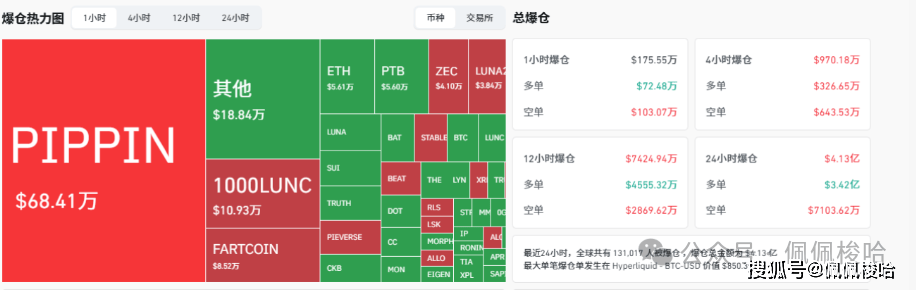
Market Overview - In the last 24 hours, a total of 131,049 individuals were liquidated, with a total liquidation amount of $413 million [1] - Bitcoin (BTC) dropped to $88,000 unexpectedly, while Ethereum (ETH) remained above $3,000, possibly due to rumors of a large sell-off [1] Bitcoin Analysis - The 10-day MACD for BTC has reached zero, indicating a strong bearish trend across the 15-day and 20-day moving averages, with potential support and take-profit levels around $87,200 to $85,300 [3] - The bullish structure remains intact as long as BTC does not fall below the previous low of $83,800, indicating a consolidation phase with higher lows [3] - The highest rebound point for BTC is near the 5-day EMA7 at approximately $93,992, with the weekly EMA7 at $96,350 serving as a critical resistance level [4] Ethereum Analysis - ETH recently tested a low of $2,978 but remains above $3,000, indicating that the overall support level has not been broken [6] - Key support and resistance levels for ETH are identified between $3,090 and $3,075, with a potential for upward movement if these levels are maintained [6] - A significant support level is at $2,780; if this level holds, it may present a buying opportunity, especially after the Federal Reserve's interest rate decision [6] Market Dynamics - The upcoming interest rate decisions from the Federal Reserve and Japan are expected to create significant market volatility, presenting both liquidation peaks and potential bottom-buying opportunities [8] - The market is anticipated to experience a final low point within the year, with recommendations for cautious entry using spot trading before leveraging contracts [8] Altcoin Strategy - Caution is advised when trading altcoins, as they tend to exhibit extreme volatility during unstable market conditions, leading to potential losses [9] - The recent speculative trading in bankrupt coins like LUNC is noted, with a warning that such assets are often associated with high risk [10] HYPE Analysis - HYPE has shown weakness prior to the release of its data, and subsequent market reactions have led to a sell-off, indicating that the positive news was already priced in [12] - Current market conditions suggest that HYPE may face challenges unless there are clear indications of reduced selling pressure and new developments [13]
博时基金桂征辉:股债均衡,市场波动中的投资“平衡术”
Xin Lang Ji Jin· 2025-12-02 02:00
Group 1: A-Share Market Insights - The A-share market in 2025 is characterized by "structural differentiation and prominent main lines," with technology, non-ferrous metals, and new energy sectors standing out, particularly in AI computing power, semiconductor equipment, gold, and lithium resources [1] - The rise in these sectors is driven by the global explosion in AI demand, supportive new energy policies, and improved supply-demand relationships [1] - Challenges include slow recovery in traditional real estate and consumer sectors, as well as external factors like fluctuating Federal Reserve policies and geopolitical conflicts affecting market trends [1] Group 2: Global Economic Impact - Global macroeconomic events, such as Federal Reserve interest rate cuts and geopolitical tensions, have an indirect but significant impact on A-shares [2] - Interest rate cuts can attract foreign capital into A-shares, but expectations during the cut process may lead to short-term volatility [2] - Geopolitical conflicts may increase energy prices, affecting industry costs and enhancing the attractiveness of assets like gold [2] Group 3: Investment Opportunities - Three key areas to focus on include: 1. Technological innovation, such as AI, semiconductors, and biomanufacturing, benefiting from national policies and technological breakthroughs [3] 2. Consumption upgrades, including cultural tourism, health, and green consumption, showing strong demand resilience [3] 3. High-end manufacturing, like new energy equipment and industrial mother machines, aligning with global industrial chain restructuring trends [3] - Some sectors have seen valuation recoveries, suggesting a diversified approach through index or sector funds to mitigate risks associated with single-stock bets [3] Group 4: Bond Investment Risks - Key risks in bond investment include interest rate risk, where market rate changes can lead to bond price fluctuations, and credit risk, which refers to the possibility of the issuer failing to pay interest or principal [4] - Investors are advised to prioritize government bonds or high-credit-rated bonds to mitigate these risks [4] Group 5: Balanced Investment Strategy - The effectiveness of a balanced stock-bond strategy lies in the inverse relationship between stocks and bonds, where stocks provide returns during market upswings and bonds may appreciate during downturns, thus cushioning losses [5] - Historical data indicates that during significant A-share adjustments, the bond market often performs well, leading to lower drawdowns in balanced portfolios compared to pure equity investments [5] Group 6: Public Fund Benefits - Public funds address the high entry barriers of direct stock and bond investments by offering professional management, diversified investment, and low minimum investment thresholds [6] - Funds select a basket of stocks or bonds, automatically diversifying risk, and have flexible investment amounts starting as low as 10 yuan [6] Group 7: Risk Preference-Based Fund Allocation - Investors should assess their risk tolerance before determining stock-bond fund ratios, with suggested allocations for different risk profiles: 1. Defensive investors: Up to 30% in stock funds, at least 70% in bond funds, focusing on low-volatility assets [7] 2. Moderate investors: Approximately equal allocation (around 50% each) with potential inclusion of thematic or convertible bond funds [7] 3. Aggressive investors: 70%-80% in stock funds, 20%-30% in bond funds, focusing on growth-oriented stock funds [7] Group 8: Additional Considerations - Factors such as age and investment horizon should influence asset allocation, with younger investors leaning towards aggressive strategies and those nearing retirement shifting to defensive ones [8] - Regular review and adjustment of investment ratios are essential to align with life stages, market changes, and goals [8] - Diversification within the same asset class is crucial to further reduce non-systematic risks [8]