
贸易摩擦

Search documents
思博瑞资管:全球经济将持续增长 未来一年挑战与机遇并存
Zhi Tong Cai Jing· 2026-01-08 09:05
Group 1 - The core viewpoint is that despite challenges in the coming year, opportunities are expected, with a strong belief in continued global economic growth [1] - The U.S. economy is projected to grow at a rate of 2% to 3% due to the effects of interest rate cuts by 2026, supported by low mortgage rates and stable real income [1] - Outside the U.S., economic growth is expected to slightly improve due to a stable job market and improved tariff conditions, with Germany and China implementing significant development plans and stimulus measures [1] Group 2 - U.S. inflation is expected to stabilize by 2026, but reaching the Federal Reserve's 2% target may take longer due to the need for service prices and wages to weaken further [2] - The inflation situation in most countries outside the U.S. has reached targets, allowing central banks to implement more stimulus measures, with Eurozone inflation expected to drop below 2% [2] - The Federal Reserve's interest rate decisions will be data-driven, with potential fewer rate cuts in 2026 due to strong economic growth, necessitating a careful balance between supporting employment and stabilizing prices [2] Group 3 - Geopolitical risks are expected to remain high in 2026, with ongoing conflicts such as the Russia-Ukraine situation and U.S.-China strategic competition impacting global trade flows [3] - The U.S. has relied more on fiscal policy than monetary policy for economic support since the COVID-19 pandemic, which may lead to long-term inflation pressures and increased financing difficulties for the government [3] - The independence of central banks is crucial, as any signals weakening inflation targets in pursuit of higher growth could heighten investor uncertainty and increase risk premiums [3]
帮主郑重10月21日盘前策略:A股缩量反弹藏玄机,紧扣主线等风来
Sou Hu Cai Jing· 2025-10-21 00:51
二是保持均衡配置。手里既要有科技成长这样的"矛",也要有黄金、大金融这类"盾",用来应对中美贸易的不确定性; 三是控制仓位,耐心等待。别因为单日反弹就急着满仓,目前市场仍在震荡休整期,仓位控制在5-6成,留足子弹,等放量突破的信号明确再行动。 帮主一句劝:行情总在绝望中诞生,在犹豫中成长。当前A股中长期向上的逻辑并未改变,我们要做的就是在震荡中守住优质标的,等风来。我是帮主郑 重,投资路上,咱们一起稳扎稳打! 中长线玩家,这时候最该沉住气。市场短期会受情绪摇摆,但长期终归要回归基本面。当前操作要把握三个关键: 一是紧抓"政策+业绩"双主线。半导体设备、AI端侧、新能源电池这些领域,既有国产替代的政策背书,又有行业景气度支撑,回调反而是布局机会; 朋友们,今天A股这缩量反弹,是不是看得你又喜又忧?三大指数全线上涨,创业板更是猛冲近2%,但两市成交额却缩到1.7万亿,创下近期新低。我是帮 主郑重,做了20年财经记者,专攻中长线——这种"指数红火、资金观望"的场面,背后其实藏着市场真正的情绪。 现在的市场,就像暴风雨前的傍晚。表面风平浪静,实则暗流涌动。昨天盘面上,科技股集体回暖,CPO、固态电池领涨,煤炭、燃气这 ...

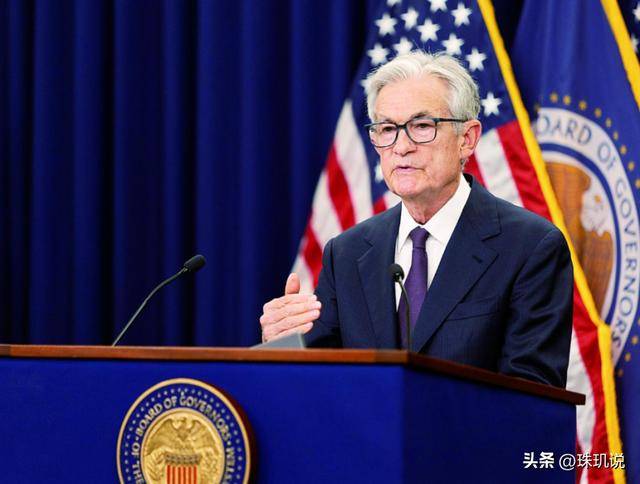
美联储释放双重信号!鲍威尔提前终止缩表,金融市场乱成一锅粥?
Sou Hu Cai Jing· 2025-10-20 12:09
Core Viewpoint - The market is oscillating between expectations of monetary easing and concerns about risks, with Federal Reserve Chairman Jerome Powell's statements drawing significant attention from global investors [1] Group 1: Federal Reserve's Actions - Powell indicated that interest rate cuts are likely to continue, with the market estimating a 96% probability of a cut in October [5] - He emphasized that the current inflation is primarily due to one-time impacts from tariffs, suggesting that rate cuts should be gradual to avoid excessive market stimulation [5][8] - The Fed may end its balance sheet reduction early, which is akin to increasing liquidity in the financial system [5][7] Group 2: Economic Context - The U.S. government shutdown has delayed key economic data releases, creating uncertainty in assessing the economic situation [3] - Powell's comments serve as a signal to reassure the market amid concerns about liquidity, especially given rising overnight borrowing rates [8] Group 3: Market Reactions - Following Powell's remarks, U.S. stocks initially rebounded, but a subsequent statement from former President Trump regarding tariffs on Chinese goods caused a sharp market decline [10] - The ongoing trade tensions and government shutdown contribute to market volatility, making it difficult for investors to predict future movements [12] Group 4: Key Upcoming Events - The CPI data set to be released on October 24 will be crucial for determining the Fed's future rate cut strategy, with potential implications for market stability [12][14] - The ongoing government shutdown poses risks to economic data publication and policy implementation, increasing market uncertainty [14]
固收:利率下行空间分析及机会挖掘
2025-10-14 14:44
Summary of Key Points from Conference Call Records Industry Overview - The records primarily discuss the bond market dynamics in the context of current economic conditions, particularly focusing on interest rates and trade tensions affecting the market [1][2][3]. Core Insights and Arguments - The bond market is currently experiencing a general upward trend, but the profit-making effect is not significant due to inflation expectations and the performance of the equity market [1][2]. - A monetary policy easing or unexpected events, such as escalated trade tensions or domestic economic weakness, are necessary to break the current stagnation in profit-making [1][2]. - The market has minimal implied expectations for easing, and any rate cuts could help lower interest rates further. The 10-year government bond yield is currently around 1.75%, with potential to drop to 1.6% only with supportive easing measures [1][2][3]. - The fourth quarter is expected to have a more relaxed tone compared to the third quarter, with a model indicating a bullish outlook starting from October 10, with an 85% success rate [3]. - The funding environment post-National Day is expected to remain comfortable, with a 7-day funding level around 1.4% and low government issuance, leading to a higher probability of maintaining a loose funding level [4]. Important but Overlooked Content - The value of certificates of deposit (CDs) is highlighted, with a recommendation to focus on 6-month CDs over 1-year CDs for better returns, while 1-year CDs are suggested for those looking to extend duration [4]. - The bond market's strategy needs to consider the historical context of trade tensions, as past increases in tariffs led to rapid declines in bond yields, but the current situation may differ due to various influencing factors [2][5]. - The spread between 30-year local government bonds and 30-year government bonds is approximately 18 basis points, indicating strong allocation value for local government bonds [2][6]. - The records suggest a flexible investment strategy, recommending a barbell approach for potential gains while maintaining a bullet strategy for fixed positions in credit bonds [8]. - The liquidity of the 10-year government bonds is noted, with specific recommendations to observe the impact of new redemption fee regulations on trading strategies [9][10]. Investment Recommendations - Investors are advised to focus on local government bonds, particularly from regions like Zhejiang and Hunan, due to their favorable yield spreads and absolute returns [6][7]. - The records suggest monitoring the 5-7 year government bonds for better value and potential investment opportunities in the context of changing market conditions [14]. - The 50-year government bonds are considered to have investment value, but their attractiveness is limited by the performance of 30-year bonds, which currently dominate the market [13]. This summary encapsulates the key points from the conference call records, providing insights into the bond market's current state, strategic recommendations, and potential investment opportunities.
穿越未知:商业银行应对外部不确定性的风险管理实务框架探讨
Sou Hu Cai Jing· 2025-05-30 02:35
Core Insights - The article emphasizes that external risks outweigh internal risks, and macro risks are more significant than micro risks in the current economic and financial landscape [2][3] - Commercial banks are expected to face ongoing challenges from external uncertainties, necessitating a unified strategic vision to balance business development and risk management [2][3] Group 1: Limitations in Management Framework and Tools - The current risk management framework, established by the 2016 CBRC guidelines, categorizes external uncertainties into various risk types but fails to capture their structural characteristics and cross-sectional risk factors [4] - Existing management tools primarily rely on stress testing and extreme scenario analysis, which do not adequately address the systemic impacts of external uncertainties on commercial banks [4] Group 2: Limitations in Response Mechanisms and Work Methods - Two main response mechanisms exist: one initiated by governance and management layers focusing on affected departments, and another relying on existing departmental responsibilities, both of which lack comprehensive coordination and strategic oversight [5] - These mechanisms often result in fragmented solutions that do not adequately address the overarching challenges posed by external risks [5] Group 3: Deviations in Risk Management Philosophy and Team Configuration - Domestic commercial banks exhibit a gap in risk management philosophy compared to international peers, often viewing risk management as opposed to business development, which undermines overall risk resilience [6] - The current environment of heightened regulation and economic downturn has led to a risk-averse culture, limiting proactive decision-making and potentially exacerbating competitive disadvantages [6] Group 4: Geopolitical Risks and Their Impact - Geopolitical risks, driven by events such as the Russia-Ukraine conflict and trade tensions, significantly affect traditional risk types, including credit, market, operational, liquidity, and funding risks [7][9] - Research from institutions like the ECB and IMF highlights the pathways through which geopolitical risks influence asset prices and the broader financial environment [9] Group 5: Recommendations for Improvement - It is recommended to unify the understanding of information importance between business and risk functions to support macro and micro decision-making [11] - Adopting iterative work methods can address structural issues in management systems, enhancing information collaboration and feedback mechanisms [12] - Promoting the organic integration of strategic and risk management processes is crucial for ensuring that banks maintain a correct strategic direction amidst external challenges [16]
雪川视角丨新经济格局下,中国薯条的光芒藏不住了!
Sou Hu Cai Jing· 2025-04-23 12:18
Core Viewpoint - The trade friction will not significantly impact the domestic frozen French fries supply in China, as the market is predominantly occupied by domestic brands, which have shown strong competitiveness and cost-effectiveness in recent years [2][5][7]. Industry Overview - The frozen French fries market in China has shifted from being heavily reliant on imports to a self-sufficient model, with domestic brands like Xuechuan leading the way [4][5]. - The market size of the French fries industry in China grew from 28 billion to 39.12 billion yuan between 2014 and 2022, with frozen French fries accounting for 98.61% of the market share [8]. Market Dynamics - The COVID-19 pandemic in 2020 disrupted the import chain, prompting businesses that previously relied on imported frozen fries to switch to domestic brands, resulting in a rapid market share shift from 80% imports to 80% domestic [5][7]. - By 2022, China's export volume of frozen French fries surpassed imports for the first time, with exports reaching 134,400 tons in 2023, marking a 1565% increase since 2018 [7]. Consumer Trends - The application of frozen French fries has diversified, becoming a key ingredient not only in Western cuisine but also in various Chinese dining contexts, including hot pot and casual snacks [10][8]. - The rise of e-commerce and household appliances like air fryers has significantly increased the demand for frozen French fries in domestic markets [10]. Competitive Landscape - The domestic frozen French fries industry faces challenges such as price wars due to the influx of new entrants, which can disrupt market stability and product quality [11][13]. - Xuechuan has recognized the need to transition from price competition to brand competition, achieving recognition as the "First Brand of Frozen French Products" in China [13][15]. Branding Strategy - Xuechuan is actively enhancing brand visibility through advertising in major cities, aiming to establish a strong market presence during the industry's transition to brand-focused competition [15].

霍华德·马克斯最新谈关税:这是我职业生涯中见过最大的一次环境转变……
聪明投资者· 2025-04-06 14:44
而在这种高度不确定的背景下,市场价格的下跌并不自动等于机会。他甚至提醒我们:现在正处于判断 最困难的阶段——不是该贪婪,亦不是该恐惧,而是要承认"我们连自己的预测正确率都低于历史任何 时刻"。 即便如此,马克斯仍在信贷市场中看到了相对的确定性。相比动荡的股市估值,信贷资产的回报路径更 加可预期。 他指出,在过去47年非投资级信贷的经验中,约99%的发行人都履行了承诺。在宏观变量充满不确定 的时刻,这种由契约支撑、违约代价明确的资产,或许正体现出一种"以静制动"的投资逻辑。 关税不仅搅乱了经济、市场,也搅乱了全球人心。 "这是我职业生涯中,见过最大的一次环境转变。" 橡树资本联合创始人霍华德·马克斯 在美东时间4月 4日接受彭博访谈中的这句判断,揭示了一个正被深刻重构的时代。 从贸易摩擦到关税升级,全球经济秩序正处于被巨力搅乱的阶段。 马克斯直言: "我们过去假设未来会像过去,但这一次,没有人知道六个月后的规则会是什么。" 他的核心观点不是判断市场是否便宜,而是指出当前环境下, "对未来的可知性比过往任何时候都更 低" 。 邓普顿所说"在最悲观的时候买入"或许仍有效,但马克斯的提醒是:我们可能还没到那个"最悲观 ...
AI赋能资产配置(三):DeepSeek与风险“再平价”
Guoxin Securities· 2025-03-03 07:39
Core Insights - The report emphasizes the integration of AI in optimizing risk parity strategies, enhancing both annualized returns and Sharpe ratios across various asset classes [5][6][10] - DeepSeek's approach involves adjusting risk contributions, dynamically modifying lookback periods, and optimizing ETF selections to improve portfolio management efficiency and risk control [5][6][10] Group 1: AI Empowered Risk Parity - DeepSeek combines macroeconomic data, capital market indicators, and analyst opinions to optimize asset risk contributions, enhancing the potential returns of portfolios [5] - The annualized return of domestic stock-bond-commodity portfolios improved from 3.85% to 4.2% with a Sharpe ratio increase to 1.137 through risk contribution adjustments [6] - For overseas portfolios, the annualized return rose from 8.11% to 14.15%, with the Sharpe ratio increasing from 0.590 to 1.018 [6] Group 2: Dynamic Lookback Period Adjustments - DeepSeek dynamically adjusts the lookback period based on market cycles, optimizing the risk parity strategy's time window using AI to learn from historical data [12][14] - The report highlights that traditional fixed lookback periods may not adapt well to market changes, while AI can provide a more responsive approach [12][14] - The adjustments led to a significant increase in the annualized return from 3.85% to 4.46% and improved the Sharpe ratio from 1.059 to 1.137 [73] Group 3: ETF Selection Optimization - DeepSeek utilizes traditional indicators and forward-looking market judgments to optimize ETF selections, resulting in an annualized return of 7.18% compared to 6.75% for non-AI selected ETFs [6][10] - The AI-driven selection process considers tracking errors, premium rates, and market volatility to enhance investment outcomes [93][94] - The report outlines a systematic approach to selecting ETFs that minimizes risks associated with market speculation and currency fluctuations [16][93] Group 4: Global Risk Parity Strategy - The report discusses a three-dimensional structure for global risk parity, balancing domestic and overseas assets to achieve risk contribution equilibrium [8][9] - It emphasizes the importance of optimizing asset weights based on volatility and covariance calculations to ensure balanced risk contributions across different asset classes [8][9] - The strategy aims to achieve a stable performance across various market conditions by ensuring that different assets contribute equally to overall risk [8][9] Group 5: Future Outlook and Conclusion - The report concludes that AI's integration into risk parity strategies represents a significant advancement, allowing for more precise adjustments and improved performance metrics [38][41] - It suggests that the ongoing evolution of AI applications in finance will continue to enhance investment strategies and risk management practices [38][41] - The findings indicate a strong potential for AI-driven models to outperform traditional risk parity approaches, highlighting the need for continuous adaptation to market dynamics [38][41]
东方证券化工周报-20250319
Orient Securities· 2025-02-17 05:41
Investment Rating - The industry investment rating is "Positive (Maintain)" [6] Core Viewpoints - Recent trade frictions have raised concerns about economic growth, leading to downward pressure on oil prices, while leading stocks remain weak. The report suggests focusing on leading companies with strong fundamentals and low correlation to oil prices for bottom-fishing opportunities. Additionally, the importance of food security has increased due to global instability, making agricultural and food supply chains more resilient. The report anticipates sustained economic improvement and upward elasticity from supply-side adjustments [11] Summary by Sections Oil and Chemical Prices Information - As of February 14, Brent oil price increased by 0.1% to $74.74 per barrel. Concerns over U.S. sanctions on certain oil-producing countries initially pushed prices up, but an increase in U.S. commercial oil inventories and easing geopolitical tensions led to a price retraction. As of February 7, U.S. commercial oil inventories stood at 427.9 million barrels, a weekly increase of 4.1 million barrels [12] - Among 188 monitored chemical products, the top three price increases this week were petroleum coke (up 24.0%), natural gas (up 12.5%), and acetone (up 7.6%). The top three price decreases were liquid chlorine (down 26.9%), threonine (down 14.0%), and vitamin B2 (down 6.3%) [13] Investment Recommendations and Targets - Recommended companies include: - Wanhua Chemical: Core product MDI shows recent profit improvement, with upcoming petrochemical and new material projects expected to launch [11] - Huangma Technology: A leading special polyether company that has entered a growth phase again after addressing previous macro demand pressures [11] - Jinhui Industrial: A leader in maltol and sucralose, with signs of marginal improvement in core product conditions [11] - Yuntianhua: A leading company in the domestic phosphate chemical industry, with sustained demand for phosphate rock [11]



