新消费

Search documents
港股新消费概念股涨幅居前,蜜雪集团(02097.HK)涨超5%,泡泡玛特(09992.HK)、老铺黄金(06181.HK)双双涨超4%,布鲁可(00325.HK)、古茗(01364.HK)、理想汽车(02015.HK)等个股跟涨。
Jin Rong Jie· 2025-12-22 07:13
Group 1 - The new consumption concept stocks in the Hong Kong market have shown significant gains, with Mixue Group (02097.HK) rising over 5% [1] - Pop Mart (09992.HK) and Laoputang Gold (06181.HK) both increased by more than 4% [1] - Other stocks such as Blukoo (00325.HK), Guming (01364.HK), and Li Auto (02015.HK) also experienced upward movement [1]


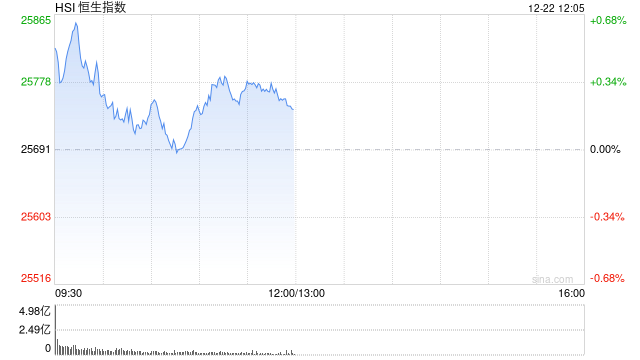
午评:港股恒指涨0.2% 科指涨0.89% 黄金股普涨 半导体板块走强 四只新股集体下跌
Xin Lang Cai Jing· 2025-12-22 04:05
Market Overview - The Hong Kong stock market indices collectively rose, with the Hang Seng Index increasing by 0.2% to 25,742.24 points, the Hang Seng Tech Index up by 0.89%, and the State-Owned Enterprises Index rising by 0.27% [1][9]. Sector Performance - The semiconductor sector showed strong performance, with SMIC (中芯国际) rising over 7% to a price of 69.800 [3][12]. - Gold stocks experienced a broad increase, with Lingbao Gold (灵宝黄金) rising over 6% as gold prices surpassed $4,380, setting a new historical high [3][15]. - The new consumption concept stocks mostly rose, with Mixue Group (蜜雪集团) increasing by over 9% to 432.200 [6][16]. New Listings - Four new stocks were listed today: Impression Dahongpao, Huasheng Biotechnology, Mingji Hospital, and Nanhua Futures, all of which faced significant declines, with Mingji Hospital dropping over 42% and Impression Dahongpao down by 25% [7][17]. Investment Insights - The entry of new shareholders into Anjieli Meiwai, including state-backed funds, indicates recognition of the company's technological strength in packaging substrates, which is a focus area for domestic innovation [2][11]. - Goldman Sachs has identified "going long on gold" as a core high-conviction trading strategy, driven by central bank purchases and cyclical support from potential Federal Reserve rate cuts [5][14]. Economic Context - Recent policies aimed at boosting domestic consumption were highlighted, with the central economic work conference emphasizing the importance of a strong domestic market [6][16].


新消费概念普遍活跃 近期密集政策提振消费 机构称关注新消费结构性机会
Zhi Tong Cai Jing· 2025-12-22 04:01
Group 1 - New consumption concept stocks are generally active, with notable increases in stock prices for companies such as Mixue Group (+7.29% to HKD 423.8), Laopu Gold (+5.02% to HKD 691), Guoquan (+5.09% to HKD 3.51), and Pop Mart (+3.89% to HKD 200.4) [1] - Recent policies related to consumption have been frequently released, with the Central Economic Work Conference emphasizing the importance of domestic demand and the construction of a strong domestic market as a key task for the upcoming year [1] - An article in "Qiushi" magazine highlights the strategic significance of expanding domestic demand, underscoring its foundational role in overall development [1] Group 2 - Dongxing Securities notes that the investment sentiment in new consumption will transition from enthusiasm to caution by 2025, with continued policy support in 2026 expected to boost consumer confidence [2] - The new consumption industry is anticipated to evolve towards three trends: health-oriented consumption, new pragmatism, and emotional consumption, alongside two dimensions: intelligence and overseas consumption [2] - Investors are encouraged to focus on companies that can establish solid business models and sustainable profit mechanisms in the new consumption sector [2]
港股异动 | 新消费概念普遍活跃 近期密集政策提振消费 机构称关注新消费结构性机会
智通财经网· 2025-12-22 03:49
Group 1 - New consumption concept stocks are generally active, with notable increases in stock prices for companies such as Mixue Group (+7.29% to HKD 423.8), Laopu Gold (+5.02% to HKD 691), Guoquan (+5.09% to HKD 3.51), and Pop Mart (+3.89% to HKD 200.4) [1] - Recent policies related to consumption have been frequently released, with the Central Economic Work Conference emphasizing the importance of domestic demand and the construction of a strong domestic market as a key task for economic work in the coming year [1] - An article in "Qiushi" magazine highlights the strategic significance of expanding domestic demand, underscoring its foundational support for overall development [1] Group 2 - Dongxing Securities notes that the investment sentiment in new consumption will transition from enthusiasm to caution by 2025, with continued policy support in 2026 expected to boost consumer confidence [2] - The new consumption industry is anticipated to evolve towards three trends: health-oriented consumption, new pragmatism, and emotional consumption, alongside two dimensions: intelligence and overseas consumption [2] - Investors are encouraged to focus on companies that can establish solid business models and sustainable profit structures in the new consumption sector [2]
港股新消费概念股集体走高,老铺黄金、布鲁可涨超4%
Mei Ri Jing Ji Xin Wen· 2025-12-22 02:14
每经AI快讯,12月22日,港股新消费概念股集体走高,蜜雪集团、老铺黄金、布鲁可涨超4%,泡泡玛 特涨近4%,古茗、卫龙美味涨近3%。 ...
新消费再迎重磅政策利好
摩尔投研精选· 2025-12-19 11:09
Group 1: Impact of Hong Kong IPOs on Secondary Market - The Hong Kong IPO market has significantly rebounded this year, with approximately 100 companies raising over 250 billion HKD, and the expected IPO financing center for 2026 is around 330 billion HKD [1] - There is a positive correlation between IPO financing in the primary market and the performance of the Hang Seng Index, suggesting a mutual causation [2] - A weak US dollar and low Hibor rates are common factors driving the simultaneous strength of both IPO and secondary markets, as investors tend to reduce US asset allocations and increase global market allocations, with Hong Kong stocks being a potential option [3] Group 2: Performance of Secondary Market Post-IPO - Large IPOs do not have a significant overall impact on the secondary market, as the Hang Seng Index shows no clear pattern in the 20 trading days prior to large IPOs, while the probability of the index strengthening in the 20 trading days following a large IPO is 56%, with a median increase of 4% [4] - The probability of large IPOs being successful is high, with positive median absolute and excess returns from listing to the time of inclusion [5] Group 3: New Consumption Policies - Recent policies from the Ministry of Commerce and the Ministry of Finance aim to promote new consumption formats, with pilot programs launched in 50 cities, emphasizing the need for robust implementation plans and project management [6] - The younger generations, particularly Y and Z, are becoming the main consumer force, with a focus on personalized and emotional consumption, leading to the rise of industries like the "guzi economy" [6] - The new consumption sector is expected to evolve towards three trends (health, new pragmatism, and emotional consumption) and two dimensions (intelligent and overseas consumption), suggesting investment opportunities in these areas [6]

深度丨股价持续调整,港股“新消费三姐妹”怎么了?“流量”和“故事”降温,如何从“网红”变“长红”?
Zheng Quan Shi Bao· 2025-12-19 05:01
今年下半年以来,港股新消费板块经历深度调整。 以"新消费三姐妹"泡泡玛特、老铺黄金、蜜雪集团为例,截至12月18日收盘,三只个股较今年股价最高 点分别下跌43%、39%、35%。受访专家表示,以"新消费三姐妹"为代表的新消费板块回调,本质上是 对前期过高估值的修正,市场正对新消费商业模式可持续性进行深度审视。 "新消费三姐妹"正围绕本土IP出海、强化全球供应链管理、加快产品创新等方式,擘画"第二增长曲 线"。受访专家认为,国际消费巨头的经验表明,新消费企业要做好品牌文化沉淀以及全球化与本地化 的平衡,唯有将短期热度转化为长期用户忠诚度,方能在周期波动中立于不败。 高估值后的回调 今年上半年,港股"新消费三姐妹"股价涨幅巨大,估值一度远超传统消费巨头和国际同行。万得数据显 示,老铺黄金动态市盈率一度超过142倍,泡泡玛特一度达到113倍,同期迪士尼动态市盈率在20—40倍 左右,LVMH动态市盈率在20倍左右。 较高的估值也推动持仓资金集中离场,导致板块进入调整期。记者查看多家重仓港股的基金持仓发现, 它们均在三季度大幅削减了新消费龙头股的仓位。 数字经济智库高级研究员翁一在接受证券时报记者采访时表示,"新消费 ...
中信建投:港股迎来年内最后一次交易窗口
Xin Lang Cai Jing· 2025-12-19 00:49
Core Viewpoint - The Hong Kong stock market is experiencing a significant trading window as it enters a mid-term adjustment phase, with quality assets becoming more attractive due to ongoing capital inflows and improving profit expectations [1][4][42]. Group 1: Factors Influencing Recent Market Adjustments - The adjustment in the Hong Kong stock market over the past three months is primarily influenced by three factors: the U.S.-China relationship impacting market risk appetite, fluctuating overseas liquidity expectations, and a shift in investment styles towards more defensive sectors [2][41]. - The U.S.-China tensions, particularly regarding rare earth exports, have suppressed market risk preferences, leading to capital outflows and a decline in high-risk assets [6][46]. - The market's liquidity expectations have been volatile, particularly following the Federal Reserve's interest rate decisions, which have seen internal disagreements and fluctuating forecasts for future rate cuts [9][50]. Group 2: Market Dynamics and Cycles - The Hong Kong stock market is currently in the mid-stage of a bull market, with liquidity cycles leading the way, followed by valuation cycles, while the profit cycle is just beginning to recover [16][58]. - The overall valuation levels of the Hong Kong stock market have risen to the historical upper mid-range, following a prolonged bear market and subsequent recovery [22][64]. - The recovery in profits is expected to be gradual, with the current momentum primarily concentrated in structurally favorable sectors [24][66]. Group 3: Investment Opportunities - The recent market adjustments have increased the safety margin for investors, making certain core technology assets more attractive for a potential rebound [26][68]. - Continuous net inflows from southbound capital have reshaped the market's funding structure, indicating a long-term commitment to Hong Kong assets despite short-term fluctuations [28][70]. - Recent improvements in China's macroeconomic fundamentals, including rising inflation and export growth, are expected to catalyze broader profit recovery across various sectors [30][72]. Group 4: Strategic Focus Areas - Investment strategies should focus on high-quality dividend stocks with sustainable payouts and stable earnings, as the defensive attributes of dividend investments may weaken in the current economic environment [35][77]. - Growth sectors that have undergone significant adjustments may lead the market as sentiment improves and macro uncertainties diminish, particularly in areas like internet services and innovative pharmaceuticals [36][78]. - The new consumption sector, especially in trendy consumer goods, continues to show high growth potential and should be closely monitored for investment opportunities [79].


洪灝:美股AI泡沫破灭为时过早,但估值过高,参考历史,未来几年美股回报为个位数,人民币2026年会升值,大宗商品未来几个月有空间
华尔街见闻· 2025-12-18 09:58
近期,知名经济学家洪灝在与瑞士宝盛的本年度收官对话中,展望了2026年的美股、A股市场,并重点剖析了AI、大宗商品及人民币等核心议题。 投资作业本课代表整理了要点如下: 1、现在说(美国AI)泡沫要破,可能还为时过早。但必须承认估值已经很贵了。那么历史上达到如此估值的高度次数屈指可数。 以及一般来说,这个估值水平, 美股未来7到10年的平均回报率往往只有个位数。 2、 从下半年开始,我们就建议客户把美股获利的部分转向非美市场。主要原因是 美股相对于其他市场的表现已经达到历史高位,再期待它持续跑赢,可 能不太现实。 3、我 相信如果投AI的话,我们会继续投现在已经崭露头角的公司,以及一些大型的从以前的科技、互联网公司转型成AI公司的领头羊。 以下是投资作业本课代表(微信ID:touzizuoyeben)整理的精华内容,分享给大家: 2026年只要经济不太差,A股值得期待 主持人:年初至今,上证和沪深300指数以及港股恒生指数涨了很多,在全球市场算是领先的。不过从十月开始,股指上升势头有所减弱,板块之间开始 轮动,比如科技类的成长股承压明显,反而价值股和周期股更受资金青睐。 4、如果AI故事继续,经济周期位置不变 ...

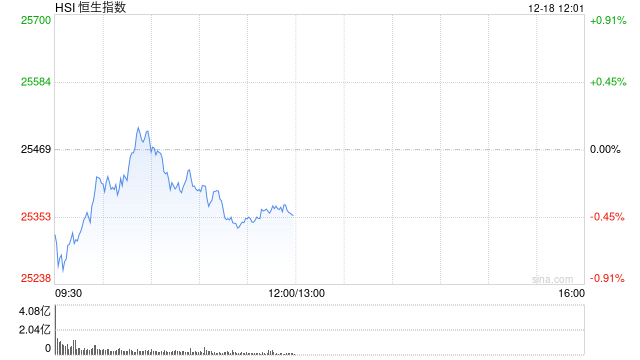
午评:港股恒指跌0.44% 科指跌1.26% 科网股普跌 锂电池板块走弱 航空股逆势走强
Xin Lang Cai Jing· 2025-12-18 04:01
Market Overview - The Hong Kong stock market indices experienced a collective decline, with the Hang Seng Index falling by 0.44% to 25,357.69 points, the Hang Seng Tech Index dropping by 1.26%, and the State-Owned Enterprises Index decreasing by 0.6% [1][8]. Sector Performance Technology Sector - Technology stocks saw widespread declines, with Xiaomi dropping over 3%, Lenovo down more than 2%, and both Baidu and Alibaba falling over 1% [1][9]. Aviation Sector - Aviation stocks continued their upward trend, highlighted by Beijing Capital International Airport's shares rising over 7%. The new round of duty-free tenders at major airports, including Shanghai Pudong and Hongqiao, as well as Beijing Capital, will introduce foreign participants [2][11]. Lithium Battery Sector - Lithium battery stocks faced significant declines, with CATL (Contemporary Amperex Technology Co., Limited) falling over 3%. Morgan Stanley has raised its global lithium demand forecast for 2030 to 3.5 million tons, indicating a potential supply-demand gap of 4-7% in the medium term, which could push lithium carbonate prices to $18,000 by the end of next year, a 33% increase from current spot prices [3][12]. New Consumption Sector - New consumption concept stocks weakened, with Pop Mart dropping over 2%. The Ministry of Commerce and other departments issued a notice to strengthen the collaboration between commerce and finance to boost consumption, emphasizing the cultivation of new consumption models [5][13].