银行业

Search documents
开局有新风|消费、就业、投资……这些变化与你息息相关!
Sou Hu Cai Jing· 2026-02-12 04:13
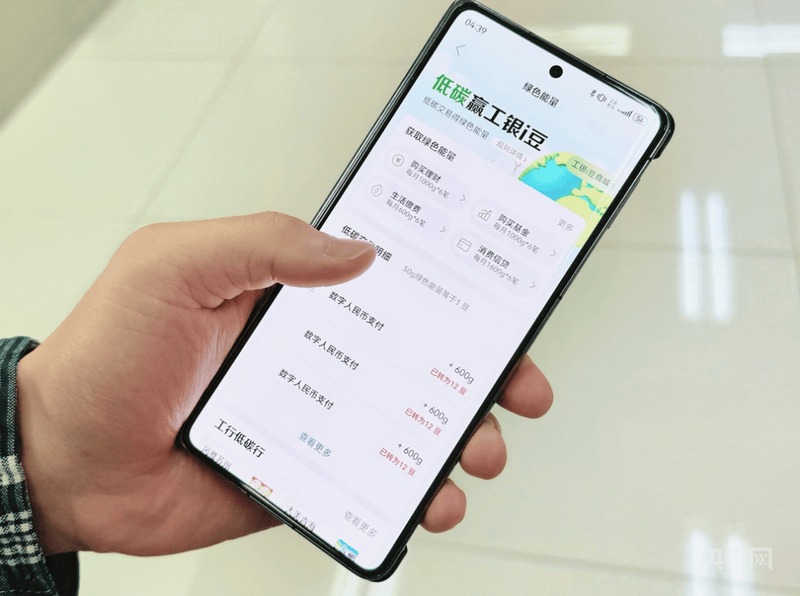
Group 1: Green Consumption and Policy Framework - In 2026, the "dual carbon" goals will enter a critical phase, with green consumption transitioning from policy advocacy to widespread public practice. The first policy document focusing on green consumption has been released, establishing a comprehensive policy framework for the supply-consumption-recycling chain [2][3] - The policy outlines three main strategies: over 88,000 national green agricultural product certifications, a sales boost of over 3.9 trillion yuan from trade-in policies for automobiles and home appliances, and a resource recycling industry with an annual output value exceeding 5 trillion yuan [2] Group 2: Employment Opportunities in Green Sector - There is a significant demand for green jobs, with nearly one million positions expected in the "dual carbon" field, while current practitioners number only around 100,000, indicating a substantial gap [3] - The Ministry of Human Resources and Social Security has recognized 137 green occupations, with new roles like carbon accountants and ESG consultants seeing a surge in demand, potentially creating 38 million jobs by 2050 [3] Group 3: Rural Revitalization and Digital Agriculture - The story of a new farmer in Pinggu, who has utilized smart algorithms to redefine agricultural practices, illustrates that rural revitalization involves the emergence of new productive forces rather than mere industrial transfer [4][6] - The recent central government document emphasizes high-quality rural e-commerce development and the integration of agriculture with tourism, which aligns with the efforts of new farmers to enhance local income through innovative practices [4] Group 4: Employment Market Trends - The employment policy direction is shifting from "stabilizing employment" to "high-quality employment," with opportunities emerging at the intersection of policy and industry [7] - Key sectors for future job growth include high-end manufacturing and digital services, with significant developments in digital economy, low-altitude economy, and artificial intelligence expected to create numerous job opportunities [9] Group 5: Wealth Management and Investment Trends - The wealth management sector has seen significant activity, with international gold prices experiencing volatility and approximately 70 trillion yuan in household deposits maturing, leading to discussions about "deposit migration" [10][12] - Predictions indicate that the scale of bank wealth management could exceed 35 trillion yuan by 2026, with "fixed income+" products likely to remain a mainstream choice due to their balanced risk and return profile [12]

美欧问题再次爆发,墨总统强硬反击,不到24小时,特朗普主动认错
Sou Hu Cai Jing· 2026-02-12 03:44
Group 1 - The article highlights the turmoil and instability caused by the United States in early 2026, indicating a shift in its foreign and domestic policies that prioritize American interests above all else [1][3][25] - The U.S. has adopted a confrontational stance towards its European allies, viewing them as competitors rather than partners, which marks a significant change in the historically close U.S.-Europe relationship [5][8][14] - The U.S. has intensified its aggressive policies towards Cuba, implementing sanctions that threaten the country's fuel supply and exacerbate its economic struggles, reflecting a broader pattern of unilateralism and disregard for international norms [10][19][27] Group 2 - The tensions between the U.S. and Europe have escalated, with the U.S. openly criticizing Europe for perceived failures in democracy and freedom, leading to protests and a potential rift in their alliance [5][8][14] - Mexico's response to the situation in Cuba illustrates the complexities of regional politics, as it attempts to provide humanitarian aid while balancing its economic ties with the U.S. [21] - The internal conflict within the U.S. government, particularly between President Trump and Federal Reserve Chairman Powell, underscores the challenges of maintaining economic stability amidst political pressures [12][23][27] Group 3 - The article suggests that the root of these conflicts lies in the U.S.'s unilateral and hegemonic approach, which prioritizes its own interests over cooperative international relations [25][27][29] - The ongoing tensions reflect a broader global shift away from U.S. dominance, as more countries begin to resist American hegemony and advocate for multilateralism and respect for sovereignty [29]

一个新的全球“工业周期”正在兴起
Hua Er Jie Jian Wen· 2026-02-12 03:26
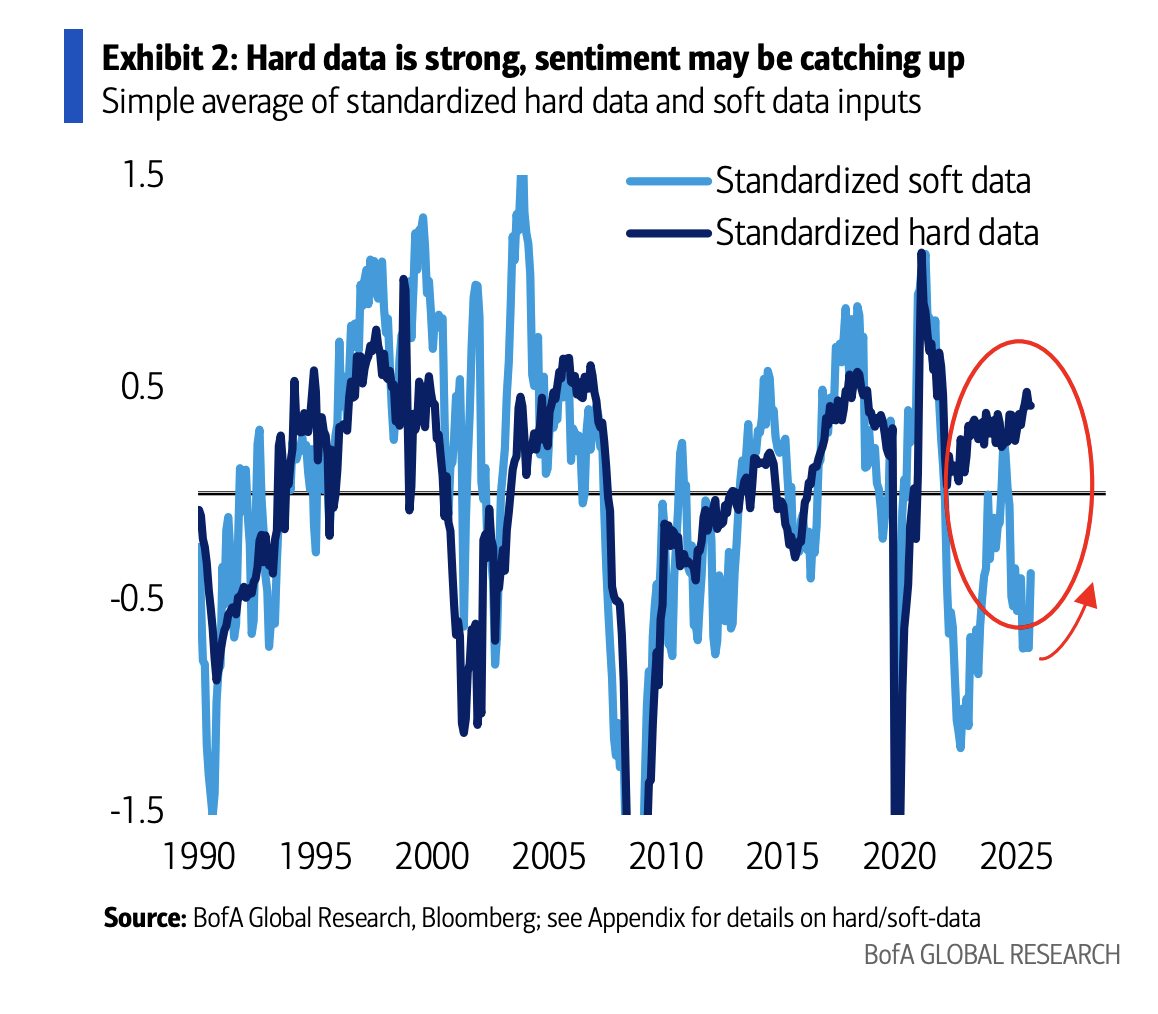
Core Insights - The narrative of global assets may shift from "technology dominance" to "industrial and credit expansion" as new industrial cycles appear to be starting, indicating potential for higher-than-consensus earnings in 2026 [1] - Bank of America (BofA) suggests that the combination of strong hard data, improving soft data, and strengthening industrial momentum points to more opportunities outside crowded trades [1][2] Group 1: Industrial Cycle Indicators - BofA's analysis shows that hard data is above long-term averages, while soft data indicators have improved significantly, with the Michigan Consumer Sentiment Index reaching its highest level since August [2][5] - Several proprietary high-frequency indicators from BofA have strengthened, indicating a positive outlook for global manufacturing PMI and industrial demand [5][10] - The current market narrative may shift from debt-driven consumption to visible organic growth in the industrial sector [8] Group 2: Credit Conditions and Expansion - BofA identifies unfavorable credit terms as a barrier to manufacturing expansion, suggesting that regulatory changes could unlock over $1 trillion in new capital from the banking system by 2026 [9][10] - Specific data points indicate that large U.S. banks hold excess capital above regulatory requirements, and capital requirements are expected to decrease, which could facilitate credit improvements [9][10] Group 3: Semiconductor Industry Impact - The semiconductor sector, particularly analog chips, is viewed as a leading indicator for the industrial cycle, with expectations of a 30% year-over-year growth in chip sales by 2026 [10][11] - The rebound in storage chip prices and increased AI demand are driving significant growth in exports from South Korea, which is linked to broader global earnings revisions [14] Group 4: Market Performance and Asset Allocation - Year-to-date returns show that expansion trades have outperformed stagnant assets, with small and mid-cap industrial stocks leading the gains [15] - Despite strong performance in expansion assets, there remains a significant underallocation in these areas compared to stagnant assets, indicating a potential shift in investment strategies [15][16] Group 5: Risks in Less Transparent Markets - The report highlights risks associated with SPACs, cryptocurrencies, and private credit, which have become more prominent in a low liquidity environment [16][17] - Historical data shows that SPACs have underperformed compared to small-cap stocks, raising concerns about the sustainability of returns in these less transparent markets [16][17]
债市早报:1月CPI涨幅回落,PPI降幅继续收窄;资金面整体仍偏紧,债市延续暖意
Sou Hu Cai Jing· 2026-02-12 03:16
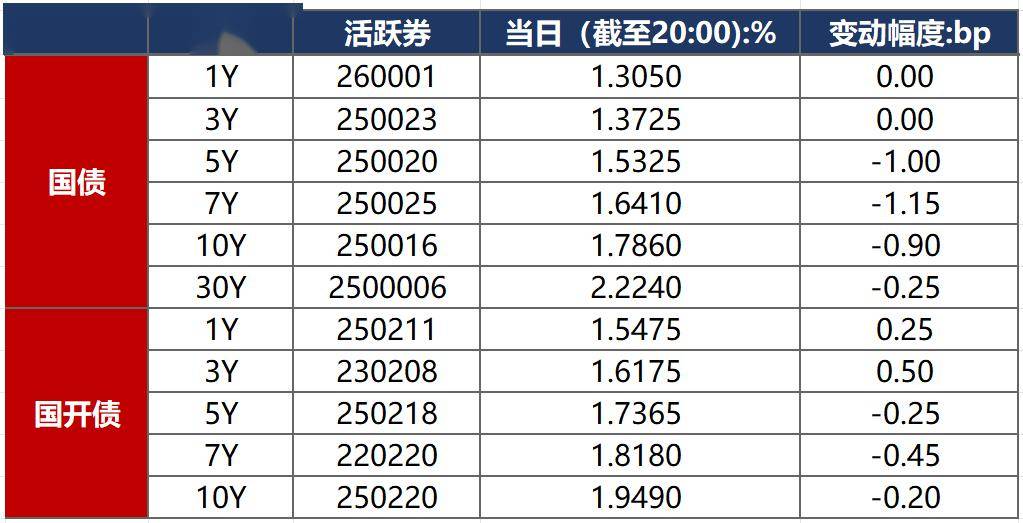
Group 1: Domestic Market Insights - The People's Bank of China reported that the average daily transaction volume of interbank lending in 2025 was 3610.7 billion yuan, a decrease of 12.1% compared to 2024 [2] - The net financing of government bonds in 2025 reached 13.8 trillion yuan, an increase of 2.5 trillion yuan from 2024 [2] - The total custody balance of the bond market at the end of 2025 was 196.7 trillion yuan, with foreign institutions holding 3.5 trillion yuan, accounting for 1.8% of the total [2] Group 2: Economic Indicators - In January 2026, the Consumer Price Index (CPI) rose by 0.2% year-on-year, while the Producer Price Index (PPI) fell by 1.4%, indicating a narrowing decline compared to the previous month [3] - The average hourly wage in the U.S. increased by 0.4% in January, surpassing expectations, while the unemployment rate dropped to 4.3% [6] Group 3: Government Policies - The State Council emphasized the need to curb new hidden debts and proposed measures to enhance government investment efficiency, including strict accountability for local government borrowing [4] - The State Council's implementation opinion aims to establish a unified national electricity market system by 2035, with market transactions expected to account for about 70% of total electricity consumption by 2030 [5] Group 4: Bond Market Dynamics - The bond market showed a warming trend as institutions preferred to hold bonds during the holiday season, with the yield on the 10-year government bond decreasing by 0.90 basis points to 1.7860% [11] - In the secondary market, seven industrial bonds experienced significant price deviations, with some bonds seeing price drops exceeding 64% [13] Group 5: Convertible Bonds and Stock Market - The convertible bond market experienced mixed performance, with the China Convertible Bond Index and Shenzhen Convertible Bond Index rising by 0.05% and 0.28%, respectively, while the Shanghai Convertible Bond Index fell by 0.13% [20] - The A-share market showed slight fluctuations, with the Shanghai Composite Index rising by 0.09% and the Shenzhen Component Index and ChiNext Index declining by 0.35% and 1.08%, respectively [20]
一次认真专业的纪念币兑换服务带来了客户百万元存款
Yang Zi Wan Bao Wang· 2026-02-12 03:12
Core Insights - The article highlights the exceptional service provided by the Industrial and Commercial Bank of China (ICBC) at its Nantong Haimen Changjiang Road branch, which led to a significant customer relationship enhancement and a subsequent deposit of 1 million yuan [1][2]. Group 1: Customer Service Excellence - A customer, Ms. Wang, approached the bank to exchange a collection of commemorative coins but was unfamiliar with the process and standards [1]. - The branch staff quickly initiated a "special currency exchange green channel," where they meticulously verified each coin's details, ensuring they met the exchange standards despite minor imperfections [1]. - The entire exchange process was completed efficiently in just 20 minutes, alleviating the customer's initial anxiety and earning her praise for the service [1]. Group 2: Business Development Impact - Following the positive experience, Ms. Wang returned to the branch to deposit 1 million yuan, expressing her trust in the bank due to the attentive service she received [1]. - The article emphasizes that the careful handling of even small transactions can lead to significant customer trust and loyalty, creating a virtuous cycle of quality service driving business growth [2].

资讯早班车-2026-02-12-20260212
Bao Cheng Qi Huo· 2026-02-12 02:10
I. Industry Investment Rating No information provided in the report. II. Core Views - The global economic outlook shows some resilience but also increased uncertainties. The domestic economic situation is generally positive, with inflation showing positive changes. The monetary policy will continue to be moderately loose, and the RMB internationalization process may speed up. In the commodity market, there are various trends in different sectors, such as potential price increases in nickel and silver, and changes in energy and agricultural product markets. In the financial market, the bond market shows a "warm but restrained" trend, and the stock market has different performances in A - shares and Hong Kong stocks [35][36]. III. Summary by Directory 1. Macro Data - GDP in Q4 2025 grew 4.5% year - on - year, lower than the previous quarter and the same period last year. The manufacturing PMI in January 2026 was 49.3%, and the non - manufacturing PMI: business activity was 49.4%. Social financing scale in December 2025 was 22075 billion yuan, lower than the previous month and the same period last year. CPI in January 2026 was 0.2% year - on - year, and PPI was - 1.4% year - on - year [1]. 2. Commodity Investment Reference Comprehensive - In January, CPI rose 0.2% month - on - month and 0.2% year - on - year, and core CPI rose 0.8% year - on - year. PPI rose 0.4% month - on - month, with the decline narrowing year - on - year. The CME is exploring the launch of the first rare earth futures contract. There are differences in the basis of domestic commodities, with some having positive and some negative basis [2][3]. Metals - On February 11, London base metals rose across the board, with LME nickel up over 3%. Indonesia plans to cut nickel ore production quotas. Silver prices soared, and the silver market is expected to have a supply gap for the sixth consecutive year. Global silver demand is expected to be stable in 2026, with retail investment growth offsetting some losses in other sectors [4][5][6]. Coal, Coke, Steel and Minerals - Trump said coal is a reliable energy source, and coal power generation will increase by about 25 - 30% this year. Ukrainian steel production in January fell 16.3% [9][10]. Energy and Chemicals - The State Council issued an opinion on improving the national unified power market system, aiming to build a unified, efficient and safe power market by 2030 and fully complete it by 2035. OPEC maintained its forecast for global oil demand growth in 2026 and 2027. US EIA crude inventory increased last week, and the US expects Venezuela's oil, gas and power production to increase significantly [11][12][13]. Agricultural Products - The National Development and Reform Commission took measures to ensure the supply and price stability of important livelihood commodities. Jordan plans to buy up to 120,000 tons of wheat. The Indonesian palm oil association expects the production of CPO to increase by 2% - 3% in 2026, but land rectification may affect production [14][15]. 3. Financial News Compilation Open Market - On February 11, the central bank conducted 785 billion yuan of 7 - day reverse repurchase operations and 4000 billion yuan of 14 - day reverse repurchase operations, with a net investment of 4035 billion yuan [16]. Important News - In January, China's CPI and PPI showed certain trends. The US non - farm payrolls in January were strong, and the Fed's interest - rate cut expectations were postponed. The State Council promoted AI development, and the government took measures in various fields such as rare earth, agricultural product supply, and capital project opening. There were also news about trade disputes, antitrust, and the automotive industry [17][18][19]. Bond Market Summary - The inter - bank bond market showed a warm trend, with yields of some long - term interest - rate bonds falling. The exchange bond market had mixed performances, and the convertible bond market also had ups and downs. Different interest - rate indicators showed various trends, and there were changes in bond issuance and yields in domestic and foreign markets [28][29][30]. Foreign Exchange Market - The on - shore RMB against the US dollar rose 14 points, and the RMB central parity rate against the US dollar was adjusted up 20 points. The US dollar index rose slightly, and non - US currencies had different performances [33]. Research Report Highlights - Fixed - income + funds had a turning point in 2025, and future strategies need to focus on asset allocation. The RMB internationalization process may speed up. Different institutions gave comments on the economic situation, monetary policy, and exchange - rate trends. The spread of urban investment bonds is expected to remain low in 2026 [34][35][36]. Today's Reminder - On February 12, a large number of bonds will be listed, issued, paid, and have principal and interest repaid [38]. 4. Stock Market News - On Wednesday, the A - share market was narrowly sorted, with some cyclical stocks rising and hot - topic sectors adjusting. The Hong Kong stock market rose, with gold and auto stocks performing actively. The pre - Spring Festival dividend of listed companies in 2025 - 2026 reached a new high [39].
【广发宏观陈嘉荔】美国1月就业数据公布之后
郭磊宏观茶座· 2026-02-12 02:09
Core Viewpoint - The article discusses the recent employment data released by the U.S. Department of Labor, highlighting a significant increase in non-farm payrolls and private sector employment, while also noting methodological changes that may have influenced these figures. Group 1: Employment Data - In January, non-farm payrolls increased by 130,000, exceeding expectations of 70,000 and the previous value of 48,000, significantly above the Dallas Fed's estimated balance level of 30,000 jobs per month [1][8] - Private sector employment rose by 172,000, surpassing the expected 75,000 and previous 64,000, indicating a rebound in employment trends [1][8] - The employment diffusion index increased from 54.2% to 55%, suggesting a broader coverage of employment growth across industries [1][8] Group 2: Methodological Changes - The introduction of a "birth-death model" adjustment by the Bureau of Labor Statistics may have led to an overestimation of the new job figures, particularly in the healthcare sector, which saw a significant increase of 137,000 jobs, the highest since September 2020 [2][11] - This model adjustment reflects a more cyclical characteristic in estimating job contributions from new businesses, potentially amplifying job estimates during periods of economic acceleration [2][11] Group 3: Sector-Specific Insights - Excluding healthcare, private sector job growth still showed a significant rebound, driven by investments in AI capacity, particularly in the construction sector, which added 33,000 jobs, with 25,000 from non-residential specialty trade contractors [3][13] - The construction job growth is attributed to the demand for data centers and AI infrastructure rather than traditional residential building [3][13] Group 4: Unemployment Rate and Labor Market Quality - The unemployment rate (U3) decreased from 4.38% to 4.28%, with an increase of 528,000 in the employed population and a decrease of 141,000 in the unemployed population, indicating a recovery from the impacts of government shutdowns [4][18] - The broader unemployment rate (U6) fell by 0.4 percentage points to 8.0%, reflecting a shift from part-time to full-time employment, suggesting an improvement in job quality [4][18] Group 5: Wage Growth and Labor Market Dynamics - Wage growth remained sticky, with average hourly earnings increasing by 3.7% year-over-year and 0.4% month-over-month, indicating tight labor supply in sectors like healthcare and construction [5][21] - The average weekly hours worked slightly increased to 34.3 hours, suggesting stable labor demand despite some fluctuations in wage growth across different sectors [5][21] Group 6: Market Reactions and Economic Outlook - The employment data has influenced market expectations regarding interest rate cuts, with a decrease in the probability of a June rate cut by the Federal Reserve [7][24] - Following the data release, U.S. Treasury yields rose, and the dollar index increased to 96.91, reflecting market adjustments to the employment figures [7][24]

绿色金融提质增效 结构性政策工具持续加力
Jin Rong Shi Bao· 2026-02-12 02:06
Core Viewpoint - The People's Bank of China (PBOC) emphasizes the importance of green finance in supporting China's economic transition towards a low-carbon future, as outlined in the "2025 Q4 China Monetary Policy Implementation Report" [1] Group 1: Green Finance Development - Green development is highlighted as a key aspect of China's modernization, necessitating a robust policy mechanism to direct funds towards green and low-carbon sectors [2] - The establishment of a unified green finance standard system is progressing, with the introduction of the "Green Finance Support Project Catalog" in 2025 to standardize green loans, bonds, and insurance [2] - The PBOC has introduced carbon reduction support tools to incentivize financial institutions to increase credit to key areas such as clean energy and carbon reduction technologies [2][3] Group 2: Market Growth and Performance - During the "14th Five-Year Plan" period, green loans grew at an average annual rate of 30.2%, significantly outpacing overall loan growth by 21.1 percentage points, with the proportion of green loans rising from 6.7% to 16.2% of total loans [3] - Cumulative issuance of green bonds reached 5.2 trillion yuan, with a balance of 2.4 trillion yuan, representing a 1.8-fold increase since the end of 2020, positioning China as a global leader in this market [3] Group 3: Future Initiatives - The PBOC plans to enhance carbon accounting and sustainable information disclosure among financial institutions, aiming to integrate carbon emissions into asset portfolio considerations [4] - Future efforts will include optimizing carbon reduction support tools and expanding the range of supported areas, as well as promoting the development of carbon financial products and derivatives [4] Group 4: Structural Policy Tools - The PBOC has introduced various structural policy tools to stimulate demand and support consumption, including a dedicated 500 billion yuan for consumer and pension-related re-lending [5] - Additional support for technology innovation has been provided, increasing the re-lending quota for technology innovation and technical transformation to 1.2 trillion yuan [6] - The PBOC is also focusing on enhancing financing accessibility for small and micro enterprises, with increased re-lending and support for private enterprises [6]
金融甘霖润泽河州 倾力服务促发展 中国人民银行临夏州分行支持地方经济高质量发展
Jin Rong Shi Bao· 2026-02-12 02:03
Core Viewpoint - The financial sector in Linxia Prefecture is deeply integrated into the economic and social development, with the People's Bank of China Linxia Branch playing a crucial role in promoting high-quality development through innovative financial services [1][8]. Group 1: Monetary Policy Implementation - The core task of the People's Bank of China Linxia Branch since 2025 has been to ensure that monetary policy benefits reach the real economy, addressing obstacles in policy implementation and enhancing financial services [2]. - A cross-departmental financial coordination mechanism has been established, involving over ten departments to jointly assess economic and financial conditions and optimize the implementation plan for financial support [2]. - The "11453" work promotion system has been innovatively constructed to transform policy transmission from a "one-way push" to a "multi-party interaction and full tracking" model [2]. Group 2: Credit Growth and Structure - As of the end of 2025, the total loan balance in Linxia reached 842.72 billion, with a high average annual growth rate over the past three years, particularly in medium and long-term manufacturing loans, inclusive small loans, and green loans [3]. Group 3: Rural Economic Development - The People's Bank of China Linxia Branch has implemented a "one county, one industry, one product" financial assistance initiative to support rural revitalization, focusing on local resources and industries [4]. - Innovative financial products, such as "live asset mortgage loans," have been introduced to support livestock farming, resulting in over 2.4 billion in loans for the livestock industry [4]. - A total of 126 billion in small loans for poverty alleviation has been issued, benefiting tens of thousands of farmers and helping to prevent large-scale poverty [4]. Group 4: Emergency Financial Services - Following the earthquake in Jishi County, the People's Bank of China Linxia Branch quickly activated an emergency financial service mechanism, providing over 200 million in disaster recovery loans to support affected households [5]. Group 5: Financial Service System Development - The People's Bank of China Linxia Branch has made significant progress in enhancing financial services, focusing on five key areas: technology finance, green finance, inclusive finance, pension finance, and digital finance [6]. - A total of 46.8 billion in loans has been issued to over 52,000 small and micro businesses, ensuring close financial service connections [6]. Group 6: Community Engagement and Financial Education - The People's Bank of China Linxia Branch has actively promoted financial literacy among local communities, particularly among ethnic minorities, through localized educational initiatives [7]. - The "Golden润河州" volunteer service brand has been established, focusing on financial knowledge dissemination and community support [7]. Group 7: Future Outlook - The People's Bank of China Linxia Branch aims to continue its commitment to high-quality development and financial services, contributing to the modernization of Linxia through sustained financial support [8].
美联储降息卡在哪?双重指标暗藏玄机
Sou Hu Cai Jing· 2026-02-12 01:54
Core Viewpoint - The recent comments from Dallas Fed President Logan extinguish market hopes for interest rate cuts, indicating that the U.S. monetary policy is entering an unprecedentedly complex phase [1][3]. Group 1: Interest Rate Outlook - Logan stated that the current inflation cooling is insufficient, and the interest rate range of 3.5%-3.75% is likely to persist longer unless there is "substantial weakness" in the job market [3]. - The Fed's decision-making logic is shifting from solely focusing on inflation data to also considering employment market performance [3][4]. - The current interest rate is seen as a balance that neither stimulates nor suppresses economic growth, providing the Fed with operational flexibility [4]. Group 2: Economic Data Complexity - Recent economic data presents a mixed picture: consumer confidence has reached a year-and-a-half high, yet long-term inflation expectations are rising [6]. - The unemployment rate remains at historical lows, but wage pressures continue to exist, complicating the assessment of whether the job market is weakening [6]. Group 3: Market Reactions and Predictions - The global market is feeling the impact, with the dollar index strengthening and the probability of a March rate cut dropping below 20% [6]. - Future scenarios include: the best case of meeting both inflation and employment targets leading to rate cuts by mid-year; the worst case of an economic collapse necessitating emergency measures; and the most likely scenario of maintaining the status quo and continuing to observe [8]. - Internal divisions within the Fed are widening, with three members publicly opposing rate cuts, highlighting the difficulty in reaching a consensus amid stubborn inflation and strong employment [8].