
农业

Search documents
午评:沪指缩量跌0.72% 海南板块逆势走强
Zhong Guo Jin Rong Xin Xi Wang· 2025-12-10 04:12
转自:新华财经 新华财经北京12月10日电(王媛媛)A股三大指数早盘小幅调整,创业板指跌逾1%。截至午间收盘, 沪指报3881.51点,跌0.72%,成交4644亿元;深证成指报13202.49点,跌0.56%,成交6722亿元;创业 板指报3170.26点,跌1.23%,成交3136亿元。沪深两市半日成交额1.14万亿元,较上个交易日缩量1184 亿元。 板块方面,海南、贵金属、零售、影视院线等板块涨幅居前,培育钻石、光伏等板块跌幅居前。 盘面热点 盘面上,海南板块走强,罗牛山、海南瑞泽涨停。零售概念表现活跃,永辉超市、南京商旅双双3连 板。商业航天板块局部强势,再升科技3连板,天通股份2连板。多只福建人气股下挫,海欣食品触及跌 停,招标股份、红相股份(维权)大跌。 全市场上涨个股有1435家,下跌个股有3834家,39只股涨停。 机构观点 中海外钜融资产:当前支撑市场的因素主要包括:(1)进入12月,机构年内考核不确定性下降,止盈 压力减少;(2)政策预期和来年布局的投资者行为对市场的支撑增强;(3)保险资本使用效率提升, 证监会主席对资本市场的积极表态,市场情绪得到提振;(4)摩尔线程上市、DeepSe ...
2025年12月10日:期货市场交易指引-20251210
Chang Jiang Qi Huo· 2025-12-10 02:44
期货市场交易指引 交易咨询业务资格: 鄂证监期货字[2014]1 号 曹雪梅:Z0015756 电话:027-65777102 邮箱:caoxm2@cjsc.com.cn 全球主要市场表现 | 指标 | 最新价 | 涨跌幅 | | --- | --- | --- | | 上证综指 | 3,909.52 | -0.37% | | 深圳成指 | 13,277.36 | -0.39% | | 沪深 300 | 4,598.22 | -0.51% | | 上证 50 | 2,997.96 | -0.71% | | 中证 500 | 7,121.33 | -0.71% | | 中证 1000 | 5,903.58 | 0.25% | | 日经指数 | 50,655.10 | 0.14% | | 道琼指数 | 47,560.29 | -0.38% | | 标普 500 | 6,840.51 | -0.09% | | 纳斯达克 | 23,576.49 | 0.13% | | 美元指数 | 99.2426 | 0.14% | | 人民币 | 7.0693 | -0.03% | | 纽约黄金 | 4,236.60 | 0.40 ...
我国将加快构建农业农村标准体系 为高质量发展打好“标准”底座
Ren Min Wang· 2025-12-10 02:21
Group 1 - The core viewpoint is that China will accelerate the establishment of an agricultural and rural standard system that meets the requirements of high-quality development, using standard upgrades to lead agricultural and rural high-quality development [1][4] - Agricultural standardization involves setting clear rules for various aspects of agricultural production and rural development, such as fertilizer and pesticide usage in crop production, feed ratios and veterinary drug use in livestock farming, and standards for rural sanitation and infrastructure [1][4] - The Ministry of Agriculture and Rural Affairs emphasizes that standards are a fundamental aspect of driving industrial transformation and upgrading, and they aim to enhance the scientific, forward-looking, and practical nature of standards [2][4] Group 2 - The Ministry will promote the formulation, application, and management of standards in a coordinated manner, focusing on filling gaps in existing standards and accelerating the development of standards in key and emerging areas [2][3] - There will be an emphasis on optimizing local standards and ensuring collaboration to improve the agricultural and rural standard system, with efforts to implement standards through supervision, service, and training [3] - The goal is to enhance the internationalization of standards and actively participate in the formulation and revision of international standards, thereby increasing China's influence in the agricultural standards field [4]
资讯早班车-2025-12-10-20251210
Bao Cheng Qi Huo· 2025-12-10 02:19
投资咨询业务资格:证监许可【2011】1778 号 期货研究报告 专业研究·创造价值 1 / 14 请务必阅读文末免责条款 资讯早班车-2025-12-10 一、 宏观数据速览 | 发布日期 | 指标日期 | 指标名称 | 单位 | 当期值 | 上期值 | 去年同期值 | | --- | --- | --- | --- | --- | --- | --- | | 20251020 | 2025/09 | GDP:不变价:当季同比 | % | 4.80 | 5.20 | 4.60 | | 20251130 | 2025/11 | 制造业 PMI | % | 49.20 | 49.00 | 50.30 | | 20251130 | 2025/11 | 非制造业 PMI:商务活 动 | % | 49.50 | 50.10 | 50.00 | | 20251114 | 2025/10 | 社会融资规模增量:当 | 亿元 | 8161.00 | 35299.00 | 14120.00 | | | | 月值 | | | | | | 20251113 | 2025/10 | M0(流通中的现金):同 比 | % | 10. ...
五矿期货文字早评-20251210
Wu Kuang Qi Huo· 2025-12-10 02:03
1. Report's Industry Investment Ratings - No industry investment ratings are provided in the report. 2. Core Views of the Report - For the stock index, although there is uncertainty at the end of the year due to some funds cashing in on their profits, the policy support for the capital market remains unchanged. In the short - term, focus on the December Politburo meeting and the Central Economic Work Conference, and in the long - term, the idea is mainly to go long on dips [4]. - For treasury bonds, the market is expected to be volatile overall under the background of weak domestic demand recovery and improving inflation expectations, and pay attention to the impact of stock - bond linkage and liquidity [6]. - For precious metals, the December Fed interest - rate meeting may be a potential negative factor for the strong international silver price. It is recommended to take profits on silver at an appropriate time [7]. - For non - ferrous metals, most metal prices are expected to be supported in the short - term, but there are also differences. For example, zinc has limited upside potential in the medium - term, while nickel may be range - bound in the short - term [10][15][18]. - For black building materials, steel is expected to continue to oscillate at the bottom, and iron ore is expected to be in a wide - range oscillation [30][32]. - For energy chemicals, rubber can be considered for short - term long positions on dips; oil prices are recommended for a low - buying and high - selling range strategy and short - term waiting; other chemicals have different supply - demand situations and corresponding strategies [50][52]. - For agricultural products, different products have different outlooks. For example, for live pigs, keep an anti - arbitrage idea; for eggs, be aware of the over - valuation of the contract; for soybean meal, it is expected to oscillate [73][75][78]. 3. Summary by Relevant Catalogs 3.1 Macro Finance Stock Index - **Market Information**: Premier Li Qiang emphasized expanding domestic demand. A "polysilicon platform company" was established, Alibaba set up a C - end business group for Qianwen, and Zhongke Shuguang and Haiguang Information will hold an investor briefing on terminating major asset restructuring [2]. - **Strategy**: Be cautious at the end of the year but optimistic in the long - term, and pay attention to important meetings [4]. Treasury Bonds - **Market Information**: On Tuesday, the prices of main contracts of TL, T, TF, and TS changed, and there were relevant news about the economy and bond issuance. The central bank had a net withdrawal of funds [5]. - **Strategy**: The market is expected to be volatile, and pay attention to the driving effect of new policy - based financial instruments and the debt balance limit increment on the fourth - quarter growth [6]. Precious Metals - **Market Information**: Gold and silver prices rose. The dovish stance of the potential Fed chair candidate drove the precious metals market, and Trump will conduct the last round of Fed chair interviews [7]. - **Strategy**: The Fed interest - rate meeting may be a negative factor for silver. It is recommended to take profits on silver and pay attention to the price ranges of gold and silver [7]. 3.2 Non - Ferrous Metals Copper - **Market Information**: Before the Fed interest - rate meeting, the dollar index rebounded, the domestic equity market weakened, and copper prices declined. LME copper inventory increased, and the domestic basis changed [9]. - **Strategy**: Copper prices are expected to remain high in the short - term, and pay attention to inventory changes and macro events [10]. Aluminum - **Market Information**: Due to the approaching Fed interest - rate meeting, market sentiment turned cautious, and aluminum prices fell. Inventory and other indicators changed [11]. - **Strategy**: Aluminum prices are expected to be supported, and pay attention to the price ranges [12]. Zinc - **Market Information**: Zinc prices fell. There were changes in inventory, basis, and other indicators [13]. - **Strategy**: In the short - term, zinc prices are expected to be strong following copper and aluminum, but the medium - term upside is limited [15]. Lead - **Market Information**: Lead prices fell. There were changes in inventory, basis, and other indicators [16]. - **Strategy**: Lead prices are expected to be strong in the short - term due to low domestic delivery inventory and a positive non - ferrous sector atmosphere [16]. Nickel - **Market Information**: Nickel prices were weak. Spot premiums and cost prices changed [17]. - **Strategy**: Nickel prices may be range - bound in the short - term, and pay attention to the price ranges [18]. Tin - **Market Information**: Tin prices fell. There were supply and demand issues, such as supply concerns and weak traditional demand [19]. - **Strategy**: After the release of macro risks, tin prices may strengthen. It is recommended to wait and see [20]. Lithium Carbonate - **Market Information**: The spot price index of lithium carbonate rose slightly, and the futures price fell [21]. - **Strategy**: There is no clear trend direction in the short - term. It is recommended to wait and see and pay attention to the lithium - battery sector [21]. Alumina - **Market Information**: Alumina prices fell. There were changes in basis, inventory, and other indicators [22]. - **Strategy**: It is recommended to wait and see in the short - term. Pay attention to supply - side policies and ore policies [23][24]. Stainless Steel - **Market Information**: Stainless steel prices fell slightly. There were changes in inventory, basis, and other indicators [25]. - **Strategy**: High inventory pressure remains. Focus on the actual implementation of steel mill production cuts [25]. Cast Aluminum Alloy - **Market Information**: Cast aluminum alloy prices fell. There were changes in inventory, basis, and other indicators [26]. - **Strategy**: Prices may follow aluminum prices, with support from the cost side and pressure from demand and delivery [27]. 3.3 Black Building Materials Steel - **Market Information**: Rebar and hot - rolled coil prices fell. There were changes in inventory, basis, and other indicators [29]. - **Strategy**: Steel prices are expected to oscillate at the bottom, and pay attention to the winter storage price and macro factors [30]. Iron Ore - **Market Information**: Iron ore prices fell slightly. There were changes in inventory, basis, and other indicators [31]. - **Strategy**: Iron ore prices are expected to oscillate widely, with a downward pressure in the range [32]. Glass and Soda Ash - **Market Information**: Glass prices fell. There were changes in inventory, basis, and other indicators. Soda ash prices fell slightly, and there were changes in inventory and other indicators [33][35]. - **Strategy**: For glass, maintain a bearish view; for soda ash, the market is expected to be weakly oscillating, and maintain a cautious and bearish view [34][35]. Manganese Silicon and Ferrosilicon - **Market Information**: Manganese silicon prices fell slightly, and ferrosilicon prices rose slightly [36]. - **Strategy**: Pay attention to the macro situation and the price changes of manganese ore and electricity. Manganese silicon has a poor supply - demand situation, while ferrosilicon has a balanced supply - demand [37][38]. Industrial Silicon and Polysilicon - **Market Information**: Industrial silicon prices fell, and polysilicon prices rose [39][41]. - **Strategy**: Industrial silicon prices are expected to be weak, and polysilicon prices are expected to fluctuate widely in the range [40][42][43]. 3.4 Energy Chemicals Rubber - **Market Information**: Rubber prices were weakly sorted. There were potential positive factors and different views on the rise and fall [45][46]. - **Strategy**: Adopt a neutral - to - bullish idea, and consider short - term long positions on dips and hold hedging positions [50]. Crude Oil - **Market Information**: Crude oil and related refined oil prices fell. There were changes in inventory [51]. - **Strategy**: Do not be overly bearish on oil prices in the short - term. Adopt a low - buying and high - selling range strategy and wait and see in the short - term [52]. Methanol - **Market Information**: Methanol prices changed, and there were changes in basis and spread [53]. - **Strategy**: The market is expected to be sorted at a low level, and it is recommended to wait and see [53]. Urea - **Market Information**: Urea prices changed, and there were changes in basis and spread [54]. - **Strategy**: Urea prices are expected to build a bottom in an oscillatory manner. Consider long positions at low prices [54][55]. Pure Benzene and Styrene - **Market Information**: The prices of pure benzene and styrene fell. There were changes in basis, spread, and other indicators [56]. - **Strategy**: Consider going long on non - integrated styrene profits when the inventory inflection point appears [57]. PVC - **Market Information**: PVC prices fell. There were changes in basis, spread, and other indicators [58]. - **Strategy**: Adopt a short - selling strategy when the price rises, as the supply is strong and the demand is weak [59]. Ethylene Glycol - **Market Information**: Ethylene glycol prices fell. There were changes in basis, spread, and other indicators [60]. - **Strategy**: The supply - demand situation is expected to be weak in the medium - term, and pay attention to the risk of a rebound [61]. PTA - **Market Information**: PTA prices fell. There were changes in basis, spread, and other indicators [62]. - **Strategy**: Pay attention to the opportunity of going long on dips based on the expected trading [63]. p - Xylene - **Market Information**: PX prices fell. There were changes in basis, spread, and other indicators [64]. - **Strategy**: PX is expected to accumulate inventory slightly in December. Pay attention to the opportunity of going long on dips [66]. Polyethylene (PE) - **Market Information**: PE prices fell. There were changes in basis, spread, and other indicators [67]. - **Strategy**: Go short on the LL1 - 5 spread when the price rises [68]. Polypropylene (PP) - **Market Information**: PP prices fell. There were changes in basis, spread, and other indicators [69]. - **Strategy**: Wait for the change in the supply - surplus pattern at the cost side in the first quarter of next year, which may support the market [70]. 3.5 Agricultural Products Live Pigs - **Market Information**: Pig prices were half - stable and half - rising. The supply and demand were in a stalemate [72]. - **Strategy**: Keep an anti - arbitrage idea, and gradually shift from shorting the near - term contract to going long on the far - term contract [73]. Eggs - **Market Information**: Egg prices were mostly stable with a few rising. The market trading was smooth [74]. - **Strategy**: Be aware of the over - valuation of the egg contract [75]. Soybean Meal and Rapeseed Meal - **Market Information**: CBOT soybean prices fell. Domestic soybean meal prices fell slightly, and the trading volume was good [76]. - **Strategy**: Soybean meal prices are expected to oscillate [78]. Oils and Fats - **Market Information**: Malaysian palm oil export data was poor, and the Argentine soybean export tax was reduced. Domestic oil prices fell [79]. - **Strategy**: Try to go long on palm oil on dips [80]. Sugar - **Market Information**: Sugar futures prices oscillated, and spot prices were stable [81]. - **Strategy**: Be bearish on the international sugar price in the long - term, and wait and see in the short - term [84]. Cotton - **Market Information**: Cotton futures prices oscillated, and spot prices fell slightly [85]. - **Strategy**: It is unlikely for cotton prices to have a unilateral trend [87].
银河期货每日早盘观察-20251210
Yin He Qi Huo· 2025-12-10 01:50
Report Industry Investment Rating No relevant content provided. Core Viewpoints of the Report The report offers a comprehensive analysis of various futures markets, including financial derivatives, agricultural products, black metals, non - ferrous metals, shipping, and energy chemicals. It assesses the current market conditions, influencing factors, and provides corresponding trading strategies for each sector. The overall market is characterized by volatility, with different commodities affected by factors such as supply - demand relationships, macro - economic policies, and geopolitical events. Summary by Related Catalogs Financial Derivatives - **Stock Index Futures**: The market is expected to oscillate in the short term, testing the 3900 - point support and confirming the breakthrough direction of the triangular consolidation. It is recommended to go long on dips, conduct IM/IC 2512 long + ETF short cash - and - carry arbitrage, and use bull spreads for options [21]. - **Treasury Bond Futures**: Bond market sentiment has eased but remains cautious. It is advisable to go long on the TL contract on dips and pay attention to potential cash - and - carry arbitrage opportunities for the TF contract [22]. Agricultural Products - **Protein Meal**: The bullish factors have limited impact, and the market is under pressure. It is recommended to hold a small number of short positions, stay on the sidelines for arbitrage, and use the strategy of selling wide - straddle options [26]. - **Sugar**: Internationally, the sugar price is expected to oscillate at the bottom. Domestically, it is likely to move sideways at a low level. It is recommended to stay on the sidelines for single - side trading, and sell put options at a low level [30]. - **Oilseeds and Oils**: The market is expected to oscillate in the short term. It is recommended to go long on dips and short on rallies, and stay on the sidelines for arbitrage and options [35]. - **Corn/Corn Starch**: The spot price has declined, and the market is expected to continue to fall. It is recommended to go long on the 03 contract on dips and short on rallies, conduct 3 - 7 reverse arbitrage, and stay on the sidelines for options [38]. - **Hogs**: The short - term pressure has improved, but the overall supply pressure still exists. It is recommended to hold short positions, stay on the sidelines for arbitrage, and use the strategy of selling wide - straddle options [41]. - **Peanuts**: The market has risen and then fallen. It is recommended to short the 01 contract on rallies, conduct 1 - 5 reverse arbitrage, and sell the pk603 - C - 8200 option [44]. - **Eggs**: The demand is average, and the price is mainly stable. It is recommended to go long on the near - term contract on dips and stay on the sidelines for arbitrage and options [48]. - **Apples**: The inventory is low, and the fundamentals are strong. The market is expected to oscillate at a high level. It is recommended to stay on the sidelines for single - side trading, arbitrage, and options [52]. - **Cotton - Cotton Yarn**: The new cotton sales are good, and the price is expected to oscillate strongly. It is recommended to expect the US cotton to oscillate in a range and the Zhengzhou cotton to be strong in the short term, and stay on the sidelines for arbitrage and options [56]. Black Metals - **Steel**: The market sentiment is volatile, and the steel price is expected to oscillate. It is recommended to expect a weak - oscillating trend, short the coil - coal ratio and the coil - rebar spread on rallies, and stay on the sidelines for options [58]. - **Coking Coal and Coke**: The market is oscillating at the bottom, waiting for the start of winter storage. It is recommended to expect the coking coal to oscillate, stay on the sidelines for arbitrage, and stay on the sidelines for options [60]. - **Iron Ore**: It is recommended to take a bearish view. Stay on the sidelines for arbitrage and options [63]. - **Ferroalloys**: The cost provides support, but the demand is suppressed. It is recommended to expect the market to oscillate at the bottom, stay on the sidelines for arbitrage, and sell out - of - the - money straddle options [66]. Non - Ferrous Metals - **Gold and Silver**: Gold is expected to oscillate at a high level, and silver may remain strong. It is recommended to go long on gold on dips, go long on silver cautiously on dips, stay on the sidelines for arbitrage, and buy out - of - the - money call options for silver [68]. - **Platinum and Palladium**: They are following the strength of gold and silver. It is recommended to go long on platinum on dips, stay on the sidelines for palladium, conduct long platinum - short palladium arbitrage, and buy out - of - the - money call options for platinum [70]. - **Copper**: The short - term profit - taking of funds has occurred, but the long - term upward trend continues. It is recommended to take profits on long positions on rallies, pay attention to cash - and - carry arbitrage opportunities, and stay on the sidelines for options [74]. - **Alumina**: It is expected to be under pressure before the expiration of warehouse receipts. It is recommended to expect a weak trend, stay on the sidelines for arbitrage, and stay on the sidelines for options [78]. - **Electrolytic Aluminum**: The price has fallen due to the departure of funds before the interest - rate meeting. It is recommended to stay on the sidelines in the short term, stay on the sidelines for arbitrage, and stay on the sidelines for options [82]. - **Cast Aluminum Alloy**: The price has fallen with the aluminum price due to macro - expectations. It is recommended to stay on the sidelines in the short term, pay attention to the narrowing of the AD - AL spread during the aluminum price correction, and stay on the sidelines for options [84]. - **Zinc**: The market is expected to oscillate widely. It is recommended to hold short positions, stay on the sidelines for arbitrage, and stay on the sidelines for options [87]. - **Lead**: The price has risen and then fallen. It is recommended to take profits on long positions and stay on the sidelines, stay on the sidelines for arbitrage, and stay on the sidelines for options [90]. - **Nickel**: The price may still face downward pressure after the rebound. It is recommended to expect a downward - oscillating trend, stay on the sidelines for arbitrage, and sell out - of - the - money call options [91]. - **Stainless Steel**: It is following the nickel price and oscillating at a low level. It is recommended to expect a low - level oscillation, stay on the sidelines for arbitrage [96]. - **Industrial Silicon**: The Shihezi silicon plants have not significantly reduced production, and the short - term trend is weak. It is recommended to expect a weak trend, go long on polysilicon and short on industrial silicon, and sell out - of - the - money call options [98]. - **Polysilicon**: With the establishment of the platform company, it is recommended to buy on dips. Stay on the sidelines for arbitrage and use the strategy of buying both call and put options [100]. - **Lithium Carbonate**: Supply has returned to the spotlight, and the price continues to correct. It is recommended to buy after the mid - term correction, stay on the sidelines for arbitrage, and sell out - of - the - money call options for the 2605 contract on rallies [102]. - **Tin**: The price has retreated from a high level, waiting for the Fed's interest - rate meeting. It is recommended to wait and stay on the sidelines for options [105]. Shipping - **Container Shipping**: The MSK WK52 price has slightly decreased, and the market is under pressure. It is recommended to take partial profits on long positions in the EC2602 contract and conduct 2 - 4 cash - and - carry arbitrage and take profits on rallies and then stay on the sidelines [108]. Energy Chemicals - **Crude Oil**: The oversupply situation is difficult to change, and the oil price is expected to oscillate weakly. It is recommended to expect a weak - oscillating trend, stay on the sidelines for gasoline, be bearish on diesel, and expect a weak contango for crude oil. Stay on the sidelines for options [110]. - **Asphalt**: There are signs of winter storage, and the price is in a dilemma. It is recommended to expect a narrow - range oscillation, stay on the sidelines for arbitrage, and sell out - of - the - money call options for the BU2601 contract [113]. - **Fuel Oil**: Both high - sulfur and low - sulfur fuel oils have weak fundamentals. It is recommended to expect a weak - oscillating trend, have a neutral view on low - sulfur cracking and a bearish view on high - sulfur cracking, and stay on the sidelines for options [116]. - **Natural Gas**: The LNG price has strong resistance to decline, and the HH price continues to correct. It is recommended to stay on the sidelines, stay on the sidelines for arbitrage, sell call options for TTF, sell out - of - the - money call options and buy out - of - the - money put options for HH [118]. - **PX & PTA**: PX supply remains abundant, and PTA is expected to accumulate inventory. It is recommended to expect an oscillating trend, conduct TA1 - 5 reverse arbitrage, and sell out - of - the - money call and put options [120]. - **BZ & EB**: Pure benzene supply is loose, and the styrene basis has weakened. It is recommended to expect an oscillating trend, stay on the sidelines for arbitrage, and stay on the sidelines for options [123]. - **Ethylene Glycol**: The inventory has a de - stocking pressure, and the price is falling. It is recommended to expect a weak trend, stay on the sidelines for arbitrage, and sell out - of - the - money call options [127]. - **Short - Fiber**: The supply - demand situation is weak. It is recommended to expect a weak - oscillating trend, stay on the sidelines for arbitrage, and use the strategy of selling both call and put options [129]. - **Bottle - Grade PET**: The supply - demand situation is relatively loose. It is recommended to expect an oscillating trend, stay on the sidelines for arbitrage, and use the strategy of selling both call and put options [132]. - **Propylene**: The inventory is at a high level, and the price is under pressure. It is recommended to short on rallies, stay on the sidelines for arbitrage, and sell call options [133]. - **Plastic PP**: PE inventory has marginally increased. It is recommended to hold short positions in the L2601 contract, stay on the sidelines for the PP 2601 contract, stay on the sidelines for arbitrage, and stay on the sidelines for options [136]. - **Caustic Soda**: The price is weak. It is recommended to expect a weak trend, stay on the sidelines for arbitrage, and stay on the sidelines for options [141]. - **PVC**: The price continues to decline. It is recommended to expect a weak - rebound trend, stay on the sidelines for arbitrage, and stay on the sidelines for options [144]. - **Soda Ash**: Supply has increased while demand has decreased, and the price is weakening. It is recommended to expect a weak trend, pay attention to the 05 contract short - soda - long - glass spread opportunity, and stay on the sidelines for options [147]. - **Glass**: The price is oscillating weakly. It is recommended to expect a weak trend, pay attention to the 05 contract short - soda - long - glass strategy opportunity, conduct 1 - 5 reverse arbitrage, and stay on the sidelines for options [150]. - **Methanol**: The price is declining weakly. It is recommended to pay attention to the 05 contract long opportunity, conduct 5 - 9 cash - and - carry arbitrage, and stay on the sidelines for options [154]. - **Urea**: Low - price transactions are acceptable. It is recommended to expect a weak trend in the short and medium terms, stay on the sidelines for arbitrage, and stay on the sidelines for options [157]. - **Pulp**: Demand has not improved, and the market is weakening. It is recommended to hold short positions, stay on the sidelines for arbitrage, and stay on the sidelines for options [160]. - **Logs**: The fundamentals are weakening. It is recommended to stay on the sidelines, and aggressive investors can go long slightly near the previous low. Stay on the sidelines for arbitrage and pay attention to 1 - 3 reverse arbitrage. Stay on the sidelines for options [163]. - **Offset Printing Paper**: Supply pressure remains, and the market has limited rebound momentum. It is recommended to short on rallies, stay on the sidelines for arbitrage, and sell the OP2602 - C - 4200 option [166]. - **Natural Rubber**: The growth rate of the predicted natural rubber production in October by the rubber alliance has slowed down. It is recommended to reduce positions in the RU01 contract, stay on the sidelines for the RU 05 contract, hold long positions in the NR 02 contract, conduct RU2605 - NR2605 arbitrage, and stay on the sidelines for options [170]. - **Butadiene Rubber**: The crude - oil cost support has been declining. It is recommended to go long slightly in the BR 02 contract, stay on the sidelines for BR2602 - NR2602 arbitrage, and stay on the sidelines for options [174].
数览中国脉动|稳扎稳打!我国实体经济底盘更稳固
Xin Hua Wang· 2025-12-10 01:30
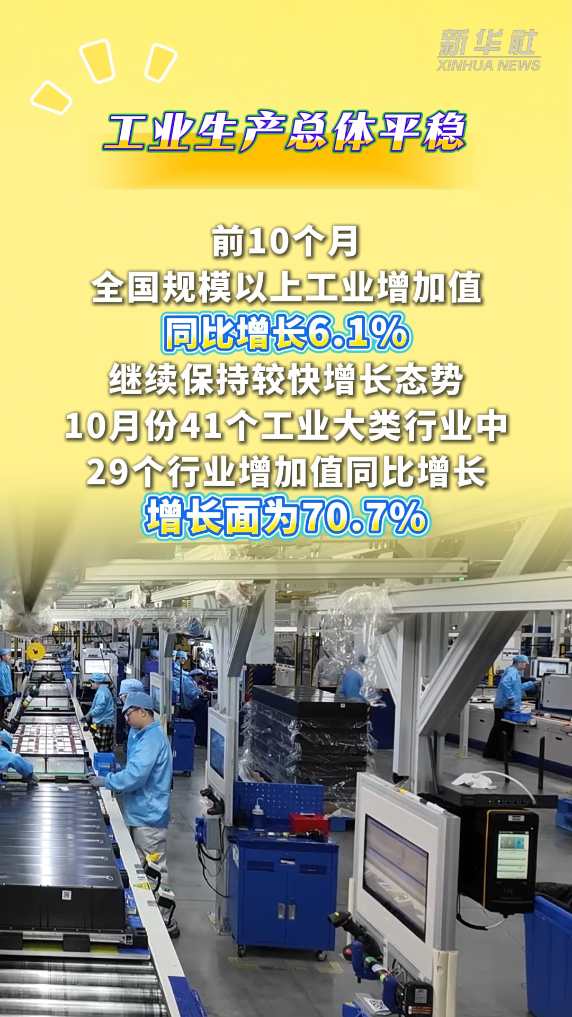
实体经济是大国的根基,是构筑未来发展战略优势的重要支撑。 面对复杂多变的国内外环境、产业链供应链波动等多重挑战,我国精准施策、靶向发力,推动工 业、农业、服务业和基础设施发展迈上新台阶,实体经济底盘更稳固。 ■工业生产总体平稳。 ■发展韧性持续增强。 稳中有进,实体经济行稳致远的底气更足。 ■产业结构持续优化。 编导:胡心懿 记者:潘志伟、尹恒、李倩薇 新华社音视频部制作 【纠错】 【责任编辑:谷玥】 ...

中共海南省委关于制定国民经济和社会发展第十五个五年规划的建议
Hai Nan Ri Bao· 2025-12-10 01:00
中共海南省委关于制定国民经济 和社会发展第十五个五年规划的建议 (2025年11月30日中国共产党海南省第八届委员会第八次全体会议通过) "十五五"时期是我国基本实现社会主义现代化夯实基础、全面发力的关键时期,也是海南自由贸易 港在封关运作新起点上全面深化改革开放、实现高质量发展的关键五年。中国共产党海南省第八届委员 会第八次全体会议认真学习贯彻党的二十届四中全会精神和习近平总书记关于海南工作的系列重要讲话 和指示批示精神,深入分析国际国内形势,就制定海南省国民经济和社会发展"十五五"规划提出以下建 议。 一、"十五五"时期是奋力谱写中国式现代化海南篇章、高标准建设自由贸易港的关键时期 1."十四五"时期经济社会发展取得重大成就。习近平总书记亲自谋划、亲自部署、亲自推动海南自 由贸易港建设,多次亲临海南并发表重要讲话,为海南发展指明了前进方向、提供了根本遵循。"十四 五"时期我省发展历程极不寻常、极不平凡。面对错综复杂的国际形势和国内省内多重超预期因素影 响,经受住世纪疫情和超强台风考验,全省上下坚持以习近平新时代中国特色社会主义思想为指导,深 入贯彻习近平总书记关于海南工作的系列重要讲话和指示批示精神,紧紧 ...
新华财经早报:12月10日
Xin Hua Cai Jing· 2025-12-09 23:49
Group 1 - Chinese Premier Li Qiang expressed willingness to strengthen international economic cooperation and promote global economic development during the "1+10" dialogue with major international economic organizations [2] - The Chinese government plans to implement more proactive macroeconomic policies to maintain economic growth within a reasonable range and continue to open its large market to the world [2] - The new mandatory national standards for civil unmanned aerial vehicles (UAVs) will be implemented starting May 1, 2026, addressing issues related to UAV operation and identification [2] Group 2 - The China Express Development Index for November was reported at 478.1, reflecting a year-on-year increase of 3%, with specific indices for development scale, service quality, and development capability showing increases of 6%, 1.9%, and 0.3% respectively [2] - The Guizhou Province proposed measures to promote the sales of liquor, including financial cooperation with institutions and measures to combat market violations [2] - The China Iron and Steel Association indicated that the recent rise in iron ore prices is driven by speculation, with actual demand remaining weak [2] Group 3 - The China Investment Corporation reported total assets of $1.57 trillion and net assets of $1.37 trillion as of December 31, 2024, with an annualized net return on foreign investments of 6.92% over the past decade [2] - Haiguang Information announced the termination of its merger with Zhongke Shuguang, ceasing the stock exchange merger process [2] - Longi Green Energy decided to terminate its issuance of Global Depositary Receipts (GDR) on the Swiss Exchange due to changing external factors [2]

湖北发力支持生物多样性金融 三季度未贷款余额超3600亿
Chang Jiang Shang Bao· 2025-12-09 23:34
Core Viewpoint - The People's Bank of China Hubei Branch is guiding financial institutions to increase credit investment in biodiversity, with a target loan balance exceeding 360 billion yuan by the end of Q3 2025, representing a 34.3% increase from the end of 2024 [1][2] Group 1: Financial Initiatives in Biodiversity - The Hubei Branch has implemented a trial plan for biodiversity financial standards, integrating resources and establishing a project database for financial institutions to connect with biodiversity projects [2] - A collaborative effort with various departments has led to the establishment of a climate data sharing mechanism and the implementation of an ecological environment-oriented development (EOD) project management regulation, resulting in 30 projects receiving credit totaling 24.7 billion yuan [2] Group 2: Sustainable Forestry and Water Ecology - Financial institutions are exploring a "forest rights mortgage + industrial upgrade" model to integrate ecological protection with industrial development, supporting projects like the transformation of low-yield tea gardens and the establishment of medicinal herb bases [3] - Innovative financing models in water ecology, such as "water ecological + specialty credit," have been introduced, including the first nationwide loan linked to sewage treatment volume, amounting to 58 million yuan [3] Group 3: Integration of Financial Services in Agriculture and Tourism - In sustainable agriculture, a model combining financial empowerment, germplasm protection, and industrial income has been developed, with significant credit support for projects like the "Zhi Gui Zong Orange" initiative [4] - The tourism sector is also benefiting from financial support, with loans provided to enhance ecological tourism, including a dedicated loan for the homestay industry that has supported over 540 operators with 180 million yuan [4] Group 4: Government Support and Subsidy Mechanisms - Local governments are establishing biodiversity loan subsidy mechanisms to encourage financial institutions to increase lending in this area, with initiatives like the "Green Development Loan" policy providing interest subsidies for forestry enterprises [5] - The Hubei ecological environment rights trading platform has facilitated access to financial subsidies for 223 enterprises, with total loan support amounting to 3 billion yuan [5]