芯片制造

Search documents
美股基金迎八个月最大资金流入!这位明星分析师缘何提及风险
Di Yi Cai Jing· 2025-07-06 03:05
Group 1: Market Sentiment and Performance - Optimistic sentiment drives technical indicators into overbought territory, supported by a trade agreement between the US and Vietnam, the passage of the tax reform bill in the House, and stronger-than-expected employment data [1] - US stock funds saw the highest net inflow since November last year, with a net inflow of $31.6 billion last week, following six consecutive weeks of outflows [5] - The S&P 500 index may trigger a "sell signal" if it breaks through 6,300 points in July, indicating potential bubble risks as the market is currently overbought [6] Group 2: Employment Data and Economic Indicators - The US added 147,000 non-farm jobs last month, significantly exceeding the market expectation of 106,000, while the unemployment rate fell from 4.2% to 4.1% [3] - Job openings in May reached 7.769 million, surpassing the expected 7.3 million, indicating a healthy labor market despite a slowdown in hiring [3] - The Atlanta Fed's GDPNow forecast for Q2 GDP growth was revised down from 2.9% to 2.6%, although still above the long-term trend growth rate of 1.8% [4] Group 3: Federal Reserve and Interest Rate Outlook - The likelihood of a rate cut in July has diminished, with traders assigning a 68% probability of a 25 basis point cut in September, down from 74% a week prior [4] - The latest employment data complicates the case for a quick dovish shift by the Federal Reserve, as rising effective tariff rates and stable job markets may delay rate cuts until Q4 or even December [5] - The market's resilience amid stable employment data has offset the negative impact of reduced rate cut expectations [5]


“大而美”法案正式生效!一文读懂:对美国各行业影响几何?
财联社· 2025-07-05 03:31
Core Viewpoint - The "Big and Beautiful" Act, signed by President Trump, aims to extend tax cuts and includes various provisions affecting multiple industries, while also raising concerns about long-term fiscal implications and increasing federal deficits [1][2]. Winners - **Chip Manufacturers**: The Act increases tax credits for chip manufacturers building new factories in the U.S. from 25% to 35%, incentivizing domestic production [3]. - **Energy Companies**: The Act reopens oil and gas leasing auctions and lowers royalty rates, benefiting oil and gas producers [5]. - **Airlines**: A $12.5 billion fund is allocated for modernizing air traffic control systems, which is supported by airline executives [6]. - **Real Estate Developers**: The Act expands tax incentives for commercial real estate investors, including a 12% increase in low-income housing tax credits [7]. - **Defense Contractors**: The Pentagon plans to invest approximately $150 billion over five years in defense projects, benefiting companies like Lockheed Martin [8]. - **Private Student Loan Institutions**: Changes in federal student loan limits may drive more students to private lenders like SoFi [9]. - **Manufacturers**: The Act provides tax deductions for manufacturing costs for factories that begin operations after January 19, 2025 [10]. Losers - **Electric Vehicle Manufacturers**: The Act terminates subsidies for electric vehicle purchases, posing challenges for companies like Tesla and Ford [12]. - **Solar and Wind Energy Companies**: The expiration of specific tax credits for renewable energy projects may lead to a decline in orders and customer retention [13]. - **AI Companies**: The removal of a provision to pause state-level AI regulations may hinder innovation in the sector [13]. - **Certain Colleges**: A new tiered tax rate on investment income for private colleges may negatively impact prestigious institutions like Harvard and Yale [14]. - **Food Companies**: Cuts to the SNAP program could lead to decreased sales for major food companies reliant on SNAP beneficiaries [15]. - **Logistics Companies**: The elimination of tax exemptions for small packages may reduce demand for shipping services from companies like FedEx and UPS [16].

万万没想到!中国第一大出口商品,竟被卡脖子了
商业洞察· 2025-07-05 02:14
Core Viewpoint - The article emphasizes that integrated circuits (chips) have become China's largest export and import commodity, highlighting the country's dependency on high-end chips and the need for domestic production capabilities [4][9][15]. Group 1: Export and Import Analysis - In terms of export value, integrated circuits were the top export item for China last year, surpassing traditional categories like clothing and home appliances [4]. - Conversely, integrated circuits also ranked as the largest import item, indicating a significant trade imbalance where imports exceed exports in both quantity and value [9][12]. - The average price of imported chips is 5 yuan each, while exported chips average only 3.8 yuan, suggesting that China is primarily exporting lower-end chips and is in need of high-end chip technology [15]. Group 2: Semiconductor Industry Challenges - The article discusses the challenges faced by China's semiconductor industry, particularly in high-end chip manufacturing, which requires advanced semiconductor manufacturing equipment and materials [17][18]. - The U.S. has imposed restrictions on the export of critical semiconductor manufacturing equipment, such as photolithography machines, which are essential for producing advanced chips [22][27]. - The lack of domestic production capabilities for semiconductor manufacturing equipment and materials is a significant vulnerability for China's chip industry [23][28]. Group 3: Investment and Future Opportunities - The National Integrated Circuit Industry Investment Fund (referred to as "National Fund") is focusing on investing in key areas such as photolithography machines and chip design software to address these challenges [30]. - The potential market for high-end chip localization is estimated to be around 3 trillion yuan, indicating a substantial opportunity for growth in the semiconductor sector [33]. - The development of high-end chips is crucial not only for economic and technological advancement but also for military applications, particularly in AI-driven technologies [35][36]. Group 4: Broader Implications - The integration of AI in military applications, such as AI-operated fighter jets, is highlighted as a significant area of development, with the first AI unmanned fighter jet expected to be operational by 2028 [38]. - The advancements in aerospace technology and the potential for AI integration in combat scenarios could create new growth opportunities for both the aerospace and semiconductor industries [39][40].

台积电拟推迟日本芯片工厂建设,优先推进美国投资
Hua Er Jie Jian Wen· 2025-07-04 10:08
Core Viewpoint - TSMC has decided to prioritize investment in expanding its U.S. operations over the construction of a second factory in Kumamoto, Japan, due to concerns over potential tariffs imposed by the Trump administration on imported chips [1][2]. Group 1: Investment Decisions - TSMC's second factory in Japan was part of a $20 billion investment plan, which has received over $8 billion in support from the Japanese government [2]. - The construction of the second factory, initially scheduled to begin earlier this year, has been delayed, with no accurate timeline for the start of operations currently available [3]. - TSMC's global expansion continues, with a factory under construction in Germany expected to be operational by the end of 2027 [3]. Group 2: U.S. Operations - TSMC announced plans to invest at least $100 billion in the U.S. over the coming years, in addition to a previously announced investment of $65 billion [3]. - The company is building its third chip factory in Phoenix, Arizona, which will be the only facility outside Taiwan capable of producing the most advanced process chips for major U.S. tech companies like Apple, NVIDIA, and AMD [3].

电源芯片,迎来革命
半导体芯闻· 2025-07-04 10:00
Core Viewpoint - The article discusses the significant upgrade in data center power infrastructure driven by the increasing demand for AI computing power, particularly focusing on NVIDIA's 800V High Voltage Direct Current (HVDC) technology, which is expected to reshape the third-generation semiconductor foundry landscape by 2027 [1][2]. Group 1: HVDC Technology and Market Dynamics - NVIDIA's 800V HVDC technology allows for an 85% increase in power transmission through the same size of wire compared to traditional architectures, with a key difference being the conversion of 800V DC to 54V DC [1]. - The demand for Power ICs in Compute Trays is expected to rise, with memory voltage needing to shift from 54V to 12V, creating opportunities for Taiwanese companies like Dazhong (8081) and Maida (6138) to capture market share [2]. - The collaboration between NVIDIA and Navitas involves the use of GaN and SiC technologies; however, TSMC's decision to gradually exit the GaN market raises questions about the future application of GaN in data centers due to safety concerns [2]. Group 2: Semiconductor Industry Implications - TSMC is optimizing its production capacity by reallocating workforce from older plants to support advanced packaging, which may create opportunities for other foundries like Lijidian to fill the gap in certain mature and specialized process nodes [2]. - The semiconductor industry is expected to see overseas PMIC manufacturers adjust their product offerings based on customer needs, providing Taiwanese supply chains with opportunities to penetrate Tier 1 customers [3].

成都华微20250703
2025-07-03 15:28
Summary of the Conference Call Company and Industry Overview - The conference call primarily discusses the humanoid robot market, highlighting its vast potential with a projected global and Asia-Pacific market size reaching hundreds of billions. The Asia-Pacific region is expected to grow at an annual rate exceeding 20% [2][6][50]. Key Points and Arguments Market Trends and Growth - The humanoid robot market is becoming an investment hotspot due to its applications in unmanned work environments and reducing personnel losses in warfare [2][6]. - Future trends include deep integration with artificial intelligence (AI) and the Internet of Things (IoT), software and operating system upgrades for smart functionalities, market segmentation for diverse business needs, and a focus on sustainable development [2][7][8]. Technological Innovations - Key technologies for humanoid robots include lightweight materials, modular design, high-precision sensors, hydraulic systems, cooling systems, and anti-slip designs. High-precision sensors convert physical signals into digital signals using ADC chips [2][10][12]. - Motion control technology is crucial, utilizing high-precision servo systems with chips like HWD32H743, which have superior floating-point computation capabilities compared to mainstream DSPs [2][16]. AI Chip Development - Current mainstream AI chips, such as Intel's X86 CPU and NVIDIA's GPU, have high power consumption, limiting their application. The company is developing dedicated AI chips, with a current version offering 12 TOPS and plans for a 64 TOPS version to enhance human-robot interaction efficiency [3][22]. Product Portfolio and Applications - The company has a comprehensive layout in the robotics sector, covering industrial, service, special, entertainment, agricultural, medical, educational, and household robots. The focus is on humanoid robots, with an emphasis on chip design and manufacturing for domestic substitution [4][5][37]. - The company’s products include AI chips, embedded CPUs, low-power MCUs, and ADC products, supported by long-term military industry experience, ensuring high reliability and cost advantages [4][38]. Challenges and Solutions - Humanoid robots face challenges in motion capabilities and intelligence, requiring significant improvements in joint flexibility and language skills for better interaction [9][12]. - Cost control is critical for commercialization, as current prices are prohibitively high. Reducing costs involves unified control over chips, mechanical structures, and materials [26]. Ethical and Social Considerations - The development of humanoid robots raises ethical issues, including privacy protection, employment impacts, data misuse, and societal acceptance. Public attitudes towards new technologies can significantly influence their adoption [30][32]. Additional Important Content - The company is transitioning from a task-oriented to a market-oriented approach in product development, engaging directly with customers to better understand their needs [58]. - Future development directions include enhancing military electronics while expanding into civilian sectors, with a focus on rapid market entry for popular products [59]. Conclusion - The humanoid robot industry is poised for significant growth, driven by technological advancements and increasing market demand. The company is strategically positioned to capitalize on these trends through innovative product development and a focus on cost efficiency and reliability.
这一板块,盘中爆发
Zhong Guo Ji Jin Bao· 2025-07-02 13:06
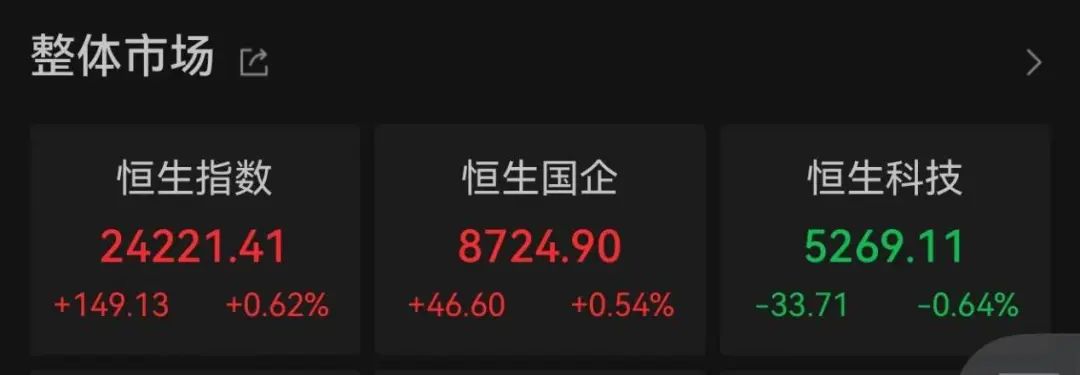
Market Overview - The Hong Kong stock market opened high but closed lower, with the Hang Seng Index rising by 0.62% to 24,221.41 points, while the Hang Seng Tech Index fell by 0.64% to 5,269.11 points, and the National Enterprises Index increased by 0.54% to 8,724.9 points [1][2]. Steel Sector - The steel sector saw significant gains in the afternoon, with Chongqing Steel's stock reaching a peak increase of 135.56% before closing with a 91.11% rise at HKD 1.72 per share. Other companies like Ansteel and China Oriental Group also saw increases of over 10% [5][7]. - A rumor regarding production limits in Tangshan from July 4 to July 15, with a potential reduction in daily output by 30%, has drawn market attention. Current production data indicates a utilization rate of 83%, which could drop to 70% under the new limits [7]. Gold Sector - Gold stocks performed well, with Shandong Gold rising over 5%. Other companies such as Zijin Mining and China National Gold also experienced gains [8][10]. - Macau's gaming revenue for June reached MOP 210.64 billion, a year-on-year increase of 19%, driven by events like concerts [11]. Solar Sector - The solar sector showed strong performance, with companies like Fuyao Glass increasing by over 11%. A collective decision by major solar glass manufacturers to reduce production by 30% is expected to address supply-demand imbalances [12]. Chip and Military Sectors - The chip sector faced declines, with Shanghai Fudan dropping over 4%, and other companies like Huahong Semiconductor and SMIC also experiencing losses [13][14]. - The military sector also saw declines, with China Shipbuilding Defense falling over 4% [15]. Investment Outlook - Analysts from CICC suggest that the macro environment for Hong Kong stocks is characterized by abundant liquidity and structural highlights, leading to index fluctuations. UBS forecasts continued net inflows from mainland investors, with significant buying activity noted earlier in the year [16].

这一板块,盘中爆发!
中国基金报· 2025-07-02 12:31
【导读】 港股高开低走,钢铁板块午后拉升,黄金股、博彩股和光伏股走强,芯片股、军工 股下挫 见习记者 储是 7月2日为港股下半年第一个交易日。 今日,港股高开低走,窄幅震荡。截至收盘,恒生指数上涨0.62%,报收于24221.41点;恒 生科技指数下跌0.64%,报收于5269.11点;国企指数上涨0.54%,报收于8724.9点。 盘面上,大型科网股普遍走高,钢铁板块午后猛拉,黄金股、博彩股和光伏股走强,芯片 股、军工股下挫。 大型科技股多数走高 此外,弘业期货H股跌超13%,A股跌停两连板,累计下跌超19%。 黄金股、博彩股和光伏股走强 今日,山东黄金涨超5%,潼关黄金、紫金矿业、招金矿业、中国黄金国际等纷纷上涨。 涨跌不一 京东集团涨0.08%,小米集团涨0.33%,美团涨0.56%;阿里巴巴跌0.36%,腾讯控股跌 0.3%,网易跌1.33%,快手跌2.76%,哔哩哔哩跌2.21%。 钢铁板块午后拉升 重庆钢铁股份盘中突破130% 午后,港股钢铁板块持续拉升。重庆钢铁股份盘中涨幅一度扩大至135.56%。截至收盘,涨 幅回落至91.11%,报1.72港元/股。该公司A股也于午后快速拉升并封住涨停。此外 ...

中国资产应该获得世界的平视!千亿景林高云程发声
证券时报· 2025-07-02 09:15
Core Viewpoint - The letter emphasizes the importance of identifying and holding onto the best businesses in a city, focusing on certainty and long-term value rather than chasing trends [2][4]. Summary by Sections Market Overview - The first half of 2025 is characterized by significant volatility and structural opportunities, with new consumption and innovative pharmaceuticals being highlighted as key investment areas [3]. - The development of AI is recognized as a major technological revolution, showing strong fundamentals and increasing revenue potential [3]. Investment Strategy - The strategy involves concentrating on a few high-quality businesses and undervalued assets, with free cash flow serving as the basis for returns [4]. - Historical data suggests that chasing popular assets often leads to negative returns in subsequent years [4]. Key Investment Directions 1. Social entertainment platforms evolving towards AI agents [5]. 2. Companies with strong pricing power in advanced chip design [6]. 3. Enterprises with scarce metal and copper resources amid a weakening dollar trend [7]. 4. Leading AI models and public cloud services in the AI era [8]. 5. Brands focused on sports and outdoor lifestyles, showing improved supply chain and brand management capabilities [8]. Market Sentiment - The Hong Kong market has become a leading venue for IPO financing, indicating a shift in international capital's perception of Chinese assets [9]. - The transition from a unipolar to a multipolar world is expected to provide additional rewards for investment portfolios [9].

稀土牌双线打法威力有多大?特朗普急于访华,美企已停工关厂了!
Sou Hu Cai Jing· 2025-07-01 08:00
Core Viewpoint - The ongoing supply chain battle between China and the U.S. is intensifying, with the U.S. employing export controls as a central issue in trade negotiations, while China retaliates by controlling rare earth supplies [1][3]. Group 1: Supply Chain Dynamics - The U.S. has implemented stringent measures in the chip sector, effectively isolating China, while China has responded by leveraging its control over rare earth resources [1][6]. - China has adopted a "dual-line" strategy in rare earth exports, tightening controls on critical materials while easing restrictions on ordinary rare earths to meet civilian demand [6][4]. Group 2: Export Control Measures - Since April 2023, China has introduced an export licensing system for seven critical minerals, leading to a complete halt in exports of certain rare earths like terbium and dysprosium, which were previously exported in significant quantities [3][4]. - The U.S. has felt the pressure from these export restrictions, with companies like Ford experiencing production halts due to a lack of rare earth magnets essential for manufacturing [4][6]. Group 3: International Reactions - The G7 countries are collaborating on a "critical minerals action plan" to counter China's rare earth strategy, with the U.S. pushing for resource development in regions like Greenland and Canada [6][7]. - Despite these efforts, China maintains a dominant position, controlling 80% to 90% of the global rare earth supply, making it challenging for the U.S. and its allies to reduce dependency [6][7]. Group 4: Future Implications - The control of rare earth resources is pivotal in the trade war, with potential significant impacts on U.S. high-tech industries if China escalates export restrictions [7]. - The effectiveness of any agreements between the two nations will depend on the U.S.'s genuine commitment to reducing trade friction, as past behaviors have led to skepticism from China [7].