有色

Search documents
天风证券:牛市领涨主线之外,哪些行业值得关注?
Zhi Tong Cai Jing· 2025-09-06 12:27
Group 1 - The core viewpoint is that in a bull market, the main style is "the strong remain strong," but cyclical styles may perform better in the latter half [2] - Historical analysis of major styles during the bull markets of 2006-2007 and 2014-2015 shows that while the main style remains strong, cyclical styles exhibit significant excess returns in the latter half after market consolidation [2] - In the current bull market, cyclical stocks maintain a relatively stable excess return but have not shown an independent trend compared to the broader market [2] Group 2 - The report identifies that in the early stages of a bull market, funds prefer a few high-growth sectors, while in the later stages, funds tend to focus on the main style, making it harder for new funds to achieve profits [2] - Cyclical stocks are characterized by low valuations and high beta, making them likely to show good performance elasticity as the fundamentals improve, positioning them as potential candidates for continued bull market speculation [2] - The analysis of the industry landscape for Q2 2025 indicates that the non-ferrous and chemical sectors show good revenue growth and return on equity (ROE) changes, indicating strong fundamental characteristics [2] Group 3 - The non-ferrous sector, particularly in metal new materials and minor metals, is positioned in the third quadrant, indicating a stabilization after a period of clearing [3] - Energy metals are showing signs of stabilization, albeit starting later than other sectors [2][3] - The chemical sector, including chemical products and plastics, is also in the third quadrant, indicating a similar stabilization trend after a clearing phase [3]

中国大宗商品价格指数连续四个月环比回升
Zhong Guo Xin Wen Wang· 2025-09-05 15:11
Core Insights - The China Logistics and Purchasing Federation reported that the commodity price index for August was 111.7 points, reflecting a month-on-month increase of 0.3% and a year-on-year increase of 1.2% [1] - The index has shown a continuous month-on-month rebound for four consecutive months, indicating that policies aimed at expanding domestic demand and reducing competition are effectively supporting business operations and facilitating the transition between old and new growth drivers [1] Industry Analysis - By sector, the black metal price index continued to rebound, the energy price index stopped its decline and began to recover, the non-ferrous price index continued to rise, while the agricultural product price index saw a slight decrease, and the chemical price index continued to decline [1] - Among the 50 monitored commodities, 25 saw price increases and 25 saw price decreases compared to the previous month. The top three commodities with the highest price increases were coke (up 20.1%), neodymium oxide (up 19.1%), and lithium carbonate (up 16.6%). The top three commodities with the largest price decreases were apples (down 4.6%), methanol (down 3.6%), and urea (down 2.8%) [1] Future Outlook - Analysts believe that with the traditional production peak seasons in September and October approaching, the development trend of the commodity market in China is expected to continue steadily. However, the global economic uncertainty remains high, and some commodity prices are still at low levels, indicating that businesses face significant operational pressures. To solidify the foundation for economic recovery, it is essential to enhance macroeconomic regulation and implement effective measures to unleash domestic demand potential [2]
8月份中国大宗商品价格指数为111.7点 连续四个月环比回升
Zheng Quan Ri Bao Wang· 2025-09-05 12:35
Core Insights - The China Commodity Price Index (CBPI) for August 2025 is reported at 111.7 points, reflecting a month-on-month increase of 0.3% and a year-on-year increase of 1.2% [1] - The index has shown a continuous month-on-month recovery for four consecutive months, indicating that policies aimed at expanding domestic demand and reducing competition are positively impacting production and business operations [1] Industry Analysis - The black goods price index has continued to rebound, reporting 79.7 points with a month-on-month increase of 2.2% and a year-on-year increase of 0.3% [1] - The energy price index has stopped its decline, reporting 98.7 points with a month-on-month increase of 2% but a year-on-year decrease of 8.4% [1] - The non-ferrous price index continues to rise, reporting 130.4 points with a month-on-month increase of 0.2% and a year-on-year increase of 6.4% [1] - The agricultural products price index has slightly decreased, reporting 97.1 points with a month-on-month decrease of 0.8% and a year-on-year increase of 1.4% [1] - The chemical price index continues to decline, reporting 101.9 points with a month-on-month decrease of 1% and a year-on-year decrease of 11% [1] - The mineral price index continues to fall, reporting 70.5 points with a month-on-month decrease of 1.6% and a year-on-year decrease of 12.6% [1] Commodity Price Movements - Among the 50 monitored commodities, 25 (50%) saw price increases while 25 (50%) experienced price declines in August compared to July [2] - The top three commodities with the highest price increases were coke, neodymium oxide, and lithium carbonate, with month-on-month increases of 20.1%, 19.1%, and 16.6% respectively [2] - The top three commodities with the largest price declines were apples, methanol, and urea, with month-on-month decreases of 4.6%, 3.6%, and 2.8% respectively [2] Market Outlook - The industry anticipates a stable development trend in the commodity market as the traditional production peak season approaches in September and October [2] - However, global economic uncertainties remain, and some commodity prices are still at low levels, indicating that businesses face significant operational pressures [2] - To solidify the foundation for economic recovery, there is a need for enhanced macroeconomic regulation and effective measures to unleash domestic demand potential [2]
华商红利优选混合:2025年上半年利润338.28万元 净值增长率2.25%
Sou Hu Cai Jing· 2025-09-05 12:09
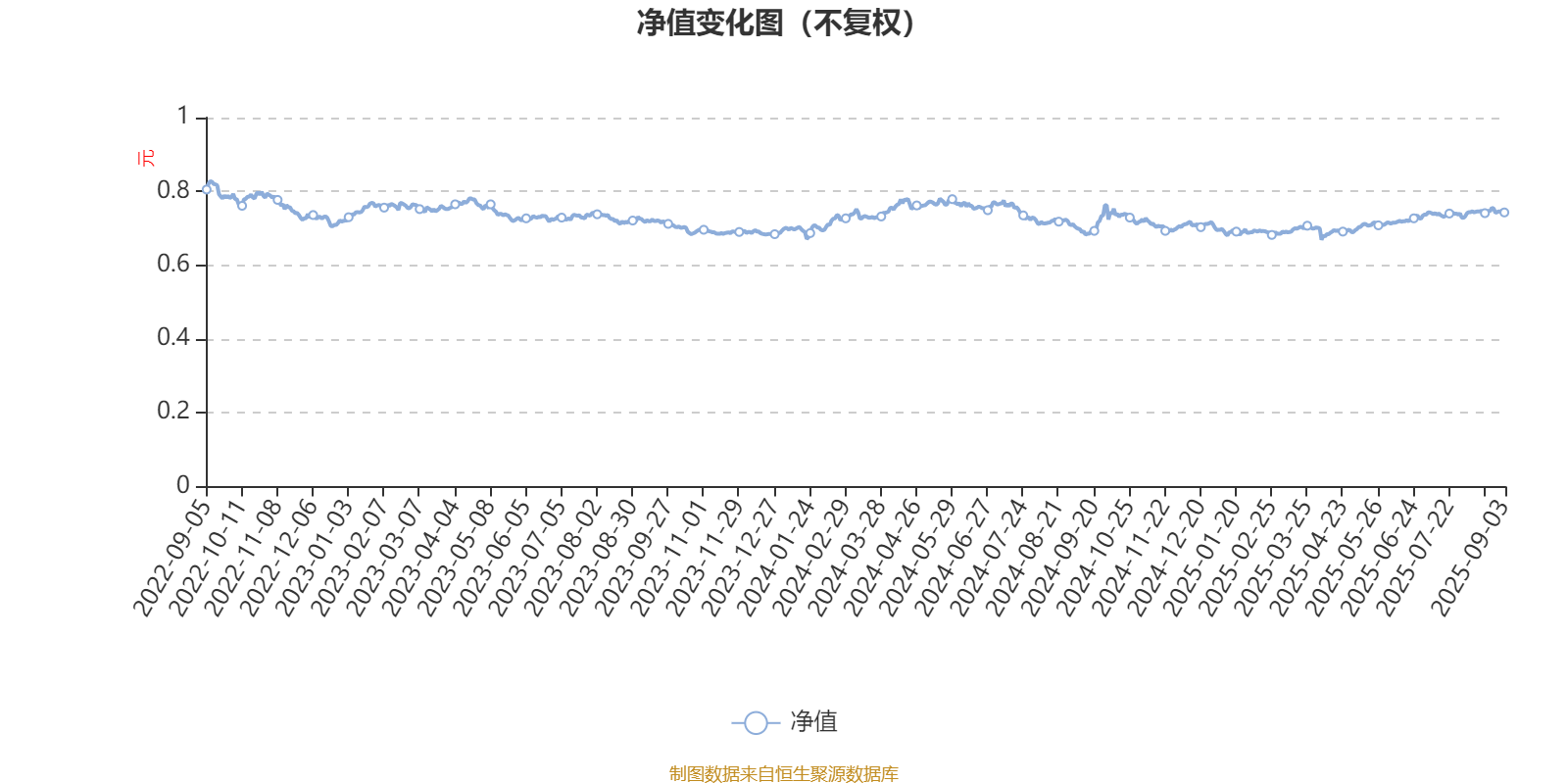
Core Viewpoint - The AI Fund Huashang Dividend Preferred Mixed Fund (000279) reported a profit of 3.38 million yuan for the first half of 2025, with a weighted average profit per fund share of 0.0141 yuan, and a net asset value growth rate of 2.25% during the reporting period [3] Fund Performance - As of September 3, the fund's unit net value was 0.743 yuan, with a recent three-month net value growth rate of 3.77%, ranking 835 out of 880 comparable funds [6] - The fund's six-month net value growth rate was 8.47%, ranking 741 out of 880, while the one-year growth rate was 5.39%, ranking 866 out of 880 [6] - Over the past three years, the fund's net value growth rate was -6.54%, ranking 619 out of 872 [6] Fund Holdings and Valuation - As of June 30, 2025, the fund's weighted average price-to-earnings (P/E) ratio was approximately 8.38 times, significantly lower than the industry average of 15.75 times [12] - The weighted average price-to-book (P/B) ratio was about 0.88 times, compared to the industry average of 2.52 times [12] - The weighted average price-to-sales (P/S) ratio was around 1.55 times, while the industry average was 2.16 times [12] Growth Metrics - For the first half of 2025, the fund's weighted revenue growth rate was 0.03%, and the weighted net profit growth rate was 0.11% [20] - The weighted annualized return on equity was 0.1% [20] Fund Composition and Strategy - The fund's current asset allocation is primarily in stable growth sectors such as banking, electricity, and non-ferrous metals, which have lower capital expenditure needs and stable profitability [3] - The fund manager expressed optimism about high-dividend assets and plans to continue selecting high-dividend targets for allocation [3] - As of June 30, 2025, the fund's top ten holdings included major banks and mining companies, such as Industrial Bank, Shanghai Pudong Development Bank, and Zijin Mining [43] Fund Size and Investor Base - As of June 30, 2025, the fund's total size was 169 million yuan, with 7,645 holders collectively owning 232 million shares [35][38] - Individual investors accounted for 99.97% of the holdings, while management and institutional investors held a minimal percentage [38] Trading Activity - The fund's turnover rate for the last six months was approximately 221.93% [41]

日度策略参考-20250905
Guo Mao Qi Huo· 2025-09-05 06:07
Report Industry Investment Ratings - No specific industry investment ratings are provided in the report. Core Views of the Report - Short - term stock index futures basis widens again, and with liquidity drive, short - term index adjustment may bring long - position layout opportunities [1]. - Short - term gold price may shift to high - level consolidation, but the long - term center of gravity still has upward space; silver may run at a high level in the short term but has the risk of increased volatility [1]. - Aluminum price fluctuates due to weak domestic downstream demand in the off - season and the expectation of the Fed's interest rate cut; zinc price has limited downside space despite inventory pressure; nickel price follows the macro trend in the short term and long - term surplus pressure remains [1]. - Stainless steel futures fluctuate weakly in the short term, and attention should be paid to the actual production of steel mills; tin price is strong in the short term; industrial silicon, polysilicon, and lithium carbonate have their own market characteristics and influencing factors [1]. - Steel products such as rebar and hot - rolled coil have neutral valuations, unclear industrial drivers, and warm macro drivers; iron ore has upward opportunities in the far - month contracts; coal and coke prices are under pressure [1]. - Palm oil and soybean oil are expected to run in a volatile manner; rapeseed oil is recommended to be observed; cotton price may range - bound in the short term; sugar supply is expected to be loose; corn has limited short - term rebound and downward space in the medium term [1]. - Crude oil, fuel oil, and other energy - related products are affected by geopolitical situations, OPEC+ policies, and the Fed's interest rate cut expectations; various chemical products such as PTA, short - fiber, and styrene have their own market trends and influencing factors [1]. - Alumina price is under pressure due to weak fundamentals; copper price is expected to rise; some products like soda ash and ethylene glycol face supply - surplus pressure [1]. Summary by Related Catalogs Macro - finance - **Treasury bonds**: No clear trend judgment provided [1]. - **Gold**: Short - term high - level consolidation, long - term upward space [1]. - **Silver**: Short - term high - level operation with increased volatility risk [1]. Non - ferrous metals - **Aluminum**: Fluctuates due to domestic demand and Fed rate - cut expectation, pay attention to far - month long - position opportunities [1]. - **Zinc**: Limited downside space, be cautious about short - selling in the short term [1]. - **Nickel**: Follows macro trend in the short term, long - term surplus pressure exists, focus on short - term trading and selling hedging opportunities [1]. - **Stainless steel**: Short - term weak fluctuations, pay attention to actual production of steel mills [1]. - **Tin**: Strong in the short term [1]. - **Industrial silicon**: Supply resumes, high hedging pressure, polysilicon production cut expected [1]. - **Polysilicon**: Capacity reduction expected in the long - term, low terminal installation willingness, good profit [1]. - **Lithium carbonate**: Frequent resource - end disturbances, large short - term downstream replenishment, limited subsequent replenishment space [1]. Ferrous metals - **Rebar and hot - rolled coil**: Neutral valuations, unclear industrial drivers, warm macro drivers [1]. - **Iron ore**: Upward opportunities in far - month contracts [1]. - **Coking coal and coke**: Prices are under pressure [1]. Agricultural products - **Palm oil and soybean oil**: Expected to run in a volatile manner, consider exiting long positions [1]. - **Rapeseed oil**: Recommended to observe [1]. - **Cotton**: Short - term range - bound [1]. - **Sugar**: Supply expected to be loose, price with upper - bound pressure [1]. - **Corn**: Limited short - term rebound, downward space in the medium term [1]. - **Pulp**: Consider 11 - 1 positive spread [1]. - **Log**: Weakly fluctuating [1]. - **Pig**: Bearish due to increased supply and lower costs [1]. Energy and chemicals - **Crude oil and fuel oil**: Affected by geopolitics, OPEC+ policies, and Fed rate - cut expectations [1]. - **PTA**: Production resumes, price difference expands, and short - term upward momentum is strong [1]. - **Short - fiber**: Factory overhauls increase, and warehouse receipts increase [1]. - **Styrene**: Bearish due to industry reform rumors and weakening market transactions [1]. - **Urea**: Limited upside space, supported by cost [1]. - **PVC**: Fluctuates weakly, with supply pressure and more near - month warehouse receipts [1]. - **LPG**: Affected by international oil prices, CP prices, and downstream profit conditions [1]. Others - **Shipping**: Supply exceeds the same - period level, and freight rates decline [1]. - **Alumina**: Weak fundamentals put pressure on prices [1]. - **Copper**: Expected to rise, consider stopping profit for spot - futures positive spread [1]. - **Soda ash**: Bearish due to supply surplus [1]. - **Ethylene glycol**: Affected by industry reform rumors and hedging pressure [1].
午评:创业板指大涨超3%,半导体等板块拉升,固态电池概念爆发
Zheng Quan Shi Bao Wang· 2025-09-05 04:18
Core Viewpoint - The market is experiencing a significant upward trend, particularly in the ChiNext index, driven by sectors such as semiconductors and solid-state batteries, while traditional sectors like insurance and banking are underperforming [1] Market Performance - As of the midday close, the Shanghai Composite Index rose by 0.35% to 3778.95 points, the Shenzhen Component Index increased by approximately 2%, the ChiNext Index surged by 3.48%, and the North Star 50 Index climbed by 2.74% [1] - The total trading volume across the Shanghai, Shenzhen, and North exchanges reached 1.3961 trillion yuan [1] Sector Analysis - Underperforming sectors include insurance, banking, liquor, and brokerage, while sectors such as non-ferrous metals, chemicals, automotive, and semiconductors showed strong performance [1] - The solid-state battery, CPO concept, and lithium battery concepts are particularly active in the market [1] Future Outlook - The current ample liquidity is seen as a fundamental support for the market, although there is a short-term overbought pressure that may necessitate technical adjustments [1] - Three key areas to watch include: 1. The potential for a second phase of a bull market with rapid sector rotation, focusing on areas with low valuations and improving conditions [1] 2. Policy signals in response to economic pressures in the second half of the year, particularly the "anti-involution" measures that may catalyze cyclical sectors from the supply side [1] 3. The likelihood of a Federal Reserve interest rate cut in September, which could enhance liquidity and stimulate sectors such as non-ferrous metals [1]

研究所晨会观点精萃:美国就业市场放缓强化降息预期,全球风险偏好继续升温-20250905
Dong Hai Qi Huo· 2025-09-05 01:09
1. Report Industry Investment Ratings - No information provided in the content 2. Core Views of the Report - Overseas, the US labor market is cooling, and Fed officials' remarks have strengthened the expectation of a Fed rate cut, leading to a continued rise in global risk appetite. Domestically, China's August official manufacturing PMI improved slightly but remained below the boom - bust line for the fifth consecutive month. The market is currently focused on domestic incremental stimulus policies and easing expectations, with a weakening short - term upward macro - drive. Attention should be paid to the progress of Sino - US trade negotiations and the implementation of domestic incremental policies [2]. - For assets, the stock index is expected to fluctuate in the short term, and it is advisable to wait and see cautiously. Treasury bonds will likely remain at a high level and fluctuate, also suggesting cautious waiting and seeing. In the commodity sector, black metals will be weakly fluctuating, and it is recommended to wait and see; non - ferrous metals will be fluctuating strongly, and it is advisable to go long cautiously; energy and chemicals will be fluctuating, and it is recommended to wait and see; precious metals will be strongly fluctuating at a high level, and it is advisable to go long cautiously [2]. 3. Summary by Relevant Catalogs 3.1 Macro - finance - Overseas: The US August "small non - farm" was below expectations, the number of initial jobless claims increased, and private enterprise recruitment slowed in August, indicating a cooling labor market. Fed officials said that a rate cut over time is appropriate, strengthening the rate - cut expectation [2]. - Domestic: China's August official manufacturing PMI rose to 49.4 but was below the boom - bust line for the fifth consecutive month. The Ministry of Commerce will introduce policies to expand service consumption in September. There is an enhanced expectation of US easing and domestic easing, but the domestic market sentiment has cooled [2]. - Asset performance: The stock index will fluctuate in the short term; treasury bonds will be at a high - level and fluctuate; black metals will be weakly fluctuating; non - ferrous metals will be strongly fluctuating; energy and chemicals will be fluctuating; precious metals will be strongly fluctuating at a high level. All suggest cautious operations [2]. 3.2 Stock Index - Affected by sectors such as semiconductors, artificial intelligence, and communications, the domestic stock market fell sharply. The fundamentals and policies are similar to the macro - finance situation. The short - term upward macro - drive is weakening. It is recommended to wait and see cautiously in the short term [3]. 3.3 Black Metals 3.3.1 Steel - The domestic steel spot market was stable on Thursday, and the futures price continued to be weak. In the traditional peak demand season, the actual demand was still weak, with the apparent consumption of five major steel products decreasing by nearly 300,000 tons and the inventory increasing by nearly 320,000 tons. Due to phased production restrictions, the steel output decreased by 236,800 tons this week, and the iron - water output is expected to decline slightly. The first round of coke price increase failed, and a price cut started. The steel market is likely to fluctuate within a range in the short term [4]. 3.3.2 Iron Ore - The futures and spot prices of iron ore were strong on Thursday. Phased production restrictions in the northern region reduced ore demand and affected port desilting volume. However, steel mills' profits are acceptable, and they are likely to resume production next week. The global iron ore shipping volume increased by 2.41 million tons to 35.56 million tons this week, and the arrival volume increased by 1.827 million tons. The iron ore price is expected to be strong in the short term [4][5]. 3.3.3 Silicon Manganese/Silicon Iron - The spot prices of silicon iron and silicon manganese were flat on Thursday, and the futures prices declined slightly. The production in Inner Mongolia was stable, with new high - silicon ignition this month and new capacity expected in October. In Ningxia, the operation was stable, and some southern factories were in losses. The silicon iron price has cost support, and the production reduction intention is not strong. The ferroalloy price is expected to fluctuate within a range in the short term [5]. 3.3.4 Soda Ash - The main soda ash contract fluctuated on Thursday. The supply decreased this week, but there is still supply pressure in the new capacity launch cycle, and the supply - surplus pattern remains unchanged. The demand was stable week - on - week, and the profit decreased. Soda ash has a pattern of high supply, high inventory, and weak demand, and it is expected to fluctuate within a range in the short term [6]. 3.3.5 Glass - The main glass contract fluctuated on Thursday. The supply increased slightly, the demand was stable, and the profit increased slightly. With the support of real - estate news, glass is expected to fluctuate within a range in the short term [6]. 3.4 Non - ferrous Metals and New Energy 3.4.1 Copper - US job openings in July dropped to the lowest level in 10 months, and domestic demand will weaken marginally. However, a Fed rate cut in September is almost certain, which may boost copper prices briefly [7]. 3.4.2 Aluminum - Aluminum prices were weak on Thursday, and the inventory continued to increase. Although it is the peak season, demand is poor. The mid - term upward space for aluminum prices is limited, and it is expected to fluctuate in the short term. A Fed rate cut in September may support the futures price [7][8]. 3.4.3 Aluminum Alloy - The supply of scrap aluminum is tight, and the demand is weak. Considering cost support, the price is expected to fluctuate strongly in the short term, but the upward space is limited [8]. 3.4.4 Tin - The combined operating rate in Yunnan and Jiangxi decreased by 0.21% to 59.43%. The supply of tin ore will be more abundant in the future. The terminal demand is weak, and the inventory decreased last week. The price is expected to fluctuate in the short term, with limited rebound space [8]. 3.4.5 Lithium Carbonate - The main lithium carbonate contract rose 1.05% on Thursday. The inventory is gradually being depleted. It is expected to fluctuate widely, and it is advisable to wait and see cautiously [9]. 3.4.6 Industrial Silicon - The main industrial silicon contract rose 0.12% on Thursday. Polysilicon is fluctuating at a high level, and industrial silicon is expected to fluctuate within a range [9]. 3.4.7 Polysilicon - The main polysilicon contract rose 0.55% on Thursday. There are expectations of capacity integration in the market. Polysilicon is facing a game between strong expectations and weak reality and is expected to fluctuate at a high level in the short term [10]. 3.5 Agricultural Products 3.5.1 US Soybeans - The November soybean contract on the CBOT rose 0.17% overnight. The USDA weekly export sales report was postponed. The market is waiting for the September 12 USDA report to see if it will revise the US soybean yield. The Midwest is experiencing drought, which has reduced the excellent - good rate [11]. 3.5.2 Soybean Meal and Rapeseed Meal - Domestic oilseeds have preventive procurement in the third quarter, with high import volumes and increasing operating rates, resulting in a large phased inventory pressure. The basis is difficult to repair in the short term. The price of US soybeans is likely to be under pressure after September 12 if the yield remains unchanged. Brazilian export quotes are rising. The future trend of rapeseed meal depends on Sino - Canadian trade policies [12]. 3.5.3 Oils - CBOT soybean oil futures rose overnight, and BMD palm oil futures also increased slightly. September palm oil exports are expected to be strong, but the future market depends on production data. The inventory of Malaysian palm oil in August is expected to increase to 2.2 million tons. Domestic palm oil imports have a deeper profit inversion, and it is expected to fluctuate in the short term [13]. 3.5.4 Corn - New - season corn has been slightly listed in Northeast China, and farmers are reluctant to sell at low prices. In North China, corn prices are stable, with tight channel inventories. The port inventory is low, and the futures market has rebounded, which is positive for the market [13]. 3.5.5 Pigs - The spot price of pigs has rebounded and is weakly stable. In September, both supply and demand of pigs will increase. The cost of secondary fattening is at a low - profit level, and there is support from the National Day and Mid - Autumn Festival stocking cycle. The pig price should not be overly pessimistic in September [14].
金鹰基金:集中消化交易压力后市场更健康 逆势布局盈利改善方向
Xin Lang Ji Jin· 2025-09-04 10:53
Market Overview - A-shares experienced a significant decline today, with the Shanghai Composite Index dropping by -1.08% to 3765 points, and the ChiNext Index falling by -4.25, indicating a notable market correction [1] - The total trading volume in both markets decreased to 2.58 trillion, reflecting a shrinking market activity [1] - Among the 31 primary industries tracked by Shenwan, 11 showed gains, particularly in sectors like commerce, personal care, banking, and social services, while high-risk sectors such as communications, electronics, non-ferrous metals, and military industries faced substantial pullbacks [1] Market Dynamics - Recent market declines are attributed to short-term capital behaviors, suggesting that the current pullback may help alleviate the pressure from previous rapid increases [2] - The AI sector has been a primary focus, with significant trading activity observed, while other sectors have seen limited opportunities [2] - Historical data indicates that even if the A-share index continues to rise, sectors that have accelerated may require substantial corrections, with an average pullback duration of 6.4 days and an average adjustment magnitude of 2.9% after breaking below the 20-day moving average [2] Economic Environment - The macroeconomic environment in September shows positive changes, with expectations of improved liquidity in the future, and the A-share market currently not facing substantial negative factors [3] - The domestic economic fundamentals remain stable, with the August PMI indicating a marginal improvement in production activities following extreme weather conditions [3] - The anticipated interest rate cut by the Federal Reserve in September, likely by 25 basis points, could further influence market dynamics, with potential implications for the Fed's independence and future rate cut sustainability [3] Sector Allocation - In terms of sector allocation, there is a focus on long-term profit improvement, with technology, innovative pharmaceuticals, non-ferrous metals, and non-bank financials being highlighted as areas of interest [4] - The AI sector is currently at a high emotional trading point, with recommendations to focus on reasonably priced AI applications and advanced semiconductor processes [4] - As market sentiment stabilizes, sectors such as brokerage, insurance, and financial IT are expected to see improvements in both valuation and performance [4] - The anticipated easing of monetary policy and fiscal measures by 2026 may create new investment opportunities in export-oriented sectors like innovative pharmaceuticals and non-ferrous metals [4]
午评:沪指跌近2%,科创50指数大跌超5%,消费板块逆市活跃
Zheng Quan Shi Bao Wang· 2025-09-04 05:11
Market Overview - The stock indices in the two markets experienced significant declines, with the Shanghai Composite Index dropping nearly 2% and falling below 3800 points, while the STAR Market 50 Index plummeted over 5% [1] - By midday, the Shanghai Composite Index was down nearly 2% at 3738.32 points, the Shenzhen Component Index fell by 2.37%, the ChiNext Index decreased by 3.2%, and the STAR Market 50 Index dropped by 5.38% [1] - The total trading volume across the Shanghai, Shenzhen, and Beijing markets reached 161.89 billion yuan [1] Sector Performance - The semiconductor and military sectors saw the largest declines, while insurance, non-ferrous metals, pharmaceuticals, and banking sectors also experienced downturns [1] - Conversely, sectors such as tourism, catering, retail, food and beverage, and textiles and apparel showed gains, with solid-state batteries and duty-free concepts being particularly active [1] Market Dynamics - According to Industrial Securities, the market has shown extreme structural differentiation recently, with volatility significantly increasing, reaching a new high since June 23 in the current upward trend [1] - The increase in volatility is attributed to the need for the market to digest and consolidate after a continuous rise, indicating that for the current "healthy bull" market to sustain, sectors must alternate and rotate upward [1] Future Outlook - Looking ahead, as new momentum sectors begin to flourish, there are numerous sub-sectors within the technology growth sector that warrant exploration, emphasizing the importance of structure over rhythm [2] - For the market to progress further and remain healthy, a "multi-point blooming" approach is necessary, with a focus on the rotation and expansion of five key areas: Hong Kong internet, semiconductor equipment and materials, software applications, innovative pharmaceuticals, and the new energy industry chain [2]
新手股民,被“技术性调整”跌懵了
Sou Hu Cai Jing· 2025-09-04 04:59
Core Viewpoint - The A-share market has experienced a slow bull run since April, but recent adjustments have raised concerns about potential profit-taking and market volatility [1][7]. Market Performance - On September 3, the Shanghai Composite Index fell by 1.16%, briefly losing the 3800-point mark, while the Shenzhen Component Index dropped by 0.65%, with trading volume decreasing to 510.9 billion yuan [3]. - Over 4,500 stocks declined, indicating a significant market pullback, which has affected new investors who recently entered the market [3][5]. - In August, new account openings on the Shanghai Stock Exchange reached 2.6503 million, a 30% increase from July and a 165% year-on-year rise [3]. Historical Context - Historical data shows that A-shares have often experienced sharp declines during bull markets, with notable instances in 2007 and 2015 where maximum drawdowns reached 21% and 15% respectively [5][6]. - The current maximum drawdown since April 2025 is only 2.5%, suggesting that the recent adjustments are more of a technical correction rather than a significant downturn [5][6]. Reasons for Recent Adjustments - Two main factors are identified for the recent market adjustments: a strong technical correction demand due to accumulated profit-taking and tightening external environments, including a downturn in U.S. tech stocks and rising gold prices [7][8]. Outlook on the Bull Market - Despite recent fluctuations, many institutions believe the current "slow bull" market is not over, as the underlying logic supporting the bull run remains intact [8][10]. - Key supportive factors include regulatory support, low deposit rates prompting capital migration, and a clear trend towards new productive forces in the Chinese industry [10][12]. Investment Opportunities - The latest mid-year reports from listed companies indicate a total revenue of 34.93 trillion yuan and a net profit of 2.92 trillion yuan, with the financial sector leading in profitability [14]. - The technology sector, particularly semiconductors, and brokerage firms are highlighted as maintaining high profitability and becoming market hotspots [14]. - The top-performing sectors from April 8 to August 27 include telecommunications, comprehensive services, electronics, non-ferrous metals, and defense industries, with respective gains of 78.06%, 51.18%, 47.31%, 43.49%, and around 40% [14]. Future Investment Strategies - Future investment strategies should focus on sectors driven by technology growth, cyclical commodities, and structural opportunities in industries like automotive and wind energy [16]. - Recommendations include maintaining a stable core portfolio with high dividend stocks and gold, while also considering sectors like non-bank financials, military, and chemicals for growth [16].