
煤炭

Search documents
对话专家:假期印尼RKAB有何进展&美国煤炭振兴法案影响?
2026-02-25 04:13
庄越 长江证券煤炭分析师: 各位领导,大家晚上好,我是长江煤炭的分析师钟月,非常感谢大家在今天马年开工的第 一天来参与到我们煤炭对话专家系列。那我们也知道,春节假期期间,全球市场的供需扰 动持续演绎,受到这个印尼控量,包括美国煤炭振兴法案的影响,在春节假期期间,海外 煤价,包括国内煤价都有所上涨。那整个假期之间,外生的一些冲击,包括美国跟印尼有 哪一些变化的一个情况?那后续我们又怎么去看待煤炭的价格表现?那今天的话,我们非 常荣幸的邀请到海外煤炭专家一起跟我们解读一下假期期间印尼 RKA B 有何进展,以及 假期前美国煤炭,就是特朗普提到的这个美国煤炭振兴法案的实际影响情况。 那下面首先我们先把第一部分先有请海外煤炭专家跟我们一起交流一下假期的一些变化, 然后我们进入到投资者提问环节。那有请,谢谢。 海外煤炭专家: 各位晚上好,非常感谢今天晚上的时间大家能够跟我们一起来进行一下回顾。就是在过去 的春节假期期间哦,两个比较网红或者说热点的地区,一个是印尼,一个是美国,他们的 一个煤炭市场的情况。首先我们还是从玉米市场开始起。其实玉米市场在过年期间,在政 策端的反馈也是挺多的。因为大家还记得,大概在 2 月,就是 ...
煤炭策略报告
2026-02-25 04:13
邱达治 华源证券煤炭分析师: 各位投资者好,我是华融证券的煤炭分析师邱达智。今天是开工的第一天,非常高兴跟各 位投资者分享一下今年的煤炭策略。在开始之前,先祝大家开工大吉。这个煤炭策略报告 是我们在 2025 年 12 月撰写的。主要的题目是供给看政策,需求看天气。紧随去库主线, 布局红利龙头。题目写的还是比较直白的,也就是说在 2026 年,煤炭的供给侧主要是政 策在发力,政策对于供给端的一个约束,会持续的发,产生影响。也是决定了供给的一个 主要的走向。 那么在需求端,天气的影响会比较大,也是说明了其实宏观的一个需求可能较为平静。那 么需,天气它不仅影响了水电的一个挤占的一个作用。另外,对于新能源的一个发力情况 在月度的影响,也会对煤炭的一个需求。产生比较大的一个作用。另外就是我们后半句的 紧随去库主线,还布局红利龙头。因为目前的煤炭总体库存还是在一个高点。往去库的一 个趋势去发展,所以全年的一个高库存和去库也是一个大家需要关注的一个。主要方向, 而红利,在全年的一个布局里面,也是一个非常的重要的主题。 我们的报告就分为动力煤、炼焦煤两个部分进行展开。动力煤,而且每个部分都是从供需 角度去分析。因为煤炭的价 ...
中煤能源20260224
2026-02-25 04:13
Summary of the Conference Call for China Coal Energy Company Overview - **Company**: China Coal Energy - **Industry**: Coal and Energy Key Points Production and Operational Updates - In January 2026, the company reported a coal production of **10.29 million tons**, a year-on-year decrease of **1.19 million tons** due to normal production fluctuations and adjustments around the Spring Festival [3][4] - The production of other coal chemical products such as urea, polyolefins, ammonium nitrate, and methanol showed a slight year-on-year increase [4] - The company’s main coal mines are gradually resuming production after adjustments during the Spring Festival, indicating a return to normal operations [5] Market Conditions - The market is currently described as "tepid," with a typical post-Spring Festival decrease in demand and supply adjustments leading to stable prices [5][6] - International factors, including U.S. tariffs and geopolitical tensions in the Middle East, have caused fluctuations in international energy prices, which may impact domestic energy conditions [5][6] Long-term Contracts - For 2026, the company aims to maintain a long-term contract signing rate of **75%** for self-owned resources, with an execution rate of no less than **90%** [9][10] - The balance between port and pit contracts varies annually based on market demand and pricing conditions, with both types of contracts generally being executed at similar levels [10][11] Pricing Outlook - The recent increase in coal prices, particularly at Qinhuangdao Port, has reached approximately **720** [15] - The company anticipates that coal prices will remain stable throughout the year, with no significant upward or downward pressure expected due to the current energy supply structure [16][17] Cost Management - The company has successfully reduced costs in 2025, with expectations for continued cost control in 2026 [20][21] - Factors contributing to cost reductions include stringent cost management practices and the effective use of safety and maintenance funds [20][21] - However, there may be upward pressure on costs in 2026 due to reduced availability of reserve funds for cost management [22][23] Project Developments - The company is on track to complete the Yulin project by the end of 2026, with other projects in Xinjiang and Shanxi also progressing [26][27] - Future project planning is underway, with a focus on integrating coal, electricity, and new energy assets within the group [30][33] Asset Restructuring Considerations - The company is monitoring potential asset restructuring opportunities within the group, particularly in light of recent developments in the industry [32][34] - No definitive plans or timelines for asset restructuring have been established, but ongoing analysis is being conducted [33][34] Dividend Policy - Currently, there is no long-term dividend policy in place, but the company aims to maintain a stable dividend ratio, with expectations for gradual increases in the future [39][40] - The historical dividend ratio has been around **30%**, with recent increases to approximately **35%** [39][40] Additional Insights - The company emphasizes the importance of maintaining operational stability and effective cost management to navigate market fluctuations and ensure sustainable growth [20][21][39] - The management remains cautious about external factors that could impact pricing and operational efficiency, including international geopolitical developments and domestic energy policies [16][17][39]

英国靠煤炭崛起,美国凭石油称霸,中国单月用电破万亿意味什么?
Sou Hu Cai Jing· 2026-02-25 03:54
Group 1: Energy Consumption Milestone - In July, China's total electricity consumption exceeded 1 trillion kilowatt-hours for the first time in a month, equivalent to the annual electricity consumption of the ten ASEAN countries combined, and surpassing the total of Germany and France [1] - This figure represents a doubling compared to ten years ago, marking a historic milestone in energy consumption [1] Group 2: Historical Context of Energy Sources - The evolution of energy sources has been pivotal in shaping civilizations, with coal playing a crucial role in the Industrial Revolution and the rise of the British Empire [3][4][6] - Coal's energy density far exceeds that of wood, with one million tons of coal releasing heat equivalent to the combustion of six million acres of forest [7] - The transition from coal to oil marked a significant shift in energy dynamics, with the U.S. emerging as a leader in oil production after the first modern oil well was drilled in Pennsylvania in 1859 [9][12] Group 3: China's Energy Strategy - China, as the world's largest industrial nation, faces a unique energy challenge with abundant coal reserves but heavy reliance on imported oil and gas [13] - The country is pursuing a significant energy revolution, transitioning from fossil fuel dependence to renewable energy sources, particularly electricity [14] - China's strategy includes maximizing coal's clean and efficient use while aggressively expanding renewable energy capacity in wind and solar [14] Group 4: Implications for Industry and Technology - The recent surge in electricity consumption supports high-end manufacturing and a fully digitalized smart society, indicating a profound industrial transformation [14][15] - The electric vehicle industry has seen a 25.7% increase in electricity consumption, while solar manufacturing has surged by 30%, highlighting the energy-intensive nature of these sectors [15][16] - The rise of AI and data centers, which require substantial energy, underscores the importance of electricity as a strategic resource for future competitiveness [17][18] Group 5: Future Outlook - China's annual electricity consumption has surpassed 10 trillion kilowatt-hours, accounting for one-third of global consumption, while the U.S. stands at approximately 4 trillion [19] - The ongoing construction of the world's largest hydropower station and plans for over a hundred new nuclear power plants aim to establish China as a leading energy power [19][20] - Electricity is evolving from a mere commodity to a core strategic resource that influences national strength and global capital flows, signaling the onset of a new industrial revolution centered around China [20]


创金合信基金魏凤春:周期复辟与成长分化的考量
Xin Lang Cai Jing· 2026-02-25 03:50
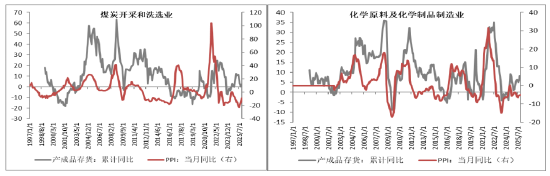
Group 1: Market Trends and Policy - The core view is that the differentiation in asset trends will be a clear characteristic in 2026, with a focus on the revival of cycles and the authenticity of growth [1][11] - The analysis indicates that the power of market cycles outweighs that of policies, with a shift towards pro-cyclical rather than counter-cyclical adjustments in policy [2][12] - The emphasis is on supporting new leading industries, particularly technology growth, which is seen as a consensus among governments, entrepreneurs, and investors in both China and the US [3][13] Group 2: Inventory Cycles in the US - The short-term inventory cycle is a key concern for investors, with the US inventory cycle indicating a stable adjustment period in 2024, contributing between -0.91 to +1.17 percentage points to GDP [4][14] - The inventory contribution turned positive in Q4, marking the beginning of a mild replenishment phase, which is expected to support manufacturing in 2026 [5][15] - Recent PMI data from the US shows a rebound, with the new orders index reaching its highest since February 2022, indicating accelerated inventory replenishment [5][15] Group 3: Inventory Cycles in China - Chinese industrial enterprises are at a critical point in the inventory cycle, transitioning from a bottoming phase to passive replenishment, with a year-on-year increase in finished goods inventory of 4.25% [6][16] - The PPI in January 2026 showed a year-on-year decline of 1.4%, indicating a significant recovery from previous lows, suggesting a warming demand and passive replenishment [6][16] - The coal and chemical industries are at a key inventory switching stage, with coal inventories tightening but pressure easing, while the chemical sector shows a dual increase in volume and price, indicating early-stage replenishment [7][17] Group 4: Growth Differentiation - The current market discussion is shifting from concerns about cyclical revival to the differentiation in growth, emphasizing the importance of identifying structural opportunities in the growth sector [8][19] - The market is moving from a broad-based rally to a selective approach, where valuation and logic differentiation in growth sectors are becoming inevitable [8][19] - The traditional internet giants are facing pressure from peak traffic growth, while AI companies are rising due to technological breakthroughs, highlighting a fierce competition between traditional and new technologies [8][19]
中原期货周报:终端需求尚未启动,原料短时承压-20260225
Zhong Yuan Qi Huo· 2026-02-25 03:21
1. Report Industry Investment Rating - Not provided in the content 2. Core View of the Report - The terminal demand has not started yet, and raw materials are under short - term pressure. The iron ore and coking coal and coke markets are both showing a weak - running trend. Attention should be paid to the subsequent changes in molten iron [3][4] 3. Summary by Directory 3.1 Market Review - Before the holiday, the raw material market showed a slight decline. Iron ore prices dropped, while the spot prices of coking coal and coke remained stable with light trading volume. The finished products had a seasonal inventory build - up, and the raw material restocking ended. The market was waiting for post - holiday guidance. For example, the price of imported iron ore (PB powder 61.5%, Australia) in Qingdao Port increased by 11 yuan/ton to 756 yuan/wet ton, and the price of hot - rolled coil in Guangzhou increased by 10 yuan/ton to 3250 yuan/ton [9] 3.2 Iron Ore Supply and Demand Analysis - **Supply**: The iron ore shipment decreased by 22.70% month - on - month and 29.65% year - on - year, reaching 1948.8 tons. The arrival volume at 45 ports decreased by 10.98% month - on - month but increased by 2.36% year - on - year, reaching 2152.4 tons [16] - **Demand**: The daily output of molten iron increased by 1.91 tons month - on - month and 2.98 tons year - on - year, reaching 230.49 tons. The port clearance volume at 45 ports increased by 2.96% month - on - month and 17.98% year - on - year, reaching 351.19 tons. The inventory - to - sales ratio of 247 steel enterprises was 37.49 days, increasing by 2.57% month - on - month and 15.75% year - on - year [21] - **Inventory**: The inventory at 45 ports decreased by 1.13% month - on - month but increased by 11.33% year - on - year, reaching 16946.32 tons. The imported iron ore inventory of 247 steel enterprises increased by 3.75% month - on - month and 16.72% year - on - year, reaching 10703.93 tons. The average available days of iron ore for 114 steel enterprises decreased by 1.41% month - on - month but increased by 24.55% year - on - year, reaching 30.85 days [26] 3.3 Coking Coal and Coke Supply and Demand Analysis - **Supply**: The coking coal mine operating rate decreased by 2.76% month - on - month but increased by 4.17% year - on - year, reaching 86.67%. The daily average of Mongolian coal customs clearance volume decreased by 34.88% month - on - month and 24.67% year - on - year, reaching 10.06 tons. The capacity utilization rate of coal washing plants decreased by 9.17% month - on - month and 3.18% year - on - year, reaching 32.28% [31] - **Coking Enterprises**: The profit per ton of coke for independent coking plants increased by 2 yuan/ton month - on - month and 63 yuan/ton year - on - year, reaching - 8 yuan/ton. The capacity utilization rate of independent coking plants decreased by 0.06% month - on - month but increased by 0.73% year - on - year, reaching 72.89%. The capacity utilization rate of steel mill coke remained stable month - on - month but decreased by 0.30% year - on - year, reaching 86.33% [38] - **Coking Coal Inventory**: The coking coal inventory of independent coking plants increased by 4.09% month - on - month and 2.22% year - on - year, reaching 1036.09 tons. The coking coal inventory of steel mills increased by 1.38% month - on - month but decreased by 3.99% year - on - year, reaching 814.12 tons. The coking coal port inventory decreased by 1.04% month - on - month and 36.82% year - on - year, reaching 286.38 tons [44] - **Coke Inventory**: The coke inventory of independent coking plants increased by 26.90% month - on - month but decreased by 45.92% year - on - year, reaching 55.52 tons. The coke inventory of steel mills decreased by 1.33% month - on - month but increased by 1.35% year - on - year, reaching 688.61 tons. The coke port inventory decreased by 2.70% month - on - month but increased by 3.08% year - on - year, reaching 199.06 tons [49] - **Spot Price**: The price of low - sulfur coking coal in Shanxi remained stable week - on - week but increased by 210 yuan/ton year - on - year, reaching 1570 yuan/ton. The ex - factory price of quasi - first - grade metallurgical coke in Handan remained stable month - on - month but increased by 30 yuan/ton year - on - year, reaching 1390 yuan/ton [52] 3.4 Spread Analysis - The spread between hot - rolled coil and rebar slightly narrowed, and the spread between iron ore contracts 5 - 9 also slightly narrowed [54]
周期板块点评:周期资源品配置正当时
Bank of China Securities· 2026-02-25 03:18
Core Insights - The report emphasizes that the current environment is favorable for allocating resources in cyclical sectors, particularly in the first quarter of 2026, due to rising overseas uncertainties and the expected resumption of domestic activities after the Spring Festival [1][2]. Group 1: Market Performance - The cyclical sector performed well, with significant gains in industries such as oil and petrochemicals, construction materials, basic chemicals, non-ferrous metals, and coal, driven by geopolitical tensions, U.S. tariff policy uncertainties, and domestic supply-demand expectations [2]. - The escalation of the U.S.-Iran situation has led to rising oil prices, with global crude oil prices reaching a six-month high during the Spring Festival, positively impacting the domestic oil and petrochemical sector [2]. - Uncertainties surrounding tariffs have provided strong support for precious metal prices, with international gold prices continuing to rise amid renewed global trade uncertainties [2]. Group 2: Supply Constraints and Price Expectations - Coal prices are expected to recover due to supply constraints, with domestic coal inventories at major ports dropping to low levels and signals of reduced coal supply from Indonesia, which may create price space for domestic coal [2]. - The resumption of work after the Spring Festival is anticipated to boost demand expectations, further supporting coal prices [2]. Group 3: Strategic Outlook - The report reiterates that the first quarter is a critical time for resource allocation, with the recent rise in overseas uncertainties likely to catalyze a new round of resource price movements [2]. - The evolution of the U.S.-Iran situation will be a significant factor influencing oil and precious metal prices, while the restart of U.S. trade policy uncertainties may provide strong support for precious metals [2]. - Domestic construction activity and macroeconomic policy developments ahead of the Two Sessions will significantly impact the sustainability of the coal sector and other domestic resource prices [2].
中国秦发(00866):SDE加速爬坡,TSE蓄势待建
GOLDEN SUN SECURITIES· 2026-02-25 03:07
Investment Rating - The investment rating for the company is "Buy" [3] Core Insights - The company has issued a profit warning for the fiscal year 2025, expecting a net loss of no more than RMB 98 million, a significant decline from a net profit of approximately RMB 556 million in 2024. This shift is primarily due to the strategic transformation and divestment of its domestic Shanxi coal business [1] - The Indonesian coal business is showing strong growth, with expected raw coal production of 5.42 million tons in 2025, a year-on-year increase of 111%, and washed coal production expected to reach 3.147 million tons, a substantial increase of 922% [1] - The company is focusing on high-growth core businesses, having cleared historical liabilities and now concentrating entirely on its Indonesian coal operations, which have significant growth potential [1][2] - The rapid capacity expansion in Indonesia aligns with market trends, and despite the short-term loss indicated in the profit warning, the operational data and growth outlook reinforce the company's position as a high-growth coal player in Indonesia [2] Financial Summary - The company expects revenues to decline to RMB 947 million in 2025, a decrease of 63.6% year-on-year, before rebounding to RMB 2.511 billion in 2026 and RMB 4.337 billion in 2027 [9] - The projected net profit for 2025 is a loss of RMB 98 million, followed by a profit of RMB 613 million in 2026 and RMB 1.167 billion in 2027, indicating a strong recovery trajectory [9] - The company's earnings per share (EPS) is expected to be -0.04 RMB in 2025, improving to 0.24 RMB in 2026 and 0.46 RMB in 2027 [9] Production Capacity and Infrastructure - The SDE No. 2 mine is expected to start production in April 2026, which will double the company's total production capacity [8] - The TSE No. 1 mine is in discussions for construction contracts with large state-owned enterprises, with contracts expected to be signed in the first half of 2026, providing a solid foundation for mid-to-long-term capacity reserves [8] - The existing washing capacity at SDE No. 1 is set to increase from 8 million tons per year to 13 million tons per year by the end of April 2026, ensuring product quality and pricing [8]
重视统一电力市场,煤与煤电+市值管理
Zhong Guo Neng Yuan Wang· 2026-02-25 02:48
Core Viewpoint - The electricity reform has entered a new stage, emphasizing the establishment of a unified electricity market system by 2030, with market-based trading accounting for approximately 70% of total electricity consumption by then [2] Group 1: Electricity Market Reform - The State Council issued the "Implementation Opinions on Improving the National Unified Electricity Market System," highlighting the goal of basic establishment by 2030 and a market-based trading electricity share of around 70% by 2030, up from 64% by the end of 2025 [2] - The reform is structured in three phases: government pricing, market-based trading, and a unified electricity market, with the current phase being the third [2] - The report suggests that future trading will involve cross-regional, cross-source, and cross-grid transactions, utilizing various market types to realize the value of electricity, capacity, auxiliary services, and environmental benefits [2] Group 2: Coal and Electricity Demand - There is a focus on the elasticity of coal demand in the first half of the year, with expectations of high growth due to a low base effect, particularly in energy-intensive manufacturing sectors [3] - The report anticipates that coal-fired electricity generation may also see high growth in the first half of the year, as the base for coal-fired generation in early 2025 is relatively low, with a year-on-year decline of 2.15% [3] - The demand for coal may be further driven by the growth of overseas data centers and industrialization, potentially leading to increased coal consumption and tighter import coal supplies [3] Group 3: Investment Opportunities - The report emphasizes the importance of coal demand elasticity and coal price feedback, recommending attention to companies like Yanzhou Coal Mining, China Shenhua Energy, and Shaanxi Coal and Chemical Industry [4] - For thermal power, the stability of Q1 performance under new market trading and capacity pricing policies is assessed, with a focus on dividend stability in the current market environment [4] - The report highlights investment opportunities in state-owned enterprises with a market capitalization around 60 billion, such as Guiguan Electric Power and Huadian International [5]
20260225申万期货品种策略日报-双焦(JM&J)-20260225
Shen Yin Wan Guo Qi Huo· 2026-02-25 02:34
Report Summary 1. Report Industry Investment Rating - No relevant information provided. 2. Core View - The main contracts of coking coal and coke showed a fluctuating trend in the night session yesterday. The total position of coking coal increased slightly month - on - month. Affected by the Spring Festival holiday, the output of clean coal from mines decreased slightly month - on - month, the import volume of Mongolian coal decreased from the high level but remained at the highest level in the same period. The supply pressure of coking coal has been relieved. The increase in molten iron output on the demand side was not obvious, and the output of downstream coke remained basically the same month - on - month, lacking obvious incremental demand. After the festival, with the resumption of work and production, there is an expectation of an increase in molten iron output, which will drive the improvement of the rigid demand for coking coal and coke and strongly support coal prices. In the future, attention should be paid to the trend of molten iron output, mine operation, and import - related policy trends [2]. 3. Summary by Relevant Catalogs Price and Volume Data of Coking Coal and Coke Futures Contracts - **Price Changes**: For coking coal, the previous day's closing prices of the 9 - month, 1 - month, and 5 - month contracts were 1365.5, 1101.5, and 1184.5 respectively, with changes of - 10.5, - 19.5, and - 17.0 compared to the day before, and price change rates of - 0.76%, - 1.74%, and - 1.41% respectively. For coke, the previous day's closing prices of the 9 - month, 1 - month, and 5 - month contracts were 1800.0, 1634.5, and 1706.5 respectively, with changes of - 40.0, - 47.5, and - 44.5 compared to the day before, and price change rates of - 2.17%, - 2.82%, and - 2.54% respectively [2]. - **Trading Volume and Open Interest**: The trading volumes of coking coal contracts for 9 - month, 1 - month, and 5 - month were 2201, 592026, and 39587 respectively, and the open interests were 9972, 468538, and 87519 respectively, with increases of 702, 56059, and 1720 respectively. The trading volumes of coke contracts for 9 - month, 1 - month, and 5 - month were 611, 19187, and 1014 respectively, and the open interests were 808, 39187, and 2307 respectively, with increases of 82, 3937, and 368 respectively [2]. - **Spread Data**: For coking coal, the current spreads of 1 - month minus 5 - month, 5 - month minus 9 - month, and 9 - month minus 1 - month were 240, - 79.5, and - 160.5 respectively, with changes of 306, 2.5, and - 308.5 respectively. For coke, the current spreads of 1 - month minus 5 - month, 5 - month minus 9 - month, and 9 - month minus 1 - month were 160.5, - 77.5, and - 83 respectively, with changes of 429.5, 2, and - 431.5 respectively [2]. Spot Price Data - The spot prices of Mongolian No. 5 primary coking coal (port self - pick - up price), low - sulfur primary coking coal (Linfen ex - factory price), low - sulfur primary coking coal (Taiyuan rail - side price), Tangshan Grade I coke (ex - factory price), Jinzhong quasi - Grade I coke (ex - factory price), and Rizhao Port quasi - Grade I coke (warehouse - out price) were 1227, 1570, 1391, 1852, 1330, and 1470 respectively, with no changes [2]. Macro - related Information - On February 24, the People's Bank of China announced that the one - year and five - year loan prime rates (LPR) remained unchanged at 3% and 3.5% respectively, for the ninth consecutive month. In addition, the central bank planned to conduct a 600 - billion - yuan MLF operation on February 25 with a term of 1 year, using the method of fixed - quantity, interest - rate tender, and multiple - price winning bids [2].