
石化

Search documents
政策预期发酵压制债市情绪
Qi Huo Ri Bao· 2025-07-22 09:44
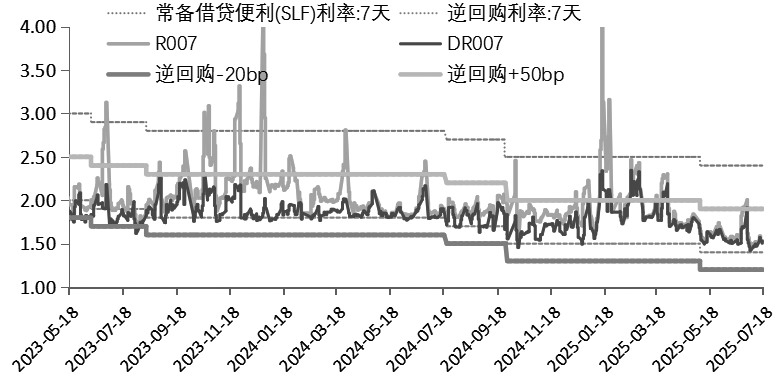
Group 1 - The recent stock and bond market dynamics show a "see-saw" effect, with strong policy expectations and a rising stock market putting pressure on the bond market [1] - The bond market experienced a brief rebound due to the disconfirmation of housing reform expectations and weak economic data, but renewed policy expectations led to a decline in bond prices [1][2] - The People's Bank of China (PBOC) has been actively managing short-term liquidity, with significant net injections to counter tax period funding demands, resulting in a more favorable environment for short-term bonds [2] Group 2 - The focus of urban development in China is shifting from large-scale expansion to urban renewal, emphasizing safety and quality improvements rather than merely increasing housing supply [3] - The economic growth rate for Q2 was slightly down to 5.2%, with structural and price weaknesses persisting, indicating a need for careful monitoring of policy impacts on economic stability [5][6] - Consumer spending remains weak, and real estate investment is still in a bottoming phase, suggesting that the overall economic momentum lacks elasticity despite a stable economic backdrop [6] Group 3 - The upcoming implementation of the Ministry of Industry and Information Technology's ten key industry growth plans is expected to exert continuous pressure on the bond market [2][6] - The market anticipates that the upcoming Central Political Bureau meeting will likely focus on maintaining existing policies rather than introducing new incremental policies, which may further influence market sentiment [5][6] - The bond market's fundamental direction remains unchanged, with a cautious outlook on the potential for further adjustments in response to evolving economic conditions and policy expectations [6]

政策高频 | 中央城市工作会议在北京举行(申万宏观·赵伟团队)
申万宏源宏观· 2025-07-22 09:30
关注、加星,第一时间接收推送! 文 | 赵伟、贾东旭、侯倩楠 联系人 | 侯倩楠 报告正文 一、 中央城市工作会议部署城市工作重点任务 7月14日至15日,中央城市工作会议在北京举行。相比2015年中央城市工作会议提出的"加快棚户区和危房改 造,有序推进老旧住宅小区综合整治,力争到2020年基本完成现有城镇棚户区、城中村和危房改造";当前"存量提 质增效"研判下,本次会议指出要"加快构建房地产发展新模式"、"稳步推进城中村和危旧房改造",并未提出明确目 标。会议中,总书记也提及"工业化进程,西方走了几百年,而我们只用了几十年。深层次看,我们工业化的短板 还很多,要花时间去补。城镇化也是这样,不能面子可以、里子不行,不要搞急于求成、急功近利的事情。有些事 要打攻坚战,有些事要久久为功。" 二、国常会:规范新能源汽车产业竞争秩序 7月16日, 国务院总理李强主持召开国务院常务会议。会议研究了做强国内大循环重点政策举措落实工作,指 出要深入实施提振消费专项行动,系统清理制约居民消费的不合理限制,优化消费品以旧换新政策,扩大新质生产 力、新兴服务业等领域投资。会议还提出要规范新能源汽车产业竞争秩序,要加强成本调查和价 ...

汕尾发布“微短剧+”政策,最高扶持50万元|“百千万”周周见
Nan Fang Nong Cun Bao· 2025-07-22 08:31
Group 1 - The "Micro Short Drama+" policy in Shanwei aims to support the cultural industry with a maximum funding of 500,000 yuan for projects exceeding 5 million yuan [47][52] - The policy includes measures to encourage the establishment of film and television bases and the production of short dramas that highlight Shanwei's unique cultural and historical narratives [50][55] - The initiative is part of a broader strategy to enhance the local cultural tourism brand and stimulate economic growth through the "Hundred Thousand Ten Thousand Project" [50][57] Group 2 - The "Hundred Thousand Ten Thousand Project" in Guangdong focuses on key sectors, with various local governments implementing innovative reforms and initiatives [3][4] - The project aims to enhance the quality of life in rural areas, as seen in the establishment of the first rural "Future Community" in Shaoguan, which has already welcomed its first residents [31][32] - The project also includes significant investments in water economy projects, with approximately 1.7 billion yuan in social capital attracted for various initiatives [19][23] Group 3 - The launch of the "Media + Rural Creators" studio in Heyuan represents a new model for integrating media and rural entrepreneurship, aiming to enhance local economic development [129][134] - The studio will focus on agricultural product branding and talent training, creating a comprehensive support system for rural innovation [135][137] - The initiative is part of a larger trend in Guangdong to leverage media resources for rural revitalization and economic growth [132][138] Group 4 - The third Guangdong (Chaozhou) Specialty Food Industry Conference achieved record-breaking intent orders of 15.35 billion yuan, showcasing the region's food industry potential [96][98] - The event attracted over 26,700 visitors and featured more than 1,000 enterprises, highlighting the importance of food manufacturing and distribution networks [99][100] - The conference aimed to promote local food products on a national and global scale, enhancing the region's economic footprint [106][107] Group 5 - The launch of the ExxonMobil Huizhou Ethylene Project, with an investment exceeding 10 billion USD, marks a significant milestone for foreign investment in China's petrochemical sector [88][90] - The project includes advanced production facilities for ethylene and various polyethylene products, aimed at reducing import dependency and supporting local industries [92][94] - This initiative is expected to bolster the economic development of the Guangdong-Hong Kong-Macao Greater Bay Area by providing essential materials for multiple sectors [95]


丙烯期货上市,化塑汇期现服务助力产业链稳健发展
Sou Hu Cai Jing· 2025-07-22 06:52
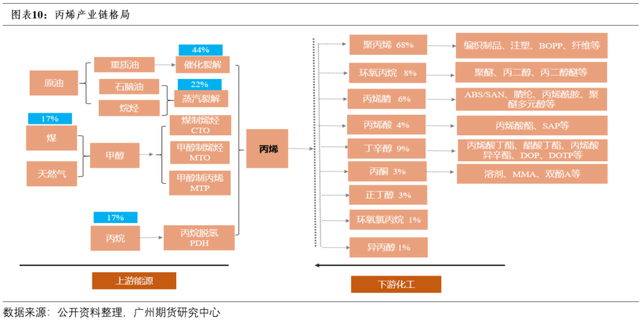
Core Viewpoint - The launch of propylene futures on the Zhengzhou Commodity Exchange marks a significant development in the petrochemical industry, providing a risk management tool and pricing reference for upstream and downstream enterprises in the propylene value chain [1][2]. Industry Overview - Propylene is the largest olefin product in China, with a total production capacity expected to reach 69.73 million tons by the end of 2024, including an additional capacity of 5.82 million tons [2]. - The introduction of propylene futures and options will fill the gap in the carbon three industry chain and create strong linkages with other chemical futures such as polypropylene and methanol [2]. Market Dynamics - Polypropylene (PP) is the largest downstream product of propylene, accounting for nearly 68% of demand. The domestic PP market has shown a downward trend, with prices dropping by 4.66% to 7,160 yuan per ton as of June 30 [3]. - The fluctuation in PP prices has impacted factories, making it difficult to control procurement costs without locking in raw material prices, leading to potential order losses [3]. Risk Management Solutions - The "basis pricing + option trading" customized hedging solution designed by Huashuihui helps factories lock in maximum procurement prices while mitigating risks associated with price fluctuations [6]. - This service allows factories to focus on daily operations while maintaining stable production, addressing liquidity issues caused by high margin requirements in traditional basis trading models [6]. Future Capacity Projections - Methanol production capacity in China is projected to reach 107.205 million tons by mid-2025, with an increase of 6.7 million tons, driven by new projects in Inner Mongolia [7]. - Polypropylene capacity is expected to reach 46.845 million tons by mid-2025, with an additional 3.155 million tons added in the first half of the year [8]. - ABS plastic capacity is anticipated to reach 10.08 million tons by mid-2025, with new production facilities coming online [9]. - Phenol production capacity is projected to exceed 735,000 tons by the end of 2025, with several companies planning new capacity additions [10].
丙烯期货及期权上市 “郑州价格”助力石化产业向优向新
Xin Hua Cai Jing· 2025-07-22 06:50
Core Viewpoint - The listing of propylene futures and options on the Zhengzhou Commodity Exchange marks a significant development in China's chemical industry, providing essential risk management tools and enhancing the country's pricing influence in the global chemical market [1][4]. Group 1: Market Dynamics - Propylene is widely used in various sectors, including plastics, home appliances, automotive, and chemical fibers, making it a crucial intermediate product in the chemical industry [1]. - China's propylene production capacity has grown at an average annual rate of 13.7% from 2014 to 2023, while consumption has only increased by approximately 11.2% during the same period, leading to a loosening supply-demand balance [2]. - The expected growth rate for new propylene capacity is around 14% this year and 8% next year, with total capacity projected to exceed 8 million tons by the end of 2025 [2][3]. Group 2: Risk Management - The introduction of propylene futures and options fills a gap in the risk management tools available for the propylene industry, allowing companies to hedge against price fluctuations effectively [3][4]. - Industry experts emphasize the need for innovative marketing strategies and risk management practices, such as basis trading and rights trading, to enhance sales efficiency and customer loyalty [3]. - The new derivatives will provide a standardized pricing mechanism, reducing information asymmetry and improving decision-making for companies in the propylene supply chain [4][5]. Group 3: Pricing Influence and Development - The establishment of a futures market for propylene is expected to enhance China's pricing power in the global chemical market, transforming the country's scale advantages into pricing advantages [4][5]. - The futures and options market will serve as a reliable pricing reference and risk management tool, supporting the industry's transition to high-quality development [4][5]. - The integration of propylene futures into the broader derivatives chain will allow companies to manage fragmented commodity risks more effectively, thereby increasing the resilience of the entire supply chain [5]. Group 4: Initial Market Performance - On its first trading day, propylene futures opened at 6,550 yuan per ton, reflecting a slight increase from the listing price of 6,350 yuan per ton [6]. - Analysts suggest a trading strategy of short-term long positions and long-term short positions, considering the current market conditions and supply pressures [6][7]. - The overall sentiment in the chemical sector remains positive, with expectations of rising demand and improved profitability for downstream products [7].
研究所日报-20250722
Yintai Securities· 2025-07-22 05:19
Group 1 - The introduction of the "Housing Rental Regulations" aims to standardize rental activities and promote high-quality development in the housing rental market, marking a significant step towards establishing a dual housing system of purchase and rental [2] - Central Huijin's investment of 200 billion yuan in 10 broad-based ETFs during Q2 is expected to boost market confidence and support A-shares, particularly after the recent market fluctuations [3] - The construction of 14 major projects in China, with a total investment of 136.2 billion yuan, indicates a critical bidding window in the next 3-5 years, as the controlled nuclear fusion sector enters a phase of intensive infrastructure development [4] Group 2 - The National Energy Administration reported a 5.4% year-on-year increase in total electricity consumption in June, indicating strong domestic electricity demand and potential growth in related power generation capacities [5] - The upcoming World Robot Conference and World Humanoid Robot Games in Beijing are expected to showcase advancements in robotics, potentially driving investment opportunities in the humanoid robot sector [5] - UBS's analysis suggests that the "anti-involution" policies may lead to improved supply-demand relationships and enhanced corporate profitability, with a focus on industries like new energy vehicles and solar energy [6][8] Group 3 - The report highlights that stock prices typically respond positively to incremental policies, with significant outperformance observed in related sectors during the initial phases of policy implementation [6] - The initial correlation between stock prices and commodity prices tends to decouple over time, with significant price increases observed in commodities during capacity reduction efforts [7] - The distinction between "anti-involution" measures and supply-side reforms suggests that current adjustments may be more market-driven, focusing on emerging industries dominated by non-state enterprises [8] Group 4 - The construction materials, building decoration, and steel industries have shown the highest growth rates recently, indicating strong performance in these sectors [24] - The mechanical equipment, construction materials, and electric equipment sectors have seen significant net capital inflows, reflecting investor interest and confidence in these areas [26] - The recent changes in market turnover and trading volume suggest a dynamic shift in investor behavior and sector performance, with notable fluctuations in the TMT and cyclical sectors [31]
针状焦转型,需产学研用齐发力
Zhong Guo Hua Gong Bao· 2025-07-22 03:26
Core Viewpoint - The development of high-end carbon materials from surplus carbon resources in oil refining and basic chemical production is a viable solution to achieve carbon reduction goals and enhance new production capabilities in China [1] Group 1: High-Quality Needle Coke Demand - High-end oil-based needle coke is a synthetic graphite material produced from low-value catalytic cracking oil slurry, characterized by its fibrous or needle-like texture [2] - Needle coke has advantages such as low thermal expansion coefficient, low sulfur, low ash content, low metal content, and ease of graphitization, making it suitable for lithium-ion battery anode materials [2] - The demand for high-quality needle coke is experiencing explosive growth due to the booming industries of new energy vehicles, green energy storage, and steel recycling in China [2] Group 2: Challenges in High-End Product Transformation - The transition of needle coke products to high-end and industrialized production faces challenges, including the need for continuous improvement in technology and innovation to overcome foreign technology blockades [3] - Domestic production of high-end needle coke is limited, with only a few companies capable of stable production, leading to a long-term supply-demand imbalance [3][4] - Resource management optimization is required due to the challenges of cross-enterprise and cross-industry resource allocation, resulting in raw material shortages and production inefficiencies [4] Group 3: Integration of Industry, Academia, and Research - To address the challenges, there is a need to develop efficient catalytic oil slurry de-solidification technologies and optimize production processes to enhance the quality of needle coke [5][6] - The establishment of a comprehensive quality control system throughout the "raw material-product-application" process is essential for improving product stability and performance [6] - A market-oriented approach is necessary to shorten the cycle from laboratory production to market application, with efforts to create an information-sharing mechanism across the entire industry chain [6]
杨德龙:低利率环境有利于权益投资
Xin Lang Ji Jin· 2025-07-22 02:01
Group 1: Monetary Policy and Economic Impact - The People's Bank of China (PBOC) maintained the Loan Prime Rate (LPR) at 3.05% for one year and 3.5% for five years, aligning with market expectations due to the current low interest rate environment [1] - The low interest rate policy aims to stimulate economic growth and stabilize the real estate and stock markets, with adjustments made to mortgage rates to support the housing market [1] - There is limited potential for significant increases in housing prices, as expectations have fundamentally changed, and the low interest rate policy primarily seeks to prevent a sharp decline in property values [1] Group 2: Industrial Growth and Economic Recovery - The Ministry of Industry and Information Technology (MIIT) proposed a new round of growth stabilization plans for key industries such as steel, non-ferrous metals, petrochemicals, and building materials, indicating more policies will be implemented in the second half of the year [3] - China's GDP grew by 5.3% in the first half of the year, and further stabilization policies are needed to achieve the annual growth target of around 5% [3] - The stock market is expected to benefit from the economic recovery, with the Shanghai Composite Index surpassing 3500 points and the Hang Seng Index exceeding 25000 points, indicating potential for increased investment opportunities [3] Group 3: Trade and Inflation Concerns - The trade war initiated by President Trump has led to rising costs for American businesses, with the Federal Reserve reporting price increases across all regions, particularly affecting manufacturing and construction sectors [4] - The increase in tariffs has pressured profit margins for companies, leading some to pass costs onto consumers, which may contribute to inflationary pressures [4] - Despite the challenges posed by tariffs, China's economy showed resilience with a 5.3% GDP growth, driven by strong consumer spending, which accounted for 52% of GDP growth [4]
中信证券:化工板块有望在第三季度迎来板块性复苏
news flash· 2025-07-22 00:43
Core Viewpoint - The chemical sector is expected to experience a sector-wide recovery in the third quarter due to intensive policies and industry catalysts [1] Investment Directions - Focus on anti-involution and equipment upgrades, with recommendations to pay attention to organic silicon, petrochemical industry chain, polyurethane, and tires [1] - Industry synergy and export arbitrage are highlighted as potential investment opportunities [1] - Chemical products related to the墨脱水电站 (Motu Hydropower Station) are also identified as a key area for investment [1]

丙烯期货及期权今日在郑商所上市
Qi Huo Ri Bao Wang· 2025-07-21 16:18
Core Viewpoint - The listing of propylene futures and options on the Zhengzhou Commodity Exchange marks a significant development in China's futures market, enhancing the risk management framework for the olefin industry and providing diverse hedging tools for enterprises [1][2]. Industry Summary - The trading code for propylene futures is PL, with the initial contracts priced at 6350 yuan/ton, closely aligning with current spot prices in East China, reflecting market expectations for future prices [1]. - The rapid increase in domestic propylene production capacity, driven by large-scale refining and PDH projects, creates a strong demand for effective risk management tools, which propylene futures will provide [1][2]. - The propylene futures and options are expected to improve the chemical derivatives market ecosystem, offering more risk management tools for upstream and downstream enterprises [2]. - Propylene, being the largest olefin product in China, has a substantial trading scale and market demand, which supports the listing of futures and options contracts [2][3]. - The introduction of propylene futures will enhance pricing efficiency and market liquidity, providing a transparent pricing benchmark for enterprises to lock in profits [3][4]. - The design of the futures and options rules is tailored to industry needs, particularly in the delivery process, which will benefit a wide range of market participants [3]. - The futures market is anticipated to shift the pricing model from decentralized negotiations to a "futures price + basis" model, improving market transparency and trading efficiency [4].