生猪养殖

Search documents
养殖板块大幅上涨!机构看好板块迎配置良机
Zheng Quan Shi Bao Wang· 2025-09-12 01:17
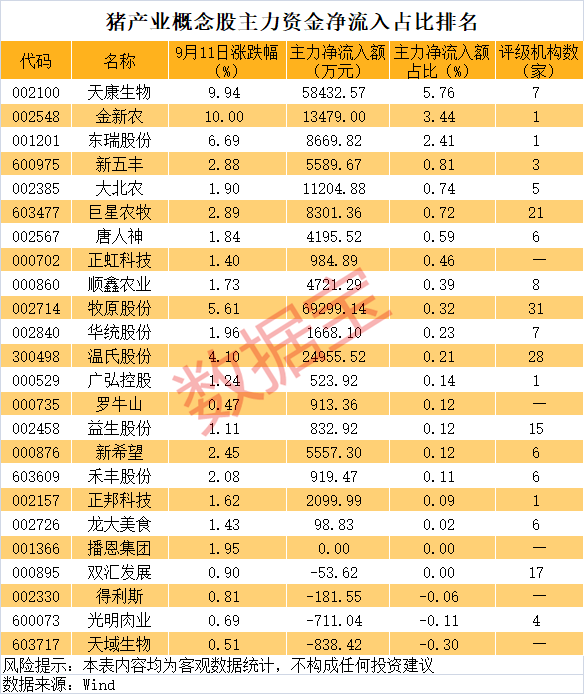
Core Viewpoint - The pig farming sector is experiencing significant gains, driven by multiple favorable factors, including government measures against EU pork imports and improving domestic demand [1][2]. Group 1: Market Performance - The pig industry index surged nearly 3% on September 11, reaching a new high for the year, with stocks like Jin Xin Nong and Tian Kang Biological hitting the daily limit [1]. - Leading company Mu Yuan's market capitalization exceeded 300 billion yuan, marking a new high for 2023 [1]. Group 2: Regulatory Impact - The Ministry of Commerce announced anti-dumping measures against EU pork imports, with a deposit rate ranging from 15.6% to 62.4%, effective from September 10, 2025 [1]. - The EU accounts for over 50% of China's pork imports, and the new measures are expected to elevate domestic pork prices as import costs rise [1][2]. Group 3: Industry Outlook - The "anti-involution" policy aims for high-quality development in the pig industry, focusing on reducing weight, stabilizing production capacity, and limiting breeding [2]. - As temperatures cool, demand is expected to improve, leading to tighter supply and potential price increases for pork [2]. Group 4: Company Performance - Mu Yuan's half-year report showed a revenue of 76.463 billion yuan, a year-on-year increase of 34.46%, and a net profit of 10.530 billion yuan, up 1169.77% [2]. - The company announced a substantial dividend plan, distributing 9.32 yuan per share, with a payout ratio of 47% [2]. Group 5: Investment Interest - Mu Yuan and Tian Kang Biological are among the most favored stocks, with significant net inflows of nearly 7 billion yuan and over 5.8 billion yuan, respectively [3]. - Tian Kang Biological is recognized for its integrated farming model and stable growth in feed and veterinary businesses, indicating promising future performance [3].


9月后,四大“降价潮”要来了?普通人终于能省点钱?
Sou Hu Cai Jing· 2025-09-11 16:45
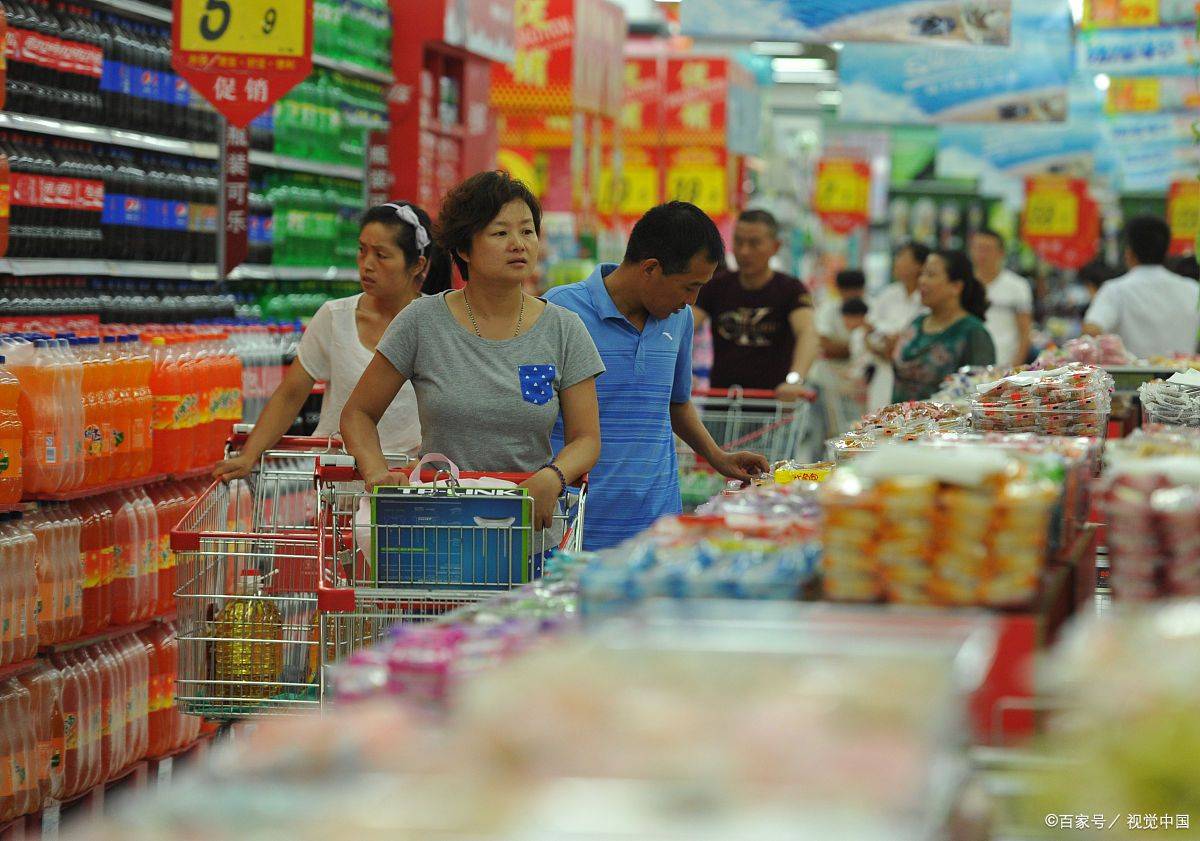
Group 1: Real Estate Market - The domestic real estate market is expected to continue its downward trend into 2025, with second-hand housing prices having fallen for over 30 consecutive months, showing a year-on-year decline of 7.34% in August [4] - A new wave of price reductions in both new and second-hand housing is anticipated post-September, driven by a significant increase in second-hand listings and developers' need to stimulate sales during the peak buying season [4] - Factors contributing to the expected price drop include a continuous decline in new home sales, an increase in second-hand housing listings, and a sluggish economy affecting residents' income [4] Group 2: Automotive Market - The automotive market is experiencing a new round of price reductions, with domestic mid-range cars seeing price cuts of 20,000 to 30,000 yuan and imported luxury cars dropping by nearly 90,000 yuan [6] - The decline in car prices is attributed to an oversupply of vehicles, a slowdown in income growth among middle-class families, and increased competition from new entrants in the automotive sector [6] - The second-hand car market is also witnessing significant price drops, with some vehicles losing 70,000 to 80,000 yuan in value within a year [6] Group 3: Small Appliances Market - A price reduction trend is observed in small household appliances, with an overall decrease of 10% to 12% expected, driven by rapid technological advancements and increased competition among brands [8] - Companies are compelled to discount older models to clear inventory as new smart appliances are introduced [8] - The slowdown in consumer income growth has led to a decrease in demand for new appliances, further contributing to the price decline [8] Group 4: Pork Market - Pork prices have significantly decreased, with current prices ranging from 20 to 22 yuan per jin, and expectations of falling below 20 yuan, potentially reaching 16 to 18 yuan per jin [10] - The drop in pork prices is due to an oversupply resulting from previous price surges that attracted more producers, a shift in consumer preference towards healthier meat options, and reduced purchasing power among consumers [10] - The decline in demand for pork has led to inevitable price reductions in the market [10] Group 5: Consumer Impact - The overall economic environment is characterized by stagnant income growth and rising living costs, yet the emergence of these four major price reduction trends offers consumers the opportunity to save money [11] - The price declines in essential goods such as housing, automobiles, small appliances, and pork are expected to significantly reduce household expenses [11]
资产配置日报:久违的股债同涨-20250911
HUAXI Securities· 2025-09-11 15:25
Market Performance - On September 11, both stocks and bonds rose, with the STAR 50 and ChiNext indices increasing by 5.32% and 5.15% respectively, while the Shanghai Composite Index and CSI 300 rose by 1.65% and 2.31%[2] - The total trading volume of the entire A-share market reached 2.46 trillion yuan, an increase of 460.6 billion yuan compared to the previous day[2] Fund Flows - On September 10, stock ETFs experienced a net outflow of 4.8 billion yuan, continuing a slight outflow trend[3] - The financing balance increased by 5.8 billion yuan, with leveraged funds adding positions in electronics, computers, and machinery, which saw respective increases of 2.07 billion yuan, 580 million yuan, and 450 million yuan[3] Sector Performance - AI-related sectors showed significant strength, with optical modules and circuit boards rising by 9.77% and 7.59% respectively[3] - In the commodity market, industrial silicon, coking coal, and polysilicon led the gains, with increases of 2.5%, 2.3%, and 1.9% respectively[8] Bond Market Insights - The yield on 10-year government bonds rose to 1.83% before retreating to around 1.80% by the end of the day, indicating market volatility and differing investor sentiments regarding the central bank's bond-buying expectations[6] - The central bank's recent reverse repos totaled 74.9 billion yuan and 79.4 billion yuan, contributing to a shift in funding rates from rising to falling[7] Risk Considerations - The report highlights potential risks from unexpected adjustments in monetary policy, liquidity changes, and fiscal policy shifts, which could impact market stability[11]
通胀数据快评:PPI环比止跌
Guoxin Securities· 2025-09-11 14:30
Inflation Data Summary - In August, China's CPI decreased by 0.4% year-on-year, worse than the expected decline of 0.2% and down from the previous month's 0.0%[3] - The PPI fell by 2.9% year-on-year, matching expectations but improving from a previous decline of 3.6%[3] - Core CPI rose by 0.9% year-on-year, marking the highest level in 18 months and continuing to improve for four consecutive months[5] Price Dynamics - Food prices significantly dragged down the overall CPI, with food items declining by 4.3% year-on-year, compared to a 1.6% decline in the previous month[5] - Pork prices saw a substantial drop of 16.1% year-on-year, contributing to the weaker-than-expected CPI data[5] - Service items and industrial consumer goods prices remained stable, with service CPI increasing by 0.6% year-on-year and industrial consumer goods rising by 1.5%[5] PPI Insights - The PPI's month-on-month change stabilized at 0.0%, marking the first halt in decline since November 2024[8] - Upstream prices showed notable stabilization, particularly in black metal mining and smelting, with increases of 2.1% and 1.9% respectively[8] - Downstream industrial product prices showed minimal improvement, with automotive and general machinery PPI declining slightly[8] Future Outlook - The weak August CPI reflects a significant divergence in consumption structure, primarily influenced by high base effects and supply-side factors[6] - There is potential for CPI to gradually recover post high base effects, especially if international commodity prices rebound and domestic policies align[10]
中泰期货晨会纪要-20250911
Zhong Tai Qi Huo· 2025-09-11 11:37
交易咨询资格号: 证监许可[2012]112 晨会纪要 2025 年 9 月 11 日 | 联系人:王竣冬 | 期货从业资格:F3024685 | | --- | --- | | 交易咨询从业证书号:Z0013759 | 研究咨询电话: | | 0531-81678626 | 客服电话: | | 400-618-6767 | 公司网址: | | www.ztqh.com | | | [Table_QuotePic] | 中泰微投研小程序 | | [Table_Report] | 中泰期货公众号 | 请务必阅读正文之后的免责声明部分 - 2 - 请务必阅读正文之后的免责声明部分 [Table_Finance] 交易咨询资格号:证监许可[2012]112 | 偏空 | 農荡 | 偏多 | | --- | --- | --- | | 橡胶 | 护锌 | 锰硅 | | 글 = | 聚丙烯 | 热轧卷板 | | 护金 | 玻璃 | 焦煤 | | 沪铝 | 甲醇 | 豆粕 | | 菜粕 | 沪铝 | 菜油 | | 鸡蛋 | 玉米淀粉 | 直海 | | 标欄油 | PTA | 焦炭 | | | РУС | | | | 护锡 ...
揭秘涨停丨这只股封单量超50万手
Zheng Quan Shi Bao Wang· 2025-09-11 11:29
Market Activity - 39 stocks had a closing order amount exceeding 1 billion yuan on September 11, with the top five being Haiguang Information (7.23 billion yuan), Luxshare Precision (7.09 billion yuan), Zhongke Shuguang (6.26 billion yuan), Dongzhu Ecology (5.4 billion yuan), and Industrial Fulian (5.38 billion yuan) [2][2][2] - Haiguang Information achieved a "20cm" limit-up with a transaction volume of 159.97 billion yuan and a turnover rate of 3.34%. The company reported a revenue of 5.464 billion yuan for the first half of the year, a year-on-year increase of 45.21%, and a net profit of 1.202 billion yuan, up 40.78% year-on-year [2][2][2] CPO Sector - The CPO sector saw a surge in limit-up stocks, including Tengjing Technology, Jinxin Nuo, and Juguang Technology. Tengjing Technology's subsidiary has completed the production of several high-speed optical engine samples and is advancing customer validation [4][4] - Juguang Technology acquired a Swiss company with extensive experience in optical communication, focusing on micro-nano optical devices for data communication [4][4] Pork Industry - In the pork sector, Jin Xin Nong reported a sales volume of 108,000 pigs with a sales revenue of 12.1065 million yuan, while Tiankang Biological sold 263,800 pigs in August, a month-on-month increase of 18.03% and a year-on-year increase of 10.15% [6][6] - Tiankang Biological's cumulative sales for the first eight months of 2025 reached 2.0155 million pigs, an increase of 8.24% compared to the same period last year [6][6] Liquid Cooling Servers - The liquid cooling server segment includes companies like Cambridge Technology and Zhongke Shuguang, with Cambridge Technology investing in the development of 800G liquid cooling optical modules [7][8] - Zhongke Shuguang launched a silicon cube liquid cooling server that utilizes immersion liquid phase change cooling technology, achieving a global leading PUE of 1.04 [8][8] Institutional Investment - Eleven stocks on the龙虎榜 had net purchases exceeding 1 billion yuan, with Luxshare Precision, Wolong Nuclear Materials, and others seeing amounts over 200 million yuan [9][9] - Among stocks with institutional participation, Dongshan Precision and Beifang Changlong led in net purchases [9][9]



农林牧渔行业2025年中报综述:养殖行业新常态,产业链高景气有望持续
Changjiang Securities· 2025-09-11 11:18
Investment Rating - The report maintains a "Positive" investment rating for the agricultural products industry [13]. Core Insights - The swine breeding industry is transitioning from a rapid growth phase to a stable phase, with medium to long-term capacity control becoming the new norm, positively impacting the industry. Profits for quality enterprises are expected to significantly increase, with a favorable long-term outlook for the sector [4][21]. - Key recommendations include Muyuan Foods, Wens Foodstuff Group, Dekang Agriculture, Shennong Group, and Juxing Agriculture in the swine breeding sector. In the pet food segment, the report highlights the rapid growth of domestic brands such as Guibao Pet and Zhongchong Co., Ltd. The feed industry is also experiencing a recovery, with Haida Group's domestic market share increasing and overseas business growing rapidly [4][21]. Summary by Sections Swine Breeding - In the first half of 2025, the revenue of listed companies in the swine breeding sector increased by 19% year-on-year, with a non-recurring net profit growth of 512%. The average swine price decreased by 4% year-on-year, but profits surged due to improved breeding costs. The industry's free cash flow improved significantly, totaling approximately 18.3 billion yuan, compared to a negative 3.7 billion yuan in the same period last year [8][23]. - The average profit for self-breeding and self-raising was about 73 yuan per head, a significant improvement from a loss of 25 yuan per head in the previous year [23]. Feed Industry - The feed sector saw a revenue increase of 13% year-on-year in the first half of 2025, with a 70.9% increase in non-recurring net profit. The total feed production reached 159 million tons, up 8% year-on-year. Haida Group's feed sales volume grew by 26% year-on-year, and the company is expected to see further growth in shrimp and crab feed in the third quarter [9][22]. Pet Food - The pet food sector's revenue grew by 22.4% year-on-year in Q2 2025, with a 19.2% increase in non-recurring net profit. Domestic sales for Guibao Pet and Zhongchong Co., Ltd. are expected to grow by over 40% in Q2. However, exports of pet snacks faced a decline due to tariffs, with a 52% drop in exports to the U.S. [10][22].



【市场聚焦】生猪:2025年Q2财务数据解读
Xin Lang Cai Jing· 2025-09-11 10:48
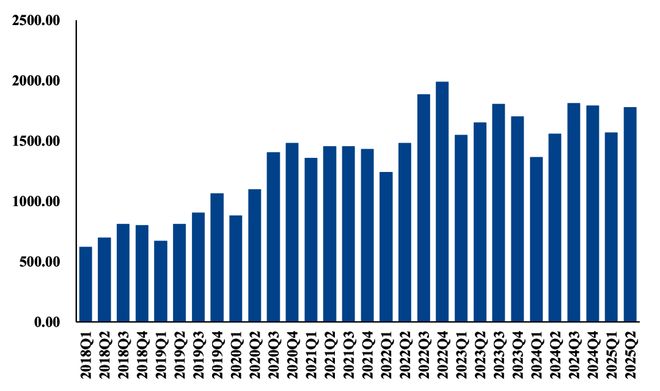
数据来源:Wind,中粮期货研究院整理 盈利能力 2025Q2样本上市公司净利润也较Q1有所增长,2025年Q2样本企业合计实现净利润107.71亿元,环比增 长6.17%,同比增长9.21%。2025年Q2育肥料平均出厂价3101元/吨,环比下降3.28%。尽管Q2的猪价较 Q1有所下滑,但上市公司整体的净利润仍然维持了正增长,2025年Q2猪价的下滑幅度基本与饲料价格 的下滑幅度持平,利润的增长主要反映了企业生产成绩的提升。从个体企业来看,21家样本企业仅有2 家养殖利润为负,整体反映Q2行业的普遍盈利情况很好,头部企业头均利润超过300元/头。费用控制方 面,2025Q2四项费用率为7.58%,较Q1下降0.99%,为2018年以来历史新低,集团企业费用控制能力继 续增强。从个体企业来看,费用率最低的企业大约在5%左右,费用率较高的企业接近20%,头部企业 费用率大约在7%左右。盈利指标方面,2025年Q2销售毛利率和ROE分别为12.61%和3.85%,较Q1分别 下降0.54%和增长0.16%,销售利润率整体仍然维持近年来较好水平,ROE稍有改善,但受制于传统重 资产经营的特点,整体水平仍然不高。 ...
“反内卷”影响初步体现
CAITONG SECURITIES· 2025-09-11 09:47
Group 1: CPI Analysis - August CPI decreased by 0.4% year-on-year, lower than the previous value of 0% and the expected -0.2%[6] - Food prices dragged down CPI significantly, with food item CPI at -4.3%, impacting overall CPI by approximately 0.72 percentage points[6] - Pork prices fell by 16.1% year-on-year, contributing to a 0.24 percentage point decline in August CPI[6] Group 2: PPI Insights - August PPI decreased by 2.9% year-on-year, a reduction of 0.7 percentage points compared to the previous value[11] - The decline in PPI is primarily due to the recovery in raw material prices like steel and coal, influenced by the "anti-involution" measures[11] - To achieve a positive PPI year-on-year by year-end, the average month-on-month growth from September to December must exceed 0.53%, which poses a challenge[18] Group 3: Future Outlook - Short-term CPI pressures are expected to persist, but a rebound is anticipated in Q4 due to stable prices of pork and fresh produce[10] - The "anti-involution" measures in the pig farming industry are expected to lead to a moderate recovery in pork prices in Q4, potentially supporting CPI growth[10] - Risks include potential underperformance of domestic policies and unexpected changes in overseas policies and geopolitical situations[21]
产能调控座谈会召开在即,继续推荐生猪养殖
HUAXI Securities· 2025-09-11 08:40
Investment Rating - Industry rating: Recommended [4] Core Viewpoints - The Ministry of Agriculture and Rural Affairs will hold a meeting on September 16 to discuss the current situation of pig production and measures for capacity regulation among 25 pig farming enterprises [1] - Since late May, there have been frequent policies regarding capacity regulation in the pig farming industry, including a reduction of 1 million breeding sows to a target of 39.5 million [2] - The average slaughter weight of pigs has been steadily decreasing, with a decline of 3.65% as of the first week of September [2] - The current pig prices are low, with August's average price below 14 yuan/kg and recent prices in Guangxi dropping to under 12.5 yuan/kg [3] Summary by Sections Policy and Regulation - The government has implemented strict measures to control the breeding sow population and reduce the weight of pigs for slaughter [2] - Major enterprises like Muyuan Foods have committed to reducing their breeding sow population, with a planned reduction of 3.82% by the end of the year [2] Market Dynamics - The breeding sow population is currently at 40.42 million, slightly above the normal level, indicating potential for further reductions [3] - The pig price is expected to rise in the future due to a combination of active and passive capacity reductions, improving the supply-demand balance [3] Investment Opportunities - The pig farming sector is currently undervalued, with a recommendation to focus on companies like Lihua Stock, which is expected to benefit from rising chicken prices and a growing pig farming business [6] - The company plans to achieve a pig output of over 1 million heads in 2024, with a projected increase to 2 million heads in 2025 [6]