
能源

Search documents
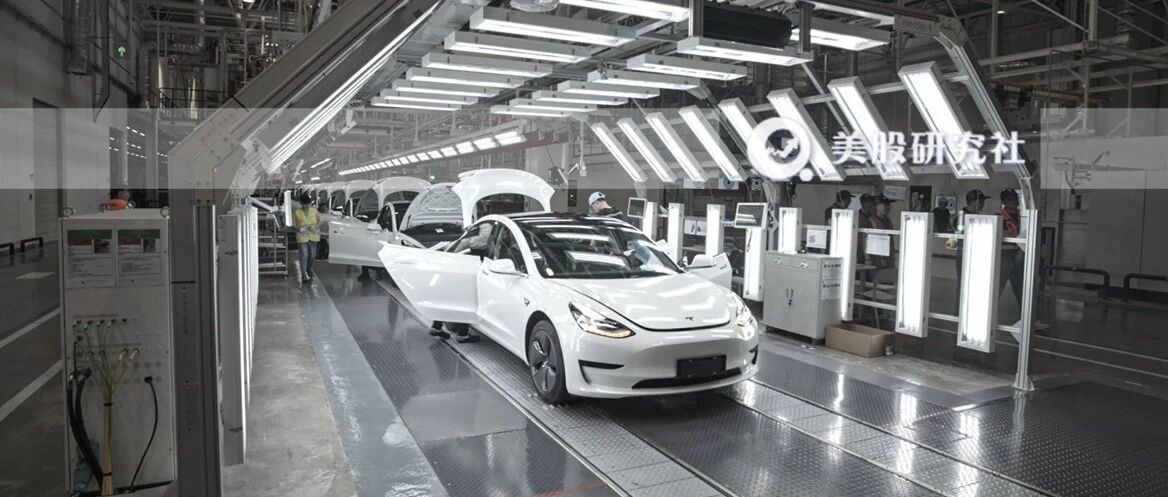
特斯拉加速世界转型?
美股研究社· 2025-10-24 11:27
Core Insights - The article emphasizes that Tesla has transformed from a traditional car manufacturer into a vertically integrated technology and energy platform, possessing multiple reinforcing "moats" that enhance its competitive edge [2][3][14] Group 1: Manufacturing and Integration - Tesla's manufacturing advantage is the foundation of its competitiveness, showcasing vertical integration and engineering efficiency through innovations like "gigacasting" technology and structural battery packs [4] - The company has moved past the "production hell" that many competitors still face, allowing it to maintain a superior cost structure and innovation speed [4] Group 2: Data and AI - Tesla has built the world's largest autonomous driving dataset, with over 6 million vehicles transmitting billions of miles of real driving data daily [6][7] - This data-driven approach enhances Tesla's Full Self-Driving (FSD) system, creating a "flywheel effect" where improved systems attract more users, generating more data [7][8] Group 3: Distribution and Ecosystem - Tesla employs a direct-to-consumer sales model, eliminating intermediaries and strengthening brand and customer relationships [9] - The global Supercharger network has become an industry standard, further enhancing user retention and network effects [9] Group 4: Brand and Vision - Tesla is not just an automaker but a cultural symbol of progress and innovation, akin to Apple, fostering strong emotional connections with consumers [11] Group 5: Platform Expansion - Tesla's autonomous driving technology and future ride-hailing network could transform its vehicles from depreciating assets into revenue-generating ones [12] - The company aims to operate its own autonomous taxi network, avoiding the costs associated with driver payments, which enhances its economic advantages [12][13]


惯用伎俩还是真谈崩了?特朗普缘何再度叫停与加拿大的贸易谈判
Di Yi Cai Jing· 2025-10-24 10:41
Core Points - President Trump has announced the termination of all trade negotiations with Canada due to a controversial advertisement released by the Ontario provincial government, which included critical remarks about tariffs from former President Ronald Reagan [1][3] - The ongoing trade negotiations between the U.S. and Canada have reached a critical stage, focusing on sectors such as steel, aluminum, energy, and automotive [5][6] - The Canadian government is considering strategies to reduce reliance on the U.S. market and expand exports to other countries, particularly in Asia [7] Group 1: Trade Negotiations - Trump criticized the Ontario government's advertisement as interference in U.S. judicial matters, particularly regarding the legality of tariffs imposed under the International Emergency Economic Powers Act [1] - The negotiations had previously shown promise, with potential agreements on steel, aluminum, and energy sectors expected by the end of the month [1][5] - Current tariffs on Canadian imports include a 35% tariff on goods not compliant with the USMCA, 50% on steel and aluminum, and 25% on certain automotive products [5] Group 2: Canadian Response - Ontario Premier Doug Ford's advertisement, which criticized U.S. tariffs, has been identified as a catalyst for the recent breakdown in negotiations [3][4] - The Canadian government has removed most retaliatory tariffs on U.S. products, maintaining only those on steel, aluminum, and automotive sectors to alleviate domestic inflation [5] - In response to Trump's threats, Canada plans to significantly increase exports to non-U.S. markets over the next decade, aiming for an additional CAD 300 billion in trade [7]

加拿大广告惹怒特朗普,美加贸易再陷僵局
Guo Ji Jin Rong Bao· 2025-10-24 09:54
Group 1 - President Trump announced the termination of all trade negotiations with Canada due to a misleading advertisement that used a video of former President Reagan to oppose tariffs [1][4] - The advertisement cost $75 million and was part of a campaign by the Ontario provincial government to promote its tariff policy and counter Trump's stance [1][4] - The termination of negotiations may escalate the ongoing trade tensions between the U.S. and Canada, which have been intensifying for months [5] Group 2 - Just days before the announcement, reports indicated that the U.S. and Canada had reached an agreement on steel, aluminum, and energy trade, with plans for leaders to sign the agreement at the upcoming APEC summit [5] - Canadian Prime Minister Carney had previously visited Washington to ease trade tensions and claimed to have reached a consensus with Trump regarding steel and aluminum trade [5] - Trump's hardline stance towards Canada is partly influenced by domestic legal challenges surrounding his tariff policies, with the Supreme Court set to hear arguments on the legality of these tariffs [5][6] Group 3 - In response to escalating trade pressures, Canada is actively seeking to reduce its economic dependence on the U.S., with plans to double exports to non-U.S. markets over the next decade [9] - Carney acknowledged that the nature of trade relations with the U.S. is changing, citing a more turbulent and competitive global economic environment [9] - The Canadian government has initiated a list of key national projects aimed at boosting the economy and reducing reliance on the U.S., although Carney admitted that this economic transformation will take time and sacrifices [11] Group 4 - Trump's tariffs have already impacted the Canadian economy, particularly in the automotive sector, leading to rising pessimism about economic growth among Canadians [11] - More than half of Canadians believe the economy will weaken in the next six months, and policymakers have reported concerning forecasts from steel and aluminum exporters, who have experienced significant layoffs due to tariffs [11]
利润下滑超三成,马斯克的“AI大饼”难充饥
2 1 Shi Ji Jing Ji Bao Dao· 2025-10-24 08:45
Core Insights - Tesla's Q3 financial results show a paradox with record revenue but a significant drop in net profit, indicating a shift in growth dynamics [1][4][10] Financial Performance - Total revenue for Q3 reached $28.1 billion, a 12% year-over-year increase, marking a historical high [1][4] - Net profit fell to $1.37 billion, down 37% year-over-year, with an operating margin of 5.8%, the lowest in nearly five years [1][4][6] Automotive Business - Global vehicle deliveries hit 497,000 units, a record, but the growth rate slowed to 7.4% year-over-year [2][3] - Production was lower than deliveries at 447,000 units, indicating inventory clearance [3][4] - The U.S. market saw a surge in deliveries due to the impending expiration of federal EV tax credits, leading to a temporary spike in sales [5][6] Market Dynamics - Tesla faces increasing competition in China from local brands like BYD and NIO, which are gaining market share through rapid product iteration and localized services [7][8] - In Europe, traditional automakers are intensifying their electric vehicle strategies, posing challenges to Tesla's market share [7] Energy Business - Tesla's energy storage business saw a significant increase, with installations reaching 12.5 GWh, a 44% year-over-year growth, contributing to a new growth pillar for the company [2][4] - The gross profit from energy products reached $1.1 billion, indicating strong performance in this segment [4] Strategic Shift - CEO Elon Musk emphasized a strategic pivot towards artificial intelligence, moving away from traditional automotive discussions [2][10] - Tesla is investing heavily in AI and robotics, with plans to expand its Robotaxi service and develop humanoid robots, which Musk believes will be central to the company's future value [10][12][13] - The company aims to balance short-term profitability with long-term strategic investments in AI and robotics [13]
特斯拉(TSLA)FY2025Q3业绩点评及业绩说明会纪要:2025Q3营收高于预期,汽车恢复增长,机器人&FSD指引乐观
Huachuang Securities· 2025-10-24 08:02
Investment Rating - The industry investment rating is "Recommended," indicating an expected increase in the industry index exceeding the benchmark index by more than 5% in the next 3-6 months [57]. Core Insights - Tesla's Q3 2025 revenue reached $28.095 billion, a year-over-year increase of 12%, surpassing market expectations of $26.365 billion [10][12]. - The automotive business generated $21.205 billion in revenue, up 6% year-over-year, with a total vehicle delivery of 497,099 units, reflecting a 7% increase [10][12]. - The energy and storage segment achieved a revenue of $3.415 billion, marking a 44% year-over-year growth, driven by record deployment of storage solutions [10][13]. - The company is optimistic about its robot and AI initiatives, with plans to launch the Optimus V3 robot in Q1 2026 and a target production of 1 million units annually within five years [18]. - Full Self-Driving (FSD) capabilities are being expanded, with the deployment of FSD v12.4, enhancing the Robotaxi service's functionality [19]. Summary by Sections Overall Revenue Situation - Total revenue for Q3 2025 was $28.095 billion, with a gross profit of $5.054 billion and a gross margin of 18% [10][8]. - Non-GAAP net income was $1.770 billion, down 29% year-over-year, with adjusted earnings per share at $0.50 [10][12]. Automotive Business - Total automotive revenue was $21.205 billion, with a total production of 447,450 vehicles, a 5% decrease year-over-year [9][12]. - The delivery of Model 3 and Model Y vehicles was 481,166 units, a 9% increase year-over-year [12][10]. Energy and Storage - The energy and storage segment generated $3.415 billion in revenue, with a gross profit of $1.073 billion, achieving a gross margin of 31.42% [25][13]. - The deployment of storage solutions reached a historic high, contributing significantly to revenue growth [13]. Robotics and AI - The company plans to release the Optimus V3 robot in Q1 2026, with a production target of 1 million units annually within five years [18]. - A partnership with Samsung aims to produce advanced chips for AI reasoning and training, enhancing the company's AI capabilities [18]. FSD and Robotaxi - The deployment of FSD v12.4 began in October, improving the Robotaxi service's capabilities and expanding its operational area [19]. - The company aims to remove safety drivers from Robotaxi services in select areas by the end of the year, contingent on regulatory approvals [28].
为了出海,我聊了七国专家
Hu Xiu· 2025-10-24 07:45
Core Viewpoint - The "going global" strategy of Chinese enterprises has evolved from mere market expansion to a comprehensive approach involving global resource integration and industrial chain restructuring, amidst increasing complexities due to global economic uncertainties and changing international political environments [1][58]. Group 1: Opportunities in Different Countries - Indonesia is highlighted as a suitable destination for Chinese enterprises due to its large consumer market of over 270 million people, abundant natural resources, and investor-friendly policies, with a total investment from China amounting to approximately $34.19 billion from 2019 to September 2024 [6][9]. - Kazakhstan is positioned as a key partner in the Belt and Road Initiative (BRI), with significant infrastructure investments and a strategic location that facilitates trade between East Asia and Europe, leading to a projected GDP growth of 6% to 9% with improved logistics [20][21]. - Chile is recognized for its transparent governance and stable political environment, making it a strategic hub for entering the Latin American market [39]. - The Netherlands is considered one of the most business-friendly countries in the EU, providing a pragmatic and efficient environment for trade compliance, which is crucial for Chinese enterprises [42][43]. - The United States is identified as an attractive market due to its large consumer base, mature capital markets, and transparent legal system, offering opportunities for brand internationalization and technological innovation [48]. Group 2: Common Challenges Faced by Chinese Enterprises - In Indonesia, common challenges include regulatory complexities, bureaucratic delays, and ownership restrictions, which can lead to significant disputes and financial losses if not navigated properly [7][8][13]. - In Thailand, communication barriers and local regulatory restrictions pose challenges for Chinese enterprises, particularly due to a lack of English or Chinese speakers [17]. - Kazakhstan presents operational challenges related to technology and production, including delays in equipment maintenance and administrative hurdles that can increase project costs [22][23][24]. - In Chile, language barriers and compliance with local regulations are significant challenges for Chinese enterprises [40]. - In the Netherlands, understanding and adhering to the complex legal framework of EU and domestic laws is a common challenge for Chinese companies [44][45]. - In the United States, compliance with a complex regulatory environment, cultural differences, and intense local competition are the primary challenges faced by Chinese enterprises [49][50]. Group 3: Consulting Issues Encountered - In Indonesia, common consulting issues include budget constraints affecting due diligence and compliance planning, differing expectations regarding timelines, and frequent changes in project scope [10][11][12]. - In Kazakhstan, the most frequent consulting issues revolve around legal protections, administrative burdens, and the complexities of public procurement [29][30][31]. - In Chile, high work pressure and unrealistic expectations from headquarters are common issues faced by consultants working with Chinese enterprises [41]. - In the Netherlands, many Chinese enterprises struggle with export control and compliance issues due to a lack of familiarity with the legal requirements [46]. - In the United States, the most common consulting issues include misalignment of strategic positioning with local realities, compliance awareness, and long-term planning [52][53].
难怪普京一点都不急:中美都闹成这样了,俄专家终于说了句大实话
Sou Hu Cai Jing· 2025-10-24 06:47
Group 1 - The core issue revolves around the competition for rare earth elements, which are crucial for technology and strategic dominance, particularly in the context of the ongoing US-China trade war [1][3] - China has announced export controls on rare earths, not as a ban but to improve its export management system, reflecting its actual needs [3][11] - The US heavily relies on China for rare earths, with a significant demand for gallium, estimated at 30 to 50 tons annually, and the inability to produce it domestically in the short term [5] Group 2 - Russia has adopted a neutral stance amid escalating US-China trade tensions, benefiting economically from increased agricultural exports to China, which grew at an average annual rate of nearly 40% from 2014 to 2020 [7] - The ongoing military conflict in Ukraine has intensified, with both sides targeting critical infrastructure, and the US has deepened its involvement by providing intelligence support to Ukraine [9] - China's strategic resilience is evident in its response to US pressure, emphasizing its strengths in key areas like rare earths and manufacturing, which are irreplaceable [11][13]

招银国际每日投资策略-20251024
Zhao Yin Guo Ji· 2025-10-24 02:37
Macro Commentary - The core objective of China's "14th Five-Year Plan" (2026-2030) emphasizes high-quality development, shifting focus from GDP growth to technological self-reliance and economic transformation [2][4] - Key strategic industries highlighted include artificial intelligence, semiconductors, advanced robotics, green energy, aerospace, and industrial software [2] - The plan aims to rebalance the economy towards consumption-driven growth, with increased investment in social services such as healthcare and elder care, benefiting sectors like consumer staples and healthcare [2][4] Market Performance - The Hang Seng Index closed at 25,968, up 0.72% year-to-date performance is 29.45% [2] - The Shanghai Composite Index closed at 3,922, with a year-to-date increase of 17.03% [2] - U.S. markets showed positive performance, with the Dow Jones up 0.27% and the S&P 500 up 0.49% [2][4] Company Analysis - **Giant Bio (2367 HK)**: The approval of its first injectable aesthetic product marks the beginning of a new growth phase for the company. The product is aimed at facial dermal filling to correct dynamic wrinkles [5][6] - The company has a strong channel advantage due to its established network and brand recognition in the aesthetic market, which is expected to drive growth [5] - **Thermo Fisher (TMO US)**: Reported a strong 3Q25 performance with a revenue increase of 5.0% year-on-year and an adjusted EPS growth of 9.7%. The company raised its full-year guidance based on robust performance [6][7] - The demand from pharma and biotech clients is showing positive signs, with revenue growth driven by bioproduction and analytical instruments [7][8] - The company is expected to benefit from the trend of pharmaceutical companies establishing manufacturing facilities in the U.S., which will reflect in its performance by 2027-2028 [9]

中德能源工作组第十三次会议在苏州召开
国家能源局· 2025-10-24 01:58
Core Viewpoint - The meeting between China's National Energy Administration and Germany's Federal Ministry for Economic Affairs and Energy focused on energy policy updates and collaboration outcomes since the last meeting in July 2024, highlighting the commitment to enhance bilateral cooperation in various energy sectors [2] Group 1: Meeting Overview - The 13th meeting of the China-Germany Energy Working Group took place in Suzhou on October 22, 2025 [2] - Both parties presented their latest energy policies and transformation developments [2] - The meeting reviewed the cooperation achievements since the last meeting [2] Group 2: Future Collaboration Plans - A work plan for 2025-2026 was approved, outlining areas for future collaboration [2] - The agreed areas for exchange and research include energy legal frameworks, energy and electricity markets, power systems, sustainable heating/cooling, renewable energy, hydrogen, and energy storage [2] - Representatives from both countries' energy authorities, the German Embassy in China, and project execution agencies participated in the meeting [2]

能源化工期权策略早报:能源化工期权-20251024
Wu Kuang Qi Huo· 2025-10-24 01:39
1. Report Industry Investment Rating - Not provided in the document 2. Core Views of the Report - The energy - chemical sector is mainly divided into energy, alcohols, polyolefins, rubber, polyesters, alkalis, and others [9] - Options strategies and suggestions are provided for selected varieties in each sector [9] - The option strategy report for each option variety is compiled according to the underlying market analysis, option factor research, and option strategy suggestions [9] 3. Summary by Relevant Content 3.1 Underlying Futures Market Overview - Various option varieties' underlying contracts' latest prices, price changes, price change rates, trading volumes, volume changes, open interests, and open interest changes are presented, such as crude oil (SC2512) with a latest price of 470, a price increase of 16, and a price change rate of 3.48% [4] 3.2 Option Factors - Volume and Open Interest PCR - Volume PCR and open interest PCR for different option varieties are given, along with their changes, which are used to describe the strength of the option underlying market and the turning point of the underlying market [5] 3.3 Option Factors - Pressure and Support Levels - Pressure and support levels for different option varieties are analyzed from the perspective of the strike prices with the largest open interests of call and put options [6] 3.4 Option Factors - Implied Volatility - Implied volatility data for different option varieties are provided, including at - the - money implied volatility, weighted implied volatility, and its changes, etc. [7] 3.5 Option Strategies and Suggestions 3.5.1 Energy - related Options - **Crude Oil**: Fundamentals involve OPEC's production increase and US shale oil production. The market has shown different trends from July to October. Option factors indicate a decline in implied volatility, a weak market according to open interest PCR, and specific pressure and support levels. Strategies include a volatility strategy of selling a neutral call + put option combination and a spot long - hedging strategy of constructing a long collar [8] - **Liquefied Petroleum Gas (LPG)**: Fundamentals show a decrease in domestic LPG production in September. The market has experienced ups and downs. Option factors suggest a decline in implied volatility, a weak market, and specific pressure and support levels. Strategies include a volatility strategy of selling a neutral call + put option combination and a spot long - hedging strategy of constructing a long collar [10] 3.5.2 Alcohol - related Options - **Methanol**: Fundamentals involve port and enterprise inventories. The market has been weak. Option factors indicate that implied volatility fluctuates around the historical average, a weak - oscillating market, and specific pressure and support levels. Strategies include a volatility strategy of selling a bearish call + put option combination and a spot long - hedging strategy of constructing a long collar [10] - **Ethylene Glycol**: Fundamentals show inventory changes. The market has been weak. Option factors suggest that implied volatility fluctuates below the average, strong bearish power, and specific pressure and support levels. Strategies include a directional strategy of constructing a bearish spread of put options, a volatility strategy of shorting volatility, and a spot long - hedging strategy [11] 3.5.3 Polyolefin - related Options - **Polypropylene**: Fundamentals involve inventory changes. The market has been weak. Option factors indicate a decline in implied volatility to around the average, a weak market, and specific pressure and support levels. Strategies include a spot long - hedging strategy of holding a spot long position, buying an at - the - money put option, and selling an out - of - the - money call option [11] 3.5.4 Rubber - related Options - **Rubber**: Fundamentals show inventory changes. The market has been in a weak consolidation. Option factors suggest that implied volatility has decreased to around the average, a relatively strong bullish market according to open interest PCR, and specific pressure and support levels. Strategies include a volatility strategy of selling a bearish call + put option combination [12] 3.5.5 Polyester - related Options - **PTA**: Fundamentals show inventory accumulation. The market has been weak. Option factors indicate that implied volatility fluctuates at a relatively high level, an oscillating market, and specific pressure and support levels. Strategies include a volatility strategy of selling a bearish call + put option combination [12] 3.5.6 Alkali - related Options - **Caustic Soda**: Fundamentals show a decline in production capacity utilization. The market has been weak. Option factors suggest high - level volatility of implied volatility, a weak - oscillating market, and specific pressure and support levels. Strategies include a directional strategy of constructing a bearish spread and a spot collar - hedging strategy [13] - **Soda Ash**: Fundamentals show an increase in factory inventory. The market has been in a low - level weak oscillation. Option factors indicate that implied volatility fluctuates at a relatively high historical level, strong bearish pressure, and specific pressure and support levels. Strategies include a volatility strategy of shorting volatility and a spot long - hedging strategy of constructing a long collar [13] 3.5.7 Other Options - **Urea**: Fundamentals show an increase in enterprise and port inventories. The market has been in a low - level weak oscillation. Option factors suggest that implied volatility fluctuates around the historical average, strong bearish pressure, and specific pressure and support levels. Strategies include a directional strategy of constructing a bearish spread of put options, a volatility strategy of selling a bearish call + put option combination, and a spot long - hedging strategy [14] 3.6 Option Charts - Charts for various option varieties, such as crude oil, LPG, methanol, etc., are provided, including price trends, trading volume and open interest, open interest PCR, implied volatility, historical volatility cones, and pressure and support levels [15][36][54]