创新药

Search documents
国信证券陈益凌:关注双抗和ADC领域的创新药投资机会
Zhong Zheng Wang· 2025-11-30 05:40
Core Viewpoint - The focus is on the potential of dual antibodies and ADC (antibody-drug conjugates) in the oncology sector, highlighting their broad therapeutic applications and significant overseas commercial potential [1] Group 1: Oncology Sector Insights - The oncology field, particularly dual antibodies and ADC products, is seen as having extensive potential due to the complexity of solid tumor indications [1] - There is a notable overseas commercial potential for these innovative drug segments [1] Group 2: CXO and R&D Services - The recovery in domestic and international innovative drug R&D and financing is expected to sustain a high level of prosperity in the CXO (Contract Research Organization) sector, especially in the ADC and broader XDC (various conjugated drugs) fields [1] Group 3: Investment Strategy and Market Outlook - The development and clinical trials of innovative drugs typically require several years for approval and commercialization, indicating a gradual rather than immediate market performance [1] - The innovative drug sector is anticipated to experience more frequent and significant milestone events by 2026, suggesting that both short-term trading opportunities and long-term investment strategies could perform well in this sector [1]

创新药板块:资金涌入,后市怎么看
Huan Qiu Wang· 2025-11-30 01:32
Group 1 - The innovation drug sector is experiencing a volatile trend in the fourth quarter, with positive signals in the funding landscape as significant capital flows into innovation drug-themed ETFs, totaling over 19 billion yuan in net subscriptions as of November 28 [1] - Despite a strong performance earlier in the year, the innovation drug sector faced a correction in the fourth quarter, with an average decline of approximately 10% in themed funds as of November 28, yet funds continued to increase their positions, leading to substantial growth in several innovation drug-themed ETFs [3] - The growth of specific ETFs is notable, with the scale of the GF Hong Kong Innovation Drug ETF increasing from 7.875 billion yuan at the end of last year to 25.276 billion yuan, and the Huatai-PineBridge Hong Kong Innovation Drug ETF rising from less than 700 million yuan to over 24 billion yuan [3] Group 2 - Industry experts believe that the long-term investment value of the innovation drug sector is becoming more apparent, although the phase of broad market gains may be over, necessitating a focus on stock selection for future investments [4] - The report from Industrial Securities indicates that the trend of "innovation + internationalization" in the innovation drug industry remains unchanged, with increased elasticity in the sector following the recent adjustments, and a positive outlook on the fundamentals of the innovation drug industry chain [4]


医保谈判结果公布在即,关注 ASH 大会
SINOLINK SECURITIES· 2025-11-29 14:55
Investment Rating - The report maintains a positive outlook on the innovative drug sector, indicating a rebound and potential for further growth in the upcoming months [3][6]. Core Insights - The innovative drug sector is expected to see a rebound after previous adjustments, with significant catalysts anticipated in December and January. The results of the national medical insurance negotiations will be released in early December, which may impact the inclusion of domestic innovative drugs in the insurance catalog [3][14]. - The upcoming American Society of Hematology (ASH) conference from December 6-9 is highlighted as a key event, with multiple differentiated hematology products expected to present new data [3][4][42]. - The CXO sector shows a continuous upward trend, supported by the rapid growth of new orders and backlog, ensuring performance release in the next 1-2 years [4][53]. Summary by Sections Innovative Drugs - The report emphasizes the importance of focusing on dual/multi-target drugs for various cancers and chronic diseases, as well as opportunities in ADCs and small nucleic acid therapies [6][15]. - The report notes that the innovative drug financing data is showing marginal improvement, indicating a potential recovery in the sector [6][15]. Biologics - The report mentions positive preliminary results from the Phase II clinical trial of amycretin for Type 2 diabetes, suggesting continued monitoring of its clinical progress [4][46]. Medical Devices - The report highlights the emergence of innovative domestic medical devices, with expectations for profit margins to stabilize and improve as new products are approved [5]. Traditional Chinese Medicine & Pharmacies - The report suggests monitoring companies with strong brand power and good inventory management, such as China Resources Sanjiu and Jichuan Pharmaceutical, due to rising flu incidence [5]. Medical Services and Consumer Healthcare - The report discusses a collaboration between a traditional Chinese medicine group and a local health bureau to enhance the capabilities of grassroots medical services through technology [5]. Key Investment Targets - The report identifies key companies to watch, including Innovent Biologics, Kintor Pharmaceutical, and others in the innovative drug and medical device sectors [7].




申万宏源策略一周回顾展望(25/11/24-25/11/29):春季行情的幅度和定位
Shenwan Hongyuan Securities· 2025-11-29 13:23
Group 1 - The market experienced a rebound after a significant decline, but the adjustment in technology growth stocks has only partially addressed the value-for-money issue, with the adjustment amplitude over half but time still insufficient [2][4][5] - Historical experience suggests that when technology adjustments reach near the bull-bear boundary, it indicates a mid-term bottom area, but there may be a scenario of "amplitude in place, time insufficient" [2][4][5] - The current adjustment in technology growth stocks has passed the halfway mark, but the time required for recovery is more challenging, relying on industry catalysts and performance verification to digest valuations [2][4][5] Group 2 - The spring market is positioned as a potential rebound within a high-level consolidation phase, with two possible scenarios: a rebound in the high-level consolidation phase or a transition from adjustment to a bottom consolidation phase [5][6] - The spring market may see effective rebounds in offensive assets (technology and cyclical stocks), but upward breakthroughs are difficult to achieve, limiting the upper bound of the spring market [6][7] - The cyclical sector is expected to be the foundational asset for the spring market, with a focus on basic chemicals and industrial technology, while technology stocks may also see a general rebound due to improved short-term value-for-money [7][8] Group 3 - The "bull market two-stage theory" is a typical feature of the A-share bull market cycle, with historical examples indicating that structural bull markets are often followed by comprehensive bull markets after consolidation phases [5][6] - The current market is in a structural bull high position, with expectations for a comprehensive bull market to potentially begin in 2026 due to cyclical improvements in fundamentals and shifts in asset allocation towards equities [5][6] - The report highlights the importance of waiting for industry catalysts and performance verification to restore long-term value-for-money to historical medians, which may signal the restart of an upward trend [2][4][5]
华创医药周观点:血液净化器械行业专题 2025/11/29
华创医药组公众平台· 2025-11-29 13:04
Core Viewpoint - The article discusses the blood purification device industry, highlighting the increasing prevalence of End-Stage Renal Disease (ESRD) and the growth potential of blood purification technologies in response to this global health challenge [18][21]. Market Overview - The global ESRD patient population is projected to grow from 91.33 million in 2019 to 148.51 million by 2030, with a CAGR of 4.2% [18][19]. - In China, the ESRD patient population is expected to increase from 3.025 million in 2019 to 6.132 million by 2030, with a CAGR of 5.8% [20][18]. Treatment Methods - Blood purification is the most widely used treatment for ESRD, offering higher survival rates compared to kidney transplantation and conservative treatment [21]. - The number of patients receiving blood purification treatment in China rose from 736,000 in 2019 to 1.069 million in 2023, with a CAGR of 9.8%, and is expected to reach 3.791 million by 2030, with a CAGR of 19.8% [21][23]. Blood Purification Technologies - The main blood purification methods include hemodialysis, peritoneal dialysis, blood perfusion, and blood filtration, with hemodialysis being the most mature and widely applied [29]. - Hemodialysis effectively removes harmful substances and excess fluid from the blood, making it suitable for patients at various disease stages [29]. Market Size and Growth - The Chinese blood dialysis device market is projected to grow from CNY 11.63 billion in 2019 to CNY 51.52 billion by 2030, with a CAGR of 19.9% from 2023 to 2030 [30][28]. - The market share of blood dialysis devices in China is expected to see significant growth, with specific segments like blood dialysis machines and consumables also experiencing robust growth rates [30]. Competitive Landscape - Domestic companies are rapidly catching up with international competitors in the blood purification consumables sector, achieving nearly 50% market share in dialysis filters [31]. - The competitive landscape for blood dialysis machines is evolving, with domestic manufacturers improving their technology and performance to match imported products [37][33]. Policy and Market Dynamics - The article notes that the Chinese government has been implementing centralized procurement policies, leading to significant price reductions and accelerating the domestic replacement process in the blood purification market [36][35].


申万宏源策略一周回顾展望:春季行情的幅度和定位
Shenwan Hongyuan Securities· 2025-11-29 12:45
Group 1 - The market experienced a rebound after a significant decline, but the adjustment in technology growth stocks regarding cost-performance issues has passed the halfway mark, with insufficient time for recovery [2][5][6] - Historical experience suggests that when technology adjustments reach near the bull-bear boundary, it indicates a mid-term bottom area, but there may be a situation of "sufficient amplitude, insufficient time" [2][5][6] - The current adjustment in technology growth stocks has exceeded half of its amplitude, but the time for recovery remains challenging, requiring industry catalysts and performance validation to digest valuations [5][6][7] Group 2 - The spring market is positioned as a potential rebound within a high-level consolidation phase, with effective rebounds in offensive assets (technology and cyclical stocks) likely to occur, but upward breakout logic may be difficult to realize [6][7][8] - The spring market may either be a rebound in the high-level consolidation phase of the bull market 1.0 or a transition from the adjustment phase to a bottom consolidation phase [6][7][8] - The spring market's upper limit may be constrained, as offensive assets are not yet sufficient to lead the market breakout, and the conditions for technology stocks to break upward are stricter [7][8][9] Group 3 - Short-term small rebounds are expected, with the spring market likely to see effective rebounds driven by a "policy bottom" and cyclical price increases, particularly in basic chemicals and industrial technology [8][9] - The overall adjustment amplitude of technology stocks is likely to be sufficient for a widespread rebound, with a focus on sectors like innovative pharmaceuticals and national defense [9] - The Hong Kong stock market continues to exhibit high beta characteristics, with the Hang Seng Technology index showing more substantial adjustments and greater rebound elasticity [9]
血液净化器械行业专题:华创医药投资观点&研究专题周周谈:第152期-20251129
Huachuang Securities· 2025-11-29 12:44
Investment Rating - The report does not explicitly provide an investment rating for the blood purification device industry Core Insights - The report highlights the increasing prevalence of End-Stage Renal Disease (ESRD) globally and in China, with the number of patients expected to rise significantly by 2030, indicating a growing market for blood purification devices [13][15] - Blood purification is identified as the most widely used treatment method for ESRD, with a higher survival rate compared to other treatments like kidney transplantation and conservative treatment [19] - The Chinese blood purification device market is projected to grow rapidly, driven by an increase in ESRD patients, improved reimbursement policies, and advancements in dialysis infrastructure [26] Market Overview - The global ESRD patient population increased from 9.13 million in 2019 to 11.14 million in 2023, with a CAGR of 5.1%, and is expected to reach 14.85 million by 2030 [13][14] - In China, the ESRD patient population grew from 3.03 million in 2019 to 4.13 million in 2023, with a CAGR of 8.1%, projected to reach 6.13 million by 2030 [15] - The number of patients receiving blood purification treatment in China rose from 736,000 in 2019 to 1.07 million in 2023, with a CAGR of 9.8%, expected to reach 3.79 million by 2030 [19][18] Treatment Methods - Blood purification methods include hemodialysis, peritoneal dialysis, blood perfusion, and blood filtration, with hemodialysis being the most common and effective method for ESRD patients [23] - Hemodialysis is noted for its effectiveness in removing toxins and excess fluid, while peritoneal dialysis is gaining traction due to its home treatment capabilities [21][23] Market Size and Growth - The Chinese blood purification device market size increased from 116.3 billion yuan in 2019 to 145.0 billion yuan in 2023, with a CAGR of 5.7%, and is expected to reach 515.2 billion yuan by 2030, with a projected CAGR of 19.9% from 2023 to 2030 [26] - The market for blood purification devices is segmented into blood purification machines, blood purification consumables, and other related equipment, with significant growth expected across all segments [26] Competitive Landscape - Domestic companies are rapidly catching up to international competitors in the blood purification consumables market, achieving nearly 50% market share in key areas [27] - The report indicates that the domestic market for blood purification machines still has room for growth, as these products have historically relied on imports due to high technical barriers [27][34] - The report emphasizes that domestic manufacturers are improving their technology and performance, positioning themselves to capture a larger market share [29][34]
光大证券:A股市场仍处牛市 但短期或宽幅震荡
智通财经网· 2025-11-29 08:44
Group 1 - The overall direction of the A-share market is still in a bull market, but it may enter a wide fluctuation phase in the short term. Compared to previous bull markets, there is still considerable room for index growth, but the duration of the bull market may be more important than the magnitude of the increase under the government's guidance for a "slow bull" policy [1][3] - In November, major A-share indices generally declined, with the STAR 50 index experiencing the largest drop of 7.1%, while the Shanghai 50 index saw the smallest decline of 1.3%. The performance across industries showed significant differentiation, with sectors like comprehensive, banking, and media leading in gains [2] - The Hong Kong stock market also experienced fluctuations in November, influenced by expectations of U.S. Federal Reserve interest rate cuts and concerns over AI bubbles. The Hang Seng Index and other indices showed mixed performance, with the Hang Seng Technology Index declining by 4.9% [2] Group 2 - In terms of investment strategy, short-term focus should be on defensive and consumer sectors, while mid-term attention should remain on TMT (Technology, Media, Telecommunications) and advanced manufacturing sectors. During the fluctuation phase, previously lagging sectors may perform better, particularly high-dividend and consumer sectors [3] - For the Hong Kong market, a "dumbbell" strategy is recommended, focusing on technology growth and high-dividend stocks. The market's overall profitability remains strong, and despite recent gains, valuations are still relatively low, making long-term investment attractive [4][5] - Specific areas of interest include domestic policies supporting self-sufficiency in technology, chip manufacturing, and high-end manufacturing, as well as independent internet technology companies with their own growth potential [5]

四季度ETF资金流向大揭秘
Guo Ji Jin Rong Bao· 2025-11-28 11:55
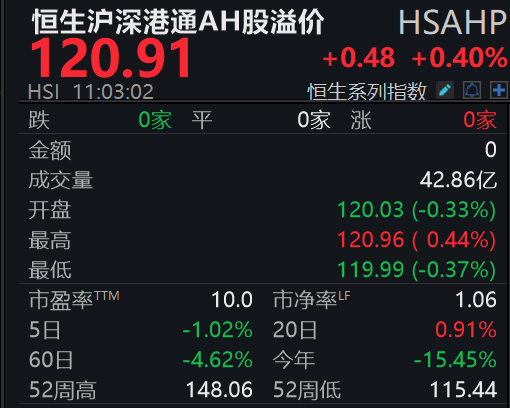
Core Viewpoint - Despite recent fluctuations in the Hong Kong stock market, it continues to attract southbound capital inflows, with A-shares also maintaining strong appeal [1] Group 1: Market Performance - Since the beginning of the fourth quarter, both A-shares and Hong Kong stocks have experienced a decline, with major indices showing significant drops. As of November 27, the Shanghai Composite Index fell by 0.19%, the STAR 50 Index dropped by 12.34%, and the ChiNext Index decreased by 3.29%. In the Hong Kong market, the Hang Seng Tech Index plummeted by 14.06%, while the Hang Seng Index fell by 3.29% [6] - Despite the fourth-quarter pullback, both A-shares and Hong Kong stocks have recorded substantial gains for the year. As of November 27, the Hang Seng Index and Hang Seng Tech Index rose by 29.34% and 25.29% respectively, while the Shanghai Composite Index increased by 15.62% and the STAR 50 Index by 32.54%. The Hong Kong innovative drug sector performed exceptionally well, with related indices showing over 90% growth [6] Group 2: Capital Inflows - There has been a notable trend of capital flowing into ETFs as investors seek opportunities. As of November 27, the top two stock ETFs by net inflow in the fourth quarter were from Guotai Junan Securities and Huabao Securities, with net inflows of 89.51 billion and 59.55 billion respectively. The Huaxia STAR 50 ETF also saw a net inflow of 51.65 billion, ranking third [6][7] - In terms of year-to-date net inflows, various themes such as securities, chemicals, robotics, and banking have been popular, with eight stock ETFs exceeding 10 billion in net inflows. Additionally, 11 cross-border ETFs related to the Hang Seng Tech or Hong Kong Stock Connect have also attracted significant capital, each exceeding 10 billion in net inflows [7] Group 3: AH Share Premium - The AH share premium index has been declining, currently around 120. Historically, A-shares of "A+H" companies have traded at a premium, but now some Hong Kong stocks are outperforming their A-share counterparts. For instance, as of November 28, the Hong Kong-listed NIO's stock price was 472 HKD per share, compared to 373.2 CNY for its A-share [9] - The continuous inflow of southbound capital is influencing the pricing power of Hong Kong stocks, with expectations that the AH premium will return to a more reasonable range as the interconnectivity mechanism improves [10] Group 4: Long-term Outlook - The long-term return outlook for A-shares is positive, with an expected annualized return of 7.7% over the next 10 to 15 years, based on three main drivers: economic resilience, ongoing shareholder return policies, and improved corporate governance [12]
创新药行情走弱后,港股通困局何解?
Xin Lang Cai Jing· 2025-11-28 11:26
Core Viewpoint - The Hong Kong innovative drug sector has experienced a significant rally this year, with the Hong Kong innovative drug index (CSI:931787) rising by 75% until October, but has since entered a cooling phase as investors digest previous gains [3][4]. Group 1: Market Performance - The innovative drug sector saw 23 companies listed in the Hong Kong healthcare sector this year, compared to only 8 last year [3]. - Despite the initial surge, many companies that have not yet entered the Stock Connect are experiencing a decline in stock prices, indicating a challenging path to inclusion [3][4]. Group 2: Stock Connect Mechanism - The Stock Connect allows mainland investors to trade Hong Kong-listed stocks, with significant contributions from southbound funds, accounting for 40%-50% of trading volume in some companies [3][4]. - Companies not included in the Stock Connect face liquidity challenges, as most mainland public funds cannot invest directly [4][5]. Group 3: Challenges for Inclusion - The threshold for entering the Stock Connect has increased due to rising market valuations, with the market capitalization requirement for inclusion in the Hang Seng Composite Index set at approximately HKD 9.32 billion [6]. - Companies previously included in the Stock Connect but later removed face significant hurdles to re-entry, as liquidity issues persist [7][8]. Group 4: Business Development (BD) Fatigue - The market has shown signs of "BD fatigue," where announcements of potential business developments no longer lead to significant stock price increases, as seen with recent collaborations that resulted in stock declines [9][10]. - Investors are now demanding more substantial evidence of project viability and commitment from partners before reacting positively to BD announcements [10]. Group 5: Future Outlook - The market is currently in a quiet phase, with investors waiting for clear signals of recovery before increasing their positions, reflecting a cautious sentiment as year-end approaches [10][11].