
新消费

Search documents
资金逢低布局,港股科技ETF(159751)盘中净申购1000万份
Sou Hu Cai Jing· 2025-12-03 02:39
Core Viewpoint - The Hong Kong stock market is experiencing a pullback, but there is a counter-trend inflow of funds, particularly into the Hong Kong Technology ETF (159751), which saw a net subscription of 10 million units. The market is expected to continue its upward trend due to strong overall profitability and the scarcity of assets in sectors like the internet, new consumption, and innovative pharmaceuticals, alongside the anticipated interest rate cut by the Federal Reserve in December [1]. Group 1 - The Hong Kong Technology ETF (159751) closely tracks the CSI Hong Kong Stock Connect Technology Index, which selects 50 large-cap, high R&D investment, and high revenue growth technology companies to reflect the overall performance of technology leaders in the Hong Kong Stock Connect [1]. - As of December 3, 2025, the CSI Hong Kong Stock Connect Technology Index (931573) shows mixed performance among its constituent stocks, with Huahong Semiconductor (01347) leading with a 2.40% increase, followed by Gao Wei Electronics (01415) at 1.81%, and BYD Electronics (00285) at 1.28% [1]. - The overall valuation of the Hong Kong stock market remains low despite several months of increases, indicating a high long-term allocation cost-performance ratio [1]. Group 2 - As of November 28, 2025, the top ten weighted stocks in the CSI Hong Kong Stock Connect Technology Index (931573) include Alibaba-W (09988), Tencent Holdings (00700), and SMIC (00981), with these ten stocks accounting for 67.26% of the index [2].






A股:刚刚,国家发改委发声,做好准备,周三将迎来全面的行情?
Sou Hu Cai Jing· 2025-12-03 01:58
Core Viewpoint - The A-share market is poised for a significant rally due to favorable conditions from the Federal Reserve and proactive measures from the National Development and Reform Commission (NDRC) [2][3] Group 1: Federal Reserve Actions - The probability of a Federal Reserve interest rate cut has surged to 85%-86%, indicating a strong expectation of monetary easing [2] - The upcoming announcement of a new Fed chair, expected to be a "super dovish" figure, is likely to further enhance liquidity in the market [2] - This environment is expected to drive investments into technology stocks and precious metals, as increased liquidity supports expansion and price increases [2] Group 2: NDRC Initiatives - The NDRC has announced extraordinary measures to support technological advancements, focusing on sectors like AI, commercial aerospace, humanoid robots, energy storage, and solid-state batteries [3] - The initiative includes financial support, land allocation, and expedited approvals, effectively providing a "policy insurance" for technology stocks [3] - Additionally, increasing residents' income is expected to boost domestic consumption across various sectors, including smart home products and food and beverage [3] Group 3: Market Dynamics - The recent market adjustment is viewed as a temporary pullback rather than a sign of a market peak, with key indices remaining above critical support levels [4][5] - The market is expected to rebound strongly if it maintains above the 3888-point level, with a target of filling the gap at 3927 points [6] - The current market environment favors specific sectors, particularly large technology and cyclical stocks, as well as new consumer spending driven by rising incomes [7][8]
港股投资价值深度解析:价值趋合理 稀缺资产成关注焦点
Zhong Guo Zheng Quan Bao· 2025-12-02 20:22
Market Overview - As of November 28, 2025, the Hong Kong Stock Exchange has 2,664 listed companies with a total market capitalization of approximately HKD 48 trillion [1] - The Hang Seng Index and the Hang Seng Tech Index have increased by 29% and 25% respectively this year, indicating significant market rotation [2][3] - The overall valuation of Hong Kong stocks is currently within a reasonable range, with a focus on scarce assets such as internet leaders and innovative pharmaceuticals [1][8] Market Structure - The market is characterized by a high concentration of value in large-cap companies, with 65% of companies having a market cap of HKD 0-20 billion, but only accounting for 1.80% of the total market capitalization [2] - Institutional investors dominate trading, contributing 85% of the transaction volume, with international investors making up 60% of the market [1][2] Valuation Insights - The AH premium index is currently at 121, which is historically low, indicating that Hong Kong stocks are not significantly overvalued nor is there substantial room for valuation recovery [3] - The valuation of the Hang Seng Index is at a historically high level compared to the CSI 300, while the Hang Seng Tech Index remains relatively low in absolute valuation terms [3] Asset Highlights - Key scarce assets in the Hong Kong market include internet leaders, innovative pharmaceuticals, new consumption, and dividend stocks, while high-end manufacturing is relatively weak [4][7] - Internet leaders like Tencent and Alibaba are seen as core highlights, with significant capital expenditures and a strong user ecosystem [4][5] - The innovative pharmaceutical sector is viewed as a "first-tier market" with a higher "innovation content" compared to A-shares, benefiting from favorable listing rules for biotech companies [5][6] Investment Dynamics - The investor structure is increasingly international, with a notable inflow of southbound funds, which have reached a cumulative net inflow of HKD 13,820 billion this year, a 90% increase year-on-year [7][8] - Despite the presence of quality assets, the market has passed the high-return investment phase, and the uncertainty of incremental capital inflows suggests a mixed outlook for future market performance [8]

“2025中国企业竞争力年会”即将启幕 共绘高质量发展新蓝图
Zhong Guo Jing Ying Bao· 2025-12-02 13:29
Core Insights - The 2025 China Enterprise Competitiveness Annual Conference will be held on December 9-10, 2025, focusing on the theme "Starting New, Steady Progress" to discuss the future development trends and paths for enterprises in the context of China's modernization process [1][4] Group 1: Conference Structure and Themes - The conference will feature a main forum and four parallel forums focusing on finance, data elements, new consumption, and health care, aiming to integrate macro trends with industry-specific discussions [2] - The main forum will address high-quality development, building a strong domestic market, and fostering new productive forces to support technological self-reliance [2][3] - The financial forum will explore profound changes in the financial system, focusing on technology finance, green finance, inclusive finance, and digital finance, among other topics [2][3] Group 2: Specific Forum Focus - The China Data Element High-Quality Development Forum will discuss the market-oriented reform of data elements, emphasizing the importance of data as a new production factor [3] - The China Consumption Trend Forum will delve into brand building, technology-market synergy, and new consumption scenarios in the context of enhancing domestic demand [3] - The China Pharmaceutical and Health Industry Forum will focus on innovation paths and global opportunities amid significant changes in the global pharmaceutical landscape [3] Group 3: Recognition and Impact - The conference will announce various case selections, including "2025 Excellent Financial Institution Cases" and "2025 Excellent Cases in Data Element Development," aimed at highlighting exemplary enterprises and individuals [4] - A blue paper on the application of real-world tokens will be released, aiming to bridge virtual applications with the real economy [4] Group 4: Communication and Outreach - The conference will utilize over 20 mainstream platforms for live broadcasting and diverse content formats to ensure broad dissemination of insights and industry perspectives [5] - The event aims to create opportunities for brand exposure and resource connection for participating enterprises and guests, enhancing the impact of discussions beyond the conference [5]
消费蓝图已绘就,万亿消费赛道或迎爆发,聚焦港股消费ETF(513230)布局机遇
Mei Ri Jing Ji Xin Wen· 2025-12-02 03:27
Group 1 - The Hong Kong consumer sector showed a fluctuating upward trend, with the Hong Kong Consumer ETF (513230) rising nearly 1% at one point and currently up about 0.5% [1] - Key stocks in the ETF include BYD, Galaxy Entertainment, Sands China, and Anta Sports, which saw significant gains, while stocks like Xpeng Motors, Laopu Gold, Meituan, and Bilibili experienced declines [1] - A joint implementation plan was released by six departments, including the Ministry of Industry and Information Technology and the National Development and Reform Commission, aimed at enhancing the adaptability of supply and demand in the consumer sector [1] Group 2 - The plan outlines a target to cultivate three trillion-level consumption sectors and ten hundred-billion-level consumption hotspots by 2027, focusing on areas such as elderly products, smart connected vehicles, and consumer electronics [1] - The ten hundred-billion-level consumption hotspots include baby products, smart wearable devices, cosmetics, fitness equipment, outdoor products, pet food, civilian drones, trendy toys, jewelry, and domestic fashion [1] - Guojin Securities predicts that by 2030, a high-quality development pattern of positive interaction between supply and consumption will be established, with consumption's contribution to economic growth steadily increasing [2] Group 3 - The implementation plan emphasizes four main directions: promoting new technologies like AI in the consumer goods industry, accelerating the development of emerging consumption driven by emotional value, supporting domestic brands in international expansion, and encouraging new business models such as live e-commerce [2] - The consumer sector is evolving towards technological integration, emotional connection, global expansion, and channel innovation, presenting significant structural opportunities [2] - The Consumer ETF (513230) tracks the CSI Hong Kong Stock Connect Consumer Theme Index, encompassing a wide range of sectors in Hong Kong's consumer market, including leading new consumption companies and major internet e-commerce players [2]
VC/PE期待已久的退出盛宴,正在到来
母基金研究中心· 2025-12-01 09:00
Group 1 - The core viewpoint of the article highlights the resurgence of the Hong Kong IPO market in 2025, providing a long-awaited exit window for VC/PE investors, with Hong Kong's IPO fundraising reaching $36 billion, making it the top global exchange [2] - The report indicates that the IPO activities in mainland China and Hong Kong accounted for 16% and 33% of the global total, respectively, with over 20 A-share companies expected to debut in Hong Kong, raising more than $17 billion [2] - The article notes a significant reduction in the IPO failure rate in Hong Kong, leading to increased investor interest in listing companies on this exchange, particularly in the consumer and technology sectors [2][3] Group 2 - The article discusses the strong performance of new consumer companies in the Hong Kong market, with notable stocks like Mixue Ice City, Pop Mart, and Laopu Gold reaching new highs [3] - It mentions the Hong Kong Stock Exchange's new listing rules that facilitate biotech and specialized technology companies, allowing unprofitable firms to go public, which has contributed to the market's vibrancy [3] - The report states that from January to November 2025, there were 191 IPOs in A-shares and Hong Kong, involving 1,114 investment institutions, with an average IRR of 47.14% [4] Group 3 - The article highlights a shift in exit strategies among investment institutions, with many adopting "flexible exit" approaches, moving away from rigid buyback agreements [6][9] - It describes various flexible exit methods, such as transferring investment amounts to new ventures of founders instead of enforcing buybacks, and implementing installment repayment plans for companies with stable cash flows [7] - The article emphasizes that the current environment has led to a systemic issue regarding buybacks, with many institutions advocating for more collaborative solutions rather than punitive measures [9]


适应产业变革 打造类型化产业金融服务新模式
申万宏源研究· 2025-12-01 06:38
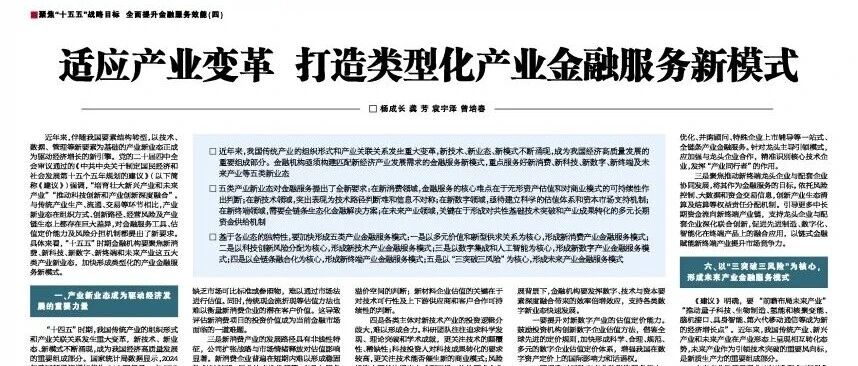
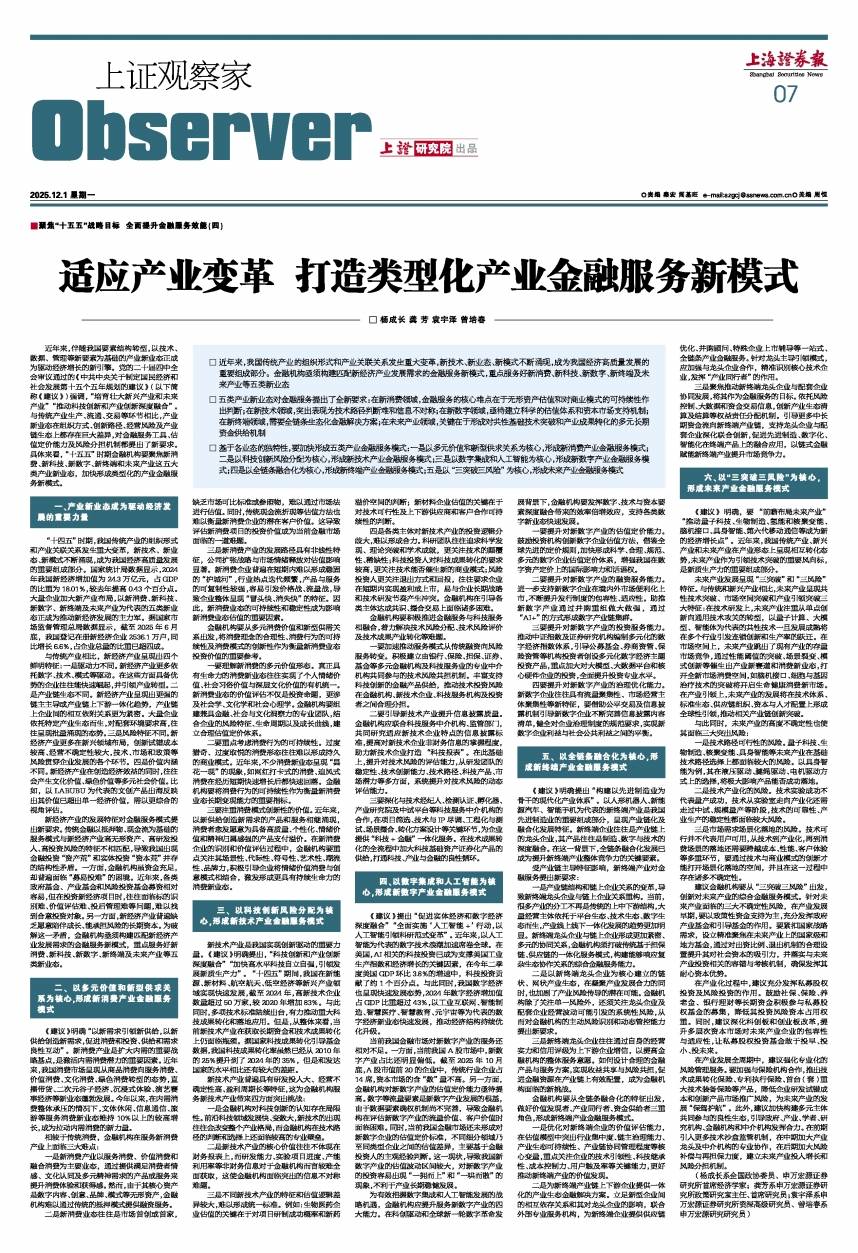
Core Viewpoint - The article emphasizes the need for financial institutions to develop new service models that align with the demands of emerging industries, particularly in new consumption, new technology, new digital, new terminal, and future industries, as these sectors are becoming crucial for China's economic growth [6][7][8]. Group 1: Importance of New Industries - Emerging industries are becoming a significant driving force for economic development, with the new economy's added value reaching 24.3 trillion yuan in 2024, accounting for 18.01% of GDP, an increase of 0.43 percentage points from the previous year [8]. - As of June 2025, there are 25.36 million registered new economy enterprises in China, a year-on-year increase of 6.6%, representing over 40% of the total number of enterprises [8]. Group 2: Characteristics of New Economy Industries - New economy industries differ from traditional ones in four key aspects: driving forces, industry chain ecology, risk characteristics, and value connotation [9][10]. - New economy industries rely more on digital, technological, and model-driven growth, leading to tighter interdependencies within the industry chain and higher innovation risks [9]. Group 3: Financial Service Models for New Consumption - New consumption industries face challenges in asset valuation and sustainable business model assessment due to their reliance on intangible assets [11][12]. - Financial institutions must consider the multi-dimensional value of new consumption, focusing on emotional, cultural, and social values, and develop a reasonable valuation system [12][13]. Group 4: Financial Service Models for New Technology - New technology industries are crucial for innovation-driven growth, with over 500,000 high-tech enterprises in China as of 2024, an increase of 83% since 2020 [14]. - Financial institutions face challenges in understanding technology risks, information asymmetry, and differing valuation logic across various technology sectors [14][15]. Group 5: Financial Service Models for New Digital Industries - The digital economy's added value is projected to exceed 43% of GDP by 2024, with rapid growth in sectors like industrial internet and smart manufacturing [17]. - Financial institutions need to enhance their valuation and pricing capabilities for new digital industries, as current market practices are insufficient [18][19]. Group 6: Financial Service Models for New Terminal Industries - New terminal industries, characterized by deep integration of manufacturing, digital, and technology, require financial services that adapt to their complex ecosystem [21][22]. - Financial institutions must optimize their value assessment capabilities and provide integrated financial solutions for the entire industry chain [22][23]. Group 7: Financial Service Models for Future Industries - Future industries are marked by technological breakthroughs and significant risks, necessitating innovative financial service models that address these uncertainties [24][25]. - Financial institutions should leverage policy funds and private equity investments to support the development of future industries while managing associated risks [26][27].
港股午评:恒指涨0.81%、科指涨0.99%,有色金属板块爆发,加密货币及新消费概念股走低
Sou Hu Cai Jing· 2025-12-01 04:10
Market Overview - The Hong Kong stock market showed a mixed performance with the Hang Seng Index rising by 0.81% to 26,068.05 points, the Hang Seng Tech Index up by 0.99% to 5,654.62 points, and the National Enterprises Index increasing by 0.64% to 9,188.61 points [1] - Major technology stocks performed well, with Alibaba up 3.3%, Tencent up 0.82%, and JD Group up 1.29%, while Xiaomi and Meituan saw declines of 2% and 1.46% respectively [1] - The non-ferrous metals sector experienced significant gains, with Minmetals Resources and China Gold International leading the increases [1] - The People's Bank of China made a significant move to stabilize the currency, leading to declines in cryptocurrency-related stocks [1] Company News - Meituan reported third-quarter revenue of 95.5 billion yuan, a year-on-year increase of 2%, but its core local business operating profit turned negative with a loss of 14.1 billion yuan [2] - China Gas announced revenue of 34.481 billion HKD and a profit of 1.334 billion HKD for the six months ending September 30, 2025 [3] - Yingtong Holdings reported a revenue of 1.028 billion RMB, a decrease of 3.42%, but a net profit increase of 15.4% to 133 million RMB [3] - Jihai Resources achieved a revenue of 450 million RMB, a year-on-year increase of 23.41%, with a net profit of 88.127 million RMB, up 2.98% [3] - Yuhua Education reported an annual revenue of 2.497 billion RMB, a 5.4% increase, and a net profit of 930 million RMB, a significant increase of 133.2% [3] - Huitai Textile reported a revenue of 2.524 billion HKD, a decrease of 6.72%, and a net profit of 79.322 million HKD, down 25.77% [3] - New Higher Education Group reported an annual revenue of 2.599 billion RMB, a 7.78% increase, and a net profit of 829 million RMB, up 9.67% [3] - Huaxin Handbag International reported a revenue of 432 million HKD, a year-on-year increase of 22.55%, and a profit of 48.262 million HKD, up 78.88% [4] - Bay Area Development reported toll revenue for October from various highways, showing a year-on-year decrease [4] Institutional Insights - Huatai Securities indicated that the market is nearing a "bad news fully priced" state, suggesting limited downside potential and pointing to left-side layout opportunities [11] - GF Securities noted that the foundation of the Hong Kong bull market remains intact, with a potential for a "volatile upward" trend rather than a rapid increase, highlighting three key triggers for future performance [12] - Dongwu Securities mentioned that short-term risk factors in the Hong Kong market are decreasing, but a rebound confirmation requires catalysts, with current positions being attractive for long-term allocation [12]
上证观察家 | 适应产业变革 打造类型化产业金融服务新模式
Sou Hu Cai Jing· 2025-12-01 00:40
Core Insights - The transformation of traditional industries in China has led to the emergence of new technologies, business models, and industries, which are crucial for high-quality economic development [10][11] - Financial institutions need to develop new service models that align with the demands of new economic industries, focusing on five categories: new consumption, new technology, new digital, new terminals, and future industries [10][13] Group 1: New Economic Industries - New economic industries are becoming a significant driving force for economic development, with the added value of the new economy reaching 24.3 trillion yuan in 2024, accounting for 18.01% of GDP, an increase of 0.43 percentage points from the previous year [11] - As of June 2025, there are 25.36 million registered new economy enterprises in China, representing over 40% of the total number of enterprises, with a year-on-year growth of 6.6% [11] Group 2: Financial Service Requirements - The five new economic categories present unique requirements for financial services, including challenges in intangible asset valuation and sustainable business model assessment in new consumption, technology path judgment and information asymmetry in new technology, and the need for a scientific valuation system in new digital industries [10][12] - Financial institutions must accelerate the formation of tailored financial service models for each of the five new economic categories, focusing on diverse value creation and innovative supply-demand relationships [10][12] Group 3: New Consumption Financial Services - New consumption industries are crucial for expanding domestic demand, with a shift towards service, value, cultural, and green consumption, maintaining over 10% growth in sectors like leisure and tourism despite overall consumption pressure [14] - Financial institutions face challenges in serving new consumption industries due to the intangible nature of core assets, lack of market comparables for valuation, and the non-linear growth paths of new consumption enterprises [15][16] Group 4: New Technology Financial Services - New technology industries are vital for innovation-driven development, with over 500,000 high-tech enterprises in China as of 2024, marking an 83% increase since 2020 [18] - Financial institutions encounter challenges in serving new technology industries, including limited understanding of technological innovation, information asymmetry regarding non-financial metrics, and differing valuation logic across various technology sectors [19][20] Group 5: New Digital Financial Services - The digital economy is rapidly growing, with its added value exceeding 43% of GDP in 2024, driven by sectors like industrial internet and smart manufacturing [21][22] - Current financial services for new digital industries are insufficient, with low representation in the A-share market and a need for improved valuation and pricing capabilities [22][23] Group 6: New Terminal Financial Services - New terminal industries, characterized by deep integration of manufacturing, digital, and technology, require financial services that respond to complex ecological collaboration relationships [24][25] - Financial institutions must optimize value assessment capabilities and provide integrated financial solutions for the entire industrial chain, focusing on collaboration with leading enterprises [25][26] Group 7: Future Industry Financial Services - Future industries are marked by breakthroughs in common technologies and face significant risks, including feasibility of technology paths and market demand realization [27][28] - Financial institutions should innovate comprehensive financial service models to address the uncertainties faced by future industries, leveraging government funds and private equity investments to support development [29]
适应产业变革 打造类型化产业金融服务新模式
Shang Hai Zheng Quan Bao· 2025-11-30 18:29
Core Insights - The article emphasizes the need for financial institutions in China to develop new financial service models that align with the evolving demands of new economic industries, particularly focusing on five categories: new consumption, new technology, new digital, new terminals, and future industries [1][4]. Group 1: New Economic Industries - New economic industries are becoming a significant driving force for economic development, with the added value of the new economy projected to reach 24.3 trillion yuan in 2024, accounting for 18.01% of GDP, an increase of 0.43 percentage points from the previous year [2]. - As of June 2025, there are 25.36 million registered new economy enterprises in China, representing a year-on-year growth of 6.6% and exceeding 40% of the total number of enterprises [2]. Group 2: Characteristics of New Economic Industries - New economic industries exhibit distinct characteristics compared to traditional industries, including different driving forces, tighter interdependencies within the industrial chain, higher operational risks, and the creation of diverse social values alongside economic benefits [3]. Group 3: Financial Service Requirements - The traditional financial service model, which relies on collateral and cash flow, is incompatible with the high intangible assets and risks associated with new economic industries, leading to a structural contradiction of "asset scarcity" in financial investment and "capital scarcity" in real investment [4]. Group 4: New Consumption Financial Service Model - The new consumption industry is crucial for expanding domestic demand, with a shift towards service, value, cultural, and green consumption. Financial institutions face challenges in providing services due to the intangible nature of core assets and the lack of market comparables for valuation [5][6]. - Financial institutions must understand the multi-dimensional value of new consumption, focusing on emotional, cultural, and social values, and establish a reasonable valuation system [6][7]. Group 5: New Technology Financial Service Model - The new technology industry is vital for innovation-driven growth, with over 500,000 high-tech enterprises in China as of 2024, an increase of 83% since 2020. However, challenges remain in securing long-term funding and converting technological achievements into marketable products [8][9]. - Financial institutions need to address challenges such as limited understanding of technological innovations, information asymmetry, and differing valuation logic across various new technology sectors [9][10]. Group 6: New Digital Financial Service Model - The digital economy is rapidly growing, with its value added expected to exceed 43% of GDP by 2024. However, financial services for new digital industries are currently insufficient, with a low representation of digital enterprises in the A-share market [11][12]. - Financial institutions must enhance their valuation capabilities for new digital industries and develop a diverse range of investment products to support the growth of digital enterprises [12][13]. Group 7: New Terminal Financial Service Model - The new terminal industry, characterized by deep integration of manufacturing, digital, and technology, requires financial services that can adapt to the evolving relationships within the industrial chain [14][15]. - Financial institutions should provide integrated financial solutions that consider the interdependencies among new terminal enterprises and their supply chains, focusing on value assessment and collaborative development [15][16]. Group 8: Future Industry Financial Service Model - Future industries are marked by breakthroughs in common technologies and face significant risks, including the feasibility of technological paths and the challenges of market demand realization [18][19]. - Financial institutions are encouraged to innovate comprehensive financial service models that address the uncertainties of future industries, leveraging government funds and private equity investments to support long-term development [19][20].