公用事业

Search documents
7月15日电子、计算机、公用事业等行业融资净买入额居前
Zheng Quan Shi Bao Wang· 2025-07-16 04:50
Group 1 - As of July 15, the latest market financing balance reached 1,877.263 billion yuan, an increase of 4.94 billion yuan compared to the previous trading day [1] - Among the 25 primary industries under Shenwan, the electronic industry saw the largest increase in financing balance, rising by 1.828 billion yuan [1] - Other industries with notable increases include computer, public utilities, and transportation, with financing balances increasing by 0.791 billion yuan, 0.404 billion yuan, and 0.402 billion yuan respectively [1] Group 2 - The industry with the highest financing balance increase percentage was the comprehensive sector, with a latest balance of 3.379 billion yuan, reflecting a growth of 2.70% [1] - The beauty care, transportation, and construction materials industries followed, with increases of 1.67%, 1.19%, and 0.97% respectively [1] - Industries experiencing a decrease in financing balance included steel, non-ferrous metals, and national defense, with reductions of 1.26%, 0.66%, and 0.19% respectively [2]
A股市场大势研判:沪指坚守3500点,创业板指涨超1%
Dongguan Securities· 2025-07-16 01:59
Market Overview - The Shanghai Composite Index maintained above 3500 points, while the ChiNext Index rose over 1% [1][3] - The market showed mixed performance with the Shanghai Composite Index closing at 3505.00, down 0.42%, and the Shenzhen Component Index closing at 10744.56, up 0.56% [1][3] Sector Performance - The top-performing sectors included Communication (up 4.61%), Computer (up 1.42%), Electronics (up 0.79%), Home Appliances (up 0.59%), and Automotive (up 0.58%) [2] - The underperforming sectors were Coal (down 1.92%), Agriculture, Forestry, Animal Husbandry and Fishery (down 1.62%), Utilities (down 1.60%), Textiles and Apparel (down 1.55%), and Beauty and Personal Care (down 1.53%) [2] Concept Index Performance - The leading concept indices included ERP Concept (up 3.35%), Co-packaged Optics (CPO) (up 2.39%), F5G Concept (up 2.25%), Nvidia Concept (up 2.02%), and Liquid Cooling Servers (up 1.90%) [2] - The lagging concept indices were Low-E Glass (down 3.55%), Silicon Energy (down 2.85%), POE Film (down 2.39%), Rural E-commerce (down 2.37%), and Coal Concept (down 2.36%) [2] Economic Indicators - The GDP for the first half of the year was approximately 660536 billion yuan, with a year-on-year growth of 5.3% [4] - In June, the total retail sales of consumer goods reached 42287 billion yuan, growing by 4.8% year-on-year [4] - Fixed asset investment (excluding rural households) for the first half of the year was 248654 billion yuan, with a year-on-year increase of 2.8% [4] Future Outlook - The market is expected to enter a period of consolidation after recent rebounds, with a recommendation for balanced portfolio allocation and focus on high-performing stocks during the upcoming semi-annual report window [5]
城市更新:更新什么?哪些机会?
2025-07-16 00:55
Summary of Conference Call Records Industry Overview - **Urban Renewal**: Transitioning from large-scale incremental development to enhancing existing stock, with a total investment scale expected to reach hundreds of billions to trillions, presenting both opportunities and challenges for the construction and building materials industry [1][11] - **Infrastructure Development**: Focus shifting to high-quality development, with an emphasis on transportation, energy, water networks, computing power, information, and logistics. Projects like urban gas pipeline renovations are expected to be completed by 2025, necessitating attention to investment efficiency [1][10] - **Real Estate Market**: The market for renovation of existing homes is projected to surpass that of new homes for the first time in 2024, indicating resilience and potential growth in the sector [1][12] Key Points and Arguments - **Urban Renewal Strategy**: Emphasizes the protection of historical architecture and limits on super-tall buildings, marking a shift from demolition to preservation [5][6] - **Construction and Building Materials Impact**: The industry must adapt to new policies, enhance technical standards, and increase the use of green materials to meet the demands of high-quality urban renewal [9][11] - **Engineering Machinery Sector**: The industry saw a 6% year-on-year increase in sales in June, with small excavators in high demand. A recovery cycle is anticipated over the next three to five years, with stable demand potentially reaching 200,000 units [14][15] Additional Important Insights - **Market Sentiment**: Initial market expectations for the conference were high, particularly for real estate and construction sectors, but subsequent performance indicated a weaker response than anticipated [2] - **Smart City Development**: The integration of digitalization and urban data management is expected to enhance operational efficiency and emergency management in urban planning [3][13] - **Public Environmental Sector**: The central government has introduced financial support policies for urban renewal, which will benefit water and waste management sectors, with specific funding caps for different regions [24][25] Recommendations for Investors - **Key Companies to Watch**: In the engineering machinery sector, companies like SANY Heavy Industry, XCMG, LiuGong, and Zoomlion are recommended due to their strong competitive positions and profitability [19] - **Public Environmental Companies**: Companies such as Hanlan Environment, Green Power, and Everbright Environment are highlighted for their stable operations, improving cash flows, and favorable valuations [26][27] Future Trends - **Urban Infrastructure**: The focus will be on modernizing urban systems with a networked approach, particularly in major economic zones like Beijing-Tianjin-Hebei and the Yangtze River Delta [20] - **Environmental Policy Support**: Increased government backing for infrastructure projects related to water supply and waste management is expected to drive growth in the public environmental sector [25][27]
6月经济:五大“异常”?(申万宏观·赵伟团队)
赵伟宏观探索· 2025-07-15 15:16
Core Viewpoints - The June economic data reveals five significant "anomalies," indicating new changes in the economy lurking in hidden corners [3][9][110] - Despite strong performance in exports and industrial production, the second quarter GDP remained flat at 5.2%, aligning with market expectations [2][9][107] - The construction industry showed a notable decline, with total output value in the first half of the year growing only 0.2% year-on-year, significantly lower than the 2.5% growth in the first quarter [3][9][107] Economic Indicators - GDP: The second quarter GDP growth was 5.2%, matching expectations, while industrial value-added growth in June was 6.8%, exceeding expectations of 5.5% [2][7][107] - Retail Sales: June retail sales grew by 4.8%, below the expected 5.6%, with significant declines in both commodity retail and catering income due to misaligned e-commerce promotions and competitive subsidies from food delivery platforms [2][20][82] - Fixed Asset Investment: June's fixed asset investment growth fell to 0%, the lowest in three years, primarily due to a decline in investment prices and significant drops in construction and manufacturing investments [4][23][66] Sector Analysis - Real Estate: Although credit financing for real estate improved significantly in June, investment growth declined to -12.9%. The reduction in ongoing projects due to earlier declines in new starts continues to impact the sector negatively [4][30][109] - Industrial Production: The industrial value-added surged due to an increase in working days and "export rush," with textile and chemical raw materials sectors showing recovery, while automotive and steel production weakened [5][41][54] - Consumer Behavior: The decline in retail sales was influenced by the timing of e-commerce promotions, with significant drops in categories like home appliances and communication equipment [20][82][108] Long-term Outlook - The "front-loading effect" may lead to a switch in economic strength between the first and second halves of the year, with the concentrated adjustment phase of the economy since 2022 nearing its end [6][46][110] - The overall economic growth target for the year remains achievable at 5.0%, despite anticipated fluctuations in economic indicators in the second half [46][110]

中报季如何“掘金”?
Guo Ji Jin Rong Bao· 2025-07-15 14:20
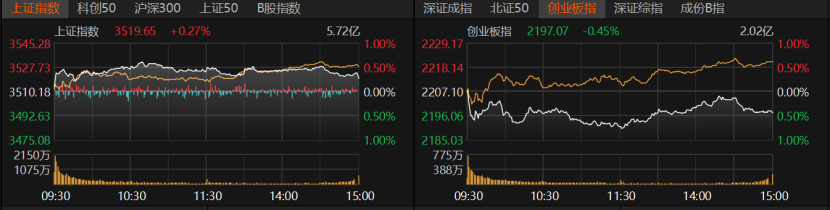
Core Viewpoint - The A-share market is expected to experience a period of consolidation during the mid-year report disclosure phase, with a focus on defensive stocks with high earnings certainty, while also considering opportunities in AI, semiconductors, and state-owned enterprise reforms [1][15]. Market Performance - On July 14, the A-share market showed mild performance with the Shanghai Composite Index slightly up and the ChiNext Index slightly down, while trading volume decreased significantly to 1.48 trillion yuan [3]. - The market is currently in a phase of differentiation between large-cap and growth stocks, with main funds shifting from high-position thematic stocks to policy-driven sectors [3][12]. Sector Performance - The mechanical equipment, utilities, and home appliance sectors all saw gains exceeding 1%, driven by factors such as the acceleration of solid-state battery industrialization and increased engineering machinery exports [5][6]. - The real estate sector experienced a decline of 1.29%, reflecting market skepticism about the effectiveness of recent policy stimuli [8][7]. Investment Strategies - Companies are advised to adopt a balanced investment strategy, focusing on defensive sectors like banking and utilities for risk-averse investors, while higher-risk investors may consider technology growth sectors such as semiconductors and AI [15][12]. - The current market environment is characterized by a rotation of sectors, with opportunities across various industries, including those benefiting from policy support and industrial trends [12][15]. Earnings and Policy Impact - The mid-year earnings reports are expected to catalyze interest in sectors such as AI, military industry, and chemicals, with a focus on companies that exceed earnings expectations [12][15]. - The market is likely to remain active, with a structural market characteristic where individual stocks are performing well despite overall index fluctuations [11][15].
业绩预告将收官,这些行业和公司亮了
Zhong Guo Ji Jin Bao· 2025-07-15 14:17
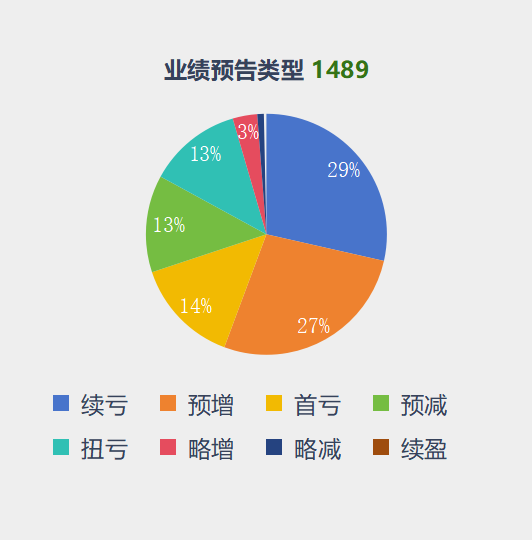
Summary of Key Points Core Viewpoint - As of July 15, 2025, a total of 1,489 listed companies in A-shares have disclosed their half-year performance forecasts, with 645 companies expecting positive results, indicating a pre-announcement ratio of 43.32% [1] Group 1: Performance Highlights - Among the companies with positive performance forecasts, 33 companies expect a net profit increase of over 1,000% [5][10] - The company with the highest expected net profit increase is Southern Precision, forecasting a net profit of 200 million to 250 million yuan, representing a year-on-year growth of 28,647% to 35,784% [6][7] - Huayin Power ranks second with an expected net profit of 180 million to 220 million yuan, reflecting a year-on-year increase of 3,600% to 4,423% due to increased power generation and reduced fuel costs [8] Group 2: Industry Performance - Notable performance is observed in the basic chemical, machinery, electronics, and pharmaceutical industries, with many companies reporting significant growth [3][10] - In the basic chemical sector, companies like Xianda Co. expect a net profit of 130 million to 150 million yuan, with a year-on-year increase of 2,443.43% to 2,834.73% [11] - The electronics industry is also thriving, with Industrial Fulian projecting a net profit of 11.958 billion to 12.158 billion yuan, a growth of 36.84% to 39.12% driven by AI-related business [11] Group 3: Declining Performance - Among the companies that have disclosed performance forecasts, 613 companies reported a decline in performance, with 42 companies expecting a net profit decrease of over 1,000% [14] - ST Nanzhi is expected to report a net loss of 800 million to 1.1 billion yuan, a decline of 18,396.17% to 25,257.23% compared to the previous year [15][16] - Companies like Seli Medical, which saw a significant stock price increase earlier, are now forecasting a net loss of 55 million to 66 million yuan, a decline of 1,052% to 1,283% [17][18]

2025年中央城市工作会议内容解读:中央城市工作会议利好A股市场哪些板块?
Yin He Zheng Quan· 2025-07-15 14:15
Group 1: Central Urban Work Conference Insights - The conference marked a shift in urbanization from rapid growth to stable development, emphasizing quality over quantity in urban expansion[2] - Seven key tasks were outlined, focusing on optimizing urban systems, fostering innovation, enhancing livability, promoting green cities, ensuring safety, cultivating cultural values, and developing smart cities[2][6] Group 2: Impact on A-Share Market - The shift towards stock quality improvement and urban renewal is expected to boost investment in municipal infrastructure, green technology, and smart city initiatives, positively impacting related A-share sectors[17] - From January to July 14, 2025, the real estate sector fell by 2.72%, while the environmental sector rose by 11.54%, indicating a divergence in sector performance[22] - Current price-to-book (PB) ratios for urban renewal-related industries are at historically low levels, suggesting high long-term investment value[22] Group 3: Real Estate Sector Analysis - In the first half of 2025, real estate development investment dropped by 11.2%, with new housing starts down by 20%[27][40] - The market remains under pressure, with a significant decline in both sales area and sales value, reflecting ongoing weak demand[27][35] - The conference's directives aim to reshape the real estate sector towards a model focused on quality and sustainability, potentially benefiting firms with strong operational capabilities[40]
业绩预告将收官,这些行业和公司亮了
中国基金报· 2025-07-15 14:03
Core Viewpoint - As of July 15, 2025, a total of 1,489 listed companies in A-shares have released their half-year performance forecasts, with 645 companies expecting positive results, indicating a pre-announcement ratio of 43.32% [2] Group 1: Performance Forecasts - 33 companies are expected to see net profit increases exceeding 1,000% in the first half of 2025, with some stocks experiencing significant price surges following their announcements [5][10] - Among the companies with positive growth, Southern Precision is projected to have a net profit of 200 million to 250 million yuan, representing a year-on-year increase of 28,647% to 35,784%, making it the "king of pre-increase" [6][7] - Huayin Power ranks second with a projected net profit of 180 million to 220 million yuan, reflecting a year-on-year increase of 3,600% to 4,423% due to increased power generation and reduced fuel costs [8] Group 2: Industry Performance - Notable performance is observed in the basic chemical, machinery equipment, electronics, and pharmaceutical industries, with many companies reporting significant growth [3][12] - In the basic chemical sector, companies like Xianda Co. are expected to see net profits of 130 million to 150 million yuan, with a year-on-year increase of 2,443.43% to 2,834.73% [12] - The electronics industry is benefiting from AI-related business growth, with Industrial Fulian forecasting a net profit of 11.958 billion to 12.158 billion yuan, a year-on-year increase of 36.84% to 39.12% [12][13] Group 3: Declining Performance - Among the companies that have disclosed performance forecasts, 613 are expected to report declines, with 42 companies anticipating a drop exceeding 1,000% [15] - ST Nanzhi is projected to have a net loss of 800 million to 1.1 billion yuan, a decline of 18,396.17% to 25,257.23% compared to the previous year [16][17] - Companies like Seli Medical, despite a significant stock price increase earlier in the year, are forecasting a net loss of 55 million to 66 million yuan, representing a year-on-year decline of 1,052% to 1,283% [19][20]


7300亿南下资金重构港股生态:2025上半年高股息与硬科技双主线深度解析
智通财经网· 2025-07-15 13:18
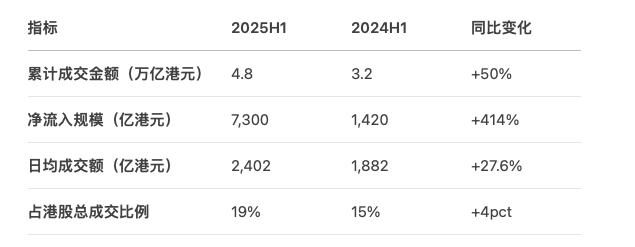
Core Insights - The Hong Kong stock market experienced a significant rebound in the first half of 2025, with the Hang Seng Index rising by 20%, leading among major global indices [1] - The primary driver of this rebound was the substantial inflow of mainland funds through the "Hong Kong Stock Connect" channel, coupled with a global reassessment of the value of "cheap Chinese assets" [1] - The net inflow of southbound funds reached over 730 billion HKD, marking a 414% increase year-on-year and setting a historical record for the same period [3][5] Market Dynamics - The total trading volume through the Hong Kong Stock Connect reached 4.8 trillion HKD, a 50% increase compared to the previous year, accounting for 19% of the total trading volume in the Hong Kong market [2][3] - Southbound funds have significantly reshaped the investor structure in the Hong Kong market, with their proportion of total trading volume rising from less than 10% in 2020 to nearly 20% [4] - The inflow of southbound funds has enhanced the correlation between the Hong Kong and A-share markets, while also increasing the independence of the Hong Kong market from global trends [4] Sector Preferences - The southbound funds showed a clear preference for high-dividend and innovative pharmaceutical sectors, with energy, telecommunications, and banking being the top three sectors for net buying [6][7] - The energy sector attracted a net buying of 620 million HKD, while telecommunications and banking received 410 million HKD and 380 million HKD, respectively [6][7] - The innovative pharmaceutical index saw significant gains, with some stocks experiencing over 60% increases, reflecting a strong recovery after a prolonged downturn [6][8] Investment Trends - The current market environment is characterized by a "barbell strategy," where investors are seeking both stable cash flow from high-dividend assets and growth potential from innovative sectors [10][16] - The anticipated interest rate cuts by the Federal Reserve are expected to further highlight the defensive value of high-dividend sectors, while the commercialization capabilities of innovative pharmaceutical companies will be crucial for growth stocks [16] - The semiconductor, innovative pharmaceuticals, and energy security sectors are expected to benefit from policy support and sustained inflows from mainland funds [17] Notable Stocks - The top-performing stocks in the Hong Kong Stock Connect included Lao Pu Gold, which saw a staggering increase of 330.18%, followed by Sangfor Technologies and Rongchang Biopharmaceuticals with increases of 288.98% and 278.12%, respectively [11][12] - The presence of diverse sectors among the top gainers indicates a broad market interest, with biotechnology leading the way [11][12] - Stocks like Rongchang Biopharmaceuticals have gained significant institutional recognition, with over 50% of holdings through the Hong Kong Stock Connect [13]
中证内地低碳经济主题指数下跌0.9%,前十大权重包含中国核电等
Jin Rong Jie· 2025-07-15 11:59
Core Viewpoint - The China Securities Low Carbon Economy Theme Index has shown mixed performance, with a recent decline but positive growth over the past month and three months, indicating a volatile but potentially promising investment area in the low-carbon sector [1][2] Group 1: Index Performance - The China Securities Low Carbon Economy Theme Index closed down 0.9% at 1583.71 points, with a trading volume of 36.979 billion yuan [1] - Over the past month, the index has increased by 7.35%, and by 10.32% over the last three months, while it has decreased by 1.71% year-to-date [1] Group 2: Index Composition - The index comprises companies involved in clean energy generation, energy conversion and storage, clean production and consumption, and waste treatment [1] - The top ten weighted companies in the index are: CATL (15.42%), Yangtze Power (14.38%), Sungrow Power (6.18%), LONGi Green Energy (5.51%), China National Nuclear Power (4.37%), Three Gorges Energy (3.5%), TBEA (3.49%), EVE Energy (3.1%), Tongwei Co. (3.09%), and Guotou Power (2.01%) [1] Group 3: Market Segmentation - The index's holdings are primarily listed on the Shanghai Stock Exchange (51.54%), followed by the Shenzhen Stock Exchange (48.04%), and a small portion on the Beijing Stock Exchange (0.43%) [1] - In terms of industry distribution, the index's sample shows that 69.10% is in the industrial sector, while 30.90% is in public utilities [2] Group 4: Fund Tracking - Several public funds track the China Securities Low Carbon Economy Theme Index, including: Huaxia CSI Low Carbon Economy Theme ETF, Penghua CSI Low Carbon Economy Theme ETF, Yinhua CSI Low Carbon Economy Theme ETF, and others [2]