证券业

Search documents
美债攀升将如何改变全球经济? | 一财号每周思想荟(第19期)
Sou Hu Cai Jing· 2025-05-30 10:25
Group 1: Impact of LPR Reduction - The reduction of LPR will lead to lower mortgage rates for existing homeowners, increasing disposable income and stimulating consumer spending in sectors like home appliances, automobiles, tourism, and retail [1] - Active consumption and a stable real estate market will significantly boost domestic demand, contributing to economic growth [1] - The LPR cut is expected to alleviate mortgage pressure, stimulate consumption demand, and improve market expectations, which is beneficial for expanding domestic demand and promoting economic growth [1] Group 2: Deposit Rate and Capital Market Dynamics - The trend of "deposit migration" has been a hot topic, with a series of deposit rate cuts leading to a decline in the value retention of deposits [2] - The narrowing of term spreads and the cleaning up of high-interest deposits by banks have made it increasingly difficult for depositors to maintain investment returns, resulting in a trend of deposit outflow [2] - The future of deposit migration is expected to align with capital market reforms, transforming household savings into long-term capital and enhancing investment returns [2] Group 3: U.S. Treasury Market Uncertainty - The rising uncertainty in the U.S. Treasury market necessitates a strategic approach to risk management, including diversifying away from U.S. Treasuries by increasing allocations to gold and non-U.S. sovereign debt [3][4] - There is a need to reduce exposure to long-term U.S. Treasuries and focus on inflation-protected securities and high-rated corporate bonds [4] - Strengthening multilateral clearing systems and reducing reliance on the U.S. dollar payment system is crucial for mitigating risks associated with U.S. Treasury market fluctuations [4][5] Group 4: Global Financial Market Implications - The volatility in U.S. Treasury yields is reshaping international capital flows, with increased interest in safe-haven assets like gold and pressure on risk asset valuations [7] - Despite short-term volatility, the U.S. Treasury market retains its status as a key safe asset due to its liquidity and depth, supported by the Federal Reserve's role as a lender of last resort [7][8] - The rising U.S. Treasury yields reflect broader concerns about potential stagflation in the U.S. economy, which could have lasting impacts on global financial markets [8] Group 5: Renminbi Internationalization - The internationalization of the Renminbi can reduce China's economic dependence on external currency fluctuations, enhancing the independence and effectiveness of its monetary policy [9] - A higher degree of Renminbi internationalization would mitigate the impact of significant fluctuations in the U.S. dollar on the Chinese economy [9] - Cross-border capital flows facilitated by Renminbi internationalization can improve the transmission of monetary policy and achieve macroeconomic control objectives [9]
宝城期货资讯早班车-20250529
Bao Cheng Qi Huo· 2025-05-29 13:31
投资咨询业务资格:证监许可【2011】1778 号 资讯早班车 资讯早班车-2025-05-29 一、 宏观数据速览 | 发布日期 | 指标日期 | 指标名称 | 单位 | 当期值 | 上期值 | 去年同期值 | | --- | --- | --- | --- | --- | --- | --- | | 20250416 | 2025/03 | GDP:不变价:当季同比 | % | 5.40 | 5.40 | 5.30 | | 20250430 | 2025/04 | 制造业 PMI | % | 49.00 | 50.50 | 50.40 | | 20250430 | 2025/04 | 非制造业 PMI:商务活 | % | 50.40 | 50.80 | 51.20 | | | | 动 | | | | | | 20250430 | 2025/04 | 财新 PMI:制造业 | % | 50.40 | 51.20 | 51.40 | | 20250506 | 2025/04 | 财新 PMI:服务业经营 活动指数 | % | 50.70 | 51.90 | 52.50 | | 20250514 | 2025/ ...
【申万固收】关税预期反复下的核心矛盾梳理与策略应对——近期市场反馈及思考3
申万宏源研究· 2025-05-29 01:12
Core Viewpoints - The article discusses the current concerns of investors regarding macro interest rates, credit, and convertible bonds, and provides insights on these topics [2][12]. Group 1: Bond Market Dynamics - Bond interest rates are positively correlated with domestic demand and negatively correlated with external demand, indicating that despite unexpected tariff changes, the core contradiction in the bond market remains focused on domestic demand [3][14]. - The liquidity environment is improving gradually, with funding rates decreasing from around 1.8% to a range of 1.4%-1.6%, suggesting that negative carry is becoming a thing of the past [4][19]. - The long-end interest rates, particularly the 10-year government bond, require a decline in deposit rates to facilitate further downward movement [20][21]. Group 2: Macro-Prudential Support - The People's Bank of China is focusing on macro-prudential measures to support the healthy development of the bond market, which includes monitoring risks and enhancing regulatory coordination [5][24]. - The current credit environment shows weak growth in broad credit, with local government bonds expanding, indicating that investors may face more interest rate risks [25]. Group 3: Credit Bond Market - The credit bond market is expected to see a shift towards stronger credit performance and weaker interest rates, driven by a decrease in deposit rates and increased allocation towards credit bonds by wealth management products [7][28]. - The performance of credit strategies is likely to favor short to medium-term bonds, particularly those with a maturity of 2-3 years, with a ranking of value from city investment bonds to industry bonds [8][30]. Group 4: Investment Opportunities - The recent surge in sci-tech bonds presents unique investment opportunities, especially with new issuers and private sector participation, although investors should remain cautious of potential credit risks [10][32]. - The recommendation for a near-term convertible bond strategy is based on the increasing market focus on bonds with shorter maturities, particularly those with a strong repayment capability [11][34].


每日债市速递 | 净投放持续
Wind万得· 2025-05-28 22:44
Group 1: Monetary Policy and Market Operations - The central bank conducted a 7-day reverse repurchase operation of 215.5 billion yuan at a fixed rate of 1.40% on May 28, resulting in a net injection of 58.5 billion yuan after accounting for 157 billion yuan in reverse repos maturing on the same day [2][4] - Liquidity remains ample, with overnight and 7-day pledged repo rates declining by over 3 basis points and 1 basis point, respectively [4] - The latest overnight financing rate in the U.S. stands at 4.26% [4] Group 2: Interbank Rates and Bond Yields - The latest transaction for one-year interbank certificates of deposit is around 1.72%, showing a slight increase from the previous day [7] - The yields on major interbank bonds are as follows: 1-year government bonds at 1.4625%, 2-year at 1.4725%, and 10-year at 1.6830% [8] - The 30-year main contract for government bond futures fell by 0.04%, while the 10-year contract remained unchanged [11] Group 3: Corporate and Government Financial Data - From January to April, state-owned and state-controlled enterprises reported total operating revenue of 26.2755 trillion yuan, unchanged from the previous year, while total profit decreased by 1.7% to 1.34914 trillion yuan [12] - The asset-liability ratio for these enterprises increased by 0.2 percentage points to 65.1% [12] Group 4: International Relations and Economic Policies - The Chinese government announced an expansion of visa-free access for citizens of Saudi Arabia, Oman, Kuwait, and Bahrain, effective from June 9, 2025, to June 8, 2026, facilitating business and tourism [12] - The European Union aims to reduce carbon emissions by 54% by 2030, slightly below its 55% target, while also striving for at least 42.5% of renewable energy [14] Group 5: Bond Issuance and Market Events - The Ministry of Finance plans to issue 68 billion yuan in government bonds in Hong Kong this year [17] - Recent negative events in the bond market include downgrades in ratings for several companies, such as Wuzhou Canghai Construction Development Co. and Jineng Technology Co., indicating potential risks in the corporate bond sector [17]

经济韧性获国际认可!穆迪调升香港评级展望
Wind万得· 2025-05-28 22:44
Core Viewpoint - The recent credit rating reports from S&P and Moody's reflect a stable outlook for Hong Kong's economy, highlighting its robust fiscal position and improving economic prospects. Group 1: Fiscal Resilience - As of March 2025, Hong Kong's fiscal reserves reached HKD 758 billion, equivalent to approximately 22 months of government expenditure, with total government debt to GDP ratio maintained at a low 4.5% [3][4] - The official foreign exchange reserves stood at USD 425 billion by April 2025, providing a solid backing for the linked exchange rate system, which enhances Hong Kong's unique advantage amid global financial volatility [3] Group 2: Economic Recovery - In Q1 2025, Hong Kong's GDP grew by 3.1% year-on-year, surpassing market expectations of 2.8%, driven by a recovery in tourism, a 12.5% increase in service exports, a 4.3% rise in private consumption, and a 5.7% growth in fixed asset investment [5][7] - The government forecasts an annual economic growth of 3.0%-4.0% for 2025, reflecting increased confidence in the economic outlook [7] Group 3: Financial Market Stability - The banking system's capital adequacy ratio remains high at 21.3%, significantly above international regulatory requirements, indicating a stable financial environment [9] - Hong Kong's new stock fundraising exceeded HKD 76 billion, a more than sevenfold increase compared to the same period last year, while the bond market reached a historic high of over HKD 4 trillion [9] - Offshore RMB deposits grew by 8% in the first four months of 2025, reaching HKD 1.25 trillion, reinforcing Hong Kong's position as the largest offshore RMB business hub globally [9] Group 4: Analyst Insights - Analysts from JPMorgan and Goldman Sachs noted that Moody's outlook adjustment aligns with expectations, indicating Hong Kong's resilience in maintaining financial stability amid global monetary policy divergence [10][11] - The Hong Kong government emphasized that the rating agencies' decisions reflect the region's ability to navigate global economic uncertainties, supported by ongoing high-level opening-up policies and advancements in technology and green transformation [11]



资本引擎带动创新核聚变 科技企业加速高质量发展
证券时报· 2025-05-28 01:55
打造资本强引擎,赋能新质生产力。 5月21日,由证券时报社主办、中国上市公司协会支持的第八届(2025)西湖大会在杭州举行。与会嘉宾聚焦"打造资本强引擎,赋能新质生产力"这一主题,就新质 生产力发展路径、创新生态打造以及人工智能重塑大资管行业逻辑等话题深入探讨,助力资本引擎带动创新核聚变。 新质生产力发展的三大赛道 新质生产力将成为"十五五"到2040年长远规划中制造业的最强音。中国金融40人论坛学术顾问、重庆市原市长黄奇帆指出,新质生产力发展有三大赛道,分别为增 量、存量和生产性服务业。 "'六小龙'在杭州出圈,本质上是创新生态的胜利。"陆建强说,"从生态角度看,人才是主体,数字经济是土壤,营商环境是空气,金融是水分,共同构成创新生态 系统的四要素。" 在陆建强看来,创新生态的胜利需要政府引导基金、产业基金、创投、风投、银行、券商等各类主体综合协同,打破牌照单项服务的壁垒,为科技企业构建"股、 债、贷、保、担、租"多元化接力式融资支持系统,推动资金链、人才链、创新链、产业链四链融合。 其中,增量领域包括新能源、新材料、新人工智能、新生物医药和新高端装备等五大新制造板块,如同五棵参天大树,衍生出多个战略性新兴 ...

【财经分析】“热行情”背后的“冷思考”:信用债择券需审慎
Xin Hua Cai Jing· 2025-05-27 14:02
Core Viewpoint - Despite recent positive performance in credit bonds, the overall performance of industrial bonds remains weak compared to municipal investment bonds, with analysts suggesting a focus on high-quality central state-owned enterprise bonds and leading private enterprise bonds as investment opportunities [1][2][4]. Group 1: Industrial Bond Performance - The credit bond market has shown a "strong credit but weak interest rate" characteristic since May, with slight fluctuations in yields [2]. - As of May 26, the yield curve for AAA-rated medium and short-term notes remained stable, with 3-month yields at 1.67%, 3-year yields down 1 basis point to 1.81%, and 5-year yields down 1 basis point to 1.94% [2]. - Industrial bond issuers are facing significant pressure, with 2024 revenue growth declining to -1.79% and net profit growth contracting to -10.47% [2]. Group 2: Sector-Specific Risks - Industries such as textiles, light manufacturing, and real estate continue to experience weak demand, impacting related sectors like construction and materials [3]. - The construction sector is particularly affected, with both revenue and net profit expected to decline in 2024, alongside rising debt ratios and slow project rollouts [3]. Group 3: Investment Strategies - Analysts recommend focusing on high-quality central state-owned enterprise bonds and leading private enterprise bonds due to the overall low yield of industrial bonds compared to municipal bonds [4]. - Investment strategies should prioritize long-duration bonds (5 years and above) with AA+ ratings or higher, particularly in sectors like utilities and transportation [4]. - The issuance of perpetual bonds, especially those rated AAA or AA+, is also encouraged due to their strong financing capabilities and tax advantages [4]. Group 4: Technology Innovation Bonds - The issuance of technology innovation bonds has surged, with a total issuance of 320.5 billion yuan in May, contributing significantly to net financing [5][6]. - Approximately 90% of technology innovation bond issuers have external ratings of AAA, with central state-owned enterprises accounting for about 57% of the issuance [5]. - The current environment is favorable for investing in technology innovation bonds, as they offer higher yields compared to government bonds and are expected to alleviate the "asset shortage" in the bond market [5][6].






中产的钱,正在流向香港
大胡子说房· 2025-05-27 04:08
Core Viewpoint - The recent interest rate adjustments signify a "wealth reconstruction," impacting different socioeconomic groups in varying ways [2][3]. Group 1: Interest Rate Changes - Loan interest rates have decreased by 10 basis points, bringing mortgage rates down to around 3%, while deposit rates have been cut by 25 basis points, with three- and five-year fixed deposits now at 1.3% [1]. - This creates a "interest rate gap trap," where keeping money in the bank results in losses, while borrowing money becomes profitable [6]. Group 2: Wealth Dynamics - High-net-worth individuals are moving their money out of banks to invest in other assets, as the 1.3% annualized return on deposits is insufficient [10][12]. - The rental yield for properties has reached 1.5% to 2.0%, providing returns that exceed bank interest rates, making real estate an attractive investment [13]. Group 3: Overseas Investments - High-net-worth individuals are also investing in overseas properties, such as in Japan, where rental yields exceed 4% and the yen has appreciated over 10% against the RMB in the past year [16][17]. - Quantitative investments are gaining traction, primarily benefiting high-net-worth individuals who are willing to invest [19][20]. Group 4: Middle-Class Responses - The middle class is responding to the interest rate cuts by paying down mortgages, effectively earning a "risk-free" return of 1.7% by reducing debt [22]. - Many middle-class individuals are looking towards Hong Kong as a "wealth haven," with 86% of high-net-worth individuals planning to invest abroad in the coming year [25][24]. Group 5: Investment Trends in Hong Kong - Hong Kong has become the top destination for overseas investments, with 37% of high-net-worth individuals choosing it for its mature financial market, stable economy, and diverse investment opportunities [27]. - The Hong Kong insurance market has seen a significant increase, with new individual policy premiums reaching 1,696 billion HKD, a 15.7% increase compared to the same period last year [32]. Group 6: Asset Diversification and Risk Management - Investors are seeking diversified asset classes in Hong Kong, including fixed income, equities, and infrastructure, to mitigate risks and ensure cash flow [33][34]. - The ability to maintain cash flow through certain assets is becoming increasingly important, as it allows for flexible access to funds [36].

日债收益率创历史新高 40年期债券拍卖明日面临新一轮考验
Zhi Tong Cai Jing· 2025-05-27 01:35
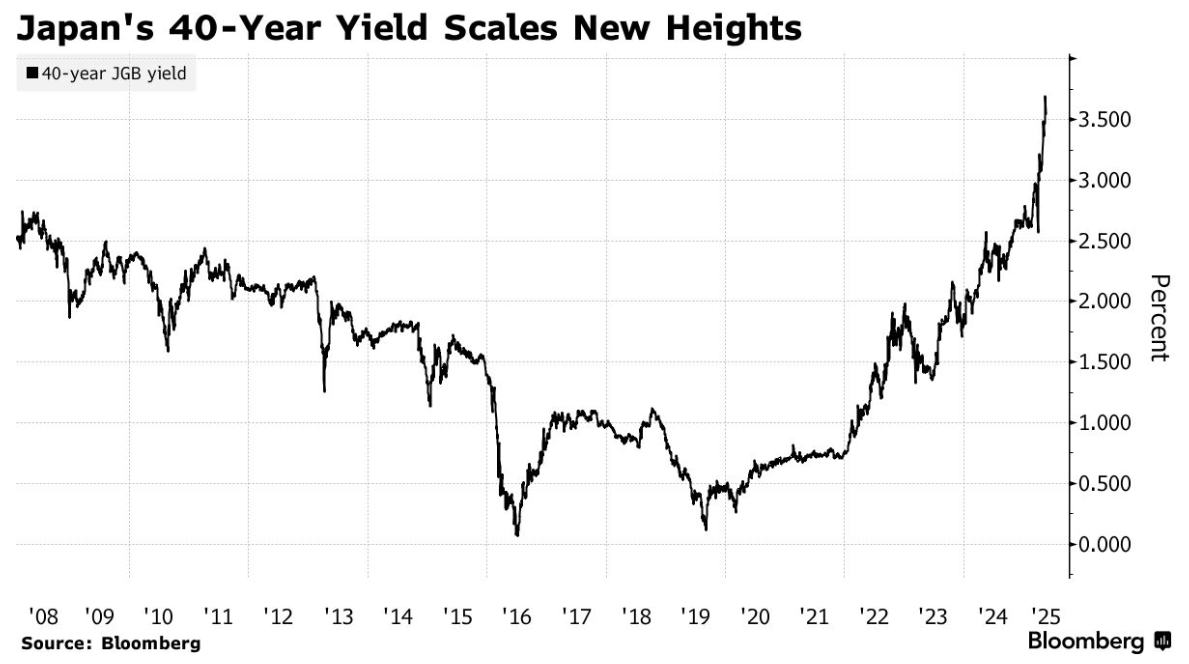
Core Viewpoint - The demand for Japanese government bonds is under scrutiny as the first ultra-long bond issuance follows a weak auction last week, leading to record-high yields [1][4]. Group 1: Bond Market Dynamics - The recent auction of 20-year bonds saw the weakest demand in over a decade, causing yields to surge to record levels [1]. - The upcoming issuance of 40-year bonds is pressured by rising long-term borrowing costs in major economies, including the U.S. [1]. - The yield on 30-year and 40-year bonds has reached their highest levels since issuance due to instability in ultra-long bonds [1]. Group 2: Investor Sentiment and Market Reactions - Rising yields have diminished investor interest, with few willing to actively bid in upcoming auctions [4]. - The 10-year government bond yield was approximately 1.52%, having reached its highest level since 2008 earlier in March [4]. - Concerns over Japan's fiscal situation have been raised, with the Prime Minister warning that it is worse than Greece's [4]. Group 3: Institutional Responses - Major life insurance companies have reported unrealized losses of about $600 million on domestic bond holdings for the latest fiscal year [4]. - The Bank of Japan is preparing to review its bond purchase plan, responding to concerns from major life insurers and pension funds regarding rising yields [4]. - Sun Life Insurance plans to increase its domestic bond holdings but may delay some investments due to liquidity and price volatility concerns [5]. Group 4: Auction Expectations - Some market participants are optimistic that a strong result from the 40-year bond auction could halt the recent rise in yields [5]. - Factors such as high yield levels, reduced issuance, and investor-friendly auction formats may contribute to a successful auction outcome [5].
连平:提振消费需要资本市场持续向好
Di Yi Cai Jing· 2025-05-26 12:41
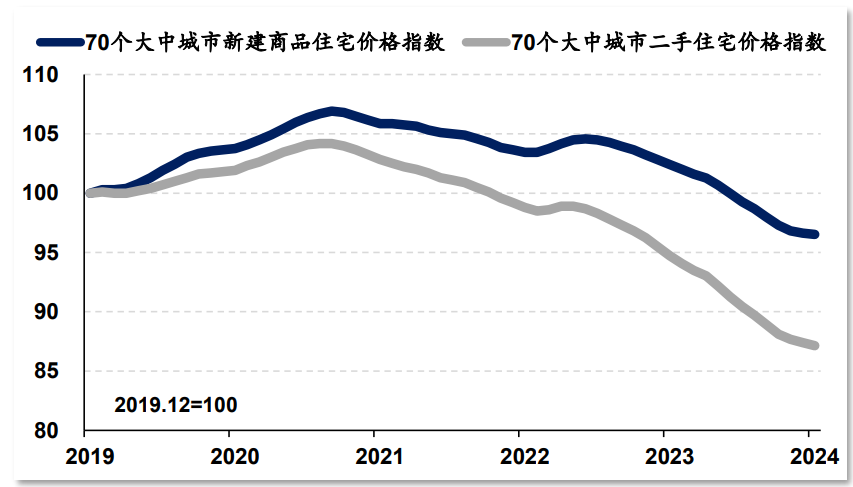
Group 1 - The core viewpoint is that increasing residents' property income may be a crucial way to boost consumer spending capacity and confidence in the current and future periods [1] - Since Q3 2024, a series of significant policies have been introduced in China to stimulate consumption and stabilize economic growth amid rising external instability and uncertainty [1] - The primary sources of residents' property income in China include real estate, financial products, and the stock market, which are critical for enhancing property income [1] Group 2 - Real estate remains the main asset for residents, with housing assets consistently accounting for over 90% of non-financial assets since 2000 [2] - From Q4 2021 to the end of 2024, new home prices in 70 major cities are expected to decline by approximately 3.5%, while second-hand home prices may drop by 13% [2] - The total value of residential housing assets in China was about 476 trillion yuan at the end of 2021, with an estimated reduction of 72 trillion yuan by the end of 2024, indicating a 15% overall shrinkage [2] Group 3 - Financial products have historically been a significant source of residents' property income, but interest rates have been declining, leading to lower returns on these products [3] - The average annualized return on three-month RMB financial products has decreased from around 6% in 2013 to less than 2% currently [3] - The era of achieving rapid growth in property income through high-yield financial products has ended, with expectations of continued low returns in the next 2-3 years [3] Group 4 - Historical experiences show that a thriving capital market can positively impact consumer spending, with past stock market rallies correlating with increased retail sales growth [6][7][8] - For instance, during the stock market rise from April 1999 to June 2001, retail sales growth accelerated significantly, demonstrating the relationship between stock market performance and consumer confidence [6] - The stock market has undergone several major bull markets since 1999, with most of them contributing positively to consumer spending, except for the 2014-2015 period, which lacked a significant impact on consumption [9] Group 5 - The current domestic stock market is characterized by low historical valuations, with the Shanghai Composite Index's price-to-earnings ratio at 14.4 times, below the historical average of 25.6 times [19] - The majority of industries are still in the early stages of operational recovery, indicating substantial growth potential in the domestic stock market [19] - Recent policy measures have aimed to stimulate the stock market, including interest rate cuts and tax adjustments, which are expected to enhance market liquidity and investor confidence [20][22] Group 6 - The large number of retail investors in the A-share market, exceeding 200 million, highlights the importance of policies that enhance capital market attractiveness to boost property income and consumer spending [22] - Recommendations include implementing more aggressive monetary policies, optimizing long-term capital market entry systems, and providing tax incentives for small investors to encourage participation in the stock market [23][24][25]