
黑色金属

Search documents
综合晨报-20251231
Guo Tou Qi Huo· 2025-12-31 03:01
1. Report's Industry Investment Ratings No relevant content provided. 2. Core Views of the Report - The current fundamental pattern of crude oil is dominated by oversupply, leading to a downward shift in the oil - price center, despite geopolitical conflicts causing occasional price spikes [2]. - Precious metals are supported by the Fed's easing prospects and geopolitical risks, but short - term adjustments are inevitable due to excessive gains driven by funds [3]. - For various metals, non - ferrous metals and precious metals generally show certain trends, with each metal having its own supply - demand and price characteristics. For example, copper prices are affected by the Fed's interest - rate cut expectations, and aluminum shows an oscillatingly strong trend [4][5]. - For energy and chemical products, most products face supply - demand imbalances, with some affected by geopolitical factors and some by seasonal and policy factors. For example, fuel oil is affected by geopolitical tensions and high - inventory pressure [22]. - Agricultural products' prices are influenced by factors such as weather, supply - demand relationships, and policies. For example, soybean and bean - related products are affected by South American weather and export situations [36]. - In the financial market, the stock index shows an oscillatingly strong trend, and the bond market has different trends for different - term bonds [48][49]. 3. Summary by Related Catalogs Energy Crude Oil - Geopolitical tensions increase concerns about supply disruptions, but the market is still dominated by oversupply. EIA predicts a daily increase of over 2 million barrels in global inventories, and the oil - price center is expected to shift downward [2]. Fuel Oil & Low - Sulfur Fuel Oil - Geopolitical factors provide short - term support, but the supply - surplus situation remains unchanged. High - sulfur fuel oil demand may increase, but Singapore's high inventory is a significant pressure. Low - sulfur fuel oil supply is expected to recover, and demand remains weak [22]. Asphalt - Commercial inventory de - stocking is weak, and the supply of heavy raw materials is unstable due to the escalating situation between the US and Venezuela, providing bottom - end support for prices [23]. Metals Precious Metals - Overnight, precious metals turned upward. The Fed's easing prospects and geopolitical risks support their strength, but short - term adjustments are needed due to excessive gains. After volatility decreases, a long - position strategy can be considered [3]. Copper - Overnight, copper prices rebounded, with large short - term price fluctuations near the New Year. The market focuses on the Fed's interest - rate cut expectations in 2026. The previous options strategy should be continued, and attention should be paid to refinery production schedules and social inventory changes [4]. Aluminum - Overnight, Shanghai aluminum fluctuated within a narrow range. After a significant correction, the panic sentiment eased. The fundamental driving force of the aluminum market is insufficient, and the oscillatingly strong trend remains unchanged. Long positions can be held based on the 40 - day moving average [5]. Casting Aluminum Alloy - The spot price of Baotai ADC12 remained at 21,900 yuan. Scrap aluminum is still in short supply, and the cost in some areas may increase due to tax adjustments. The seasonal spread between casting aluminum alloy and Shanghai aluminum is weaker than in previous years, maintaining around 1,000 yuan [6]. Alumina - Alumina is in a state of significant oversupply, and the cost has room to decline as the bauxite price falls. The short - term decline in the spot price is slowing down, but medium - term stabilization requires large - scale production cuts [7]. Zinc - The supply - side pressure of zinc is weakening, and the overall upward trend remains unchanged. The consumption outlook in January is moderately optimistic, but the real - estate sector restricts the upside of zinc prices. Shanghai zinc is expected to oscillate in the range of 22,800 - 23,800 yuan/ton [8]. Lead - The maintenance of primary lead smelters continues, and the low social inventory supports the price, but battery enterprises' inventory checks at the end of the year suppress demand. Shanghai lead is expected to oscillate at the bottom, with a price range of 16,800 - 17,500 yuan/ton [9]. Nickel & Stainless Steel - Nickel prices rose again, but the spot trading was cold. The Indonesian Nickel Ore Association reduced the ore quota and will modify the mineral benchmark price formula in early 2026. Stainless - steel costs increased due to the rising nickel - iron price, and social inventory decreased. Short - term policy sentiment dominates, and it is advisable to wait and see [10]. Tin - Shanghai tin rebounded with a reduction in positions. Attention should be paid to the possible mining conference around the New Year. It is recommended to hold a 350,000 - yuan call - selling option and observe the adjustment range [11]. Iron Ore - The supply pressure of iron ore is still large, but with the sign of iron - water production bottoming out and the expectation of steel - mill winter - storage replenishment, the short - term price is supported. However, the positive factors have been reflected in the recent price increase, and the future trend is expected to be oscillatory [16]. Coke - The price oscillated upward during the day. The fourth round of price cuts for coke was fully implemented, and the coking profit was average. The inventory increased slightly, and the downstream demand was still resilient but with a strong willingness to suppress prices. The price faces fundamental pressure after correcting the premium, and market sentiment is affected by policy expectations [17]. Coking Coal - The price oscillated upward during the day. The Mongolian coal customs - clearance volume decreased seasonally, and some domestic coal mines reduced or stopped production. The total coking - coal inventory increased slightly. Similar to coke, it faces fundamental pressure after correcting the discount, and market sentiment is affected by policy expectations [18]. Manganese - The price oscillated strongly during the day. The manganese ore spot price increased. There are structural problems in the port inventory, and the demand for semi - carbonate ore may increase. The iron - water production decreased seasonally. It is recommended to try long positions when the price is low [19]. Silicon Iron - The price oscillated strongly during the day. There are expectations of coal - supply guarantee, which may reduce the power cost and lanthanum - carbon price. The iron - water production rebounded, and the overall demand is still resilient. The supply decreased significantly. It is recommended to try long positions when the price is low [20]. Chemicals Polycrystalline Silicon - The spot price of polycrystalline silicon increased slightly. The downstream silicon - wafer production in December was lower than expected, so the production schedule in January may be slightly increased. The battery - cell production is expected to continue to decline in January. The factory inventory is at a high level and continues to accumulate. The price is expected to oscillate at a high level [13]. Industrial Silicon - The weekly operating rate in the northwest main - production area fluctuated slightly. The demand side is still under pressure, and the demand for polycrystalline silicon may weaken again. The upward momentum of the future price depends on the implementation of production - reduction expectations, and the trend may change from strong oscillation to consolidation [14]. Urea - The urea price oscillated strongly. The supply tightened temporarily, and the production - enterprise inventory decreased significantly. The agricultural procurement slowed down, and the industrial demand was mainly for rigid needs. The supply may increase in the short term, and the price may decline slightly [24]. Methanol - The methanol main - contract price increased with an increase in positions. The import volume is expected to decrease gradually, and the coastal MTO device is approaching the restart time. The medium - term port inventory may enter a de - stocking cycle. The short - term port inventory is accumulating. The medium - term price is expected to be strong [25]. Pure Benzene - The pure - benzene price oscillated at night. The port inventory continued to increase, higher than the same period in previous years. There are expectations of device maintenance and downstream production increase in the future, but the supply may also increase. The short - term price oscillates at the bottom, and the medium - term can consider long - short spreads [26]. Styrene - The cost side does not provide obvious positive driving force for styrene. The supply and demand are expected to increase simultaneously, but there is an expectation of inventory accumulation, which is difficult to boost the price [27]. Polypropylene, Plastic & Propylene - The cost pressure on downstream propylene has been slightly relieved, but the demand recovery is limited. The supply of polyethylene is expected to increase, and the downstream procurement enthusiasm is not high. The supply of polypropylene is expected to increase slightly, and the short - term demand is still weak [28]. PVC & Caustic Soda - PVC shows an oscillatingly strong trend. The supply may increase in the short term, and the demand is weak. The inventory pressure is large, and it is expected to oscillate within a range. Caustic soda runs strongly, but the supply pressure is large, and the downstream demand growth is limited, so the upward space is restricted [29]. PX & PTA - The PX price rose due to strong expectations but started to oscillate after a decline. The short - term supply may increase, and the downstream demand may decline. PTA is expected to reduce inventory at a low load, and the processing margin has slightly recovered. The main driving force is the raw material PX [30]. Ethylene Glycol - The weekly production of ethylene glycol decreased, and the port inventory increased. The downstream polyester is expected to reduce production around the Spring Festival, and the fundamental situation is weakening. However, the reduction in arrival volume and device load eases the inventory - accumulation pressure. The price oscillates at a low level. The long - term supply pressure is still large [31]. Short - Fiber & Bottle Chips - Short - fiber enterprises' inventory is at a low level, but it is the off - season for demand. The long - term supply - demand pattern is relatively good. Bottle - chip demand has weakened, and the inventory has decreased. The long - term problem of over - capacity exists, and the price is mainly driven by cost [32]. Building Materials Glass - Glass prices are running strongly due to environmental - protection pressure and production - capacity reduction. The industry inventory is increasing slightly, and the demand is insufficient. The industry will continue to reduce production capacity, and a new balance is expected to be achieved [33]. Rubber 20 - Number Rubber, Natural Rubber & Butadiene Rubber - Favorable policies have been introduced, and the international crude - oil price has risen slightly. The global natural - rubber supply is entering the production - reduction period. The demand is average, the natural - rubber inventory is increasing, and the synthetic - rubber inventory is decreasing. The cost support is strengthening. Before the New Year's Day holiday, RU&NR are strong, and BR should be observed [34]. Fertilizers Soda Ash - The soda - ash price is strong due to the call for anti - involution and significant inventory reduction. The production may increase in the future, and the supply pressure is large. The demand for heavy soda ash has slightly declined. The short - term inventory reduction should be observed for sustainability, and the long - term faces oversupply pressure [35]. Agricultural Products Soybean & Bean Meal - This week's soybean crushing volume is expected to decline, and the bean - meal output will decrease. The downstream demand is light, and the inventory may remain high. The South American weather has improved, and the trading logic focuses on US soybean exports and South American production expectations. The bean - meal price will follow the US soybean price and oscillate at the bottom [36]. Soybean Oil & Palm Oil - Near the holiday, the domestic soybean - oil and palm - oil prices rebounded. The South American new - season soybeans are expected to have a good harvest, and the domestic soybean inventory is high. The palm - oil high - inventory pressure in Malaysia needs to be digested. The short - term macro - atmosphere is optimistic [37]. Rapeseed & Rapeseed Oil - The domestic rapeseed inventory is at a low level, and the supply - side expectation supports the near - month contracts. The EU's rapeseed supply - demand balance has been slightly adjusted. The market focuses on Australian rapeseed crushing and policies. The short - term strategy is to wait and see [38]. Soybean No.1 - The domestic soybean main - contract price is strong. The auction price provides support, and the spot - purchase price has increased. The South American new - season soybeans are expected to have a good harvest. Short - term attention should be paid to domestic policies and the spot market [39]. Corn - The northeast and north - port corn prices are strong. The low - temperature weather makes farmers reluctant to sell, and the supply of ground - stored corn is tight. The resumption of low - price old - wheat auctions may suppress the corn price. The Brazilian first - crop corn planting rate is high. The short - term Dalian corn futures will oscillate [40]. Live Pigs - The live - pig 03 - contract price continued to rise, and the spot price increased rapidly due to reduced end - of - month sales and tight large - pig supply. There is still an expectation of second - fattening replenishment in the short term, but the long - term supply pressure is large, and it is recommended to short after the 03 - contract price rebounds [41]. Eggs - The egg - futures price is weakly adjusted. The spot price is in a low - level oscillation range. The 2 - month contract is expected to be weak, and the 4 - and 5 - month contracts in the first half of next year may be strong. The high - premium contracts in the second half of next year may have a complex trading rhythm [42]. Cotton - Zhengzhou cotton prices rose yesterday, and the spot trading was average. Although the new - cotton production has increased significantly this year, the commercial inventory is lower than the same period last year, and the sales progress is fast, providing support for the price. The demand is stable in the off - season. The industry can consider hedging opportunities [43]. Sugar - Overnight, US sugar oscillated. The rainfall in Brazil in December increased, and the previous drought was slightly alleviated. The international sugar supply is sufficient, and the upward pressure on US sugar remains. The domestic market focuses on the new - season production. The Guangxi production progress is slow, but there is a strong expectation of production increase in the 25/26 season, and the rebound of Zhengzhou sugar is expected to be limited [44]. Apples - The apple - futures price oscillates. The cold - storage trading is light, and the demand has entered the off - season. The market's bearish sentiment has increased, and a bearish strategy is recommended [45]. Wood - The wood - futures price is at a low level. The external - market quotation has decreased, and the domestic spot price is weak. The demand is in the off - season, and the port inventory is decreasing. The low inventory provides some support, and it is advisable to wait and see [46]. Pulp - Pulp prices rose yesterday. The short - term upward space is limited due to weak downstream demand. The port inventory has been decreasing for five consecutive weeks. The new - year contract, especially the 01 contract, may face less warehouse - receipt pressure. The paper - mill procurement is mainly for rigid needs, and the market game is intense. It is advisable to wait and see [47]. Financial Products Stock Index - Yesterday, the Shanghai Composite Index remained flat with ten consecutive positive days. Most stock - index futures contracts rose, and the basis of all contracts was at a discount. The external - market performance was divided. After precious metals shifted from a one - way upward trend to a high - level volatile pattern, the performance of the stock index and other risk assets needs to be observed. The A - share market is expected to be oscillatingly strong, and attention can be paid to the rotation of low - level sectors [48]. Treasury Bonds - On December 30, 2025, treasury - bond futures showed mixed results. The 30 - year bond rose, and the 10 - and 5 - year bonds fell slightly. The ultra - long - term bonds showed an oversold - recovery trend, and the short - term contracts were relatively weak. In the short term, the allocation of ultra - long - term bonds may increase, and it is advisable to participate in the butterfly - spread strategy to make the yield - curve convex [49].
黑色金属日报-20251230
Guo Tou Qi Huo· 2025-12-30 11:24
Report Industry Investment Ratings - The investment ratings for different products are as follows: Threaded steel, hot rolled steel, and iron ore are rated ☆☆☆; coke and coking coal are rated ★☆★; silicon manganese and ferrosilicon are rated ★★☆ [1] Report's Core View - The steel market has minor supply - demand contradictions, with a cautious market sentiment. The short - term steel futures market will mainly fluctuate within a range, and attention should be paid to macro - policy changes. The iron ore price is expected to be supported in the short term but will mainly fluctuate. The coke and coking coal prices face fundamental pressure after discount repair, and the market has expectations for stimulus policies, leading to intensified capital games. For silicon manganese and ferrosilicon, it is recommended to try to go long on dips [2][3][4][6][7][8] Summary by Related Catalogs Steel - The steel futures market fluctuated today. In the off - season, the apparent demand for threaded steel declined, while its production increased slightly and inventory continued to decline. The demand for hot rolled steel recovered, with production rising slightly and inventory reduction accelerating, but the pressure still needs to be alleviated. The supply pressure is gradually easing, and the steel mill profits are marginally improving. The decline in blast furnace production has slowed down, and molten iron production has stabilized. The real estate investment decline continued to expand, and the investment growth rates of infrastructure and manufacturing continued to decline. Domestic demand is still weak, while steel exports remain high. The market will mainly fluctuate within a range in the short term, and attention should be paid to macro - policy changes [2] Iron Ore - The iron ore futures market declined today. The global iron ore shipment increased month - on - month and reached a new high this year, while the domestic arrival volume decreased month - on - month with an expected increase in the future. The port inventory continued to accumulate, and the news of a possible increase in stacking costs strengthened the supply release expectation. The steel mill profitability has improved recently, and the molten iron production last week was basically stable. The iron ore supply pressure is still high, but with the sign of molten iron production bottoming out and the expectation of steel mill winter storage replenishment, the short - term price is expected to be supported, and the future trend will mainly be fluctuating [3] Coke - The coke price fluctuated upward today. The fourth round of price cuts for coke has fully landed, the coking profit is average, and the daily production has slightly decreased. The coke inventory has slightly increased. Currently, downstream customers purchase on a small - scale and demand - based basis, and the purchasing willingness of traders is average. The carbon element supply is abundant, and the downstream molten iron production is at a seasonal low. The demand for raw materials still has some resilience, but the steel mills still have a strong willingness to suppress raw material prices. The coke futures price is at a premium, and after the discount repair, it still faces certain fundamental pressure. The market has certain expectations for stimulus policies, and the capital game in the futures market has intensified [4] Coking Coal - The coking coal price fluctuated upward today. The Mongolian coal customs clearance volume decreased seasonally. The production of coking coal mines decreased slightly. At the end of the year, some coal mines reduced or stopped production due to factors such as safety production and completion of annual production tasks. The spot auction transactions were okay, and the transaction price increased slightly. The terminal inventory increased slightly, and the total coking coal inventory increased slightly while the production - end inventory decreased slightly. The carbon element supply is abundant, and the downstream molten iron production is at a seasonal low. The demand for raw materials still has some resilience, but the steel mills still have a strong willingness to suppress raw material prices. The coking coal futures price is at a discount, and after the discount repair, it still faces certain fundamental pressure. The market has certain expectations for stimulus policies, and the capital game in the futures market has intensified [6] Silicon Manganese - The silicon manganese price fluctuated strongly today. Driven by the futures market rebound, the spot price of manganese ore increased. There is a structural problem in the current manganese ore port inventory, and the balance is relatively fragile. The silicon manganese smelting end pursues the most cost - effective option and changes the manganese ore formula for the furnace. If the reduction of oxidized ore is large, the demand for cheaper semi - carbonate ore is likely to increase. The semi - carbonate manganese ore price increased last week. The molten iron production decreased seasonally. The weekly production of silicon manganese decreased slightly, and the inventory decreased slightly. It is recommended to try to go long on dips [7] Ferrosilicon - The ferrosilicon price fluctuated strongly today. The market's expectation of coal mine supply guarantee has increased, leading to an expected decline in power costs and semi - coke prices. The molten iron production rebounded to a high - level range. The export demand decreased to over 20,000 tons, with a marginal impact. The production of magnesium metal increased month - on - month, and the secondary demand increased marginally. The overall demand still has some resilience. The ferrosilicon supply decreased significantly, and the inventory decreased slightly. It is recommended to try to go long on dips [8]
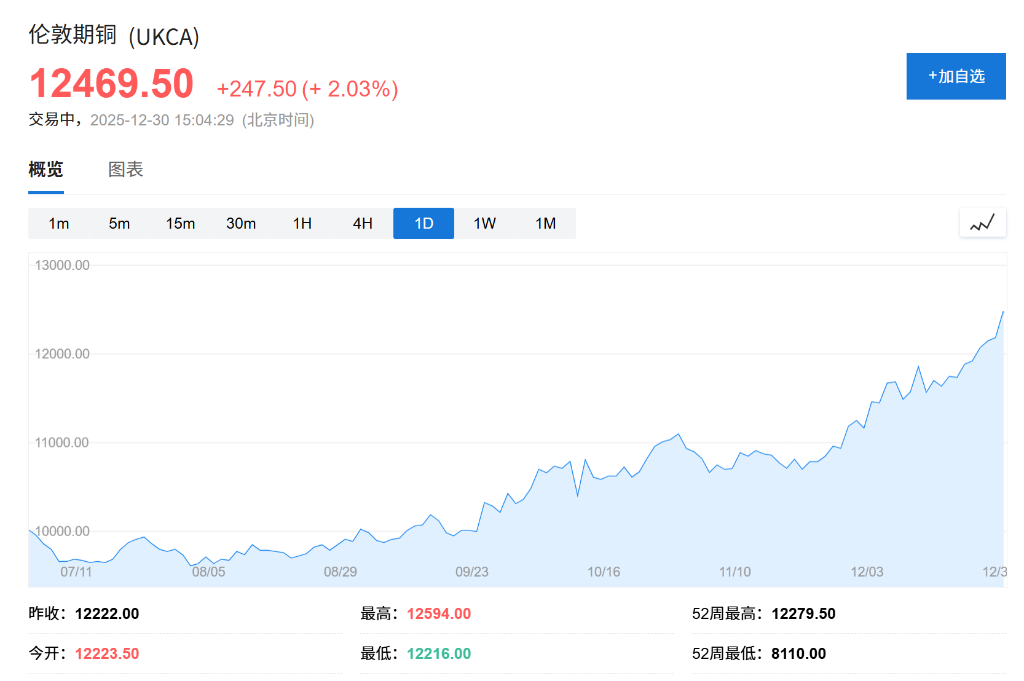
供应链担忧推动年末反弹,铜价暴涨40%创2009年来最大年度涨幅
Hua Er Jie Jian Wen· 2025-12-30 07:20
Group 1 - Copper prices are experiencing the longest consecutive rise since 2017, driven by supply chain pressures and tariff expectations, reaching a historical high of nearly $13,000 per ton [1] - The strong rebound in copper futures has resulted in an annual increase of over 40%, marking the largest annual gain since 2009, influenced by defensive buying against potential U.S. tariffs and a weaker dollar [3] - Supply disruptions globally, including incidents in copper mines in Indonesia, Chile, and the Democratic Republic of Congo, have heightened concerns about supply-side issues, affecting not only copper but also other base metals like aluminum and zinc [3][4] Group 2 - The threat of U.S. import tariffs has led to a rush to transport metals to U.S. ports, causing buyers to pay higher prices and exacerbating supply tightness globally [4] - Trade dynamics are being reshaped by inventory redistribution due to tariff policy expectations, with predictions of "extreme shortages" of copper in other regions by 2026 [4] - The London Metal Exchange (LME) has seen a notable increase in copper prices, with all base metals showing positive performance, indicating strong market reactions to supply concerns [4]

美元流动性维持宽松,商品短期或偏稳运行
Guo Tou Qi Huo· 2025-12-29 13:36
1. Report Industry Investment Rating No relevant content provided. 2. Core Viewpoints of the Report - The commodity market as a whole rose 4% last week, with precious metals leading the way with a 9.69% increase. The short - term commodity market may run stably due to the loose dollar liquidity [2]. - The Fed's loose outlook and geopolitical risks support the strength of precious metals. The short - term market fluctuates greatly as various varieties hit new highs [2]. - The non - ferrous sector may oscillate strongly in the short term due to the weak dollar and the support from the expected contraction of mine supply [3]. - The black sector may oscillate as the demand and supply situation is complex, with factors such as changes in steel mill production and raw material supply [3]. - Oil prices continue to be under pressure due to the long - term loose supply - demand background, despite the geopolitical tension in Venezuela [3]. - The polyester chemical varieties may be affected by supply and demand changes, and attention should be paid to the downstream polyester load [4]. - The short - term trend of agricultural products and oils and fats is expected to be oscillatory, influenced by factors such as weather and export expectations [4]. 3. Summary According to Related Catalogs 3.1 Market Review - The overall commodity market rose 4% last week, with precious metals up 9.69%, non - ferrous metals up 4.97%, energy and chemicals up 2.98%, agricultural products up 2.53%, and black metals up 0.08%. Silver, PTA, and nickel were the top gainers, while tin, coke, and rebar were the top losers [2][6]. - The 20 - day average volatility of the commodity market increased, with only the black and coal - chemical related varieties showing a decline in volatility. The overall market scale increased, but only the precious metal and non - ferrous sectors had net inflows, with most funds concentrated in silver [2][6]. 3.2 Outlook for Different Sectors - **Precious Metals**: Supported by the Fed's loose policy and geopolitical risks, the shortage of spot makes silver, platinum, and palladium more favored by funds. The gold - silver ratio has fallen below the average. Exchange restrictions and risk warnings have led to large short - term market fluctuations [2]. - **Non - ferrous Metals**: The weak dollar and better - than - expected GDP growth in the US provide a neutral - warm macro environment. Although the inventory is increasing and the spot premium is weakening, the expected contraction of mine supply supports the price, and the sector may oscillate strongly in the short term [3]. - **Black Metals**: The demand for rebar decreased, production increased slightly, and inventory continued to decline. The slowdown of blast furnace production cuts and the stable molten iron output need attention to the sustainability of environmental protection restrictions. The supply of raw materials is relatively sufficient, and the sector may oscillate in the short term [3]. - **Energy**: The geopolitical tension in Venezuela increases the risk premium of crude oil, but the impact on global supply is limited. The US shale oil production remains high, and oil prices are under pressure due to the long - term loose supply - demand situation [3]. - **Chemical Industry**: Polyester varieties may face supply pressure from device restarts, but the strong expectation remains, and attention should be paid to the downstream polyester load [4]. - **Agricultural Products**: The improving weather in South America and the expected transition of La Nina to ENSO neutral increase the expectation of a bumper harvest in South America. The fundamentals of palm oil are less negative, and the short - term trend of oils and fats may be oscillatory [4]. 3.3 Commodity Fund Overview - Gold ETFs generally had positive returns last week, with the total scale of gold ETFs increasing by 0.77% and the total trading volume increasing by 29.04%. The total scale of commodity ETFs increased by 0.86% and the trading volume increased by 23.22% [36]. - Among them, the returns of different gold ETFs ranged from 3.21% to 3.60%, and the return of the silver fund was 17.43%, while the returns of energy - chemical, bean - meal, and non - ferrous metal ETFs were 4.25%, 1.69%, and 4.34% respectively [36][38].
2025年12月上旬流通领域重要生产资料市场价格变动情况 - 国家统计局
Guo Jia Tong Ji Ju· 2025-12-29 09:36
Core Viewpoint - The monitoring of market prices for 50 important production materials across nine categories indicates a mixed trend, with 27 products experiencing price increases, 19 seeing declines, and 4 remaining stable in early December 2025 compared to late November 2025 [2][3]. Group 1: Price Changes in Major Categories - In the black metal category, rebar (Φ20mm, HRB400E) is priced at 3191.8 CNY per ton, up by 23.4 CNY, a 0.7% increase [5]. - In the non-ferrous metal category, electrolytic copper (1) is priced at 90698.1 CNY per ton, increasing by 4059.8 CNY, or 4.7% [6]. - In the chemical products category, sulfuric acid (98%) is priced at 1013.9 CNY per ton, up by 74.4 CNY, a 7.9% increase [6]. Group 2: Specific Product Price Movements - Liquid natural gas (LNG) is priced at 4092.2 CNY per ton, down by 121.5 CNY [7]. - Gasoline (95 National VI) is priced at 8057.3 CNY per ton, increasing by 34.6 CNY [7]. - Urea (medium and small particles) is priced at 1713.2 CNY per ton, up by 36.5 CNY, a 2.2% increase [9]. Group 3: Monitoring Methodology and Scope - The monitoring covers over 2000 wholesalers, agents, and distributors across more than 300 trading markets in 31 provinces [12]. - Price monitoring methods include on-site price collection, telephone inquiries, and electronic communications [13]. - The price changes are categorized based on percentage changes, with 27 products increasing, 19 decreasing, and 4 remaining stable [14].
2025年12月中旬流通领域重要生产资料市场价格变动情况 - 国家统计局
Guo Jia Tong Ji Ju· 2025-12-29 09:36
Core Viewpoint - The monitoring of market prices for 50 important production materials across nine categories shows a mixed trend, with 15 products experiencing price increases, 31 seeing declines, and 4 remaining stable in mid-December 2025 compared to early December 2025 [2][3]. Group 1: Price Changes in Major Categories - In the black metal category, prices for rebar decreased by 22.0 yuan per ton to 3169.8 yuan, while wire rod fell by 15.0 yuan to 3354.5 yuan [5]. - In the non-ferrous metals category, electrolytic copper saw an increase of 1822.7 yuan per ton, reaching 92520.8 yuan, while aluminum ingots dropped by 65.8 yuan to 21796.7 yuan [6]. - Chemical products showed varied results, with sulfuric acid increasing by 44.0 yuan to 1057.9 yuan, while several other chemicals like caustic soda and methanol experienced price declines [6][7]. Group 2: Energy and Coal Prices - The price of liquefied natural gas (LNG) decreased by 172.7 yuan to 3919.5 yuan per ton, while liquefied petroleum gas (LPG) fell by 4.2 yuan to 4405.4 yuan [7]. - Coal prices showed a slight increase for some types, with non-caking coal rising by 7.5 yuan to 930.5 yuan per ton, while other types like Shanxi mixed coal saw declines [8]. Group 3: Agricultural Products and Inputs - In agricultural products, the price of rice increased by 25.6 yuan to 3943.2 yuan per ton, while wheat and corn prices saw minor declines [8][9]. - Fertilizer prices varied, with urea decreasing by 1.4 yuan to 1711.8 yuan per ton, while compound fertilizer increased by 61.8 yuan to 3390.6 yuan [9]. Group 4: Monitoring Methodology - The price monitoring covers over 2000 wholesalers, agents, and dealers across more than 300 trading markets in 31 provinces, utilizing methods such as on-site price collection and electronic inquiries [12][13].
美元下跌 金属集体回落 伦铜涨超3% 碳酸锂跌逾7% 铂钯一同跌停
Sou Hu Cai Jing· 2025-12-29 09:27
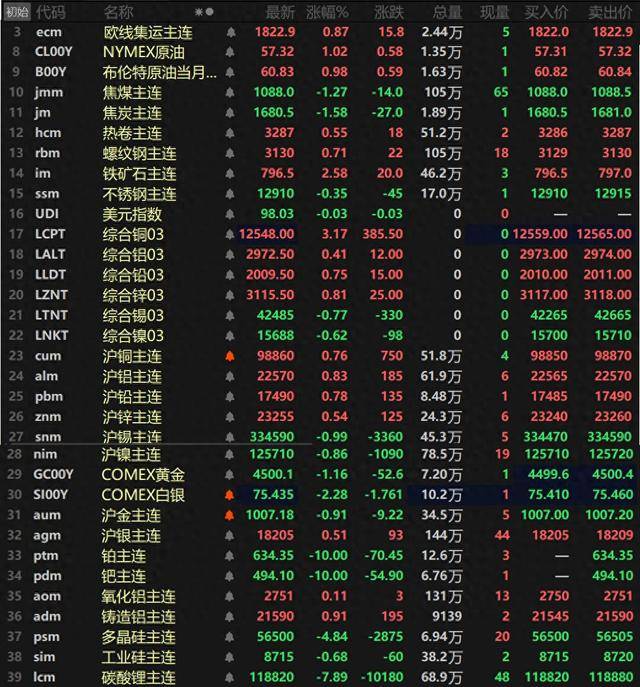
Metal Market - Domestic base metals collectively retreated, with tin and nickel down by 0.99% and 0.86% respectively. Copper rose by 0.76%, aluminum by 0.83%, lead by 0.78%, and zinc by 0.54% [1] - Lithium carbonate futures fell sharply, hitting a limit down with a decline of 7.89% to 118,820 yuan/ton. Industrial silicon and polysilicon also saw declines of 0.68% and 4.84% respectively [1] - In the black metal sector, stainless steel dropped by 0.35%, while iron ore led gains with a rise of 2.58%. Rebar and hot-rolled coil had gains of less than 1% [1] - On the external market, copper rose by 3.17% and zinc by 0.81%, while tin and nickel saw minor declines [1] - Precious metals experienced declines, with COMEX gold down by 1.16% and silver by 2.28%. Domestic gold fell by 0.91%, while silver's gain narrowed to 0.51% [1] Platinum and Palladium - Both platinum and palladium futures hit the limit down, with platinum down by 10% to 634.35 yuan/gram and palladium down by 10% to 494.1 yuan/gram [2] Macro Environment - The Ministry of Commerce announced that certain anti-dumping measures will expire in the second half of 2026, allowing domestic industries to apply for reviews if they believe termination could lead to dumping or damage [5] - The People's Bank of China has introduced an action plan for digital currency, set to officially launch on January 1, 2026, with significant transaction volumes already processed [6] - The central bank conducted a net injection of 4.15 billion yuan through reverse repos, maintaining the operation rate at 1.40% [6] Oil Market - Both domestic and international oil prices rose, with U.S. oil up by 1.02% and Brent oil by 0.98%, amid concerns over Middle East tensions affecting supply [9]
俄乌“和平计划”中关键的领土问题就尚未达成一致
Dong Zheng Qi Huo· 2025-12-29 00:41
1. Report Industry Investment Ratings No relevant content provided in the given text. 2. Core Views of the Report - The geopolitical situation, especially the Russia - Ukraine conflict, continues to impact various markets, causing uncertainties and fluctuations in financial and commodity markets [1][11][18]. - Market sentiment and trading volumes are affected by holidays such as Christmas and New Year, leading to relatively light trading and narrow - range fluctuations in some markets [1][2]. - Different industries show different trends. For example, some commodities are expected to be affected by supply - demand changes, policy adjustments, and cost factors, resulting in price fluctuations and investment opportunities [25][36][45]. 3. Summary by Relevant Catalogs 3.1 Financial News and Reviews 3.1.1 Macro Strategy (Gold) - Key issue in the Russia - Ukraine "peace plan" regarding territory remains unresolved. After Christmas, overseas market trading is light. On Friday, gold price rose 1%, and silver price soared 10% due to a short - squeeze. The short - squeeze may be nearing its end. With the New Year's holiday approaching and the exchange increasing margin requirements, short - term market volatility is expected to intensify. It is recommended to hold a light position during the holiday [1][11]. 3.1.2 Macro Strategy (Foreign Exchange Futures - US Dollar Index) - The Russia - Ukraine conflict is likely to continue as the territorial issue remains unresolved, and the US dollar index is expected to remain volatile [15][16][17]. 3.1.3 Macro Strategy (US Stock Index Futures) - Ukraine attacked a Russian refinery, increasing geopolitical risks. Although the market is trading lightly, the year - end seasonal performance of US stocks is strong, and the market risk appetite remains high. US stocks are expected to oscillate with an upward bias [18][19]. 3.1.4 Macro Strategy (Treasury Bond Futures) - The central bank conducted 93 billion yuan of 7 - day reverse repurchase operations, with a net injection of 36.8 billion yuan. The problem of fragile institutional trading behavior is being alleviated, and long - term bonds are in the process of bottom - building. It is not recommended to chase short - term varieties. Long - term varieties are suitable for allocation when interest rates rise, and trading positions can buy on dips and exit quickly [20][21]. 3.1.5 Macro Strategy (Stock Index Futures) - The A - share market has shown a strong performance, with the Shanghai Composite Index achieving an 8 - day consecutive increase. The market sentiment is positive, and it is recommended to allocate evenly in long positions of each stock index [23][24]. 3.2 Commodity News and Reviews 3.2.1 Agricultural Products (Soybean Oil/Rapeseed Oil/Palm Oil) - In the week of December 20 - 26, 2025, the actual soybean crushing volume in domestic oil mills decreased. In December, the production of Malaysian palm oil decreased, and exports increased. Although palm oil is expected to accumulate inventory in December, the supply pressure is gradually easing. It is recommended to wait for further signals of supply pressure release before going long on palm oil. For international and domestic soybean oil, there are potential factors for price increases, but the impact may be limited due to sufficient inventory [25][26]. 3.2.2 Agricultural Products (Soybean Meal) - The estimated soybean crushing volume in domestic oil mills in January 2026 is expected to increase year - on - year. The domestic market is mainly affected by customs policies and national reserves. It is necessary to continue to pay attention to these two factors, which will mainly affect the unilateral trend of the March contract and the 3 - 5 spread [27][29]. 3.2.3 Agricultural Products (Sugar) - Brazil's sugar production in the 26/27 season is expected to decrease by 5%. Thailand's sugar production progress is slow, and the international sugar market's supply - demand may tighten in the first quarter. However, the overall supply surplus expectation limits the upward driving force. Domestically, new sugar production is accelerating, and the upward space of the market is limited. It is necessary to pay attention to the overseas market's driving effect and the terminal's stocking demand [31][33]. 3.2.4 Agricultural Products (Cotton) - In November 2025, Japan's clothing imports entered the off - season. As of December 11, the weekly signing data of US upland cotton was strong, but the export signing progress for the 25/26 season still lags. Zhengzhou cotton has increased in position and broken through previous highs, mainly due to speculation on the expected reduction of cotton - planting area in Xinjiang and the rise of chemical fiber futures prices. It is necessary to pay attention to the downstream transmission situation and the risk of a decline due to capital withdrawal [34][36][38]. 3.2.5 Black Metals (Rebar/Hot - Rolled Coil) - Before the New Year's Day holiday, steel prices are expected to continue to oscillate. The de - stocking speed of the five major steel products has not changed significantly, and the finished products have not yet entered the inventory - accumulation stage. It is necessary to pay attention to the export policy changes at the beginning of the year. It is recommended to adopt an oscillating trading strategy [41][42]. 3.2.6 Non - ferrous Metals (Copper) - Macro and capital factors continue to drive copper prices up, and the short - term upward momentum is not weak. The fundamental situation deviates from the capital situation. Copper prices are expected to remain strong in the short term, and a long - term bullish strategy is recommended for the medium - term [45]. 3.2.7 Non - ferrous Metals (Polysilicon) - The spot price of polysilicon has increased, and the inventory is rising. In the off - season of demand from January to February, polysilicon may be "priced but not traded", but the peak - season expectation cannot be falsified. It is recommended to pay attention to the opportunity to go long on dips and hold positions carefully [47][48]. 3.2.8 Non - ferrous Metals (Industrial Silicon) - The production of industrial silicon in some regions has changed slightly, and the inventory is increasing. The current production reduction scale is not enough to reverse the inventory - accumulation pattern. It is recommended to pay attention to the opportunity to sell short on rebounds [50]. 3.2.9 Non - ferrous Metals (Lead) - The spot price difference of lead is in a discount state. The supply of recycled lead may be tightened due to environmental protection. The terminal demand is differentiated, and the inventory is declining. It is recommended to adopt an oscillating trading strategy [53]. 3.2.10 Non - ferrous Metals (Zinc) - The raw material inventory of smelters has increased, and the demand has recovered slightly. The domestic social inventory has decreased, and there is a possibility of inventory accumulation in January. Zinc prices are expected to be volatile in the short term and easy to rise but difficult to fall in the medium - term. It is recommended to pay attention to the opportunity to buy on dips [56][57]. 3.2.11 Non - ferrous Metals (Nickel) - A company has terminated a nickel project. The Indonesian government plans to adjust the nickel production quota and the tax - calculation formula, which may increase the smelting cost. The nickel market is currently in surplus, and it is recommended that the previous long - positions track and stop profits and pay attention to the implementation of Indonesian policies [59][61]. 3.2.12 Non - ferrous Metals (Lithium Carbonate) - The price of lithium carbonate has risen sharply, and the inventory is decreasing. The supply may decline slightly in January, and the demand side has many production - reduction and maintenance news. It is recommended that the previous long - positions track and stop profits, not chase the high, and pay attention to the opportunity to go long on dips in the medium - term [64][65]. 3.2.13 Energy Chemicals (Carbon Emissions) - The EU carbon price has been oscillating. The expected reduction of quota supply in 2026 is expected to support the price in the long - term, but short - term profit - taking by some investors may suppress the upward momentum. The price is expected to oscillate in the short term [66][67]. 3.2.14 Energy Chemicals (Crude Oil) - Russia has extended the export ban on gasoline and diesel to February 2026. Geopolitical conflicts and supply - surplus expectations are disturbing the market. Oil prices are expected to oscillate and find the bottom in the process of verifying the surplus [68][69][70]. 3.2.15 Energy Chemicals (Bottle Chips) - The export prices of polyester bottle chips have risen, and the market trading atmosphere is good. With the commissioning of new devices and the restart of previously overhauled devices, the processing cost pressure may increase. The bottle - chip market is expected to follow the rise of polyester raw materials [71][73].
国投期货综合晨报-20251226
Guo Tou Qi Huo· 2025-12-26 06:03
Oil - The external market was closed due to the Christmas holiday, while domestic oil prices fluctuated. Russian Black Sea port attacks and adverse weather have slowed repair progress, leading to a 14-month low in Kazakhstan's December CPC mixed oil exports. Despite a decline in drilling and fracturing activities in the US shale oil industry, US crude oil production remains high due to production adjustments lagging behind. Geopolitical tensions between the US and Venezuela have raised concerns about oil supply disruptions, but the overall market fundamentals remain loose, suggesting a shift in market focus from geopolitical issues to a long-term supply-demand balance that may lead to a downward adjustment in price levels [1]. Precious Metals - The external market was closed for Christmas, while domestic gold and silver continued a strong trend. The adjustment of minimum opening quantities and trading limits by the Guangqi Exchange has occurred. The prospect of Federal Reserve easing and geopolitical risks have supported the strength of precious metals, with various types reaching new highs, leading to increased market volatility and the need for position control [2]. Copper - The Shanghai copper night market opened high, briefly rising to 98,000. Domestic spot divergence signals have strengthened, with Shanghai and Guangdong discounts expanding to 330 and 185 yuan respectively. SMM social warehouse increased by 25,200 tons to 193,600 tons. Short-term domestic supply and demand pressures may lead to greater adjustment pressure on copper prices, but tight raw material supply may transmit to domestic refined copper, benefiting exports. It is recommended to take profits on previous long positions or adjust the holding position to 95,000 [3]. Aluminum - The Shanghai aluminum market showed a strong fluctuation. The fundamental contradictions in the aluminum market are limited, with social warehouses fluctuating narrowly and apparent demand year-on-year being weak, leading to an expansion of spot discounts. The macro sentiment continues to drive precious metals and various non-ferrous metals to new highs, with Shanghai aluminum primarily following the upward trend and testing previous high resistance levels [4]. Alumina - Alumina production capacity is at a historical high, with a persistent oversupply situation and rising industry inventories. The average complete cost in Shanxi and Henan is 2,850-2,900 yuan, while the spot index has dropped to around 2,700 yuan, indicating profitability at cash cost calculations. A Guinea mining company has lowered its first-quarter long-term contract price by $5, suggesting potential for cost reduction in alumina. The weak trend in alumina is expected to continue before any significant production cuts, with a larger basis for spot price declines [5]. Zinc - Shanghai zinc operates independently with narrow fluctuations, supported by a strong bottom. The domestic consumption outlook for January is not pessimistic, and the price range is expected to rise from December, projected between 22,800-23,800 yuan/ton [7]. Lead - The market remains at a low level, with domestic aluminum social inventories below 20,000 tons and trading activity being average. The import window remains open, with overseas pressure continuing to transmit to the domestic market. Shanghai aluminum is still in a cost and consumption tug-of-war, with a price range expected between 17,000-17,500 yuan/ton [8]. Nickel - The Shanghai nickel market has seen a pullback, with active trading and significant stop-losses leading to market consolidation. Recent news from the Indonesian nickel ore conference has sparked market interest, with a significant reduction in nickel ore quotas for 2026. Current spot prices for high nickel iron are at 888 yuan per nickel point, with upstream price rebounds weakening support, leading to a cautious short-term outlook [9]. Lithium Carbonate - Lithium carbonate opened low and rose, with active market trading. Battery-grade lithium carbonate prices exceeded 110,000 yuan, with a price difference of 2,650. Despite high prices, market confidence in maintaining these levels is low, leading to limited trading enthusiasm. Total market inventory decreased by 1,000 tons to 110,400 tons, with downstream inventory also declining. The latest Australian mining price is $1,385, maintaining strong pricing. The overall market fundamentals for lithium carbonate remain strong, with short positions under pressure [11]. Polysilicon - Polysilicon futures surged above 60,000 yuan/ton. Expectations for tighter industry production quotas in 2026 and collective production cut plans from some companies have strengthened market sentiment. Current mainstream transaction prices are stable between 51,000-53,000 yuan/ton, primarily driven by replenishment demand. Recent increases in silver prices have pushed up non-silicon costs for battery cells, with pressures transmitted upward. The market is advised to monitor the effectiveness of breaking through the 60,000 yuan/ton level [12]. Steel - Steel prices continued to decline, with a slight drop in rebar demand and a small increase in production. Hot-rolled demand is recovering, with inventory reduction accelerating. Iron water production continues to decline, gradually alleviating supply pressure, while steel mill profits are marginally improving. The overall market sentiment remains cautious, with limited rebound momentum expected [13][14]. Iron Ore - Iron ore prices fluctuated overnight, with strong global shipments expected as year-end mine output increases. Domestic port arrivals are also strong, leading to significant inventory accumulation. Demand remains low in the off-season, but previous reductions in iron water production have stabilized prices. The overall fundamentals for iron ore are loose, with short-term price movements expected to remain volatile [14]. Urea - Urea production companies are significantly reducing inventory, leading to improved market sentiment and transactions. Daily production continues to decline due to environmental restrictions, with slight adjustments in industrial downstream demand. The short-term market for urea is expected to strengthen [22]. Methanol - Methanol prices slightly declined overnight due to recovering import unloading speeds and weakening inland demand, leading to significant port inventory accumulation. The overall market is expected to remain weak in the short term, with potential upward drivers in the medium to long term [23]. PX & PTA - PX prices continue to rise, with PTA following suit. Short-term PX supply is expected to increase due to plant restarts, while downstream demand may decline around the Spring Festival. Overall, the strong expectations for PX remain, with limited upward space in the short term [28].
黑色商品日报(2025 年 12 月 26 日)-20251226
Guang Da Qi Huo· 2025-12-26 05:14
1. Report Industry Investment Rating - No relevant information provided 2. Core Views of the Report - Steel: The rebar futures market continued to fluctuate within a narrow range. Although the current supply - demand situation is strong with some specifications in short supply, the expected increase in steel mill复产 in January and the weakening demand in the off - season may lead to the accumulation of supply - demand contradictions. It is expected that the rebar futures market will mainly move in a narrow range in the short term [1]. - Iron Ore: The main contract of iron ore futures fluctuated narrowly. With the decrease in shipments from Australia and Brazil, the increase in shipments from other countries, and the slight decrease in molten iron production, the iron ore price may show a volatile trend under the interweaving of multiple factors [1]. - Coking Coal: After a coal mine accident in Zhaotong, Yunnan, local coal mines were shut down for temporary rectification, exacerbating the supply shortage. However, due to the poor profit recovery of steel mills and the expected further price cuts of coke, the downstream acceptance of high - priced coal is low. It is expected that the coking coal futures market will operate in a wide - range volatile manner in the short term [1]. - Coke: The coke futures market declined. The coking plants are actively operating, but the consumer market is lackluster, and steel mills are maintaining a rigid procurement strategy. It is expected that the coke futures market will operate in a wide - range volatile manner in the short term [1]. - Manganese Silicon: The manganese silicon futures price fluctuated strongly. Although the production has decreased, the demand support is limited, and the inventory is accumulating. Considering the cost support, it is expected that the manganese silicon price will mainly move in a volatile manner in the short term [1]. - Ferrosilicon: The ferrosilicon futures price fluctuated strongly. The production has decreased, the demand is weak, and the inventory is decreasing. Overall, the fundamental driving force is limited, and it is expected that the ferrosilicon price will maintain a firm and volatile operation in the short term [1] 3. Summary by Relevant Catalogs 3.1 Research Views - **Steel**: The closing price of rebar 2605 contract was 3127 yuan/ton, down 9 yuan/ton or 0.29% from the previous trading day, with a decrease of 15,600 lots in positions. The spot price was basically stable, and the trading volume declined. The national rebar production increased by 27,100 tons week - on - week to 1.8439 million tons, the social inventory decreased by 188,100 tons to 2.9419 million tons, the factory inventory increased by 5200 tons to 1.4006 million tons, and the apparent demand decreased by 59,600 tons to 2.0268 million tons [1]. - **Iron Ore**: The main contract i2605 of iron ore futures closed at 778.5 yuan/ton, down 1 yuan/ton or 0.13% from the previous trading day, with a trading volume of 150,000 lots and an increase of 13,000 lots in positions. The shipments from Australia and Brazil decreased, while those from other countries increased slightly. The molten iron production decreased slightly by 30 tons to 2.2658 million tons. The inventory of imported iron ore in 47 ports increased by 3.9443 million tons to 166.1996 million tons [1]. - **Coking Coal**: The coking coal 2605 contract closed at 1124 yuan/ton, down 8 yuan/ton or 0.71%, with an increase of 3115 lots in positions. After the coal mine accident in Yunnan, local coal mines were shut down for rectification. The demand side was weak due to the poor profit of steel mills and the expected price cuts of coke [1]. - **Coke**: The coke 2605 contract closed at 1739 yuan/ton, down 7 yuan/ton or 0.4%, with an increase of 330 lots in positions. The coking plants were operating actively, but the consumer market was weak, and steel mills maintained a rigid procurement strategy [1]. - **Manganese Silicon**: The main contract of manganese silicon futures closed at 5846 yuan/ton, up 0.48% from the previous trading day, with a decrease of 3752 lots in positions to 272,000 lots. The weekly production of manganese silicon decreased to the median level in recent years, and the decline has slowed down recently [1]. - **Ferrosilicon**: The main contract of ferrosilicon futures closed at 5692 yuan/ton, up 0.85% from the previous trading day, with an increase of 6584 lots in positions to 255,000 lots. The weekly production of ferrosilicon decreased, and the demand was weak, but the inventory decreased [1] 3.2 Daily Data Monitoring - **Contract Spread and Basis**: For rebar, the 1 - 5 month spread was - 20.0, down 5.0; the 5 - 10 month spread was - 45.0, down 8.0. The basis of 01 contract was 203.0, up 4.0; the basis of 05 contract was 183.0, down 1.0. Similar data were provided for other varieties such as hot - rolled coil, iron ore, etc. [4]. - **Profit and Spread**: The rebar futures profit was - 70.0, down 3.8; the long - process profit was 34.8, down 13.6; the short - process profit was 39.3, down 10.0. The spread data such as coil - rebar spread, rebar - iron ore ratio were also presented [4]. 3.3 Chart Analysis - **Main Contract Price**: Charts showed the closing prices of main contracts of rebar, hot - rolled coil, iron ore, etc. from 2020 to 2025 [6][7][8][9][11][15]. - **Main Contract Basis**: Charts presented the basis of main contracts of rebar, hot - rolled coil, iron ore, etc. over different months [17][19][22][24]. - **Inter - period Contract Spread**: Charts displayed the spreads of different contract periods (e.g., 01 - 05, 05 - 10) for rebar, hot - rolled coil, iron ore, etc. [26][28][32][33][35][37][39][41]. - **Inter - variety Contract Spread**: Charts showed the spreads between different varieties such as main contract coil - rebar spread, rebar - iron ore ratio, etc. from 2020 to 2025 [43][44][45] 3.4 Black Research Team Member Introduction - The team includes Qiu Yuecheng, Zhang Xiaojin, Liu Xi, Zhang Chunjie, each with their own professional experience and qualifications in the black commodity research field [56][57]