
TMT

Search documents
渤海证券研究所晨会纪要(2025.12.05)-20251205
BOHAI SECURITIES· 2025-12-05 00:25
晨会纪要(2025/12/05) 编辑人 请务必阅读正文之后的声明 渤海证券股份有限公司具备证券投资咨询业务资格 1 of 4 晨会纪要(2025/12/05) 宏观及策略研究 崔健 022-28451618 SAC NO:S1150511010016 cuijian@bhzq.com 渤海证券研究所晨会纪要(2025.12.05) 宏观及策略研究 国内外重要会议临近,市场进入等待阶段——A 股市场投资策略周报 证 券 研 究 报 告 晨 会 纪 要 国内外重要会议临近,市场进入等待阶段——A 股市场投资策略周报 宋亦威(证券分析师,SAC NO:S1150514080001) 严佩佩(证券分析师,SAC NO:S1150520110001) 靳沛芃(研究助理,SAC NO:S1150124030005) 1、市场回顾 近 5 个交易日(11 月 28 日-12 月 4 日),重要指数多数收涨;其中,上证综指微幅收涨 0.01%,创业板指收 涨 1.19%;风格层面,沪深 300 收涨 0.69%,中证 500 收涨 0.89%。成交量方面有所缩量,两市统计区间内 成交 8.27 万亿元,日均成交额降至 1. ...
国泰海通证券:服务消费景气提升 科技硬件延续涨价
智通财经网· 2025-12-04 13:09
智通财经APP获悉,国泰海通证券发布研究报告称,服务消费景气提升,科技硬件延续涨价。上周 (11.24-11.30)中观景气表现分化,值得关注:1)内需景气线索有所增多,冰雪出行和电影市场景气度显 著提升,或反映地产和耐用品消费收缩之余,"吃喝玩乐"相关的服务型和大众品消费复苏趋势持续显 现。2)新兴科技行业延续高景气,但短期AI泡沫叙事影响下,TMT硬件景气增长的持续性有赖于AI应 用取得积极进展。后续重点关注AI应用商业化进展。3)建工需求偏弱,内需资源品大多偏弱震荡,海外 降息预期再度升温,国际金属价格大幅上涨;受铁矿增产影响,干散运价格环比延续提升。 国泰海通主要观点如下: 下游消费:服务消费景气显著提升,地产耐用品仍承压。1)服务消费:国内冰雪游景气度显著提升,根 据同程旅行,广州-哈尔滨26年元旦机票均价较25年11月提升约56%,主因国内气温下降,居民冰雪消 费情绪提升;电影票房同/环比+326.7%/+355.7%,主因引进爆款新片上映拉动观影需求增长。2)地产:30 大中城市商品房成交面积同比-34.3%,其中一线/二线/三线城市商品房成交面积同 比-31.6%/-33.9%/-40.7%, ...

国泰海通|策略:服务消费景气提升,科技硬件延续涨价
国泰海通证券研究· 2025-12-04 12:46
Core Viewpoint - The article highlights a differentiated growth pattern in the medium-term economic landscape, with strong performance in emerging technologies and high-performance storage prices continuing to rise rapidly, while the real estate cycle and durable goods demand remain under pressure [1]. Group 1: Consumer Trends - Service consumption has significantly improved, with domestic ice and snow tourism seeing a notable increase; average ticket prices for flights from Guangzhou to Harbin for New Year's Day 2026 rose approximately 56% compared to November 2025 due to colder weather boosting consumer sentiment [2]. - Movie box office revenues surged, with year-on-year and month-on-month increases of 326.7% and 355.7%, respectively, driven by the release of blockbuster films [2]. - Real estate transactions in 30 major cities fell by 34.3% year-on-year, with first, second, and third-tier cities experiencing declines of 31.6%, 33.9%, and 40.7%, respectively, indicating continued pressure on the real estate market [2]. - Durable goods consumption shows signs of overextension, with manufacturers significantly lowering production expectations; daily retail sales of passenger vehicles continue to decline [2]. Group 2: Technology and Manufacturing - The technology hardware sector remains strong, driven by AI infrastructure investments; prices for high-performance DRAM storage (DDR4/DDR5) increased by 13.3% and 8.2% month-on-month, respectively [3]. - The number of domestic game licenses increased by 58.9% year-on-year in November 2025, contributing to a favorable supply environment for AI software applications [3]. - Construction demand remains weak, with slight price recoveries in steel due to reduced operating rates in blast furnaces, while prices for glass and cement continue to face downward pressure [3]. - Manufacturing sectors, including automotive and chemicals, are experiencing declines in operating rates and a decrease in hiring intentions [3]. Group 3: Logistics and Transportation - Long-distance travel demand has decreased month-on-month, although it remains strong year-on-year; the Baidu migration index fell by 3.8% month-on-month but increased by 18.5% year-on-year [4]. - Freight logistics have also seen a month-on-month decline, with highway truck traffic and railway freight volumes decreasing by 0.2% and increasing by 0.7%, respectively [4]. - Shipping rates for dry bulk and refined oil have risen significantly, driven by increased demand from iron ore and crude oil production [4].


A股市场投资策略周报:国内外重要会议临近,市场进入等待阶段-20251204
BOHAI SECURITIES· 2025-12-04 10:06
Market Review - In the past five trading days (November 28 to December 4), major indices mostly rose, with the Shanghai Composite Index slightly up by 0.01% and the ChiNext Index up by 1.19%. The CSI 300 rose by 0.69% and the CSI 500 increased by 0.89% [3][9][23]. Policy Insights - On December 3, the Deputy Director of the Central Financial Office emphasized the necessity of accelerating the construction of a financial powerhouse to promote high-quality development. Key areas include improving the central bank system, enhancing capital market stability, and optimizing financial institutions and infrastructure [28]. Investment Strategy - The A-share market is entering a phase of oscillation and waiting. The performance of the market will depend on the catalysts from various sectors during this earnings vacuum period. With important meetings approaching, the market is anticipating incremental policy changes, which could lead to a rebound if they exceed expectations. Investors are advised to remain patient and focus on policy and technology themes for future positioning [29]. Sector Opportunities - Investment opportunities are identified in several sectors: 1. TMT sector and robotics, driven by the expansion of AI capital from domestic and international cloud vendors and the acceleration of domestic computing power replacement [29]. 2. Power equipment and non-ferrous metals, benefiting from high global demand for energy storage and the ongoing industrialization of solid-state batteries [29]. 3. Social services and resource products, which may present policy-driven opportunities amid structural adjustments and "anti-involution" initiatives [29]. 4. The banking sector is also highlighted as a potential area for allocation due to the low interest rate environment and the return of public fund holdings to performance benchmarks [29].
慧博云通:慧博创展本次质押股份数量为454万股
Mei Ri Jing Ji Xin Wen· 2025-12-04 09:49
2025年1至6月份,慧博云通的营业收入构成为:TMT占比59.06%,金融占比30.83%,其他行业占比 10.11%。 截至发稿,慧博云通市值为176亿元。 每经AI快讯,慧博云通(SZ 301316,收盘价:43.48元)12月4日晚间发布公告称,慧博云通科技股份 有限公司(以下简称"公司")于近日接到公司股东舟山慧博创展创业投资合伙企业(有限合伙)(以下 简称"慧博创展")的函告,获悉其将部分股份办理了质押,本次质押股份数量为454万股。截至本公告 日,深圳申晖控股有限公司累计质押股数为2936万股,占其所持股份比例为34.34%。慧博创展累计质 押股数为1744万股,占其所持股份比例为29.07%。 (记者 曾健辉) 每经头条(nbdtoutiao)——让"铁疙瘩"从数万米高空精准"踩刹车",中国商业航天"降本复用"只差"最 后一公里"!朱雀之后,同行排队接力 ...
指数下行趋势确定!题材板块暗流涌动,还有哪些投资机会?
Sou Hu Cai Jing· 2025-12-04 06:37
中期而言,继续看好我国发展新阶段下权益市场的向上空间。配置上,建议关注三条主线:一是内外需共振下景气向上的科技成长(TMT/机械/军工等); 二是"反内卷"推动下行业景气有望改善的板块(新能源/建材/传统周期等);三是受益于政策支持且目前估值不高的消费板块。而流动性仍是行情发展的重 要驱动,融资资金的流入进程是否会转向,将对题材股行情的发展产生重要影响。此外,红利资产的配置价值亦值得关注。 近期头部电池厂密集派发磷酸铁锂大单,宁德时代更是重金入股富临精工子公司江西升华,以锁定高压实密度磷酸铁锂产能。在下游旺盛的市场需求下,磷 酸铁锂厂商正悄然启动新一轮扩产。多数业内人士认为,在"反内卷"背景下,本轮磷酸铁锂行业扩产主要围绕"高端产品、海外需求"展开,风格更为理性, 比拼维度也逐步从"卷价格"、"卷规模"向"卷价值"、"卷技术"过渡,同时产能布局更加全球化。 展望2025Q4季度,预计供给紧张将望推动铜钴等商品价格继续上行,锂价则受益于储能需求超预期有望上涨。贵金属价格虽然经历冲高回落行情,但整体 看涨思路并未改变,随着市场对高位品种的风险担忧加深,煤炭、电解铝等年内滞涨品种或将在四季度获得更高关注度。其他商品 ...
永元证券|当恒生指数企稳时,创业板的机会来了吗
Sou Hu Cai Jing· 2025-12-04 02:31
Group 1 - The Hang Seng Index's stabilization signals a shift in market sentiment from defensive to offensive, raising interest in the ChiNext board as a potential investment opportunity [1][3] - The ChiNext board, which includes many technology-driven companies in sectors like new energy, biomedicine, and high-end manufacturing, is seen as a concentrated representation of assets with long-term growth potential [3][4] - Historical data shows a strong correlation between A-share growth style and market risk appetite, with the ChiNext typically demonstrating resilience during periods of liquidity easing and economic recovery [3][4] Group 2 - There are significant internal differences within the ChiNext, with some leading companies showing strong profitability and others facing challenges, indicating that opportunities are more structural rather than broad market rallies [4] - External factors, such as the end of the U.S. interest rate hike cycle and a weaker dollar, are favorable for capital inflows into emerging markets, supporting valuation expansion for the ChiNext [4] - The overall price-to-earnings ratio of the ChiNext remains high compared to the main board, and potential economic recovery shortfalls or significant adjustments in overseas tech stocks could disrupt growth stocks [4][5] Group 3 - The ChiNext presents a window for observation, offering long-term investors opportunities for gradual positioning rather than immediate explosive growth [5] - The true opportunities lie in companies that are making significant technological advancements and gaining influence in the global supply chain, which are essential for restoring market confidence [5]


都说在通缩,为什么科技股一直在涨?
3 6 Ke· 2025-12-04 00:41
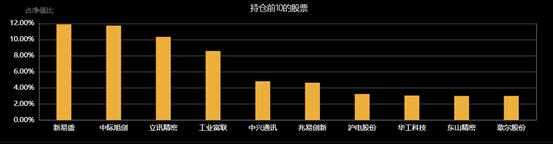
Core Viewpoint - The current market is experiencing a structural bull market driven by "structural inflation" in technology assets, despite a backdrop of consumer deflation and overall economic challenges [1][2]. Group 1: Structural Inflation in Technology Assets - The bull market resembles the structural bull market of 2014-2015, primarily benefiting technology stocks, while consumer sectors have generally declined [2]. - Significant inflationary trends are observed in technology-related assets, including a 40% increase in AI training cluster rental prices and a 30% rise in average costs for AI servers [3]. - The ChiNext Index has surged by 54%, indicating strong performance in the technology sector [3]. Group 2: Policy and Investment Dynamics - The rise in technology stocks is largely driven by government policies focusing on "new productive forces," "self-control," and "AI+" initiatives, leading to concentrated financial resources in sectors like semiconductors and AI [4]. - Despite two years of monetary easing, CPI and PPI have continued to decline, while stock prices have risen, indicating a disparity in capital allocation favoring technology assets [4]. Group 3: Supply and Demand Factors - The inflation in technology assets is influenced by both supply-side and demand-side factors, with supply constraints due to U.S. restrictions on high-tech exports to China and a focus on self-sufficiency in technology [6][7]. - Investment in AI infrastructure is a key demand driver, with ongoing fiscal support expected to continue for the next five years [7]. Group 4: Future Outlook - The current cycle of technology asset inflation is anticipated to persist for at least the next two years, driven by ongoing advancements in AI capabilities and infrastructure investments [5][7]. - The AI infrastructure sector is highlighted as a preferred investment area due to its dual support from supply and demand dynamics [8]. Group 5: Investment Opportunities - For investors, ETFs focused on AI computing, such as those tracking the 5G communication theme index, present clear opportunities, with major holdings in companies benefiting from AI infrastructure investments [8][9]. - The underlying index is characterized by a high concentration in "hard technology," with significant allocations to communication and electronic sectors, indicating a robust investment landscape [9].
Why The Market Just Nuked IREN: This Selloff Makes No Sense
Seeking Alpha· 2025-12-03 15:59
Core Viewpoint - IREN Limited (IREN) has experienced a significant decline in stock value, dropping over 15% on a day with record trading volume of 83.2 million shares, indicating investor dissatisfaction and potential concerns regarding the company's performance [1]. Company Summary - The stock's decline marks its highest volume trading day ever, suggesting heightened investor activity and possible panic selling [1]. - The company is currently not favored by investors, which may reflect underlying issues or market sentiment affecting its valuation [1]. Industry Context - The article references the author's extensive experience in the technology sector, highlighting the importance of momentum in investment strategies, particularly in navigating market fluctuations [1].


月度策略:平稳收官,高股息防御与科技成长布局-20251203
Zhongyuan Securities· 2025-12-03 08:15
Macro Environment - Economic data for November shows weak recovery in investment and consumption, with exports declining due to high base effects and holiday impacts. However, CPI has turned positive year-on-year, and the decline in PPI has narrowed, indicating signs of mild recovery in prices. The export structure has improved, with high-tech product exports showing strong resilience [6][10][12] - The central bank's third-quarter monetary policy report emphasizes maintaining relatively loose social financing conditions and supporting "stable growth" through counter-cyclical and cross-cyclical adjustments. Various government departments have introduced policies to stimulate domestic demand and private investment [6][11][67] Market and Industry Performance Bond Market Review - In November, the bond futures market faced pressure, with the ten-year main contract falling by 0.67% and the thirty-year bond dropping by 1.84%. This decline was influenced by three factors: cooling expectations for rate cuts, credit concerns stemming from the Vanke bond incident, and a weakening of the traditional "stock-bond seesaw" effect. The outlook for December suggests a stabilization in the ten-year bond futures, transitioning into a slight oscillation pattern [6][45][67] Stock Market Review - The equity market in November continued to favor value over growth, with the performance of various sectors showing mixed results. The consumption sector rose by 1.02%, while technology and advanced manufacturing sectors saw declines of 3.5% and 3.41%, respectively. The overall market sentiment indicates a cautious approach among investors [6][51][57] Industry Performance - The top-performing industries in November included comprehensive (4.07%), banking (2.99%), and textile and apparel (2.95%). Conversely, the worst performers were pharmaceutical biology (-3.62%), non-bank financials (-3.81%), and electronics (-5.04%) [57][64] Monthly Allocation Recommendations - Looking ahead to December, the easing of US-China trade relations and key policy meetings are expected to influence market risk appetite. A balanced investment strategy is recommended, focusing on high-dividend defensive assets like banks and utilities, while also considering the improved valuation attractiveness of TMT and AI sectors following November's adjustments [6][67]