
传媒

Search documents
粤开市场日报-20251202
Yuekai Securities· 2025-12-02 09:32
Market Overview - The A-share market experienced a decline today, with the Shanghai Composite Index falling by 0.42% to close at 3897.71 points, the Shenzhen Component Index down by 0.68% to 13056.70 points, the ChiNext Index decreasing by 0.69% to 3071.15 points, and the Sci-Tech 50 Index dropping by 1.24% to 1320.16 points [1][14] - Overall, there were 1541 stocks that rose while 3739 stocks fell, with 171 stocks remaining flat. The total trading volume in the Shanghai and Shenzhen markets was 15934 billion yuan, a decrease of 2805 billion yuan compared to the previous trading day [1] Industry Performance - Among the Shenwan first-level industries, the sectors that saw gains included Oil & Petrochemicals (up 0.71%), Light Industry Manufacturing (up 0.55%), Home Appliances (up 0.43%), Building Materials (up 0.32%), and Communications (up 0.27%). Conversely, the sectors that experienced declines included Media (down 1.75%), Nonferrous Metals (down 1.36%), Computers (down 1.34%), Pharmaceuticals & Biology (down 1.23%), and Electric Equipment (down 1.18%) [1][14] Sector Highlights - The concept sectors that performed well today included Cross-Strait Integration, SPD, and Pre-made Dishes, while sectors such as CRO, Cultivated Diamonds, and Lithium Mining saw a pullback [2][11]
ETF日报 | “高股息+稳增长”逆市走强!年末行情如何选择“避风港”?
Sou Hu Cai Jing· 2025-12-02 08:15
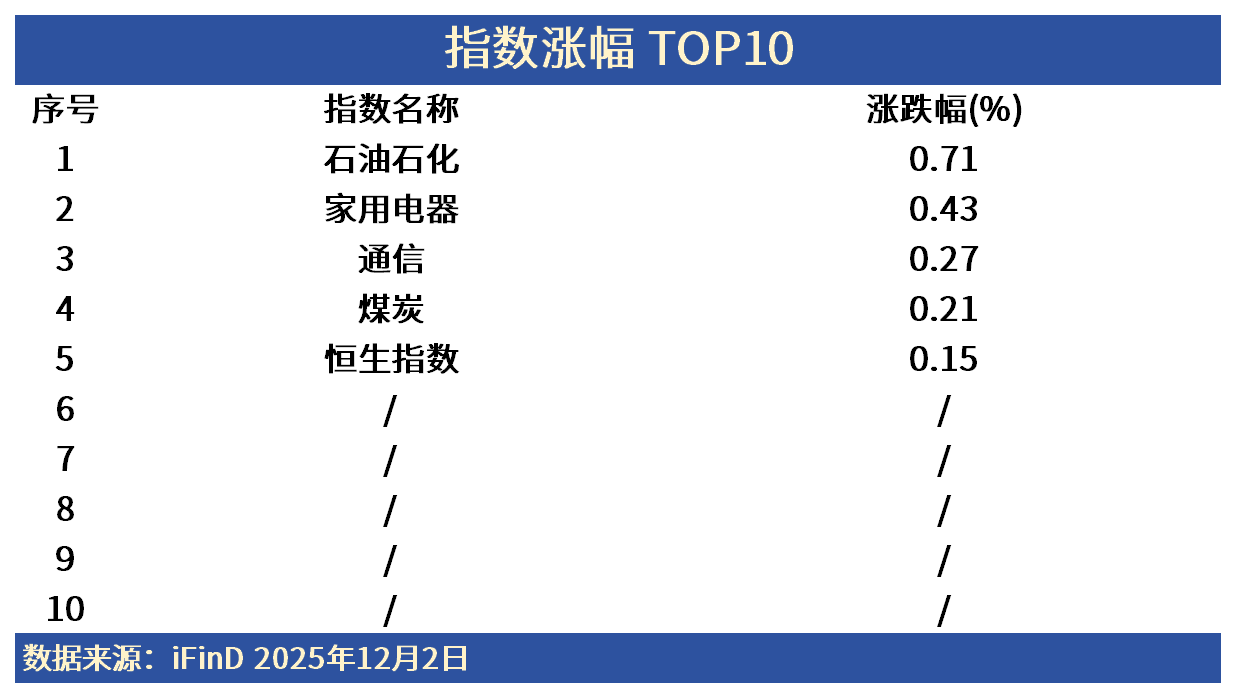
Group 1: Market Performance - The A-share market saw significant gains in the oil and petrochemical, home appliance, and coal sectors, with increases of 0.71%, 0.43%, and 0.21% respectively as of December 2, 2025 [1][7] - The coal industry is experiencing stable profitability due to a stable average daily production of over 12 million tons since October and a recent price increase of 8 yuan per ton for long-term contracts [2] Group 2: Policy Impact - Recent national policies have injected strong momentum into the oil and petrochemical, coal, and home appliance sectors, including a meeting by the National Development and Reform Commission to ensure stable coal production and transportation [2] - The home appliance sector benefits from a new policy in Shanghai that expands the scope of subsidies for old-for-new exchanges to 12 product categories, with a maximum subsidy of 2,000 yuan [2][3] Group 3: Industry Outlook - The oil and petrochemical sector is benefiting from the implementation of green electricity direct supply policies, which are reducing energy costs and meeting carbon reduction demands [2] - The home appliance industry is showing clear signs of recovery, supported by both domestic policies and an optimized export tax rebate policy [3] Group 4: Investment Opportunities - Analysts suggest that coal companies are expected to see stable profits as coal prices are projected to bottom out in the second quarter of 2025, leading to improved performance for listed coal companies [4] - The home appliance ETF has shown positive growth in market share, indicating a strong recovery trend in the sector [4]


收评:沪指跌0.42%,有色、医药等板块走低,零售等板块拉升
Zheng Quan Shi Bao Wang· 2025-12-02 07:42
Market Performance - Major stock indices in the two markets experienced fluctuations, with the Shenzhen Component Index and the ChiNext Index dropping over 1% at one point, and more than 3700 stocks declining [1] - As of the market close, the Shanghai Composite Index fell by 0.42% to 3897.71 points, the Shenzhen Component Index decreased by 0.68%, the ChiNext Index dropped by 0.69%, and the STAR 50 Index declined by 1.24% [1] - The total trading volume in the Shanghai and Shenzhen markets reached 1.6073 trillion yuan [1] Sector Performance - Sectors such as non-ferrous metals, media, pharmaceuticals, semiconductors, brokerages, automobiles, and liquor saw declines, while retail, coal, insurance, and real estate sectors experienced gains [1] - Concepts related to cross-strait integration and Hainan Free Trade Zone were active [1] Investment Outlook - According to Industrial Securities, the easing of overseas disturbances, rising expectations for global liquidity, and improved risk appetite have laid a solid foundation for the current year-end market trend [1] - Following previous fluctuations and digestion, clearer economic and industrial development plans from year-end meetings are expected to further consolidate market consensus and guide mainline directions [1] - A bullish mindset is recommended, with continued investment in the recovery of Chinese assets [1] - Focus should be on sectors with policy support and positive economic outlook for next year, including "anti-involution" and price-increasing resource products (chemicals, building materials, steel, energy metals, precious metals), agriculture, and new consumption & service consumption (leisure food, education, travel chain, etc.) [1] - Technology growth is anticipated to be a key driver in breaking through the current market volatility [1]
【盘中播报】沪指跌0.51% 传媒行业跌幅最大
Zheng Quan Shi Bao Wang· 2025-12-02 06:24
Market Overview - The Shanghai Composite Index decreased by 0.51% as of 13:58, with a trading volume of 900.44 million shares and a total transaction value of 1,308.77 billion yuan, representing a 14.35% decrease compared to the previous trading day [1][2] Industry Performance - The top-performing industries included: - Oil and Petrochemicals: Increased by 0.63% with a transaction value of 96.06 billion yuan, down 3.46% from the previous day, led by Hengyi Petrochemical, which rose by 9.65% [1] - Light Industry Manufacturing: Increased by 0.41% with a transaction value of 214.51 billion yuan, up 29.69%, led by Haolaike, which rose by 10.03% [1] - Home Appliances: Increased by 0.19% with a transaction value of 184.62 billion yuan, down 7.89%, led by Lek Electric, which rose by 6.78% [1] - The worst-performing industries included: - Media: Decreased by 1.62% with a transaction value of 487.16 billion yuan, down 6.13%, led by Happiness Blue Ocean, which fell by 7.16% [2] - Non-ferrous Metals: Decreased by 1.58% with a transaction value of 610.96 billion yuan, down 43.52%, led by Huaxi Nonferrous, which fell by 6.82% [2] - Electric Power Equipment: Decreased by 1.41% with a transaction value of 1,146.66 billion yuan, down 24.07%, led by ST Hezhong, which fell by 8.73% [2] Stock Movement - A total of 1,478 stocks rose, with 49 hitting the daily limit, while 3,812 stocks fell, with 6 hitting the daily limit [1]


长城基金汪立:前瞻布局春季行情
Xin Lang Cai Jing· 2025-12-02 06:09
Group 1: Market Overview - In November, the A-share market exhibited a volatile pattern, with the Shanghai Composite Index declining by 1.67%, while the ChiNext Index and the STAR Market Index fell by 4.23% and 6.24% respectively [1][7] - There was a significant shift in market structure as funds sought to rebalance their portfolios, with banking, petrochemical, textile, and light industry sectors showing the highest gains, while electronics, computers, and automotive sectors experienced notable pullbacks [1][7] Group 2: Macro Analysis - In October, the profits of industrial enterprises above designated size weakened, with a cumulative year-on-year growth rate of 1.9% from January to October, down from 2.4% in the previous period, and a significant drop to -5.5% in October compared to 21.6% in September [2][8] - The increase in raw material prices under the "anti-involution" policy, combined with weak demand, has narrowed corporate profit margins, although sectors like non-ferrous metals, electronic equipment, food, beverages, and automotive still maintained positive year-on-year growth [2][8] - The expectation of a Federal Reserve interest rate cut has risen, with indications from Fed officials suggesting a need for significant rate reductions to support economic growth, despite a recent increase in the unemployment rate to 4.4% [2][8] Group 3: Investment Strategy - Following the market correction since October, there has been a notable decline in margin trading activity, but recent stabilization in market risk appetite has led to a rebound in margin trading volumes [4][10] - The anticipated recovery in global liquidity due to the Fed's rate cut expectations, alongside the need for further policy measures to stimulate domestic growth, suggests a potential rebalancing of industry allocations [4][10] - Current market conditions may present an opportune moment to position for a spring rally, with a focus on emerging technologies, undervalued consumer stocks, and brokerage firms [5][11] - Specific sectors to watch include technology growth (internet, semiconductors, media, power equipment, innovative pharmaceuticals), consumer goods (mass products, hotels, airlines, retail), and non-ferrous metals, which are expected to benefit from easing monetary policies [5][11]
午评:沪指跌0.55%,有色、半导体等板块走低,福建板块活跃
Sou Hu Cai Jing· 2025-12-02 04:21
Market Overview - The major stock indices in the two markets experienced fluctuations, with the Sci-Tech 50 Index dropping over 1%, and nearly 4,000 stocks in the market showing declines [1] - As of the midday close, the Shanghai Composite Index fell by 0.55% to 3,892.55 points, the Shenzhen Component Index decreased by 0.77%, the ChiNext Index dropped by 0.88%, and the Sci-Tech 50 Index declined by 1.18%, with a total transaction volume of 1,056.2 billion yuan across the three markets [1] Sector Performance - Sectors such as non-ferrous metals, media, semiconductors, brokerages, pharmaceuticals, and automobiles saw declines, while retail, coal, and insurance sectors experienced gains [1] - Local stocks from Fujian and concepts related to Hainan's free trade zone were notably active [1] Future Outlook - Looking ahead to December, the A-share market is expected to enter a critical observation window for domestic and international policies, potentially increasing market risk appetite and setting the stage for a year-end rally [1] - On the international front, there is a significant probability of interest rate cuts by the Federal Reserve, alleviating concerns over dollar liquidity and supporting a stronger yuan, which may encourage foreign investment in Chinese assets [1] - Domestically, key meetings such as the Central Political Bureau meeting and the Central Economic Work Conference in early to mid-December will set economic development goals and macro policy directions for 2026, with policies aimed at reducing internal competition, promoting consumption, and enhancing new productivity likely to benefit [1] Investment Recommendations - Industry trends should focus on investments related to the "14th Five-Year Plan," including commercial aerospace, AI applications, energy storage, military industry, and innovative pharmaceuticals [1] - Non-ferrous metals are expected to benefit from improved overseas liquidity, while technology stocks in Hong Kong that have seen significant adjustments may also present investment opportunities [1]
传媒概念股早盘走弱,传媒ETF跌近2%
Mei Ri Jing Ji Xin Wen· 2025-12-02 03:22
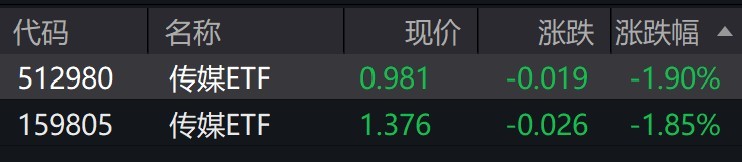
Group 1 - Media concept stocks weakened in early trading, with Kunlun Wanwei down over 3%, and both 37 Interactive Entertainment and Mango Excellent Media down over 2% [1] - The Media ETF fell nearly 2% due to market influences [1] Group 2 - According to a brokerage, the media industry is expected to recover in terms of prosperity in the medium to long term, driven by gradual recovery in content supply, deepening AI technology empowerment, policy support, and expectations of consumer recovery [2] - Companies with strong performance in sectors such as film and television, gaming, and advertising marketing are recommended for attention, along with those involved in digital assets and AIGC-related technologies [2]



港股通50ETF(159712)领涨超1.2%,科技消费板块获资金关注
Mei Ri Jing Ji Xin Wen· 2025-12-02 02:50
港股通50ETF(159712)领涨超1.2%,科技消费板块获资金关注。 国泰海通指出,科技制造板块中,电子行业获外资和融资资金显著流入,机械设备则出现明显流 出;TMT板块表现活跃,传媒行业外资小幅流入,计算机和通信行业融资资金流入居前。消费板块整 体承压,食品饮料行业外资持续流出,但ETF资金逆势流入。从全球资金流向看,外资边际流入新兴市 场,中国和韩国市场获外资增配,港股市场外资流入规模居前。 注:如提及个股仅供参考,不代表投资建议。指数/基金短期涨跌幅及历史表现仅供分析参考,不 预示未来表现。市场观点随市场环境变化而变动,不构成任何投资建议或承诺。文中提及指数仅供参 考,不构成任何投资建议,也不构成对基金业绩的预测和保证。如需购买相关基金产品,请选择与风险 等级相匹配的产品。基金有风险,投资需谨慎。 每日经济新闻 (责任编辑:董萍萍 ) 【免责声明】本文仅代表作者本人观点,与和讯网无关。和讯网站对文中陈述、观点判断保持中立,不对所包含内容 的准确性、可靠性或完整性提供任何明示或暗示的保证。请读者仅作参考,并请自行承担全部责任。邮箱: news_center@staff.hexun.com 港股通50E ...
【国信金工】券商金股12月投资月报
量化藏经阁· 2025-12-02 00:08
Group 1 - The core viewpoint of the article emphasizes the performance of the "brokerage golden stocks" and their ability to track the performance of mixed equity funds, showcasing the analytical capabilities of brokerage firms [2][9]. - In November 2025, the top-performing stocks in the brokerage golden stock pool included Blue Cursor, Yanjiang Co., and Suzhou Tianmai, with significant monthly increases [1][4]. - The top three brokerages in terms of monthly returns were Guolian Minsheng Securities, Guoyuan Securities, and Huaxin Securities, with returns of 4.48%, 3.40%, and 0.64% respectively, while the mixed equity fund index and the CSI 300 index both saw negative returns [6][8]. Group 2 - As of December 1, 2025, a total of 41 brokerages released their golden stocks for the month, resulting in 264 unique A-shares after deduplication [21][28]. - The current allocation of brokerage golden stocks is heavily weighted in the electronics (15.38%), basic chemicals (7.96%), and machinery (7.43%) sectors, with notable increases in food and beverage, media, and consumer services sectors [28][21]. - The performance of the brokerage golden stock performance enhancement portfolio showed an absolute return of -1.06% for the month and a return of 33.65% year-to-date, outperforming the mixed equity fund index by 1.39% and 4.42% respectively [36][32]. Group 3 - The article highlights the performance of various selection factors within the brokerage golden stock pool, noting that total market capitalization and quarterly revenue growth rates performed well recently, while analyst net adjustment ratios showed weaker performance [20][16]. - The brokerage golden stock index has been able to track the mixed equity fund index effectively, indicating a strong correlation between the two [9][14]. - The article also discusses the importance of analyst recommendations in increasing market attention for lesser-known stocks within the brokerage golden stock pool [24][22].

长城基金:轮动提速整固蓄力,后市关注三大方向
Xin Lang Ji Jin· 2025-12-01 12:52
Market Overview - In November, major A-share indices experienced varying degrees of adjustment, with the Shanghai Composite Index down 1.67%, the ChiNext Index down 4.23%, and the STAR 50 Index down 6.24% [1] - The overall market activity has cooled, with the average daily trading volume across A-shares decreasing by 249.2 billion compared to the previous month [1] - The primary reason for the market adjustment is attributed to changes in overseas expectations leading to increased risk aversion, rather than an actual deterioration in liquidity conditions [1] Sector Performance - Sectors such as banking, oil and petrochemicals, and textiles performed well, while electronics, automotive, and computer industries lagged behind [1] - The adjustment in the A-share market aligns with global market trends, primarily due to concerns that expectations for overseas liquidity easing may not materialize in December, alongside fears of a bubble and risks in the AI sector [2] Investment Sentiment - The fluctuating expectations regarding the Federal Reserve's policies have become a key variable affecting market sentiment, with recent comments from Fed officials increasing uncertainty [2] - The market has shown signs of recovery as expectations for a rate cut by the Fed in December have been somewhat restored, leading to a gradual warming of global capital markets [2] Future Outlook - The short-term market is characterized by a "waiting for profit-driven" pattern, with the potential for upward movement still present [3] - The current valuation levels are constraining upward momentum, with the median PE ratio for A-shares at the 84th percentile and the median PB ratio at the 85.5th percentile over the past three years [3] - Investment strategies should focus on three main areas: low-crowding sectors within technology, opportunities in global pricing resources like gold and copper, and manufacturing sectors benefiting from a restart in overseas credit cycles [3]