造纸

Search documents
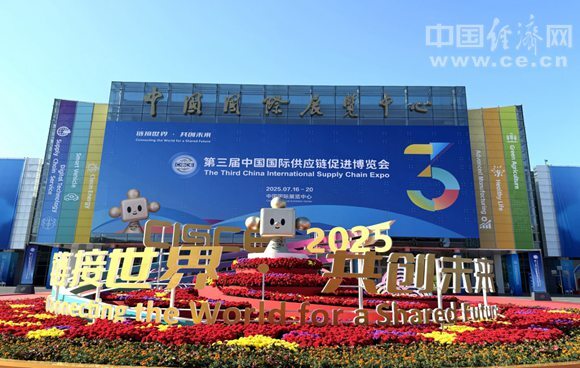
第三届链博会多方践行绿色办展理念
Zhong Guo Jing Ji Wang· 2025-07-18 09:14
Core Viewpoint - The third China International Supply Chain Promotion Expo emphasizes a green exhibition concept, showcasing significant achievements in promoting sustainable practices among participating companies [1][10]. Group 1: Event Overview - The expo, held from July 16 to 20, is the world's first national-level exhibition focused on supply chains, organized by the China Council for the Promotion of International Trade [2]. - A total of 651 domestic and foreign enterprises and institutions are participating, representing 75 countries, regions, and international organizations, with foreign exhibitors accounting for 35% [2]. - The actual number of exhibitors, including over 500 partners from the supply chain, is expected to reach 1,200 [2]. Group 2: Green Initiatives - The expo features various companies showcasing their green and sustainable practices, such as the Charoen Pokphand Group's "farm-to-table" food chain [4]. - Companies like Golden Light Group and Jilin Chemical Fiber are presenting innovations in "dual circulation cross-border industrial chains" and green materials, respectively [6][10]. - The event includes multiple seminars focused on green and low-carbon themes, encouraging collaboration to build a sustainable industrial chain ecosystem [10]. Group 3: Sustainable Exhibition Practices - The expo adheres to principles of energy conservation and waste reduction throughout the exhibition process, including pre-event, during the event, and post-event phases [10]. - Initiatives include energy-efficient upgrades to existing facilities, the establishment of a smart energy management platform, and the integration of photovoltaic energy projects [10]. - The exhibition promotes the use of lightweight, reusable, and modular materials while minimizing single-use items, aiming for a zero-carbon and zero-plastic event [10].

铭记历史 缅怀先烈丨一张“纸”的红色记忆与当代新篇
Xin Hua She· 2025-07-18 08:57
Core Insights - The article highlights the historical significance of Xuan paper and its revival through the efforts of the New Fourth Army during the Second Sino-Japanese War, emphasizing the cultural heritage and economic potential of the Xuan paper industry in modern times [1][2][3] Group 1: Historical Context - In 1938, the New Fourth Army established its headquarters in Jingxian, Anhui, where they initiated efforts to protect the Xuan paper industry, which was severely impacted by war and displacement [1] - The establishment of the "Xuan Paper Production Cooperative" by the New Fourth Army aimed to preserve traditional paper-making techniques and ensure a stable supply of paper for propaganda, leading to the publication of the influential "Kangdi Bao" [1] Group 2: Cultural Heritage and Modern Revival - Xuan paper was recognized as a national intangible cultural heritage in 2006, and Jingxian has since integrated the Xuan paper industry with tourism and cultural creativity, marking a significant transformation from traditional paper selling to cultural experiences [2] - The Xuan Paper Town has become a cultural hub, attracting 410,000 visitors in 2024, a 64% increase year-on-year, and creating approximately 850 jobs across related industries [2] Group 3: Community Engagement and Future Prospects - Jingxian is actively promoting the integration of the Xuan paper industry with red tourism and cultural festivals, creating a vibrant environment for both heritage preservation and economic development [3] - Younger generations are increasingly involved in preserving Xuan paper traditions, ensuring the continuation of its cultural narrative and craftsmanship [3]
建信期货纸浆日报-20250718
Jian Xin Qi Huo· 2025-07-18 03:46
Report Overview - Report Title: Pulp Daily Report - Date: July 18, 2025 - Industry: Pulp 1. Investment Rating - No investment rating provided in the report 2. Core View - The absolute price of pulp is at a relatively low level. The downside space due to weak fundamentals is limited, and a new round of price increase depends on the improvement of terminal demand and the restoration of industry profits. In the short term, pulp prices will maintain a wide - range shock at a low level [8] 3. Summary by Directory 3.1 Market Review and Operation Suggestions - **Market Review**: The pre - settlement price of the pulp futures 09 contract was 5234 yuan/ton, and the closing price was 5264 yuan/ton, with an overall increase of 0.46%. The intended transaction price range of coniferous pulp in the Shandong wood pulp market was 5070 - 6700 yuan/ton, and the low - end price remained stable compared with the previous trading day's closing price. The quoted price of Shandong Yinxing was 5920 - 5950 yuan/ton [7] - **Supply - side Information**: Chile's Arauco announced the July quotation. Yinxing's transactions were completed with no new offers, and the net price of Uruguay's broad - leaf pulp New Star was 500 US dollars/ton. According to PPPC data, the shipment volume of coniferous pulp from the world's 20 major pulp - producing countries in May decreased by 8.2% year - on - year, and the cumulative year - on - year decrease from January to April was 0.6%. According to Europulp data, the total inventory of wood pulp in European ports in June increased by 2.4% month - on - month and 6.6% year - on - year; the consumption of wood pulp in Europe decreased by 9.9% month - on - month and 10.6% year - on - year. In June, China's total pulp imports were 3 million and 30 thousand tons, an increase of 0.5% month - on - month and 16.3% year - on - year. As of July 10, 2025, the weekly pulp inventory in major regions and ports increased by 0.45% month - on - month, and only the inventory at Gaolan Port decreased compared with the previous week, with a stable overall shipment speed [8] - **Demand - side Information**: Downstream terminal orders were insufficient, and the overall price of base paper was stable with individual declines [8] 3.2 Industry News - On July 11, the second - phase chemical mechanical pulp project's No. 2 line of Liansheng Pulp and Paper Co., Ltd. was successfully put into operation. It took only 4 hours and 8 minutes to connect the entire system from feeding. After 20 hours of system optimization after startup, the quality of the main pulp reached the pulp - using requirements of the paper machine production line. The chemical mechanical pulp of the No. 2 line has been used in the PM1 white cardboard production line of Zhangpu Base. The successful commissioning of the No. 2 line marks a major progress in the annual production of 3.9 million tons of forest - pulp - paper integration in Zhangpu Base and further strengthens Liansheng's raw material self - supply flexibility [9] 3.3 Data Overview - The report provides multiple data charts, including import bleached softwood pulp spot prices in Shandong, pulp futures prices, pulp spot - futures price spreads, needle - broadleaf price spreads, inter - delivery spreads, warehouse receipt totals, domestic main port pulp inventories, European main port wood pulp inventories, prices and spreads of white cardboard and whiteboard paper, prices and spreads of coated paper and offset paper, and the US dollar - RMB exchange rate [15][17][19][26][28][30]
ST晨鸣的生死百日赌局:上半年巨亏35-40亿 新增364件诉讼涉案金额近46亿
Xin Lang Zheng Quan· 2025-07-18 03:33
Core Viewpoint - Chenming Paper Industry is facing a severe financial crisis, with a projected net loss of 3.5 to 4 billion yuan in the first half of 2025, marking a more than 120-fold decline in profit year-on-year, setting a record for single-period losses in China's paper industry [1] Group 1: Financial Performance - The company's main production bases are under maintenance, leading to a significant drop in production and sales, which has severely impacted revenue and profit [1] - The company has faced 364 lawsuits since January 23, 2025, due to overdue debts and contract disputes, with a total amount involved of approximately 458.27 million yuan, accounting for 40.11% of the latest audited net assets [1] - As of the end of Q1 2025, the total liabilities reached 47.74 billion yuan, with current liabilities making up 85.59% (40.86 billion yuan), and short-term loans amounting to 23.64 billion yuan, while cash reserves are only 2.28 billion yuan, most of which are restricted [1] Group 2: Strategic Missteps - The company aggressively expanded production capacity by 7 million tons from 2019 to 2022, with 75% concentrated in oversupplied areas, leading to a gross margin drop to -12.91% for its white card paper business when industry operating rates fell below 70% in 2024 [2] - The financing leasing business has accumulated 8.899 billion yuan in receivables with a bad debt rate of 51.7%, resulting in a loss of 1.468 billion yuan [2] - The company's asset-liability ratio has consistently exceeded 70%, reaching 79.79% in 2024, significantly higher than the industry average, with family management reducing risk awareness [2] Group 3: Rescue Efforts - The company is struggling to restart production, with only 23% overall operating rate, while shifting focus to high-margin specialty paper production and aiming to reduce energy consumption by 15% [3] - A provincial debt committee has been established to coordinate debt restructuring, with 42 billion yuan in loans extended, but new loans of 2.31 billion yuan are stalled due to bank approval issues [3] - The company is dissolving its financial company and exiting the financing leasing business, focusing on core operations of pulp and paper integration as a survival strategy [3] Group 4: Future Paths - There is a potential for industry recovery, with a 5% increase in cultural paper prices driven by the back-to-school season, but the oversupply issue remains unresolved [4] - The company faces a countdown to delisting, as negative audit opinions on internal controls could trigger delisting procedures if not rectified in the 2025 financial report [4] - Strategic restructuring options include introducing state-owned enterprise investors, local government assistance, and debt-to-equity swaps, with the possibility of bankruptcy reorganization if necessary [4] Group 5: Industry Insights - The collapse of Chenming Paper highlights the challenges of traditional industrial transformation, where misinterpreting industry concentration as a signal for scale competition led to "scale diseconomies" [5] - The failure of the "financial support manufacturing" model is evident, as the financing leasing business resulted in significant impairments during economic downturns [6] - In cyclical industries, cash reserves are more valuable than profit scale, and neglecting cash flow during prosperous times can lead to liquidity crises in downturns [6]

铁路通达产业兴 普洱搭乘中老铁路迎来发展“黄金期”
Zhong Guo Xin Wen Wang· 2025-07-17 16:56
Core Insights - The opening of the China-Laos Railway has significantly increased tourist traffic and economic opportunities in Pu'er, with daily visitor numbers reaching thousands during peak periods [1] - Pu'er has seen a substantial rise in both passenger and cargo transport volumes since the railway's operation, with over 15.47 million passengers and 3.68 million tons of goods transported by the end of 2024 [1][2] - The coffee industry in Pu'er is experiencing rapid growth, with local leaders investing in full-chain coffee production and tourism integration [1][2] Industry Developments - The logistics costs for local businesses have decreased significantly due to the railway, with fertilizer transportation costs dropping by at least 400 yuan per ton [2] - The tourism sector in Pu'er has expanded, with occupancy rates in local accommodations reaching 80-90% during peak seasons, and revenue from tourism projected to exceed 300,000 yuan in 2024 [2][3] - Traditional industries, such as paper production, have benefited from reduced transportation costs, saving approximately 16 million yuan annually due to the railway's operational efficiencies [2] Economic Growth - Coffee exports from Pu'er are projected to grow by 374.5% year-on-year in 2024, leading the province in export volume [3] - Tourism revenue in Pu'er has doubled, increasing from over 25.4 billion yuan to 62.9 billion yuan [3] - The region has attracted notable companies and projects, including a complete industrial chain for sodium-ion battery materials, indicating a diversification of the local economy [3]
纸业龙头恒安集团启用飞书
news flash· 2025-07-17 09:07
Core Viewpoint - The collaboration between Hengan Group and ByteDance's Feishu marks a significant step in the company's digital transformation and efficient collaboration efforts [1] Group 1 - Hengan Group has signed a partnership with Feishu to enhance its digital collaboration capabilities [1] - Hengan Group's President, Xu Qingliu, emphasized that this cooperation is a proactive approach to embrace change and accelerate digital transformation [1]
川普单挑华尔街+美联储,背后竟是一盘大棋!
Sou Hu Cai Jing· 2025-07-17 08:09
Group 1 - The core viewpoint of the article highlights the tension between political pressures and the independence of the Federal Reserve, as President Trump publicly calls for the resignation of Chairman Powell, which raises concerns in the market about the Fed's autonomy [2] - Major Wall Street executives, including the CEOs of Bank of America, Goldman Sachs, and JPMorgan Chase, have voiced their support for the independence of the Federal Reserve, indicating a collective stance from the financial sector [2] Group 2 - The article discusses the lagging nature of news in the market, emphasizing that true market movements often precede news announcements, particularly in the A-share market where speculation occurs ahead of actual news [5] - It illustrates this point with examples of two stocks, Shengtun Mining and Qifeng New Materials, which had different market performances despite both announcing positive earnings forecasts, highlighting the importance of institutional investor behavior over mere news [10] Group 3 - The article stresses the value of quantitative data in understanding market dynamics, suggesting that institutional investors exhibit specific trading behaviors during market volatility, which can be analyzed through data [11] - It advises investors to focus on real trading data rather than being swayed by news, as data provides a more reliable insight into market trends and investor sentiment [11][12]
上游出栏,猪价承压
Zhong Xin Qi Huo· 2025-07-17 01:20
1. Report Industry Investment Rating Most of the industries in the report are rated as "oscillating", with the exception of the log industry which is rated as "oscillating weakly", and the sugar industry which is expected to "oscillate weakly" in the long - term and "oscillate" in the short - term [7][8][9][10][12][14][16][17][18]. 2. Core View of the Report The report analyzes multiple agricultural and related industries, finding that most industries are currently in an oscillating state. Some industries face supply - demand imbalances, such as the oversupply in the hog industry; others are affected by factors like weather, policies, and trade relations, such as the possible weather - related speculation in natural rubber and the impact of trade agreements on protein meal [1][7][8]. 3. Summary by Variety 3.1 Oils and Fats - **View**: Oscillating and differentiating, with soybean and rapeseed oils oscillating strongly yesterday. - **Logic**: Good growth of US soybeans, a decrease in US soybean oil inventory, an increase in the expected demand for soybean oil in biodiesel, and the Brazilian biodiesel blending ratio increase. However, there is also pressure from the increase in palm oil production and the high inventory of domestic rapeseed oil [7]. 3.2 Protein Meal - **View**: Due to the signing of the Sino - Australian trade memorandum of understanding, the double - meal oscillated and slightly declined. - **Logic**: Abroad, the growth of US soybeans is smooth, but the export prospects are worrying; Brazil's exports are still high. Domestically, the signing of the Sino - Australian memorandum implies new Australian seed imports, with supply pressure leading to weak spot prices, but concerns about Sino - US trade support the futures prices. It is expected to oscillate in the short - term and be strong in the long - term [8]. 3.3 Corn/Starch - **View**: Spot transactions are light, and futures and spot prices oscillate weakly. - **Logic**: Futures prices rebounded slightly during the day and then fell back. On the spot side, supply at ports and deep - processing plants decreased, and there were price adjustments at some deep - processing plants. Deep - processing production and consumption data changed slightly, and there is a risk of supply shortage before the new grain is listed in large quantities [9][10]. 3.4 Hogs - **View**: Upstream slaughtering puts pressure on hog prices. - **Logic**: In the short - term, large hogs are being slaughtered at an accelerated pace, but the average weight has bottomed out and rebounded, and farmers are still reluctant to sell standard hogs. In the medium - term, the number of new - born piglets has been increasing, and there is room for an increase in hog slaughter in the second half of the year. In the long - term, the current production capacity is still high. The demand for pork has increased week - on - week, and the weight - reduction trend is blocked. In the short - term, the market has positive sentiment, but in the medium - and long - term, there is supply pressure in the third quarter [1][10]. 3.5 Natural Rubber - **View**: There may be weather - related speculation, but the expected increase is limited. - **Logic**: The rubber price rose rapidly at the end of trading yesterday, possibly due to weather - related speculation about a typhoon landing in Hainan Island or external capital. The trading logic follows the macro - sentiment, and the fundamentals are currently stable. The supply is affected by the rainy season, and the demand is relatively stable [12][13]. 3.6 Synthetic Rubber - **View**: The futures price rebounded after a decline. - **Logic**: The futures price followed the commodity adjustment and then rebounded due to the impact of natural rubber. The upward driving force is not obvious, but there is support from the macro - environment and the improvement in butadiene trading. It is expected to oscillate within a range [14]. 3.7 Cotton - **View**: Cotton prices increased with increased positions, breaking through the 14,000 - yuan mark. - **Logic**: In the medium - and long - term, the cotton market is loose, and the new cotton in Xinjiang is expected to increase in production. The demand is in the off - season, but the current commercial inventory is low. Yesterday, the futures price increased with increased positions, but there are multiple factors restricting further increases, and there is a risk of decline when new cotton is listed in large quantities [14]. 3.8 Sugar - **View**: Sugar prices fluctuated within a narrow range. - **Logic**: In the medium - and long - term, sugar prices are under downward pressure due to the expected supply surplus in the 25/26 sugar - making season. In the short - term, the decline in Brazilian sugar production and high domestic sales rates support sugar prices, but the increase in Brazilian production and exports and domestic imports will increase supply pressure [16]. 3.9 Pulp - **View**: The trend is dominated by the macro - environment, with a stalemate - type fluctuation. - **Logic**: The futures price fluctuated horizontally, and the supply - demand relationship is in a stalemate. The upward driving force comes from the macro - environment, but there is pressure at 5200 - 5300 yuan. In the short - term, there is a slight rebound space, and in the medium - term, there may be a phased increase, but the height is limited [17]. 3.10 Logs - **View**: There are few fundamental contradictions, and the short - term futures price oscillates. - **Logic**: Spot prices are weak due to the impact of delivery products, and the cost of importers has increased. Although it is the off - season, the overall demand is stable, and the market is in the bottom - building stage. There is no clear driving force for upward or downward movement in the short - term [18][19].
中金:“反内卷”的宏观含义
中金点睛· 2025-07-16 23:43
Core Viewpoint - The article discusses the issue of "involutionary competition" in various industries, emphasizing the need for regulatory measures to promote product quality and orderly market competition, as highlighted in the recent Central Financial Committee meeting [1][5][6]. Understanding "Involutionary Competition" - "Involutionary competition" refers to a form of homogenized and disorderly competition, resulting in excessive investment without improving output efficiency, leading to resource misallocation [10][11]. - It manifests in two dimensions: horizontal competition among peers, characterized by over-investment and price wars, and vertical competition, where dominant firms transfer competitive pressure to suppliers and retailers, disrupting market order [11][12]. Causes of "Involutionary Competition" - The root causes include macroeconomic oversupply and microeconomic market failures. Oversupply leads to a negative cycle, while market failures can stem from blind investments and structural power imbalances [22][23]. - The article identifies the need to combat "involution" to achieve reasonable price recovery and promote sustainable innovation, shifting competition from price to value [31][35]. Effective Measures to Address "Involutionary Competition" - The current approach to combating "involution" is more market-oriented and legalistic compared to previous capacity reduction efforts, focusing on innovation and consumer demand [3][44]. - Industries likely to benefit from these measures include coal, steel, construction materials, chemicals, and emerging sectors like photovoltaic and electric vehicles, which are currently experiencing "involutionary competition" [6][66]. Regulatory Framework and Industry Response - Recent regulatory actions include collective production cuts in the photovoltaic glass sector and commitments from major automotive companies to limit payment terms to suppliers [6][9]. - The government has implemented various laws to ensure fair competition, such as the "Fair Competition Review Regulations" and the "Payment Guarantee for Small and Medium Enterprises" [9][17]. Industry Impact and Future Outlook - The article suggests that industries with significant "involutionary competition" characteristics, such as declining capacity utilization and increased sales expenses, should be closely monitored for the effectiveness of "anti-involution" policies [64][66]. - The transition from price competition to value competition is expected to enhance product quality and long-term profitability, aiding in the overall industrial upgrade and high-quality development [43][44].

国泰海通|轻工:新旧共振,轻工掘金
国泰海通证券研究· 2025-07-16 12:39
Group 1: Furniture Industry - The furniture industry is experiencing a recovery supported by the demand from the existing housing market and the ongoing "old-for-new" national subsidy policy [1] - Leading companies possess comprehensive channel layouts, stronger brand power, and mature marketing systems, while smaller firms may face "traffic bottlenecks," amplifying the advantages of top players [1] Group 2: Personal Care Industry - The demand in the personal care sector is relatively inelastic, with companies focusing on product innovation and precise consumer targeting, while the integration of online and offline channels is becoming a trend [1] Group 3: Export Chain - Starting from Q4 2024, the performance of the export chain will be affected by a weakening low base effect, with internal growth becoming more significant, depending on downstream industry demand and the company's efforts in category, channel, and customer expansion [1] - Increased tariff disruptions are expected, benefiting companies with overseas production capacity, leading to further excess revenue performance [1] Group 4: Two-Wheeled Vehicles - The "old-for-new" policy is being intensified, and major automotive companies are set to launch significant new products in early 2025, with inventory replenishment at the channel level to meet peak season demand, resulting in an upward trend in performance [1] - In the medium to long term, the competitive advantages of leading brands are expected to expand due to new national standards and manufacturing capacity constraints, leading to a continued concentration in the market [1] Group 5: Millet and Stationery - The millet market has a broad outlook, with traditional stationery moving towards cultural and creative products, while the pan-entertainment toy market is expected to grow faster due to its entertainment and interactivity [2] Group 6: Smart Glasses - The smart glasses industry is witnessing an explosion in trends, with major manufacturers accelerating the integration of products with AI models, and the first generation of products has been released, with others expected to launch by 2025 [2] Group 7: Paper Industry - A turning point in cost has been confirmed, with a positive outlook for the profitability of specialty paper compared to bulk paper, as profitability is expected to improve starting Q4 2024 [2] - Price increases for paper are anticipated, with pulp prices peaking in Q1 2025, leading to improved profit margins [2] Group 8: Packaging Industry - The packaging industry is currently stable, with an expected improvement in profitability driven by optimized market structure, as capital expenditure is slowing down and companies focus on efficiency and shareholder returns [2] - As the industry enters a competitive phase in the existing market, mergers and acquisitions among leading companies are accelerating, which may lead to an upward shift in the overall profitability of the industry [2]